

 135
135 431
431 16
16 2
2 6
6 3
3 8
8 10
10 3
3 13
13 1
1 1
1 1
1 1
1 2
2 6
6 8
8 5
5 9
9


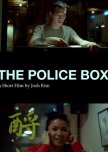
Satisfying love triangle
Josh Kim filmed The Police Box after dropping out of film school. He’s gone on to make other films and shorts. The first short of his I watched was The Postcard. One of his guiding thoughts is “what if?” That question served him well in this seven-minute film, one of the more interesting romances I’ve seen recently.A young man and a young women sit at the window in a bar each evening. The young woman is fixated on a policeman who walks the beat. Outside the bar is a police box where he writes down notes. After she writes the policeman a note in the book, the young man at the bar takes matters into his own hands.
I have to say, when the film first ended, I was thinking, “What?” Then it dawned on me and I laughed. What a great ending to this short film. The acting was quite basic, but the twist Josh Kim threw in at the last made it all worthwhile. This is one romantic triangle that I can easily recommend.
11 December 2024
PS-After the film ends, he runs it again with the costs he incurred during filming.
Was this review helpful to you?

"Cheer up"
Ophelia is a short film by Celina Mae Medina. It was not only her thesis but also a result of “two years of personal crisis and research.” The film was dedicated to her friend Allen. While this film is important, if the discussion of suicide is a trigger you may want to avoid it. **Lia is a college student suffering from depression and suicidal thoughts. Scattered throughout her bedroom are sticky notes with positive messages. Her parents try talking with her and at her. “Cheer up.” Always helpful advice when a loved one is having a mental health crisis. They blame her girlfriend and each other. Lia wants to see a psychiatrist, feeling she can no longer go on. Her parents are convinced the problem is spiritual and resist sending her to a psychiatrist, using alternative treatments.
The film did not glorify suicide nor ridicule anyone needing mental health help. Lia’s family was financially well off. Her parents loved her even if they were clueless. But clinical depression and suicidal thoughts don’t care about any of that. Willing them away or praying them away is like trying to put out a four-alarm fire with an eye dropper of water. Director Medina made her short film available on YouTube during the pandemic to start conversations and to help people who are struggling to not feel so isolated. Ophelia showed how devastating and destructive it could be to hear platitudes from people who did not or could not understand the depth of her anguish/and were in denial about how deeply it ran. The running time for Ophelia may have been short but this gut punch of a film will be remembered much longer.
10 December 2024
**
**
Spoilery Trigger Warning Below
**
**
**
Suicide
Was this review helpful to you?

Real love with a side of extra rice
How to review a three-minute short film? Keep it even shorter! Was The Vow a short film or a long commercial? Really does not matter. It was filmed with a gauzy romantic effect as a man remembered the first time he met “The One." The Vow related a story of true love and real devotion revolving around a Jollibee’s fast-food restaurant.If you have three minutes to spare and want to hear a beautiful wedding vow with a meaningful twist, this film is worth it. I don’t know if Jollibee’s two-piece spicy chicken with extra rice and upgraded pineapple juice is any good or not but they certainly made a satisfying commercial. Everyone should be so lucky to have a person as devoted and selfless in their life as the narrator.
10 December 2024
Was this review helpful to you?
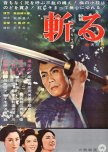
"A man with a heretical style can live honorably"
Destiny’s Son aka Kiru was a lovely, if nihilistic, style over substance tale of a samurai’s journey of loss. Director Misumi Kenji crafted a spare film clocking in at 70 minutes based on story by author Kyoshiro Nemuri. I suspect people who have read the book would be able to fill in the narrative gaps in the film.Takakura Shingo was given permission to take a three-year walkabout by his low ranking samurai father. When gentle Shingo returns everyone is surprised that he has developed incredible sword skills. This sets off a chain of events that leads to murder and Shingo taking to the road, this time for good. Skilled, loyal, and good-hearted, Shingo learns more about his background and the treachery of “honorable” samurai.
Death was a main character in this drama as it lurked behind every character. Betrayal and Deception were strong supporting characters as Shingo dealt with ambushes repeatedly. The young samurai vowed to never marry as he was unable to save the three women in his life nor were his skills successful in protecting his father figures. Shingo’s theme song could have been “Alone Again, Naturally.”
Most of the sword fights were of the swipe and fall variety. There was one notable exception. During a duel an opponent made like a banana and split vertically as his corpse fell to the ground. Shingo’s innovative style was considered heretical which I found amusing as if there was a sacred way to murder people.
Misumi created a very stylish film with a variety of framing and filming techniques. He pared the story down to the bare minimum, hitting the highlights in Shingo’s sad life. Ever at the mercy of merciless people and a merciless system, Shingo’s invincible sword skills could not protect his heart.
7 December 2024
Was this review helpful to you?
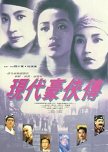
"Don't worry, nothing is going to happen"
Michelle Yeoh, Maggie Cheung, and Anita Mui returned for this sequel to The Heroic Trio from the same year. While The Heroic Trio was campy and fun, Executioners was dark with an erratic script and zero fun.Wonder Woman aka Tung (Anita Mui) is now married with a daughter. Her husband, Commissioner Lau, is rarely home as he is dealing with the aftermath of a nuclear strike that has left the people without clean water for several years. An entrepreneur named Mr. Kim (Anthony Wong) has figured out how to clean the radiation out of the water and sells small shipments at premium prices. Invisible Girl* aka Sandy Ching (Michelle Yeoh) turned over a new leaf after the first movie and is helping transport medical supplies. Thief Catcher Chat (Maggie Cheung) is still doing whatever she can to make a buck. Religious leader Chung Hon and a military colonel are both in cahoots with Mr. Kim. The president is vulnerable as well as the government in general with Kim and the Colonel both gunning to take over the country. Somehow the Heroic Trio must find a way to save themselves and the people from the evil men’s machinations.
The budget must have been miniscule for this film. In order to make the cheap sets appear post-apocalyptic they turned down the lights and turned up the fog machine. The strength of the first film was the relationship between the three women. Here, they were rarely together. The main exception being a gratuitous bubble bath scene at the beginning of the film as they played a game of grab and tickle. If there was a Sapphic subplot it might have made more sense but here it seemed to be designed to titillate 15-year-old boys. There weren’t many action scenes and most weren’t memorable. The plot seemed to be focused on the women fighting in skirts or short shorts and having as many people killed as possible. If they had ever planned a third film those characters eliminated should have counted themselves lucky.
It is no secret that I love the beautiful and talented Michelle Yeoh and will watch anything she is in. I also adore Maggie Cheung. The three women combined could not save this movie, actually if they’d had scenes together it might have helped. Anthony Wong as the villain was hampered by having to wear heavily scarred facial prosthetics and a mask on top of that. Kaneshiro Takeshi’s religious leader seemed to be a prominent role until he lost his head early on. Lau Ching Wan’s character had possibilities but ended up all wet. One of the characters that dragged this movie down considerably for me was the daughter. She was always getting lost or making a scene or diving into danger. It didn’t help that the dubbed voice was equally annoying as the character.
Executioners had a wealth of talent and wasted all of it on a dreary, convoluted story. When the three women were together fighting it was exciting. The trouble was the director forgot that key piece and squandered his cast and my time.
5 December 2024
Trigger warning: Rats and drinking of rat’s blood
* In the first film, Michelle Yeoh’s character wore an invisible cloak, but not in this film.
Was this review helpful to you?
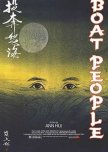
"Run towards the angry sea"
Boat People aka Run Towards the Angry Sea dealt with the brutal years directly following the end of the US/Vietnam War when Ho Chi Min and his party reunified Vietnam. This was the third film Ann Hui directed focusing on Vietnam resulting from stories she had heard while making the previous two. This film told the story of a Japanese reporter and the impoverished children he befriended.Akutagawa Shiomi had reported favorably on Ho Chi Min’s government previously so he was invited three years later to see the country’s progress. His visit to a New Economic Zone is highlighted by happy children singing and greeting him. Not long afterwards he sees people being forcefully removed from their homes. Troops beat first and ask questions later when he photographs horrific scenes. He follows a girl who scooped up noodles from the street and meets her family who are fearful of him. The oldest son tells him he can photograph them on the street for a price. As Akutagawa explores the city and NEZs without his escorts he comes to find that his initial introduction had been a show and that numerous people were willing to risk anything to flee their fates.
I’m old enough to remember the humanitarian crisis of the Boat People when nearly 300,000 people died at sea. This film did not focus on the boat people but rather the circumstances that drove people to make such a dire decision. The New Economic Zones were home to “bad elements” which could simply mean having been a capitalist or having contact with western countries or having wrong ideas by virtue of living in the south. Clearing land mines or farming in remote, inhospitable conditions was not a future many people had envisioned.
George Lam played reporter Akutagawa. He gave a strong performance as a left leaning reporter whose eyes were gradually opened to the horrors around him. A young Andy Lau played a former translator sentenced to a NEZ who was determined to leave the country before being blown up by a land mine. Newcomer Season Ma was believable as Cam Nuong who did what she needed to do to help her family and also had dreams of her own.
The biggest drawback for me was the lack of a language barrier. For the most part, everyone spoke Cantonese. And while there was a segment of the society that was ethnic Chinese, the Hao, who suffered greatly under the new regime, that didn’t seem to be the case here. Lam and his buddy Inoue’s Japanese didn’t sound very authentic, but I’m hardly an expert. I also had a hard time watching Akutagawa use his camera in the pouring rain. Not sure his camera would have survived the punishment he put it through.
While Ann Hui attempted to be apolitical, this time in Vietnam’s history could easily have been a criticism of any totalitarian regime that shut down free thinking and punished those who were seen as suspicious or disloyal. The terrible conditions left from decades at war were also visible. Land mines and unexploded ordinances took their toll as much as the unsympathetic party in control. The film was not an indictment on Vietnam in our present but on a specific time in its turbulent history and the price some people paid for not being on the winning side.
Boat People won numerous Hong Kong Film Awards including Best Picture and Best Director. The transformation of Akutagawa as he went from the idealized version of events to the harsh reality was poignant. The asexual friendship that developed between him and Cam Nuong which went from caution and suspicion to acceptance and compassion also hit the right notes. Without any spoilers, Boat People was tragic and heartbreaking on many levels yet also showed the determination and resiliency of the human spirit.
28 November 2024
Triggers: Deaths from many different graphic sources. Sexual content was alluded to but not shown.
Was this review helpful to you?

Love in the time of Covid
I Want Us to Be Together was a sweet age gap romance starring Qin Lan and Fan Cheng Cheng. Cupid, in this instance, turned out to be Covid. When many people were figuring out they couldn’t live together anymore after quarantining in the early days of the novel virus, others found love.Yu Ge is going home for the New Year celebration to be with her parents and extended family. She says her parents are cool with her being single, but other relatives are more bothersome about it. Yu Ge auditions several men to play her boyfriend and ends up with Lin Bu Mian, a younger man who works at the same restaurant. Lin is nine years younger than her but beggars can’t be choosers. Her parents are overjoyed with the handsome young man and cannot contain their excitement. As the family prepares to travel to the gathering, they are told no one can leave. Everyone is going to learn a lot more about each other in the small apartment.
Qin Lan is a delightful actress who the very next year would have another age gap romance in the drama The Rational Life with Dylan Wang that was quite entertaining. In this short film the age gap was supposed to be nine years while in real life it was closer to twenty.
IWUtBT brought back memories of the early days of the pandemic. No one really knew how to deal with Covid or the best way to treat it or prevent it. Scary times with masks and quarantining. With all the fear and deaths the invisible enemy caused it was nice that something good came out of those dark times, even if it was a fictional romance.
19 November 2024
Was this review helpful to you?

This story was on thin ice
Donnie Yen took a dramatic turn without the benefit of his martial arts skills in Comeback Home aka Polar Rescue. This family thriller about a lost child set in a beautiful snowy wilderness was marred by poor storytelling.A De and his family are on their last day of vacation having a blast playing in the snow at a resort. He has promised his son a trip to Lake Tian to see the monster living there. Finding the road closed due to inclement weather they take an alternate route where their car ends up stuck in a snowy pothole. A De and his wife manage to dislodge the car but their son Lele throws a fit and nearly gets everyone injured when another car comes up the road. When the eight-year-old’s temper tantrum escalates, A De leaves him there to teach him a lesson while he drives his wife and daughter to a nearby store. When A De returns, his son is nowhere to be seen.
I was looking forward to watching Yen in a non-martial arts film and he did fine here as the worried and hotheaded father. The winter scenery was gorgeous. The music while melodramatic fit the film. Where Polar Rescue slipped and fell was in the writing. A De’s initial response seemed utterly unbelievable for a caring father. At times the search and rescue teams were portrayed with all the propaganda they could fit in. At other times they were incompetent, unprofessional, and petty. If only perfect people were worthy of rescue, no one would ever be rescued. I found most of the characters’ actions baffling and at times infuriating.
Comeback Home had interesting moments and many that strained credulity. If you are a fan of Donnie Yen or family dramas where a member is in danger you might want to give this a try. Or if you are simply in need of a film with snow continuously falling. If you’ve ever known someone who has worked search and rescue or you need your thrillers to make a modicum of sense, you’ll want to avoid this one.
19 November 2024
Was this review helpful to you?
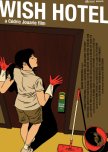
The two female day clerks man the desk dutifully standing as guests enter the hotel and leave. One talks constantly about horror movies she’s seen as the other passively listens. Kai Lin, the quiet maid, follows her daily routine cleaning the rooms and general areas. The boss introduces Da Guan who will be handling the desk at night and tells him to familiarize himself with the hotel. When Da Guan is wandering around he notices Kai Lin doing one of her routines that is not quite normal.
The Wish Hotel is quite busy at lunch time when customers rent rooms for “romantic” meetings. The meetings keep Kai Lin busy and also reveal her proclivities to Da Guan. The maid doesn’t like change, but also doesn’t like her life. Only the “travels” of the guests perk her interest as do her actions for Da Guan.
Nothing overtly exciting happens in Wish Hotel, yet short films often reveal subtle rhythms and changes in the lives of those peered at. The daily routines run from the mundane to slightly out of the normal range, yet judgements aren’t made on the workers who cater to the customers who use the hotel for rest and recreation.
11 November 2024
Trigger Warnings: References to sexual activity but nothing shown.
Was this review helpful to you?

"The roar of the dark sea is so far away yet I can still hear it"
Just when I thought I’d already seen Obayashi’s strangest film, he said, “Hold my beer.” I watched the short film, Emotion, twice and am still not sure I understand it. The acting was okay, the story surreal. What was amazing was the maddeningly creative editing Obayashi concocted like a sorcerer who had inhaled too many mushrooms in his dark laboratory.Emi is a young woman who lives by the sea and yearns to see more of the world. When she moves to the big city she meets mysterious Sari. They become fast friends until the day the man Sari loves falls in love with Emi. Sari gives in to the dark nature of her family…a family descended from vampires. At least I think that’s what happened. Lol
I cannot fathom how many editing cuts and splices were made for this film. Obayashi used every camera angle and trick available at the time. I caught more of the special effects the second time I watched it. Much like a silent film, the characters rarely spoke out loud. A voiceover in English and Japanese narrated the film. Intertitles occasionally appeared with the speed of a subliminal mind-altering torture. Poetry was spouted almost continually which elaborated more on emotions than plot. Different frames were bathed in solitary colors or simply black and white. Swirling, rocking scenes could be nausea inducing. You never knew what might appear next-bubbles, a random dog passing through, a dancing vampire with an umbrella, or a wild west shoot-out. Contemporary 1960’s music alternated with traditional music which added to the fanciful atmosphere.
To top everything off, behind the scenes footage was also used.
Much of the film could have been a dream or a young woman’s descent into madness. Coming of age, sexual awakening, friendship, desire, heartbreak, and jealousy all made an appearance. I’m not sure if incest or passing along the vampiric “gift” was shown. And whether a couple of scenes were about losing one’s innocence or rape.
Emotion was a complete mood film even if I wasn’t always sure what mood was being evoked at breakneck speed. It was an intriguing work of art more than compelling story. The short running time worked to the film’s advantage as it could be dizzyingly exhausting. Obayashi wasn’t afraid to inject humor throughout---never thought I’d see a vampire drink someone’s blood with a straw. If you are looking for something strange and different, Emotion qualifies on both counts.
"Do you like the sound of footsteps on the fallen leaves? Come. Night is falling."
26 October 2024
Trigger warnings: Suicide. Partial nudity.
Was this review helpful to you?
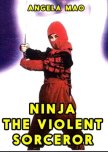
"We're all sick of Baker's vampires and bullying!"
Some movies are so bad they are good. Some movies are so bad they are bad. And then there is Ninja the Violent Sorcerer that is so bad it is WTF? Spliced and diced from The Stunning Gambling (1982) with new footage added for a story told in English, assumed director Godfrey Ho created a Frankenstein film of gambling, ninjas, a vengeful ghost, and hopping vampires.Gambling pro Mr. Myer, is tricked into killing himself during a gambling bet with the evil Mr. Baker. Myer’s dead wife appears in ghostly form to his brother Roger and tells him he must avenge her husband. Baker cheated by using hopping vampires…somehow. Collins works for Baker by shaking down people who owe the baddie money and using the invulnerable hoppers as muscle. What Baker and Collins don’t know is that Roger is secretly a ninja (white). His buddy, Ken, is also a ninja (green) and amateur Taoist. They have Myer’s son contact Webber, an incredible gambler who has turned into a drunk. Webber is the only man who has a chance at beating Baker. Roger and Ken gear up to take on Collins and his jianshi hitmen while Webber attempts to bring down Baker.
I was lured into watching this film with the promise of Angela Mao and hopping vampires. It was false advertising in regards to Angela. She appeared briefly in one scene where she handed Webber, who was suffering from the shakes, a bottle of booze. The hopping vampires did appear fairly often. And I actually bumped my score up for the actors’ commitment to their craft. Despite two ninjas attacking them, they kept their arms in front of them and continued to hop. The ninjas were at a loss as to how to stop the hoppers. Where’s Lam Ching Ying when you need him?
Godfrey Ho had 40 different pseudonyms and most people are convinced Bruce Lambert was one of them. If you enjoy his patented form of theatrical chaos and mania, you might want to try this. Of if you are curious how not very good ninjas would stack up against hopping vampires, you might want to try this. Otherwise, best to hop on by.
23 October 2024
Trigger warnings: Brief nudity. Really bad acting.
Was this review helpful to you?
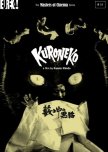
"What ghost would dare hate us?"
“Strange things happen in a war-torn land.” Do they ever in Kuroneko's ghostly story of revenge. The problem with revenge is that it’s a double-edged sword that can wound both ways.Yone and Shige are home alone having dinner when a group of 16 samurai come upon their hut. The samurai lay claim to everything in it. When they are done, the women are dead, and their hut goes up in flames. A black cat lingers over the bodies in the smoldering ruins. Not long after, samurai traveling through the Rajomon Gate at night are lured to their deaths by a beautiful woman. Tragedy is at hand when Yone’s son and Shige’s husband returns from the war a successful samurai and the women’s vows must be kept.
“Who cares about peasants or even considers them human?”
This was a strange story about the consequences of revenge. The vengeful ghosts had plenty to be resentful of regarding the world the warring men had created. Hachi loved his mother and his wife, but would he be immune to the rancorous entitlement vented by so many? It also showed the utter disregard for the lives of the peasants, the people hit the hardest by war. The lazy samurai leader Raiko couldn't understand anyone hating the samurai believing they were beloved by all. The suffering peasants' feelings didn't count as they weren't really human. A samurai lured into the women’s house said, “Fighting allows us to eat our fill and have whatever we want.” Not the words one should say to ghosts who had everything stolen by samurai including their lives. The offending samurai faces bore the greed and lust of crazed animals, fitting irony that they died in similar fashion.
The 1960’s special effects were rudimentary, created with darkness and light, fog and shadows. Makeup and hairy cat limbs gave the illusion of feline ghosts. A few wires and even their shadows slipped through the editing process. The greater fear in this film resulted from the ghosts required to fulfill their vows and Hachi who had his own vows to fulfill which put the loved ones on a hellish collision course. I gave this old horror film a small rating’s bump due to its age, but despite that it was a well made film about the costs of war and revenge.
20 October 2024
Triggers: Sexual assault and some nudity
Was this review helpful to you?
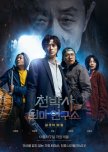
Ring the bell, the paranormal fight is ready to begin!
Dr. Cheon and the Lost Talisman was a light, entertaining shaman fantasy. It was more humorous than scary, goofier than ghoulish. Not an outright comedy but not a horror either. Kang Dong Won’s screen presence helped tie together the dark backstory with the action-packed present.Dr. Cheon and his assistant Kang In Bae take on shamanic jobs across Korea. Because Kang is in charge of the special effects to sell their show, he believes Dr. Cheon is a fake. Cheon does fleece his wealthy clients and has become a YouTube celebrity. While Cheon makes a living exorcising “ghosts” and “demons” from people what he’s really doing is solving clients’ problems psychologically. At every job he tests his bell which will only ring if ghosts or the supernatural are nearby. He is on the hunt for a dangerous demonic force that destroyed his family. When a young woman hires him claiming she can see ghosts, the bell of fate is set to ring.
This film had numerous supernatural chase scenes which were creative. Kang Dong Won made for a compelling shaman as he searched for the source of the paranormal events. With his ghost revealing bell and sword of destiny he was prepared to face the forces of evil. I much preferred this film to his previous wizardly turn in Jeon Woo Chi: The Taoist Wizard. For the most part this was an entertaining story, it just felt like the characters were thinly drawn. The Big Bad’s motivations were hazy. Did he want to take over the world or destroy it? There were a few loose narrative ends tied up by a trip to the Celestial Maiden for an informational exposition dump.
Dr. Cheon and the Lost Talisman benefited from its short run time. While the characters weren’t fleshed out the film moved at a solid pace, never becoming boring. The CGI was adequate and for the most part didn’t distract from the story. It was a 90-minute fantasy romp that while forgettable was enjoyable.
20 October2024
Was this review helpful to you?
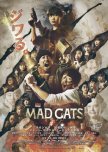
"Why am I here?"
Mad Cats was a low budget flick with an interesting concept. Cats had taken human form and were wreaking havoc on bad pet shop owners and breeders. These women had cat-itude and were not kitten around!Drunken, unemployed Taka receives an audio recording from a woman telling him where he could find his missing brother. There was also a wooden box he had to steal where his brother was being held. Mune was an archaeologist who had discovered an ancient and forbidden catnip. The catnip supercharged cat monsters who looked like women making them more violent. Taka finds his brother and the catnip but is unable to spring Mune from his prison. While on the run, Taka is helped by a homeless man named Takezo. They both end up being the target of fur-midable feline assassins stalking them! Luck favors the totally inept male leads when a furrocious young woman arrives and protects them from the killers. Ayane whiskers them away to an abandoned amusement park and attempts to train the two impawsibly untrainable men.
This film was as crazy as a bag of cats. Strangely enough, everyone ate Yum Yum Catness cat food, even the humans. The production values were as low as the budget although I really enjoyed the mewsic. Most of the comedy was hiss or miss. The film was littered with cat puns (the nerve!). A prime example, the license plate on the car the guys stole was “hissatu” (hiss at you). The acting was actually pretty good from the main characters and I thought Ayane played the cat turned human purrfectly. Ayane kneaded all nine lives to save her new fur-iends. Mineo Sho and Matsuura Yuya as the bumbling heroes and in-fur-ior creatures managed to pull off some of the purr-plexing slapstick as they fought the murderous glamourpusses.
Mad Cats was a cautionary tale for those who mistreat cats. You would not want to face The Executioner. Fur-tunately, the boys had a cat goddess on their side. Both brothers developed felines for Ayane who was completely devoted to her purr-sons. If you are in the mewd for something purrhaps not claw-some but also not a cat-astrophe, Mad Cats might be something to pounce on.
18 October 2024
Was this review helpful to you?

Numerous demon hunters descend on the small town of Baihe, the 100 Demon Town. Friends Tian Jiao and Shui Ling work with inventor Mo Lian Huan. Tian Jiao’s father, herbologist Zi Zhong Bai, joins them as does Shui Ling’s mom, San Niang the expert of Ghost Needles. Buddhist monks Liao Yin and Liao Guo come to help save humanity. And officers Tian Can and Di Que bring the might of the Ministry of Demon Suppression. They amass at Bai Ling Long’s Inn, the owner who possesses foxlike abilities. Two bumbling samurai and 3 vengeful demon sellers also appear at the inn for other reasons. Differences of opinions arise over the dispatching of all demons as some are helpful to humanity. The problem is muddled because Hua Man Teng has turned good Buddhist animals evil against their will.
The first half of the film was slow as the above characters were introduced. Each of their abilities varied from the others. Finally, on the night of the Great Demon Hunt, Man Teng made her dramatic entrance with a cauldron of demonic bats. At that point the fight was on and the body count went up. The CGI creatures and weapons ranged from good to poor as did the different actors’ responses to the CGI creatures and vines. For an epic fight, the low production values diminished my enjoyment. As did the focus on Tian Jiao in the latter part as she wasn’t a very likeable character. I was pleased that there were several competent women warriors instead of the usual one token female. Mika Wang’s evil Man Teng did the best she could as most of the time she was rooted in one place with vines extending from her. In truth, I started this film because Yuen Wah played the herbologist father. He and Yuen Qiu made a fun sparring not-couple couple.
The Book of Mythical Beasts had entertaining moments and several compelling characters. This two-hour movie tried to give sixteen characters screen time with mixed results. So many people on screen at any given moment meant that some were going to be sidelined and the main thrust of the story would be bogged down. And the main thrust of the story was confusing at times. There were good demons, good demons who were forced to be evil, and then evil demons. Some demon hunters differentiated and others did not, calling into question humanity’s propensity for evil as well. The film ended with a new threat to humanity crawling over the mountains so the filmmakers might have other questions they want to raise.
16 October 2024
Was this review helpful to you?


