

 135
135 431
431 16
16 2
2 6
6 3
3 8
8 10
10 3
3 13
13 1
1 1
1 1
1 1
1 2
2 6
6 8
8 5
5 9
9


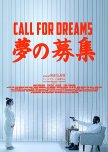
"Darkness makes me nervous"
If you threw some David Lynch and Wong Kar Wai movies in a blender along with the mood and palette of Blade Runner, mixed them up and threw them on a canvas, you would get a psychedelic Jackson Pollock work of twisted dreams and reality battered with ear and eye piercing sound and colors titled, Call for Dreams.“Every act of recording transforms the present into memory.”
Eko runs an ad in the paper soliciting a Call for Dreams. She receives messages about people’s dreams on her cassette answering machine. If she chooses the person, she helps to reenact the dream, much like a call girl only without the sex. Somehow the dreams shared and reenacted become intertwined with reality. Or do they? There is a fine line between dream and dreamer, reality and alternate realities, perhaps even sanity and madness.
“There is no ‘real’ anymore. You choose to act in a reality of your choice.”
The world Eko resides in is eternally dark and raining. Blue and pink lights follow her juxtaposed with pungent greens and yellows, and pops of retina damaging reds. City nightlines are showcased as she hurls through brightly lit tunnels. The music, colors, and movements twirl surreally as in a dream state. Only when the camera focuses on a police officer in Israel does it appear anchored in reality and then like a puff of smoke, the reality changes.
“People want to remember events, not necessarily in the way they happened.”
Is the film about dreams, reality, or memory? Only director Ran Slavin knows for sure. If you are in the mood for a mind tripping, illusion of reality and dream, this might be one to try. Keep in mind, “Is the dreamer dreaming the dream or is the dream dreaming the dreamer?"
11 April 2024
Was this review helpful to you?
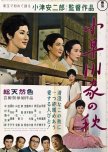
"Is this it? Is this really it?"
“Life is a running stream, forever changing.” Ozu Yasujiro once again examined how the world was ever changing and its effect on the individual and family dynamics. In his penultimate film, The End of Summer, a care-free father who does what he wants regardless of public opinion causes headaches for his family.“With so many captains, this ship will end up in the mountains!”
Manbei is a widower and owner of a small sake brewery that is beginning to fail. He spends most of his time disappearing during the day which causes consternation for his family and employees. Turns out he is seeing an old mistress again. Aside from his day pleasures and business concerns, the family is also trying to match-up Akiko, his widowed daughter-in-law, and also his younger daughter Noriko. Neither woman is receptive to the overtures of the men provided. Akiko is happy as she is with her young son. Noriko is in love with an assistant professor who moved away. Fumiko is the daughter who chastises the father for seeing the woman who had made her mother cry when she was alive. Manbei possibly has another daughter by the mistress though he is the only one who believes that. Yuriko’s only interest in Manbei as a potential father is securing a mink stole from him. Everything is fun and games until Manbei suffers a heart attack one evening which draws the family together.
“He did as he pleased his whole life…but he was also quite happy. It’s a rarity these days.’”
While the rapscallion of a father led his family on a merry chase, it was the sisters-in-law who captured my attention. Ozu made no moral judgements on the promiscuous head of the family but I found his childish behavior tiring. Akiko and Noriko (familiar Ozu names) had one of the most beautiful bonds in filmdom. Akiko gave Noriko advice on life and relationship matters. Akiko told Noriko when considering a husband, that character was more important than conduct, conduct could be changed but character couldn’t. Noriko wouldn’t allow Akiko to speak poorly of herself, charging her 100 yen every time she referred to herself as old. At the mother’s memorial service, they walked by the water and gracefully squat to talk perfectly in sync. Near the end of the film in a solemn moment they did the same thing. Despite being told differently by everyone else, the two mirror the father’s life philosophy and chose the paths that were right for them.
“I do miss the old days”
The changing world also crept into Ozu’s style with flashing neon lights used in several scenes. Instead of the rectangular imagery often used, the circular sake barrels were reflected in much of the family’s décor. Music and names in his movies were often repetitive as if they were barely an afterthought. In this film he used the composer from Good Morning. Though slightly more intrusive, it was mostly limited to transitions between scenes. Bird songs, crickets, and rhythmic drumming filled most scenes as characters talked with each other in their carefully composed settings. In two critical scenes, the faint whistle of the trains he loved could be heard. It was time for a long trip for one of the characters.
“Destiny is a strange thing.”
The ending of the film was darker and more somber than most Ozu films. Crows and the crematorium smokestack dominated the scenes with a couple of farmers ruminating on the cycle of life. Perhaps Ozu was contemplating his own death more. His mother died in the same year this film came out and he would die of throat cancer in 1963. That’s not to say the film was downbeat. Manbei provided humorous hijinks and the sisters-in-law provided a warm united front as they mapped out their own futures. The End of Summer provided a curious mix of humor and pathos with the scales carefully balanced in Ozu’s favor.
11 April 2024
Was this review helpful to you?
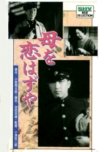
"One's life is so fragile"
A Mother Should be Loved is difficult to rate for it is lacking the first and last reels of film. Ozu Yasujiro’s film still has compelling moments amid the melodrama of a son discovering his mother is not his biological mother, but his stepmother after his father dies.At breakfast before school, Sadao and Kosaku’s father has promised to take them to the beach on Sunday. While the boys are at school, word comes that they must return home for something has happened to their father. Sometime after the funeral, the father’s old school friend visits the mother, Chieko, and asks her to continue to raise Sadao as her own even though he was the child of the father’s first wife who died. Chieko loves the boy and says there was never a question she would and has no intention of telling Sadao she’s not his mom. Trouble comes a few years later when Sadao applies for college and sees on his birth certificate that Chieko is not actually his birth mother.
The film is a tad melodramatic for Ozu, though he wasn’t afraid to dip his toe into the sea of tears. At one point I wondered if it was a melodrama or murder mystery as characters died off. But external conflict was not something Ozu used much. This was once again a look at a family being torn apart and whether the characters had the resiliency to bounce back and forge something better. Ozu originally wanted the title to be Tokyo Twilight but the studio insisted on having mother in the title. That makes sense when you watch this movie, the mother was more of a passive character, the focus was not on her, but on Sadao and his inner turmoil. Burdened by guilt and resentment he both lashed out at Chieko and tried to repair the relationship between her and Kosaku.
Ozu’s detailed compositions were quite apparent in this film along with his filming from the mat. Characters didn’t stare directly into the camera as they later would but at each other. Because of the hurt and anger felt by characters, there were also shots from the back incorporated into some scenes. I didn’t think the loss of the first reel hurt the story much though it might have showed the relationship the boys had with their father. The editing and time skips were what I found jarring. Right after the boys have found out their father has died, there’s a scene with them at the dinner table smiling and having a good time. It seemed incongruous with the solemn scene of them walking home from school with their heads down. Occasionally, Ozu gives us tips that time has passed but it’s difficult to tell how much. “Uncle” Ozaki showed up so often and so casually that I thought maybe he and the mother had married. The boys even mentioned him acting as their father, especially when Ozaki told Sadao all that Chieko had done for him and how much she loved him. The final reel was a loss, but at least due to a script still existing, the intertitles explained how the familial conflict was resolved.
Ozu has said the reason he remembered this film so well was because his own father died during the filming. He would go on to live with his mother for the rest of her life, a bachelor and childless. The mother in this film was trying to do the right thing. She loved Sadao as her own child and didn’t want to lose him simply because he wasn’t born from her body. She may have made mistakes but they were from love. Sibling rivalry has difficulty seeing those nuances, instead only seeing favoritism or supposed lack of attention. Both boys saw the other one as favored, the one who was never scolded and the one who was. In this film, Chieko deserved to be loved as she poured her heart into both her boys even when they broke it.
1 April 2024
Was this review helpful to you?
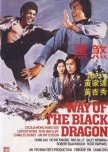
“It’s better in the Bahamas”
Way of the Black Dragon was the tale of two different movies spliced into one. The first half was a sleazy sexploitation story about two women kidnapped for hazy reasons and used as drug mules and sold into sex trafficking. In the second half the Black Dragon, Carter Wong, and an unknown Hong Kong actor showed up to try and rescue the women.This is the type of movie you could fast forward through the first half and miss almost nothing except the degradation of women for sport. I suffered through it so that I could write a review. It starts in Thailand where Allison and friend are kidnapped, forced to be drug mules on a plane to Hong Kong, sold into prostitution, some were murdered, etc. Around the halfway mark, Allison ends up being sold as a wife to Carter Wong. This lasts about 5 minutes. She tells him what happened and he vows to take the syndicate down. At the same time, Special Agent Bill Eaton aka the Black Dragon, an Interpol agent, discovers the trafficking and takes Allison back to Thailand where she is once again kidnapped. Carter, Allison’s brother, and The Black Dragon team up to take down the bad guys with lots of poorly shot car chases, motorcycle chases, and water chases.
The second half of the movie which was completely different in temperament might have been saved with great fight choreography, but the fights were generally poorly planned and underwhelming. Ron Van Clief had quick and powerful kicks and moves at times and at others were ridiculously let down by the slow, awkward choreography. He was entertaining to watch but the movie around him was a dumpster fire. Carter Wong didn’t have much to do other than get thrown into the deep end of the story without much motivation. I’m not sure who played Allison’s brother, I couldn’t find a listing. I’ve seen Hsiao Ho mentioned, and he was in the movie as one of the thugs, but not as the brother. The women were all but forgotten by the end of the movie.
The Way of the Black Dragon had choppy editing, an abysmal story, uninspired fights, and bad acting even for a kung fu movie. At one point Van Clief wears a t-shirt that says “It’s better in the Bahamas”. It would have to be, it couldn’t be any worse than this. Unless you are a completionist and want to finish The Black Dragon trilogy, I’d suggest skipping this one.
24 March 2024
Was this review helpful to you?
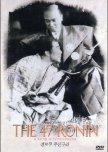
"A single drop of water has turned into a wave"
The 47 Ronin was not only based on a play but also inspired by a historical event on January 31, 1703. This film was shown in two parts, which makes writing a review difficult. It would be like watching the original Star Wars and the story stopping before they attacked the Death Star. The first part was almost two hours of introducing a plethora of characters and lots of waiting around while Councilor Oishi decides what the Ronin and vassals are going to do. Will they all commit seppuku? Attack the Shogun’s forces coming to evict everyone from the castle? Or will they seek revenge on the Lord who instigated the problem and escaped scot-free?Lord Asano attacks Lord Kira in the Shogun’s palace when the protocol expert repeatedly besmirches him. The price for his hotheaded action of drawing a sword where swords can’t be drawn is hara-kiri. The inspectors don’t believe he deserves the fate, in fact, he acted like a samurai should and Kira was the sniveling spineless samurai. Because of Kira’s political connections he’s released and aside from Asano losing his life, all of his properties are confiscated and his samurai become masterless Ronin. Councilor Oishi is slow and thorough, making sure the farmers and townspeople are taken care of while the Ronin are looking for blood. Theirs or the Shogun’s soldiers or Kira’s, they don’t particularly care. Oishi gains pledges from the remaining men, around 50, that they will abide by his decision. A year later, after a subterfuge plan finally comes to an end, Oishi can execute his heart’s desire. Roughly translated, “It’s go time!” and Lord Kira had better find a good hiding place.
Kawarasaki Chojuro as Oishi had to give the more nuanced role of a man whose decisions were repeatedly questioned by his subordinates. One wrong move meant disaster for all involved and more importantly they could not restore honor to the Asano family. At one point, he goes so far as to drive his wife away by carousing at the local pleasure house and refusing to see the anxious Ronin who are tired of waiting for revenge in order to sell his ruse. At this point there were so many characters introduced, the only other memorable ones were the initial investigator and an old friend.
When a film begins with “Defend the homes of those who fight for Greater Asia”, you know it’s probably a propaganda film or at least was expected to be one. It premiered one week before the attack on Pearl Harbor. While it was a call for loyalty, honor, and self-sacrifice for soldiers and citizens, Mizoguchi Kenji also included the Ronin questioning authority and acting on their own beliefs and willing to accept the consequences for those actions.
As a piece of art, the film was interesting if too long. I felt much like the impulsive Yasubei who was tired of sitting around and not knowing what Oishi’s ultimate plan was. Let’s go take this jerk down. But Oishi was a strategist who not only wanted to avenge his lord by killing Kira, he wanted to stand up to the Shogunate and expose favoritism and unfairness. It didn’t help that his plan was nearly derailed by well meaning allies. “Water will always drip from cupped hands.”
Part One was well made, it was Mizoguchi after all, but it began to feel like death by PowerPoint. Like Oishi and the other Ronin, I’m ready for the vengeance to begin and justice, if not prevail, at least not be completely denied.
“Even more than cherry blossoms
Scattered by the breeze
Memories of the passing spring
Bring unbearable regret”
18 March 2024
Was this review helpful to you?
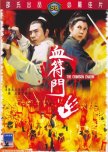
"No need to be rash. Someone will kill you tomorrow!"
Ivy Ling Po and Chang Yi avenge their master in The Crimson Charm. The film is an older Shaw Brothers, not a classic, but still watchable if you enjoy early martial arts movies.Chiang Tzu Chao and his daughter, Shang Ching, enrage the Yellow Gowned Chief of the Crimson Charm gang when Tzu Chao kills his son who was attacking a young woman. Tzu Chao and Shang Ching are befriended by the Blood Master during an encounter with Tsao Kang’s men. Tsao has decreed Chiang and all his disciples will die the next day. During the bloody battle, only three Chiang disciples initially survive-Han Yu, a badly wounded Yu Fang Fang, a mortally wounded Shang Ching, and the Blood Master. The three ultimate survivors will independently forge new skills and resolution to take revenge on not only Tsao Kang but the head of the Crimson Charm gang, Lin Han Su.
The acting covered a wide range in this film. Fang Mian as Tzu Chao can always be counted on to do a good job, but Shih Szu as his daughter was quite limited. At first, Ivy Ling Po’s performance was annoying as a pouty disciple but after she faced disaster, her character’s resolve and steely determination was a much more mature turn. Chang Yi’s appearance never seemed to change in films whether he was 26 as in this film or 40 in later films. James Nam showed a broader range of emotion as Ling Wu Lui, the Blood Master. Ku Feng appeared at the end of the film as the Crimson Charm Chief, bald, bare chested and sporting a leopard vest. Ku always seemed up for whatever directors threw at him.
There was a mix of sword work, other weapons, and kung fu. Shih Szu really struggled to be convincing holding a sword. Ivy Ling Po, especially in the second half of the movie did a much better job, even with her handicap. I always like when they allow the woman warrior to take her own revenge without the help of the male characters, and Ivy was able to shine during a battle in an inn. Chang Yi and James Nam both had good fights against the various Crimson Charm clans. One fight engaged tridents with annoying bells on them. The loud weapons might have made me go berserk as well. Body parts flew and #2 red finger paint ran everywhere throughout the movie.
The Crimson Charm had little story to it, only multiple revenge layers. And in the end, it showed just how destructive revenge can be as many of the clans lay in waste. While not one of the more well-known Shaw Brother films, it was entertaining once you get past some of the awkwardness of the first twenty minutes. For old kung fu movie fans. As always, I rate these niche films before 1990 on a curve.
17 March 2024
Was this review helpful to you?
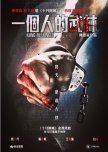
Fast and furious kung fu action!
I watched Kung Fu Jungle aka Kung Fu Killer years ago and quite enjoyed it. Upon rewatch I enjoyed the fight scenes again, and that the film had its own version of Yes Madam with a strong female officer in control of the investigation. Not that Donnie’s character listened to her much but her subordinates did and she got her chance to shine. The fight choreography was off the charts displaying a variety of styles. One of my favorite parts of the film were the homages to actors and stuntmen from the Golden Era of kung fu movies.Mo Hahou is serving time for accidentally killing a man in a fight when other martial arts fighters begin being murdered. He convinces Inspector Luk Yuen Sum to let him out to work on the investigation. Hahou escapes to convince his lover to go into hiding, but when Luk catches up with him agrees to let her stay with him so that he can help without being distracted. There’s no question where the story is heading, toward an epic fight between Hahou and the villain Fung Yu Sau and the movie delivers on its implied promise.
The story was thin but still managed to convey the ticking clock on men’s lives as the police and Hahou frantically tried to track Fung down and corner him. This was the perfect role for Donnie’s abilities, stern and determined. Charlie Yeung and Michelle Bai were thankfully not portrayed or written as inept (mostly) and helpless. Wang Bao Qiang brought a maniacal energy to the man obsessed with being the best and for whom kung fu meant death.
Donnie Yen choreographed fast, complex fights starting with fists and moving through kicks, grappling, and weapons. The final fight using CGI trucks was thrilling. Numerous older kung fu actors made cameos---Yuen Cheung Yan, David Chiang, Yuen Bun, Tsui Siu Ming, action choreographer Tony Leung Siu Hung, car stunt driver and choreographer Bruce Law, Tony Tam, Mang Hoi and Billy Chan to name but a few. Even Raymond Chow, the famous producer for and founder of Golden Harvest made a cameo.
Kung Fu Jungle was hard for me to rate. I’m not comparing it to Kurosawa Akira or Zhang Yi Mou films, but against other comparable films from the time. I recently watched Kill Zone and found this one to be far more entertaining. This was a bone crushing, fast moving, truck dragging bolt of energy that was fun to watch.
16 March 2024
Was this review helpful to you?
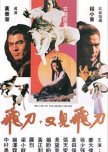
"I'm not old, I'm just mature"
Return of the Deadly Blade was the equivalent of click bait for me. The cast included Kurata Yasuaki, Norman Chu, and Lo Lieh. And then it hit me with the discombobulation virus, which lasted around 90 minutes.Master Li aka The Deadly Blade killed “Kam the Invincible Gold Rings” in a duel and then went into hiding for twenty years. Now suddenly everyone is looking for the famed bladesman. Siu Wan begins his trek to find Master Li taking on contenders as he goes. The Lonely Killer, a roguish lady’s man, is also looking for Master Li. He’s followed by a female fighter he defeated who apparently developed the kind of crush that could kill. A nobleman dressed in gold lame, which means you can’t trust him, sends out men to assassinate Lonely Killer, including a ninja. Siu Wan and LK keep crossing each other’s paths as does the lovesick warrior and a damsel in distress. All roads lead to the Tomb of the Hero and the showdown to discover, “Who’s your daddy?”
The story was convoluted and badly edited. Maybe there’s a longer version out there that tied the plot elements together better, but this version was disjointed and didn’t explain things well. Kurata Yasuaki finally had a role where he wasn’t a diabolical villain. Lonely Killer was no angel but usually Kurata played a burn down the orphanage kind of character in old kung fu movies. Kurata is skilled in karate and other forms of martial arts and his moves displayed his skill despite the limited hand-to-hand action. David Chiang as Siu Wan was David Chiang, I was never a fan of his work in these older movies. Reliable Norman Chu appeared as the wheelchair bound Master Li, a man tired of killing. Lo Lieh surfaced briefly as an umbrella fighting warrior who had to fight against Siu Wan and LK. While it saddened me that Lo was often relegated to smaller roles after the 1970’s I always enjoy seeing him on the screen. In a blink and you’ll miss him moment, Hwang Jang Lee was featured in the intro as Kam and his golden rings. Flora Cheung played both ingenue and femme fatale.
Since the writers didn’t make the story very clear, the action had to carry the movie along. Kurata had a fun fight against the Famous Four in a cave hot springs tub. Epic towel fight. He later had to face Bruce Leung in a cameo role. The three-way fight between Kurata, Chiang, and Lo Lieh was well choreographed. Later, when Kurata faced a ninja and the vengeful nobleman on a rope bridge, it felt like more could have been done with it. The grand finale fight that included quite a bit of wirework was a letdown.
Return of the Deadly Blade squandered a strong cast with a badly edited story. The most compelling reason to watch it is to see Kurata Yasuaki be able to play a lighter character than usual. Not a solid reason, but for fans of the genre a reason to try it.
15 March 2024
Was this review helpful to you?
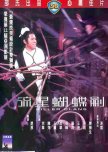
"A friend's weapon is the most fatal"
“Killers are like meteors. They appear in brilliance and vanish in no time. And they don’t have names.” Based on Gu Long’s book “Meteor, Butterfly, Sword”, Killer Clans tells the story of love and treachery between competing clans and even friends.Meng Sheng Wen and his blood brother, Yeh Hsiang, were cared for by the brothel owner Sister Ko. Ko receives assassination assignments after intimacy with a mysterious stranger, which she passes on to Meng as Yeh has lost his confidence and become a drunkard. Meng’s assignment is to kill Sun Yu the leader of the prosperous Longmen Clan. On one of his trips, he meets the beautiful Hsiao Tieh in the Butterfly Forest. She has a formidable father who does not tolerate swordsmen coveting his daughter. As Meng moves in closer on his target, it soon becomes apparent that he is not the only one with the wise and crafty Sun Yu in his sights, both enemies and friends alike will stop at nothing to bring the leader down and gain what is his.
Killer Clans is a Shaw Brothers classic. The sets and costumes were luxurious and there were numerous outdoor shots in picturesque scenery. The cast was stacked with SB actors, most of which did not last long as the body count was incredibly high. Double crosses, even triple crosses abounded. You know times were tough when the only man Sun Yu was able to trust was the man sent to kill him! My only quibble with the story is one that I often have with these older martial arts movies-their need to have bare breasted women and sexual assault.
Ku Feng was the highlight of this film as the Longmen Clan leader---caring, ruthless, adept, and shrewd, his backup plans had backup plans. Tsung Hua isn’t one of my favorites, but as the story often focused more on Sun Yu, not much was asked of him but to look grim. Yueh Hua played against type which was fine with me as it pushed him harder. One of my favorites, Lo Lieh, had a small role as Sun Yu’s supreme protector with a serrated round blade hiding in his hat.
The sword fights were actually choreographed well and not super slow as most were during this time, not nearly as fast as in the modern era, but still entertaining. The first time I watched this I wasn’t impressed with the swordplay but after watching, let’s just say, several martial arts movies since then, I’ve gained an appreciation for this film’s fight choreography. It also helped that I watched a restored copy this time and not a grainier version. Most of the well-known stuntmen actors from the 1970's could be seen jumping, flipping, diving, falling, and taking a beating as the story progressed.
Killer Clans was an action-packed tale of deceit, greed, and love. For anyone who enjoys old martial arts movies, it’s a must.
14 March 2024
Was this review helpful to you?
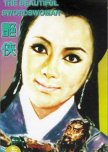
Yuan Yuan trains in secret and receives her assassin assignments from her old sifu. She and her governess disguise themselves in a myriad of ways, even as a new bride, in order to take down her targets. Her doting father never suspects his docile and obedient daughter has another side to her. Before long her secret life and her family life converge when she learns a devastating secret about her “father”.
The sword fights were pretty good for the time although there were a lot of swipe and falls. Yuan Yuan wasn’t afraid to aim for the face. Her nemesis used rings to kill his enemies. Wang Ling gave a strong performance as Yuan Yuan keeping the overacting so common in the 60’s to a minimum. Ma Chi played the loving father to the hilt and also the creepy murdering rapist.
There were some exciting fights early in the film and then it began to be dragged down in melodrama. The end was encumbered by the diametrically opposed familial cry for revenge and the punishment for killing a parent. Yuan Yuan was burdened with forgiving the unforgiveable and also settling her parents’ blood debt which seemed impossible. Family dynamics can be tricky.
6 March 2024
Was this review helpful to you?
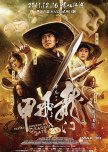
Stellar cast let down by mediocre writing and even worse special effects
Flying Swords of Dragon Gate was a remake of a remake. After watching it, I’m pretty convinced that was at least one remake too many. In lieu of quality martial arts fights, Tsui Hark buried the film in bad CGI and mediocre storytelling.It’s the Ming Dynasty which means the evil eunuchs are running amok. Zhao Huaian and his spunky rebels seek to take down the eunuchs and rescue the falsely accused. At the same time, a maid who was unfortunate enough to get impregnated by the emperor is on the run. Fear not! Eunuch Yu the head of the diabolical Western Bureau vows to have her hunted down and killed. A keen multi-tasker he is also determined to be rid of Zhao. The annoying maid is rescued by a female swordswoman and escorted to the Dragon Gate Inn in order to avoid a deadly sandstorm. The inn becomes overly crowded with a group of rowdy Tartars, Eunuch Yu’s men, and a dead ringer for Yu named Wind Blade. Eventually, Zhao shows up as well because the inn in the middle of nowhere is a magnet for killers and heroes alike. Everyone has their reason for being there and hidden treasure buried in the desert makes strange bedfellows with unlikely alliances.
This movie was 2 hours long but felt closer to 2 days. With the exception of the female Tartar warrior, none of the characters were particularly engaging. Aside from Burudu, I didn’t really care if any of them walked away from the inn where you did NOT want to be served “white” meat. Chen Kun played dual roles, but even he couldn’t save the lackluster writing. Jet Li acted bored as well. On the positive side the film had four accomplished female fighters. I was also happy to see old school kung fu movie star Gordon Liu in a guest role as one of the power hungry eunuchs brief as it was.
The film lacked character development and urgency for a story set in the only dwelling on the edge of nowhere filled with people wanting to kill each other. What could have been a tense claustrophobic thriller dragged on relentlessly with very little movement. The eunuch’s doppelgänger element was talked about more than used effectively. The romance clumsily wedged into the story was feeble at best. Five black sand tornadoes did little to liven things up.
Aside from the uninspired storytelling, what ruined this film for me was the terrible, and I mean atrocious CGI. The fights were ridiculously bad and completely reliant on CGI and green screens. The green screens were obvious as well. Nothing appeared real including the CGI actors that often bounced around. The sped up fake and real people fighting moved awkwardly instead of fluidly. Jet Li and Chen Kun’s fight in a tornado hurt my eyes there were so many bad effects going on. I kept expecting to see the woman riding her bike in the twister from The Wizard of Oz blow by. That’s not even taking into effect how fights were sped up and characters were thrown like paper airplanes. Most Wuxias in actual historical settings have some actions grounded in reality. People had limitless daggers stashed away in their sleeves. How their sleeves weren’t dragging the ground, I’ll never understand. Originally filmed for 3D, many of those daggers were hurled straight at the screen.
I enjoyed King Hu’s 1967 original Dragon Gate Inn no matter that the sword fights were primitive by today’s standards. At least they weren’t blurred and sped up to a ridiculous rate. I am a fan of Jet Li, Chen Kun, and Zhou Xun and I really wanted to like this film. The film ran too long, was narratively a mess, and relied too heavily on special effects instead of quality fight choreography. Flying Swords of Dragon Gate deserved to be buried in the sand.
5 March 2024
Was this review helpful to you?
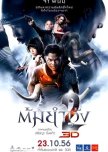
"You've lost your elephant again!?!"
Tony Jaa had to rescue his elephant little brother once again in Tom Yum Goong 2. Just as in the original, the story was a thin construct, simply there to let Jaa shine. This time he stayed in Thailand when he faced the dastardly devils who stole his elephant.Kham’s elephant is stolen (again!) by a bad guy who is working for a badder guy. When Kham arrives at his lair, the bad guy is dead and his two nieces skilled in martial arts think Kham did it. The cops have already been called to set him up so he has Sue Sue and Ping Ping (Jeeja Yanin) after him as well as the police force. Sgt. Mark, now working for Interpol, arrives on the scene. Kham ends up with what looks like the entire population of Bangkok chasing him on foot, motorcycle, and car! The Big Bad, LC, wants Kham to help him disrupt the peace process taking place in Bangkok for Kantana, a country divided. With his life and the life of his elephant on the line Kham has to find a way out or at least a way through the formidable fighters standing between him and his elephant.
The story, much like the first one, had plot holes galore. The acting was adequate. None of that was too important. Watching Tony Jaa and Jeeja Yanin fight was more than enough reason to hit play.
I’d read numerous complaints with people unhappy that Tony used wires and CGI in this film. While it was great he did amazing stunts without either in previous films, at 37, I didn’t understand what the big deal was. Jet Li, Donnie Yen, and Jackie Chan all used fighting enhancements, especially as they aged. It makes for more fantastical if not realistic fights. The wires and CGI didn’t bother me, what did was the almost indestructible nature of Kham, The Big Bad, and the #2 bad guy. In the original, Kham took people out in their vulnerable places and when people went down, they stayed down. Regardless of how they staged them there were several creative fights. The motorcycle battle and an electrically charged confrontation were quite creative. Jeeja Yanin took a backseat to Tony in the fights, but was still able to demonstrate what makes her an exciting fighter.
Tom Yum Goong 2 had a more polished look than the first film, but I missed the intense fight choreography. Unless the bad guys were zombies, I’m not sure how they kept getting up again and again. Apparently, Kham wasn’t hitting them very hard because even a hardened body is not indestructible. Kham also seemed made of impervious rubber. Having said that, I always enjoy watching Tony Jaa fight and this was no exception. Delephantly (couldn’t resist an elephant pun!) for Jaa and martial arts fans only.
3 March 2024
Was this review helpful to you?
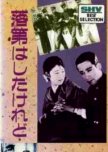
"What does flunked mean?"
I Flunked, But… was one of Ozu’s early silent films about university life. It was a warmhearted story demonstrating life’s ups and downs during and after university.Shomochi and his four buddies don’t take things too seriously as they cheat during exams and spend the evening before the big final exam cramming. Shomochi is the leader helping the others to study. He also prepares his white shirt as an answer guide. Nothing is ever that easy, especially when the house mom inadvertently collects the cheat sheet shirt along with the dirty clothes and gives it to the laundry services. The roommates panic at the loss. Much to everyone’s surprise the four roommates pass while Shomochi fails. The boys are sad for their friend, but Shomochi is devastated to not be able to graduate. Shomochi receives comfort from an unexpected source and finds his path toward adulthood and confidence. The four graduates discover the harsh reality of a disastrous economy where their diplomas mean very little.
Just as bachelor Ozu made numerous films about marriage and family life, he never attended university, so his take on it was more what he envisioned it to be than what he’d experienced. I enjoy Ozu's silent films, his style was more mobile. People moved naturally and looked at each other, not the camera, when they were talking. He wasn't rigid with filming from the mat and some shots were filmed from a higher position. The comedy felt organic and not forced. The boys had many humorous moments without delving completely into slapstick. I did miss his meticulously designed sets with the spare compositions. Of course, these were college boys and cluttered rooms were more realistic. An American movie poster and American university pennants decorated the walls. Ozu's teapot did receive prominent placement in one shot!
While there were many comedic moments, they alternated with sadness and discouragement. University life felt more insular. When the graduates faced the unforgiving economy, they were the ones needing help and encouragement. “Why did we have to graduate so fast?” Shomochi, on the other hand, moved toward maturity and finding joy in the moment.
This film shared the bonds formed from late night study sessions and walking arm and arm to a dance beat. Love brought encouragement in the darkest moments as did friendship. Maturity became a path adversity set them on. I Flunked, But… asked what it means to fail, and if one fails…what next? What happens when you do everything right but still can’t succeed? Ozu left some of those questions unanswered for the students who sought to find happiness amidst the sorrow and victory from failure.
25 February 2024
Was this review helpful to you?
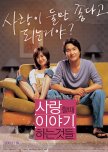
Sometime love ain't enough, and sometimes it is
Solace is a difficult movie to pigeonhole. While it is a romance, the leads spend large amounts of time apart. The pacing is slow like a slice of life and there are troubles enough for a melodrama. The leads involved occasionally find solace with each other, a gentle spot far removed from their daily grueling challenges.Somehow Lee Hye Ran has inherited her deceased father’s massive debt. I don’t understand Korean law and how it ended up with her and not her mom. Be that as it may, Hye Ran is drowning in debt and hounded by her father’s creditors. She runs a clothing shop where she often sells counterfeit clothing. Her sister is pregnant and getting married, adding to her financial concerns. Meanwhile, In Ku is a pharmacist living with his mother and mentally impaired brother, In Seob. His marriage plans fell through when the bride’s family forbade them to marry because of the brother’s condition. Neither Hye Ran nor In Ku are looking for love but fate insisted on throwing them together on several occasions. The two find comfort in each other’s company and arms, but regardless of their feelings, Hye Ran’s debt doesn't disappear and In Seob’s needs don't lessen.
Solace was a realistic look at two people for whom life could be a difficult grind. Realistically, love didn’t conquer all and solve all their problems. The film wasn’t all dreary and pessimistic. Both people were reminded of what they were missing. It instilled in them a desire to find joy in their lives whether it was listening to a familiar song or taking a hike. Speaking of music, it was a blast from another past to see a Walkman and a car with a cassette player in it. Both Hye Ran and In Ku had responsibilities they could not be released from. Opening their hearts to each other, helped them to open them to others. Sometimes love can be expressed in a myriad of ways, Solace explored love in different relationships, the joy it can bring, and the loving sacrifices people make for each other. While not a traditional romance, it was a film that stayed true to itself.
24 February 2024
Was this review helpful to you?
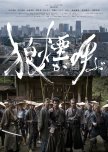
An heirloom's hidden past...
Wolf’s Calling is a stylish short film by director Toyoda Toshiaki with no dialogue. It is truly a mood piece bordering on samurai music video. This is the first film in his Resurrection trilogy followed by The Day of Destruction.A young woman discovers a rusty revolver in a box and takes it out. The memories imbued in the cold steel open up for the audience. Several samurai gather at the Mountain Resurrection Temple-Wolf. Soldiers in blue uniforms join them shouting, the only human sounds in the film. A woman’s sash and hairpin are laid out by one samurai and another carries a child’s toy implying the reasons for their solemn assembly. They silently form ranks with knowing glances. Drums echo the sounds of the approaching enemy. Weapons are drawn as well as the revolver.
An impressive cast lent weight to the performances making me wish this had been a full-length film. While the samurai might have been avenging loved ones, the real inspiration for the film had more to do with Toyoda’s arrest for possessing an illegal firearm, cleared up when it was shown that it was a family heirloom dating back to WWII. Like him, when looking at family heirlooms I wonder about the stories and people behind them.
Though Wolf’s Calling was a short film, the shots of the warriors walking through the old growth forest to the temple were resplendent. The temple was used in this film and The Day of Destruction, I have yet to watch the third film. The Young American revolver style was first made in 1905 which if they did their homework would help to date the action in the past. The music filled in for the dialogue conveying the urgency and determination of the men involved. The body language of the actors also conveyed their deadly resolve.
The film is so short that I watched it twice, enjoying it more the second time. The acting, scenery, and music gave the glimpse into the family’s past a depth that in lesser hands would have fallen flat. After watching Wolf’s Calling and The Day of Destruction which were both low budget films, I’m looking forward to trying more of his work. If you’ve never watched a silent film this might be a good gateway film.
23 February 2024
Was this review helpful to you?


