

 135
135 431
431 16
16 2
2 6
6 3
3 8
8 10
10 3
3 13
13 1
1 1
1 1
1 1
1 2
2 6
6 8
8 5
5 9
9


This review may contain spoilers
5 > 7
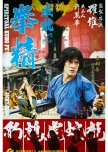
Five red-headed ghosts visited Jackie Chan in Spiritual Kung Fu. In this kung fu flick there wasn’t just one secret kung fu book, there were two!Long Yi Lang is the dull, mischievous, often bordering on unlikeable, student at the shaolin temple. One night a thief sneaks into the temple and steals the forbidden Seven Deadly Fists book. The Luk family took it in their plan for revenge against the monks for preventing the father from becoming the Wu Lin leader a decade before. Using the techniques in the secret book, the Luk son will be able to eliminate the competition and gain the leadership role. The only counter to the Seven Deadly Fists style is the Five Style Fists and that book has been lost. Right on cue, a sparkler from heaven crashes into the temple library depositing 5 red-headed ghosts who just happen to reveal where the Five Styles secret book is hidden and begin training Yi Lang in Dragon, Snake, Tiger, Crane, and Leopard styles. Meanwhile, the Luk son studies his book and begins killing off his competition. The inevitable duel between the two men will determine whether 7 is greater than 5 in a kung fu battle.
Jackie Chan’s Yi Lang was more irritating than funny or endearing. When the fights started in earnest, the mugging for the camera and whining finally stopped. James Tien often played a bad guy as he did in this film. Dean Shek and Wong Ching both played comic relief buddies to the two fighters. Wu Wen Siu had the rather thankless job of being the only female in the cast but made the most of it when fighting Jackie and James. I deducted points for the spanking scene she had to endure that detracted from the film for me.
The beginning of the film was slow and the humor decidedly low brow. One low point was when Jackie was putting live frogs and an eel into his pants. Some of the characters integral to the first half of the story all but disappeared during the second half. Maybe they had to rush to do another kung fu movie being filmed. The movie improved when the ghosts dropped into the temple and shook things up. They were funny but the first encounters with them became repetitious as if the director needed them to fill time, especially when he resorted to fart and urination jokes. Jackie choreographed the fights. They weren’t as slow as some of his earlier efforts, but were still indicative of the time and nothing like his more inventive fights he would create later on. It took nearly half the movie to begin the fighting. The pole fights were interesting when he had to fight the 18 Lohans though like the ghost scenes went on too long. Jackie and James’ duel was entertaining as was the fight with the secret Luk father, which didn’t take a genius to figure out early on. Jackie showed off the five styles with a minimum of wire and trampoline work.
Once the training and fighting began, I started to enjoy this film. The clownish mute ghosts in their tutus were low tech but their antics were engaging most of the time. When watching an older Jackie Chan film like this one, it helps to remember that this was near the beginning of his starring roles and his comedy and fight choreography would evolve.
10/23/23
Was this review helpful to you?
This review may contain spoilers
Too much talking, not enough monster
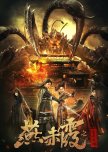
If you saw The Rock’s Scorpion in The Mummy 2 and thought, wow!, that’s amazing CGI, you may be impressed by the brief appearances of the Scorpion Monster in this film. The synopsis said the film was based on a famous Taoist monk, but he never made an appearance in this story. There was Ye, a self-absorbed officer for the Monster Killing Bureau and Yan, a self-absorbed monster hunter who was ordered to help Ye by the imperial court.Yan had consumed the power of a Red Wolf demon and managed to bring her into human form. Ye and his two cohorts dropped by and ordered Yan to help them find the missing Yue Ling village. Ye feared the Scorpion Monster was at fault for the village’s disappearance. When they finally found Yue Ling they discovered the villagers were indebted to the Scorpion Monster who had saved them and wished to live in harmony with him. Neither Ye nor Yan believed that was possible even though Yan and the wolf demon had become close. In the shadows, was a mysterious woman who whispered into Ye’s ear (repeatedly) that Yan was responsible for his father’s death and if Yan absorbed the scorpion’s powers, the emperor would make him a state preceptor instead of Ye. In the end, it would be a struggle to see who would conquer or kill the scorpion and what would become of the villagers.
The above bland description of the basic premise of the story was actually more entertaining than watching this plodding movie. A movie with the title Scorpion Monster, should have some exciting scorpion scenes. There was very little Scorpion Monster in the movie, and probably for the best as the CGI was quite poor. The acting was on par with the CGI. The writing was substandard, dull, and quite repetitive for a movie that ran less than 90 minutes. Eighty minutes into it I was wondering who I was supposed to be rooting for aside from the monsters. And the final battle was the definition of anticlimactic. I actually said out loud, “Was that it?”
Normally, I would try to think of something positive to say about a movie for those who might possibly be interested in it even if I wasn’t. But with below average acting, writing, CGI, and fights, it’s hard to recommend. If you get a kick out of watching a cheaply made monster movie that only shows the monster briefly a couple of times, this might be for you, otherwise best to skip this one or get stung.
10/17/23
Was this review helpful to you?
Not Fab-boo-lous, but not completely boo-ring either
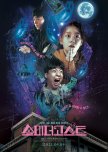
Show Me the Ghost failed to break any new ground in the Ghost Whisperer genre. If they’d trimmed the film by 20 minutes and tightened up the story it might have made a good episode in one of the many ghostly dramas dedicated to the same theme.Ye Ji and Ho Doo are friends dating back to childhood. When Ye Ji fails yet another job interview she casts her troubles on her friend reminding him that he owes her money. Ho Doo takes her to his new house that is spacious and came completely furnished and as they would find out later, complete with its own ghost. Unable to break the contract the two determine to either fob the apartment off on someone else or drive the ghost out.
The plot was threadbare and I knew within five minutes exactly where it was going. Some of the scenes felt incredibly forced. It was billed as a comedy and that was a reach unless you find Han Seung Yeon’s relentless screaming and ear-piercing fake crying hilarious. There was only one segment involving four pair of shoes that made me chuckle. Kim Hyun Mok’s performance was as understated as Han’s was shrill. The rest of the cast was adequate but not much more.
For a big fraidy cat like me, this was the perfect kind of ghost story. It wasn’t scary and there was a bittersweet resolution to the haunting. Despite being cursed by an over-used paradigm, with a more imaginative script and compelling acting it might not have been spooktacular, but it would have had more spirit.
10/15/23
Was this review helpful to you?
This review may contain spoilers
Sammo takes on a hopping vampire!
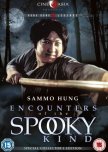
Sammo Hung took on all sorts of things that go bump in the night in Spooky Encounters. This was a combination of horror, comedy, and kung fu with mixed results.Bold Cheung’s wife is having an affair with the local wealthy guy, Master Tam. Unwilling to share or be exposed Tam hires Chin Hoi, an immoral priest to kill Cheung by magical means. Chin Hoi’s apprentice, Priest Tsui, refuses to go along with the murderous plot and secretly helps Cheung. Another of Chin Hoi’s apprentices tricks Cheung into spending the night not once, but twice in a locked temple. Not scary, you say? Locked inside is a hopping vampire! When the hopping vampire fails to kill him, the bad guys frame Cheung for the murder of his very much alive wife. Eventually the simple Cheung is convinced that the man he trusts and the wife he loves are plotting to kill him. It will all come down to a no spells barred priest against priest and Sammo against the rest ultimate magical fight.
This is considered a kung fu horror classic and many people love it. I struggled to connect with it. I love a good hopping vampire story and this one scored on that account. But if Sammo is in the movie, I want more action. The first fight didn’t take place until 43 minutes into the movie. And most of the action took place after the 1-hour mark. The story wasn’t compelling enough to keep me interested during the first half. I was happy to see Lam Ching Ying, one of the martial arts directors, have a nice little fight against his own men when they were possessed. Chung Fat played a lot of bad guys early in his career so it was fun for him to play a heroic character. The final fight had Sammo possessed by different characters including the Monkey King. The action and dialogue were cranked high in fast motion. Once Sammo started fighting the film took on more interest for me. Fair warning there were some gruesome images-insects, rodents, a decomposed corpse, and a decapitated chicken.
Encounter of the Spooky Kind was one of the first movies to combine kung fu, comedy, and horror. It started out slow, finally finding its footing. The humor could be hit or miss, but when it came to fighting, Sammo rarely missed.
10/4/23
Was this review helpful to you?
This review may contain spoilers
"Never have I witnessed the beauty of the world"
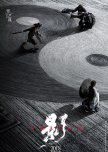
Zhang Yi Mou is renowned for his use of brilliant colors and vibrant scenery. In Shadow he showed he could strip it all away and lay bare the story in a gray and white world. The story that seems simplistic at first peels away layer after layer revealing desire, betrayal, and greed.Two kingdoms have signed a peace treaty but only the Yans have control of the great walled city of Jing. The Pei clan yearns to reclaim Jing City against the wishes of their king who wants to keep the peace at all costs even if it means wedding his sister to the Yan heir. The Pei Commander has challenged General Yang to a duel, one he doesn't believe he can win with the winner claiming the city for his clan. The Pei king strips the Commander of his rank for putting the peace at risk, reducing him to a commoner. Early on it is revealed that the Commander is only a shadow named Jing. The real Commander stays tucked away in an underground cave slowly dying from a wound rendered by the Yang general. Soon the characters set up the play they wanted, never knowing if they were the puppet master or puppet.
Shadow's dark underlying mood reminded me of an emotional mash-up of Kurosawa's Kagemusha and Throne of Blood. Jing had grown up in the darkness and even in the light was someone else's shadow. Aside from the Commander's wife, was there something else he desired? The Commander (like a good Kurosawa character) had gone nearly mad trapped below ground scheming and planning. Deng Chao played both characters so well I could scarcely tell they were the same person. Madam was torn between her loyalty to her husband and her feelings for Jing. Other than his longing for Pei to reclaim Jing City, Capt. Tian's loyalty was murky at best. Was Pei's king short-sighted or playing the long game? Characters with the greatest conceit would pay the greatest price. Zhang Yi Mou took his time revealing the hidden truths beneath the characters' facades.
Zhang may have stripped his palette of bright colors but the film was no less stylistic. Though the film at first glance appeared monochromatic, he judiciously used color---patches of green on the hills, the luminous glow of skin, the golden heat from candles, warm brown tones in the Yin and Yang and of course the crimson flow of blood pooling in the rain. His use of color and architecture were, as always, a wonder.
Umbrellas are no stranger to kung fu movies. Zhang, however, took them to new heights. One scene with the army sliding down the cobblestone street doubly armed may have defied gravity but not wuxia magic. The fights were brutal and deadly. Ku Huen Chiu has an impressive track record as a martial arts director and his work here was exemplary. One fight managed to combine dangerous combat into an erotic dance. Feminine moves were created to combat masculine ones to great effect. A surprise knife or sword to the neck always works, too. The great battle accompanied by a zither duet was reminiscent of Hero and just as effective.
The climax dragged on as the endgames became apparent and who would ultimately come out on top was left up to the viewer to decide. Shadow was at its heart a martial arts film complete with betrayals, schemes, lust, and revenge served on a blood-soaked platter. Few directors could create a more aesthetically pleasing film or take an old genre and make it feel new. Zhang Yi Mou is one of my favorite directors for being able to do all that and more. Shadow's breathtaking use of color and creative cinematography was the perfect setting for the ancient story of man's pyrrhic need for power.
9/26/23
Was this review helpful to you?
This review may contain spoilers
Slow, non-linear story, but still engaging
Desert of No Return was a slow paced, non-linear (very non-linear) story about two people in dire financial straits who hooked up one night leading to tragedy. The film felt dragged out by bouncing back and forth in time and telling the story from both main characters' points of view. Soo Eun's story was far more compelling and Ha Yoon Kyung did a superb job bringing her to life.Tae Shik is a divorced father who lives with his mother and can't make ends meet providing for both households. He collects junk from sellers and illegally from abandoned houses. His ex-wife takes every opportunity to denigrate him as well as people on the street. He goes with a friend to a karaoke bar where girls are provided for companionship. Soo Eun wants to own a nail salon but is short of the cash needed. She is in a loving relationship with a female musician and promised to never sleep with the clients during the "second round." Tae Shik and a reluctant Soo Eun end up in a hotel room which sets a terrible chain of events in motion.
Tae Shik was a man incapable of properly handling adversity or confrontation. If there was any effort to make him sympathetic it did not work with me. The more I discovered about him the less I empathized with him. All I learned from the film was that even ahjussis can be deadly dangerous if provoked or steal from you when your back is turned. Soo Eun made a choice she paid for in multiple ways. Though she worked to be a good human being she lost everything due to a desperate decision. The film bounced not only between the two characters' points of view but also back and forth in time which could be confusing.
Tae Shik's story tried to explain his rage which Jo Sung Ha portrayed well. Ha Yoon Kyung brought out Soo Eun's vulnerable side as well as her fierce side. She was beautiful whether made up or sans free of makeup and gave a lovely performance as the doomed young woman. The music was quietly moving though I disagree with her lover, even musicians have to pay their bills.
I didn't particularly enjoy the first part of the film but found myself engrossed in Soo Eun's romance and story. Many synopses made her out to be a prostitute. I don't think one time brands a woman for life. I felt the ending was unsatisfactory, but that could be because I do like my endings tied up with a bow one way or another. Had the rest of the film felt as complete as Soo Eun's story I would have enjoyed it more.
9/19/23
Was this review helpful to you?
This review may contain spoilers
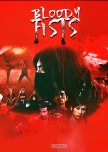
Set in the early 1900's, The Bloody Fists starred Chen Sing and Chen Kuan Tai. Yuen Woo Ping choreographed the fights which meant at least they would be interesting. It was a good thing, because the story wasn't.With a plague descending upon the country the invading Japanese wanted the precious dragon herb grown locally for their own people and to let the Chinese suffer the devastating effects of the illness without their remedy. The villagers in charge of farming and storing it refuse to sell it to the Japanese. A mask wearing Chen Kuan Tai in a terrible wig brings his men to intimidate the village into handing over the dragon herb. Three brothers manage to hold his men off initially. In a kung fu film if there are three brothers, two of them are extraneous and most likely won't see the ending credits. Along with the Yu brothers, Jiang Wu Ke, a notorious robber wanted by the law shows up in town while he's on the run. He falls ill with the plague and is treated with the dragon herb by a mute and his grandfather. By the time he recovers the villagers are either dead or being held hostage by the Japanese. The bad guys didn't quite grasp the whole hostage concept as they kept killing them off or killing the people who knew where the herb was hidden. Offended by the bad guys' violence Jiang decides to take matters into his own hands.
Chen Sing played the good guy in this movie, going against his usual villain type. He did make for a more complex hero than the bland Yu brothers. Chen Kuan Tai didn't come across as a very sinister baddie, but it could have been due to the hilarious wig he was sporting. Evil sidekick San Kaui had owl-like eyebrows while Pak Sha Lik looked like his mustache was made out of electrical tape. Mama Hung and Hao Li Jen who had nearly 600 acting credits between them made their usual supporting appearances.
The story's simple plot coupled with terrible pacing caused the movie to drag terribly. The sets weren't special and the Chinese costumes were standard for kung fu movies regardless of the era they were supposed to take place in. The Japanese costumes were as bad as Kuan Tai's wig. There was an awful rape scene that was gratuitous and completely unnecessary which downgraded the movie for me. Yuen Woo Ping's fight choreography wasn't as polished as it would become but it was entertaining, especially the final fights by the ocean beach. Chen Sing and Chen Kuan Tai had enough charisma to sell it. There was one fight in the dark that was almost impossible to make out much of the action. Trampolines and sped up camera work were both employed throughout.
As bland as the story and characters were, I did enjoy seeing Chen Sing play the good guy. He made his character compelling to watch, a rare feat next to the lackluster cast. The Bloody Fists wasn't an awful 1970's kung fu film, but it wasn't bloody marvelous either.
9/10/23
Was this review helpful to you?
This review may contain spoilers
"A flower once bloomed will hold to the vine, while a bud will fall."
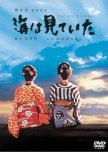
Kurosawa Akira worked on this script but didn't live to film the story. The Sea Is Watching seemed far from his usual comfort zone as it was woman centric and heavy on romance. You'd have to go back to just after WWII to see him tread so heavily into romantic territory. Director Kumai Kei picked up his mantel and made the film, but it felt far from the Kurosawa films most of us are familiar with.The film centers around a brothel and a young prostitute named Oshin. She has a big heart and a bad habit of giving it away to the wrong men. Kikuno is an older prostitute with an older suitor who wants her to come live with him. Stopping her is a violent yakuza lover who thinks he owns her and uses her earnings to pay off bad debts. The young women stick together and support one another through their ups and downs. After a bad romance, Oshin falls hard for a destitute man who is ready to end his life. He will play a key role when a torrential storm churns up the sea and the nearby river sending flood waters toward the town.
The cinematography and sets were beautiful and the colorful kimonos stunning. The acting seemed overwrought at times as the younger thespians weren't as polished as the more experienced actors. Shimizu Misa grounded the young oiran with a more reserved performance.
This film played like a melodramatic slice of life on the wrong side of the bridge as the women dealt with the caste system, love, heartache and dangerous clients. The middle bogged down making an already long film feel longer. However, the ending gave the film the emotional weight it desperately needed when one person showed the true samurai spirit in a moment of love and sacrifice with the pure-heart of a warrior.
9/9/23
Was this review helpful to you?
This review may contain spoilers
Sometimes brave people can bring about change
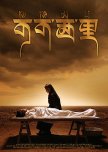
As the Tibetan antelope numbers rapidly decreased from one million to around 10,000 in the 1990's, men from the Kekexili area formed the Mountain Patrol to deter poachers from the area. Based on a true story, in the nearly lawless, desolate land the patrol had no one to rely on but themselves. Outmanned and outgunned by the ruthless poachers they would have to be resolute in their convictions in the unforgiving terrain to save the endangered animals…and themselves.A Beijing journalist with a Tibetan father, Gu Ya, succeeds in imbedding himself with the Mountain Patrol. Their leader, battle hardened Ri Tae, accepts him with the hope a story could bring more help to their cause. The patrol is mourning the loss of one of their own who was murdered recently by the poachers. Gu Ya scarcely has time to unpack his bag before the men head out on patrol to track down the murderers. Along the way they cover barren desert and forbidding mountains. Gu Ya discovers how harshly they interrogate witnesses and suspects, especially after they come across nearly 500 hundred dead and peltless antelope. The patrol reverently stacks the carcasses and burns them with a funeral rite. The small band of men have to resort to selling the pelts they discover to pay for medical care and supplies.
The patrol was decimated by illness and death. The earth reminded them that despite their noble cause, they were vulnerable in spaces without food and water, where snowstorms could erupt in a moment, and quicksand could swallow a man in a matter of seconds. The desert and blizzard winds mercilessly erased all traces that a person had ever been there. Ri Tae was a man possessed with catching the murdering poachers which endangered not only himself but also his men as they ran low on food and fuel. Tibetan actor Duo Bu Jie was perfect as the patrol leader who was relentless in his pursuit of his enemy and also loved his men and the land.
Mountain Patrol could be disturbing with scenes of animals being butchered with numerous carcasses and bullet ridden pelts. Yet it also featured beautiful and stark landscapes. Director Lu Chuan filmed on location where the events were said to have happened in a land so remote a person's steps could be the first footsteps there since the dawn of time. The soundtrack was emotionally haunting, perfectly accenting a scene without intruding. The story was gut wrenching as the men with "dirty hands and pure hearts" suffered devastating losses. Yet their losses for a cause they believed in did bring about change. After their stories became published the government designated the land a natural preserve and the antelope population has steadily increased. Lu Chuan never fully answered what compelled these men to risk their lives in service to the graceful animals, but the world is a slightly better place because they did.
9/1/23
Was this review helpful to you?
This review may contain spoilers
"Beauty co-exists with its wounds"
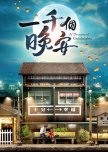
If a person wrote a love letter to Taiwan extolling its people, land, food, and history it might look like A Thousand Goodnights. An adopted daughter sought to finish her father's rail trip of exploration and found an unfinished story needing reconciliation. Later in the drama the journey diverted off the main itinerary into melodramatic territory stranding passengers hoping for more scenic destinations yet still continued the search for meaning between generations and what constituted home.Kindly Station Master Tai Chia He took an abandoned little girl, Tai Tien Ching, home and raised her as his own along with his daughter, Tai Tien Yu. On the day of his retirement, Cheng No, a young man he had corresponded with through the years returned to Taiwan. Chia He set out the next day on his long awaited rail journey complete with itinerary in hand. When Chia He unexpectedly died Tien Ching and Cheng No decided to finish his trip for him. Along the way they discovered relationships that needed healing-a first love, a birding club, an old friend's birthday party gathering, and a child who needed a family and desired to be a station master.
New friends were made and new family members discovered and romance blossomed along the way. The drama dealt with healing the sins of the past and the problems of the present. It covered a multitude of issues-infidelity, lost parents, dementia, plagiarism, gambling and the trials of becoming an idol. The older generation learned from the younger generation as the younger generation learned from the older generation.
I loved seeing the beauty of Taiwan and learning about some of its history. The rail travels were my favorite part. The healing message and reconciliations were heartwarming if a little too simple. As one character said, "I really miss those days when we traveled together." Me, too, buddy. The story lost some of its magic when it veered off course.
The biggest problem I had was the female lead, Tien Ching. As one character asked her, "Were you born to be exploited?" She was terribly bland and being an artist could not be used as a substitute for actual interesting characteristics. She mumbled quite often and had trouble standing up for herself which led to people taking advantage of her. The actress who played her was limited to pursing her lips and darting her eyes around to convey emotion. Her every movement looked staged and awkward and very rigid in comparison to some of the more natural performances around her.
Overall, A Thousand Goodnights conveyed the value of handing down our stories from generation to generation as well as expanding the friendships to the next generation. Most family and friendship problems were handled respectfully and with compassion. The characters also found the value in home and family and not letting past family heartaches determine how they would treat each other in the present. This charming drama showed not only the beauty of Taiwan and her people, but also how we are all tied to the earth and to each other.
5/31/23
Was this review helpful to you?
This review may contain spoilers
Samurai daddy take your kid to work day
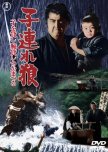
Lone Wolf and Cub: Sword of Vengeance was the first in a series of movies about a disgraced ronin caring for his baby son while seeking revenge on the people who murdered his wife and framed him for treason. This ronin of few words left a trail of spurting arteries along with piles of limbs and decapitated heads.Ogami Itto was the honored executioner for the Shogun until one day the treacherous Yagyu clan decided they wanted his position for their clan. They murdered his wife and set him up on treason charges. The wily swordsman not only escaped the executioner's blade but won his freedom as long as he stayed out of Edo. Pushing a secret weapon laden baby cart, he had a sign reading "Sword for Hire" and "Son for Hire." No longer using his feared name, he and his son were now known as the Lone Wolf and Cub. An assassination job took him to a hot spring in a mountain village being terrorized by bandits. Playing a sheep looking after his lamb he found himself among captured travelers. It didn't take a fortune teller to know what the fate of the bandits would ultimately be.
Ogami had his own code of righteousness formed by his job and his responsibility to his son. It meant when he saw a woman being raped and her father murdered that he didn't step in, which didn't exactly grant him a halo. Nor did it stop him from servicing a prostitute in front of crowd in order to "save" her. A man's gotta do what a man's gotta do. Like other 1970's movies, there was plenty of sexploitation. Had they toned down the naked women and sexual violence I would have enjoyed this movie more.
This film felt like they were setting the table for more courses to come. I was surprised how quickly the movie was over and how little happened in the present as there was copious use of flashbacks. Wakayama Tomisaburo was an accomplished martial artist and his skill showed during the fights. At least the fights I could watch when I wasn't closing my eyes during the severing of limbs and buckets o' blood spewing everywhere.
Lone Wolf and Cub reminded me of the Mandalorian only with more blood and flying body parts. Ogami's son could have given Baby Yoda a run for his money in the cute kid with a lethal daddy department . If you can overlook the '70s sexploitation and are in the market for an old school gore fest samurai with a baby who is also seeking revenge film, this is it.
8/31/23
Was this review helpful to you?
This review may contain spoilers
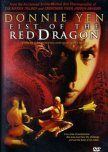
Wong Fei Hung once again fights opium dealers, this time in Heroes of Heroes, with a little help from Beggar So. An evil opium smoking and opium dealing prince found himself overextended when he managed to make enemies of both men even with the vicious Red Lotus gang backing him up.Special Commissioner Lin asks for Wong Fei Hung's help in cleaning up the city when the Emperor declares an opium ban. So Chai from the wealthy So family is bamboozled by Prince Barac into siding with him on the opium issue. The Prince is not only addicted to opium but stands to lose a fortune if its banned. When the prince hooks the young So on opium, Wong Fei Hung steps in to rescue the promising fighter. The two kung fu legends will have to work together to bring down the prince and free the city from the grip of opium addiction and dealers.
The first fifty minutes of this film were narratively scattered and filled with slapstick comedy. I found it tedious and underwhelming. When the secondary characters stopped hogging the limelight and So and WFH stepped up with their fists and kicks in the second half the movie turned for the better.
Wang Jue made for a very bland Wong Fei Hung. Donnie Yen was much more interesting as the young Beggar So discovering his destiny. Hung Yan Yan/Xiong XinXin succeeded in making the sinister Prince someone who was difficult to defeat. Fennie Yuen started out as the intrepid princess reporter with her camera, but quickly became a damsel in distress. Ng Man Tat and Sheila Chan were mainly used as comic relief, really bad comic relief.
The fights, especially in the second half were entertaining. There was a lot of wire-work and sped up camera action, but also some nice hand and foot work. Donnie was young, fast, and limber. I always enjoy watching him fight. The Yuen clan choreographed interesting fights using weapons, scenery, tiger, crane, and drunken fist styles of kung fu.
If you love 1990's slapstick comedy complete with goofy prosthetic teeth, you're in for a treat. If you're like me and just don't get it, but do enjoy old kung fu movies, be patient and wait until around the 50-minute mark and the fun will begin.
8/27/23
Was this review helpful to you?
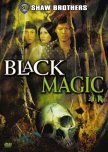
This review may contain spoilers
Watch only if you have a strong stomach
In the 1970's movies and television dug into the occult and often mixed it with a little sexploitation. Black Magic was one of those movies. The movie boasted a strong Shaw Brothers cast-Ti Lung, Lo Lieh, Tien Ni, Ku Feng and Lily Li. It also had a host of slimy creatures. You'd need a strong stomach to watch it.Ku Feng played the Black Magic magician with a laughable gray wig. Lo Lieh loved Tien Ni's money so he needed her to fall in love with him. Tien Ni was in love with Ti Lung's body and needed him to fall in love with her. Ku Feng wanted to sleep with Tien Ni. Finally, Ti Lung and Lily Li had a wholesome love that was definitely going to get messed up by all the lust and greed in the air. The Black Magic started flowing and nobody ended up with exactly what they desired. Fortunately, Ku Wen Chung played a good priest who helped sort things out by the end.
There were plenty of dead bodies, nude bodies (some writer had a fetish about women expressing breast milk), snakes, worms, centipedes and other vile bits. I'd have to include Ti Lung's horrible wig among the scary objects. The only thing that caused me to rate this as high as I did was the hilarious finale where good and evil fought it out with cheap 1970's special effects and sound effects on top of a building scaffold. I watched it on my quest to see all of Lo Lieh's movies. Other than that, I couldn't recommend unless you enjoy films with all of the above.
8/26/23
Was this review helpful to you?
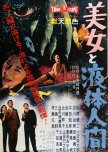
The Blob moved quicker than this slow paced movie
H-Man, in this case H-Men, was another film cautioning against the use of atomic weapons. Similar to The Blob, slow moving ooey-gooey creatures that can also glow green dissolve anyone in their path.
The film begins with a drug heist gone wrong when the chief gangster disappears leaving his clothes behind. Enter an earnest young scientist who tries to convince the police that the gangster didn't run away---he was dissolved. The police refuse to believe him and concentrate on tailing the gangster's lover who is a singer in a club. After the dissolved bodies start puddling all over town, they realize they are dealing with the consequences of radioactive experiments.
The sci-fi part of the movie was well done for a story about giant molasses-moving blobs of radioactive goo that dissolve people but not their clothes. The tedious gangster part of the film about finding a block of missing heroin slowed the movie down making the blobs seem quick in comparison. As with some Godzilla movies, the monstrous blobs had most of their screen time in the last segment of the movie leaving the rest to the boring humans.
I enjoy a good creature feature, but the movie needs to feature the creature and not women in skimpy outfits singing in a club or cardboard characters wandering around aimlessly looking for gangsters or puddles of goo. Green Glowing Blobby-7.5/10 Bland Gangster Noir-4/10
8/24/23
Was this review helpful to you?
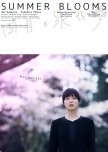
This review may contain spoilers
"Every time you lose something, you have to discover another piece of yourself"
Summer Blooms was a gauzy slow journey through a young woman's grief and guilt. Hatsumi's life froze in one moment in spring, not looking back and not moving forward. A series of events jarred her loose from her self-imposed exile compelling her to face the truth of her life and the death of her ex-boyfriend.Hatsumi works part-time in a soba noodle shop, listens to the radio, and floats through her days. We're told her boyfriend had died three years ago in the spring, an event that upended her world. She gave up teaching and for the most part, living. Whether it was sorrow over the loss of a great love or something else we don't know. The noodle shop owner is retiring and closing the shop ending her tenure there. An old student attempting to make it as a jazz singer drops into her life. The energetic, kooky young woman shakes up her mundane routine. With the restaurant closing, a customer who had eaten there every day just to see her, finally works up the courage to speak to her. He wants more from her, but she seems reticent to go out with him. A pregnant ex-colleague asks her to substitute for her while she is on maternity leave, pressuring her to make a decision. And more dramatically, the deceased ex-boyfriend's last letter to her shows up at her door step.
After three years of existing, she decides to confront the past and travels to the town where her boyfriend's parents live. Here her truth comes out as well as the reason for his death. To be honest, I'd figured it out early on, but the movie takes us well into the last act before it shares these revelations. I found his letter to be self-serving and it seemed she did as well. It turns out it was one of many he'd written her, with her not responding to them. In the end she wrote him a letter that helped her move from spring to summer.
Asakura Aki was perfect for playing a reserved young woman with a fake smile. She gave us tiny glimpses into the pain beneath and through the former student Kaede, flashes of the fierceness she was capable of displaying. Kawasaki Yuriko as Kaede gave just the right balance of youthful bravura and frightened homeless waif with an abusive boyfriend. She also supplied a clue that Hatsumi's ex-boyfriend might not have been mentally well-balanced. Miura Takahiro's Totaro, the craftsman in love with her, was rather bland and something of a red flag with his behaviors.
Summer Blooms was a light exploration of Hatsumi's grief and guilt and her withdrawal from the world. It took a collision of circumstances to finally force her to face her monotonous life and the reason for it. Due to the reason for her seclusion, I was expecting more of a moment of emotional discovery and more revelations to the audience for why she felt she needed to suffer so much. What led to the fateful moment that crystallized her life in seclusion? In the end, it felt like the movie was skipping stones on the shallow surface of her life and only briefly touching on the real reason behind her actions when the stone sank below the waves. Though the film attempted to show how one young woman responded to loss and finally worked through it, the story lacked the depth to have a proper conversation and left many pertinent elements of her previous relationship unknown.
8/14/23
Was this review helpful to you?


