

 135
135 431
431 16
16 2
2 6
6 3
3 8
8 10
10 3
3 13
13 1
1 1
1 1
1 1
1 2
2 6
6 8
8 5
5 9
9


This review may contain spoilers
Two tigers cannot live on the same mountain!
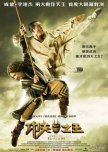
Jackie Chan and Jet Li finally had the chance to team up in 2008's The Forbidden Kingdom. The movie felt like a mixture of Journey to the West and The Wizard of Oz making for an uneven story and one that won't hold many surprises for anyone. There were shout outs to old kung fu movies which will be fun for fans, but a bland American in a fish out of water trope may be more taxing to deal with.Jason Tripitikas (JTTW reference) is a teenager obsessed with old kung fu movies. He frequents Old Hop's (Jackie Chan) shop to buy bootlegged movies like early Shaw Brothers films. One night during a robbery a wounded Old Hop gives him a staff and tells him he has to return it to its owner. Soon Jason is transported back to China in ye olden times. He meets up with drunken beggar Lu Yan (Chan again) and soon he, Lu, and Sparrow (Crystal Liu-her character named after Cheng Pei Pei's famous Come Drink with Me character who also appeared in other Shaw movies, the Golden Sparrow) are being chased by the Jade Warlord's thugs who want the staff, which it turns out belongs to the rock encased Monkey King. Along the way they pick up a monk (Jet Li-who played a lot of Shaolin monks early in his career) and head for the Five Elements Mountain to return the staff to the Monkey King.
Jason is completely inadequate in a fight so Lu and the monk begin to teach him kung fu like two tigers on a mountain. Before you can say "wax on, wax off", Jason is proficient enough to hold his own in a fight. Li Bing Bing plays a White Haired Witch looking to snag the staff so that she can obtain the immortal elixir from the Jade Warlord (Collin Chou in a delightfully campy performance). The movie follows a formula right to the end, even for the female warriors, much to my chagrin.
The cinematography and scenery were gorgeous. Yuen Woo Ping who has choreographed fights for both Jet and Jackie amongst a plethora of other films made the best use of two aging action stars. There were also some humorous fights using the young disciple. The fights incorporated wire-fu and CGI given the characters' super kung fu powers which wasn't unexpected in a kingdom with magical beings. The fight between Jet and Jackie was entertaining and felt like two skilled friends fighting. Jet as the Monkey King was the most relaxed and genuinely playful I've ever seen him.
Due to Jason having to deal with humiliations and set-backs, he didn't come across like a white savior--too much. Jet, Jackie, and the other Asian actors were the people who were proficient and confident and somehow magically speaking English in ye olden times as well as Mandarin. I would have preferred a slightly different ending to the final fight but this was a story to appeal to teenage males. And of course, Jason learned his valuable lessons and took them home to deal with his problems there.
The Forbidden Kingdom could be cheesy and predictable, but is worth watching if you like the stars and want to watch Jet Li and Jackie Chan fight each other and a whole army of people. The fish out of water trope wasn't too annoying and gave the film a message about global friendship and cooperation to solve dangerous problems, something we really need right now in the world.
3/3/23
Was this review helpful to you?
This review may contain spoilers
Warning!-This movie might give you indigestion
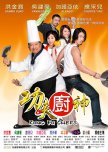
Kung Fu Chefs was undercooked with no one behind the camera knowing what they were doughing. That's right. This movie was so bad I kneaded to resort to using puns.Sammo, still a delight at 57, played the skilled chef Wong Bing Yi, who was run out of his village when his nephew had the meal Yi had prepared for Ku Feng's birthday a-salted with poison instead of salt and everyone became sickened. The nephew hated Yi because he'd taken the Dragon knife, the family's heirloom, while his dad was drunk and raving which also led to the father being hurt and leaving town. The dad was played by old kung fu actor Bruce Leung. Yi eventually ends up at the restaurant where Bruce had learned his skills and takes over as the chef after besting the current one in a challenge. The restaurant is run by the late master's two daughters, Sam Ching and Sam Ying. The eldest daughter is thrilled to have Yi take over because she is having trouble making ends meat. Vanness Wu as chef Kenichi, coincidentally ap-pears at the same restaurant and begins to study under Yi. The nephew stirs up trouble and Sammo has to put a beet down on him and his henchmen.
What was good--The cooking and the food competitions were actually fun to watch. If you are a vegan/vegetarian you may want to skip this movie as there were a lot of fish and meat prep scenes. Sammo and his stunt double had some very good fight scenes. He was 57 when this film came out and he still had some skillets left. I would like to have seen more of Bruce Leung as well because those two were a recipe for exciting action.
What was not so good—The little sister played by Kago Ai was unrelentingly annoying in what I'm sure was supposed to be a spunky and endearing way. Sexy Vanness Wu ended up having to be the goofy doofus younger cook. Much of the story was focused on these younger people. They simply weren't as ap-peeling to watch as Sammo. Cherrie Ying as the older sister looked like she was thinking that at least she was getting a paycheck. The story was half-baked and not very interoasting.
This film wasn't the wurst, but it could have been much butter. If you like Sammo, cooking, and slapstick humor it might be one to check out. If you don't a-peach-ate any of those things, best to skip it. Oil I can say is thanks for pudding up with my puns.
3/2/23
Was this review helpful to you?
This review may contain spoilers
"Why hadn't I been kinder?"
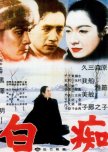
Kurosawa Akira tackled Dostoyevsky when he gave his interpretation of the novel The Idiot. The story was a morality tale of what happened to an innocent lamb in a den of wolves, even when friendship and love had been professed by all.Kameda had been accused of a war crime and was about to be executed when he received a reprieve. He was summarily acquitted, but the damage had been done. He developed what the film called epileptic dementia. Kameda was reborn a kind man with a pure spirit. He had developed the ability to look into people's eyes and see into their soul, their kindness, their sorrow, their rage. After spending time recuperating in an asylum, he chose to travel to his last known relative.
On the train to Hokkaido, Kameda made friends with Akama. Akama was as brutish as Kameda was serene but the rough man took a liking to the gentle one. Akama was on his way to Sapporo to marry Taeko, a sad, beautiful woman who had been Tohata's mistress since she was fourteen. Tohata had decided to dismiss her and was offering a 600,000 yen dowry to whoever would marry her. With the death of his overbearing father Akama had received an inheritance and he was prepared to pay to have Taeko be his. Kameda also had received and inheritance, but what he didn't know was his relatives had already taken possession of his property.
Kameda met Taeko and found a lost and kindred spirit. He saw a pure soul in her buried under the shame and suffering. Taeko's exterior was as frozen as the ice-covered statues outside, but melted when for once someone respected her and she fell immediately for Kameda. Akama burst onto the scene with 1 million yen and was not looking to take no for an answer. Taeko threw the money into the fireplace and chose Akama. She knew that if she went with Kameda she would ruin him, Akama was the kind of man that even if she ruined him, it would not matter. As Kameda would later observe, she destroyed everything good that came into her life.
Afterwards, Kameda and his relative's daughter, Ayako, began to see each other. Jealous and conflicted, Ayako oscillated between love and hate for Kameda and his friendship with Taeko. Akama suffered the same fate except with a hotter hate and jealousy toward both Kameda and Taeko. Akama turned abusive toward Taeko because he knew she didn't love him and he harbored murderous thoughts for his friend Kameda.
For nearly the whole film, blowing snow pelted the characters. Piles of snow flanked the sides of the road and covered the roofs. The dark, cold world perfectly fit the mood of this film. Eventually, the buried feelings would explode with the heat of the flickering fire in Akama's wood stove leading to a tense, emotional scene as Kurosawa marched them in circles ever closer and closer to the long-awaited culmination.
Akama and Kameda were like the devil and the angel on Taeko's shoulders whispering which way she should go. Kameda didn't have any business sense or desire for wealth. He did, however, face every person and problem with kindness and understanding which earned him the name Idiot. Though he had been in an asylum for treatment, other characters would display for more frightening madness than he ever could. He showed compassion, others showed deadly obsession, envy, and dangerous emotional swings.
Mori Masayuki gave Kameda an almost angelic bearing, a difficult character to play. Some scenes he was more successful than others in breathing life into Kameda. Mifune Toshiro and his animalistic energy surged against the calmness of Mori's performance. Hara Setsuko playing against type with her often sunny performances, plumbed the depth of the darkness of Taeko. The youngest of the love square, Kuga Yoshiko, did what she could with the complex character of manic Ayako whose emotions flipped back and forth almost in the same breath. Mori was 20 years older than Kuga in real life, who was only 20 years old when the movie came out, and they looked an odd age match, made even odder since she was a relative in the story.
At the beginning of the film there were dozens of characters, but only Kameda, Akama, Taeko, and Ayako truly mattered, the rest were simply the chorus explaining why people thought Kameda was an idiot and giving voice to their concerns about him and finally understanding that he was too beautiful for a cruel world.
The pacing could be odd at times. The use of intertitles was very disrupting but that was not Kurosawa's fault. Initially, the film was going to have two parts, with a run time over 260 minutes. The production company cut 100 minutes from the film and summed up some of the first act with the intertitles. In all honesty, it might have been for the best. I really don't see how this film could have remained remotely compelling at 4 ½ hours even with adding more fully developed backstories. Nearly three hours was enough for me.
The Idiot can require some patience with its slow, melodramatic journey through what felt like an eternal and unrelenting winter. The only warmth and light came from Kameda loving the unlovable, forgiving the unforgivable, and facing a cruel and treacherous world with an open heart. In the end, those who remained came to realize the real idiots were the ones whose love included hate.
He was a "…genuinely good man. It may seem ironic choosing a young idiot as his hero, but in this world, goodness and idiocy are often equated. This story tells of the destruction of a pure soul by a faithless world." (The Idiot intertitle)
2/28/23
Was this review helpful to you?
This review may contain spoilers
Cheap Fast Food!
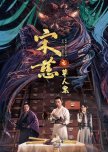
Detective Song Ci is loosely based on the first forensic entomologist and the author of Collected Cases of Injustice Rectified. I suspect reading his 1000 year-old forensic science book would be more entertaining than this short, cheap, confusing movie.The story bounces around more than a ball at an octopus ping pong tournament. Detective Song is called in when a man is murdered at home. He solves the crime in seconds which freed up his schedule to deal with a mysterious mass murder of the Li family in the Tonggu County. Creepy straw men are hung where the people disappear, their bodies buried elsewhere. By his side is his trusty deputy Han dressed like a typical historical bodyguard. A young woman also drops in from a roof and joins him in the investigation. She has a jade pendant much like the Li family carries and she's looking for her parents. At the same time Grand Censor Ding, and Song's boss, has his hands full with the Emperor who wants to travel to Tonggu Co. to visit his old teacher who is ill. Ding forbids anyone to talk about the straw man murders under penalty of arrest, including Song. Even though not one constable had been aware of much less able to stop any of the murders of the prominent family they are quick as bunnies to arrest people whispering about the case. Song deduces that the killers are using blood thirsty insects to kill their victims. Before long he realizes events and people are not as they seem.
The movie is needlessly confusing at the beginning when much of the action is going back and forth without people being properly introduced. Eventually, names and titles are given to most of the characters which helps to sort the story out. At the end when the nefarious plot is revealed, a dying character has to use his last couple of hundred breaths to tell the convoluted tale. Some of the characters are still an enigma as the credits roll, there simply wasn't the time to develop them.
The production values were quite low. I did enjoy seeing old kung fu movie actor Norman Chu in his role. Norman's General Censor costume was much nicer than the clueless Emperor's. The fighting was of the most rudimentary style and they couldn't even get the buckets of spurting blood to look better than a 1970's kung fu flick. Norman must have felt right at home. Most of the acting was perfunctory with some of the worst dubbing I've ever heard. Along with the atrocious dubbing were the sound effects that were so amplified as to be literally laughable. When several women were walking on a dirt path further from the action, they sounded like a herd of horses walking by. Music overrode the dialogue at times. They couldn't even muster the money for a proper entourage and palanquin for the Emperor.
If you have an hour you need to kill and want to see a low budget movie with a big body count and a low rent Detective Dee or Sherlock Holmes, you might want to give this one a try. Otherwise, better to watch Detective Dee or even The Great Mouse Detective than this one. Song Ci deserved much better.
2/24/23
Was this review helpful to you?
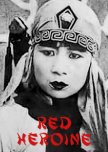
This review may contain spoilers
"A swan among chickens"
Red Heroine is the oldest surviving wuxia film and the oldest surviving Chinese film to have a female action star! The Burning of the Red Lotus Temple came out first but sadly that one is lost to the ages. I was delighted to find this piece of wuxia and feminine history.Fan Xue Peng starred as Yun, a mild-mannered girl living in tiny Mulberry Village with her blind and paralyzed grandmother. A band of bad guys was fast heading there but her grandmother refused to leave. When the wealthy neighbors show up and ask to help take her away, grandma refuses. Finally, when cousin Jin Zhang arrives, grandma agrees to be carried. There was only one narrow dirt path going into and out of Mulberry Village but somehow Yun and Jin Zhang become separated. The Big Bad, Zhi Ma, captures her and takes her back to his fortress. Grandma ended up pummeled under horses' hooves as Yun was carried away.
Zhi Ma has a bevy of half-naked ladies serving him in his fortress, quite risqué for the time. Yun resists him until she is fortuitously rescued by the Taoist kung fu master White Monkey. The paradigm for a thousand martial arts films that will follow is laid out. A Loved One was killed. After being Threatened and Humiliated, Yun vows Revenge. But she fears she's too weak and powerless to do any good. Honey, that's what the Training Montage is for, but that must have been a later development. White Monkey, a Master, vows to train her with his Secret Sauce Fighting Technique and make her revenge ready. She later Flies in and storms the fortress and demolishes her enemies all in a very Exotic looking Costume.
The formula would have worked if they had known about one key part of it. The middle section of the movie dragged because it focused solely on secondary characters and the bad guys’ lair. The film would have benefited from a training and inspirational montage for Yun so that we could see her transform from timid maiden into the Red Heroine. Perhaps the writers wanted us to be surprised when she suddenly shows up later. When Yun, now the Red Heroine, came flying in, literally, disappearing and appearing in a puff of smoke, it was exciting, though almost too late to save the story from the middle act doldrums.
My favorite scene was after doing battle with some baddies, the Red Heroine paused a moment to catch her breath and roll up her sleeves before jumping on the Big Bad. I could almost hear her thinking, "a woman's work is never done."
This was definitely a low budget film. Much of the time people were either walking or riding back and forth on the narrow dirt path, it really did need at least two lanes as much traffic as it saw. Or people were going up and down the open staircase in the fortress, usually forcing captured women up it. Lastly, one window in the harem's dressing room needed a revolving door as much action as it saw with people climbing in and out it with the rope so thoughtfully dangling outside from a nearby pole.
The martial arts, mostly sword fighting and flipping people onto the ground, was more sword dancing than 1970's era blood spurting kung fu but for 1929 was entertaining. The student must have surpassed the master because she could fly and appear and disappear in a puff of smoke while her old master traveled via a donkey or running. I was quite pleased that they allowed her to kill her enemies instead of having to be daintily magnanimous with them. "The evil receive their due retribution."
The version I watched had no music though I've read that a score was added at a later date. The film has suffered through the years, with some frames so badly blown out that you couldn't see what was happening. It seems it may have been cropped as well. There were both Chinese and English intertitles, but they were cut off on the sides. Fortunately, there were better English titles below those which helped enormously as the original English subtitles were difficult to understand. I did love Yun's cousin being referred to as her cousinbrother in those subs.
Another trait that continued on into the 1970's was hammy acting. I've seen other old silent films and this movie won the award for mustache twirling and overwrought responses. The director also made liberal use of flashbacks and prosthetic goofy teeth. Many of the costumes were over the top as any good kung fu movie would have. I'm sure if it had been available the bad guy costumes would have been made of silver lame. While I'm riffing, one bad guy had the biggest sword I've ever seen. It screamed over compensation.
This was #6 in a 13-part serial, of which none of the other films survived. I have no idea if Red Heroine's character was in more of the films or not, but maybe that's why Yun didn't figure prominently in the middle of a film named after her. Unfortunately for them and us, China outlawed the popular wuxia films in the 1930's. For the most part this was a nicely feminist film in places. Red Heroine made her own choice to be trained and seek revenge on her grandmother's killers and was allowed to kill her enemies. The cousinbrother would not set aside the women he'd become attached to during Yun's absence even though the woman had been "sullied". "Love is sacred, nothing can contain it."
Red Heroine was entertaining even if it dragged badly during the long stretch without the titular heroine. This is probably a film only for martial arts movie enthusiasts. I thoroughly enjoyed being able to see the launching of this genre into filmdom, especially with a female hero who wasn't afraid to roll up her sleeves and get her sword dirty.
2/16/23
Was this review helpful to you?
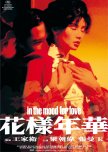
This review may contain spoilers
"You notice things if you pay attention"
In the Mood for Love delivered an achingly beautiful story of longing and love. The story could be as painful for the viewer as it was for the main characters, Mo Wan and Lai Zhen, as they dealt with their repressed feelings for each other.Chow Mo Wan and Su Lai Zhen move into adjacent rooms in an apartment complex. The landlady, Mrs. Suen, holds frequent mahjong games and sees all. Lai Zhen asks her husband who is making a business trip to Japan to pick up two purses for her boss, one for his mistress and one for his wife. Mo Wan's wife often works late and takes trips as well. It doesn't take long for Mo Wan and Lai Zhen to compare notes when they both realize that his wife carries a Japanese purse just like Lai Zhen's and her husband wears a tie like Mo Wan's. They commiserate by role playing in regards to their spouses. Gradually, they spend more and more time together while attempting to avoid gossip. They determine to remain platonic so as not to become adulterers like their spouses.
The strength of this film was Tony Leung Chiu Wai's and Maggie Cheung's nuanced performances as they grieved their marriages, exhibited anger over the betrayals, and most of all the subtle build-up of their feelings for each other. It didn't hurt that they looked stunning together and by their every move and word, you could believe their characters. Mo Wan's hooded glances as Lai Zhen gracefully passed him in the hallway or on the way to the noodle shop conveyed a deep appreciation for her. The touch of their hands was seductive and intimate, revealing their desire and need for each other. Like lovers, they longed to see each other and simply be near one another.
Director Wong Kar Wai used a musical theme when they passed each other or when they were at a busy office or loud mahjong gathering to let us know they were thinking of each other. Sultry Nat King Cole's music accompanied many scenes providing a soothing background. His song about green eyes (Aquellos Ojos Verdes) played when the two revealed they knew what their spouses were doing together. "Quinzas, Quinzas, Quinzas" (Probably, Probably, Probably) played while they decided what to do about their future.
Most of the frames were tight, shots through doorways, windows, narrow hallways, alleyways, and around corners. Though the rooms were small, the images of the two eating alone or sitting alone only emphasized their aloneness and loneliness before finding each other. Whether working together on Mo Wan's martial arts serial in a rented room or trapped in a room with the rowdy mahjong players just outside, the tension and tiny revelations of familiarity bled through. Many of the scenes were in the dark or rain, insulating Lai Zhen and Mo Wan as they sorted through their complicated feelings for their spouses and for each other. As the two spent more time together, the progression of days was often shown by the changing colors of Lai Zhen's gorgeous cheongsams.
As Mo Wan realized that Lai Zhen would not leave her husband and his feelings had grown too strong to control, they began to rehearse their good-byes. I have to admit to not understanding her loyalty to her husband at this point. He and Mo Wan's wife had flaunted their affair with the identical gifts and trysts in the apartment room. It was as if they wanted to get caught or simply didn't care. I'm also not sure if both Mo Wan and Lai Zhen had both truly agreed to not having their own affair. There were times when it seemed he was fishing to see if she'd changed her mind. Eventually, when it was too late, they did seek exits from their marital traps. At that point Wong Kar Wai resorted to cliched misunderstandings and missed opportunities which cheapened this mesmerizing love story for me.
I'm not sure if Director Wong wanted the audience to sympathize with the couple or just be content with watching their story unfold. He never fully developed the characters outside the forbidden relationship and tantalizingly dangled a possible happy ending in front of us and the characters only to snatch it away...repeatedly.
"He remembers those vanished years as though looking through a dusty window pane. The past is something he could see but not touch. And everything he sees is blurred and indistinct."
Maybe when all was said and done, a beautiful memory of a seemingly perfect relationship was better than reality.
2/14/23
Was this review helpful to you?
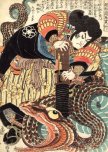
This review may contain spoilers
This short, silent film is toadily worth seeing!
Jiraiya the Hero is a 1921 silent film about the Japanese folk hero Jiraiya. The quality of this film is not the greatest and one would need a working knowledge of this tale that began as a serialized story in 1839 to fully understand it. There are few placards and they only serve to tell an audience familiar with Jiraiya what chapter was coming next. Until someone far more familiar with this character deciphers this short film, I’ll do my best to share what I think of it.The film begins with a father and son pleading with Jiraiya with an empty food basket. I’m guessing they are telling him that the dastardly doers stole their food and left them with nothing. Jiraiya tells them he’ll take care of it. The man is like, “not with 10,000 men could you do this.” Jiraiya struts as if to say, “I am no mere man.” Then he disappears. Literally.
Jiraiya confronts the gang. He uses a variety of super powers against them. He disappears. He flies one baddie to the clouds and asks him if he really wants to jump. Then he sends water geysers against the baddies. Ultimately, he soundly defeats them all in what looks like a samurai dance off.
Afterwards he goes to confront warlord, Ashikaya. Ashikaya is not happy that Jiraiya took out some of his enforcers. He needs them to pummel the poor and extract whatever he can from them. Jiraiya ends up in the courtyard fighting numerous baddies. He turns into a giant toad and gobbles them up, then spits them out. Big Bad Orochimaru takes Jiraiya on, both evenly matched. Jiraiya turns into a toad, but Orochimaru has a secret, he can turn into a snake! In this version of the game of rock, paper, scissors---snake beats toad! What will happen to Jiraiya? Is this the end? Luckily a beautiful fighter, Tsunade, arrives and turns into a slug. In the world of magical creatures, slug beats snake! They all return to human form and Tsunade and Jiraiya join forces against the viper Orochimaru and defeat him. But alas, the bad guys have an endless supply of evil doers. The priest Zenshu shows up and there is a huge fight between his men and Jiraiya’s. After prevailing once again, it looks like Jiraiya can take a rest. In rides a very official and important looking man. Everyone, including Jiraiya, bow to him. At this point I chose to believe that the dignified man told Jiraiya, “Thank you for ridding me of that virulent pestilence. I give the keep over to you. While you are at it, why don’t you marry the pretty little slug girl and live happily thereafter.” The end.
The film is badly faded, making some scenes harder than others to see. Aside from that, it was a cute story and for 1921, the Kabuki style storytelling was interesting to watch. The fights were highly choreographed and stylized, looking much like dance. Given the time, the special effects were, well, special. The wide screen and similar costumes could make it difficult to keep up with Jiraiya at times but also added a more epic quality to the battles. Even with the story being unfamiliar to me, who could turn down a film where the main characters turn into animals to fight and the hero can vanish and perform other powerful feats? If you enjoy old silent films, this short 21-minute film is one to give a try.
1/30/23
Was this review helpful to you?

This review may contain spoilers
The wall may be great but this movie isn't
The Great Wall made for an average popcorn movie with lush visuals and a completely forgettable script and characters. With only a hint of Zhang Yi Mou’s usual movie magic I found it mildly entertaining. It’s like the damning compliment laced with criticism, “It’s fine I just I expected more from you because you are better than this.”William (Matt Damon) and Tovar (Pedro Pascal), two mercenaries seeking the fabled black powder, end up captured by The Nameless Order that guards the Great Wall. Very quickly this prickly western bandits wandering into the wrong place in China drama turns itself on its head when the reason for the Great Wall is discovered. Like a gruesome batch of cicadas, deadly green monsters appear every 60 years to remind the emperor and his people to not be greedy. The Nameless Order’s job is to drive them back. And yes, the plot is just that weird and weirdly simple.
At first, I worried that this would be a white savior story. Instead, the white guy was saved from his avarice by learning from the Nameless Order and their strong belief in “trust” and their belief and loyalty to each other. The script was so diluted of any real meaning, perhaps in the desire to not offend or confuse either Western or Eastern audiences, that it lacked spark and anything deeply intriguing. Though several well-known faces appeared on screen, most of the characters would barely qualify as cardboard cutouts.
Jing Tian as General Lin Mei along with Andy Lau as her wise advisor gave the most competent performances. Pedro Pascal as the ethically challenged Tovar did what he could with the rascal role. Matt Damon as the biggest western star in the movie playing William looked completely confused, maybe he was looking for his agent. His “Irish” accent was all over the place and came and went from sentence to sentence. His wig looked like the food truck had run over it a few times and then the hairstylist closed her eyes and pasted it onto his head. He also lacked any chemistry with Pascal and Jing, leaving the bromance and inferred romance without any heat.
The tei tao, which resembled four-legged monsters from numerous film and television productions only green and with their eyes on their shoulders, were suitably scary if overly familiar looking. Editing for the escalation of the monsters’ attacks could be quite awkward as they appeared and disappeared without much reason. The primary weakness of the monsters resulted in a strangely anti-climactic ending.
Now, for some of the things that worked. It was a Zhang Yi Mou film so it did have his signature color saturation, richly emotional OST, gorgeous battle armor, beautiful scenery and sets, and fascinating coordinated battles. The idea that the wall was built to keep out ravenous alien creatures was a fun concept, if not well implemented. I’m a fan of Zhang’s work which means I was more forgiving of this film’s flaws than I might have been otherwise.
If you are in the mood for an aesthetically shot film with colorful costumes and good battle action against green alien critters and can check your brain at the door, this might be a movie to try. Pop some popcorn, even better if you can watch with a friend, and see what you think of this ludicrous movie.
1/27/23
Was this review helpful to you?
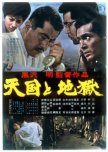
This review may contain spoilers
"Why do you think we have to hate each other?"
Director Kurosawa’s High and Low delved into the police procedure he loved with a story of a high-profile kidnapping and stakes that were also unbelievably high. Some would fall to new lows and others would rise from the lows they were buried in. High and Low, also known as Heaven and Hell, was a fascinating look into people’s true characters when thrust into a fiery crucible.Mifune Toshiro played Gondo Kingo, a man who rose from an apprentice in a shoe factory to running it. In the opening scene, several executives are planning a takeover of the company. The sales have been flat because the Old Man insisted on utilitarian women’s shoes. The execs wanted to make cheap disposable shoes. Gondo wanted something in the middle, to make stylish high quality shoes and earn greater profits in the long run. The executives threatened to use their power to push him out of the company unaware that Gondo had his own plan. After throwing the men out of his house he revealed to his wife and right-hand man that he had leveraged everything he owned to buy enough shares to take over the company—50 million yen for the deposit with 100 million yen remaining to be paid later. Though not a samurai he was deeply involved in a business war rife with risk, back stabbings and betrayals.
Gondo’s move was brilliant, ambitious, and dangerous. All that needed to be done was for his subordinate to transfer the check. As fate would have it a call came in telling him his son had been kidnapped and the ransom was 30 million yen. Wrecked he was willing to pay it even though it would ruin him. Another turn, the child kidnapped was not his own, but his chauffer’s son. The kidnapper doesn’t care, he wants Gondo humiliated and brought down from his mansion on the hill. A mansion in plain sight of the people who live in squalor below. A mansion with air conditioning and sound proof windows leaving the family insulated from the poverty just beneath them.
Nakadai Tatsuya, played the lead inspector of a team that arrives at the mansion. He gives a likeable performance, expertly nuanced with personality. Now the thrust of the moral dilemma begins. Does Gondo have the responsibility to destroy his family’s lifestyle and future to save a child not his own? He is unconvinced. He might have ended up as the tragic MacBeth character in Throne of Blood if not for the fact that this wife was one of good conscience. Gondo’s rule of thumb is kill or be killed. Reiko tells him he must not lose his humanity in his desire for wealth and position. She knows if he lets the boy die his emotional ruin would be greater than their financial ruin and something he would never recover from.
The scenes with the police officers, Gondo family, and Aoki the driver and boy’s father are tense with emotions rumbling below the surface breaking through from time to time. As Gondo takes the ransom money on the train with officers hidden about, it was a surprisingly taut scene filmed on a real train.
Once the boy is returned, the movie turns largely into a police procedural as a huge task force is assigned to the case to find the culprits and return the ransom money. In a time before cell phones, CCTV cameras, and DNA testing the police relied on canvasing the neighborhoods and old school detective work. Nakadai’s Tokura is determined to arrest the suspects on the highest charge they could. At the time, the jail sentence for kidnapping was minimal and the criminals knew it. Along the way, it also turned into a murder case, upping the ante. Public sympathy was squarely in Gondo’s corner, the people loved the man who sacrificed everything to save a child. Tragically, Gondo's fate was sealed for his creditors reminded him that good will does not pay the bills. Tokura played Gondo’s avenging angel, leaving no stone unturned looking for the man who brought him down. As determined as he was to save the child’s life, he was also as determined to save Gondo’s. Even when he was reciting what amounted to pages of narrative, Nakadai gave a riveting performance. This was a 180 from his unhinged performance as the gun wielding villain in Yojimbo, making me appreciate his acting skills all the more.
Mifune played a character every bit as courageous as any samurai in his repertoire. Though calm, his barely caged energy rippled under the surface. His agony, strained anger, despair, empathy, and relief all on display in a restrained performance brought this complex character to life. Unlike most of their collaborations, this time Mifune wasn’t always stage center, this was a group effort. Kagawa Kyoko gave a lovely performance as Gondo’s conscience. Though her character Reiko swore she could live in poverty, Gondo knew she’d never gone hungry or known a moment of want.
When Gondo and the kidnapper finally meet, Kurosawa made amazing use of his shots. Each man’s reflection to the side of the man in focus across the glass in the prison room was masterful. Gondo’s eyes misty, seeing the obsessed, rage-filled man before him, unsure if his display of wealth had created him. Takeuchi, the kidnapper who had lived below the mansion in the sweltering heat seething with hatred for Gondo. The last straw for Takeuchi, was knowing that Gondo lived untouched by the oppressive heat, smell, and noise, in his insular air-conditioned house in full view for all to see. In his obsession to bring Gondo down to his level, he destroyed himself in the process. At the same time, though Gondo’s position and possessions had been stripped away he had grasped at the chance for renewal. A man who still enjoyed working with his hands, still loved shoes, still loved life, the upheaval had only brought into sharp focus what was important to him. He might be ambitious but he was also a good man with a resilient spirit. Kurosawa makes his characters earn, if not a happy ending, at least their inspiration.
Unlike Stray Dog where Kurosawa humanized the villain, laying much of the blame on materialism and crime as a means of surviving, in this film he seems to relish in showing the kidnapper’s obsessive madness. The film was a criticism of the lax kidnapping laws. The next year the laws were strengthened as there had been several heinous child kidnappings.
Once again, Kurosawa also sharply criticizes the materialism and gap between the haves and have nots. A cesspool like in Drunken Angel makes another appearance where the people in view of the mansion live. A master of the wide angle, he often filled it with a variety of people and moods. Interestingly, he also made use of real American military in a rousing bar scene as Yokohama had a port where the military resupplied and shipped out. I also found his use of the villain’s sunglasses fascinating. They reflected light and his surroundings, one particularly artful scene when he arises in a garden with the flowers’ and sun’s reflections blending with the flora, hiding his cruel intentions. For the most part all of the performances were energetic but restrained and filled with charisma. Even the villain who had few words was given the chance to come unraveled with the actor making the most of his scenes.
If you enjoy police procedurals, Kurosawa and Mifune, riveting performances, or morality plays, this is not one to be missed. High and Low was made with great care and skill, showing how dire situations can bring a man low or bring a man high and sometimes a little of both.
1/20/23
Was this review helpful to you?
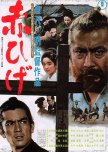
This review may contain spoilers
If you want to help yourself, help others first
Red Beard was the last film Kurosawa Akira and Mifune Toshiro made together. If it had to be the last one, it was a gentle and glorious way to end their partnership. This film seemed uncharacteristically hopeful and optimistic for a Kurosawa film. I found it to be heartwarming and heartrending.Dr. Noboru Yasumoto takes what he thinks is a tour of a backwater clinic run by a dictatorial doctor named Red Beard. In a cruel surprise he finds out that he has been assigned there by the magistrate and has no choice but to stay. A graduate of the Dutch school in Nagasaki, this smelly place filled with poor people is not worthy of his skills. He’s in the game to serve a Shogun, make money and live the easy life. In a quietly dramatic scene, he meets Red Beard aka Dr. Niide. It turns out Red Beard’s rules are for the benefit of the patients and staff in order to keep the clinic clean. He serves people who cannot pay in the afternoon and takes a personal interest in his patients. He believes the body and mind must be healed in order for a person to be cured.
Yasumoto arrogantly decides he will treat the homicidal patient locked up on the property nicknamed The Mantis. In a spectacularly filmed five-minute scene with no edits Yasumoto and The Mantis have a dangerous encounter that ends up altering his view of Red Beard. The older doctor doesn’t lecture, he begins to train the brash young doctor with experiences. He asks him to stay with an older man who is dying. Sitting with the man who is gasping for air, the young doctor can barely stay in the room as death becomes too real. When he’s relieved by one of the women he practically runs out only to be called to help Red Beard in a primitive surgery. A woman with a gash on her side and intestines hanging out is thrashing on the table. Yasumoto finds out he’s not as accomplished as he thinks he is and maybe Red Bed is more accomplished than he thought he was.
Through a series of vignettes focusing on various patients, Yasumoto begins to lose his arrogance. Instead of faceless, nameless people unworthy of his attention, they begin to have names and importance. The gruff Red Beard reveals himself to be flawed but also an exceptional man who cares for people. When the local government cuts the clinic’s funding, Red Beard increases the charges for the wealthy. When a young woman married to an abusive husband needs help, he has no problem blackmailing the local magistrate to help her though he does criticize himself for the unseemly action. And in a scene viewers were surely hoping for, he takes down a group of ruffians creating new patients while rescuing a child from a brothel. Red Beard is a genuinely good man yet like most Kurosawa heroes he’s also a rebel, lying outside the norm.
The last half of the film sees the complete transformation of Yasumoto when Red Beard puts him in charge of Otoyo, the young girl rescued from the brothel. In the process of healing her, he becomes sick and she takes over as his caregiver. And in the spirit of the film as she begins to receive kindness and trust, she passes that on to a small thief in need of it himself. The women who worked there went from distrusting Otoyo to protecting her and thrashing the Madame with daikons when the woman came to take Otoyo away. In one of the most moving scenes I’ve seen in any movie, as a boy is dying the women and Otoyo go to a well to call his spirit back by shouting his name into the well. It was haunting listening them to wail in hopes of saving the child and creatively shot by Kurosawa.
Though the movie is called Red Beard the story is about Yasumoto’s journey from self-centered, over-confident doctor to a humbled physician who sees the whole person regardless of their income. Otoyo became the heart of the film as she went from a tiny world where she couldn’t trust anyone to a larger complex world with people she could trust. Red Beard grounded the film with his wisdom and gravitas.
Near the end of the film, I was surprised to see Ryu Chishu make an appearance during a wedding scene. There were two domestic scenes in this film, something rare in a Kurosawa film unless he’s turning them on their head. Ryu made 52 films with Ozu, a director known for his domestic films. It was an odd, but satisfying cross-over.
As he usually did, Kurosawa made his hero suffer and face trials as he finds the courage to help others. In this film that meant small acts of kindness that blossomed into more, slowly changing the lives of others. Instead of trying to transform the political system, it was more about changing the people around them, healing them mind and body. Though the world outside was cruel and filled with suffering the clinic was an oasis of charity and good will. Yasumoto had Red Beard to be his master and show him the way. Yasumoto returned the favor by helping others.
The music was beautiful, heavily influenced by Brahms and Hadyn. Natural sounds and bells were often interspersed with the moving score. Kurosawa also used long wordless scenes layered in deep meaning. The actors expertly played their parts. Mifune portrayed the wise older doctor with a gentle flair. I did, however, enjoy him going into action mode, doctor style, even briefly. Kayama Yuzo took Yasumoto from an unlikeable petulant jerk to a compassionate and more open-minded adult. Niki Terumi as Otoyo showed a traumatized young girl and then one learning confidence in herself and others convincingly. Kurosawa also had some great shots, one I have to mention is when a female character walks out of a cloud of dust after an earthquake, devastation all around and in the distance a line of people scurrying away. Magnificent.
The only detractions for me were in the first half of the film, there were four perfidious women who caused some of the characters man pain. I’m often not a fan of Kurosawa’s view and portrayal of women. He did redeem himself some with Otoyo’s story and the women who worked at the clinic who often formed a sort of Greek chorus or cheerleading squad for the other characters.
Overall, this was an enjoyable film. Despite the cruelty humans caused one another, the people in the clinic reached out to heal. I laughed, I cried, I got angry, this movie took me on a three-hour ride that was over too quickly. This film was Kurosawa’s final hero film and Red Beard and Yasumoto were deserving heroes with which to end that era. Red Beard’s advice to help others in order to help yourself is still a worthwhile sentiment.
11/15/22
Was this review helpful to you?
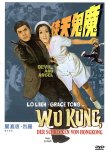
This review may contain spoilers
This devil in blue jeans knows how to kick!
Devil and Angel is a classic kung fu revenge movie. The action runs almost non-stop even when the logic runs out.Lo Lieh joins a heist gang to gain enough money to marry his sweetheart. Instead of instant wealth, he’s set-up and lands in jail. Upon exiting jail, he rejoins his girl and plots his revenge against the men who hung him out to dry.
That’s it and probably more plot than a lot of kung fu films. Lo Lieh carries this film with his charisma and athleticism. I was happy to see him in the, if not good guy role, a not completely bad guy role. He also directed and co-wrote the script. If he were still alive, I would like to ask him about that WTF ending.
Many of the standard kung fu guys populated the screen. It was fun to see Tien Feng, Wu Ma, and Fong Yau in street clothes instead of wigs and historical wear. The fights were solid and entertaining, choreographed by Lau Kar Wing and Chan Chuen. Before Capt. America exited as the only man standing from an elevator full of baddies, Lo Lieh did it in 1973.
For a low budget kung fu flick, it was put together fairly well. There was plenty of generic ‘70s music, lots of bow chicka wow wow guitar action, even a rock ‘n roll band at one point. Lo Lieh made good use of the city for stalking and fights with old school overlays. That doesn’t mean there weren’t plenty of cringey campy scenes, including a slow car chase through a parking garage and the hills outside the city. But with this type of film they are to be expected.
Given the constraints, not a bad first directorial effort for Lo Lieh although I did ding his score for that ridiculous ending. As always, I grade these old, niche movies on a curve. This type of movie is only for hardcore fans of the genre.
11/12/22
Was this review helpful to you?
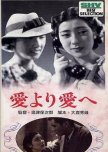
This review may contain spoilers
So Goes My Love is a short, sweet, predictable love story, but that doesn't mean it was bad. Just short, sweet, and predictable. Shigeo and Miyako have fallen in love and moved in together, against his father's wishes. Being the first born son and heir and stubbornly choosing his own mate has gotten him disowned by his traditional father. Shigeo doesn't care, he's willing to rough it as he works on his novel while Miyako works as a hostess at a nice café. It doesn't take long for him to realize that writing is hard and living takes money. He berates himself for being a loser and Miyako for loving such a loser.
Shigeo's sister, Toshiko, comes along to break up the monotony by giving them a surprise visit as she wonders at the lower classes. Miyako treats her with respect and kindness, despite the sudden visit as she is readying for work. Toshiko takes one look around and realizes this woman is no gold-digger but someone who would be a good wife for her churlish brother.
Shigeo visits his uncle to try and find work, but his meddlesome uncle creates more problems for him. One by one the family members are won over by Miyako's kindness and sincerity, but will it be enough to break through the patriarch's stone heart?
Many of the problems in this story were created by the collision of traditional and modern values as well as generational conflicts. There was also the issue of the prideful male egos at play. As the heir, Shigeo had bucked tradition and chosen his own mate, something his father seemingly could not accept.
As with many films from this era there was a mix of traditional and Western dress and furniture. Toshiko took the couple out to a German movie which Shigeo walked out of. It made me wonder if the director’s personal beliefs bled through about this turbulent political time.
Most of the acting was natural and believable. Takasugi Sanae gave a gentle performance as the kind and hard-working Miyako. Takamine Mieko as the vivacious sister provided just the right spark as the bridge between the couple and Shigeo’s family and a cheerleader for the lovers.
The only drawbacks for me were the cold father and son, with few words of encouragement for anyone. I wondered what Miyako saw in Shigeo. We come into the story with his male pride damaged by not having the skills to write and unable to find a job while Miyako goes off every night to work. Despite their differences the couple deeply loved each other.
Even with Shigeo’s occasional rude behavior, typical of so many cold male leads, I enjoyed this short, simple romance. It didn’t explore any new territory and didn’t delve deeply into societal or relationship woes, it was just a straightforward story of a boy and a girl who have to decide if the struggle and their love are worth the pain.
11/12/22
Was this review helpful to you?
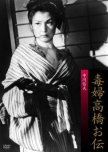
This review may contain spoilers
Poisonous or poisoned?
This is the tale of a "poisonous" woman, you know, the kind that is independent, morally gray, and does what needs to be done to support her husband. The kind of woman who can upend society and must be dealt with before she brings a country to its knees. Oden was just such a woman. This story was very loosely based on the last woman to be beheaded in Japan. Directly after her execution they did a primitive autopsy, paying close attention to her female parts in order discern what caused her to be a deviant woman.In this film, Oden had an ex-husband who was a degenerate gambler, an alcoholic and a womanizer. He took care of their daughter and I use that term loosely. She also had a current husband with TB who depended on her completely and yet constantly berated her for finding ways to bring home money. After a botched shoplifting job of a diamond she ended up with a Yakuza lover and a police officer lover. Of all of them, it was the officer whom she fell in love with and the one she was willing to walk away from in order to keep him from ruin.
The Yakuza forced her to bring him women for his sex slave operation. Constantly bounced between the demands and desires of the men in her life, including their violence, it was no wonder Oden wandered down a dark path. When at last she found the courage to make a break with all of them and to take her daughter away to start a new life, tragedy struck.
By the end of the movie all the main players converged in Yokohama. A police officer showed up looking for her, not the violent boss in control of her, but this dangerous woman. The young officer who had fallen in love with her had completely lost his way and his job, poisoned by her love. The sweet young girl he was supposed to marry became ensnared in the destructive drama as well. By this time Oden was ready for revenge against the men who had helped guide her to this sorry state. In a fiery, bloody climax, normalcy once again wrestled control of the situation. Oden had fought to survive in the only ways she could find available to her, was utterly failed by every man in her life, and yet she was considered the destructive poisonous force.
Wakasugi Katsuko made for a beautiful conflicted criminal. She was able to play the soft woman who wanted to help the people in her life and the heartless woman who could lead women like herself into the lair of a sadistic crime boss.
Even though Oden did some reprehensible things, her charm and allure made her a fascinating character. I suspect I saw the character through more sympathetic eyes than the director did. Instead of being a poisonous danger to society, I saw a poisonous society that had let her and her daughter down. Had her first husband cared for her and his child instead of drinking and gambling away their money she might never have turned to crime to support herself and others around her. In the case of A Wicked Woman, I found Oden to be the one poisoned, never finding the antidote or someone to save her.
11/11/22
Was this review helpful to you?
Aren't you tired of being stupid yet?
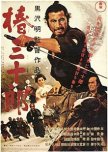
Director Kurosawa and Mifune Toshiro brought back the iconic samurai character, Sanjuro, for this sequel to Yojimbo. Once again turning the genre on its ear, Kurosawa questioned the violence and death of the samurai code and the genre and asked his characters to distinguish between reality and appearances, duty and wisdom.Nine young samurai are in a quandary after the Chamberlain has rejected their report on corruption, thinking he must be the problem. The Chamberlain had warned them that appearances can be deceiving. People are not what they seem. And with that we are giving the central theme to this film. And Mifune's introduction as he walks into the temple room stretching from an undetected nap in the back. Scruffy, scratching, with a beard and unshaved head, the young stoic samurai were not impressed with the man in front of them. But this Sanjuro, more controlled in demeanor and wiser than in Yojimbo immediately sizes up the problem. The Chamberlain is unattractive, and the Superintendent looks the part, thus causing people to distrust the one and trust the other simply by appearances. He immediately grasps that the young samurai are about to be attacked and saves them.
This casual ronin has grown since his last adventure. Where he conned the locals for money in Yojimbo, here he takes only what he needs. The 9 act as one and think as one, trailing after Sanjuro like a centipede. Again and again, he has to calm their foolish headstrong ways, questioning their rules and conformity which is leading them into a dangerous pit. This Sanjuro is a mentor and altruistic, constantly putting himself in danger to keep the young ones out of it.
Whereas Yojimbo was a dirty, dilapidated town, this film is all clean with neat lines. The characters are rigid and vertical, while Sanjuro is loose and often found reclining. Not that Mifune forgot how to swagger, he still had that virile swagger set to music on several occasions. In most of the shots with The 9 he is set apart somehow, a loner who likes to be alone and doesn't play by the samurai rules.
When they rescue the Chamberlain's wife we hear the second theme of this film. The wife tells Sanjuro, "You are like a sword without a sheath. You cut well, but the best sword is kept in its sheath." While this film does have several fights and deaths, the message that violence is not always the answer comes through loud and clear. The wife's mercy for a guard they capture became one of my favorite comic parts of the film. Stashed in a closet he would come out and give words of wisdom as he discovered the Superintendent was the corrupt person and not the Chamberlain. The captured guard was a good man, saved from death and wrong living by not being cut down for honor's sake.
This was a gently comic film as Sanjuro worked to keep the young samurai alive and rescue their leader. Just as he did in Yojimbo, Nakadai Tatsuya played Mifune's nemesis. Nakadai's Muroto, like Sanjuro, was a warrior from the old school. The two recognized the tiger in each other, both unsheathed swords.
So great was the message of sheathing swords that the main climax came with cut camellias instead of pools of blood. Only at the end when the inevitable duel between Sanjuro and Muroto could no longer be avoided, did the blood fall. Kurosawa gave us 35 seconds of silence as the two samurai sized each other up. His use of silence in film is one of the things I enjoy. It builds tension and slows the action so that we have time to process what is about to happen.
My love for Kurosawa's shots is great. His frame-within-a-frame shots were stunning in this film. A night scene in gauzy smoky light wafting about Mifune and Nakadai was striking. His use of wide-angle shots, boom shots, low shots all brought this story to life in the most vivid way.
Mifune had this scratching, confident, at times vulgar, character down. With his cat-like speed he perfectly played the samurai who hated to draw his sword, but when called upon was proficient. Going against the grain, no longer a ronin because he couldn't find a master, now one by choice as he wandered alone. A rugged individual, he could not be an obedient servant confined to the rules of bushido. Though only a year had passed in the real world, Mifune's Sanjuro had matured immeasurably in film time.
There were some repetitive moments and places where the plot and action slowed uncomfortably for me, but overall, I found this film entertaining. Mifune's Sanjuro was fun to catch up with again, a samurai like no other, one that broke the mold. It was with sadness that I watched that scruffy, wiser, warrior walk off into the sunset.
10/17/22
Was this review helpful to you?
This review may contain spoilers
Gamera’s greatest hits from the 60’s &70’s!
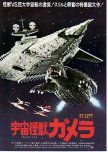
A last ditch cheap effort to keep a studio afloat resulted in Gamera: Super Monster. Spoiler alert! All of Gamera’s finale fights from the previous movies are spliced together in what amounts to a clip show.Zanon’s pirate ship is orbiting Earth, a ship that looks suspiciously like a Star Wars Imperial Star Destroyer. The Big Bad who is never seen sends his female minion to Earth and subsequent monsters to try and conquer the Earthlings. Earth has three space women to help out even though they have no weapons and spend most of their time doing a little dance to change from space women clothes to Earthling clothes. It can’t be a Gamera movie without a little boy who can communicate with him and this one was the least annoying of the Gamera movies I’ve seen.
There’s not a lot going on with the humans and space women except running back and forth between their magic van and their cover jobs including a pet shop. They also watch Gamera fight on what amounts to a big screen tv, even the clip from him fighting on a different planet.
The clips don’t always match up with daytime and nighttime from scene to scene. If you like the Gamera March song in the opening credits you are in for a real treat because the little boys sings it several times during the movie.
It’s a glorified clip show but one with a good heart and likable cast. There’s no doubt this Gamera movie was aimed at children and with that sentiment and it’s age I gently scored it. Only for people who don’t want to sit through the previous 7 movies (and maybe a cartoon as well?) but want to see the final monster fights or you like seeing 3 women dance to change clothes.
10/14/22
Was this review helpful to you?


