

 135
135 431
431 16
16 2
2 6
6 3
3 8
8 10
10 3
3 13
13 1
1 1
1 1
1 1
1 2
2 6
6 8
8 5
5 9
9


This review may contain spoilers
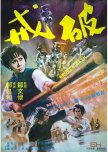
My name is Liu Chieh Lien, you killed my father, prepare to die!
Angela Mao kicked and punched her way through this movie with the grace and agility her fans have come to expect. Her character Liu Chieh Lien was merciless to her opponents and the men she had sworn vengeance against. Born with a violent rage in her heart due to her mother's dying wish after giving birth that her daughter would seek revenge for her parents' demise, Liu was too ferocious for the Buddhist temple where she grew up and just ferocious enough to be a match for the four men who determined the course of her life. Along the way, she teamed up with Bruce Leung's undercover agent. She didn't really need his help as she was more than capable of a deadly rampage all on her own.Yuen Woo Ping with the help of Hsu Hsia choreographed the fights and it showed. A few were slightly slow but stopped short of kung fu posing. Given that many of the fights involved a large group it was understandable. Angela was quick and agile enough to keep up with every kick and step they designed for her. Her rapid-fire kicks are always a treat to watch! Baddies had better beware when she glared at them. The fighters used a variety of weapons and styles, scorpions were even featured! This movie included a long list of talented stuntmen and bit players from the era making the fights extra special. Sammo Hung even had a non-speaking role as a knife wielding baddie. Bruce Leung did a superb job in his fights, though it highlighted Michael Chan's less sophisticated fighting style when they faced off.
The story was a typical kung fu revenge trope aided by Angela's fiery presence and the cast of superlative kung fu stuntmen and supporting characters. The major flaws were that the story started slowly as the mother entered prison and slogged through the backstory. Once Angela was grownup and causing a ruckus at the temple, the story kicked into high gear. And as with many of these movies, the ending was quite abrupt. There was also a gratuitous nude scene in the flashbacks which was not warranted.
The location scenes were beautiful with sets and costumes of a higher standard than many movies from this time frame. You could tell they spent more money than usual to showcase this story, and Angela deserved it. If I sound like a fan, I am. Angela Mao was beautiful and fierce, elevating many of the mediocre movies she was in.
This movie had its flaws, but Angela and the cast were not among them. Fast paced, dark, and brutal once the rampage started, Broken Oath was an entertaining kung fu movie to experience.
Was this review helpful to you?
This review may contain spoilers
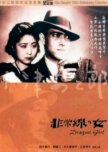
Dragnet Girl is a mostly bloodless noir film featuring a gangster and his moll who were not nearly as bad as they thought they were.Joji is a washed-up boxer who turned to crime to make his living. Tokiko is his good time loving moll able to run scams on her own. Her target is the boss' son who keeps hitting on her at the office where she works her daytime job. Joji doesn't like the fact the boss is giving her jewelry, more importantly what she might be doing to earn the jewelry.
The characters come fast and furious, with almost no printed dialogue to help keep track. A young boxer, Hiroshi, tries to impress Joji at the boxing gym so that he can hire on with the stylish crook. So far life is good for Joji and Tokiko until he brings the kid aboard. Hiroshi's sister who works in a record store, complete with RCA's dog Victor cocking his head throughout the store, takes exception to her brother foregoing school to go down a dark path. Dressed in traditional garb she goes to Joji and begs him to turn her brother away. Joji takes an immediate liking to her, and it causes him to reflect on how he's living his life. Tokiko finds out about his desire for Kazuko and hunts the sister down with blood in her eye. Then as fate would have it, she too is charmed by Kazuko. And like Joji develops a sudden desire to go straight and live right. The last half of the film ramps up the tension and suspense in the storyline.
Director Ozu and cinematographer Shigehara Hideo made great use of light and shadow. Whether it was the shadows cast by the workers walking into the office, or faces and rooms half hid by shadow, they developed a proper noir film atmosphere. They highlighted everyday objects and architecture into beautiful composite frames. Outliers Joji and Tokiko were stylishly dressed in 1930's Western clothes. Sweet Kazuko, on the other hand, was always dressed and coifed traditionally. There was no music at all in the version I watched. Ozu did such fine work immersing the viewer into this world, that even though the film was silent you could almost hear the clacking of typewriter keys or a gun firing.
Oka Joji did a superb job showing Joji as dapper and invincible, then unravelling to a dejected and tormented man. Tanaka Kinuyo played the tough moll with a hidden heart of gold to perfection. Mizukubo Sumiko was given little to do as Kazuko except to float into and out of frame when needed and in brief moments, beg for her brother. Kazuko 's main role was to be the catalyst for Joji's and Tokiko's character development, with scant left over for the dutiful sister.
Dragnet Girl was an entertaining silent gangster film as it did not follow the mold of so many other crime movies. Ultimately, for me, it felt a little flat. The skill was there, the camera shots were lovely, and the actors did their jobs well. In the end, I remained unconvinced that quiet Kazuko could turn the two criminals lives upside-down like she did. I would definitely recommend this to anyone who enjoys old movies or old gangster movies as beauty is in the eye of the beholder when it comes to this genre of film.
Was this review helpful to you?

This review may contain spoilers
It's big! It's tentacled! It's BIG OCTOPUS! Big Octopus was a Chinese attempt at Kaiju. It succeeded in some ways and failed in others.Life for a restaurant owner was turned upside down when he hauled in a strangely cute octopus. Of course, his love interest was a scientist, and she rather ominously told him he must never sell the octopus for any price. It didn't take long for the evil biogenetic mogul to show up offering money. A camouflage wearing commando unit was shown killing off people in a compound and then headed to the restaurant. More dangerous than either gun toting group, was when Big Mama Octopus discovered her baby was with the humans. Somehow the people involved had never learned the number one rule in nature---
never mess with a baby animal because the mama might be nearby. Big Mama Octopus was not having it and tore the joint up as her tentacles rampaged across the beach and restaurant in search of her baby. Fun fact, her tentacles were extra-sensory. With one touch she could tell that a woman was pregnant and left her alone. Motherly courtesy, I guess.
Before long, everyone ended up on an island where a WWII bunker was hidden. The Big Bad Businessman's grandfather had run experiments with the Nazis back in the 1940's and Big Mama Octopus was the result. The girlfriend scientist and the hapless restaurateur ended up along for the ride as well as the Killer Commando Unit. Big Mama Octopus sent her infinitely long tentacles through the underground corridor killing bad guys left and right, at least whoever was left after the Killer Commandos did their work.
Big Octopus had more story and better acting than most kaiju films. There was romance, discussion on the ethics of bioengineering, and a little comedy. The storytelling wasn't great though, it lacked consistency and felt like certain parts had been edited out. It was also infinitely bloodier than the older kaiju movies. The Commando unit delighted in head shots. Big Mama Octopus impaled and dismembered various "red shirts". The acting was stronger, but that was a low bar to begin with. I wouldn't go so far as to say the acting was exceptional, more along the lines of adequate for the genre. The production values, with the exception of the CGI, were good, and as a 2020 movie they should have been.
The biggest problem with this movie was that it failed in the number one rule of kaiju movies---show the monster! With the exception of a couple of shots, the body of the octopus was never shown. The bad CGI tentacles received plenty of screen time. It would be like only seeing the dirty toenails of Godzilla as he stomped through town but never seeing the whole monster.
As a guilty pleasure popcorn movie, it was fine. If you enjoy kaiju movies, it's one worth trying out if you don't mind the lack of money shots for the Big Octopus.
Was this review helpful to you?

This review may contain spoilers
If I stay where I am, I don't know how much farther I'll fall
Osaka Elegy was a difficult film for me to rate. It attempted to reveal how men with money have power over women and even men with no money still exerted power over the women in their lives. Ayako, the female lead, did the wrong thing for the right reason in order to help the men in her life, only to suffer mightily for her selflessness.Asai, the owner of a pharmaceutical company received no respect from his wife, nor did he give her any. He was verbally abusive of his female servants. At work he lusted after a young phone operator, Ayako. Initially, she rebuked his advances. She wanted to marry her noncommittal boyfriend and reached out to him for help. He was unable or unwilling to assist her family.
When her father was threatened with jail because of his embezzlement of 300 yen, she gave in and had an affair with Asai to pay off her father's debt. She would also pay off her brother's tuition. Neither man showed any gratitude, rebuffing her instead. Things went from bad to worse, eventually she was abandoned by all the men in her life showing her just how much their loyalty was worth.
Yamada Isuzu made a wonderful, conflicted heroine. She knew her father was inept and unkind, but still could not resist helping him by foregoing her dignity and reputation. Once ensconced as a mistress she began to forge her own limited power, a power dependent on the generosity of a more powerful man. Constantly rebelling against the label of a woman suffering from the "illness of delinquency" Ayako struggled to keep what dignity she could even when publicly humiliated. From shy telephone operator to a woman fiercely fighting for her future, from joy to utter despair, hopelessness to a tiny ray of hope, Yamada played out a wide array of emotions.
The film suffers from age, fading or blurry at times. Even with the shaky and blurred shots, there were many lovely and creative scenes. At times the camera gave the viewer distance literally and figuratively from the characters, at others it sat as a cold observer, intimately close to the destruction of trust and love.
Whether director Mizoguchi made this film as an indictment on the precarious situation of poor women or simply an observation of the women in the world around him, what played out was the price for not having power of one's own. Punishment awaited the woman stepping outside of conservative values even by the same unscrupulous people who turned her toward the dark to make their lives easier or more pleasurable.
Was this review helpful to you?
This review may contain spoilers
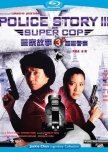
Super Cop is supposed to refer to Jackie Chan’s character in this movie but could just have easily been referring to Michelle Yeoh’s character.Jackie Chan’s Chan Ka Kui from the previous Police Story films goes to China and teams up with Michelle Yeoh’s Captain Yang Chien Hua to go undercover and break Yuen Wah’s bad guy out of prison and join his brother’s (Kenneth Tsang) drug gang in order to take out the Big Bad. After being accepted into the gang, they all go to Malaysia and meet up with Lo Lieh’s drug general. Lots of shooting and things blowing up ensue. They also have to bust Tsang’s missus out of jail before she is executed because she’s the only one who knows the number to the Swiss bank account where a fortune in drug money is stashed. Along the way, they run into Chan’s tour guide girlfriend (Maggie Cheung) who blows his cover because she is the dumbest girlfriend in cinema history.
The plot isn’t very strong or consistent. Most people don’t watch Chan’s movies for the plot anyway. The action is slightly different in some places because it relies more on guns and explosions. If you enjoy Chan’s comedy schtick, it’s dialed back here, but should be still enough to satisfy you. As always, the draw to his movies are the insanely dangerous stunts he performs mostly himself. Super Cop is not short on them. The bonus is that Michelle Yeoh performs most of her own death-defying stunts as well.
Chan gave his usual manic performance, though he didn’t mug as hard for the camera in this one. Michelle Yeoh’s gravitas made an excellent foil for him to play against and there was never any question that it was a partnership of equals. The two had good screen chemistry with Yeoh nearly stealing the show. It was hard to watch the talented Maggie Cheung play the jealous dim-witted girlfriend. Yuen Wah and Kenneth Tsang made excellent bad guys. One of my favorite old kung fu stars, Lo Lieh, made a brief appearance as a general supplying the drugs to the different cartels.
I would like to have seen more hand-to-hand combat, but what there was played out well, no surprise with Yeoh and Chan. The stunts were quite good with Jackie dangling from a helicopter over Kuala Lumpur and Michelle Yeoh landing a motorcycle onto a train. Rumor has it that the stuntman who initially attempted it broke his leg trying the stunt. Michelle Yeoh was able to land the scary jump herself.
Fans of Jackie Chan or Michelle Yeoh movies should be satisfied with Super Cop. The two martial arts stars bring enough daring action and excitement to help overlook the flaws in this film.
17 April 2022
edit--I liked this movie better than Police Story 1 which was graded on my pre-1990's curve so I went ahead and bumped this up to an 8 on the curve because the stunts were just as amazing and the cast was stronger. It also didn't have the 30 minute lull in the middle of the film. 25 March 2024
Was this review helpful to you?
This review may contain spoilers
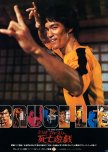
The road to hell is paved with good intentions or greed, take your pick with this film.Bruce Lee had started work on Game of Death when he paused it to make Enter the Dragon. Lee died before being able to come back to Game of Death. This movie used 11 minutes that he had filmed previously and added an abysmal story around those minutes using body doubles and clips from other movies.
The story employed for this movie was that actor “Bobby” and his singer girlfriend were being targeted by gangsters to sign with them. “Bobby” ended up faking his death because he kept getting beaten up and later when his girlfriend was kidnapped went on a rampage against the bad guys.
I cannot express in words how awful this spliced together piece was. They used Bruce Lee’s reaction shots from other movies-one an outdoor reaction shot while they were inside, a cardboard cutout of Bruce's face pasted over a double's body, clips from his movies and two doubles who wore sunglasses who didn’t look like him and weren’t even built like him. The fights were slow and poorly choreographed with lots of backflips. Sammo Hung choreographed the fight scenes and it was like he’d never seen a Bruce Lee movie. The story was heavy handed and barely made sense. Worst of all, they used scenes from Bruce Lee’s real funeral and pictures of him in his coffin in this theatrical abomination. The creators of this movie said they were trying to honor Bruce Lee and see that his film was completed, by exploiting his funeral images, that argument went right out the window for me.
The only part of this movie worth watching is near the end for 11 minutes when the real Bruce Lee battled two antagonists, one of whom was Kareem Abdul-Jabbar*. This 11 minutes is noteworthy for the quality of the fights and his iconic yellow and black tracksuit which has been used in other movies paying homage such as Kill Bill. The fight with 7’2” (218.44 cm) Abdul-Jabbar has also been immortalized. In the movie Bruce was planning, he would have to go through 5 levels of a pagoda fighting against different masters of different styles, exposing their weaknesses and show how his system was superior. What remained at the time were these two fights which were spectacular. No wires, no flipping around, just amazing fluid lightning-fast moves. The rest of the movie was exposed for its fraud and ineptness with these two fights. Bruce always had to try and slow his moves down for the camera and still his moves were often too fast for the human eye. The rest of the movie’s fights which were plodding had to be sped up at times.
A 10 for the two true Bruce Lee scenes, -500 for this ridiculous attempt to capitalize on those scenes and for using his funeral images for their own putrid gain. There’s a reason Chuck Norris and Kareem Abdul-Jabbar would have nothing to do with this movie fearing it was exploitive. Better to check out Bruce Lee: A Warrior's Journey from 2000 which contains more recently discovered clips from Bruce Lee’s version of Game of Death and his outline for that film. I could highly recommend that documentary, but not this movie. This Game of Death is only for Bruce Lee movie completionists with a high pain threshold.
*For those not familiar with him, Kareem Abdul-Jabbar is a retired American basketball player, one of the greatest, who dominated the league for years with his legendary Skyhook. Kareem was Bruce Lee's student and friend. He is also a civil rights activist, author, and philanthropist among other things.
Was this review helpful to you?
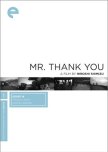
This review may contain spoilers
It’s only 80 km long but a lot happens here!
Mr. Thank You is a charming movie that while at times was lighthearted and comic was also not afraid to highlight the social and economic problems of the time.
Mr. Thank You drove a bus serving a rural mountainous area, on the 80 km road linking the rural area to a train station where people could travel further to Tokyo. Most travelers on the narrow, dangerous road were on foot. As he honked his horn asking them to move over, he always yelled “thank you” in a cheerful manner as the pedestrians made room for the bus, hence his nickname from the locals.
Most of the story took place on the bus which showcased a generally genial cross-reference of people from the region during The Depression. On the surface the passengers were friendly and happy. Dig a little deeper and the effects of the times became all too present. A seventeen-year-old girl was being taken by her mother to Tokyo to be sold into prostitution to help the family. Other people on the bus had experienced serious financial setbacks. Along the way people talked, sang, drank, ate, and smoked. Mr. Thank You treated everyone equally and affably, offering to carry messages, visit gravesites, and purchase records for those who asked.
Most of the passengers weren’t afforded much time for character development, but each made the most of the time offered. The small gathering of people on the road trip revealed layers of themselves and for the most part kindness and generosity toward each other.
Given the era, one scene in particular stood out to me as particularly moving. Mr. Thank You encountered a young Korean woman he had come to know who had worked on the road he drove on. He treated her with dignity and respect even though she was among the most marginalized people living in Japan at the time. Whether it was the writer or the director who found a way for that scene to slip through, it showed a subtle criticism of the government’s policies.
In addition to the subtle commentary on political and foreign policies, it was repeated many times how girls forced to go over the mountain to enter prostitution never came home. Boy children often became vagrants. The smiling characters were all too aware of the reality most of them were living in yet still willing to form temporary and perhaps longer-term relationships.
The music was perfect for a traveling story, just like Mr. Thank You, it was light and lively, keeping everything moving forward. Though faded by time, the black and white cinematography and choice of shots was stylish and creative. The scenery along the road gave a time capsule’s view of the area.
During this bumpy road trip, the viewer is treated to heartbreak, hope, kindness, and a little humor. It’s a film that will leave you feeling better, but also a little unsettled.
Was this review helpful to you?
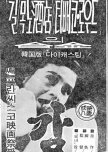
This review may contain spoilers
Based on a short story by Kim Dong In, Potato tells the tragic story of Bok Nyeo, a young woman who is married off to an older aristocratic man. Kim Dong In who was living in Pyongyang was inspired to write this story when he witnessed the hard life of the people living in poverty around him.Bok Nyeo found out in rude fashion that her new "aristocratic" husband was penniless and landless. He also refused to work and expected her to provide for him. The story follows her as she works odd jobs, begs, and even picks caterpillars off trees, all while rebuffing the advances of the men around her. Eventually, she is forced to go against her conscience and do things she would not have done before in order to stay alive and later to pay off her worthless husband's debts.
Potato is a grim look at what poverty can drive a person to do in order to survive. Unable to return to her poor farming family, unable to be rid of her husband, unable to pay off his crushing debt, with no support system and only a will to live Bok Nyeo's story was devastating to watch.
******Spoiler Below******
*****Spoiler******
I graded this movie down somewhat because I felt it was needlessly exploitive of her body, devotion, and sacrifice. In the end it implies she falls in love with the Chinese farmer demanding use of her body in repayment for her husband's debt and that's why she tries to murder him. The official synopsis would lead one to believe this is not how the book told this aspect of the story. Even though it sympathetically shows the detrimental effects of poverty and the vulnerability of women in a male dominated society, I had trouble accepting the oft used literary trope of a woman being sacrificed for the mistakes of others and the failings of society. Just my $.02
Was this review helpful to you?

This review may contain spoilers
Toho goes all in with marketing this Mothra movie to a young audience. There’s a plethora of rainbows, glitter, fluffy animals, and silly humor.The three main human characters who are grade school age find a Furby-like creature, Gorgo, who appears at the same time as a ferocious water Kaiju, Dagahra. The Elias are back, good fairies Moll and Lora, and their trouble making sister Belvera.
The first half of the movie dragged for me, as the fairies and children took center stage fighting to see who would take custody of the furry little critter. Eventually, it’s revealed that a long-lost advanced civilization, Nilai Kanai, had polluted the waters and created Dagahra to feed on the pollution. The unfortunate by product were destructive starfish called Barums who destroyed life in the ocean. Eventually Dagahra turned on his creators and destroyed the once great city, going dormant until the pollution in the ocean roused him once again.
Lora, Moll, and Gorgo guide the children to where the city used to be and with Gorgo’s powers they travel beneath the ocean into the pyramid structure as it once again rises above the ocean. On their tails are two bumbling crooks guided by Belvera. It turns into a race to find the treasure which can stop the Dagahra who has taken his battle to land as well where he properly obliterates buildings. Mothra shows up to do battle with the Dagahra and the adventure finally swings into full motion.
For a 1997 children’s movie the special effects are fine. There are lots of lightning bolts, monster fights, and glittering rainbows. The miniatures were well made and Dagahra makes a menacing enough foe for the beautiful Kaiju. Mothra is granted new powers as well. The film’s score is rousing when it needs to be.
Rebirth of Mothra II may not be something most adults would enjoy, it would help to have younger children watching with you or to let the child inside you respond to a simple adventure story of developing friendship and redemption. Though it's post 1990, I did give it a small ratings bump as it was aimed for children and I wasn't its targeted audience.
Was this review helpful to you?
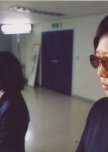
This review may contain spoilers
The Weight of Her is a short film from nearly 20 years ago that I stumbled across. I truly hope that attitudes have changed about girls and women and their appearances since this was made.The story follows a slightly overweight high school girl who is constantly judged for her weight not only by other students but by the teachers as well. Her friend who took diet pills and lost weight was praised. She, however, was constantly criticized and told she'd never find a job or a man because she weighs over 50 kg.
The girls are weighed in class as the male teacher makes derogatory comments about them. At one point when a very overweight male teacher derides the FL for weighing too much she calls him on it. He tells her it doesn't matter how men look, women are the ones with the problem.
Fat shaming, shaming for double-eyelids, all appearance related bombs lodged at young women, destroying their self-esteem and causing them to do unhealthy things to try and be ultra-slim. Instead of building them up, and training them to be competent and confident, they are told their self-worth is in how they look and how much they weigh. The focus was never on teaching them to be healthy in body and mind, and to develop their skills so that they would be able to find a good job because they were qualified, not because they were thin and pretty.
I found this very difficult to watch because defining women by their looks and size is destructive and the society loses out on creative, intelligent people in the work force simply because they aren't attractive enough for the men who hire them.
Was this review helpful to you?

This review may contain spoilers
Floating City takes place over several decades culminating in the end of the British rule over Hong Kong. Based on a true story the film focuses on Bo Wah Chuen, a man of mixed races and cultures, never fully accepted by any of them. Despite his humble up-bringing he manages to rise in stature and power.Born to a Chinese mother, with a Caucasian father, and adopted by a poor Tanka fishing family, the Brits name Bo "Half Breed" and the Chinese call him "Mixed". Though he carries a British passport he finds out that he's not really British either. The story begins near the end so we know he succeeds but we also know as movie viewers that the climb will not be an easy one. Much of his youth is faced with helping his family survive and dealing with tragedies as they come. With the help of a priest, he enters school though he is older than the other students. Education opens his eyes to other possibilities, and he rebels against his father and the fishing life he is supposed to inherit. He discovers that the way out of his barefoot poverty and at times perilous existence is to find a job with the Imperial East India Company which runs much of Hong Kong. As a Chinese man his route is not without challenges, his inability to speak English has to be overcome and he's daily confronted by the limits of deeply ingrained racism.
Aaron Kwok gave a quiet performance as a conflicted man who was not sure who he is. Sometime too quiet. I found his character too enigmatic and unemotional in his relationships and struggles. Josie Ho who played Bo's mother in her younger years and Bau Hei Jing who played Bo's older mother both gave compelling performances as a woman who had to make heart-wrenching decisions through the decades for the family if it meant keeping them alive. Charlie Yeung as Bo's wife was given little to do. The heart of this story was between Bo and his tenaciously loyal adoptive mother.
Floating City flies over the complex issues giving us a nice overview of the problems in Hong Kong, but without connecting us emotionally with the tumult and cultural conflicts inherent in a place, and man, caught between two powers. It hints at a depth it is unwilling to dive into only skimming the surface as many of the performances do.
I wanted to like Floating City more than I did. It revealed parts of Hong Kong history not always covered in cinema but at times felt more educational than entertaining. That's not to say there weren't some deeply touching moments in it, I just felt it missed some opportunities to connect more with the audience. If you enjoy family stories and rags to riches stories, this is a movie you might want to check out.
Was this review helpful to you?
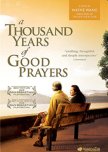
This review may contain spoilers
A Thousand Years of Good Prayers crosses generational and cultural boundaries. All people need to feel heard and understood. Misunderstandings and silence can lead to separation. The daughter in this movie has lived in the United States without seeing her parents for twelve years. After she divorces, and after the death of her mother, her father comes to visit from China. What follows is an uncomfortable slice of life focusing on two people who barely know each other.Yilung works at Gonzaga University in Spokane, Washington. When her father comes to visit, she barely makes time to see him, rushing off to work and coming home late. The father doesn't tell her he loves her, but he goes out and buys a wok and cooks for her every night, shorthand for "I love you" in almost any language. During his daily walk to the park, he meets an older Iranian woman and they talk about their kids. In Chinese. In English. In Farsi. With no subtitles. Yet subtitles aren't needed as the parents love and concern for their children comes through in each word, making their conversations understandable to them and us.
The strain between father and daughter only tightens until a wall cracks and truths emerge. Healing doesn't come overnight as with any relationship. They begin to understand each other better, as do we.
This film is shot simply, with few sets. Each of the performances was natural as if we were watching real people face the days. Henry O's performance of a father trying to cross a generational barrier with his daughter and a language barrier with the people in town was sympathetic. The father could also be frustrating when he failed to realize his grown daughter had her own wants and needs when he wanted to find her a good husband so that she didn't fail twice. Faye Yu, for the most part, gave the difficult performance of a daughter avoiding her father, seemingly ungrateful, all the while holding in a secret that kept a great chasm between them.
A Thousand Years of Good Prayers is slow and narrow in focus and definitely not for everyone. It is a simple, thoughtful film concentrating almost exclusively on two people and how presumptions and lack of communication brought them to a place in their lives where both felt lonely and hurt. If you like slice of life films, especially about families, this might be one to try.
Was this review helpful to you?
This review may contain spoilers
From Zero to, well, maybe a 4 or 5
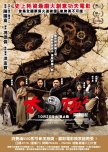
Tai Chi Hero took up where Tai Chi Zero left off and promptly slid downhill from there. The gang was all back and added William Feng Shao Feng and Peter Stormare to try and shake things up a little.Yang Lu Chan (Jayden Yuan) and Chen Yu Niang (Angelababy) were in the middle of their nuptials when her ne'er do well brother, Chen Zai Yang (William Feng), showed up spoiling the mood. Fang Zi Jing (Eddie Peng) who was soundly beaten in the previous movie returned plotting revenge with some help from Duke Fleming (Peter Stormare) of the British East India Company.
That set-up sounds boring and unfortunately for me, this movie lacked the zaniness of Tai Chi Zero. Grandmaster Chen Chang Xing's (Tony Leung Ka Fai) character was developed more while he worked things through with his estranged son. Tony Leung Ka Fai did his best as the master of martial arts who had to come to grips with the mistakes he made with his child. The two main characters, Lu Chan and Yu Niang were stuck in much the same place without any conflict which drained the energy out of their scenes. Poor Jayden, a real-life martial arts champion, was unable to convey more than one perplexed expression. Unsurprisingly, there was no chemistry between he and Angelababy. The film focused more on the Grandmaster and his estranged son, possibly out of necessity.
Tai Chi Hero lacked a definitive villain, Zi Jing wasn't sinister or competent enough or engaged in the story enough to be much of a threat. Eddie Peng wasn't able to overcome the caricature and corner his character had been written into.
The story spent time flashing back to try and build the characters' and story's background but in the present time there was no urgency or significant development. There was no high stakes battle at the end. In fact, the ending felt rushed, too easily wrapped up, and anti-climactic.
There weren't as many fights or as inspired fights this time around. Lu Chan was trained by his wife and father-in-law which was to set him up to become the super Tai Chi Master but was lackluster as a viewing experience. The one grand battle was sped up and blurred which always seems like a cheat in a martial arts movie with a real martial artist in it.
The steampunk, pop-ups, and comic book style wackiness were largely gone in this sequel. Tai Chi Zero wasn't empirically a good movie, but it was a fun movie. Tai Chi Hero took much of the fun out, tried to replace it with heart, which ended up feeling more like hot air. I'd still recommend it to people who watched the two previous movies, even though this one limped across the finish line.
Was this review helpful to you?
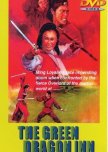
The righteous official upholding the law in this movie was played as stiffly and unemotionally as possibly by Yueh Hua, whose stony expression never changed. Fortunately, Lo Lieh swaggered onto the scene as an interested party, with a more compelling performance and kung fu. Polly Ling-Feng Shang-Kuan (yep, that's her whole stage name) popped in from time to time to shake things up with her sword and kung fu. This trusted trio bravely vowed to uphold the law in the face of overwhelming numbers.
With the exception of Polly's and Lo's, the fights felt overly staged at times, but were entertaining enough. The action was fairly non-stop. Oftentimes the story is overlooked, Green Dragon Inn's was simple but engrossing. This movie had a bad case of "run out of film" ending. If you watch a lot of martial arts movies, especially Shaw Brothers, you'll know what I'm talking about.
Green Dragon Inn had two problems that had nothing to do with the story or acting. In the version I watched the film had been ruthlessly cut to fit different screens. Much of the action, fighting and reaction shots were missing if they happened near the edges. This version was also dubbed. I'm pretty sure the same guy voiced all of the men's lines. As bad as dubbing is, in this situation, subbing would have been worse as the words would have been cutoff. I've seen movies where that happened and it was very frustrating. This movie is good enough with a famous enough cast to be remastered and restored to its former glory.
If you enjoy martial arts movies, especially from Taiwan, this is a good one to try. Even with the problems I mentioned, Green Dragon Inn was still a fun way to spend 90 minutes.
*As always, I grade these older niche movies on a curve.
Was this review helpful to you?
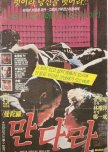
The two monks may have traveled together, but their roads to the top of the mountain were slightly different. One monk, Poban, adhered to the rules, the other, Jisan (who had been kicked out) seemed to go out of his way to break them. In their duality of thought they were not that far apart, both were seeking to let go of attachments and find the real meaning in their faith and how that should be lived out in their lives. What was more important-prayers or action? Avoiding temptation or facing it head on? Being attached to the rules or breaking through them? From time to time their pasts and mistakes caught up with them, crashing through their thoughts, forcing them to deal with them and answer some of those questions. The conversations were dense with meaning and would take a third or fourth viewing for me to truly grasp the deeper elements.
Though years passed, it seemed ever winter in the landscape, cold, gray, and austere. This movie truly needs a loving hand to re-master it, saving it from the graininess of age. I'm sure the images were originally crisper and clearer.
Mandala isn't for everyone. It is slow, focusing narrowly on the two leads and their conversations regarding life and Buddhism. As Jisan said, "Attaining enlightenment is easy, putting it into practice is difficult." Forty years after the release of this film and countless world events since then, this message still found and resonated with me reminding me how timeless some films can be.
Was this review helpful to you?


