

 135
135 431
431 16
16 2
2 6
6 3
3 8
8 10
10 3
3 13
13 1
1 1
1 1
1 1
1 2
2 6
6 8
8 5
5 9
9


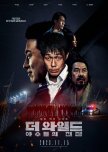
"It doesn't take much for friends to become foes"
The Wild trotted out every trope and plot element used in a dozen other gangster movies, offering nothing new or exciting. It’s only saving grace was that Park Sung Woong can always bring an intimidating presence to any role, even when playing an overaged boxer.Song Woo Cheol is picked up by his old friend and boss, Jang Do Shik, when he is released after 7 years in prison for accidentally killing another boxer in the ring during an illegal fight. Do Shik is ready to put Woo Cheol back to work, but the fighter wants, “to live quietly.” It takes no time for Woo Cheol to become entangled with a hooker who has a drug problem and one of her violent johns, Jo Jeong Gon, who is a detective and entangled with Do Shik and his North Korean drug supplier Ri Gak Soo. With a huge drug supply coming in, nearly everyone is double-crossing or murdering someone in order to either get hold of the drugs, the money, or both.
While I’m sure the writers thought the twists and turns would be surprising, I was calling them out before they came. It helps to have someone to be invested in, but for a solid hour, I really didn’t care about any of them. There were hints that Song Cheol regretted his part in the other fighter’s death and going to prison for Do Shik, but he didn’t exactly do anything to break away from Do Shik. I have no problem with age gaps, but a romance with someone half his age, felt more like male wish fulfillment than organic to the story.
The Wild was a wildly pessimistic and cynical gangster movie. I was deeply disappointed that Woo Cheol didn’t turn out to be as smart as I hoped he was. If you’ve never seen a Korean gangster movie or any gangster movie, The Wild might provide some twists and turns, otherwise, it was a “connect the dots” of familiar crooked games of deceit and betrayal all at the end of a knife.
26 January 2025
Was this review helpful to you?
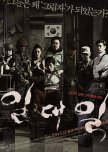
"Who am I?"
Director Kim Ki Duk took the viewer to dark places with One on One. Though he highlighted how the rich get richer and the poor get poorer, the poor were shown to be just as culpable in society’s ills as those in positions of power.After a school girl was murdered, seven vigilantes stalked the killers and the ones who ordered the hit. One by one, the murderers were captured and tortured to find out all they knew about the killing. Each time they captured someone, the vigilantes changed costumes. The group began to fracture when some of the vigilantes begin to ask, when is too much violence, too much?
The contract killers were all shown to live comfortable lives with significant others. While they ate ramen as a snack, many of the vigilantes were reduced to eating it as their main meals. Most of the vigilantes were suffering social injustices from different corners. The curious thing was that Kim Young Min not only played one of the killers, but also several different characters callously interacting with the vigilantes in their daily lives. Perhaps it meant that abusive jerks are similar regardless of their station in life?
After every prisoner was captured, they all asked, “Don’t you know who I am?” Director Kim seemed to be asking the audience to ask that question of themselves as well. “I was just following orders” or even “I was doing it for the greater good” were the common answers given during the torture sessions. How many of the world’s evils have been built on those two concepts? What danger could a school girl be to society that she was brutally murdered?
The film was shot in two weeks and it looked flat and gray at times. The sound could be abysmally bad. Having seen Kim's 3-Iron which had almost no dialogue, the heavy-handed and stilted dialogue in this film was a disappointment. For those who would be bothered, there was a long sexual encounter that started with violence. Each “victim's” torture session was different, some of the methods were more gruesome than others. There were annoying lapses in logic on several occasions. Why would the school girl keep running down dark, empty alleys when there was a well-lit street with shops to dart into? Why didn’t the vigilantes have any security around their building? Despite their dangerous activities, they didn’t even lock the doors to their hideout. They were constantly followed and observed through windows yet never knew it.
Director Kim had plenty to say about human nature and its depravity. Good guys did bad things. A few of the bad guys regretted their actions. People were cruel and driven to be greedily selfish at all social levels. The utter lack of compassion for their fellow human beings went from the top to the bottom of the economic structure. Kim asked the question, “Who am I?” Perhaps more importantly, “What am I?" One on One was frustratingly inconclusive regarding answers and had an overtly pessimistic view of humanity.
11 July 2024
Was this review helpful to you?
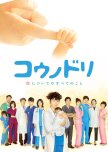
Dr Storks protect and assist the miracles
Dr Storks followed the trials, joys, and frustrations of the medical personnel in the labor and delivery portion of a hospital as well as those in the NICU. Dr. Konotori worked to help mothers share the gift of life during the miracle of birth. Pregnancy is not an illness but as the drama showed, it is not without risks. The doctors and midwives fought alongside the parents and newborn infants as they dug deep to find their courage to succeed and survive.The main OB/Gyns were Drs. Konotori and Shinomiya, both devoted to their patients but as different as night and day. Friendly and talkative Konotori was willing to risk a mother’s life to save her uterus while harsh speaking and quiet Dr. Shinomiya was ready to perform a hysterectomy at the drop of a hat. Made for an interesting balance. For anyone wanting to watch the drama for Hoshino Gen, he was only in each episode for a few minutes. This was Ayano Go’s starring role and he made the most of it. I thoroughly enjoyed his piano performances in disguise as the pianist "Baby". Some doctors had character growth and others broke down. In my country the majority of OB/Gyns are women so it was odd seeing the majority of doctors as male. The female doctors weren’t very well represented. One female doctor was easily excitable and distracted while the other was a walking burnout. Both came across as fragile. The doctor I would want in my corner was the older NICU doc. He saw the big picture and was steady emotionally.
Each episode had different medical crises and subjects---teen pregnancy, adoption, abortion, Rubella, birth defects, maternal and infant deaths, IVF, smoking, preservation of the uterus, midwives, pregnancy and sexual discrimination, as well as discrimination against single parents and working women with children, postpartum depression, and more—whew! A few of the topics came across as strange to me. Adoption seemed to be a new concept and there were misconceptions about the availability of pregnancy care in Hawaii. Members of the staff also had very callous attitudes toward certain patients which seemed the opposite of how they should have approached patient care. The gut-wrenching stories involved parents and spouses faced with traumatic decisions that no one would ever want to make. Some parents handled bad news better than others. As in real life, there were parents who would do whatever was needed for their baby and others who wouldn’t visit a child fighting for its life. A few of the topics were handled with the subtlety of an afternoon school special while others were quite well done. I hate to admit that I became teary during two or three of the stories. It wasn't all tears, there were lovely heartwarming stories as well.
The cinematography and lighting were rudimentary and could be distracting. At times the music blared over the dialogue which was also distracting. What Dr. Storks had going for it were the compelling stories of life, death, and the medical personnel who fought for happy healthy outcomes for everyone even when it wasn’t possible. The doctors realized they were often powerless and that “things don’t always go as planned,” but that didn’t stop them from giving their all to the women and tiny lives entrusted to them.
4 Jan 2024
Was this review helpful to you?
This review may contain spoilers
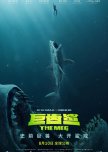
"Pleased to eat you!"
If you decide to watch The Meg because of the tagline, "Pleased to eat you!" you probably already know to check your brain at the door because you are about to be swamped with clichéd characters and plot and ridiculous pseudo-science. Most of the CGI and cinematography were quality which helped when the dialogue tried to drown the fun of a massive Megalodon or two set loose from the Mariana Trench!Starring Jason Statham, you know he's going to have to go mano y pectoral fin with the giant 90ft/27m shark at some point in time. Jonas is the lone diver who can attempt a rescue at over 11,000ft/3300m depth and he's off in Thailand drinking his sorrows away. He'd attempted a rescue five years earlier of a sub trapped in the Trench and had to abandon some of his men when the sub was attacked by a giant creature. Even though he saved numerous lives he was branded as having had a psychological breakdown for the story he told. When his ex-wife and crew become stranded at the bottom of the Trench, an old teammate comes calling to talk him into rescuing her.
The characters were stock characters, shallow with little personality. Li Bing Bing was weighed down in the Stereotypical Headstrong Female Scientist role who thought Statham's Jonas was crazy and treated him as such until she was rescued by him numerous times as he snatched her out of the jaws of death. She had a Wise Beyond Her Years Daughter who helped to lead the two divorced people to a romance. The rest of the crew included the Egotistical Billionaire, Tough Chick, Black Guy Who Can't Swim (really?!?), Scientist Bestie, Jerk Doctor, Dad With a Target On His Back, and a couple of other scientists. Honestly, with the exception of a couple of characters, none of them were developed enough to make me care whether they lived or became chum. One of the early deaths was actually emotional and done well, after that it was bring on the shark!
The science was particularly awful without any conception of the forces at work on submersibles and the people in them at the deepest depths of the ocean. And one scene that was supposed to be frightening had me laughing until I could barely breathe. Seriously, that little boat they used was tough if they could lasso a megalodon using it! Also, every time the script called for Statham to have to dive into the water to face the big fish to show his courage was hilarious.
If you watch this movie, you need to know that there aren't any award-winning performances, in fact, some are particularly bad. The science is dreadful. The dialogue can be cringe-worthy. When numerous people are threatened the stakes don't feel very high because we don't know anyone, even the people from the main crew who fall into the water every five minutes. If you can set all that aside, it is a fun movie with the ginormous sharks seeking to turn back the clock about 10 million years when they ruled the oceans.
9/13/23
Edit--I bumped the score up .5 because I enjoyed it more than the sequel although the sequel had better acting. This one had me laughing more.
Was this review helpful to you?
This review may contain spoilers
"I drink upon occasion, sometimes upon no occasion." Don Quixote
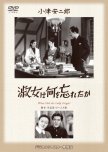
Ozu is one of my favorite Japanese directors/writers, but he missed the mark with What Did the Lady Forget for me. Not dramatic enough to be a drama and not funny enough to be a comedy, it languished in a dull middle ground somewhere lost in a mathematic word problem.I knew I was in trouble when for the first 20 minutes of a 70-minute film we were treated to a university lecture on Salmonella and junior high school boys dealing with mathematic word problems. I found myself wondering where Ozu had found the props and how hard the staff worked at polishing the sets to a shine as he required.
The premise of the story was a domineering housewife and a docile professor husband-a classic Ozu gender role reversal. Tokiko, the wife, insisted that her husband play golf each weekend which involved an overnight stay outside of town. The problem being, he didn't like to play golf, so he was always figuring out ways to make it look like he'd golfed but hadn't. Most women balk at a husband taking an overnight trip every weekend instead of encouraging it making this a very foreign concept. Maybe she wanted some peace around the house, but she wasn't doing anything interesting while he was away except gossiping with her friends.
In walked another of Ozu's standard story upheavals-a modern niece, Setsuko, who wore western clothes, smoked, drove, and drank. She and Komiya, the husband, became co-conspirators when he was staying with a male student during his aborted golf trip and they both showed up at the same bar. They had to hide where they had both been to Tokiko who was furious when Setsuko came home drunk after midnight and was brought home by Komiya's student. It actually sounds more interesting than it was, even a night out at a geisha house became a drag.
Setsuko began to berate Komiya for not being masculine enough and not wearing the pants in the family which after a fight between the three ended up with Komiya slapping Tokiko. Instead of throwing fuel on the fire, Tokiko was thrilled and felt like it showed her that Komiya loved her. She bragged about it to her friends and the role reversals were reversed and everything was put back into its proper patriarchal relationship. The cutest scene was at the end when Tokiko made a sweet move on Komiya which led to a night of bliss. It would have meant more to me if he hadn't slapped her to get it. That Setsuko was just as domineering as Tokiko and ordering Komiya about never seemed to occur to her or him. I'm guessing the title refers to Tokiko and how she had forgotten that Komiya was the head of the household and that is what would lead to harmony in their home.
This was supposed to be a comedy, but I didn't get it, if it was funny, it was far too subtle for me. I get that it was a classical farce set up, the situations just didn't come across as very humorous. Slapping Tokiko to put her back in her place ruined this film for me and for the most part I found it lacking in any emotional depth to begin with. The sets, costumes, and frames were attended to with the greatest care as is to be expected with Ozu, it just didn't feel like he developed the story with the same care.
10/3/22
Was this review helpful to you?
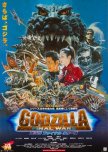
This was almost non-stop Kaiju battles as monsters from the previous 50 years showed up to do battle with Godzilla, including the abomination from the US Godzilla (1998). A who’s who of monsters from the Godzillaverse---Hedorah, Rodan, Kamacuras, King Ghidorah, Manda, the aforementioned Zilla and many others. Mothra even showed up to bat clean-up with Gigan.
There was a lot to love in this movie. The humans were the most interesting of any of the Godzilla movies I’ve watched. It had aliens and mutant humans and futuristic weapons. Kitamura Kazuki as a bad alien with even badder guyliner was over the top. He looked like he was having as much fun making the movie as I had watching it. Don’t expect Oscar worthy performances, it’s not that kind of movie.
How could I not love a Godzilla movie that included my second favorite niche genre-kung fu in it?
Yes, the story could be a bit of a mess, but was easy to follow. The director unashamedly included a lot of the science fiction fads from previous years, the Matrix, Star Wars, Independence Day, Alien, and Jules Verne, among others. Sometimes it worked, sometimes it didn’t. No doubt there were moments of pure cheese. They also must have spent most of their money on the monsters, sets, and CGI because the music sounded like some guy hitting random notes on a synthesizer. The non-stop action from beginning to end could be draining and there were times when Godzilla was absent during a lot of the action with other monsters and the aliens. However, when Godzilla did appear, he showed why he was a force to be reckoned with.
Godzilla: Final Wars features guys in rubber suits and miniaturized cities and vehicles, just as the Godzilla Genie intended them to be from this era. On Godzilla’s 50th anniversary and retirement, it was appropriate. Final Wars was a monster mash that was fun and entertaining from beginning to end.
April 12, 2021
Was this review helpful to you?
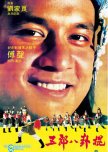
Famously known as the film Alexander Fu Sheng died while filming, in a car accident off set. The script had to be re-worked leaving him out of the final fight scenes.
The themes of loyalty, family, honor and betrayal are woven throughout the movie. Out of seven sons, only two survived a betrayal by a family friend and ambush. One was driven mad and the other hid in a Buddhist temple and refined his pole fighting skills. The mood is bleak and dark throughout the film as the surviving family members seek justice and revenge.
I look forward to movies directed and choreographed by Lau Kar Leung. His fights are always fast and creative. Brutal, too. Gordon Liu is a gifted fighter and with every film of his I see I am more and more impressed. The pole sparring session between Liu and Phillip Ko Fei is not to be missed. Not to be outdone, Kara Hui shines as the sister who has to fight through her own ambushes and entrapment on her way to find her brother. The final fight is a bit gruesome as the monks practice their non-lethal moves that extract an opponent’s teeth. The action is almost non-stop from the opening credits to the end.
The story didn’t move me as much as I hoped it would. The fight scenes were, however, spectacular and worth watching this movie for.
Was this review helpful to you?
"No place on Earth is more screwed up than here"
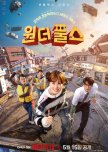
WONDERfools was wonderfully quirky, silly, and fun. That’s not to say it wasn’t flawed, but I was able to overlook the more egregious issues I had with the drama for the Super Friends sake.Eun Chae Ni was born with a bad heart and is deteriorating fast. It's 1999 and all she wants is to live long enough to witness the end of humanity on December 31st as is being predicted. She’s never been out of Haeseong and is determined to take a trip in defiance of her grandmother’s orders. Chae Ni aka Trainwreck develops a scam to make money for the trip which goes very wrong, implicating her two best friends, Ro Bin aka the Sap King and Son Ahjussi aka Nightmare. City Hall clerk Lee Un Jeong aka Mr. Oddball finds himself dragged into their madness as a nefarious force lurks in the shadows hoping to bring about the apocalypse.
This drama felt like the writer had watched old reruns of Dark Angel (2000-2002) and pitched the story like this, “What if we use the Manticore concept only make it more of a comedy? With the female lead and her friends having the emotional maturity of seven-year-olds?” I also saw strong resemblances to Guardians of the Galaxy, Super Friends, and name whatever zombie movie you prefer. There were times the super trio’s antics and emotional outbursts could be exhausting. I’m not a fan of slapstick comedy but I actually laughed frequently throughout this drama though there were times it drew eyerolls as well. The acting varied widely. Park Eun Bin and Choi Dae Hoon have some serious acting chops and Im Sung Jae held up his end of the super triangle as well. I was happy to see Kim Hae Sook have a substantial role as the boss grandmother who wasn’t afraid to tangle with the dark forces of Manticore, I mean Wunderkind, to protect her grandchild. The biggest problem I had with the drama was the romance, I’ll note why in a spoiler section under the date of this review.
WONDERfools had deaths in it and characters had suffered childhood traumas, but none of the losses carried any real weight to them as the comedy rode roughshod over most of the darker elements. I’m a sucker for friend stories and though they were the oddest ducks in town, Chae Ni, Ro Bin, and Son Ahjussi strengthened their bonds and also grew as people. They even went from a triangle to a square by adding in Mr. Oddball Lee Un Jeong---whether he liked it or not. If you enjoy super hero friends that lean toward the humorous offbeat end of the measuring stick, WONDERfools might be one to try.
25 May 2026
Trigger warning: Worms coming out of the skin of one character---I had to skip over a few short scenes. *shudder*
Spoiler comment follows---
***SPOILER COMMENTS***
Jeong attempted to kill Chae Ni to test her powers which could have ended in her death if he was wrong. But most troublesome was when he handed her over to Dr. Ha and his chamber of death knowing what awaited her. And then strongly resisted agreeing to help rescue her. These two actions, regardless of his motivations and rough childhood were not romantic lead actions for me. He was far too easily forgiven by the other main characters, especially Chae Ni. I don’t care how emotionally stunted and lonely Chae Ni was, two attempted murders make for an enormous red flag and huge NO for romance. Maybe in a second or third season when he had truly earned that forgiveness and trust I'd accept it.
Was this review helpful to you?
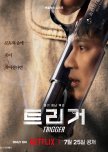
"Everyone has a trigger"
What is the trigger for a person that will cause them to throw away their future for a moment of vengeance wrapped in the cloak of justice? What is the tipping point for a society lured into self-destruction? Trigger challenges the angel on a person’s shoulder to do the hard thing even as the devil on their other whispers for them to do the thing that will feel good in the moment.Due to his violent military past, Officer Lee Do has given up on guns and only carries a taser when on patrol. He seeks to show compassion to victims and enforce the law with criminals. South Korea’s stringent gun and ammo laws are suddenly being flouted by everyday citizens as well as criminals leading to numerous deaths and causing panic to incur in society. Do is determined to discover the source of the weapons and the plans of the dealers before Korea falls headlong into gun culture.
Trigger asked pertinent questions and addressed timely problems. While there were criminal elements getting their hands on guns, the more sinister elements involved the stressed-out citizenry clandestinely led down the path to their own annihilation. Bullied children and adults, the daily slings and arrows of casual cruelty, mental illness, and corporate greed and corruption drove people to their trigger points. When there was no recompense, no justice, no recourse for the downtrodden, desperate people with little to lose turned to vigilante justice with a gun. Trigger asked the audience to contemplate whether guns made people safer or less safe.
The production values were high and the story kept a stringent pace. That’s not to say you won’t have to suspend disbelief on occasion. I was relieved a drama finally showed the drawback to the first bullet in an officer’s gun being a blank. Most of the acting was excellent. Kim Nam Gil can always be counted on for a strong performance. I prefer him with facial hair and a devil-may-care grin, but we all have to suffer for his art at times. Kim Won Hae gave a nicely balanced performance as Do’s supervisor and father figure. He was utterly heartbreaking in one scene. Kil Hae Yeon played another distraught and vengeful mother, knowing how to hit all the emotional beats. I quite liked the music as it was neither intrusive nor overly wrought. My biggest complaint was the lighting and makeup that showed every pore on people’s faces and often the theatrical makeup itself.
Lessons I learned: 1) Always check your horoscope. 2) When holding a gun on a person, never stand too close. 3) Never bring a boxcutter to a gun fight. 4) It pays to know who your employees are. 5) A sincere apology could save your life. 6) “You can’t justify your actions with some sort of grade school philosophy.” You can, but it might not work out so well.
Guns are like cockroaches. Once a home is infested you are never going to get rid of them even if you burn the place to the ground. When trust is lost and people live in a state of fear, they are capable of abhorrent actions. And at least in Dramaland, if reminded of their humanity and shown compassion, people in a broken and suffering world can choose a path to a brighter future. I found Trigger entertaining, though it did bog down near the end. I only hope these forms of entertainment can help societies make choices that result in their children never having to practice active shooter drills at school.
25 July 2025
Trigger warnings: Numerous shooting deaths even of children. Because when guns are plentiful, the most vulnerable all too often fall victim.
Several comely nekkid buns at a gangster sauna.
Was this review helpful to you?
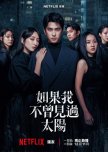
And the thunder rolls...
Had I Not Seen the Sun P2 continued the story of pain and retribution which began in P1. Questions were answered, monsters were destroyed and created, and justice was once again slow and ineffectual.Li Jen Yao is out of prison and working for Big K as a cleaner amongst other jobs. More than anything he is searching for Chiang Hsiao Tung who has seemingly disappeared. One night he helps a blind woman who has Chiang’s butterfly tattoo on her hand. Is this the girl he has been searching for? How could she look so different? Somehow in this town of over 2 million people other interested parties from the past also bump into the damaged pair.
Sun P2 did some things quite well. The romantic parts sizzled and scored. Chiang’s brokenness, not only from the attack by her rapists but by society’s lurid need for despicable videos, and people’s trained response to blame the victim, resulted in her mind’s answer to an unanswerable question to her problems. Alice Ko may have been too old for her role, but I honestly enjoy her performances and was grateful for her screen time in P2. The drama highlighted how Chiang felt trapped in that one horrific moment, not only her, but the boy who loved her as well.
What didn’t work for me as much: The villains became even more cartoon-like completely going over the top, perhaps to justify their gruesome deaths more. Li sinking into monsterdom wasn’t a shock, we knew from season 1 that he would go on a killing spree, but his bloodlust spilled over onto people who didn’t deserve it. His last murder was almost comical, it felt like the old saying, “In for a penny, in for a pound.” “I’ve murdered this many people so, why not?” While Chiang’s mental state was the focus of her story, it would seem the writers underwrote Li’s. His most monstrous act didn’t seem to faze Chiang which was also problematic for me. Li was always portrayed in a simple binary. There was Chiang, his sun, and everything and everyone else in the darkness with him. While I enjoyed watching the romance blossom, it was at best a female wish fulfillment of a guy who would do anything, anytime, anyway for his girl with few thoughts and desires of his own. Finally, after all the angst and mysteries, the drama took a shortcut in the healing of a truly complex mental illness that was jarring.
There was a public service announcement with a number to call “if you need someone to talk with” at the end of the drama, not how to get justice, which just showcased that rape is a part of life for many women. Women who will never see justice. Women who must deal with a patriarchal society that blames the victim, shames the victim, and oftentimes turns on the victim. With the advent of the internet, their pain can be on full display for seemingly all time with few recourses because the silent monsters in the dark feed on it. There were so many important things this drama touched on, not least of which was how abusive parents cause terrible brokenness in their children and society. I was prepared to give Had I Not Seen the Sun P2 a higher score as I was watching it until Li went completely off the rails. A romanticized monster is still a monster.
13 December 2025
Trigger Warnings: Sexual assaults, slicey and bone crushing murders, self-harm, suicide
Was this review helpful to you?
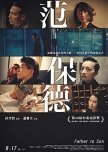
"Stories from the past you want to hear hide in the future"
Father to Son was another slow, meditative work by Hsiao Ya Chuan. Packed with colorful characters denied real life by shockingly short interludes, the film hinted at a deeper story that it could not fulfill. Yet there were still points to recommend from this film about fathers and sons and their complex life cycles.Van Pao Te/Ah Te is a sixty-year-old owner of a hardware store and has made a name for himself with his inventions. He and his wife aren’t close but he helps her campaign for a local office once run by her mother. His son, Fan Ta Chi, is gifted at coding and assists his dad with their business. One day while working in a hospital, Ah Te is seized with pain. An old schoolmate who is a doctor witnesses it and gives him an exam. The results regarding his pancreas are not promising. As Ah Te contemplates his future, the past bids him to call. His father had abandoned the family and moved to Japan when Ah Te was 10, never to be heard from again. Ah Te and Ta Chi take a business trip to Japan and then go in search of his father. Meanwhile, a young man from Hong Kong who is close to Ta Chi’s age visits Ah Te’s old flame.
Father and son relationships can be complicated especially when the primary source of demonstrating love was simply not walking out. Ah Te was a man of few words and fewer visible emotions though the scars from his childhood ran deep. Determined to not make the same mistakes, he sought to give his son an exit ramp from feeling obligated to stay and support his parents. Huang Chung Kun gave a quietly intense performance of a man grappling with a future receding from him and a past overcoming him. Fu Meng Po crafted a son who had come to understand his father’s sacrifice and faults, while gently caring for Ah Te as the illness chipped away at his health.
The cinematography and scene compositions were lovely. Several crucial incidents occurred during the time between 1987-1988. As I’m not a scholar of Taiwanese history, I’ll let better informed viewers seek out the symbolism. Circulation or cycles did play out in the film and it wasn’t hard to see how Ah Te sought to break the cycle his father created, yet still inadvertently may have effectuated his own offshoot of estrangement. The laundress’ niece, Nico, blew into town much in the way Yu Chin had years ago and Ta Chi was attracted to her as his father had been to Yu Chin. The film was slice of life slow with sparse dialogue and I would have loved to have gotten to know several characters and their stories better. My biggest complaint was that past events were intriguing and wished Hsiao had filled in more of their background. My other complaint was the ending which felt out of place in this glacially paced, yet life affirming film.
Father to Son wasn’t a reconciliation film, more like revelatory film. Questions to some answers remained an enigma, and the individual had to discover meaning out of the mist of memory, critical absences, and a flawed life lived with the best of intentions. Each generation had to work to break out of unhealthy cycles even as their eyes were opened to answers that must be experienced to be understood.
16 July 2026
Trigger warnings: Smoking. Brief nudity-both male and female in two different scenes. Vomiting.
Was this review helpful to you?
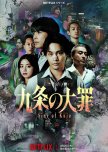
"Many people who can't be saved by the justice system are victimized by it instead"
Sins of Kujo is a law drama that focuses on Kujo Taiza, a defense attorney who specializes in cases involving the weak, the poor, and the wicked. Despite the fact that the judicial system promises representation for defendants, Kujo is treated as a pariah among other lawyers for the clients he takes on.Defense lawyer Kujo Taiza harbors dark secrets and takes on cases others shun. He lives in a tent on the roof of the building he works in having lost everything in his divorce. He has no visitation rights to his daughter and has been completely disowned by his own family. The straightlaced Karasuma Shinji applies to work in Kujo’s practice with secrets of his own. Shinji finds Kujo’s clients distasteful and his methods aberrant. Social worker Yakushimae Hitomi drops in occasionally to help with clients in need of public assistance. Mibu Kengo, a yakuza fixer, helps on the fringe, for good or bad remains to be seen.
One of the things that worked for me in this drama was that there were no meaningful court scenes. We were privy to the actions before court and the resolutions afterwards. No long, drawn-out, overly dramatic speeches with each case. It was also interesting to watch a law drama that covered the gray areas and people. Kujo told Shinji to not confuse morality and the law. His clients were not people anyone in polite society was going to invite to dinner but they deserved to be properly represented just like everyone else. Not that anyone seemed to believe that. Other lawyers, the police, and citizens on the street considered Kujo a crooked lawyer because he represented criminals. He was threatened with prison often, nearly every episode, which I found confusing. Unless he did something illegal, being a defense attorney was an important cog in the wheels of justice. How was representing crooks any less ethical that representing corporate raiders who bled people dry on a grand scale? At least once an episode someone would bang on about how awful he was, despite the fact he also worked tirelessly to help victims and didn’t charge exorbitant fees. He was definitely an unorthodox human rights lawyer at times.
The work relationship between Kujo and Shinji never gelled for me. The connection between Kujo and the tattooed Mibu was far more intriguing. The social worker tended to show up at mealtimes and spent most of her scenes with Shinji. There was an incredibly repressed and narrow-minded activist lawyer that was dangled as a possible love interest for Kujo. Neither female character was written very well.
There was obviously a sinister connection between Kujo, Mibu, the yakuza Kyoguko, and detective Arashiyama though a frustrating dearth of clues as to what their connections were. Kujo was playing a long game but the writers were silent on what that game was. Something you do need to know about this drama is that it ends on a cliffhanger without resolving any of the issues that were hinted at for 10 episodes***. If no season 2 appears on the horizon, I’ll be dropping my score. Up until the last episode I would have rated this drama an 8 merely for not retreading overused law cases and tropes. I’d honestly put off watching this drama until a season 2 has been confirmed.
13 July 2026
Trigger warnings: A long finger lopping scene, nekkid tattooed buttocks, smoking, torture scenes, sexual assault alluded to in a flashback scene.
Snack note: these lawyers and friends ate and drank often so if seeing food triggers you to hit the frig you might need to find an appropriate snack or mindset beforehand. XD
Spoilery thoughts below regarding the unanswered and unasked questions
***
***
***
***
***
***
***
***
Why didn’t Kujo have any visitation rights with his daughter? Was that his choice?
What is the dark secret connecting Kujo and Mibu? They both obviously want to take down Kyogoku.
Was Kujo that absurdly stupid to take and then give back Morita’s phone?
He said he wouldn’t leave it to the courts if a loved one of his had been murdered. Why did we never meet his wife?
Was Shinji’s dad truly into a shady business or was it just a salacious news story?
What really brought Shinji to Kujo?
What was the real reason Kujo was disowned by his family? That one case didn’t seem reason enough for such drastic action.
What is Kujo’s brother up to?
How did Kujo’s dad die?
How was the estrangement connected to Shinji’s family?
Usually, dramas drop a juicy clue before the cliffhanger. Not this one. Combined with not knowing if there will be a season 2, those are the real Sins of Kujo.
Was this review helpful to you?
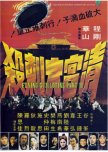
"I don't want their hearts, I only want the kingdom." Are you sure you don't want their heads?
Flying Guillotine 2 was the sequel to the 1975 film Flying Guillotine. Campier, bloodier, but less fun than the original, FG2 had a similar cast with people playing different characters because most of their characters were killed off in the first movie.The Qing emperor Yung Jing is furious that the ex-Flying Guillotine Ma Tang has not been found. Ma is not the only worry Yung has, rebels have been trying to assassinate him. The emperor has continued to have righteous officials and scholars murdered which does not sit too well with the surviving officials or the people. The rebels led by Hero Jin are planning to mass on Hsia Mountain. Before they can leave, the F.G. squad attacks. Most of the rebels survive because Ma Tang arrives with his Iron Umbrella that can defeat the spiraling death caps. Both sides accelerate their arms race in the hopes of defeating the other and being left with their bodies intact.
Ti Lung took over Chen Kuan Tai’s role as Ma Tang. With a huge cast, his time was shortened compared to Ma’s prevalent screen presence in the 1975 film. Shih Szu played Na Lan, the daughter of a minister, with a personal grudge who was determined to kill the emperor. And one of my faves, Ku Feng, brought the authoritarian threat to his role as the emperor. My other favorite, Lo Lieh, was stuck working with Wai Wang who had no idea how to play off another actor. I could see Lo trying to connect with him as Wai looked like he was thinking about what he was going to have for dinner.
There were substantially more and longer fights than in the first film all competently choreographed by Tang Chia. The problem with having such a large cast though is that the stakes were watered down. It was hard to care about 90% of the characters and whether they were separated from their heads. The flying guillotines, even with their upgrades, lost their spiky menace as they decapitated random characters too fast to process. The first film gave weight to the characters and corruption that added suspense and concern.
Flying Guillotine 2 aka Palace Carnage was fast paced with plenty of action, yet it felt strangely hollow with so few characters to connect with on a screen plastered with bodies. It’s worth a watch if you like the actors or the guillotines, if you come into the film with low expectations. As always, I rated it on a kung fu curve, and was probably being generous with a 7.0/10.
24 March 2026
Trigger warnings: Decapitations, of course. Arms chopped off. Two scenes with naked women for no other reason than it was 1978. A bird in flight was skewered with a sword.
Was this review helpful to you?
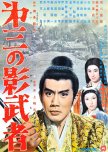
"In this world, the weak are playthings to the strong"
Third Shadow Warrior showed how man’s desire for carnage and power wasted the lives and resources of the land. Whether a farmer dreaming of being a samurai or a samurai lord desiring to rule everyone, the greed sank deep into the hearts of the sword bearing warriors.In 1564 the Hida area within the mountains escaped the large armies’ invasion. That didn’t stop smaller forces from desiring to rule the clans. Lord Yasutaka was winning the battles and close to being the ruler supreme of the Hida. A young farmer named Ninomiya Kyonosuke’s dream of being a samurai appears to be answered when Shinomura Saheita comes down from the castle to hire him. Ninomiya discovers he is to be one of Yasutaka’s three doubles, trained to exactly mimic the lord. Whatever troubles befall Yasutaka, befall the three doubles as well.
The message behind the film was strong. Samurai were not to be admired as they were blood-thirsty fighters who only desired more power and wealth never caring about anyone below them in stature or station. Each of the clans betrayed the other in order to move ahead. Betrayals were also rampant within the clans. Despite making strides forward, Ninomiya’s future burned around him with every step. Never clever nor ruthless enough, the farmer fell victim to others with more power. His own greed spelled his doom.
As much as I appreciated the bleak, disturbing story, the unfolding of the revelations felt perfunctory. I called out each disaster before they occurred. While I felt sorry for Ninomiya losing his identity, his impulsive actions also sealed his fate. His was not the sharpest katana in the drawer. The acting for many of the characters was also overly theatrical as if they were on a stage playing to the back row.
Third Shadow Warrior played out the ridiculous degrees of loyalty some samurai were called upon to enact. Not that the nobility and superiors were required to show the same loyalty, more often than not, those ranked below them suffered terrible consequences. Fate was not kind to those who did not understand their place and the sacrifices mandated upon them. Definitely worth a look if you enjoy anti-samurai or Jidaigeki films.
18 March 2026
Trigger warnings: Loss of eyes, loss of an arm.
Was this review helpful to you?
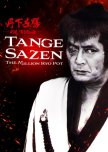
Tange Sazen Kenfu! Hyakuman Ryo no Tsubo
2 people found this review helpful
"See you never!"
Tange Sazen: The Million Pot Ryo is a famous tale. My first encounter with it was from the 1935 film with a similar title. While the 1935 film took a lighthearted approach, 1982’s was much grittier. Not an unexpected turn from director Gosha Hideo and star Nakadai Tatsuya.The “Shadow Shogun,” Gurako, convinces the shogun to have the Yagyu clan pay for the temple’s restoration. A sum of money designed to bankrupt them. Not to worry, the oldest Yagyu member of the clan knows of a treasure kept secret for emergencies, hidden within a vessel in the family vault. What he doesn’t know is that the walls have ears and now more than one interested party heads to find the vessel. When an orphan boy becomes embroiled in the mad chase, a one-eyed, one-armed ronin becomes involved…a problem for everyone seeking the fortune.
Tange Sazen had been unbeatable before the loss of his limb and eye. Even now, no one truly stands a chance against him. As cunning as he is skilled, Sazen manages to resolve the myriad of problems the treasure creates, though not how everyone else might want them solved. At 50-years-old, Nakadai still made for a compelling and fierce warrior. This Sazen was cynical, having been betrayed and maimed by people he trusted. Despite his missing arm and eye driving him back to his samurai life, he was still comfortable among thieves and prostitutes. The thieves Yokichi and Ofuji went from being adversaries to allies.
This made for television movie may not have been the highest quality project either Gosha or Nakadai worked on, but it was above average in entertainment as the different factions killed each other off in search for the treasure with Sazen always one step ahead or into his cups. Whatever he was up to, Nakadai’s Tange Sazen was fascinating to watch and worth a look at this older tv film.
17 March 2026
Was this review helpful to you?


