

 135
135 431
431 16
16 2
2 6
6 3
3 8
8 10
10 3
3 13
13 1
1 1
1 1
1 1
1 2
2 6
6 8
8 5
5 9
9


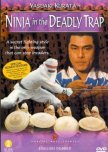
General Chi sends his son to find the Master of the Three Arts. The master has a book detailing the ninja’s skills. Years ago, he taught three different men three different skills. They’ve never met, but have a way of knowing who the other is. Eventually, Han Yu returns with the fighters and they immediately start ferreting out the ninja spies.
I had higher hopes for this film given the cast. Poor Ti Lung spent most of his time ostentatiously dressed and looking constipated. Kurata Yasuaki didn’t fight until the last five minutes of the film, which was the greatest crime. Phillip Kwok aka Lizard Venom, Lu Feng aka Centipede Venom, and Chiang Sheng aka Venom Intern, put on a good show as all three were quite athletic and acrobatic. The trio took part in directing the film and choreographing the fights. Though a few of the fights strayed into kung fu posing, most were quick and entertaining for the time.
This film was not a Shaw Brothers production where the Venoms had spent most of their time. The Venoms went on the road to Taiwan and it showed. Several of the fights were shot at night which meant that it was difficult to discern the action. Others were carried out in the forests per usual, though at least this time it helped for the ninjas to have trees to jump out of.
The film’s quality was badly degraded. At one point it looked like Mystery Science Theater with dark chunks missing at the bottom of the screen resembling the bots watching a movie. The film choices I found were either subbed with faded white subs on a faded badly cropped background or a dubbed version with Chinese subtitles with more of a letterbox screen. The sound and film quality were poor for both. Basically, pick your poison.
When Ninja in the Deadly Trap focused on the Venoms it was more interesting. I’m still salty that Kurata had such a small part as he could bring the menace to accompany his real word martial arts skills. For fans of the genre, it could be a frustrating watch but worthwhile if you are a fan of any of the players. As always, graded on a curve.
3 May 2025
Was this review helpful to you?
"Don't ask for more"
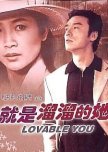
Cute Girl aka Lovable You was Hou Hsiao Hsien’s directorial debut. Fans of his may be able to spot his tells, but this seemed worlds away from “A Time to Live, A Time to Die” or “Daughter of the Nile”. This was a plain vanilla romcom if you removed all the vanilla.Pan Wen Qi’s wealthy father is arranging a marriage for her to the son of another wealthy family. Wen decides to take a break and spend time with her aunt in the countryside. As luck would have it, Gu Da Gang is surveying the town for a highway that is going to be built. “Hilarious” interactions between the villagers and Da Gang draw the two together. But sadly, this love could never be, because Wen’s father would never approve of a poor engineer. Wen returns home without saying good-bye to the man she has happily spent the past few days with. That doesn’t stop Da Gang from stalking her, I mean searching for her to declare himself.
Romcoms often rely on cheesy situations and misunderstandings, how the tropes are implemented is what matters. Cute Girl was built on cute people who did supposedly cute things. The characters had no depth and Wen’s most emotional outburst was when Da Gang and her blind date became friends. The cringe factor was high in this film, which wouldn’t have been so bad if the characters caused me to care whether they got to together or not. The theme song was played at least six times and for the most part this was a music video with a little story to it. It was truly one of the blandest films I’ve ever watched. At ninety minutes, it felt much longer.
3 May 2025
Trigger warning: A cobra was shown being butchered
Was this review helpful to you?
"To those we remember fondly"
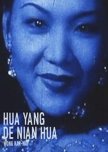
While looking for something to watch on the Criterion Channel, I stumbled across a short film by Wong Kar Wai. He made Hua Yang De Nian Hua (listed as Fa Yeung Nin Wa on MDL) while prepping for In the Mood for Love. Numerous old Chinese films thought lost were discovered during the 1990s in a warehouse in California, USA. Wong used the archival footage and spliced together images of glamorous actresses in a variety of roles and set the short film to the song Hua Yang De Nian Hua made famous by Zhou Xuan.Edited beautifully, the film flowed easily to the rhythm of the song that also used a clip from “Happy Birthday.” There weren’t any words, but it was gratifying to see a short film dedicated to women and their roles in Chinese and Hong Kong films. Dancing, smiling, crying, moments of love, sorrow, and violence were highlighted as well as some truly gorgeous costumes. At less than three minutes, definitely worth a watch.
Was this review helpful to you?
"If your sword skill is poor, best to not carry it."
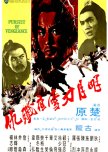
Pursuit of Vengeance was a 1977 kung fu flick whose cast was stronger than its story. Based on a Gu Long book, Chor Yuen must have struggled to contain the story in a 90-minute film. While the story may have been convoluted, the potent combination of Ti Lung, Tony Liu, and Lo Lieh made the film entertaining.Fu Hong Xue and Ye Kai wander into town and are invited to Ma Kong Qun’s school for dinner along with four other fighters. Six coffins are delivered ahead of them, not a good sign of a friendly welcome. Amongst the attendees is the unknown surviving son of Master Bai. The family leader was ambushed by thirty masked warriors and brutally murdered twenty years prior. Fu and Ye develop a friendship as they fight together or watch the other one fight. Into the mix, a sword for hire and playboy, Lu Xiao Jia drops into their laps. Lu has been sent to kill them, but as he hasn’t been paid yet, he works to keep them alive until he sees the money.
The Gu Long story behind Pursuit of Vengeance was also made into the 1993 movie, A Warrior’s Tragedy. I’d hoped by watching this film that I would better understand AWT, but alas not. The original story must have been quite complex with numerous characters as both films struggled to narrow down the focus and make it understandable. Frankie Chan wrote the music for this film and then 17 years later directed and starred in the remake. Ti Lung played Fu in both adaptations. At least he was closer to the character’s age in this one and didn’t walk around with that ridiculous limp as he did in AWT.
Despite the fact that this film was absurdly written, I enjoyed watching Ti Lung and Lo Lieh. Ti, as he usually did, played the straight man, this time to Lo and Tony Liu who delivered their comedy without going OTT. There were so many fights that many bit actors and stuntmen died at least twice! Mama Hung who was normally cast as a random villager even got in on the action as did Oyang Sha Fei! Tang Chia designed the fights which meant that they more theatrical than realistic. Unlike the remake’s over the top wire work, PoV had a modicum of super leaping individuals. It more than made up for any realistic elements by overusing the Mission Impossible face masks.
Pursuit of Vengeance had trouble with what must have been an unwieldy book to translate onto the screen. The fights were typical of the time, including bizarre weaponry. What made the film entertaining for me was the camaraderie between Ti Lung, Tony Liu, and Lo Lieh. They were fun to watch banter and fight back to back. I can honestly say I’ve never seen so much of Lo. Only for fans of old kung fu flicks and as always, rated on a generous curve for the genre.
26 April 2025
Trigger warning: Lo’s bare bottom on two occasions.
Was this review helpful to you?
"Enter at your own risk"
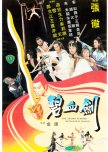
The Sword Stained with Royal Blood was a 1981 Chang Cheh film based on part of Jin Yong/Louis Cha’s story that was originally serialized in a Hong Kong newspaper during 1956. Phillip Kwok starred as the hero Yuan Cheng Zhi and also helped choreograph the fights along with fellow Venoms Lu Feng and Chiang Sheng.Yuan Cheng Zhi is rescued as a child by a loyal servant when his righteous father is executed by the new Qing emperor. He is brought up and trained by Mu Ren Qing the leader of one of the Mount Hua sects. Cheng Zhi becomes quite proficient in kung fu and grows into a kind and ethical young man. On one of his exploits, he and his servant discover the cave of the Golden Snake Hsia, a renowned swordsman from two decades ago. Cheng Zhi learns Hsia’s techniques with the golden sword and throwing darts. A secret treasure map is also included in this inheritance but Hsia’s desire was that the gold be given to the lady Wen Yi. Cheng Zhi goes in search of Wen Yi finding the thief Wen Qing instead.
Phillip Kwok was a talented martial artist who was also quite acrobatic. Kwok (Lizard Venom) worked once again alongside two of the other Venoms---Lu Feng (Centipede Venom) and Chiang Sheng (Venom apprentice). Cheng Zhi was not only an accomplished kung fu fighter and swordsman, but diplomat as well. Everyone around him was slice first, ask questions later. Despite Cheng Zhi’s early attempts at stopping the fighting, in the end, limbs would be lopped off and the blood would flow. There was a cross-dressing romance with Candy Wen’s Ching Ching, one of the more annoying female leads during this time. Her mother’s romance in flashbacks played a strong role in the present. I tend to find long flashbacks annoying and a real momentum killer, but I actually enjoyed the revenge and love story from the past that tied everyone together in the present.
The Sword Stained with Royal Blood had too much story with too little time to tell but did the best it could. Kwok made for a moral hero who wasn’t a total drip. I guess it helped that Cheng Zhi had the skills to back up his polite entreaties. There were fewer fights than one might expect from 1981, but the fights offered were fast and well-choreographed. Worth a try if you like these old kung fu flicks.
31 March 2025
Trigger warnings: At least three dismemberments and one torture scene.
Was this review helpful to you?
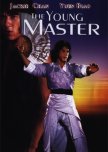
Lung and Tiger were orphans taken in by Master Tien. When Tiger betrays the school for money, he’s kicked out. After second thoughts, Master Tien sends Lung out to retrieve the wayward student. Tiger falls in with Ah Suk’s motley gang and helps spring a dangerous prisoner, Master Kam. Lung is mistaken for Tiger and becomes entangled with Sheriff Sang Kwan and his family.
The story was thin, even as kung fu flicks go, but it provided a framework for numerous fights beginning with a Lion Dance. Back when Lung was chastised as a lazy fighter. Somehow, he became a more proficient fighter as the story moved along, all without the benefit of a training montage or new master. The story had continuity issues, perhaps because of editing for time. Chan fought with just about every fighter in the movie-Fung Hak On, Lee Hoi Sang, Yuen Biao, Sek Kin, Lily Li, Wai Pak, Fan Mei Sheng, Yue Tau Wan (& friends), and the big finale with hapkido master-Hwang In Shik. The final fight showed off Hwang’s fighting skills and Chan’s pratfalls for nearly 20 minutes before Chan finally ate his spinach and was able to do more than fall down.
Comparing it with other films from the era, the fights were well choreographed. Fung Hak On and Lee Hoi Sang tended to move at a faster speed in their fight against the prison guards. Chan’s fights were more deliberately styled, often with props, which slowed things down. His fight with Sek Kin (and Sek’s double) was entertaining. The old veteran brought nice acting skill to his scenes as well. I lost interest in the last fight other than being impressed with Hwang’s diverse kicking techniques. There were only so many times I could watch Chan fall down before it became monotonous. The Young Master was entertaining, but often felt a bit self-indulgent and uneven. 7.25 rounded up to a 7.5.
31 March 2025
Trigger warning: Nekkid men’s buttocks
Was this review helpful to you?
Anything you can do, I can do better!
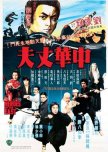
Heroes of the East aka Shaolin Challenges Ninja was a lighthearted Shaw Brothers production directed by Lau Kar Leung and starred Gordon Liu. The movie started out as a battle of the sexes over whose martial arts was better between a newly married couple and graduated to an understanding and respect for the different styles and weapons of martial arts in China and Japan.Ho To resented his father for forcing an arranged marriage on him. His wealthy father who often worked in Japan arranged the marriage with a Japanese business partner. Once Ho saw how beautiful Kung Zi had become, he had a rapid change of heart. The way of love was not smooth as Kung Zi was dedicated to her martial arts practice and looked down on kung fu. Ho To believed karate was inferior to kung fu. The garden and furnishings took a beaten when the two quarreled with the servant Shou often literally stuck in the middle. When Kung Zi angrily returned to Japan, Ho To issued her a challenge. If she could beat him in any form of martial arts, he would admit he was wrong. Kung Zi’s life long friend, Takeno, saw the challenge and took it as an affront. His sensei gathered different masters and off to China they went in order to take up Ho To’s challenge!
Lau Kar Leung is one of, if not my favorite, martial arts director from this time period. His love for martial arts shown through in this film. Instead of stereotyping the Japanese as evil and painting the screen in blood, he respectfully showcased different skills from both countries. No one died, and there was only one tiny trickle of blood. The fights were quick, complex, and thoroughly entertaining whether using fists and kicks, swords, spears, or nunchaku. Lau also acted in the film as Beggar So, demonstrating the drunken style, magnificently I might add, to the young martial arts students.
Gordon Liu was his usual competent, fast self, even while wearing a horrible wig that must have been glued to his head. Kurata Yasuaki played the Japanese ninja who was in love with Ho’s wife. Due to their real life skills, he and Gordon were able to fight believably with Crane vs Crab techniques. The purple smoke and disguises weren’t really needed but were fun. I was happy to see Japanese actors and fighters cast instead of Chinese actors playing the Japanese roles. The only reason I wasn’t able to rate this an 8.0 was due to the character of Kung Zi. She was ridiculously destructive and entitled in the first hour of the film. She became more sympathetic in the second half and then pulled a ninja move by disappearing.
Despite proclaiming respect for each other’s skills, the film was a Chinese film so kung fu was shown as more elegant and effective. Ho was also accomplished with numerous weapons and different fight styles while the Japanese were relegated to only one form each. The Japanese also bent the rules to give themselves advantages. Nearly half of the film focused on fighting whether between husband and wife or Ho and the Japanese masters. Each of the fights was unique instead of regurgitating the same moves over and over as some films do. Gordon and Kurata in the same film with Lau’s choreography made this a must see film for me. I wish they’d done a better job writing for Mizuno Yuka in her Taming of the Shrew role, but she sold her fight scenes well. The movie has been restored and looked beautiful. For fans of the genre, it’s one to check out.
26 March 2025
Was this review helpful to you?
Winner, winner, chicken dinner!
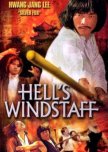
The Dragon and the Tiger Kids aka Hell’s Windstaff (or Wind Staff) was made in the spirit of Drunken Master without the drunken part. The film started out featuring two goofball young guys stumbling through comedic scenes. As often happens in these films the laughing turns to crying followed by a revenge filled training montage and rampage.Tiger Wang and Shih Hai Lung are proficient with kung fu but spend most of their time causing problems for the adults in their lives. Tiger’s dad hires a traveling entertainer to train his son in kung fu. Tiger tries to rid himself of his new teacher, but Ching Wan Li is too crafty for him. When Tiger and Shih end up in trouble trying to run human traffickers out of town, it is Ching who comes to their defense. But will his abilities be enough to defeat Lu Shan Tu and his Devil Staff when he comes calling?
Despite the early comedy, this was an old school brutal kung fu blood fest. I watched this for Hwang Jang Lee and his glorious porn stache. Actually, for his incredible kicking techniques. Like Lo Lieh he was often relegated to villain roles which he did well. It seemed perfectly within reason that the heroes would need at least three guys to bring him down. Hwang did a variety of amazing stunts with fists, kicks, and the staff. I had to rerun and re-watch his three for one kicks all done in a single jump. Mang Hoi reminded me of a kung fu Samwise Gamgee. An excellent martial artist in real life and often a martial arts director, this was a rare leading role for him. Meng Yuen Man as Tiger was considered one of the “Seven Little Fortunes”. The two good guys were extremely acrobatic and performed complicated stunts together and alone. There were several martial arts directors including Hsu Hsia and Corey Yuen. With most of the cast more than capable, the choreography was complex and relatively fast. The fights still had the basic rhythm of most of these early kung fu movies but moved quicker than many of their counterparts. Nothing was sacrosanct, there were numerous hair pulling, eye gouging, and pants dropping fights! Bonus points for Jason Pai Piao who played the courageous and clever Ching Wan Li. I really enjoyed his character.
Hell’s Windstaff would have benefited from a stronger lead performer than Meng Yuen Man. However, the copious fights were well staged and exciting. Hwang Jang Lee was given the opportunity to display his quickness and martial arts abilities which made this movie worth the price of admission. It also had a comedic and gruesome surprise ending. If you enjoy old kung fu flicks this is one to give a try.
20 March 2025
Trigger warning: Snake!
Was this review helpful to you?
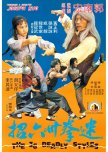
Did not meet wig-spectations
36 Deadly Styles was two different movies consolidated into one which was odd enough, then the costume department apparently must have run out of money and raided a high school drama department and janitor closet to find enough wigs for everyone.Wai Chi and his uncle are being chased by a red-nosed bad guy and his henchmen. They escape into a shaolin temple and are aided by Huang who fights off the bad guys. The uncle dies and Wai Chi is allowed to stay as long as he does menial tasks. Wai Chi meets Yu Ti the soy milk provider for the temple. She is also adept at kung fu as she demonstrates by taking him on when he has no money for the milk he ordered. Eventually, Wai’s belligerent attitude gets him kicked out of the temple just as the villainous brothers hunt him and the mysterious Huang down.
Wai Chi and Yu Ti ended up being the two halves of the “8 Gods Fist” style of kung fu. For some reason Hwang Jang Lee had killed Wai’s dad and other relatives years ago and was still after Wai. Another completely unrelated story, but gave the movie its title were two old kung fu masters with a 10 year old grudge. Kwong Wu Chan had possession of the “36 Deadly Styles” manual, something Yuen Ching Tien was willing to kill to have. Given that Hwang Jang Lee only appeared in the last 15 minutes of the film with a stuntman doubling for him in earlier fights they could have combined the two stories.
The fights were standard early 1970s kung fu posing. Mark and Jack’s fight was slower than I would have anticipated from them. I watched this film for Hwang Jang Lee and his Thunderleg but there was precious little of it. Even when he was showing off his kicks, the camera was so close you couldn’t see the full effect. Another problem with the fights were the terrible wigs. Poor Bolo had the worst wig I have ever seen in anything. It looked like someone took a mop and did macramé with it. Lau Kwok Shing was stuck with a burned-out blonde wig not matching his beard and eyebrows. Hwang had a fried gray wig. All three men could be seen adjusting the monstrosities during fight scenes. Nick Cheung Lik seemed to have his own hair but was relegated to a Jackie Chan light role. All the men had great fighting chops but the choreography by Max Lee did not measure up to their skills.
Like many kung fu comedies the body count was quite high. I truly have no idea why director/writer Joseph Kuo shoehorned the secret book and old masters’ story parallel to the revenge tale, especially since he didn’t establish a strong enough reason for the blood feud with Wai and the abominable wig villains. Graded on a curve, and only for Joseph Kuo fans (maybe) or Bolo fans though why see the poor guy with that embarrassing mop hanging off his head.
19 March 2025
Trigger warning: a rather gruesome snake skinning and eating.
Was this review helpful to you?
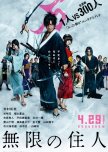
"You're not the only hero with a sad story"
Blade of the Immortal cut through 30 volumes of manga (none of which I’ve read) condensing them into a two-hour movie. Manji, “The Killer of 100,” who was tired of living found a spark of life in helping a young girl avenge the deaths of her parents. The cyclical nature of revenge and the price people pay for it was woven throughout the endless bloody fights.Manji is a wanted man after killing for his lord and then discovering the order was a murder to hide his boss’ illegal actions. Unable to live with that dishonor, he killed his boss and his boss’ bodyguards. After a key death drives him to the edge, he is ready to die after killing 100 men, or at least a lot of men. But death was not found so easily as an ancient crone puts a curse on him. He is destined to live forever with his guilt, assisted by creepy bloodworms that can heal his body, even reattach limbs, an ability that will be used often. After 50 years, a girl named Rin finds him and asks him to help her avenge her parents’ death. A cruel group of assassins led by Anotsu is eliminating traditional dojos in an attempt to become the preeminent martial power. Manji and Rin will face every bad guy, corrupt official, and nutjob in Japan on their path to revenge.
In the 50 years leading up to meeting Rin, Manji must not have touched his swords. Without his miracle worms, he would have died very early in the movie as he was often dominated by baddies with a sword, simply outlasting them. Every few minutes, a member of Anotsu’s crew or a bounty hunter from the Shogun’s Suicide Squad met him on the road or in an alleyway. Arms and legs flew everywhere, including Manji’s. This is not a movie for the squeamish. I had to look away when severed body parts were flung about or when the worms played Florence Nightengale.
The multitude of fights were well choreographed. Manji managed to hide numerous weapons in his clothes (seriously, how big were his pockets?) so that he could show off different skills. I liked Kimura Takuya’s turn at the world-weary warrior searching for a modicum of redemption in protecting Rin. Sugisaki Hana as Rin was stuck with the formulaic female part of running headlong into trouble and mistaking yelling as strength. Even though she’d studied the sword at her father’s dojo, Rin was completely inept with it. Fukushi Sota’s Anotsu was pretty though not nearly menacing enough. Anotsu and Rin’s interactions illustrated how revenge begets revenge which begets another cycle of revenge.
The continual parade of new bad guys to fight began to wear thin. At one point it became humorous when Manji was fighting an army, Anotsu, and then another villain showed up to confront him! Even as a fan of samurai movies, 140 minutes of nearly continuous hacking and blood spewing of random soldiers and villain cameos became monotonous. Despite these reservations, I did enjoy Blade of the Immortal. The movie was well shot and acted with only the severed bodies "disarming".
16 March 2025
Warning: So many body parts
Was this review helpful to you?
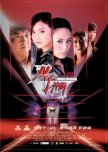
"The guy who trusts you is passed out now"
Twins Mission was a kung fu fest starring several sets of twins both identical and fraternal. The story and much of the acting was weak. My reason for watching? Yuen Wah in a dual role, Sammo Hung, and Wu Jing flaunting their fists and kicks in this high-flying wire-fu, glass breaking free-for-all.Monks Lau Hay and Uncle Luck are transporting a precious Tibetan bead onboard a train headed to Hong Kong. They are attacked by sets of twins and the bead is lost. Meanwhile in Hong Kong, powerful real estate developers are pressuring the owner of several homes to sell in exchange for the bead which might be able to heal her cancer stricken sister. Two acrobat sisters work in a circus with two other sets of twins. Eventually, the Principal, Chang Chung, comes calling to ask them to help him retrieve the artifact for the monks. None of the twins are happy to see him as he had dumped them off with the circus when they were young. Their fate was better off than the twins that ended up with his twin brother, Chang Yung, who runs a crime syndicate. The bead will trade many hands as the two twin teams battle it out with the life of one little girl hanging in the balance.
This was Benz Kong’s only film he ever directed. He usually played the role of the martial arts/action choreographer or even stuntman. I remember reading years ago that Sammo Hung and Jackie Chan both said that Yuen Wah was the real deal, the guy you wouldn’t want to fight in real life. Often relegated to “Thug #3” in many early martial arts films, I’m always happy when Yuen plays a more prominent role. Sammo’s character was sidelined early in the film, only again appearing at the end. Jacky Wu Jing was a legitimate Wu Shu champion and is always fun to watch. Old school Bobby Yip in a bowl haircut did a cameo with a twin sister with an equally bad hairdo. The rest of the twins’ action were well choreographed. Most of them were better when they were fighting than when they were talking. I haven’t seen this much breaking glass since the original Police Story.
The story was not great and not particularly well edited, I won’t even mention the ending. There was a lot of cheesy humor and acting. The fights aboard the train, the glass shattering mall encounters, and the final battle featuring the old school kung fu artists were highly entertaining. If only all the parts that connected them were as well thought out.
10 March 2025
Trigger Warning: Twin Snakes!
Was this review helpful to you?
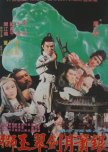
"Sorry, you're just making me more confused" Buddy, you're not the only one
Angela Mao starred in Moonlight Sword and the Jade Lion. This script was one of the biggest messes I’ve seen in a while. I tried to attribute the problems to translation issues as the only available version I could find was dubbed in English, but even at that there were serious issues with it. Angela was the only redeeming part of this kung fu flick.Chu Sau Yin leaves to find her master’s brother. Why? Good question. She spends a month running into dead ends, dead people, or simply getting the run around. Don Wong inexplicably picks fights with her when masked men aren’t attacking him. Then he makes like Houdini and disappears for most of the movie. Anyone who is about to give Chu a clue is murdered by a dagger throwing assassin. She ends up fighting everywhere she goes, sometime even with the “good” guys. Why is it so important for her to find Liu Chan? You’ll have to wait 75 minutes into a 90-minute movie to discover that underwhelming tidbit.
This story was just about as thin as a story can get. Chu searched for her master’s brother for whatever reason her master wanted and she also wanted to know what happened to her parents. Apparently, only Liu Chan knew and he never told anyone, not even his brother for over 20+ years. Meanwhile an assortment of baddies were stealing and trafficking in what appeared to be well-to-do women. Doris Lung trained dancing girls and assassins all while romancing the Big Bad. Don Wong, well, I have no idea what his role was in this movie. He didn’t even warrant a name. He attacked Angela Mao’s character for seemingly no reason other than to show off his food fighting skills. Then there were times the two acted like buddies and fought together against whoever might be attacking them. Wong disappeared for over 40 minutes in the middle of the movie. Maybe he had another acting gig he had to work on simultaneously. People appeared and disappeared, said they were going somewhere-but never showed, and motivations were never given for random actions. Chung Ren wrote the script, the only one I could find he was credited with. Even in the bare bones stories of kung fu films, this movie would win a prize for one of the top three most poorly written and poorly edited films I’ve seen.
But how were the fights? Angela made the most of her fights using a spear. She moved quickly and was quite agile. Her stuntman did a great job filling in with the more complicated gymnastics moves. Whenever her character wore the pink pantsuit, it meant she was about to open a can of whoopass. The fights employed reverse filming, trampolines, complicated weaponry, wire-work, and often stilted action. One fight with lethal dancers and their explosive flowers was at least unique. The film might have been called Moonlight Sword because most of Don Wong’s fights were filmed in the dark which made the action difficult to see. There were also fights between characters who were largely inconsequential to the story. Since there wasn’t much of a script, they had to fill the time somehow.
Angela Mao was the absolute best thing about Moonlight Sword and the Jade Lion. I admit to giving the film a slight ratings bump merely because she is one of my favorite martial arts actresses. The film was a mess right up to the very end when certain characters made perplexing decisions, but by that time all I could think was, “why not?” Only for dedicated fans of Angela.
6 March 2025
Was this review helpful to you?
"Don't you have an opinion of your own?"
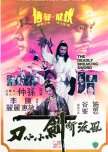
The Deadly Breaking Sword was a Shaw Brothers production starring Ti Lung and Alexander Fu Sheng. It lacked a classic hero, in fact, there were only characters with layers of gray and darker gray. Fu Sheng’s “comedic” character felt completely out of place in this dark story of human pride and greed.Tuan Chang Qing aka The Deadly Breaking Sword prided himself on the flare with which he killed his opponents. He always dressed in nice clothes, prepared a coffin for the soon to be departed, and then broke off an inch of his sword into the bone of the defeated. Classy. He battles halberd wielding Lian San and beats him, but doesn’t kill him. Lian goes to Dr. Guo (secretly the Killer Doctor, given that Ku Feng plays the character and is surrounded by thugs played by Yuen Wah and Eddy Ko, it’s a given that he is the Big Bad). Xiao Dao is gullible and a hapless gambler who ends up as a servant in the casino until he pays off his enormous debt. He falls for Liu Yin Xu, the fancy prostitute next door, even while Luo Jin Hua, the owner of the casino has her eyes set on him. Liu has a secret grudge against the good doctor and tries to rope Tuan and Dao into killing him for her.
This film had a dark theme running through it often derailed by the comedy schtick plopped randomly into it. Fu felt like he belonged in a completely different movie. Not that Xiao Dao wasn’t capable of murder. Without his character, I might have rated this film higher. The long running time would have been cut down and the clumsy fights he was involved in would have been eliminated. The fight choreography overall wasn’t great. Tang Chia implemented a lot of kung fu posing. The first and last fights between Ti Lung and Michael Chan were actually entertaining and much more fluid. The rest of the fights were awkward and the fists, kicks, and weapons often missed their marks by a mile/km.
The Deadly Breaking Sword was filled with anti-heroes and outright villains with the potential for an interesting take on the traveling swordsman. Instead, it was a mish-mash of characters badly stitched together into one story. It wasn’t a comedy, or at least it wasn’t for me. The most comedic thing in the whole movie was Ti’s dreadful fake mustache. The story of revenge and twisted honor codes kept getting tripped up by people slipping on banana peels or in this case, dominoes.
3 March 2025
Trigger warnings: Dismemberments and bloody injuries
Fun fact: Fu Sheng's wife, Jenny Tseng, sang the theme song.
Was this review helpful to you?
"You don't understand how women feel"
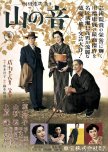
Sound of the Mountain was a complex story of a father coming to terms with his adult children’s failing marriages. “Success as a parent depends on the success or failure of your children’s marriages. That has me worried.”Shingo and his son, Shuichi, work together and live under the same roof. Shuichi has a mistress and a girlfriend, along with his long-suffering wife, Kikuko. Shingo tries to make his daughter-in-law’s life better and gives her positive attention whenever he can. The rest of the family thinks they are hiding the fact that Shuichi has a mistress, but given that he is out late every night, or doesn’t come home, she’d have to be an idiot to not know. Shingo’s daughter, Fusako, comes home with her two small children, having run away from her husband who is also involved with another woman. She doesn’t receive much comfort or help from her family and goes to stay with other family. Kikuko realizes that Fusako is trapped. She has no job, no money, and will eventually have to return to her husband. This observation will play a key role in Kikuko’s upcoming decision about her marriage with Shuichi.
This family drama focused on Shingo as he was nearing the end of his life and realizing how he utterly failed as a parent. His son was selfish, thoughtless, and a womanizer. He realized that Shuichi has murdered Kikuko’s heart and that his son was completely incapable of love. His daughter was miserable and trapped in a loveless marriage with two children. Shingo tried to patch the relationships with tape. Nothing he did made any of the relationships better. He and his wife vaguely discussed older couples who committed double-suicide when their usefulness was done.
While the film sounded like a melodrama it highlighted women’s plights, how children and lack of money kept them tethered to terrible husbands. The men casually felt it was their right to have sex and relationships outside of marriage. Four women made bold choices that went against social norms. One woman had an abortion to have the option to be free, another decided to have a child out of wedlock, another woman had to leave her son behind when she left her marriage, and another still had to decide what she was going to do. The decisions weren’t easy and had terrible costs, but these women refused to be cowed. Director Naruse Mikio didn’t offer any easy solutions, he simply showed how the patriarchy didn’t benefit these women.
Yamamura So and Hara Setsuko did a splendid job as the conspiratorial in-laws who bolstered each other’s spirits. Quite honestly, the film often made me angry as it unflinchingly showed how the men treated the women in their lives. I would have rated this a 10 if the unfaithful husbands had been hung up like piñatas and beaten for the suffering they caused their wives. Sadly, that wouldn’t have been realistic. I’ll have to take solace in a 1954 film being bold enough to discuss difficult subjects and giving the women the courage to make their lives the best they could under the conditions they lived in. Good job, Naruse.
23 February 2025
Was this review helpful to you?
"People can't be worse than wolves"
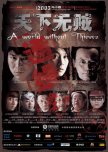
A World Without Thieves starring Andy Lau, Rene Liu, and Ge You had packs of thieves on a train all stalking a naïve young temple carpenter unwisely carrying his life savings. The cast alone made this film worth watching for me.Wang Bo and Wang Li are thieves looking to fence a BMW in the Gansu province. Li is ready to retire and live a normal life, something Bo has no interest in. When they stop at a temple for Li to pray, Bo makes use of the time pickpocketing the other worshippers. The two agree to part ways when Li insists she’s turning over a new leaf. At the train station, Li befriends a young man who doesn’t believe there are any thieves and announces to the crowd that he is carrying 60,000 yuan ($8000 USD). Li is determined to protect him and his funds while Bo strategizes how to steal them, all while fending off the other thieves he has identified. Before long, it appears that there are more wolves than people on the train all seeking to fleece the innocent lamb.
Lau and Liu had great chemistry as the bickering couple. Lau’s job of being taken seriously was undermined by one of filmdom’s worst wigs ever. Spoiler alert, the wig was murdered later in the movie which all but made me stand up and cheer! Ge You wasn’t outshone as the leader of a gang of thieves. A master of disguise that didn’t fool many people he was the perfect foil for the lovers. An egg peeling duel between Bo and Uncle Li was fascinating. Li Bing Bing played Uncle Li’s very limber #1.
The cinematography, especially in the first part of the movie was stunning. The open vistas and mountains tried to steal focus from the photogenic actors. Once on the train, the feeling became more claustrophobic with thieves circling each other and the hapless and clueless carpenter. There were several fights in tight spaces that were shot super close and more balletic than realistic. And apparently, several of the characters had ride on top of a train in their bucket list.
A World Without Thieves was a comedic thriller for much of the running time. This being a Chinese film, don’t put too much trust in the almost campy thief competitions of one-upmanship. It’s all fun and games until the blood starts flowing. The story of redemption and just deserts was wobbly in places, but like gifted pickpockets, the strong cast were successful in drawing attention away from the film’s weaknesses…most of the time.
“Even ghosts will work for money.”
19 February 2025
Was this review helpful to you?


