

 135
135 431
431 16
16 2
2 6
6 3
3 8
8 10
10 3
3 13
13 1
1 1
1 1
1 1
1 2
2 6
6 8
8 5
5 9
9


Reporters Ken and Jenny are aboard a navy sub in order to watch a new torpedo demonstration when a mysterious creature swims by the viewing window. Later the two don their scuba gear and go back to investigate. Jenny is confronted by one of the creatures and escapes. Commander Tom Brown says he doesn’t believe her, and like a good man from the 1960’s, recommends she see a psychiatrist. Ken does believe her and the two once again go underwater to see what’s going on but are captured by the strange creatures. They awaken to find themselves dressed in white pajamas and scuffed up white go-go boots. Dr. Rufus Moore introduces himself and explains his plan, showing the transformation of a man into a Creature from the Black Lagoon. Ken and Jenny seek to avoid that fate while their friend, Commander Brown fights bureaucratic red tape in order to rescue them.
I have a high tolerance for cheesy old monster films, but this one tested that tolerance. With the exception of Sonny, who looked great here I might add, the acting was abysmal. Not even in the cheesy, “Welcome to my lair, Mr. Bond,” kind of way. The costumes had issues with gaping spots and one was literally coming apart at the seams. The cyborg commands were rudimentary of which they showed only two, “work” and “fight.” But what happens if they become short-circuited and turn on their masters? They livened up the movie after a lot of yakking from the humans! Jenny’s sole purpose was to scream or cry loudly and look pretty which became quite annoying. Sonny’s street fighter powers were greatly reduced here. Instead of fileting the fishmen, he was routinely dominated. But I will say the evil scientists made good use of their label makers by neatly labeling every can of atomic waste dumped at the bottom of the ocean clearly and succinctly.
Fans of Sonny Chiba or old monster flicks may be disappointed by this film. The underwater installations, subs, and torpedoes were all well-crafted. If only as much attention had been paid to the acting and costumes. Even graded on a curve, Terror Beneath the Sea barely made a passing grade.
23 October 2024
Was this review helpful to you?
Lots of ghosts-no vampires
Mr. Vampire 3 left the hopping vampires behind and embraced ghosts, both the friendly and unfriendly kind, in this installment of the franchise. Lam Ching Ying’s vampire slayer was joined by a fellow Taoist played by Richard Ng. Stronger than the second film, it lagged behind the first for me.Uncle Ming, a Taoist priest who utilizes two ghostly brothers to help him make money exorcising “haunted” houses finds himself in the middle of a skirmish between villagers and deadly horse thieves. Uncle Nine leads the villagers and figures out very quickly that the bandits who are impervious to weapons have had a heavy dose of black magic. Uncle Nine convinces Uncle Ming to release his ghosts, but they might just need them when the bandit’s leader, the Devil Lady, decides to seek revenge against the village.
Lam Ching Ying owned this role and despite this being his third outing as the unibrowed Taoist priest gave it his all. Richard Ng was a welcome addition as the Taoist priest who had fallen on hard times yet still had some magical chops. His relationship with the two friendly ghosts was one of the sweeter parts of the film. Pauline Wong, who played a ghost in the first film and a hopping vampire in the second, returned this time as the malevolent Devil Lady. What caused me to drop my rating for this film was the overuse of Billy Lau. As an antagonist with limited screen time in the first he accomplished his task. In the third installment his sycophantic, contemptible disciple of Uncle Nine grated on my nerves. I was rooting for the Devil Lady to tear him apart instead of his friend. Sammo Hung, Wu Ma, and Corey Yuen made guest appearances at a birthday party when they served up a “foreign moon cake” with candles.
This film had very little kung fu unlike the first, which was a shame. Lam Ching Ying in action is a sight to see although he did have a few cool moves in this film. Like the other films in this franchise, the wires were rarely edited out and I could see them in several scenes when the supernatural fights took place. There were rudimentary special effects for the ghostly battles and a deep-fried ghoul scene to top it off. Director Ricky Lau kept the action coming from start to finish.
Mr. Vampire 3 was entertaining for the most part and I enjoyed Richard Ng and his ghosts, though I could have used less of his bare behind. Lam Ching Ying and his twitchy brow were worth watching the film alone. If the writers and director had remembered to dial back the most annoying character it would have been far more enjoyable for me.
14 October 2024
***Trigger warnings: Cockroaches and bats***
Was this review helpful to you?
"I want to get that foreign fish fried!"
Lam Ching Ying and his unibrow returned to fight the undead in Vampire vs Vampire. This time he was aided by a Little Vampire, 2 inept disciples, and a fierce Mother Superior. He would be confronted not by hopping vampires, but a European vampire impervious to his magical talismans.Disciples Ho and Fong disturb a palm ghost and attract her attention. Master Unibrow helps them out but now the ghost will not leave them alone. The two have to find her body so that she can be properly buried. Meanwhile, Master Unibrow is helping the village leader who is having a feng shui problem with the land. Master Unibrow shows him where to dig a well for better water and fortunes. Unfortunately, bats move the marker and workers dig in the wrong spot the next day. During these misadventures a handful of nuns are attempting to rebuild their church. The local captain vows to burn the church down but the nuns are persistent. When the well workers begin digging they find more than artifacts, unbeknownst to them they uncover a European vampire staked in the heart by a cross with a giant ruby in it. The greedy captain and his girlfriend awaken the beast when they try to steal the ruby. Master Unibrow has his hands full when trying to dispatch this new foe.
Vampire vs Vampire was a similar set-up to Mr. Vampire (1985). Lam Ching Ying was once again the adult in the room and constantly helping everyone around them whether it was a bat infestation, blood sucking vampire, or distraught ghost. The casting of Chin Siu Ho promised a few acrobatic fights which he delivered on. Lam Ching Ying who also directed the movie was able to get his kung fu on as well much to my delight. Sandra Ng played the self-absorbed girlfriend who was bitten by the vampire and was able to show a completely different side of her acting. Billy Lau who seemed to be in all of these movies played the character I most wanted to be blown up-the pompous captain. Lam Jing Wang brought the adorable to his Little Vampire, a character familiar to those who watched Mr. Vampire 2 even though it was set in the future. With these movies, logic was never a consideration.
Vampire vs Vampire had plenty of slapstick comedy for those who like it, I’m not one who does. There was low budget special effects and once again I spotted wires in various shots when characters went airborne or amphibians. But the film had a few tense moments when the bats attacked the sisters, maybe because bats* freak me out. The European vampire was scarily funny yet also a good opponent for Master Unibrow. The Dracula wannabe became more gruesome looking as the fights went on. Master Unibrow had to think outside the box to bring down the fanged baddie. Fortunately for him, the sisters were willing to help as well as his incompetent disciples and his cute TNT carrying Little Vampire. If you enjoyed Mr. Vampire, this is one you might want to give a try. (Rated on a curve)
14 October 2024
Trigger warnings-bats and a snake
Was this review helpful to you?
He Jia Yu is always getting into fights with brothers Wu De Bao and Wu De Zhi from a rival school. Also in town is Chen Xiaowei and her mother who are fleeing from Luo Yihu and his gang who are taking down schools and fighters. When Yihu comes to town the bodies start dropping. Jia Yu and friends will have to up their skills if they want to stay alive.
The first half of this film was slapstick comedy and pranks that began to wear thin. If not for the promise of hopping vampires I would have dropped it. There was a creative fight competition between a chicken and a centipede. Which eventually led to hopping vampire action on a bet later on. Hwang Jang Lee as Luo Yihu had a black cat and could power up when his eyes glowed green. I love watching Thunderleg in action. He didn’t need wires for his high-flying kicks. Wong Yu was quick and acrobatic, a good foil for the hard kicking baddie. Yen Shi Kwan as Yihu’s mentor was always dependable and had a strong fight with Hwang. Sharon Yeung’s fight choreography made use of her limberness, but she wasn’t believable as a lethal fighter. The final fight between Wong Yu and Hwang Jang Lee was quite creative. I’ve never seen incense used in that manner.
Kid from Kwang Tung was moderately entertaining, perhaps more so if you enjoy slapstick comedy. The comedy didn’t work for me, especially when the good guys kept getting brutally killed. What did work? Hwang Jang Lee was worth the price of admission. That and a half dozen hopping vampires. As always, rated on a curve for old kung fu flicks.
11 October 2024
Was this review helpful to you?
Oh, what a web we weave, when first we practice to deceive or ... blow people up
The Web of Death was a Shaw Brothers fantasy and action fueled story with special effects revolving around a spider that could shoot the rainbow out of its spinning hole and create colorful explosive and poisonous webs. In 1976 the creators may have expected the audience to take this movie seriously but I laughed hysterically throughout it.The 5 Venoms Wu Du Clan is holding a meeting regarding the big martial arts tournament to be held on the Wudang Mountain. Snake Clan Chief Liu Shen wants the Wu Du Chief to allow them to use the Five Venoms Spider to defeat their enemies. The chief refuses saying that if the wrong person got hold of the weapon the world could be threatened. Liu Shen starts the gossip that the weapon which has been hidden for 100 years is about to be found believing the good guys will find it for him. Sure enough, the Wudang Clan immediately sends Fei Ying Xiang out to see what the scoop is. He runs into a woman disguised as a man who tells him she might be able to find the spider for him. Turns out she’s the Wu Du Chief’s daughter. While she has nothing nefarious in mind, not everyone may believe that.
Yueh Hua played the righteous swordsman Fei Ying Xiang while Ching Li played Hong Susu, the deadly swordswoman from the “bad” clan. I know I was supposed to be invested in their Romeo and Juliet romance but it didn’t really pull me in. This film was packed with Shaw Brother favorites. Lo Lieh was the duplicitous Liu Shen-always a delight to see. Ku Feng took on the role of a “good” clan leader while Wang Hsieh gave one of his more sympathetic performances as the “bad” clan leader.
The special effects were low budget 1970’s fare, but there were plenty of them. Sparkling lights, smoke, fire, fireworks, and colored lights. There were hidden traps, acid baths, and poison everywhere. The spider spewing out smoke and lights was a chef's kiss of cheesy effects. And this tarantula could also make elephant trumpet calls while standing on his hind legs. The sets were decked out like a Halloween spider fun house. I’m not an arachnophobe, but I also don’t like seeing them. These decorations looked like something a grade school came up with so were not scary to me at all. There were only a couple of shots of a real tarantula (surrounded in rainbow light) for anyone who needs to know for trigger warnings.
Very little time elapsed between fights or traps. Trampolines, wires, and reverse shots were all utilized in the place of serious martial arts, but the fights were still fun to watch as people fought on fire or dodging fireworks. Whoever doubled for Ching Li was quite acrobatic, flipping and twisting around her enemies.
As I was watching this movie, my first thought, after laughing about the “chase the rainbow” spider, was that I’ve seen this story before. Turns out it was a reworking of Cheng Pei Pei’s The Thundering Sword. Maybe this time the doomed love would turn out better and the good guys wouldn’t be close-minded jerks. Or maybe not.
The Web of Death is really only for fans of old kung fu movies or people who enjoy cheesy special effects. Turns out I love both and had a blast watching this fun house of horrors. As always, I grade old niche films on a curve.
10 October 2024
Was this review helpful to you?
I wanted to hop away from this one
Aside from also starring Lam Ching Ying and featuring hopping vampires, Mr. Vampire 2 had little to do with the original Mr. Vampire. Mr. Vampire 2 seemed to think if 2 Idiot assistants were good in the first film, 3 or more would be even better. The relentless slapstick comedy dragged this movie down for me.Grave robbers come across 3 Jiangshi in a cave and take them back to their lab. They believe the hopping vampires will fetch a good price. In the process of transporting the little boy vampire, his talisman comes loose and he escapes. A little girl finds him and makes friends with him. The mother and father vampires are set loose first by Idiot #1 and then again with Idiot #3. “Hilarity” ensues.
The humor in this film didn’t work for me. Wanting to molest a frozen female vampire wasn’t humorous to me. A snake going up Idiot #1’s pants or Idiot #2 keeping a frog in his mouth didn’t tickle my funny bone. And once again a snake was killed, this time its heart was eaten by Idiot #2 as a tonic. Idiot #3 tried to convince Lam Ching Ying to let him marry his daughter by telling him he was already banging her. Who does that? How many times could people stupidly free the vampires while hamming it up for the camera? Each “hilarious” fight took around 10 minutes. Another thing that took away from my enjoyment was the terrible dubbing for the children. The little boy vampire was cute and because he couldn’t talk, didn’t have the bad dubbing by an adult. Despite the cute little vampire and the children taking him with them on outings, this shouldn’t be mistaken for a children’s show though it felt like they were trying to lean in that direction.
The best part of this film was Lam Ching Ying and his unibrow who appeared to be the only adult in the room. Moon Lee who was featured in the first film had a couple of small scenes in this sequel. Wu Ma made a brief appearance as a neighbor. James Tien who played in many kung fu movies showed up as an inept police captain. The three trouble-makers had me rooting for the hoppers who were far less annoying. The only other bright spot was when Lam Ching Ying’s character rattled off his credentials, such as---his master Sammo had Spooky Encounters and Lam had caught a Mr. Vampire last year. Speaking of Sammo, I missed the kung fu that took place in Mr. Vampire (1985).
Mr. Vampire 2 had possibilities by being set in the then present 1986. If you enjoy Hong Kong slapstick comedy you will likely enjoy this film far more than I did. I won’t be crypt-ic, there was nothing I could sink my teeth into and enjoy.
6 October 2024
Was this review helpful to you?
Wasn't electrifying
Whether watched under the title Frankenstein Conquers the World or Frankenstein vs Baragon, this movie was a letdown on both counts. I enjoyed War of the Gargantuans, the loose sequel to this film and had higher hopes for the origin story. All the scenes of decimated animals had me wanting to bolt for the door.During the last days of WWII a German mad scientist’s work is taken by the Nazis and delivered to the Japanese via submarine. An equally mad Japanese scientist in Hiroshima looks at the indestructible beating heart and envisions an invincible army of soldiers who cannot be killed. As luck would have it, as they were doing their experiments, it turned out to be the disastrous day of August 6, 1945. Fifteen years later scientists come across a feral boy who is eating people’s cats and dogs and bunny rabbits. He’s eventually captured and after some research is believed to be a Frankenstein. With an oversized brow, a terrible wig, gapped teeth, and unable to communicate he continues to grow the more protein he is fed. Meanwhile, an earthquake, unbeknownst to the citizens, is actually Baragon burrowing and causing havoc.
A feral boy who continues to grow until he’s over three stories tall and a giant burrowing kaiju with a glowing horn ought to make for an electrifying movie. Alas, most of the film was as dull as dirt until the last 15 minutes or so. The scientists continually waffled back and forth whether Frankenstein should be or could be killed. Most believed he wasn’t human so it didn’t matter how they treated him when he was shackled and caged. This could have led to an interesting moral discussion but they were unable to piece together a workable body of logic.
The miniatures for the most part were skillfully done. The trees being thrown had roots to good effect. The boar on wheels and puppet horse were funny because they were so unrealistic and made the scenes less problematic. Although I did not need to see a dismembered rabbit. The overlays worked for the most part when Baragon blasted through a dance party.
These are the hardest films to review because Frankenstein Conquers the World wasn’t awful but it wasn’t very good either. It was an interesting origin story for War of the Gargantuans but didn't reanimate the genre. Baragon would be seen again in 1968’s Destroy All Monsters and the mouthful of a title Godzilla, Mothra, and King Ghidorah-Giant Monsters All Out Attack in 2001. The latter was the best out of all the movies mentioned here. There were parts of an interesting story and the final fights were good (make sure to watch the international version which has an additional kaiju), it just wasn’t stitched together well as a whole. The writers could have used a hand but sadly it crawled off.
5 October 2024
Was this review helpful to you?
Nailed it!
Kung fu, hopping vampires, silliness, and ghostly romance---what more could you ask from a movie called Mr. Vampire? It had typical 1980’s slapstick style humor. Some of the jokes haven’t aged well but many were still able to stick the landing.Lam Ching Ying’s Master Ko is in charge of stopping a deadly vampire with only two incompetent disciples to help him. One disciple (Chin Siu Ho) becomes possessed by an amorous ghost (Pauline Wong) while the other one (Ricky Hui) begins to transform into a vampire after being bitten. Matters are not helped when a greedy rice dealer (Wu Ma!) adds regular white rice to the sticky rice needed to deter vampires. Did that suck! Master Ko uses every trick in the book to destroy the vampire. Buffy had it a lot easier. All she had to do was stake the fangers or decapitate them. Ko has to use chicken blood, ink, talismans, coated wire, sticky rice, and a host of other magical spells to try and stop the nearly indestructible homicidal hopper.
Mr. Vampire was aided by Lam Ching Ying and Chin Siu Ho having some martial arts abilities. Chin was particularly acro-bat-ic. Kung fu veteran Yuen Wah played the vampire which added to the martial arts fun. There was wire work which fit the magical atmosphere. There was a grave mistake, I spotted the wires in one scene.
What I learned from Mr. Vampire: Sticky rice slows down a vampire. A vampire can’t see you if you hold your breath. If a beautiful person of the opposite sex suddenly appears and wants to take you home on a dark night, best to make a date for coffee during daylight hours to see where it goes and whether they can appear because they may not be the ghoul of your dreams. If someone grows long blue nails overnight keep the sticky rice nearby. Hong Kong has gorillas? lol
Mr. Vampire was fun, especially if you like hopping vampires/Jiangshi combined with martial arts. As always with these older films there won’t be the high production values and CGI you see in modern films. Though you will be able to see guys hop in unison and others get set on fire. Props to Yuen Wah who was able to take the heat and his performance to the neck level!
(Trigger alerts below)
4 October 2024
TRIGGER ALERTS: A real chicken was killed as well as a snake (they made soup out of it later). There were also rats in one scene.
Was this review helpful to you?
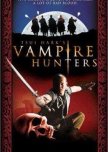
Hopping Vampires!
I thought that I’d been led astray in my research of hopping vampire movies when I began Era of Vampires aka Vampire Hunters. The first creature of the night was a super powered blood sucking vampire that did not so much as hop, jump, or skip. Later on, my patience was rewarded when a whole herd of hoppers appeared. This was a low budget Hark Tsui produced film of which I expected more yet still found enough to keep my attention.Be very, very quiet for Wind, Rain, Lightning, Thunder and their sifu Mao Shan are hunting a vampire. This mostly dead ex-general was juiced up and took exception to the vampire hunters. Many of the red shirt hunters were killed and Mao Shan was feared dead as well. Three months later the weather crew followed their vampire compass to the Jiang residence on the day of a wedding. The Jiangs were experts in making and using wax which led to some uber creepy goings on in a house where things didn’t just go bump in the night but also hopped and slithered. A secret stache of gold, a greedy brother-in-law, the Vampire King, the hunters, and the macabre household would all eventually collide in one gory mess.
This film had a very low budget look to it. The sets were simple but made to appear frightening with blue lighting and copious amounts of smoke masquerading as fog. The Vampire King was gruesome and buggy, no sexy fang banger here. Two of the humans did have time for some romance while running away from and fighting vampires. Even though there was some gore, the special effects were extremely low tech which took away much of the fear factor.
I didn’t recognize the Phoenix from Eternal Love TMOP at first. A young Ken Chang played Thunder and had the most screen time. Old martial arts movie star Chen Kuan Tai showed up as a Taoist corpse wrangler and set the hoppers loose at one point to distract the hunters while thieves sought out the golden treasure. He was even able to show his kung fu stuff in a short fight with one of the baddies. There were several wire-fu fights in dim lighting that weren’t as creative as I would have liked but were okay for this film.
Era of Vampires was more reminiscent of early kung fu films than films from the same timeframe. It had some intriguing moments and for this bargain basement niche mixed genre of martial arts and vampires it held its own.
30 September 2024
Was this review helpful to you?
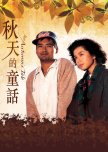
Table for Two
Before Harry Met Sally, Figgy and Jenny met in An Autumn’s Tale. Mabel Cheung directed this romcom from a script by Alex Law. Set in New York City, it showed some of the obstacles Figgy and Jenny had to overcome on the way to love and the American Dream.Jennifer Lee flies from Hong Kong to NYC in order to go to acting school and be with her boyfriend, Vincent. Her cousin Samuel Pang aka Figurehead aka Figgy greets her at the airport and gives her a ride in his deathmobile to her new apartment. Jenny’s mom had been informed that Figgy was a very successful businessman with his own apartment and car. Technically, all those things were true, if exaggerated. Vincent gave her a worse surprise than riding in Figgy’s junker. Unmoored and not sure what to do, Jenny went to school and picked up two part-time jobs to make ends meet. When Figgy wasn’t working or gambling he spent time with her, helping her overcome a broken heart and also had to make a better bowl of fish soup.
This film may have smacked of a tried-and-true romcom formula, but it was a newer trope nearly 40 years ago when this film came out. Even at that I found it entertaining and well done. The film eschewed secondary characters for the most part and focused on Jenny and Figgy which helped deepen my bond with them. Both were flawed, likeable characters trying to find their place in the world. Chow Yun Fat gave a delightful performance as the good-hearted Figgy who always helped a friend in need. This was the most vulnerable I’ve seen him. From joyous to down crested, he made Figgy believable and sympathetic. The younger Cherie Chung held her own with him as Jennifer. The two had nice chemistry going from strangers to something more even when Jenny and Figgy weren’t sure exactly what that something more was.
NYC was shown from its dirtiest closet to its shiniest showroom. Jenny went from being unsure of how to navigate the city to gaining her confidence with each passing day. Unlike Figgy, Jenny not only hung out with Cantonese speaking people, she also made friends at her school. Though ten years older than her, it was Figgy who needed to gain the confidence required to meet his goals. The two characters helped each other to grow and figure out what they wanted in their lives and each other.
An Autumn’s Tale was a subtle and slow burn romance without any annoying melodrama or slapstick comedy. Even the misunderstandings were overcome quickly. What it did have was character growth and personal discovery for both Jenny and Figgy. Their endearing relationship and adventures made the trip to NYC worthwhile.
25 September 2024
Was this review helpful to you?
"Sometimes I have to follow what others do. I don't know why life is this hard"
All the Crows in the World is a short film by Tang Yi that won the 2021 Palme d’Or Best Short Film and the 2022 SXSW award for Narrative Short. A clever satirical look at “respectable” businessmen and also a warm take on how friendships can occur in the strangest of places. Tang Yi built her world, added some surreal elements, and let her sharp female lead navigate it with care and fun.Zhao Sheng Nan and her friend are enjoying a snack when the shop owner takes off with a female “friend” before his wife comes back. Sheng Nan starts a stopwatch and bets how long he’ll last. A relative advises her with a bullhorn that her cousin wants to meet up with her. At the restaurant table filled with middle-aged businessmen she finds herself, her virginity, and her marriageability the center of conversation. A conversation that includes a Taoist priest. She’s also gifted numerous red envelopes. The party moves to an “entertainment” establishment where numerous girls in short dresses are introduced. Sheng Nan finds a safe harbor with Wang Jiang Guo who has no interest in women or the evening’s proceedings.
Shot on a small budget, Tang Yi was the writer, director, and cinematographer. She utilized her 14 minutes and managed to make Sheng Nan and Jiang Guo come to vivid life, also helped by the actors’ performances. Though teenage Sheng Nan still had an innocence about her, with each zip of her jacket she showed that she was also aware of what men’s eyes desired. And was confident enough to put the businessmen in their places. Unlike the mainland where gay love is verboten, this Hong Kong film had an openly gay character. Jiang Guo and Sheng Nan formed great co-conspirators as they found their own way to enjoy their evening.
I enjoyed this quirky short film which even found time for a quick dance number complete with wings, bubbles, and strobe lights. Sheng Nan and Jiang Guo’s developing friendship was entertaining to watch as they commiserated with each other and poked fun at the respectable people around them. Tang Yi is a fresh voice and one I want to hear more from.
24 September 2024
Was this review helpful to you?

Don't buy our cars!
It’s Me Here, Bellett was composed of three car commercials written and directed by Oshima Nagisa. Ozu Yasujiro was a script consultant/creative consultant but these three films bore no resemblance to any of his films. Nakamura Hachidai provided the score which ranged from a typical 1960’s jazz background to dark noir trumpets. Each of the segments were unique and none of them would make you want to buy the Isuzu Bellett sedan.Segment 1-A young guy who dotes on a red Bellett that may not be his picks up his girl for a night of lovin’ by the sea. Things do not go as planned when she takes offense at his overly fastidious obsession with the car.
Segment 2-A darker noir story featuring an actor in love with the female producer he works for, complete with the narration such films had. He uses his apartment money to buy a car he can’t afford to show her he’s a serious actor. When he has the opportunity to give her a ride, just as in the first segment, things do not go as planned.
Segment 3-A boss who is having an affair with a beautiful subordinate calls things off when he buys a car to show his commitment to his wife. His lover takes exception to this and steals his car while he and his wife are on vacation.
My rating is on the actual art of the commercials which was excellent. The cinematography and different moods evoked by lighting, acting, story, and music were excellent. But they were the most anti-ads I’ve ever seen. If I had to grade by how much they created a desire in me to purchase a Bellett my rating would be a zero. All of the owners were either jerks or oddballs which became strangely humorous by the end. The acting ranged from sufficient to proficient. The acting by the young actors in the first segment was supposed to be comic which didn’t work for me as well. In the darker second segment, Oshima’s wife, Koyama Akiko, played the producer who had an unusual ride with an actor. Segment three threw the actors straight into a melodrama.
Watashi wa Beret aka It’s Me Here, Bellett is only 27 minutes long, but a fascinating anti-car commercial made for television to sell cars by several well-known directors aside from the ones mentioned such as Yamamoto Kajiro, Chiba Yasuki, Gosho Heinosuke, Nakahira Ko, Hideo Sekigawa, Tanaka Shigeo, and Nomura Yoshitaro. Worth your time if you enjoy films from the past and windows into a different world and don’t mind the short format.
10 September 2024
Was this review helpful to you?
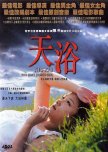
"Every place is the same"
Xiu Xiu the Sent Down Girl was a haunting and angry film set during the Cultural Revolution. The Tibetan steppes with an ocean of green and endless blue skies belied the ugliness taking place in a small, ragged tent.Xiu Xiu waves goodbye to her family as she and other youth from her community are sent to the “countryside” during the Cultural Revolution. At fifteen years of age she is assigned to work with a horse herder in order to learn the skills to come back in six months to lead the Iron Girls Cavalry. Lao Jin is a skilled horseman who understands the land he lives on. During a battle twenty years ago he was castrated, something none of the local men let him live down. Xiu Xiu doesn’t care for her remote assignment but gamely works with Lao Jin in the sun and rain. When the six months come to an end, homesick Xiu Xiu packs her belongs and eagerly waits to be picked up. The bus home never arrives. One by one men come to her and convince her that they can help arrange her permission documents if she will give them the favor of using her body. Desperate to leave the steppe and return to her mother and father she opens herself to the degenerate men while slowly and surely her hope and dignity begin to ebb away.
This was an infuriating movie to watch. Director/writer Joan Chen left most of the politics out and focused more on human nature. Xiu Xiu was a naïve child who wanted to go home. The vast steppe wasn’t freedom to the teenager, more like being stranded on a desert island. As evil men do who have power over women or in this case a beautiful teen girl, they took what they wanted offering empty promises in return. Like the child she was she committed to the only path she could see that might help her escape. Lao Jin allowed her to make her own choices even when he saw how disastrous they were. Only when something happened that wasn’t her choice did he spring into action.
The connection between Xiu Xiu and Lao Jin was engaging. The difference in age was substantial which Lao Jin respected if the men at headquarters did not. He cared for her more as a ward than possible love interest. Xiu Xiu tended to boss him around yet Lao Jin tried to make her as comfortable as possible. Li Xiao Lu (Lu Lu) and Lopsang gave natural heartfelt performances that drew me in as the mismatched work couple.
Both Joan Chen and the author* of the novel this film was based on lived during the Cultural Revolution which gave them some basis for their artistic endeavor. Watching a child willing to do whatever was necessary to break through the corrupt bureaucratic red-tape and institutional abuse of human rights and dignity was devastating. Joan Chen took advantage of the stunning scenery and cloudy skies as the backdrop for the film. Even when human darkness began to erode Xiu Xiu’s self-worth the sun shone brightly. The juxtaposition was jarring. With these kinds of films I worry that they can be more exploitive than revealing. Instead, there was a coiled fury underlying the manipulation and mistreatment of a child who had no money, no power, and no knowledge of the ways of the world. The Cultural Revolution didn’t have a monopoly on those vices. To quote Lao Jin, “Every place is the same.” Every place is the same when those in power are free to do as they will to those with less power.
31 August 2024
*Yan Ge Ling wrote the short story Celestial Bath in 1981
Was this review helpful to you?
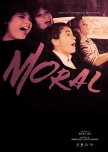
"Everyone has their limitations"
Director Marilu Diaz Abaya crafted a daring film about four female friends in 1982. Moral talked about martial law under Ferdinand Marcos while he still held power. There were frank discussions about premarital sex, married sex, sex between men and women, men and men, and women and women. One character spent as much money on weed as she did on cigarettes. Marital rape was brought up as was abortion. No subject seemed to be taboo in Ricky Lee’s script.Pregnant Maritess and Dodo tie the knot in the opening scene with guys taking bets on how long the marriage will last. Present at the wedding are Maritess’ best girls-Kathy, Sylvia, and Joey. Maritess moves into a large house with Dodo’s even larger extended family. Kathy is determined to become a famous singer and isn’t afraid to use any of her wiles to make it happen. Sylvia is a divorced mother with a child around 5 years old. She still loves her ex, Roberto, but Roberto loves Celso, a dancer at a gay bar. Finally, Joey is adrift with no place to call home spending the night with whoever will take her in. She dulls her emotional aches with marijuana and sex with strangers. Her heart belongs to Jerry, who is heavily involved with the fight against the government and is in love with Nita. The women are about to graduate from university with many decisions personally, professionally, and socially to come to terms with.
There were less love triangles and more love conga lines. At one point, teacher Ernie loved Sylvia, who loved Roberto, who loved Celso, who loved sleeping with other men. Sylvia’s relationship with Roberto and Celso was the most endearing. The three became emotionally involved if not sexually. Maritess found herself repeatedly pregnant and caged in a house with 20 children with little say in her life. Like a trapped raccoon she was ready to chew her arm off to escape. The price for fame began to take its toll on Kathy as it became more apparent she wasn’t a very good singer. Joey lagged behind the others in growing up until she hit bottom and had to make some hard choices.
Moral showed the moral choices the women had to make that were breaking new ground in a conservative society. Sylvia was deemed immoral for not wearing a bra to work, imagine the horror if someone found out she shared a bed with two men. Joey was talked about for being promiscuous, something that was a right of passage for male students. Kathy slept with a woman in order to further her career. Maritess had to decide whether to be a voiceless babymaker or stand up to have a life of her own. All four women were three dimensional characters who had their own growth arcs. The men were not vilified though some of them behaved in the entitled way they were accustomed to in 1982.
Scenes from the film were censored for being offensive to the army, not surprising with two characters actively involved in the New People’s Army. Moral was not a box office success or one with the critics back in the 80’s. Over time people were able to see its groundbreaking themes and emphasis on women’s challenges and lives in a changing society. The negatives of the film were badly degraded, damaged by time and mold. L’Immagine Ritrovata spent 2600 restoration hours working to salvage it with the restored film being shown in 2017. There were still some issues but nothing distracting.
Even here near the end of 2024, films about women, directed by women are all too rare. In 1982 I cannot imagine what it took to get this film made and distributed. Especially a film where women were the powerful agents of their own lives. No wonder it didn’t get a positive reception, Marilu Diaz Abaya and Ricky Lee were treading on new territory and it would take time for people to catch up with them. The film had its flaws and some performances were stronger than others, but given its age and the courage to make it I was generous with my rating.
Favorite line---“Next time you see Ernie, tell him his mother is a whore.”
29 August 2024
Was this review helpful to you?
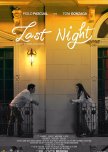
"Once you see hope, embrace it!"
I went into Last Night trepidatiously given the subject matter. Suicide is far too serious and complex a matter to take lightly. This film had mixed results with how it broached the topic. In this particular story, the motivation was sudden catastrophic changes in life and not long-term clinical depression which made the movie’s approach more palatable.Mark is about to jump off the Jones Bridge when he hears a woman calling for help. Carmina’s sweater is caught on the sign below in a failed suicide attempt. They end up agreeing to die together and begin attempting different ways but are continually foiled.
This was a tale of two movies for me which made it hard to rate and hard to watch at times. As I was slogging through the first half of this film, it was sitting at a 5.0 for me, largely because of the character of Carmina. Everything Toni Gonzaga’s character did was over the top, cringe-worthy, and annoying. Even Mark asked Carmina, “Are you a child? Do you always have to be entertained?” Piolo Pascual’s Mark was more reserved and felt like he was in a completely different movie. The suicide attempts were more farcical than saddening. Long before the half, I’d figured out the upcoming twist and was waiting for it to be revealed. The second half was more engaging and the comic acting was toned down. The cinematography and music were actually quite good and put to much better use as the film went on.
If you enjoy Gonzaga’s comic routines you will likely enjoy this more than I did, I tend to be hypersensitive to overt comic acting, especially with a serious subject matter. Without any spoilers, the ending was satisfying and I did enjoy her acting later in the film. If suicide is a trigger or the Catholic view of it troubles you, best to skip this one.
26 August 2024
Was this review helpful to you?


