

 135
135 431
431 16
16 2
2 6
6 3
3 8
8 10
10 3
3 13
13 1
1 1
1 1
1 1
1 2
2 6
6 8
8 5
5 9
9


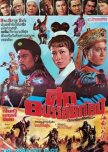
"My king, don't overdo!"
The Greatest Plot was a surprisingly well made 1977 Taiwanese kung fu film. So many of the films made in Taiwan were filmed outside and/or in the dark as if they didn’t have a permit for filming. The stories could also be notoriously threadbare. Though it boasted to have the greatest plot, it might have been exaggerating. This film did however attempt to take a deeper dive into the story rather than leaning on the tried and true secret list or book themes.When the Emperor dies Prince Yung Zhen is named the new leader much to the surprise and chagrin of all. He promises his buddies, The Eight Knights, that being Emperor won’t go to his head, he will still be their friend. Oh, by the way, could they please protect him when he took power? After being crowned, the eight are treated to a feast which includes poison and flaming arrows. The few who survive regroup with their sifu and plan to take the duplicitous tyrant down. Marshal Nien who had dutifully served the Emperor also discovered how much his loyalty was worth. Other than the typical guards which would be problematic to overcome, the heroes would have to survive the deadly traps and weapons hidden in the Emperor’s palace.
Aside from the story of good vs evil, characters went mad, and vengeful “ghosts” returned for retribution. The randy Emperor was often implored by his aids, “My king, don’t overdo!” Which came across pretty funny. The major drawback to the writing was that The Eight Knights were not fleshed or well differentiated. Hsu Feng was the only one who had any lines for the most part. Not the movie makers fault, but also causing me confusion was that the only copy I could find available had atrocious dubbing and subs. On a positive note, I was pleased that in 1977 Hsu Feng was allowed to be the primary hero of the film, many of the martial arts films during this time had fewer and fewer capable women in them.
Of the Taiwanese martial arts films I’ve watched, The Greatest Plot had some of the most luxurious costumes. There were also the requisite cheesy outfits. One of the “Dalai Lama’s” men wore a one shouldered leopard wrestling singlet. Though there weren’t many indoor sets those used were of a higher class than usual. Hsu Feng had the ability to be a beautiful warrior who could throw fear into the eyes of her enemy. Lo Lieh as the Martial gave a nicely nuanced performance of a man who could not believe his friend was not who he thought he was. For me, Yueh Hua always made a better villain than hero and he had no problem playing the treacherous and horny emperor.
The fights were well choreographed, though some were shot in the dark and almost impossible to make out. While the main three of the cast were more actors than martial artists, they all moved gracefully and believably. There was a wide assortment of kooky kung fu weapons. The razor bladed shield made an appearance with the ability to turn into a guillotine as well. The world’s largest possessed Roomba took out several characters with its protruding spears and ability to fire spears. Maybe ancient China had AI to guide the projectiles or maybe it really was possessed. Pretty sure it ate one guy, too. The mop up attachment would be needed after the mess it made. Swinging poles imbedded with blades made it hard for the heroes who weren’t cleaned up by the swirling spears of death to not end up Shish Kebabed.
The Greatest Plot was far from it, but for a martial arts movie, it did try to go a more Shakespearean route instead of the lowest common denominator one. A strong cast helped to cover over the lack of character development and plot holes. Definitely only for fans of old martial arts movies and who can tolerate a film in need of restoration. Rated on a curve.
21 March 2024
Was this review helpful to you?
Oishi discovered that his request for the Asano family to be restored failed which caused him and the other retainers to dance with joy. They could now avenge their lord and restore everyone’s honor. Oishi promptly set out to find more people to talk to, not the other Ronin, they were the invisible Ronin. The day after his visit to Lady Asano she received a letter detailing the Asano Ronin’s attack on Kira’s castle.
Four hours of talking, 47 Ronin, and the most important action shown was the hotheaded lord at the beginning of the movie who caused the downfall of his family. I used the analogy of Star Wars in my review of the first part. To continue that analogy, this film would be like the Rebel Alliance General Dodonna (minor character) receiving an email that the Death Star had successfully been blown up. Anything exciting in these films happened off screen. Show, don’t tell, is a much better payoff for the audience. I want to see Luke flying his X-Wing with Darth Vader right behind and those 47 Ronin attacking the castle and lopping off Kira’s head.
After Kira’s defeat there was almost an hour left. While confined, the Ronin had time for a talent show, flower arranging, and lovers saying good-bye, lovers we never met. At the beginning of the movie, we were treated to a Noh performance. But all was well because we were told over and over and over and over how taking vengeance on Lord Kira was the honorable thing to do and restored the honor of the family and the Ronin and showed how honorable Ronin behave. Even Lord Asano’s wife said her husband pulling a sword in the Shogun’s palace was a boneheaded move but he must be avenged or he would forever be a laughingstock. Asano’s impulsive action affected thousands of lives and caused at least 50 deaths, not counting the Kira contingent, all because someone called him boorish. If this movie was supposed to inspire the audience, I wonder how well it succeeded.
The one area where the movie didn’t let me down was Mizoguchi’s filming style. Every frame was exquisite. The sets and exterior shots were refined and well lit. The only drawback was often the characters were filmed so far away it was difficult to make out their facial expressions. The technique was quite distancing emotionally from what should have been an emotional movie. Then there were those invisible Ronin. Seventeen men stood in for the 47 and we learned almost nothing about any of them, no connection, no empathy for their plight. When they did talk it was all about being ready to die. Or being happy they were about to die. Or that everyone died with honor. Even for a propaganda film, the call for self-sacrifice was laid on thick. The kids were told in the first film, “Samurai children must behave as if nothing is wrong during a crisis.” I suppose when you’re about to awaken a sleeping giant you want everyone onboard with the party line.
For a movie with the title The 47 Ronin, this felt more like homework than entertainment. Four hours of dialogue with much of it repetitive was more than I could take. I want to see outtakes of the exciting elements that happened off screen-forbidden love and castle assaults. Since Mizoguchi refused to show us those things, he could have easily condensed this movie to two hours. It’s not like he was devoting those four hours to character development beyond their loyalty, stoicism, and desire for revenge and death. In the first film, it appeared he might have been leaning toward the characters resisting the rules of a corrupt Shogunate and rebelling (honorably of course), instead their actions were seen as heroic as they adhered to the bushido code and surrendered to the authority of the Shogun. An interesting film time capsule from the war era but it would help to be a fan of Mizoguchi or chatty samurai films with zero action.
18 March 2024
Was this review helpful to you?
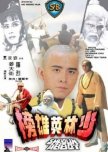
"Punches and kicks don't have eyes!"
Shaolin Abbot was another telling of the burning of the Southern Shaolin Temple, this time with David Chiang as Chin San and Lo Lieh once again playing the traitorous white bearded Taoist Pai Mei.The Shaolin temple has been resisting the Qings but lacks proper weaponry. Monk Chin San is sent to the Taoist temple in Er Mei to learn how to make firearms and gain blueprints for them. He also spends six months learning new kung fu techniques and is befriended by the master there and his niece Wu Mei. The second in command, Pai Mei, collaborates with the Qings and leaves rather than have a Shaolin monk in residence. Upon returning home to the Shaolin temple, Chin San finds the monks dead and the temple blown up. The dying abbot tells him to take the weapon blueprints south to Guangdong and rebuild the temple there. Chin San heads south and finds a loyal Buddhist patron who convinces others to support the building of a new monastery. Unfortunately, the Qings and Pai Mei are hot on Chin San’s trail and determined to kill the monk before he can complete his plans.
Shaolin Abbot had what should have been a compelling story, but I found it underwhelming. Running around 80 minutes, it felt twice that long. The acting was okay. The fights were slow, painfully slow, even for 1979. I could have handled kung fu posing if the choreography or the characters were more interesting. They weren’t bad, just bland. These are the hardest kind of reviews for me to write. Shaolin Abbot wasn’t terrible or good, just okay.
17 March 2024
Was this review helpful to you?
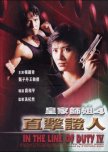
Luk Wan Ting is a dock worker in Seattle. A mortally wounded police officer hands him a roll of film before he dies. Now Luk is being hunted by the bad guys and considered a cop killer by the good guys. Inspector Rachel Yeung doesn’t think he’s guilty though Capt. Donnie Yan is less flexible. CIA officer Michael Wong is determined to have Luk extradited to Hong Kong. The attacks on Luk are non-stop for a nice guy who just wants to see his mom and be done with all of the cloak and dagger danger and trickery. Rachel has to figure out how to keep him alive and who is the mole betraying them at every turn.
This entry in the franchise is one of my favorites. Khan and Yen had an appealing chemistry in their push-pull professional relationship that thankfully didn’t veer off into romance. For the most part there was no idiotic comic relief character which was a huge relief for me as well. Yuen Yat Choh, in what became his final movie, was a sympathetic character who was dedicated to his mother. Michael Wong’s performance as the duplicitous CIA agent wasn’t particularly strong.
What made this movie entertaining for me, aside from the acting rapport, were the numerous well-choreographed fights. Yuen Woo Ping and his brother Shun Yee resisted the wire-fu for the most part and relied on their actors’ athletic abilities and flexibility. Cynthia moved believably against the various foes she faced and delivered some punishing kicks. A young Donnie Yen had no problem reaching kicking heights all by himself. And Yat Choh was another of the Yuen clan who knew how to sell a fight. No wires didn’t mean characters weren’t left dangling on several occasions or even falling to their deaths. Gravity is a harsh mistress. Cynthia had an exhilarating ordeal on top of, on the sides of, and on the grill of an ambulance. Donnie faced real life martial artist Michael Woods in a brutal fight on a rooftop and jousting on motorcycles with ax and shovel.
The story had some narrative gaps and not all of the acting was strong, but for the most part the story held together by the relationships of the characters. The fights were fast, exciting and creative, all that any martial arts movie enthusiast could want.
14 March 2024
Was this review helpful to you?
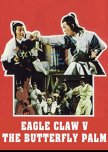
Butterflies deserved better
Eagle’s Claws & the Butterfly Palm was a deeply disappointing kung fu flick. The only thing it had going for it were spinning butterfly shields with spikes on them. Who knew butterflies could be so deadly?The defeated Mongol king along with his son and daughter are plotting how to return to power. In the opening minutes, the Mongol king wearing his lemur tails hat is assassinated, leaving the siblings in charge. The princess has magic powers and can control people with a secret butterfly potion and her flute. The last of the clans work together to bring down the deadly duo but become ensnared in the Butterfly clan’s plots. Three heroes-Mao, Eagle, and Lung plan to bring the Butterfly clan and Mongol princess down, but spend most of their time either in an abandoned temple or wandering around. Things are not looking up for the good guys.
When someone asked, “Who’s there?” when he entered a room, the answer should have been, “Who knows, it’s so d*mn dark in here!” Most of the fight scenes were filmed in the dark making it almost impossible to follow the action. Perhaps it was by design as the fight choreography was quite poor illustrated in the few well lit fights. Even with all the kung fu posing, many of the hits and kicks missed by a mile. Lo Lieh did a twist on his red hands from King Boxer, only this time with the butterfly palm. The sword work was also rudimentary, though the creative stuntmen tried to jazz it up with flipping over multiple railings or doing creative falls. The producers must have gotten a deal on buying trampolines in bulk. Characters leaped across the country and even rooms like giant bullfrogs.
The female lead known only as Lung’s daughter was extremely annoying both from the writing and acting. Everyone else seemed to be going through the motions as if they realized this film was a real stinker. Lo Lieh can usually perk up any movie, but looked like he wanted to fire his agent for getting him involved in the movie. Tsung Hua, Yu Tien Lung, Nancy Lau, Sun Chia Lin, and Lee Kwan were the only actors with significant lines, everyone else seemed to be a guest role. Maybe the others negotiated ways to stay off the screen for professional preservation. The story barely made sense and tried to use double crosses, secret identities, mind control, and treachery to spice things up. It didn’t help. Characters hopscotched around without any real purpose. A bad high school play would have been a step-up from this movie.
I normally save low scores like I gave this one for movies who delve into sexual exploitation. This film was just ridiculously bad. Bad script. Bad fights. Bad acting. Bad lighting. And lastly, hilariously bad costumes. I can even handle bad if the movie entertains me. Eagle’s Claws & the Butterfly Palm never took flight.
8 March 2024
Was this review helpful to you?
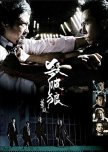
"You don't have anyone to fight with anymore"
In SPL: Sha Po Lang aka Kill Zone it didn’t matter what their star was everyone suffered painfully. Those three troubling stars---power, destruction, lust---there was very little lust but an awful lot of destruction for the cops and robbers in Hong Kong on a fateful Father’s Day.Inspector Chan is aboard a vehicle with a witness and his family. The vehicle is attacked and the witness is killed leaving a young daughter behind. With no witness, the notorious criminal Wong Po is released from jail. When the surgeon removes a large shard of glass from Chan’s head, he discovers a tumor. Chan adopts the witness’ daughter and spends the next three years with his team trying to bring down Wong Po. As the clock ticks down on his life, Chan prepares to retire. The conscientious Inspector Ma comes on board to take his place. It doesn’t take long for Ma to realize that Wong Po isn’t the only one engaging in illegal activities.
Director Wilson Yip and fight choreographer Donnie Yen attempted to turn back the clock in this Triad film by using a minimum of wires and undercranking. With the casting of Donnie, Sammo Hung, and Wu Jing, the expectation was for spectacular fights. There were a couple of small skirmishes near the beginning, but you will have to wait until the last twenty minutes or so to be rewarded for sitting through the corruption, murders, and hand wringing on Father’s Day. The fight between Donnie Yen and Wu Jing was unbelievably fast and vicious. The last fight on the docket was Donnie vs Sammo. This fight included more grappling and was brutal and punishing. Donnie may have been 42 but Sammo was 53 and showed he could still bring it! Donnie’s Inspector Ma learned why one of the main rules in fighting is---Never turn your back on your enemy! Another character learned the tsunami lesson, if all the bad guys are running away it means there is either a Balrog loose from Middle Earth or a very scary bad guy is headed your way. Run!
Most of the action took place on Father’s Day prior to 1997. As a father or child, every character had an issue. The story was melodramatic, nihilistic, and just a big Debbie Downer. The acting was excellent for the most part. Simon Yam made a great weary Inspector Chan. Sammo brought a bit of humanity as a father and husband to his ruthless Triad boss. He also didn’t overact and make the character cartoonish as so often happens with martial arts villains. Donnie played low key as he often did, turning on the energy when the fights began.
Sha Po Lang wasn’t a great movie and the script felt like a retread of better crime films. Infernal Affairs it wasn’t. The saving grace was that the final two fights were memorable, enough to bump my rating up. There’s an old saying that “crime doesn’t pay” but it does pay back. Character after character was sliced to bits. I had to watch through my fingers on a couple of fights. Everyone seemed to be in the Kill Zone.
5 March 2024
Was this review helpful to you?
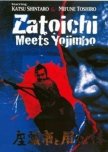
"I am through with hell"
When I heard there was a movie called Zatoichi Meets Yojimbo I could not wait to watch it! The fall was long and hard when I realized that the title was false advertising. Mifune Toshiro was in the movie playing a feckless samurai, but nothing like the cagey Yojimbo. Despite a few hints thrown out about the Kurosawa film, this samurai had a name, Sasa. I wouldn’t have been nearly as disappointed if they’d just titled it Zatoichi and the Two-Bit Samurai.Zatoichi is tired of the blood and decides to return to his hometown with the babbling brook and plum blossoms he talks about at length. It doesn’t take long before he realizes the town is under new management. Two years ago during a terrible famine, other villages heard about the town’s food reserves and attacked. The local leader hired the yakuza to come in, and just like vampires, once you invite them in you can’t get rid of them. After lots of hemming and hawing, Zatoichi decides to stay in town and begins work as the Big Bad Eboshiya’s masseuse/bodyguard. Across town Sasa has been hired by the Big Bad’s son to be his bodyguard. Sasa mostly drinks, sleeps, and cons Masagoro out of coins for strategic information. The blind swordsman and the samurai get on each other’s bad sides, more so because of the comely Umeno than whatever is going on in with the yakuza family. Long story short, everyone wants to know where some hidden gold is.
If they’d given Zatoichi and Sasa a bromance this might have been a fun movie. They couldn’t make Mifune a real bad guy because no one was going to believe Zatoichi could take him down. Bad enough they made Sasa greedy and lazy, and not as smart as Zatoichi. Again, it goes back to the title, because during the whole movie, it was impossible to not compare Sasa and Yojimbo.
The fights didn’t really start until the final third of the film. Another demerit for me. You have two of the greatest swordsmen in the land and they sit around talking and drinking? A new threat, named Kuzurya, waltzes into town with a connection to Sasa and starts eliminating people left and right. The double crosses and corruption were hip deep in the tangled plot line which was needlessly confusing. At nearly two hours with not nearly enough action, the plot became repetitive and dragged. The swordfight choreography was fairly lackluster as well, despite the high body count.
Zatoichi came to town and did his good deed, but even he was hit by gold fever. Whether Sasa or Yojimbo, the character was still played by Mifune Toshiro which gave ample opportunities that seemed to have been missed for a more exciting film. Zatoichi Meets Yojimbo had moments that were entertaining, but it could have been so much more.
1 March 2024
Was this review helpful to you?

"Someone went ahead of you again"
Lola Igna showed that a long life isn’t always a gift when a person has to watch as her family and friends all leave her behind. Veteran Filipino actress Angie Ferro portrayed the 118-year-old Igna who was in the running for oldest grandmother in the world. Lola Igna was a message of resiliency, quiet resignation, and reconciliation shown through the life of one woman and her tattered family.Lola Igna’s great-granddaughter Nida takes the older woman to the mayor’s office where she is to receive an award for being the oldest grandmother in the Philippines. When asked what she hasn’t done that she would like to do by reporters, she tells them what she is looking forward to is death. While researching her age, the group Amazing People of the World believes she might be the oldest grandmother in the world which would come with a substantial cash prize. Nida is thrilled with this news and immediately seeks to cash in on Lola Igna’s newfound fame. On one of the tours to Igna’s house in the rice fields, her long lost great-great grandson arrives and makes his way into her life.
Director Roy depicted Lola Igna’s sparse surroundings without sliding into poverty porn. The flies, chamber pot, and simple meals didn’t come across as denigrating. Angie Ferro played Igna with dignity and a sense of humor while also hiding her sorrow at having lost family, friends, and even the man who was the first baby she ever delivered as a midwife. After some coconut wine her loneliness and her anger at God for leaving behind a person willing and ready to join her departed husband while younger people died spewed out. Yves Flores as Tim bounced into her world with his cell phone and camera and a healthy dose of respect for his great-great grandmother. He was also a reminder to everyone of his mother who left years before and never returned.
Lola Igna was a glimpse into the heartache people feel when they’ve attended too many wakes. The last sibling, the last child, the one who outlived those who were born after her was a terrible burden. Death is part of life, and Igna was ready to join her beloved unafraid of what lie ahead. While her final destination was delayed, Igna also gave freely of herself to her family and community. There were those who benefited financially from the centenarian yet the movie overwhelming showed the community’s and family’s loving generosity which led to heartfelt reconciliations. No life is free from sorrow but Lola Igna showed that it could be faced with grace and when necessary, a full chamber pot.
22 February 2024
Was this review helpful to you?
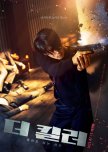
The Killer: A Girl Who Deserves to Die
2 people found this review helpful
Film saved by Jang Hyuk's particular set of skills
The Killer tread a familiar action movie path. Did it matter? Not with Jang Hyuk showing off his particular set of skills as many times as the writers could work a fight scene in. His quiet confidence and proficient use of a body well honed by real life martial arts training kept me engaged from beginning to end.Retired killer, Ui Gang, is maneuvered into babysitting the seventeen-year-old daughter of his wife’s friend when the two women embark on a three-week vacation. A reluctant sitter at best, Ui Gang finds himself dragged back into his profession when Yoon Ji is repeatedly kidnapped by human traffickers. The killer never breaks a sweat or even raises his voice as he works his way through the bad guy hierarchy. There’s never a moment when he doesn’t look completely in control, even when facing a gang of axe wielding thugs.
If I laid out the plot in detail, few people would find it surprising. If you’ve seen Nowhere Man, John Wick, or Taken or a jillion other movies with a similar story you’ll have the whole thing figured out in a matter of minutes. With this kind of genre, execution matters, and The Killer executed it well. As in there were executions aplenty. The action drove the story and rarely slowed down long enough for the viewer to start counting plot holes.
Jang Hyuk is an accomplished martial artist in real life and it showed in his agility and quick moves. The brutal and bloody fights were well choreographed and exciting to watch. Ui Gang dispatched the baddies with a number of different weapons or whatever sharp object happened to be nearby. Shadowy scenes were often Illuminated with neon lighting making the action seem otherworldly.
The Killer didn’t have the most inventive script. Luckily this genre doesn’t require uniqueness, only thrilling action. Would the film have worked without charismatic Jang Hyuk and his martial arts skills selling the action? Thankfully, we didn’t have to find out.
4 February 2024
Was this review helpful to you?
This review may contain spoilers
"Life is like that"
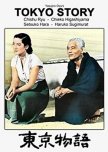
Tokyo Story is a quintessentially Ozu film. The story about the dissolution of a family was emotional without being dramatic. Every frame was composed with the utmost care as if evoking a painting. Shot from the mat, the camera never moved, only the people, drawing the viewer in for an intimate window into this troubled family’s life.“Be a good son while your parents are alive. None can serve his parents beyond the grave.”
Retired couple, Shukichi and Tomi, make the long, arduous trip from their southern fishing village to Tokyo to visit their children. Due to the distance it has been years since they’ve seen each other. Instead of greeting their parents/grandparents with open arms, everyone seems put out that their lives and households are being disrupted. Shige, the eldest daughter, pawns them off on the couple’s widowed daughter-in-law, Noriko. Unlike their flesh and blood children, Noriko takes the day off and shows them the town, treating them with great care and respect. Afterwards, Shige and her brother Koichi, pool their money and send their parents to a seaside spa. The spa ends up being a loud hangout for young people causing the elderly couple to return to Shige’s the next day. She’s upset that they returned early because she has a party planned leaving the couple literally out on a curb. Noriko takes in her mother-in-law while Shukichi has a reunion with old friends and goes out drinking and reminiscing. Realizing they are a burden on their children, the couple boards the train the next day to go home. They are able to see their middle son who works at the Osaka railroad when Tomi becomes ill on the train and has to disembark there. Satisfied they have seen all of their children for possibly the last time, the parents state that their children may not have lived up to their expectations, but they are better than most leaving them satisfied.
“To lose one’s children is hard, but living with them isn’t easy either.”
Ozu never truly goes into why the children are not only distant but disrespectful as well. The father drank heavily when they were younger, whether that caused a lingering anger he wasn’t telling. Despite Noriko being a dutiful daughter-in-law and widow, her short marriage to Shoji eight years ago was a difficult one for he also drank heavily. Shige grated from beginning to end, always finding fault, never giving an inch. When her husband brings home expensive cakes for her parents, she scolds him that the delicacies are too good for them and then eats the cakes herself! Yet Ozu and the characters simply accept her as she is, never calling her out for her rude behavior. It is what it is.
“Isn’t life disappointing?”
The grown children’s lives are busy as they hustle to make a living in a town with too many people after the war striving for the same thing. Their children reflect the same attitude as their parents, they are rude and disinterested as well. Every generation of the family is disintegrating, held together by memories and tenuous traditions. The father states, “Life is like that.” Death happens. People forget. People move on. Relationships are always in a state of constant flux as people change, suffer, succeed, fail, grow older. Families, like marriages, require emotional upkeep to stay together and relevant, something this family has neglected. Life was also taken for granted, the thought that their parents would always be around. When death visits, the children still can only think of themselves and their lives with only Noriko going out of her way to help. Stay busy, stay moving, and you don’t have to think about the difficult things in life.
“Isn’t life too short?”
Tokyo Story is one of Ozu’s more beautifully shot films, and one that took the viewer beyond a small world. From the parents’ fishing village to Tokyo, we’re taken along with the parents to discover new sights. The music is subtle, just like Ozu, perfectly setting the tone when used. School children sang just as the story needed a bolus of hope. Often only the rhythmic sounds of nature were used or mechanical as with a ticking clock when a character realized all he had was time left. Despite the larger world the characters inhabited his meditative rooms and pauses still reigned supreme. Ozu’s beloved train began the film as the parents journeyed on their last trip to see their children and a train ended the film as a character was freed from her guilt and allowed to embrace a new future.
Everyone ages. Relationships change. Children become parents and then grandparents themselves. Life involves death, irrespective of age. Loneliness is a harsh mistress. I hope Ozu’s assessment that life is disappointing and everyone will eventually not only suffer from alienation but also cause it isn’t inevitable.
2 February 2024
Was this review helpful to you?
This review may contain spoilers
The shortest distance between two points may be a straight line but revenge is often circular
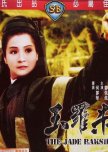
The Jade Raksha started out as a typical revenge wuxia and then dug a little deeper to give it a nice twist. Cheng Pei Pei once again played a confident swordswoman but this time she was more anti-hero than hero. Three fathers died and three children swore revenge in a vicious violent circle.Leng Qiu Han has been rampaging against the Yan family in a desire to make them pay for murdering her family. The problem is, she doesn’t know which one did the vile deed. She crosses paths and swords with Xu Ying Hao. Xu tries to convince her to find evidence as to which Yan killed her family instead of taking the lives of innocent people. Leng has no intention of discontinuing her blood-letting. Xu can’t hang around because he has his own revenge to fulfill against the man who killed his father which in turn will spawn a new cycle of revenge.
I was relieved that there wasn’t a romance between Leng and Xu as Tang Ching was twice Cheng Pei Pei’s age in real life. The film did seem to be trying to make Xu younger than Tang Ching’s grizzled appearance. Leng could be difficult to like as she sliced her way to the top of the Yan family because Xu did have a point. At first, I wasn’t sure if she was avenging her family’s death or punishing the Yan’s crimes against animals and fashion. Many of them wore some atrocious looking animal furs. Interestingly, Xu’s sense of morality didn’t make his revenge any more righteous than hers. In the end, many revenge plot points were finally pulled together in a long exposition dump in the villain’s dungeon of doom.
There was fun wuxia action to be had---running on water, fighting on the top of bamboo trees, bamboo pole vaulting over a flaming bridge, and light body leaping onto roofs. The sword fighting was average for the time period, nothing terribly inspiring. The sets and scenery set the mood for the different scenes perfectly. The dungeon of doom had a specialized guillotine for head and arms which was demonstrated. There were enough traps and torture devices that it made the virtuous Xu question the philanthropic lead Yan’s innocence. I loved that the secret door leading to the dungeon had a sign reading “Always Be Kind”. Of course, the sign at the gate of the fortress read, “Home of Mercy.” False advertising at its best.
This was not my favorite Cheng Pei Pei role though she was fine in it. Leng's kill first, ask questions later attitude and penchant for jealousy made the character difficult to connect with. As I mentioned, Tang Ching seemed a little too long in the tooth for the hero but he did well as the swordsman who wanted to do the right thing but made some unfortunate choices. One of my favorites, Ku Feng, gave depth to the story as a blind father with a dark secret. Get in line, buddy, there were plenty of secrets to go around. And plenty of revenge. The film showed that the road to revenge is not always a straight line or as simple as it might seem.
16 Dec 2023
Was this review helpful to you?
This review may contain spoilers
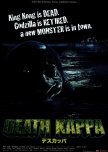
Death Kappa attempted to be a combination of parody and homage to Kaiju movies of old. What I discovered was that 56 years before this film was made, Honda Ishiro made a more believable world using miniatures and a guy in a monster rubber suit.Kanako returns home after a failed attempt at becoming a Jpop star. Her grandmother’s dying wish is for her to protect Kappa, the local Yokai. It just so happens the Kappa has awakened and enjoys Kanako’s music and the cucumbers she leaves out for him. Dancing with the turtlish Yokai, how sweet! But wait! In the same area, a crazed scientist has been creating super soldiers by combining men and women with Kappa DNA. Before you know it, body parts are flying when they go on a tear. Kanako and the Kappa end up in the bad guys’ lair and within minutes bullets are flying and a nuclear bomb is set off. Cut to a local downtown where Kaiju Hangyolas is destroying the city and killing people with his stomping power and flame flowing breath. What is Hangyolas and where did he come from? Was he created from the radiation from the explosion? The world may never know. When all seems lost a super-sized irradiated Kappa arrives and it is on like Donkey Kong.
This film injected campy humor into the death and mayhem. Dolls were flattened, melted, and blown up. Godzilla era vintage planes on wires made an appearance, showing more wires than were necessary. The town was quite artificial making it obvious everyone was on a soundstage.
The first half of the film was filled with Yokai dancing and cucumber eating which devolved into militaristic soldiers bent on conquering the United States with mutant ninja turtle warriors and an atomic bomb. It also had a character who might have been practicing necrophilia. The acting and production values were average at best, with much of the acting being over the top. After the blast, the film took a hard right and focused on a Kaiju WWE throw down complete with a volleyball match. The inept and powerless humans found their “savior” was far more lethal than the initial destroyer. If only Kanaka had survived the nuclear blast! Death Kappa put the fever in fever dream, truly one of the more bizarre Kaiju films I’ve seen.
10/22/23
Was this review helpful to you?
This review may contain spoilers
"Which elementary school did you go to?"
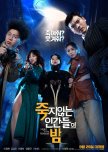
The Night of the Undead had zero zombies in it if that’s what you are looking for. Without giving away any plot points, the title refers to a dark night with aliens and humans who all seemed very difficult to kill. The movie was far more comedic than frightening.So Hee is living a great life. She resides in a huge apartment and has a gorgeous husband who cooks her breakfast every morning. When Man Gil’s late nights at work and disturbing text messages pique her curiosity, she goes to The Mystery Research Lab. Broccoli, the man in charge of the shabby agency, follows her husband and brings back a disturbing report. Man Gil is not only a philandering husband, he’s also an alien. When her loving hubby attempts to murder her, So Hee calls upon Broccoli and her friends Sera and Yang Sun to help her put a permanent stop to his lethal ways. Killing a murderous alien was harder than it looked as he was nigh on indestructible. He also had his own crew of indestructo buddies. The Korean version of Men in Black were also hunting down the unbreakable Choi Man Gil. It might take a combination of the Earthly forces and a bizarre feline concoction to save the planet.
The film ran too long, it would have benefited from a 90 minutes running time. Some comic schticks were beaten dry of any humor from situations. Having said that there were genuinely funny moments. If you were needing something suspenseful, look elsewhere. Due to the comedic nature of the film, the grim happenings couldn’t be taken too seriously. The story had serious plot holes and implausible elements which were difficult to overcome. This was also one of those films that only had enough money to pay for the rights to one song---Billie Eilish’s Bad Guy played several times.
It’s rare for a sismance to take center stage in a movie, but So Hee, Sera, and Yang Sun banded together despite their differences in the past. And any woman would be lucky to have a friend willing to take a cleaver to her psychotic alien husband bent on exterminating humans and taking over the world. Night of the Undead may have been a deeply flawed film but it had some entertaining moments.
10/20/23
Was this review helpful to you?
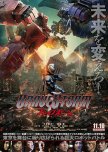
"Our power is justice!"
Based on two television shows from the 1970’s, Bravestorm combined the Silver Mask and the Super Robot Red Baron to try and save the Earth from an alien invasion. The film used a combination of time travel and mecha suits and while it resembled a television episode more than a film, for fans of the genre it might be enough to entertain them.In 2050 after an alien invasion that resulted in the Earth being terraformed for the aliens’ benefit, the human population is next to extinct with 96% of the population eradicated and a small portion enslaved. Siblings Koji, Haruka, and Kozo are sent back to their grandfather, Kenichiro, in 2013 to prevent the invasion. In 2018, Kenichiro’s ne’er do well brother, Ken, is recruited after an alien confrontation at an underground fight ring. Kenichiro has built a giant mecha suit for Ken to control in order to combat Black Baron, the aliens’ giant terraforming robot. Ken is less than enthused about joining the gang but is finally convinced to help.
The siblings’ abilities were varied. Koji was the brave brother who wore the silver suit of armor capable of 500% of a human’s strength. Haruka, had one expression throughout the film and few lines. She was gifted with second sight, perception, psychic ability, any power they needed her to have in a pinch, and swordswomanship. Poor Kozo had little to do and was stuck being the techie. He had a special pair of glasses that could determine whether a person was human or not. Ken was a boxer who earned money in illegal fights and was quite angry with the brother who disappeared a few years earlier. This character came across as an idiotic jerk for much of the film until he was given what he considered a better reason than humankind’s imminent demise to finally suit up. Kenichiro was the most interesting of the characters as the robot and AI specialist and surrogate father to the group.
The CGI ranged from cheap television effects to proper film CGI. Red Baron and Black Baron for the most part were well done. There were also alien robots in human suits, such as the fearsome Bald Borg. The creepy Chigrises, which I could swear I’ve seen in another movie, could also take human form. The Killgis CGI was uneven, terrible in one scene but better in another. Interestingly, the Killgis chose our planet because of humanity's warlike nature and destiny to self-destruct. Might as well move the timetable up. Harsh.
The music was drawn from a variety of films. There were times I expected to see Christopher Reeve’s Superman fly in, or Luke Skywalker, or the Rebel Alliance. It was like a patchwork quilt of famous action movie scores.
At just over 80 minutes the movie sped by and there wasn’t much time for character development. When dealing with giant mechas all can be forgiven if the battle is spectacular. Disappointingly, the final battle was short and definitely not epic and the heroic actions felt rushed particularly in the villain’s lair. The movie also ended on a cliffhanger apparently in the hopes of a sequel. For fans of the old tv shows or the genre in general, it is one to check out. For everyone else, if you keep your expectations quite low, you might find parts of it entertaining.
10/17/23
Was this review helpful to you?
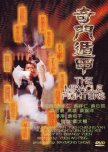
This review may contain spoilers
Director Yuen Woo Ping gathered his family together to make The Miracle Fighters---a combination of kung fu, magic, and slapstick comedy. While it was fun to watch the Yuens and Bryan “Beardy” Leung, the story was a bit of a mess and dragged badly in the middle.Kao Hsiung’s wife is killed because of their mixed marriage-a Han and a Manchu. In order to escape execution and a dangerous sorcerer, he takes the royal son as hostage. When the boy is inadvertently killed, Kao is distraught. He later takes in an orphan named Shu Gut and raises him. The royal sorcerer eventually catches up with Kao and hopes to use the now grown boy to impersonate the prince. Things don’t go to plan for anyone and Shu finds himself with two old sorcerers. The Old Man and the Old Woman have few peers with magic, but bicker constantly even resorting to dividing their property with painted red rocks. They agree to train Shu so that he can defeat the evil sorcerer and be free from his threat.
Yuen Yat Choh had spent most of his career in bit parts. He was adequate in the role of Shu Gat but he was a better fighter than actor. Yuen Cheung Yan was funny in his role of the Old Woman who could fight and make you see double. Yuen Shun Yee as Sorcerer Bat provided the menacing force needed to give the story some movement. At the sorcerers’ altar, Woo Ping honored the late Yuen patriarch Simon Yuen, with a large painting of him from his role in Drunken Master. Bryan Leung made for a spry Old Man with more than a few tricks up his sleeves.
The fights mixed with magic were cuckoo crazy and everyone of the Yuens and Leung could be counted on to do their part to sell the moves. Shu had to not only fight other sorcerers but also a giant wooden stick man that looked straight out of Angry Birds. The problem was when no one was fighting. The slapstick shenanigans wore thin quickly for me. It was like they knew where they wanted the story to end up, with a magic free-for-all, but didn’t create a compelling, coherent story to get there. At 100 minutes, the movie ran ten minutes longer than many other kung fu flicks and those extra ten minutes of bickering sorcerers was not spellbinding. If you enjoy slapstick kung fu and want to know if you should watch this, my Magic 8 Ball says, “without a doubt”. If you don’t care for slapstick and long sequences between action bother you, *shake, shake*, the magic ball reads, “my sources say no” or at best, “reply hazy, try again later.” The Miracle Fighters had entertaining parts to it, especially when the Yuens leaned into their strengths. I only wished they had done more of what they do best because more miraculous fists and kicks would have done the trick.
10/14/23
Was this review helpful to you?


