

 135
135 431
431 16
16 2
2 6
6 3
3 8
8 10
10 3
3 13
13 1
1 1
1 1
1 1
1 2
2 6
6 8
8 5
5 9
9


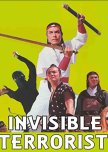
This review may contain spoilers
So bad, it's just bad
Some movies are so bad that they are good. The Invisible Terrorist almost made the cut in this category if not for two disturbing scenes that downgraded it in my view. Too bad, I'm always up for some Carter Wong kung fu action and ridiculous weaponry and plot lines. The Invisible Terrorist delivered in those areas.Once again, Ming rebels have a secret list of their members that for some reason they are carrying around and the evil Qing, of course, want to steal it. Poor Lo Lieh, in what amounts to a guest role, is taken out by a Qing ambush within the first ten minutes of the movie. Wang Hsieh is a turncoat Ming general working for the other side along with Chin Kang and Lung Fei. A Shaolin monk who is a rebel leader gives Carter Wong the secret rebel list. The monk tells him that there is a traitor among them called the Deadly Blade. During an attack, the monk is killed as the rebels escape. Carter divides the list between himself and Cliff Lok and Wen Chiang Long. From there the story amps up the bizarro plot lines.
What ruined this film for me is when Carter's character is captured and his sister is brought in to persuade him to give the Qing the list he has hidden, he brutally rapes his sister to prove that she isn't his sister. The only thing that it proved to me was that he was a vicious pervert. Even plot-wise it didn't make sense as they were alone in a prison cell and he was rescued about two minutes after the fact. Later, a number of pigeons were killed. So, if incestual rape and animal cruelty trouble you, I would recommend you not watch this movie.
It really was a shame because this movie has one of the most bonkers plotlines I've seen in a kung fu film, not good, but so bad it was funny. The number of double crosses and "I know something you don't know!" reveals kept going right up to the end credits. In an ode to school band members, one of the deadly squads of assassins was called The Six Cymbals. They were impervious to swords and defeated their opponents with the loudest most annoying weapons ever. Another squad was called The Six Whips. They too, had loud annoying weapons impervious to swords. But they had a weakness---bamboo!
Loud annoying weapons, rape, animal cruelty, the makers of this movie knew how to ruin a perfectly convoluted kung fu good time. My advice is to skip this one. I wish I had.
5/5/23
Was this review helpful to you?
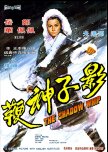
This review may contain spoilers
"We'll have to fight our way out!"
Cheng Pei Pei was one of Shaw Brothers big female stars after the success of Come Drink with Me. This time instead of a sword she wielded a deadly whip in the snow for The Shadow Whip. While the film didn't break any new ground or have memorable fight choreography it was fun and stocked with plenty of familiar faces for kung fu fans.Shadow Whip opened with stunning mountain scenery shot in the snow. It was a rare departure for SB using this kind of outdoor scenery for a big part of a movie. Pei Pei played, Miss Yun, the "niece" of a secluded inn keeper who would turn out to be the infamous Shadow Whip, Fang Cheng Tian played by Tien Feng. Ku Feng as Chief Hong, Wang Hsieh as the leader of the Serial Trio, and Yueh Hua as the earnest Wang Jian Xin all collide with Miss Yun and her comic sidekick Er (Li Kun) violently at a local inn. Later Chief Hong, the man who cast no footprints in the snow, would show up at the isolated inn owned by Miss Yun's uncle. At this point everyone believes that her "uncle" is the legendary Shadow Whip who stole 300,000 taels worth of jewelry 15 years ago, killing a respected official's family in the process. Wang's uncle had been the head of the escort service for the transport who was ruined after the theft and murders. Hong and Wang are out for revenge and a plethora of others are on the hunt for the Shadow Whip in order to steal the stolen jewels.
Miss Yun comes home at one point to find people murdered and she is surrounded by bandits led by Kao Ming. "Are you officials?" "We're the bandits of Yan Yun. I trust Fang Cheng Tian has mentioned us." She did not look frightened, more like, 'Only 16? You should have brought more men'. Her uncle showed up and the two of them made short work of the bandits with their powerful and lightning-fast whips. Later that night she takes a message to Wang and they are surrounded at the inn by what looks like all the men in the region. "We'll have to fight our way out!" It's a martial arts movie, we'd expect nothing less. Chief Hong becomes determined to kill Miss Yun when he discovers her real family name is Yang. Mmm… let's see… it's Ku Feng with a maniacal evil laugh, he's hanging out with Wang Hsieh, and keeps trying to kill the heroine. Even with Tien Feng playing the Shadow Whip it doesn't take much to connect the dots to see who the real bad guy is.
The fights were mostly with swords and the aforementioned whips. The whips were used creatively to cause much bodily harm even if it wasn't always logical or physically possible. Swords, spears, and bodies were propelled with deadly and dismembering results! The sword-fights were slightly above average for the era. And 30 years before Crouching Tiger, Hidden Dragon, this film had a flying battle in the trees. Being a wuxia, there was quite a bit of light body flying. Despite having decent sets, you could see the wires in several scenes. Pei Pei is one of my favorite action heroines. She battles fiercely and doesn't look out of place with a weapon in her hand. Even better, she was allowed to take vengeance on her enemy instead of leaving it up to the men.
The snowy scenes were beautiful and nicely highlighted the bloody battles played out on the glittering ground. Horses were ridden through the deep snow up and down the mountains and in the forests. During one scene it was nice that the snow plow from ye olden times must have cleared off the road for the horses though it would have been nice if they'd covered the tire tracks.
Yueh Hua was less stiff than usual and quite energetic in his fights. Pei Pei was gorgeous, fluid and agile in her movements, always a delight to watch. Tien Feng, normally cast as a baddie made a sympathetic whip fighter. And I'm always happy to see Ku Feng who seemed to be having a good time with this role.
The Shadow Whip wasn't a great martial arts film but the fights and plots twists were fun and Pei Pei brought her A game as always. I grade old niche movies on a curve. This film was about average but I gave it an extra bump for the spectacular scenery and a proper ending. No frozen frame as the killing blow was landed!
4/27/23
Was this review helpful to you?
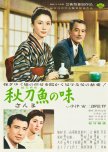
This review may contain spoilers
Alone again, naturally
An Autumn Afternoon was director Ozu Yasujiro's final film. The main character and Ozu were in the late autumn of their lives, far closer to winter than summer. Somehow, this film so reminiscent of Late Spring, with a father facing solitude as his children were leaving home was a fitting ending for the great writer and director.Ryu Chishu, an Ozu regular, once again played a father deliberating marrying his youngest daughter off. His character, Hirayama Shuhei wasn't in any hurry to find a suitor for her until he and his buddies held a reunion for an old teacher. The teacher's middle-aged daughter still lived at home and worked in their noodle shop taking care of her father. Instead of feeling sorry for the lonely, sad woman who was well beyond the age of marriage, they pitied the old man. These were the older men who mercilessly teased the one man in their group who had married a woman his daughter's age, worrying she would be the death of him. Most of the women in the offices were young because by the age of 24 they were supposed to marry and quit their jobs. As Shuhei makes the decision that Michiko should marry soon, his other children are only worried for him, not whether Michiko would be happy and well cared for.
Ryu did a superb job as always encompassing the character designed for him by Ozu. This time his daughter was played by Iwashita Shima who was actually age appropriate for this role. Young and vivacious, Michiko was in no hurry to marry but also was a dutiful daughter and followed her father's lead which Iwashita portrayed perfectly. It seems like there is always a strange casting in Ozu movies when it comes to age. Tono Eijiro(the old teacher) was a year younger than his movie daughter Sugimura Haruko!
The three older men felt like they could have been the school boys from Ozu's earlier films. All grown up, but still mischievous and pulling pranks on each other. I did find it oddly disturbing how often they made innuendos about the one man's very young wife. Though everyone was worried about Shuhei being alone, in reality he spent long hours at the office and then seemed to go out drinking with his friends every night. Michiko stopped making dinner for him and her brother because they never called to say if they were not going to be eating at home after she had gone to the trouble to cook for them. Though it was Shuhei we were guided to feel sorry for, it was the women who earned my pity. Michiko had little say about her life which was mostly laid out for her by men. The old teacher's daughter had been used by her father as a surrogate housewife to care for him after his wife died. Michiko's sister-in-law had to deal with a selfish husband who spent money recklessly. Shuhei was proud of his daughter for handling a rejection so well, then found out she had cried. Thankfully, Ozu had allowed her to be human and experience sorrow even for a moment.
This is the first Ozu film I've seen where WWII was mentioned so much. Shuhei had been the captain of a destroyer and met a crewman in a bar. The crewman lamented their loss, saying if they'd won those blonde haired, blue-eyed Americans would be play the samisen now instead of the young Japanese dancing to rockabilly. Shuhei blithely tells him then it's lucky they lost. Ozu rarely delved into the past with his characters. They lived and dealt with problems where they were---in the present.
Regardless of my misgivings for the lack of autonomy for the female characters, this was Ozu's world, not mine, and the old childless bachelor was feeling the sting of loneliness after the recent death of his elderly mother. Despite the characters in the film doing what they could to ameliorate their circumstances, there would always be suffering. Ozu never flinched from two difficult life lessons: Life is short and loneliness is hard. Shuhei bitterly said, "…sons are best…No point in having a daughter…" His friend understood the meaning beneath when he responded, "Boy or girl, it's all the same. They all go sooner or later." It's in the nature of children to grow up and leave the nest no matter how much love, attention, and money has been given to them…just as their parents did. One day Michiko may face solitude, maybe not in an Ozu film because the women all seem to die young, but parents all tend to fade from their children's lives. Old age is filled with empty, quiet rooms.
In the final scene, Shuhei sang from a military song and then said, "I'm all alone." The camera took one long loving look at Ozu's meticulously decorated set and the actor who had accompanied him for so long on their theatrical journey as Shuhei poured one last glass from Ozu's ubiquitous teapot. A fitting ending indeed.
4/26/23
Was this review helpful to you?
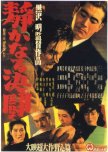
This review may contain spoilers
"Misfortune makes people stubborn"
The Quiet Duel was the second collaboration of Kurosawa Akira and Mifune Toshiro. The story was told from a field hospital during WWII and then in a small clinic for the poor right after the war. Due to the immediacy of the filming so close to the war the characters' struggles felt authentic. A young Mifune gave one of his most restrained performances as a doctor suffering in silence, refusing to give into desire or despair and living out his conscience dispensing hope to those who had less than he did.Mifune's character, Dr. Fujisaki Kyoji, performs surgery on a man in a ramshackle field hospital low on supplies. During the surgery he accidentally cuts his finger and he continues on for another hour. Kyoji discovers that the patient has syphilis, contracted from his promiscuous lifestyle. The doctor contracted syphilis but had nothing to treat it with until he was sent home much later. The treatment would take 3-5 years, maybe longer. Knowing the stigma of being considered dirty with the disease the pure in heart doctor broke off his engagement with his fiancé. Minegishi, a probationary nurse at his clinic, was snide to him when she saw him treating himself with Salvarsan. Suffering her own shame from being a pregnant, single mother, she came to take his side when she heard the reason for his suffering. Into Kyoji's personal duel of desire and conscience walked Nakata, the man he'd contracted the disease from. Nakata had refused to seek treatment and had also married and impregnated his wife. Kyoji sought to help the couple only to find Nakata as reckless with his wife's health as he was with his own.
Mifune Toshiro had to portray the doctor's silent struggle to deny the desire of his heart and his body, to kill that desire with his conscience and commitment to being a doctor. His stethoscope became his armor against his desire for the woman he loved. He was torn for he had done nothing to deserve being kept from her, so why must he suffer? Minegishi made the correlation that some patients screamed when they were in pain, others dealt with their pain quietly, dripping in sweat. Mifune did an admirable job of portraying the selfless man writhing quietly in pain, refusing to retreat from helping others.
Sanjo Miki's Minegishi had the most character growth of anyone in the film. She went from an annoying, self-pitying probationary nurse to maturing into a caring person and mother. Initially she was one who would have been screaming in pain but learned to focus her attention on becoming a better woman and nurse biding her time for the doctor she had come to love.
As a modern viewer, I did question the good doctor performing surgery. Just as he had contracted the disease from a surgical accident, couldn't a patient be at risk as well? I suppose the poor people who came to see him unable to pay had few other choices.
Kurosawa kept the framing tight, never leaving his tormented doctor's face too far from sight. He was careful to make the distinction between Kyoji, an innocent contracting the disease and Nakata, a sexual scoundrel. Of course, there are many shades of gray with this medical issue, but in 1949 he was not going to explore those.
Despite the melodrama and heartbreak, the movie did end on a hopeful note. Kyoji and Minegishi learned to walk with their chins up and face their problems head on, teaching their patients to do the same thing. They might have to suffer as well, but where there are clouds the sun is also present if you can reach high enough.
4/25/23
Was this review helpful to you?
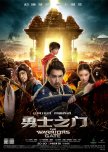
This review may contain spoilers
"We don't need philosophy. We need a break."
The Warrior's Gate was a clunky but affable wish fulfillment for if not teenage boys, twelve-year-old gamer boys. The movie was reminiscent of The Forbidden Kingdom only without actual martial artists in it and any real danger for the main characters.A teenaged boy named Jack spends most of his time playing a video game as the Black Knight. His house is about to be foreclosed on which doesn't seem to bother him much. After school he works in an antique shop for Mr. Chang who gifts him a large Chinese basket/box. The next thing Jack knows Warrior Zhao (Mark Chao) and Princess Su Lin (Ni Ni) pop out of it looking for his help thinking he is the great warrior The Black Knight. Jack ends up guiding the English speaking Ni Ni through his world, taking her to the mall. When the bad guys show up to kidnap the princess, Jack has to follow them into the basket which takes him to what is supposed to be ye olden times China. Warrior Zhao and a wizard accompany him to help him free the princess with sword and magic. Along their journey, Jack teaches Zhao to break dance and swim. Dave Bautista plays Arun the Cruel, the Horrible, the Terrible, the Miserable who wants to marry the princess who is to become the Empress giving him the fast track to becoming Emperor.
Uriah Shelton was soft and non-threatening as the fish out of water who became a fighter, wooed a princess, and taught Zhao that he needed to take time to have fun. Mark Chao made for a believable warrior and was able to play the straight man to several jokes. He was so darn sexy and capable that it was hard to accept the Caucasian, timid teenager as being of any use. Before you could say "wax on, wax off", Zhao taught Jack one move in a few minutes and the next thing you knew the kid was capable of taking on battle hardened barbarians. And you knew that when he returned to the present, those bullies would be no problem and he would resolve his mom's financial problems with his mad gaming skills. Ni Ni was largely wasted as the princess though she always lit up the screen when she was on it. Bautista made for a large and properly menacing Arun the Cruel, with a few funny quirks. Francis Ng was fine as the strange Wizard who popped in and out to help the heroes. Kara Hui showed up briefly as a witch to challenge the two heroes on a narrow mountain path.
As a flight of fantasy with a thoroughly likeable cast it was not horrible. It wasn't very good either with cringe worthy humor and suffering from a white savior complex. The overly familiar paradigm was about as creative as white bread. Mark Chao and Ni Ni are such strong performers, it felt almost shameful to focus on the teenage boy. Also, the romance didn't work for me. Uriah was playing a young teenager (he was 19 when this film came out) and Ni Ni was 28. It was hard to see what the princess saw in him. Everyone speaking English was also jarring. Perhaps this film would have worked better as strictly a fantasy and not tried to make it ancient China.
This did not look like a 2016 film, but more like one from the late 1980's or early 1990's. Think Karate Kid crossed with The Forbidden Kingdom. The film must have been aimed at young boys giving them an avatar and showing poor Ni Ni in skimpy clothes. The beautiful princess of course fell in love with the nerdy kid. The inexplicable "romance" was chaste and anemic. There were a few curse words and some mostly bloodless killings if you were thinking of letting a child watch it. For adults there were no surprises in this bland and lackluster movie. It did overestimate how much this viewer could suspend her sense of disbelief on too many occasions. The thoughts that kept me most occupied during this film were ones wishing Mark Chao and Ni Ni would work together again in their own movie or drama with no fish out of water gamer to ruin the illusion.
4/5/23
Was this review helpful to you?

This review may contain spoilers
"Breaking one arrow is easy, a bundle is not"
A Home with a View is a rather typical Hong Kong comedy with lots of yelling and manic action. What sets it apart is its theme about overcrowded living spaces in the densely populated city and the emotional pressure it puts on the residents crammed into their homes. The overacting and nearly constant yelling could be off-putting, but the story underneath had a current of societal desperation and sinister truth running through it.The Lo family lives in a crowded apartment which gives them no real privacy. They are paying a large mortgage in order to have a slice of visibility of the harbor. Tempers erupt on a regular basis, but are soothed when the family clusters around the small window and drink in the tiny tranquil view of nature. They live in a building with people as crazy, er, eccentric as themselves. Unaware of their own distracting noise, the mother picks fights with the butcher (Lam Suet) who lives upstairs while the kids yell at the old man below whose tobacco smoke drifts into their apartment at dinner time. While the father seeks peace with the neighbors, sometimes in an overly generous fashion, the rest of the family pretty much finds themselves in conflict with everyone. This is not just a failing on their part, no one around them is looking for harmony with each other either. The contentious Lo family's only pressure valve is threatened when a callous neighbor erects a garish billboard with Karl Maka's face on it obstructing their view.
Wong (Louis Koo), a lonely man who feels unseen, refuses to take down the billboard, relishing the attention. The family runs up against an immovable and uncaring bureaucratic wall of paper. A fight over whether it's art or advertising ensues. Ultimately, the family is found in the right, but the process for removing the hated monstrosity could take years or even decades. They can't even sell their flat as the loss of the harbor view drastically devalued their home. Meanwhile the family is slowly descending into madness without their precious view. The film takes a dark turn as they run out of options and coping mechanisms.
There were some odd scenes thrown into the mix. A truly unique teenage pregnancy scene where it comes to light helping a schoolmate deliver a baby will earn you a demerit. You also would not want to do battle with Mama Lo over a fish in the market. Every element of society seemed on edge in the manmade cement prison.
The family was not alone in its need for something to bring them peace. The offending butcher above found nightly peace in his pork pies. The old man dying of cancer below escaped into his evening smokes and eventually into death. The Lo family dealt with their existential crisis in a decidedly permanent manner. The film explored family and the people struggling daily to survive financially and with their sanity intact in the overcrowded city. The Lo Family united first at their serene window, then in their fight against Wong, and in the end…their madness.
4/4/23
Was this review helpful to you?
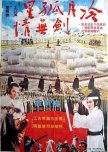
This review may contain spoilers
What's love got to do with it?
Pearl Chang Ling starred as the Invincible Swordswoman, or in this movie's case, The Heavenly Swordswoman Pai Yu Sung. This wuxia had it all-death, revenge, multiple betrayals, disguises, and unrequited love. Death and maiming occurred via swords, bamboo spikes, poison darts, and iron hands. And what would a Ming Dynasty martial arts movie be without a duplicitous and deadly eunuch guiding the evil events?Pai Yu Sung had disappeared after the death of her father by the Eunuch Ma Tang. She returned as the man Pai Tong about the time the bad guys were searching for her to kill her and the good guys were searching for her to help them. Tu Yueh Pian hated and loved her. When they were young he'd been obsessively in love with her and wanted to be close to her, resulting in their master blinding his one eye when he tried to take advantage of her. Yung Tsin Tsin, Tu's old classmate wanted Pai dead because she was in love with Tu and was obsessively jealous of the great swordswoman. The Eunuch Ma Tung who had Pai's father killed wanted her dead as well because he thought she was a threat to him. The woman had more enemies than she knew what to do with. A strange beggar named Lee Chiu ended up taking her side and watching her back.
A kung fu tournament was held to try and draw Pai out. It would be a chance for the bad guys to kill her and the good guys to use her to take a secret box with evidence against Ma Tang to the proper authorities. The tournament was held on a spectacular set built of bamboo spears. The combatants had to fight using the weapon of their choice on the top of the spears. Lo Lieh showed up with a metal hand that had an endless supply of poison darts. After winning her fights, Pai met with the young master Wang to take possession of the secret box and the betrayals, impersonations, poisonings, and killings began in earnest and did not end until the final credits.
Pearl made for a confident swordswoman who was seeking justice for her father. Cliff Lok as Lee/Ni Chiu, at first seemed to be the comic relief but evolved into one of the most important and sympathetic characters. Tsung Hua's Tu Yueh Pian, was far from sympathetic and I'm still not sure what the writer wanted us to feel about him. His angry obsessive "love" seemed to only make Pearl and me feel repulsion. Chiang Ming's Ma Tang came across as almost super human with a magical throne. Yueh Hua had brief appearances at the beginning and the end of the film. Fan Ling as the jealous Tsin Tsin swung her sword with authority as she grudgingly gained respect for Pai and sided with her in the battle against Ma.
Most of the sword-fights were quite good for this era, a little above swing and fall. There was quite a bit of wuxia light body work, aka wire-fu, for those who are averse to it. The tournament on bamboo spears occupied much of the middle of the film and used diverse enough skills to keep it interesting along with several subsequent impalements. And then as now, when a cross-dressing character's hair was let down, everyone knew Pai Tong was a woman. Men had long hair as well, so I've never figured that one out, but those are the genre's rules. The final battle was one of skill and heart as the good guys fell at an alarming rate against the invincible Ma's three sword attack. Almost no one walked away into the sunset after this movie's blood baths.
I quite enjoyed Pearl's performance and surprisingly for me Cliff Lok's. The fights were fast and entertaining with enough carnage to make them credible even with the moments of flight. If you enjoy old martial arts films, this is one to try. As always, I grade these low budget niche films on a curve.
3/22/23
Was this review helpful to you?
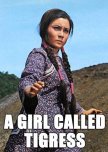
This review may contain spoilers
Don't mess with her sister!
A Girl Called Tigress, a typical low budget Taiwanese kung fu flick, had a few things working in its favor. Polly Shang Kuan Ling Feng played a dual role, Kurata Yasuaki delivered his usual menacing villain role, and before he was typecast in villain roles, "Mallet Fist" Chin Kang played a good guy. There was even a semblance of a story that wasn't based on a secret list!Polly played Shu Fung, a hot headed martial artist who was searching for her mild mannered twin sister, Mishi. When she stopped on her journey for a quick bite to eat she was accosted by several thugs. Big mistake on their part. After Polly had a table flipping, face kicking good time, the thugs ran off with their tails between their legs. Per usual, thugs in martial arts movies have plenty of other jerks to call on and they waited for her in the woods. As she was holding them off, Chin Kang arrived to help her out. Everyone thought she was Big Bad Chiau Kung's woman, who of course turned out to be her sister. Chin Kang was in town to solve a murder and several thefts. Mishi, the twin sister, had gotten into a "Runaway Joe" situation when she left her family to be with A Chung, the unlucky thief who died at the hands of Chiau Kung. Chiau had kept Mishi locked in his compound ever since. Eventually, all the parties collided as Shu Fung attempted to free her sister from Chiau and Chin Kang sought the evidence to arrest Chiau on, while Chiau and his gang tried to kill all the other parties involved including a rival boss who owned a brick kiln where the goods had been hidden! Suffice to say, there were plenty of fights!
Lung Fong's and Leung Siu Chung's fight choreography was kick heavy and Polly was athletic and fierce enough to keep up. Kurata was fast and as always, fun to watch. Chin Kang's size and surprising agility along with his meaty fists made for entertaining fights as well. I was pleased that Polly's character was able to dish out the final vengeance instead of leaving it to the larger Chin Kang. The cast boasted a large number of actors who could double as stuntmen and they made the hits and kicks convincing as they flew and tumbled backwards. The final long fight's choreography was done well enough to make it believable, not an easy task when having an actress spar with Kurata.
Polly played cocky in a way that wasn't a turnoff and took no prisoners with her attitude. Chin Kang made for a likeable good guy. He, like Lo Lieh, would end up largely typecast as villains during their careers. Kurata Yasuaki, a real-life karate expert, played menacing and skeevy like no one else.
This movie will not go down as a great kung fu flick or even one of Polly's best, but it delivered what it promised-double the Polly and almost non-stop action with a mostly coherent story. For fans of Polly Shang Kuan Ling Feng and old martial arts movies that's usually enough.
3/22/23
Was this review helpful to you?
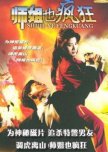
This review may contain spoilers
Absurd and lewd
This Yes Madam is not to be confused with Cynthia Khan's other movie Yes Madam 2 (1988) or Michelle Yeoh's Yes Madam (1985). While Cynthia Khan did play a cop, the movie veered into the fantasy realm with the most oddball villains and good guys. The story refused to be taken seriously resulting in a headache of a viewing experience trying to make sense of the haphazard script and even worse acting.This review will be short as the movie was not entertaining for me. Cynthia Khan played a cop for the A-Team and her boyfriend was a security guard who happened to break up a criminals' fight and ended up with a book filled with money. The bad guys wanted the book back. The boyfriend's family ended up being kidnapped by the bad guys in exchange for the book. Two gangs of bad guys double-crossed each other making an exchange for the merchandise resulting in the most ridiculous and poorly choreographed fight scenes I've ever seen.
The bad and the strange: Starting first with the boyfriend's family---The sister was over the top strange. She was shown making an elaborate meal for the cat but only ordered delivery pizza from a guy dressed as Superman for the family with a stack of boxes from previous meals sitting in the corner. One young boy dressed like Goku (Dragonball) and practiced kung fu in his room. The other lecherous child had the magical power to steal women's bras and panties off their bodies. And for some reason there was a pin-up poster of a half-naked woman hanging in the dining room behind the dining table. Khan's boss was also pervy. The bad guys looked like they were cos-playing anime baddies wearing strange costumes and hair pieces. Several of them had face paint or huge owl-like eyebrows.
The story made no sense, beginning with the first random fight right up until the final scene. The writers threw in the most arbitrary things which made scenes even more chaotic and incomprehensible. This is a movie only for those who love absurd Taiwanese films with lewd humor. For me, this movie was a beating and I am happy to have it in my rearview mirror.
3/19/23
Was this review helpful to you?
This review may contain spoilers
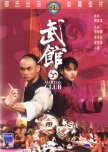
Miss Manners for martial arts
Martial Club followed Wong Fei Hung from goofball show-off to accomplished and more thoughtful fighter. Though the story wasn't too compelling it had some interesting fights in it. Gordon Liu, Robert Mak, and Kara Hui as three young fighters from two different schools had a nice, if not too dynamic camaraderie. If it feels like I'm damning this movie with faint praise, I probably am.The movie opens with an elaborate Lion Dance that is interrupted by a rival school led by Lu Zheng Fu (Chu Tit Wo). Wong Fei Hung's father (Ku Feng) and Master Zheng Tian Shou (Wilson Tong) attempt to keep the peace with the troublesome school. Meanwhile, Wong Fei Hung and his buddy Wang Jinlin (Mak) have more fun horsing around and picking fights with paid marks than they do actually training at their respective martial arts schools. Wang Juying (Hui) has a crush on WFH and runs interference for her brother Jinlin. Along comes Master Shan Xiong (Johnny Wang), a fellow from the North, and apparently all people from the north are considered rubes and less intelligent, in a classic case of miscommunication, he delivers a punishing blow to Jinlin, stopping short of killing him. The aftermath causes WFH to rethink his devil may care attitude and he decides to commit to his training while Jinlin continues to hang out at the brothels.
Shan joins up with an old acquaintance at the rival school to the other two. Think Slytherin vs Hufflepuff and Gryffindor. The shady Lu's son (King Lee) and his buddies trick Jinlin at the brothel and nearly beat him to death doing nothing to help the tension between the schools. Afterwards, Lu invites the others to a Cantonese opera and then tries to have them arrested for watching the show without a ticket. An extended free for all brawl takes place until Papa Wong shows up and calms everyone down. Master Shan refrains from any of the infighting and often restrains the Lu family when he can. He tests WFH on his martial courtesy and is pleased. The two have a "friendly" duel in the Zig Zag Alley which was the highlight of the film. And then a pointless and abrupt ending.
There was little to complain about with the fights. Gordon, Robert, Kara, and Johnny were a delight to watch as always. Hsiao Ho also showed up to add some acrobatics. Gordon and Johnny's duel showcased a number of styles well done, especially as the alleyway became narrower and narrower. Kara was an elegant fighter, even if her character was a bit of a hothead. Lau Kar Leung, King Lee, and Hsiao Ho provided the creative martial arts choreography managing to make huge brawls and one-on-one fights interesting.
The problem I had with the film was that there wasn't anything really at stake except for school pride. Though the Lu School played dirty, they never received any punishment for their misdeeds because everyone was too polite and more concerned with keeping the peace. The film was largely about loyalty and martial arts decorum, manners if you will. The implied crush between WFH and Juying had no spark to it, at least on his part. Kara looked like she was trying to make some chemistry happen, but came up against Gordon's stony façade. The friendship between WFH and Jinlin faded as WFH separated himself skill-wise. Other than WFH's seemingly overnight maturity and leap in abilities, nothing actually happened in this movie except for a bunch of fights between the schools.
What I did really like. When I see Johnny Wang's name on a cast list, I immediately know who the Big Bad or the Big Bad's #1 henchman is going to be. Johnny nearly always plays a villain. This is the first film I've ever seen him play a reasonable, fair, moral character and he did a good job at it. It's a shame he didn't have more morally righteous or at least gray characters. Seeing him smile at WFH's courtesy and abilities and not because he'd just murdered a small town was something I didn't know I needed.
Things I learned about the Lion Dance and life:
#1-A lion should never smell another lion's butt. #2-There should be no blinking at another lion. #3-Do not approach another lion with a raised foot.
Martial Club had quality fights and a likeable cast. It just lacked that special spark to make it memorable. Any kung fu movie that could tame Johnny Wang might be too polite for the genre. Who knew making an exciting movie about martial arts manners could be so difficult?
3/15/23
Was this review helpful to you?
One sweet martial arts action fest!
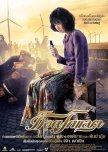
If you enjoy martial arts action films and don’t mind a lackluster story---check your brain at the door and kick in your suspension of disbelief, make some popcorn and sit back and be prepared to be amazed by Jeeja Vanin in her first starring role.Chocolate's storyline uses the most dated of plots. A jealous crime boss doesn't like the woman he loves falling in love with someone else. The woman eventually sends her lover away to save him and has his child in secret. The child turns out to have autism and the woman runs up debts for her care and even more debts when the mom turns out to have cancer. The girl and a boy the mom adopted find her mom's old debt collection book and head out to try and collect the money from some shady characters. Fortunately, the girl has learned Muay Thai and other martials arts from watching tv and video games. I'm going to skip over the magical autism abilities discussion. The story setup is simply a reason for her to drop kick a wide assortment of baddies in ice houses, meat factories, and the Big Bad's headquarters. And punch and kick she does in the most creative ways you are likely to see. The fights started out fairly rudimentary and continued to crescendo until the bonkers, long finale fights that were as brutal as they were graceful.
The writing and acting were mediocre to poor. Just like in a Kaiju movie, when it takes the monster 30 minutes to show up, the only thing people really care about, this film took about that long to get the action rolling as well. The story was nearly irrelevant because the star of this show was Jeeja's astonishing ability to contort her body into a beat down machine, dodging objects, fists, and kicks while delivering punishing blows to men and women twice her size. I read that several actors were injured while making this film and it was not surprising when you see the hard slamming falls people took throughout the fighting. The fight choreography started out slow and breathlessly moved to astonishing.
If you are looking for stellar performances and an interesting, cohesive story, you are likely to be disappointed. However, if you enjoy exciting martial arts choreography, especially with a kickass female lead, this is definitely one to try out.
3/11/23
Was this review helpful to you?
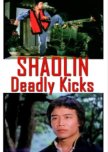
Dorian's Hung Yi hunts down the scattered members of the Eight Dragon gang. Three years ago they had stolen a secret octagonal treasure map and divided it among the 8 gang members. Holy story convenience Batman! More than bringing in the bad guys he's trying to collect the pieces of the map and return it to the temple the gang stole it from. The pieces don't come easy with numerous fights along the way. Dorian faced harm from farm implements, deadly wheel barrows, swords, explosives, hidden weapon traps, chains, bamboo spears, ropes, leap frog kung fu and a giant. Along the way he meets the comely and dangerous Doris Lung, daughter of one of the gang members.
The story, while thin, stayed on track and remained somewhat comprehensible, something more than a few martial arts movies from this time can't boast. Like many movies filmed in Taiwan, this title is in desperate need of restoration. It was dark, faded and grainy. The fights were typical of the 70's, slow and jerky yet the actors made them entertaining. They did make use of wire work, but the majority of fighting was on the ground. Instead of kung fu, Dorian used taekwondo, with his extremely limber and strong legs. He could pop, pop, pop up the bad guys' bodies and then slap or kick them with his feet in their faces.
Dorian is not the most emotive actor but he's entertaining to watch. Lo Lieh showed up as a scarred bad guy and he always brings energy to his supporting roles. Wang Hsieh made his menacing appearance as a deadly member of the Dragon gang. Doris Lung was a nice love interest who could hold her own in a fight. Lung Fei, Tsai Hung, Chin Kang, and Lu Ti rounded out the main partial map carrying members of the gang. There was a nice variety of characters in the gang. A few were completely murderous and others had come to have regrets about the life they had lived.
Things I learned from this movie. #1 Never turn your back on your mortal enemy. #2 Never carry a pocketful of fragile explosives to a fight.
Shaolin Deadly Kicks won't go down as one of the great kung fu flicks from the 70's but for a bargain basement Hong Kong movie filmed in Taiwan it was entertaining enough even with a rather abrupt ending. Probably of most interest to Dorian Tan fans. As always, I grade these old martial arts movies on a curve.
3/11/23
Was this review helpful to you?
Ghosts, and zombies, and vampires, oh my!
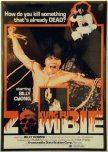
Check your brain at the door and hope there's not a manic Taoist priest nearby. Kung Fu Zombie is so bad and so stupid it's almost good or at least funny. Billy Chong has to fight a ghost, hopping vampires, real life baddies, a possessed father, and a maniacal vampire in just around 80 minutes.Fong Fang is the rebellious son of a stern and overbearing father (Chiang Tao having a grand time) who pushes him hard every day in order to be able to fight the Long clan who has a vendetta against them. His words of wisdom when his son wants to take a break, "Meditation is time off." His idea of meditation for his son, is for the son to be tied up while sitting in a giant crock of water. Not father of the year material, but it does pay off when Fong not only has to fight one of the Longs, but also a Long that has turned into a kung fu blood sucking vampire due to a Taoist priest's incantation being disrupted. Cheng Kei Ying plays an inept baddie using the Taoist priest to try and control hopping vampires to kill Fong Jr. Just his luck he's the one who ends up not only dead but a ghost as well! He and the priest go corpse shopping at the local morgue to try and find a body he can be reanimated into. When Fong's dad dies of a heart attack, a body presents itself and the bad guy now wants to use Fong Sr to have revenge on the son. Fong Jr and the hapless priest have to team up to kill two dead guys.
This movie uses wire-fu, trampolines, reverse camera work, and super sped up camera work in a ridiculously fun way. I enjoy Billy Chong's fighting, but he is not a skilled actor even for the genre. To his credit he was young and pretty and never missed the chance to lose his shirt and show off his toned, oiled torso. Even the fights that weren't sped up were quick enough. This was my first time to see human yo-yo kung fu! And the movie also gave new meaning to the terms hot hand and hot foot.
Chong's selfish, childish, and arrogant character was unlikeable for the most part. Thankfully, he did more fighting than talking. The editing was super choppy, possibly due to 20 minutes being cut from the original film, but I'm fairly certain the editing would have been poor regardless. A 100-minute running time shoring up the story would not have helped because the frenetic non-stop action and gags were the only thing this film had going for it. The musical score was as scattered as the plot using a jaunty chase music one moment and shamelessly lifted portions from the James Bond theme the next. The sound department made full use of its zany sound effects to remind you at all times this was a comedy. There was a minimum of vampire gore and papier mache corpses. The most disturbing scene involved a puppy-dog lovers be forewarned.
I learned some valuable lessons from Kung Fu Zombie. #1-the dead can't enter a temple or walk past a picture of the Buddha or they are hit with red lasers. #2-the dead can't enter a jail for the law is the arm of god. #3-huge green leaf hats render the wearer invisible to the dead and practically so with the ladies. They just don’t teach you this stuff in school.
Kung Fu Zombie is everything you want in a cheap kung fu flick with this title. Only for fans of older kung fu movies who know how to set the bar low, like on the ground. For those who don't mind a little cheese to go along with their beefcake, it might be one to try. Remember to bring your leaf hat!
3/9/23
Was this review helpful to you?
This review may contain spoilers
"Swordsmanship means right-mindedness"
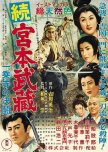
Samurai II: Duel at Ichijoji Temple continues the story of Miyamoto Musashi from the first film. Where a young Takezo/Musashi spent much of the time in the first one running around in the woods with angry villagers chasing him, this time he spends a lot of time evading ambushes by a school of samurais that are offended that this nameless swordsman can soundly beat any of them. He also has the two women who loved him from the first film hot on his trail. What's a swordsman to do?True to his word, Musashi wanders the countryside in order to hone his skills. He duels a man with a chain and scythe, defeating him easily. A monk watching the duel tells him he's too strong and that a man's strength is not forever. To become a true samurai he must learn chivalry as well. Musashi puts a pin in that and takes on the Yoshioka School demanding a duel with the young master of the house. The samurai in the school don't think their master is up to it and seek opportunities to ambush the unknown swordsman.
Meanwhile, the characters from the previous film have moved on. Otsu has gone back to the temple forlorn over Musashi choosing the sword over her. Akemi is working as an entertainer for men, with her mom pimping her out. Her mom, Oko, now married to Musashi's friend Matahachi is cheating on him and waiting for the chance to sell her daughter and ditch him. Akemi still pines for Musashi but is being courted hard by Sasaki, another gifted swordsman. And of course, Matahachi's mom is still crying out for Musashi's blood even after she literally bumps into her ne'er-do-well son. Just for good measure she adds Otsu onto her blood list.
Some battles are better than others as we aren't always shown the end of the fights, only the deadly outcomes. Many fights are at dawn or at night, filmed in the day to look like night which can make the action hard to see. The final battle shows Mifune's fiery fury as he battles 80 samurai, having to use strategy as well as his sword. He also learns much to the priest Takuan's delight when to beat a hasty retreat. Even after treachery and blood lust, the future noble fighter, writer, and artist learns compassion or at least chivalry. He also renounces women. With the crazy ones in his life, might not have been a bad idea.
Mifune Toshiro truly made this character come alive with a wide variety of emotions. His energy and charisma were hard to resist watching. Godzilla's Hirata had few scenes, but the terror in his eyes facing Musashi was greater than when facing Big G. Once again, the women were portrayed in typical 1950's sexist fashion. They were dangerously jealous, short-sighted, obsessive, liars, and emotionally unstable all around. Throw in murderous as well. And then there was Akemi's mother who sat idly by while her daughter was raped so that she could profit off her. Not a good apple in the whole feminine basket.
Though there weren't as many scenic outdoor scenes as the first film, there were still enough to satisfy most viewers. The indoor and outdoor sets varied as to how well they came across. Some were quite realistic and others might be found on a theater's stage.
Samurai II was a more compelling film than the first with more dire consequences and challenges for a majority of the characters. I look forwarding to watching the final installment to see how Musashi transforms on his walk to become a better swordsman and more mindful person. And whether in all the spiritual enlightenment he receives he learns how to take a woman's rejection better.
3/8/23
Was this review helpful to you?
This review may contain spoilers
"You're not known as a hard man for nothing!"
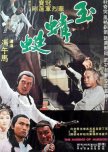
The Murder of Murders aka The Massive is not your typical revenge kung fu flick. It's a murder mystery where nearly everyone in town is hiding a secret and wants to find a fortune in stolen gems with a little kung fu thrown in for good measure.The Jade Dragonfly, a jewel thief, has been hitting all the major cities. When Lo Lieh comes rolling into town and wanting to buy some jewels at a high end shop it doesn't take a genius to know who the culprit is. He manages to get away with 6 precious stones but not before the town's inspector tells him everyone in the shop is a suspect and he'd better not leave town. If the thief isn't caught in five days, the inspector will resign. It seems like everyone in town is hunting for the stolen gem stones. Lo Lieh seems unbothered and has no problem dealing with the cops and baddies until he's poisoned and dies on the spot.
The Jade Dragonfly's brother, Chi Kuan Chun, shows up looking for his brother's killer and he has a plethora of people to choose from. The local gambling den boss, Yi Yuan, and his gang of thugs, including Phillip Ko Fei, Lei Ming, Lee Chiu, and Shih Ting Ken all have had motive and opportunity. Yueh Hua shows up as an art forger with a bad habit of serving suspicious tea. Miao Tien plays The Light in the Darkness, an assassin who uses a pole with a paper lantern to fight his opponents. Phillip Ko Fei uses a pipe with 490 poisoned tipped darts and Lei Ming has a poison dart fan. Chin Kang is the no nonsense straight arrow hard fisted Inspector. As a fan of Taiwanese kung fu movies, it's a grand slam of actors and stunt men to enjoy fighting as they scramble to be the one to obtain the stones. As one character says, "Never think a man has enough money because that's a lie." There are a couple of twists at the end of the movie that given the casting didn't seem too surprising but gave a little depth to the plot.
Lee Chiu was the martial arts director. Most of the fights were decently fast with a variety of weapons as stated before. The fight between Chi Kuan Chun and Yueh Hua was a stiff as Yueh's acting. The fights featuring Chi and either Phillip Ko Fei or Lee Chiu or Chin Kang were far more entertaining. A couple of fights were shot in the dark and with the aged film's fading were more difficult to see.
The Murder of Murders was a fun "who done it?" with plenty of villains and shady characters to choose from keeping the guessing going until the last minute. The fights were better than average 1970's caliber especially for low budget Taiwanese fare. As always, I grade on a curve for these old kung fu films.
3/6/23
Was this review helpful to you?


