

 135
135 431
431 16
16 2
2 6
6 3
3 8
8 10
10 3
3 13
13 1
1 1
1 1
1 1
1 2
2 6
6 8
8 5
5 9
9


This review may contain spoilers
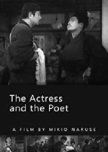
Director Naruse Mikio's first talkie was a comic take on a "modern" marriage. The financial roles were reversed in this 1935 film. Chieko was an actress and the breadwinner of the family while her spouse, Geppu, was a househusband who wore an apron and occasionally submitted poetry without much luck financially. The couple went along day in and day out as if all was normal. A nosy neighbor and the women in the neighborhood didn't understand it. While they liked Geppu, they didn't understand exactly what he did for a living. The men didn't understand why he did the laundry and cooking while his wife slept in late after rehearsals.
The nosy neighbor and her husband had a traditional marriage, yet it didn't insure happiness. She brow beat her husband into selling life insurance one night to their new neighbors. An act that would have consequences later on. The new neighbors were dressed in Western clothes and looked fabulously in love wanting only to be alone. Throw in a wannabe writer who owed everyone he could swindle and that was the main cast. Nose, the writer, was both catalyst and annoyance. I never did find his selfish antics amusing.
The turning point came when Chieko asked Geppu to run lines with her. The characters were a husband and wife fighting over the husband allowing a deadbeat friend to stay with him. As in real life the wife was the owner of the home and in charge financially. The two had never fought in real life and Chieko didn't know how to portray this part. Soon enough life imitated art and a real fight took place shaking up the status quo.
Spoilery comments below...
The acting was adequate, nothing very memorable. Overall, the film was well made. The story made nice arcs with the husband and wife. Geppu gently asserted himself and Chieko learned to treat her husband as more than an errand boy. The Nosy neighbors were brought in for contrast and comic relief. Nose was the irritating stone in their and my shoe. The real fight became physical which seemed out of place and unnecessary. The new neighbors' story took a dark turn which stood only to create conflict in the nosy neighbors' marriage.
For much of this film the couple's relationship seemed more modern than many recent marriages I've seen portrayed in Jdramas and movies. The wife was not berated by the husband and told repeatedly that her main job was to serve him and take care of the household. Their unique paradigm came across as fresh and I wonder how this was received early in the 20th century. The moments when he balked against their dynamic seemed natural when he felt underappreciated.
The ending felt like a step backwards in this progressive relationship, for a moment I had a flashback to the Stepford Wives movies, but I choose to believe Chieko stayed an independent woman, only one who paid more affectionate care of her husband instead of being shoved into a household role for which she wasn't made. And Geppu continued to be a loving househusband who learned it was okay to disagree with Chieko. Perhaps the marriage needed a shake-up to let each other know what was missing in their relationship. On a different day I might have rated this a 7, the ending, some dangling plot holes, and Nose's tiresome presence graded it down for me.
Was this review helpful to you?
This review may contain spoilers
If he goes to heaven, I'll him pull him down...
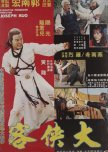
Dancing Kung Fu was an odd juxtaposition of a comedy and a drama both paralleling each other for a time by two groups chasing the main lead until everyone crashed together in the end.Doris Lung played Ping Erh, an 18-year-old girl, deemed ready for marriage by her grandfather. He took her to the market square and called out that anyone who could beat her in kung fu would win her hand in marriage. Over the next 20 minutes a very odd assortment of men took their shot, including a pair of guys who "do everything" together. Don't even want to ask. She made short work of her opponents until Szema Lung's Kan somehow ended up fighting her and won. He had no desire to wed her and made a hasty exit with his traveling buddy. Grandpa and Erh spent much of the rest of the movie chasing them down and ending up in grand fights with random others at an inn and then a brothel.
The more serious plot involved Kan and his unnamed traveling companion needing to deliver a secrety, secret list to the rebel forces. Ching agents were chasing them to obtain the list as well as Grandpa and the jilted fiancée wanting to obtain her a husband. As so often happens in kung fu movies, laughter turned to tears. Eventually, Kan met up with the rebels only to be betrayed and had to face off with Lo Lieh in his white wig. Every kung fu fan knows Lo Lieh in a white wig means big trouble. His henchmen wore leopard skin off the shoulder shirts, not sure if their outfits were supposed to invoke fear in their opponents or laughter on the audience's part.
The comedy wasn't too cringey. Grandpa and Erh seemed to be one step ahead of the secret list carrying men and ruffling their feathers along the way. Because there was also a serious tale embedded in the story, the comedy went down easier. Comedy that included a man beaten so badly by Erh that he peed himself in public and a romantic couple were interrupted by the fighting. How much you enjoy this movie will in large part depend on how much you like this kind of visual humor.
Most of the fights were well choreographed by Huang Fei Long. Some could be slow and there were a few shots that missed by a mile. Overall, the fights were entertaining. Lo Lieh's Sorrow and Joy technique was new to me. He was either laughing or sobbing to keep his opponents off-guard. The Yin-Yang attack was unique, if not a little cheerleady. If cheerleaders carried swords and used their pyramids to kill people.
Most of the acting was fine. Szema Lung didn't make very many movies, but he managed to carry off the fights well and look properly horrified at the thought of marriage. Doris Lung had a chance to shine and have some power of her own, completely unfazed by the men she fought. Yi Yuan as a comic good guy was nice, playing the aged grandpa with plenty of kung fu tricks in his magic staff. Nancy Yen joined in the fighting near the end. Lo Lieh in his wig and smirk gave the incongruent team a worthy foe, causing them to have to band together to survive.
Dancing Kung Fu, aka The Cavalier, aka The Smart Cavalier needs some loving restoration. It has faded badly and much of it had a blue hue to it. Though the version I watched was dubbed in English, they did leave in some Chinese songs and music which added a modicum of authenticity to it.
I enjoyed the unique take on a kung fu movie with the chasing Grandpa and kung fu girl. The fights were worth watching. But parts of Dancing with Kung Fu were incomprehensible either due to shoddy editing or writing. And as I mentioned, the humor could go over the top and vulgar. It had its fun moments, and, in the end, I didn't think I'd wasted my time. Not exactly exultant praise but there are some movies I wish I had the 90 minutes back, though this isn't one of them thanks to Erh and her grandpa.
Was this review helpful to you?
This review may contain spoilers
Your knowledge is thin like a piece of paper...
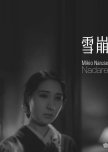
Avalanche does not involve snow and ice, but it does signify the disaster one arrogant man brings down upon himself.Goro is the spoiled child of a rich family, self-centered, entitled, and thinks he is much smarter than he is. He's been married for a year to sweet, obedient, traditional Fukiko and he is already bored. Goro is in love with Yayoi and wants to divorce Fukiko to marry her. His father puts his foot down and tells him he has responsibilities as a married man to his wife and society. Yayoi, the object of his affection, wants to be with Goro yet also feels guilty. Goro has no such compassion for his wife or feelings of guilt. Like a petulant child Goro wants what he wants now without caring how his actions will affect others. Father and son continually argue about duty and desire.
Avalanche can be a difficult film to watch, regardless of how you feel about infidelity. Goro is a selfish protagonist with no redeeming qualities. Even if you start to feel sorry for his situation, by the end of the film, he will have wiped it all away in a particularly dark moment.
I've been conflicted on how to rate this film. It is well made. The scenes flow easily into one another. Unlike some older movies where the action takes place within a couple of sets and the characters are static, Avalanche's scenes are fluid. The characters hold conversations while walking in a forest, in town or naturally in the home. Conversations involving the father tend to be smart and on point more often than not as the father realizes how vacuously empty his son is of any morals. It is obvious the director is contrasting the old and the new as well. The house is Western in design and furnishings. Fukiko dresses as a traditional Japanese married woman, whereas the men and Yayoi are in Western clothes at all times. Father and son eat in a Western style restaurant. Two generations and two different cultural attitudes clash at every moment.
The problem I have with the movie if I try to view it as a character study is that none of the characters grows or have much depth to them. Fukiko is devoid of personality and obedient unto death. Goro thinks only of himself. The trigger for a disastrous emotional release occurs when his father tries to reign him in with the threat of being disowned. As Goro's father tells him, he wouldn't go down this path if he didn't have the cushion of a wealthy family to land and rely on. Yayoi is caught up in Goro's avalanche, unable to extricate herself even though she is aware the price to be paid in society for their actions. Yet even she begins to believe Goro that to be happy one has to ignore the pain it causes others. Before the film ends, Goro steps beyond being merely disdainful and pitiless, to evil. At that point the film falters as it does not bring about a satisfactory or even comprehensible ending. With all the dialogue and inner thoughts this film encompassed, it lacked the few sentences which might have made the last actions understandable to the character and the audience.
The father compared Goro's thoughts to being as thin as paper. Too often the characters came across thinly drawn as well. In the end, it was hard to care about any of the main players. Whether motivated by love or desire, their actions or inactions brought down an avalanche upon them, leaving none of them unscathed or particularly sympathetic. In the end, Avalanche plummeted into a crevice with me, offering neither character development nor emotional release.
Was this review helpful to you?
This review may contain spoilers
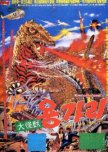
Before the United States sent men to the moon South Korea had a futuristic space program...and...a giant fire breathing lizard visiting from out of town.Prior to becoming a tv and film grandpa, Lee Soon Jae was an astronaut and pilot trying to celebrate his wedding night. Instead of celebrating he was called into action to observe from space an earthquake moving in a straight line toward Seoul.
Ill Woo, a young overworked scientist, tracked the phenomenon from the ground. Low and behold up popped from the ground Yongary, hungry and tearing through town looking for something to eat.
The requisite politicians and military took charge and performed all the tried-and-true tactics against a Kaiju, starting with tanks. This is where Korea broke with Japan when the tank commander didn't take long to call for a retreat. Anyone who watches these movies knows that the poor tank guys don't have a long life span when battling giant monsters. A helicopter managed to make it through, too. They also sent a plethora of missiles to pelt the beast, against Ill Woo's recommendation, which only served to strengthen the monster.
This is where I should mention the one thing I disliked about this movie. Yongary had one of the most annoying kids in monster movies, almost tying a couple of early Gamera flicks. The eight-year-old Icho delighted in pulling pranks such as using a beam his uncle invented which caused people to itch, like the poor honeymooners, and often disappearing from his older sister's care to follow Yongary around. And of course, the young scientific genius figured out what needed to be done to stop the behemoth. Ill Woo might have done the heavy lifting constructing the deadly weapon but he couldn't have done it without his plucky irritating sidekick. This was one of those movies I was rooting for the monster to eat the child.
Yongary's costume was almost on par with Godzilla's from this era, the flame nozzle in Y's mouth was quite visible, but in a rubber suit, I'm not sure how they would have worked around it. And Yongary danced, the actor inside of the suit was quite agile for all he was required to do. South Korea must have sunk some money into this movie because overall the miniatures were quite good. Not to say they were all well-constructed, one canvas backdrop of the city looked like they should have ironed it before filming. A tank that was set on fire had it's wiring showing beneath it. Oh, and the moon looked like a Death Star prototype. But other than those few quibbles, the miniatures, forced perspective, sets and overlay were pleasing and well done.
Aside from the overly precocious child, the human stories were slightly above par for an old Kaiju movie and the acting passable. The Koreans brought a more emotional element to the genre. There was no moral to the story except sometimes you have to do things you don't like to do to survive.
Yongary was a fun monster romp, with lots of monster action. Toho could be stingy with Godzilla's scenes, this movie let the monster stomp, burn, laser and dance his way through South Korea before being brought low. A word of caution, the ending was a bit gruesome for the time period. Yongary was better than Son of Godzilla that came out in the same year, not saying much I know. I would have rated this slightly higher except for Yongary's diminutive fan who seemed to pop up in nearly every scene. If you enjoy giant monster movies from this time period and all the camp and tiny planes that entails, you might want to try this one.
Was this review helpful to you?
This review may contain spoilers
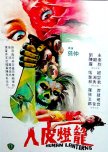
Human Lanterns was a grotesque kung fu horror movie. Two rich men in a small town vied at every chance to outdo and humiliate each other, opening a crack that let in a deadlier presence to further fuel their hatred and destroy their luxurious lives.The opening scene laid open the conflict as Lung (Tony Liu) and Tan (Chen Kuan Tai) fought over a prostitute at a village celebration. Tan showed off the lantern he was going to use at the lantern festival and Lung determined to outshine him with an even more exquisite lantern. In order to win, Lung had to find a master lantern maker who turned out to be a rival he had humiliated years ago. Thinking money could smooth over anything Lung hired Chao (Lo Lieh) which propelled into motion deadly consequences.
The title refers to lanterns made with human skin and Chao set about using people close to the men to craft the gruesome light fixtures. Lung and Tan blamed each other for the disappearances of their loved ones while the inept police led by Sgt Poon (Sun Chien) flailed about between the two powerful men.
To be perfectly honest, I am not a horror fan and had to fast forward through some of the bloodier scenes of Chao working on his victims. Despite the age of the film, it was disturbing enough for me to try and avoid most of the scenes once he began to work. For the faint of heart, it did show flaying.
Tony Liu and Chen Kuan Tai played their roles stoically with some bravado, pretty much copy and paste from other performances. Neither Lung nor Tan would be considered heroes, more concerned about their rivalry and honor than the well-being of their missing loved ones. The real star of this movie was Lo Lieh who stole every scene he was in with his unhinged performance as the maniacal killer seeking revenge for the loss of his honor years ago. With his facial expressions and fluid body motion he dominated the screen with his malevolent presence.
The movie kept the story moving at a rapid clip, interspersing fight scenes between gore and the over-the-top squabbling between Lung and Tan. Most of the fights were more pose-fu than well-choreographed fast fights. They were slow and then even slower when slow-motion was used. The final fight was the best of the lot, destructive, deadly, and extreme. There was sword work, kung fu, and wire fu. Maybe it was because Lo Lieh was involved that I enjoyed it more, he upped the energy and stakes, regardless, the final fight was intense.
The sets and costumes were well done. The silver lame was kept to a minimum and the sets weren’t some of the cheaper ones designed for people to be thrown through the walls. The wealthy men’s homes seemed appropriately opulent while Chao’s dungeon was eerily macabre.
Unlike many Shaw Brothers films this one has a proper ending. Too often the stories end abruptly as if the crew ran out of film. For the most part, everyone got what they deserved, even if I thought one of the characters got off too lightly. I downgraded the film some due to the grisly scenes only the women had to go through. This older kung fu movie went too far in titillating the audience with female nudity and deaths.
Human Lanterns is not a film for everyone to be sure. At its heart HL was a story about the price paid for hubris and pride. The cast is what drew me to it, HL was loaded with familiar faces and stuntmen. If you enjoy old martial arts movies and/or old horror movies, this one might be of interest to you.
Was this review helpful to you?
This review may contain spoilers
Anyone who brings trouble...answers to my fist!
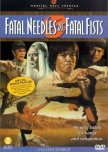
Lo Lieh and Don Wong Tao began this movie as the unstoppable Kung Fu Dynamic Duo of Crime Fighting. Bad guys were no match for these awesome fighters.Unfortunately, the partnership and fun didn’t last for long, as the synopsis says, Chow Lung (Lo Lieh) died when Meng Hu (Don Wong) accidentally caused his partner’s death. The movie quickly turned into a melodrama and Meng Hu relegated himself to the coward of the county status, vowing to never fight again. Even when Chung Tung and his wicked golden needles skills and gang of miscreants showed up threatening to bring opium to and through town. Even when his new friends’ lives were threatened. This is not one of my favorite tropes. The skilled warrior decides to never fight again because of the loss of one life, but in the process many others are killed. Eventually, the depressed hero decided to act and take on the white-haired needle thrower and his crew. The body count ran pretty high in Fatal Needles.
Don Wong, in his Bruce Lee wig, did well in his fights and portraying the mopey hero. He didn’t add much depth to the character or excitement though. Lo Lieh in his jaunty hat made the most of his brief screen time during the early scenes. Chang Yi, as the white-haired evil doer, had no problem bringing life to his character. There were numerous supporting characters, some more memorable than others. The fighter with what looks like a hairy squid on his chest will not be forgotten.
The fights were adequate, not very creative or fast, but serviceable. Though there was a revenge fight and a duel there were no training scenes, no secret book, no secret list, just a battle against the deadly golden needle thrower and his minions. The final battle between the two elite warriors on opposite sides of the law was weak after all the build-up leading to it.
The women had strong roles even if two of them were prostitutes. Two fought with cunning, another with her fists and kicks. The movie did come to a screeching halt at one point when one of the prostitutes launched into a lengthy anti-drug Public Service Announcement.
Fatal Needles vs Deadly Fists had more story, and though I wasn’t a fan of the trope, more comprehensible story than many old kung fu movies. At times engaging, at other times plodding, Fatal Needles was entertaining overall.
Was this review helpful to you?
This review may contain spoilers
Run!
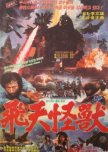
A Korean attempt at a Kaiju movie, a bad attempt, a disastrous attempt. Abandon hope all ye who enter here!Before there was Jurassic Park, Dr. Kim Jin Young believed in the Prehistoric Dinosaur Resurrection Theory. In this movie, it meant he thought dinosaurs buried in the ice and earth would be set free because of global warming. He spent most of the movie wandering around the beaches and caves on a remote island looking for evidence to prove his theory. Part of the time he also ranted to the sky about how everyone thought he was crazy. Buddy, if you don’t want to be considered crazy, you might want to stop ranting everywhere you go. An intrepid reporter imbedded herself in his home as a housekeeper to gather information on his secret new theory. She ended up bonding with his young daughter when she wasn't sunning herself on the beach. I should mention, his badly dubbed daughter who took up a lot of the screen time. Actually, everyone was badly dubbed but the adult voice on the little girl was jarring.
After nearly three quarters of the film watching the scientist wandering and ranting in the rocks, the monsters finally showed up. Pretty sure none of these freaky creatures have been found in the fossil records. If birds are descendants of dinosaurs, thank goodness none of them retained the fire breathing, laser shooting abilities of these guys. The rubber suits were awful, even in comparison to old Godzilla movies. The monster sounds were even worse, and monsters appeared and then reappeared inconceivably. To top it off, most of the miniatures were subpar and they kept using some of the same sets only with different monsters destroying them.
The editing of this film was incomprehensible. The story bounced between characters with no cohesive plot development. The intrepid reporter’s main job was to change outfits between each scene and take care of the daughter. None of the characters were particularly likeable and there were only three main characters! The shots of the monsters made no sense. Actually, nothing about this movie made any sense. The ending was bizarre and abrupt as well. This film didn’t even have the courtesy of being so bad it was good. It’s one of the most poorly put together movies I’ve ever watched, and I watch a lot of old Kaiju and kung fu movies so that’s saying something. Only if you are a Kaiju movie enthusiast and want to add it to your list, or if you have a high pain threshold for badly spliced together movies would you want to watch this.
Was this review helpful to you?
Mind and body fall away
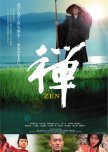
This 2009 film follows the spiritual quest and enlightenment of the Japanese Buddhist Dogen Zenj who brought Zen Buddhism to Japan in the 1200’s. I can only comment on this film as a non-Buddhist and one who hasn’t studied Zen Buddhism and the life of Dogen. My review is based on the artistic endeavor.The film followed Dogen on his spiritual journey which took him from Japan to China to have his questions answered and in search of a true Buddhism. The scenery was spectacular as this lone man traveled in a foreign land. He found one master who was more concerned with politics and later, a sage who was a cook at a temple. All the main highlights were touched upon as he discovered Zen Buddhism, became enlightened, returned to Japan to share what he had learned and then inevitably ran up against the sect in power that didn’t like new ideas, and finally, the events ending in his death.
The performances were for the most part subdued as you would expect in a film about Buddhist monks. Nakamura Kantarou didn’t have much to do except look serene and introspective which he did well. Uchida Yuki brought a spark to the film as Orin, a prostitute, whose path led to Dogen which changed her life. Orin had the most obvious character development in the film which made it easier to be invested in her limited story. The monks practicing detachment also made it hard for this viewer to become emotionally attached to them.
The film suffered at times from choppy editing and storytelling. Characters appeared without any backstory to let us know who they were and time jumps happened without any warning. A segment involving headless ghosts and swarming CGI butterflies probably sounded better on paper than it looked and would have been best omitted. The moon played a large role (sometimes Earth destroying large!) and had to be interpreted symbolically. At times in a film grounded in realism, the supernatural CGI elements seemed out of place and didn’t really add anything.
To enjoy this film, it would help if you are interested in religious history or the life of Dogen. It is slow paced with many scenes of people sitting and meditating. I do enjoy these types of spiritual journey films, even at that, it could be plodding at times. Overall, I enjoyed it, and as a niche film could recommend it though I suspect the greater movie audience would not find it as interesting.
Was this review helpful to you?
This review may contain spoilers
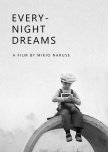
This 1933 silent film portrayed a strong FL who had to work as a hostess to provide for her son after her husband abandoned them during depression era Japan. Director Naruse Mikio focused this film, at times in a melodramatic way, on some of the struggles people endured during this economically depressed era. Omitsu was relentless and dedicated to her child and the friends who helped her. She had a backbone of steel hidden under her kimono. Even when her husband showed back up in her life after three years, penniless and nearly shoeless, she initially refused him. In the end she took him in, unlike some older movies where the husband is a total mooch and abusive, Mizuhara was a good father and at least attempted to find work. Turned away at every potential job because of his physical frailty, his mental and emotional frailty began to decline as well.
The version I watched had no music which was a little jarring at first, but I found the rhythm quickly. The film had also faded in places, not enough to detract from the story though. Naruse used symbolic foreshadowing with a child’s toy and images of the water to good effect. For a 1933 silent film, the cinematography, shots, and sets were all quite good.
Kurishima’s accomplished performance as a woman who refused to give up on life and her child’s future was beauty to behold. Saito Tatsuo, as the ne’er do well husband, gave his character enough likeability as he played with the children to help the viewer understand what might have drawn Kurishima to him. The supporting characters rounded out the performances well without resorting to overacting. I’m always amazed at how well a story can be told with minimal dialogue, and this was one of those cases.
Every Night Dreams briefly dipped into melodrama though given the times, perhaps not that much. Life was often balanced on the edge of a knife during those dark days for many people. Some had the strength to survive, and some did not. Omitsu blazed a trail for future female characters who were not afraid of the future but who faced it head on.
Was this review helpful to you?
Master of the Nine Dragon Fist: Wong Ching Ho
2 people found this review helpful
This review may contain spoilers
Don’t lose to yourself before the fight begins
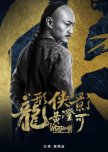
Master of the Nine Dragon Fist: Wong Ching Ho is like an old school martial arts film only with good sets, costumes, and music. Also, without the fire and energy of the oldies.This movie focuses on Wong Ching Ho who has a martial arts school and forms a fragile alliance with the other schools to drive the British East India and their opium out of town. The Big Bad Brit, Mr. James, with a strange almost French accent, the dubbing is quite bad for the English speakers, sparks a plan to use a newly arrived country bumpkin to take down Wong Ching Ho. He has the local magistrate and spies in the different schools in his well-moneyed pocket.
Mun Sing, the country bumpkin, challenges Wong Ching Ho to a duel. If he wins, Mr. James will give him his own school. Wong’s pregnant wife is attacked during the duel and Wong abandons the duel to see to her. This action fractures the alliance of schools. He does the requisite training sequence which was actually pretty dull and takes on Mun again. This time there is subterfuge and a set-up which leads him to becoming a fugitive. Eventually, there is another training sequence where he develops the Nine Dragon Fist so that he can clear his name and take down the Big Bad Brit. A wise old master helps him clear the poison from his heart so that he can fight effectively.
The plot was fine for a martial arts film, thin, but adequate. Some of the acting was better than others, some was pretty awful. The fights were aesthetic, though lacking in creativity and energy. The problem I have with these HBO Asia films is that they are bland. Vanilla ice cream without the vanilla bland. They are lacking in urgency and energy. The most compelling character was that of Mun Sing, the duped fighter from out of town. If the martial alliance had allowed him to find work or join one of the schools much of the tragedies could have been avoided. He was just trying to feed his family. Wong Ching Ho came across as wooden and unenthusiastic, not the most relatable hero.
The Nine Dragon Fist is one of those short martial arts movies if you run across and have nothing better to do would be worth trying. Not one I’d recommend seeking out or paying to watch.
In case you were wondering what constitutes The Nine Dragon Fist---
1) Dragon Fist OG
2) Swimming Dragon
3) Whirling Dragon
4) Sinking Dragon
5) Whipping Dragon
6) Splitting Dragon
7) Coiling Dragon
8) Intertwining Dragon
9) Flying Dragon
Was this review helpful to you?
This review may contain spoilers
Dead people can’t use money
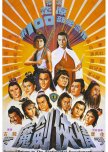
Three years after the events of The Sentimental Swordsman, Ti Lung is back in the title role to take on the Money Clan who is determined to rule the martial world. One of Shaw Brothers’ big money makers, Return of the Sentimental Swordsman had a star-studded cast with many famous Hong Kong actors in roles large and small.Like many movies regarding the martial world, the large cast was needed so that duels could take place to see who was really the best. Aside from Ti Lung, Lo Lieh appeared as the leader of a beggar kung fu clan who worked for whoever paid best. Yueh Hua, Yuen Wah, Yuen Bun, Kara Hui, Tony Liu, and Ching Li all made appearances. The main characters aside from Ti, were Derek Yee as his friend who had been beguiled by a femme fatale since last they met, Ku Feng was the ruthless leader of the Money Clan, and Alexander Fu Sheng starred as Ku Feng’s adopted son.
Ti Lung’s character, Li Xun Huan had become a traveling alcoholic after the trials of the first movie. But like Michael Corleone in The Godfather II, every time he tried to get out of the martial world they kept pulling him back in. He needed to save his friend, A Fei, and stop the Money Clan’s nefarious plans. However, being ranked #3, he kept being challenged by those ranked below him to see if Little Li’s Legendary Daggers were as fast as rumored to be. Alexander Shu Fei as the Left Hand Sacred Knife pulled off a Princess Bride (1987 film-check it out if you haven’t!) moment that had me laughing.
The fights were adequate, some quite well choreographed, but many were more theatrical than fast and accurate. There were a variety of weapons and techniques used which was entertaining. Nearly everything was filmed on the movie lot, but the sets and scenery were better than some other Shaw productions.
Ti Lung made a sentimental and sympathetic character, though Alexander Shu Fei’s conflicted character was nearly as compelling. Derek Yee’s side-kick came across more pathetic then sympathetic. Lo Lieh’s short appearance was powerful as the playful and lethal beggar clan leader. Ku Feng nearly always turns in a powerful supporting performance, this time as the Big Bad.
If you enjoy old martial arts films and haven’t watched Return of the Sentimental Swordsman, this is one to check out, if only for spotting all the famous actors and bit players popping up on screen. Far from perfect and rated on my old, niche grading curve, this Sentimental Swordsman was an entertaining 90ish minutes fight for supremacy and honor.
Was this review helpful to you?
This review may contain spoilers
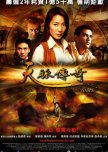
The Touch is a slightly above average Hong Kong adventure film starring Michelle Yeoh. It was the first film from her production company and was directed by Peter Pau, the cinematographer from Crouching Tiger, Hidden Dragon (2002).I'll start with the bad so that I can end on a positive note. The pacing was off and the editing was choppy at times. Some of the young actors weren't very believable, especially the actor playing Michelle's younger brother. The CGI was bad, early video games bad, and in one particular scene no one seemed to be following the normal laws of gravity and physics. The conflict also ended too early.
Now, onto the good, or at least the better. Michelle Yeoh played a splendid acrobatic Indiana Jones, capable of dispatching evil doers with her fists, kicks, and seemingly magic scarf. The fight choreography wasn't the strongest, but she managed to bring the fight charisma regardless. The Big Bad, Richard Roxburgh (Moulin Rouge!), played the villain without going completely over the top, which had to be difficult given the dialogue. Ben Chaplin did an adequate job as Michelle's ne're do well ex-lover who brought her the key to the holy missing relic she was in charge of. Dane Cook who played the Big Bad's useless brother gave some comic relief, which did seem out of place in a movie that more often than not played it straight. I'm back to sounding ambivalent again.
The scenery and sets were top notch and the OST fit beautifully. Overall, the look and sound of the film were quite good. It's unfortunate that the well-trod story wasn't pulled together better with consistency, coherency, better fight sequences, and better dialogue.
If you go into this movie with low expectations, you may find a diverting film. For me, a movie with Michelle Yeoh is never a waste of time.
Was this review helpful to you?
This review may contain spoilers
The truth is out there!
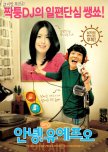
Au Revoir UFO or as it's also known, Hello UFO, is a delightful romantic comedy featuring two romantic misfits. It has all the traditional tropes we've come to love and hate back when they were newer and throws in a couple of quick UFO visits just to shake things up.Lee Bum Soo gives a heartfelt performance as Sang Hyeon, a bus driver, whose main joy in the world comes from playing DJ on the mixed tapes he makes for his bus passengers to hear. Lee Eun Joo gives a far more reserved take on her character, Kyung Woo, a blind woman who was recently dumped by her boyfriend. She moved to the outer limits of Seoul to heal and also so that she might once again experience a UFO sighting. They cute meet twice, with Sang Hyeon too afraid to tell her that he is the bus driver and DJ she doesn't care for, giving her a false name and job. Despite his subterfuge, they slowly build a friendship that grows deeper as they spend time together.
UFO is enjoyable, if dated looking. It won't shock you with any serial killer plot twists or reward you with award worthy performances. There are no deep dives into character motivations or childhood connections. When you need a soothing, sweet, gently funny, friends to lovers, old fashioned romance, this 2004 romcom might be one worth checking out.
Was this review helpful to you?
This review may contain spoilers
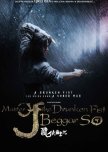
If it was HBO Asia's desire to remake a 1970's kung fu movie and remove big chunks of the kung fu this is what it would look like. Beggar So seeks to be more than a martial arts film but doesn't have enough coherent narrative or charismatic acting to accomplish the task.When watching this movie, it might help to do as I did, and reframe it as an episode of a drama because that was what it was closer to than a well-funded film. In comparison to old kung fu movies, the sets and costumes were more elaborate and on par with your average historical Cdrama. The story was as basic as any kung fu movie. The evil eunuch once again appears to wreak havoc on the good and innocent in his bid for power. In this instance, he took So's court position and wealth and nearly his life. Rescued by the Beggar Clan, So learned the Drunken Fist from a master. After several set-backs, So becomes Beggar So and confronts the Big Bads with his new found skills. Most of us could recite the basic structure in our sleep and HBO Asia doesn't attempt to reinvent the martial arts wheel. Mores the pity, kung fu films don't have to stay stuck in the past even if they are set there.
The acting was adequate for the most part. The dubbing for the women was atrocious and distracting. I actually watched it muted for a while and just read the subtitles.
Beggar So's narrative jumped around with characters appearing and disappearing without much explanation. It would go from more realistic to fantasy fighting. Plot elements like certain characters appeared and disappeared as well, popping up when convenient or disappearing when inconvenient.
An early fight showed promise even though the setting under a table was ludicrous. The table would have to be five feet high for what they were doing under it, but at least the fight was entertaining. The writer and director must have forgotten it was named The Drunken Fist because So sure did at times. Everyone seemed able to beat So for much of the movie. The final fight looked more like professional wrestling than drunken fighting. Despite the lack of consistency in the fighting choreography, Beggar So would have benefited with more fights to cover over the thin, very thin storyline.
Master of the Drunken Fist: Beggar So isn't unwatchable. It's a slightly below average made for TV martial arts movie, and that bar is not very high. I've seen much, much worse. If it was made in the distant past of the 1970's I would have graded it on a curve. Beggar So begged to have better acting and writing, thus my grade. Not a terrible watch if it happens to show up on TV but I wouldn't go out of my way to find it.
Was this review helpful to you?
This review may contain spoilers
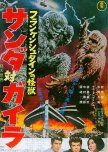
I almost skipped over this movie when it was showing on a Kaiju marathon. That would have been a mistake. The War of the Gargantuas was absurd monster fun.Unlike a lot of Toho monster movies where the monsters don't show up for half an hour (Godzilla I'm looking at you), the monsters showed up early and often. The big green Frankenstein/Gargantua introduced himself when he fought a giant octopus at sea. The enormous sasquatches were called Frankensteins because their origins were from a lab. For the millionth time, Frankenstein was the name of the mad scientist who created the patched together monster, not the monster. But I digress. The initial brotherly love between the gargantuas was sweet until the ginormous good guy realized his bro was a man-eating monster.
In one scene, a singer aboard a ship belts out what felt like the longest song in movie history called "The Words Get Stuck in My Throat". An interesting choice of words right before the ship was attacked. Big Green liked to eat people whole and then spit out their clothes when they got stuck in his throat.
The actors were about what you'd expect from a monster movie from 1966. I was surprised to see Russ Tamblyn who starred in West Side Story (Riff) show up as one of Frankenstein's scientists. He looked like it was the last place he wanted to be, and I've read he was difficult to work with. Too bad. The people who came to watch the movie were looking to have fun and he missed out on the party. Ifukube Akira's score, familiar from his work in the Godzilla movies was well done as always even if some of the work sounded as if it were spliced in from other films.
What I was most impressed with were the miniatures. The houses were detailed, the forests were well done as well as the weaponry and ships. At times in these movies, the miniature buildings were obviously cardboard, these miniatures looked well crafted.
The biggest drawbacks were the monster costumes. They were bad, not King Kong (KK vs Godzilla) moth eaten costume bad, but not great. On the positive side, the costumes did allow for greater body movement, so unlike Godzilla and his buddies, the monsters' movements were less stilted. Many of the scenes from the movie featured one or both of the Frankensteins which made this flexibility advantageous.
This is a movie only for people who enjoy these old monster movies. You can't go into it expecting great acting and a riveting, logical storyline. War of the Gargantuas was ridiculous, but fun. As always, I score older niche movies on a curve.
Was this review helpful to you?


