

 135
135 431
431 16
16 2
2 6
6 3
3 8
8 10
10 3
3 13
13 1
1 1
1 1
1 1
1 2
2 6
6 8
8 5
5 9
9


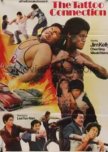
This review is for the sanitized version cut for television. The uncut original version has a lot of cursing and gratuitous nudity. It would probably get a much lower score from me even graded on my old kung fu movie curve.
The story is almost incoherent with terrible editing and of course, the censored cuts. Flash Legs works for big bad Chen Sing who saved him as a child. Chen Sing's gang stole a famous diamond, and they are trying to find a way to fence it. Black Belt Kelly shows up as an insurance investigator whose job it is to find out what happened to said diamond. There are double crosses and lots of high kicking fighting. Jim Kelly, Dorian Tan, Chen Sing, Bolo, and Chiang Tao all did well with their fights even if the fights were cheesy at times.
Tattoo Connection is not a movie I'd recommend unless you're a fan of any of the above. The fights were decent, and it boasted familiar faces to those who watch old martial arts movies. If you find yourself unable to sleep and it's on television, and you're easily amused, you can give it a try. Do not expect good acting, respectful treatment of women, or a storyline that makes too much sense. Bring some crackers and enjoy the cheese.
Was this review helpful to you?
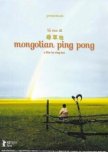
Much of this film is wrapped up in showing slow, flowing shots of the terrain, an endless sea of green, distantly bordered by mountains. The boys live in a world without electricity and running water. There are no phones, video games, or computers. One father buys a television, but even using his long herding rod as an antenna with cans and cooking strainers attached, can't get a signal. Climbing, exploring, riding their horses, playing with sling shots, and contemplating the mystery and responsibility of their new found treasure fills their days.
The strength of this film is in its hospitality and letting us be guests, sharing for a few brief moments, in a world foreign to most of us. There are no great conflicts outside of the ping pong ball, although it is obvious that a creeping consumerism is beginning to invade the old way of doing things. For the most part, it is best to simply immerse yourself in the warmth and curiosity of these children and enjoy the expansive beauty of a solid green sea.
Was this review helpful to you?
This review may contain spoilers
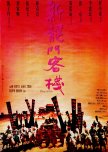
Tony Leung Ka Fai, Maggie Cheung, and Brigette Lin have the ultimate slumber party in the middle of the desert at the Dragon Gate Inn.The hero, Chow Wai On, sends Yau Mo Yan and some mercenaries to save the children of an executed loyal official who are being used as bait. The power mad eunuch is back at it again and this time he's cleaning house of anyone not loyal to him and he wants Chow's head on a platter. Chow and Mo Yan rescue the children and get as far as the Dragon Gate Inn in the middle of the desert. It's run by Jade who is ruthless in her own right and has an eye for Chow. Things get complicated when the Eunuch's men show up at the inn and everyone is trapped there due to the weather.
Tsui Hark did a good job of creating a claustrophobic atmosphere as deadly games were played within the inn. My problem with it was that he didn't slow the pace enough for us to get to know any of the characters. Maggie Cheung's Jade was the only one who came across with a personality. Tony Leung Ka Fai and Brigette Lin had little to do besides fight and call each others' names. He didn't have many lines, but I was happy to see Yen Shi Kwan in a supporting role. Donnie Yen was in what amounted to a guest starring role as the Eunuch.
Most of the fight scenes didn't work for me either. I have no problem with wire work but much of the focus was from underneath the fighting which made it harder to follow the movements. Swords missed by great distances. These martial arts directors usually do a much better job of interspersing real kung fu moves and narrowing the focus to show the action, here everyone seemed to be jumping around in a frenetic pants on fire style. If there was something I did really like it was that the women were capable fighters, especially Jade.
Though the characters were only in the Dragon Inn for two days it began to feel like two weeks with nothing aside from the random deaths going on. Even with hints of romance, a great cause, friendship, betrayal, etc., with all the random scenes it was hard for me to get invested in any of the characters or their relationships.
The final fight scene in a sandstorm was bonkers but couldn't make up for the messy chaos in the inn. Because this is post 1990 it doesn't get graded on a curve with me like earlier martial arts movies. If you like kung fu movies, and the cast is strong in this one with some of my favorite actors/actresses, Dragon Inn is worth seeking out. Just ask for the vegetarian meal if you ever go there.
Was this review helpful to you?
This review may contain spoilers
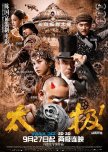
What do you get when you cross a martial arts movie with steam punk, computer graphics, pop-ups, a comic book, and a video game? Tai Chi Zero.The Freak was a martial artist born with a small horn on his forehead foretelling greatness. After his mother died, he was taken in by a master (Fung Hak On) and ended up on the wrong side of a battle against the ailing Qing army. He escaped to the famed Chen Village where he hoped to learn kung fu techniques that would heal the wounds caused by his many battles causing him to be near death. Problem was, outsiders were not allowed to learn any of the techniques. He ended up fighting most of the village and the Chief Master's daughter, Angelababy (more often than not), as he tried to convince them to teach him.
Jayden Yuan, a real life wushu champion, played The Freak. Martial artists like Fung Hak On and Bruce Leung also gave the movie martials arts cred. All of which came crashing down when Angelababy's character was supposed to be a martial artist. In fairness, Jayden in only one of his two movie credits, wasn't a very strong actor so the movie needed people around him like Tony Leung Ka Fai who could act. Even Angelababy looked Oscar caliber in comparison to Jayden, though he was far more convincing in fight scenes.
I won't get into the story, because honestly, it's convoluted. Fortunately, it was fun and funny, never taking itself too seriously even when the big life or death battle began at the end. This movie is not for everyone, and it is far, far from perfect, but if you can check your brain at the door, it's diverting enough to be entertaining.
Spoiler/Not Spoiler Alert (the sequel is listed in the credits above)! There is a part three/finale.
Was this review helpful to you?
This review may contain spoilers
A Summer at Grandpa's sounds like an idyllic childhood romp through the flowers. And while there are moments of childhood glee, this is a Hou Hsiao Hsien film and there's always a deeper narrative camouflaged under the sunny surface.Tung Tung (11) and Ting Ting (4) were sent to their maternal grandfather's rural house for the summer while their mother lay ill in a Taipei hospital. Far from a cuddly grandpa, this grandpa was the village's doctor and rarely interacted with the children. Tung Tung made friends quickly with the local boys. In the days before cell phones, dvds, cable, and video games they did what most kids did, went outside and played. They skinny dipped in the local creek splashing and playing. Again, Hou never leaves any scene too shiny, and the boys had to exit the creek when cow dung floated into their play space.
Ting Ting suffered the fate of many a little sister and was left out of the boys' games. She spent most of the time with her stuffed animal or plastic fan, ultimately befriending the local mentally ill woman.
As Tung Tung hung out with his friends or lounged bored at his grandpa's house, he began to see behind the world of the adults around him. His childhood became breached by reality and the signaling approach of growing up. Even in the pastoral town, rape, an aggravated assault and robbery, a shot gun wedding, and family discord took place. Tung Tung went from casual observer to participant in the adult world around him as the movie rolled on. He also discovered that adults were capable of childish, petulant behavior. Adulthood, it would seem, is an ongoing process.
This film is a slow slice of life story shown through the eyes of an eleven-year-old boy as those eyes begin to open to what is happening outside of himself. A Summer at Grandpa's bids Tung Tung and the audience to become more observant of the small details and meaning in the world around us.
(Trigger warning---if you are sensitive to animals being harassed or dying you might want to skip this movie or fast forward through a couple of scenes.)
Was this review helpful to you?
Donnie Yen's character, Henry Chen, returned to teach at his old school after serving in the United States military. He was assigned to the worst class in the school. What he found were standard movie fare students---poor students, students with parental problems, misunderstood kids, racism, kids running errands for gangsters, stressed kids, kids with unfulfilled dreams. Chen studied their histories and then stepped in to make things right by unconventional means.
In addition to the teenagers' problems, the school was in danger of being shut down because of underachieving students. Throw in gangsters who intended to develop the area where the school sat, and you've got all you need for conflict. Add in a couple of awesome fights when the plot slowed down or became too serious to keep the audience invested and you've got a winner-it's Donnie Yen, we don't expect him to solve all of his problems in a peaceful way, do we?
Donnie elevated a familiar and at times clichéd story with his star power. He transitioned over to less action and more acting smoothly in this film. The kids were likeable even when doing unlikeable things. One problem with such a large cast, the villains were underdeveloped even though one had a key connection to Chen.
This movie was a combination of social concerns and martial arts displayed in a fairly balanced manner. Some problems may have been solved too easily, but sometimes we need to believe that children can be saved from others and themselves and that someone cares enough to risk stepping in to help them. Big Brother had moments of inspiration and enough action and character development to keep it entertaining. Donnie Yen as Henry Chen didn't just save the children in this story, he saved this movie as well.
Was this review helpful to you?
Pearl Chang Ling starred as Lu Du Shing AKA Lone Traveler Wu, the swords"man" in search of Peerless Swallow, a renowned swordsman. Poor Pearl was dressed in a wooly tunic for the length of the movie. She looked more like a vagabond than a skilled swordswoman. Violent and with a temper to match, she dispatched anyone who crossed swords with her, or just plain crossed her, ruthlessly. As per usual, everyone accepted her as a man until the shocking reveal late in the movie. Pearl did a good job playing the single-minded warrior who wanted to be free of her duty and was willing to slice her way through the kingdom to get there.
The plot was needlessly complicated by varying factions which didn't add anything to the main story. The plot revolved around Wu and Peerless Swallow's family histories and the dire consequences and burdens left to the children of swordsmen. Wu had sacrificed her entire life to become a swordswoman to fulfill her father's wishes. Chained to a sword for ten years, unable to free herself of it unless she fulfilled her mission or died trying. Ling Yun played Peerless Swallow, the object of Wu's scorn. He gave a suitably noble turn as a man who was tired of the swordsman code of endless fighting.
My Blade, My Life was shot in Taiwan. The sets were rudimentary, the costumes outlandishly bright at times. The score was forgettable except for the original Star Trek sci-fi sound effects during fights.
If they'd trimmed this movie to around 90 minutes and cut away much of the useless cast and story, I would have rated this movie higher. As it was, it dragged on too long when Pearl and Ling Yun were the heart of the story.
Was this review helpful to you?
Beast Stalker is a suspenseful thriller that felt like it could have been better than it was. Hampered by a shaky camera that looked like they were filming during an earthquake, erratic close-ups, and choppy editing, it was hard to follow some of the action scenes without feeling nauseated. The actual car crash scene was done quite well, choreographed by Bruce Law, even if you could tell they were the only cars on the road.
The acting ranged from adequate to good. Nicholas Tse did a fine job portraying a dutiful cop whose actions led to a tragedy and the shattering personal and professional fallout resulting from it. Nick Cheung played the scarred villain on a collision course with Tse's cop. I honestly felt if he had been able to bring more nuance to his role as conflicted as his character was, it would have made his story arc more powerful. I was most impressed with Wong Suet Yin who played Ling, the prosecutor's youngest child. The daughter was kidnapped to force her mother to capitulate to the Big Bad's demands. Wong beautifully portrayed a little girl who never gave up and was resourceful in trying to rescue herself despite numerous setbacks.
Overall, too many characters took away from the central core of the story for me. In a thriller like this, the fewer characters the better, and the better to develop those few fully.
The film displayed how a fateful accident drove people to drastic measures both for good and evil which brought up the age old question, "Do the means justify the ends?"
Beast Stalker is not a bad film, just remember to take your Dramamine before you start it.
Was this review helpful to you?
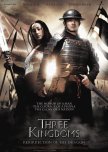
Three Kingdoms: Resurrection of the Dragon
2 people found this review helpful
Produced in China it took me a few minutes to adjust to familiar actors being dubbed. Having watched so many Cdramas I was able to fall into it pretty quickly.
I have only the most cursory of knowledge about this time period and will leave it to others to judge it on it's historical accuracy. As with all movies based on historical characters, I take them with a grain of salt knowing the makers have their own agendas. Fact, myth, and legend are often intertwined to tell a good story. The same goes true with costumes and armor, whether they are accurate or made to be pleasing to the eyes is not for me to decide.
Three Kingdoms was beautifully shot and scored. Costumes, sets, and locales were all well done and chosen. Mountains above the plains made for desolate places of battles.
All of the actors did a good job of portraying their characters, though most had very little time on screen. The great Ti Lung barely had any lines as one of the Five Tigers. Vanness Wu was in and out almost before I recognized him. Yueh Hua as the warlord and later emperor Liu Bei showed up long enough to make a small impact. The focus of the movie was on Andy Lau's Zhao Yun and Sammo Hung's Luo Pingan. The two were war buddies with Zhao's story told through Sammo's eyes and jealousy. Maggie Q also had a significant role as Cao Ying, the leader of the of the opposing forces in the final battle. Resourceful and ruthless, she made an excellent adversary for Zhao.
Three Kingdoms downfall for me was that there was no development of characters, no reason why they were continually at war, nothing much to hang onto. It was a series of violent battles over three decades bound by a thread of characterization between the two friends. The movie ended with me knowing little more than Zhao Yun was a tiger in battle and his friend envied his success. Andy and Sammo managed to imbue their characters with more than what they were given to play, a testament to their acting abilities and chemistry.
The short, creative battles are worth watching the movie for, as well as the pairing of Andy Lau and Sammo Hung. As long as you aren't expecting much more it's entertaining.
Was this review helpful to you?
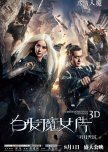
The White Haired Witch of Lunar Kingdom
2 people found this review helpful
The no-name female lead was a Robin Hood who stole from the rich and gave to the poor. A brilliant fighter, she looked after her group of people and helped protect their small, somewhat peaceful island within a sea of deceit and battles. The new leader of the Wu Dang tribe stumbled across her on his way to deliver the curative red pills to the emperor. He promised to give her a name worthy of her beauty and skills. Along the way he was framed for murder, she was framed for murder and everyone ended up in the mountain fortress. As often happens, they fell in love and he gave her a name.
Trying to keep up with all of the plots and traitorous groups was difficult at best. Most of the time I was a bit lost as to who was supposed to be the bad guys. Except for Wu Dang and the mountain fort, the rest were duplicitous murderers. When the story stayed with the lovers, I found it to be engaging. Elsewhere, it tended to lose it's way, especially near the end.
The heart of this movie was the love story with all of the betrayals swirling around them for external conflict and to test their love and trust. The actors certainly looked earnest enough, though I wasn't completely sold on their chemistry. I'm really not sure why it was titled, The White Haired Witch. Zhuo Yi Hang had substantially more time on screen and development than Lian Nishang (the name he gave her). I was disappointed that she was given less time and character development for what could have been a much more interesting character. The titular character shouldn't be relegated to practically a supporting role in her own film.
The cinematography and costumes were beautiful and the natural scenery made for alluring settings. The movie did not disappoint in these areas. The CGI was disappointing when it came to people leaping around the mountains.
I thought many of the fight scenes were good. Most were fairly short and brutal. It was a wuxia which meant there was some flying around and special powers. None of that bothered me in the least. The only problem I had was when huge armies clashed with the view narrowed down to a few people making the battles small in scope.
The White Haired Witch of Lunar Kingdom had great potential, it was beautiful to look at but was let down by the muddled political plots and lack of meaningful evolution for the main character.
Was this review helpful to you?
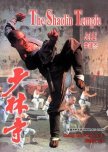
The plot is typical of a lot of kung fu movies. The father was killed by an evil warlord. The wounded son ended up at the Shaolin temple. He learned martial arts so that he could enact revenge. Killing was against the Shaolin way leading to conflict with the warlord and the monks. Anyone who watches old kung fu movies already knows this plot by heart.
If you are looking for a captivating story or character development you won't find it here. What you will find is a movie filled with real martial artists, including some champions instead of actors, meaning the fights were fast and used real moves with almost no wire work.
Disappointingly the martial artists did their own choreography with mixed results. Some of it was very good, other times it was awkward with people in the background jumping up and down with spears, interacting with no one. Jet Li was fast and furious and light on his feet, no complaints about his skills. Yu Hai, a real life Master, showed off a little of his Mantis form. The dialogue was kept to a minimum for the most part. With the exception of Jet Li's and Yu Hai's characters I wasn't emotionally invested in any of the rest as none of them were differentiated.
Fair warning there were several instances of animals being killed on screen and in another a family pet was "hilariously" accidentally killed and eaten. China could really use PETA.
The real temple and scenery around it were beautiful. The story was loosely based on an event in the temple's history. The movie started and ended with shots of the temple and surrounding area and bits about it's history from a narrator. At first I thought I was watching the wrong movie until the story obviously began. Though nice to hear about the history it was a strange way to begin a movie.
Shaolin Temple was enjoyable for me just to watch Jet Li when he was young. One particular set up of him training through the seasons sealed my score for this movie because I liked it so much. Most of the fights were engaging and creative if in need of an overlying guiding hand. If nothing else, Shaolin Temple is worth it for martial arts movie enthusiasts to seek out to see Jet Li launch his movie career.
Was this review helpful to you?
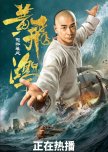
The story is fairly weak despite the aforementioned conflicts. Most of the intrigue introduced is an excuse to set up another fight scene. The movie's strength lies in it's numerous fight scenes. Summo wrestlers, ninjas, and your garden variety assassins show up from time to time to battle WFH and his merry band of kung fu warriors. Vincent Zhao does a good job as the high flying and noble Wong Fei Hung. His subordinates can be more of a detriment than an asset at times, both the characters and actors. The bad guys, even the femme fatale don't seem particularly menacing or much of a threat to WFH.
Warriors of the Nation is a perfectly enjoyable kung fu movie if you enjoy kung fu fights, don't mind a little wire-fu, and don't expect any character development or a cohesive storyline.
Was this review helpful to you?
Honestly, this movie annoyed me so much it's hard to write a review. I may never get Charlene Choi's screaming out of my head.
The basic plot is that an evil queen ruled the land with an iron fist. It's fantasy kung fu land where people can shape shift and use special powers. Donnie Yen showed up in a small role to find The Chosen One and also to find Excalibur so that the rightful male king could kill the queen and rule as was proper. He didn't have much to do with the exception of one big CGI enhanced fight with Jackie Chan in an even smaller role. What was the name of the character Donnie play? Crouching Tiger, Hidden Dragon. Again with the complete lack of originality.
One of the main leads was Jackie's son, Jaycee Chan, who was as interesting to watch as a wet blanket. Wilson Chen played his buddy, Blockhead. Don't laugh, Jaycee's character's name was Charcoal Head. One of these two doofuses was future royalty, if I'd been Donnie I would have had to reevaluate how bad the queen really was. Jillian Chung played the cold Blue Bird, it would only take a man to warm her heart. The aforementioned Charlene Choi played the Dumbell/male slave seller out to make money. The women were supposed to be skilled in martial arts, but at the first sign of trouble screamed and hid behind the men. A feminist's dream this movie was not, ultimately if any good came out of a situation it was because a man handled the problem.
The four main characters simply could not carry this movie due to the actors' limited skills. It reminded me of cheaply made fantasy television show where all the actors had to do was look pretty and wait for the stuntmen/stuntwomen to jump in and do the heavy lifting for the fight scenes. The scenery and sets were beautiful and you could tell the producers had sunk some cash into them. CGI and wire work were used extensively in the fight scenes with mixed results. In 2004 the CGI should have been better.
I'm sure I wasn't in the age demographic this movie was aimed at which may explain why it was so irritating to me. Your experience may vary depending on how many Chosen One stories you've seen and whether you find the leads attractive or likeable. For me the only scene that I found remotely entertaining was the fight between Donnie and Jackie and five minutes out of 105 hardly made it worth it.
Was this review helpful to you?
Scaffolding Kung Fu vs Bench Kung Fu!
Mantis, Tiger, Drunken, and Monkey kung fu…just when you think Lau Kar Leung might have run out of kung fu forms for choreographing martial arts scenes, he’s given the dream combo of Scaffolding kung fu vs Bench kung fu!Gordon Liu returned in this sort of sequel to The 36th Chamber of Shaolin. The third movie, Disciples of the 36th Chamber was actually a direct sequel to the original movie. This time he played a conman, Chao Jen Cheh, masquerading as Monk San Te in order to intimidate the new violent Manchurian overlords of the local cloth and dye factory. The Manchurians in charge bullied and beat their employees as well as reduced their worker’s pay to pad their own pockets. The only problem was, Chao didn’t know any kung fu and was soon found out which made the situation even worse for the workers. The people who had talked him into helping them begged him to go to the real Shaolin temple and learn kung fu so that he could come back and protect them.
Chao managed to maneuver his way into the Shaolin Temple but the real San Te saw through him instantly. After comic segments which went on too long for me, San Te put Chao to work building a scaffolding around the temple. Chao watched and learned from the monks as he practiced the drills while building the scaffolding, subconsciously developing his own form of kung fu. Three years later, he left the temple thinking he was a failure until he returned home. It turned out San Te’s covert method had taught him all he needed to know to handle the bullies. Admittedly his training smacked a little of Karate Kid’s “wax on, wax off” style of kung fu training but the final fights were entertaining enough to stretch my disbelief. It was only at this point that I started to enjoy the film. The fights were among some of the most creative, fun, and least deadly that I’ve seen. It was worth sitting through the rest of the film to watch Gordon Liu and Johnny Wang show their stuff.
I thought Gordon Liu showed a greater range of acting in this film. Chao not only learned kung fu, he also received the character development this unlikeable guy needed. Gordon Liu’s martial arts skills and moves were spectacular as always. I wait in anticipation for when he tears his shirt off and gets down to business. The less said about Hsiao Hou’s fake teeth and giant mole, the better. Johnny Wang only needed to look grim until it was time to fight, like a wrestler waiting to be tagged in.
Lau Kar Leung rarely disappoints with his direction and who would have thought bamboo ties could make such an effective kung fu weapon! Chao was faster than an elf wrapping packages for Christmas with his tying technique. While the great final act raised the score for me, it couldn’t completely erase the first half of the movie which dragged on too long for my taste. If you enjoy kung fu comedy you might enjoy this movie from beginning to end. If not, the last third of the film makes it worth watching.
Was this review helpful to you?
Dyeing to Know You Better
The Bare-Footed Kid started off sweet enough, turning darker with each new pair of shoes the shoeless youth acquired.Ti Lung played Tuan the noble, skilled fighter living undercover as a supervisor in a cloth dyeing shop. Maggie Cheung, Miss Ho, was the lovely owner of said shop with a secret dyeing technique and the den mother to her workers. These two had an underlying affection for each other that gradually made its way to the surface in a meaningful exchange. Tuan and Miss Ho were the heart of this film and the most compelling characters.
Aaron Kwok played Yuan, the titular character. Bare-foot, broke, and illiterate he came to town looking for his deceased father’s friend, Tuan. Yuan was naïve, but a ridiculously skilled fighter who couldn’t even write his own name which brought up some questions about how he was raised that are never answered. Enter Huang Lien as his love interest who was a teacher in her father’s school. Their budding romance had a rocky start and a rockier ending.
Yuan initially went to work for the kind Miss Ho, making missteps that landed him in the employ of the Big Bad. He earned a pair of stylish shoes, a pocketful of change and soon enough a heart full of regret.
The younger actors’ performances were fine as their characters went through life changes. Aaron Kwok made a sweet country bumpkin who was briefly led astray, his conscience weighing on him as reality sank in. Ti Lung and Maggie Cheung were a couple I never knew I needed as their subtle performances delivered an emotional impact that stayed with me.
Compared to older kung fu movies, the cinematography was excellent with beautiful scenery, lighting and colors. The score could be oddly synthetic at times but it wasn’t anything that distracted me much, I’ve heard much worse in these kinds of movies.
My biggest complaint, and what dropped the rating for me were the fight scenes. Ti Lung is a martial artist, one of those whose movements often needed to be slowed down for the camera. He also had a presence which made you believe he was nearly indestructible. I’m guessing Aaron Kwok’s skills, if he had any, were much more rudimentary, as his fight scenes included a lot of wire-work, possible doubling, speeding up, and blurry camera work, especially the huge concluding fight. One of my favorite martial arts choreographers, Lau Kar Leung, choreographed the fights. Whether he was compensating for the lead’s lack of ability, having an off day, or trying something new, I found the final fight to be hugely disappointing.
The Bare-Footed kid started out with some comedic moments ending as kung fu comedies often do, in heartbreak. Aside from the poor final fight which was brutal, this movie was entertaining. I could recommend it to kung fu enthusiasts with a few reservations.
Was this review helpful to you?


