

 135
135 431
431 16
16 2
2 6
6 3
3 8
8 10
10 3
3 13
13 1
1 1
1 1
1 1
1 2
2 6
6 8
8 5
5 9
9


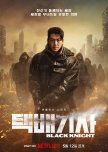
"Refugees are people, too. They live and breathe."
Black Knight didn't add anything new to the dystopian world genre, but it was an engaging and entertaining drama at the perfect length. It was long enough to give the viewer time to care about the characters and also didn't bog down and overstay its welcome. For a world short on oxygen, it knew just how many breaths to take.Kim Woo Bin as delivery man 5-8, in his oversized coats was perfect as the leader of the delivery people and refugee rebels. Having survived a massacre, he knew exactly what the Cheonmyeong corporation was capable of. The Chairman's son, Ryu Seok, wanted to eradicate the refugees and keep the status quo with the haves having all the oxygen and resources in their underground relative utopia while the refugees gasped for air and dealt with a lack of food, medicine, education, and jobs on the dusty surface.
Kang Yoo Seok as Sa Wol was the cocky young upstart mutant refugee who entered the fight ring in order to become a delivery man. Again, nothing new in the winner takes all fight to the near death or death to gain a dystopian prize, but the scrappy and sympathetic Sa Wol made it easy to care about him. Esom as Seol Ah, was the dutiful soldier who was not afraid to bend the rules by hiding Sa Wol in her house and raising him for a decade. As the story went on, she and 5-8 would have a different reason for going to the mountaintop, each taking their own road in order to bring Ryu down and save the refugees who were marked for death.
Kim Woo Bin did a great job as the delivery man who delivered more than food and oxygen, he delivered hope and justice. Song Seung Heon was elegantly despicable, proving why nepotism is a bad thing. The story had some lapses in logic and could have delved more into certain plot points, but the charismatic performances overrode the plot holes a delivery truck could have driven through.
Black Knight highlighted how the 1% in charge of resources was unwilling to share and capable of almost any atrocity against refugees that they didn't see as holding any value. It was in their best interest to keep the people divided into classes. The company and their lifestyles trumped any good they could have done for the surviving masses. For Ryu, the people were never grateful enough for the oxygen Cheonmyeong allowed them to breathe---those whom they decided were worthy to breathe.
"The only thing necessary for evil to triumph in the world is that good men do nothing." (Source debated) The politicians, military, refugees, and delivery people would have to decide what they were willing to do to build a world for all survivors. Black Knight could be dark at times and was unafraid of sacrificing characters in the deadly fights, but it also shone a light on the goodness of people as they fought to create a better world for everyone, not just for some. This might not have been a perfect drama, but it was perfect way to spend a few hours on a rainy day.
5/12/23
Was this review helpful to you?

This review may contain spoilers
You do not want to catch this rainbow
"Why must humans be so greedy?" Gamera vs Barugon brings that harsh lesson into focus showing how human greed causes as many problems as giant Kaiju.At the end of the original Gamera, the giant turtle was enclosed in a capsule and launched into space. This movie picks up with a meteor cracking open the ship and Gamera spinning his way home to Earth where he caused some damage feasting on hydroelectric power from a dam.
After Gamera takes off to parts unknown three men travel to New Guinea to retrieve a giant opal left hidden in a cave from WWII. The natives try to warn them off but they won't hear of it. Death and betrayal follow which is why we can't have nice things. The opal, as any Kaiju fan will have figured out by now, is an egg, not a stone. Next thing you know Barugon is on the loose with his giant tongue (whole new meaning to the term tongue lashing!), glowing tines on his back and a giant rainbow ray of death you do not want to catch. Gamera shows up and takes quite a beating from the new kid in town.
The humans, including a repentant thief and the native girl who came with him to Japan seek to stop Barugon. One of the other thieves cannot except the loss of the jewel and goes on a murder spree. As usual, most of their efforts are thwarted because this is Gamera's movie, not theirs, and it's up to him to have the marquee fight.
Though the movie starts slow, the humans are among the most interesting of any Kaiju movie. Hongo Kojiro made a believable humbled man trying to undo his mistake, knowing it would be impossible to repay the lives lost. Fujiyama Koji played the greedy and villainous thief well. Let's just say his character got the tongue lashing he deserved by human and Kaiju alike.
I didn't care for the original Gamera but his second outing was much more enjoyable and well done. It helped that there wasn't an annoying child talking about turtles non-stop. This Gamera was dark and excluding the usual Kaiju pseudo science, fairly coherently and cohesively written. It was beautifully shot and the fights were well done considering they were guys in cumbersome rubber suits. For a 1966 movie about a big turtle that can fly you couldn't have asked for much more.
(As usual these old niche movies are graded on a curve)
10/20/22
Was this review helpful to you?
This review may contain spoilers
"Love is a matter of time. It's no good meeting the right person too soon or too late"
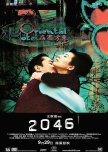
2046 returned to the world Wong Kar Wai built in his 2000 film, In the Mood for Love. Tony Leung Chiu Wah reprised his role of Chow Mo Wan, this time as a broken man who numbed himself with casual sex and used the lives of the beautiful women in the hotel room next door, room 2046, as inspiration for his story of the same name.Chow, now alone after the events in the last film, earns his meager living writing racy stories. He had moved to Singapore and has little money for airfare home. The Black Spider (Gong Li) comes to his rescue and after spending time together he asks her to go to Hong Kong with him which she refuses. Back in Hong Kong he helps a very drunk woman home one night. In a moment of narrative synchronicity, he finds a room available next door, room 2047. He would have preferred 2046 but the woman he helped home was later stabbed by a jealous lover in that room and there was some redecorating to do. For those who didn't see In the Mood for Love, 2046 was the number of the room in another hotel where Chow and Su Lizhen (Maggie Cheung) worked on a martial arts story.
Aside from the revolving door to his bedroom, the lonely writer becomes involved with various women at different times and different ways in the hotel. The landlord's daughter, Jingwen (Faye Wong), is in love with a Japanese man, something her father cannot tolerate and will not approve of. Bai Ling (Zhang Zi Yi) moves in and she and Chow "borrow" each other to occupy their nights. Both have their share of paramours but become intimately if not romantically involved. Though she would like more, he keeps his emotional distance. As he writes his dystopian story of a train to 2046 where people search for their lost memories, the women's lives offer fodder for his creativity.
For me, this film would have been more difficult to understand if I hadn't watched In the Mood for Love prior to it. Understand might not be the right word, sympathize would work better. Chow didn't come across in a very favorable light as he slept his way through Hong Kong. Knowing what happened between him and Su Lizhen aided in feeling sympathy for his case of terminal heartache as guilt and grief guided his self-inflicted pain.
There were also many call backs to ITMFL. The green noodle thermos made an appearance several times. Many of the sets and lighting were similar, even more so when the rain set in. A taxi ride where he at least subliminally tried to recreate a moment with Lizhen with another woman gave a glimpse into his mind. And every Christmas he visited the diner as Nat King Cole's Christmas Song played in the background.
With three of the women, he found that he was using them as a substitutes, something that did not bring him comfort for very long. He was told the ending to the story he had written was too sad. How does one write a happy ending when your heart is hollowed out and beyond repair? When loss and longing are your constant companions? At best the women in his bed gave him a brief sense of warmth but he found himself lonely even in someone else's arms. Passion could not replace what he was searching for. His heart was waiting on the only one who could break his solitude and give him a happy ending and he had let her slip away.
This film was visually stunning. The color palette leaned heavily on green, yellow, and red in lighting, sets, costumes, and props. The costumer set the bar too high with Maggie Cheung's cheongsams in the previous film but there were some gorgeous dresses, particularly on Zhang Zi Yi. I was pleased that the soundtrack was more diversified for this film, fitting the despondent mood perfectly. Tony Leung, Zhang Zi Yi and the rest of the cast gave superb performances. The neon train moved beyond metaphor to personal therapy as Chow worked through his feelings writing about others. In style, this film succeeded brilliantly.
Where the film let me down were the characters. Though attractive and complicated the characters were challenging to care about. Remote and difficult to read, most of them kept their feelings to themselves. And those that did reach out were often reprimanded.
2046 was a deeply melancholic look at love and regret, bordering on cynicism. By the end of the film all of the color had been drained out of the spectrum, leaving only the cold, dark mood of despair. For Chow, love was pain and "all memories were traces of tears." This film could be just like Chow-beautiful to look at but also mystifying and emotionally detached and completely irresistible to walk away from.
5/3/23
Was this review helpful to you?

"Had I not seen the sun, I could have borne the shade..." E Dickinson
Had I not Seen the Sun has been a difficult drama to rate and write a review for. Certain elements left me wanting and others I found completely engrossing. Also, given that we must wait until December for the second half to air, the drama ends on a cliffhanger meaning the story is not complete. I went out on a limb with my score hoping the writers bring everything to a satisfying ending.Li Jen Yao turns himself in, confessing to several horrific murders. A small film company receives permission to do a documentary on him. Their goal is to discover the one thing the police were unable to ascertain…the motive for the grisly killings. Chou Pin Yu is the young film assistant. She’s moved into a haunted apartment and begins to be possessed by someone with a connection to Li. Pin Yu is given a ghostly guided tour of the lives of Li and the ballerina he loved.
The present time escapades did not work for me largely because the actress playing Pin Yu is extremely inexperienced and she lacked the ability to give any depth or nuance to a complex role. I rarely comment on acting abilities as it’s very subjective, but I nearly dropped this drama early on because I could not connect with her performance. When the drama largely moved to the past I fell into the story. The narrative may not have been original and was overtly melodramatic, but I don’t mind a little drama mama action. I’m tempted to say the writers were heavy-handed with their butterfly metaphors but can’t bring myself to criticize their uses of my namesake.
“Moths (at night) keep going in circles mistaking lights for the Moon…Butterflies only appear under the sun and go anywhere they want to.”
I’m curious to see how the writers will resolve the mysteries of which there appeared to be many. If nothing else, this drama was a strong motivation for cameras in classrooms and child advocacy programs and more.** With the exception of one girl’s family, there were no people deserving of children in their lives in this drama. Most of the teens involved lived in the darkness. They either basked in the sun hoping to learn how to walk in the light or attempted to drag the light into the darkness with them. We'll see if anyone sees the sun by story's end.
20 November 2025
Trigger warnings: SPOILERY
-a violent sexual assault, numerous beatings, and glimpses of disturbing murders.
**Spoiler comment below**
**** There is also a need for better protections for sexual assault victims with the police, schools, and more public education that girls/women who are raped are NOT sluts or responsible for the vile acts committed against them and they are not tainted goods. The protection of boys is not more important than the welfare of their victims and the victims deserve justice though it is too often denied. Li Jen Yao should have aimed lower.
Was this review helpful to you?
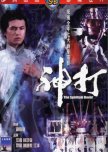
Hsiao Chen is separated from his master when Chi Keung was taken to jail. Hsiao takes over their spiritual charlatan business by accident and then purposefully. He’s saved from a group of thugs by cross-dressing Jin Lian who becomes his new “disciple” in the business. The two end up fleecing people even as they convince the villagers Hsiao is a medium for the gods. When Hsiao begins teaching the villagers kung fu to protect themselves from the local gangsters, the Big Bad calls in reinforcements that may be the end for the “spiritual boxer.”
I had high hopes for this film when the introduction included an exhibition match with Ti Lung, Chen Kuan Tai, and Wilson Tong. It went downhill from there. Wong had skills but lacked the star power to carry this film. The film had numerous familiar names as villagers and the Big Bad’s thugs. Lin Chen Chi in a wig that looked like combed out roadkill, did an adequate if not memorable job. Shih Chung Tien wasn’t exactly terrifying as the local crime boss Liu Deruei. Lee Hoi San and Ng Hong Sang did, however, bring the menace as Liu’s hired specialty killers.
The bookended fights were well choreographed as Lau Kar Leung (one of my faves) was both the director and martial arts director. This was only his second directorial effort so I’m willing to cut him some slack. Spiritual Boxer was the film equivalent of luke warm water, not awful, but not good either. Graded on a curve as usual.
31 October 2025
Was this review helpful to you?
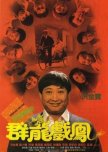
Lo Tung (“Fat Lo”), Mai Chien Tang (“Malted Candy”), San Cha (“Cake”), and “Rice Pudding” are four buddies who drive pedicabs. Mai meets a young woman named Hsiao Tsui when he runs into her and romance blooms. Lo begins a romance after threatening Ha Ping with a torch who happens to work in a shop in his auntie’s building. Despite the rocky beginnings, true love takes its course though conflicts arise. Hsiao has a dark past and the local triad boss (John Shum with a huge gold grill) wants Ha Ping.
The film begins with a big workers’ brawl and soon after has a car vs pedicab chase. The chase ends with the best fight of the film. Old school Shaw Brothers actor and martial arts director Lau Kar Leung and Sammo fight with fists, kicks, and Lau’s specialty---weapons. Lau was 53 and Sammo was pushing 40 but you’d never know it from their speed and agility. I found the choreography highly entertaining. The middle of the film sank into romantic melodrama before the murderous fights began giving Sammo a reason to clean house at the Triad lord’s. Sammo fought perennial baddie Billy Chow while Mang Hoi (criminally underused) took on Chung Fat. With Sammo, Mang Hoi, and Brandy Yuen choreographing the fights, none of them were disappointments.
There were things that did not work for me. The story was uneven, with characters disappearing and reappearing. Ha Ping’s boss pushed her hard for a romance. I don’t mind age gaps, but the nearly 60-year-old Sun Yueh constantly creeping on 28-year-old Nina Li (his employee) screamed “Me, too” moment of harassment. The camera focusing on women’s clothed bouncing breasts for long lingering minutes was uncomfortable. Ha Ping was pretty, with no other backstory or development, as if that created enough of a character to fight over.
This film, like so many Hong Kong kung fu comedies, started out light and fluffy then devolved into something resembling the Manson Family Christmas* before the final funny credits that erased the horror of the prior losses. Sammo Hung fans will likely not be disappointed as the big guy put on quite a kung fu show. As always, I rate these pre-1990s martial arts films on a curve.
29 October 2025
*Scrooged (1988)
Triggers: The final fights were bloody if you are squeamish
Was this review helpful to you?
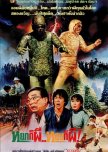
Chicken dance!
The First Vampire in China was on my list to watch for one reason---hopping vampires! Turns out it had an even better reason to watch---a vampire chicken! This was a ridiculous jiangshi, vampire, and ghost film grounded by Sek Kin as the ever-calm sifu ready with a talisman to subdue supernatural critters.I usually try and give a little synopsis of the story here, but this one was confusing at times. Not helped by much of it being filmed at night making it very hard to see. Basically, there was a school near a large burial ground that taught how to summon and contain things that go bump in the night. The students accidentally release malevolent ghosts. That wasn’t their greatest worry. A new inept mayor arrives and long story short, an ancient gold jade wearing vampire, along with an assortment of hopping vampires are set free when he attempts to rob a tomb. Sifu Kent and his students Kwong and Mao bring their magical tools to try and set everything right.
I don’t usually find Hong Kong horror or kung fu comedies very funny but I will admit to laughing at the vampire chicken and its effects on the hapless antagonists. The chicken song that played throughout the movie was funny enough. A jump-roping jiangshi was also unique. The students weren’t very memorable, Sek Kin saved this movie. The bumbling fool usually played by Billy Lau in the Mr. Vampire movies was played by Charlie Cho here. I found Charlie’s character far less annoying as an annoying character. And the mayor was pretty annoying. Kung fu fighters Hwang Jang Lee and Johnny Wang made brief appearances as ghosts.
The only copy I could find was faded and the subtitles were even more faded and tended to run off the bottom of the screen. I will admit that if I ever hear that this film has been restored I’d probably watch it again, though the likelihood is that it will just further degrade. The First Vampire in China is only for fans of this particular era and genre, and idiots like me who giggle whenever the chicken song is played. Graded on a curve as always.
20 October 2025
Trigger: Allusion to a dog being killed for its blood. The chicken used looked like a puppet so I don’t think one was harmed for the film.
Was this review helpful to you?

"I didn't expect him to trick me again" and again, and again...
The Whistleblower was a thriller set across three continents highlighting the dangers of capitalism and greed. Lei Jia Yin and Tang Wei starred as two people caught up in corporate corruption that could lead to the deaths of over a million people.Mark/Ma Ke has been living in Australia with his family for over ten years. His company has developed a way to turn coal into a form of natural gas. A Chinese company wants to use the technique under a highly populated area that sits above a large coal reserve. The CEO sends his wife, Zhou Si Liang, to handle the less than savory financial elements. She and Mark had been lovers years ago before she broke things off to marry a rich man. They meet at a party and share a night of passion. Passion turns to fear when Si Liang’s life is endangered and a terrible problem with Mark’s company is revealed to him.
The Whistleblower had good elements to it that were buried under plot inconsistencies, plot incoherencies, and two characters who weren’t always likeable. Starting the film with infidelity didn’t put the characters on firm moral footing. Frustratingly, both Mark and Si Liang had moments of brilliance and then utter stupidity. If there was a theme to this film it was that money is bad and makes people bad. Even if that was the case, and there are plenty of corrupt, heartless corporations in the world, the basic business model of GPEC was astonishingly, unbelievably short-sighted and would result in the utter destruction of the company and all involved. If the CEO of GPEC had been a Bond villain then it would have made more sense.
Lei Jia Yin and Tang Wei did the best they could with the material. Tang Wei has a beautiful charisma that is too often underused in Chinese films. The Whistleblower did try to distract from its messy storytelling with action scenes. There were plenty of car chases, and foot chases along and in buildings, and characters falling off and out of buildings. The White Truck of Doom even made a guest appearance! The most fascinating thing to me is that apparently there aren’t whistleblowers in China as there were three screens of explanation about the terminology.
The Whistleblower was an okay thriller that was overly long and stumbled over itself on occasion trying to do too much and not keeping track of its own plot. It’s worth a try for fans of Lei and/or Tang and if you can go into the movie with low expectations.
25 September 2025
Triggers: Black face, not so subtle racism . Infidelity-the wife was the most sympathetic character as well as the son.
Was this review helpful to you?
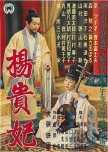
Be careful what you wish for...
Princess Yang Kwei Fei was one of only two films Mizoguchi Kenji shot in color. Based on the lives of Tang Dynasty Emperor Xuanzong and his beloved consort Yang Yu Huan aka Yang Gui Fei, it covered their brief moments of happiness before a bloody uprising tore them asunder.This film was made in conjunction with Hong Kong’s Shaw Brothers. Aside from Japanese being spoken which was jarring, it looked much like a SB film minus the sword fights and kung fu. This film would have benefited from a little wire-fu. Despite having famous actors in the main roles, the film was terribly dry. Gui Fei was shown to be a kind and caring consort. Xuanzong adored her and she helped him not feel like a bird in a suffocating gilded cage composed of regulations and schedules. The Yangs he appointed to important positions abused their power and angered the people and Imperial guard. An Lu Shan who had been responsible for introducing Gui Fei to the emperor resented not gaining an even more prominent position and coveted the throne for himself. Before long the music minded emperor had a revolt on his hands.
The acting by Kyo Machiko and Mori Masayuki was fine. The sets and music were fine. Perhaps the run time was too short to properly build the story. Why did the people come to hate the Yangs seemingly overnight? What was the treacherous Crown Prince up to, a character we never met? The emperor and his Gui Fei were together for around 11 years IRL but the movie made it seem as if it was a matter of days or weeks. This tragic love story deserved a more in-depth journey into their relationship and the complexity of the world around them. Princess Yang Kwei Fei was fine, but I expect more than fine from Mizoguchi.
16 August 2025
Was this review helpful to you?
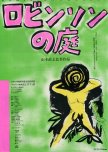
"My cabbages!"
I suspect Yamamoto Masashi’s 1987 film “Robinson’s Garden” is a polarizing film. Two hours of a counter culture woman creating a home out of an abandoned industrial site may either strike a viewer as profound or a colossal waste of time. I didn’t consider it a waste of time but also failed to see its profundity.Kumi and her friend Maki make a meager living as small time drug dealers and live in a communal type dwelling with an international crowd of underachievers. One night while stumbling home drunk, Kumi climbs over a wall and enters a thick forest, unusual for Tokyo. There in the midst is an empty factory and surrounding buildings. The next day Kumi sells or gives away nearly everything she owns and moves in. She paints murals on the walls and plants small trees. After that she begins the arduous task of digging up overgrown weeds in order to plant a cabbage patch. She furnishes and decorates her home with castoffs she finds in alleyways. All does not go well when she invites her friends over and it ends in a brawl.
Robinson’s Garden was more about the feelings that it evoked than any plot. Conversations were sparse and usually inane and repetitious like a record skipping in place. Kumi created her own reality or at least tried to, the opposite life of the rigid salaryman or cooped up housewife. In a feverish moment she pedaled her bike through a group of identically dressed salarymen to drive home the point. The isolated, verdant island hidden somewhere in Tokyo had a mythical feel about it, especially when coupled with a mysterious tree at the center of strange events.
The industrial site transformed into a rustic home led people to have hallucinations. An odd mandala painted by a stranger could have been a curse or a blessing. Kumi’s physical and mental health deteriorated as time went on, was she a victim of nature or lead paint or having only cabbages to eat? Kumi wasn’t a great gardener and alternated between working feverishly and sleeping for long periods of time.
Robinson’s Garden had little plot and could have used some judicious editing from my perspective. For a time, Kumi’s off grid existence bordered on paradise as she spent her days living in the moment. Capitalism and consumerism were far away over the wall. Either Nature or her own ebbing sanity began clawing back the “improvements” she’d made, showing the impermanence of humanity in the face of whatever green goddess ruled in her hidden world. This film was interesting but didn’t convey very clearly the existential questions it seemed to dance around.
25 June 2025
Trigger warnings: Partial nudity and sexual encounters
Was this review helpful to you?
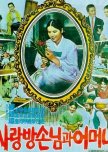
"Once you have your hair cut, you'll change your old worldview"
Mother and a Guest showed the cultural crossroads Korean widows faced in 1960. The small town, how people dressed, and the customs were in a state of flux. Much of the film was narrated by the kindergartener and the adults were seen through her eyes. She didn’t understand them and I can’t say that I did either.Lee Kyung Sook and her six-year-old daughter Ok Hee live with her mother-in-law. Her husband died before Ok Hee was born. Kyung Sook wears her white widow’s weeds and chignon, never looks men in the eye, and is the epitome of demure. She clings to her widow’s integrity by not remarrying. Trouble develops when they take in Han Sun Ho as a boarder. Ok Hee is immediately taken with the soft-spoken artist and follows him around like a puppy. Could a romance develop between the widow and the artist when they are almost never in the same room and almost never speak? Well, that’s the question.
Throughout the film widows and widowers were shown remarrying and living happy lives. The old taboo was no longer enforced. Lee has been a widow since she was twenty-one and seemed relegated to forever being alone except for her daughter. Her wants and desires were irrelevant as well as her daughter’s. There could be no laughter and she’d abandoned her music. This film was supposed to be a melodramatic tearjerker, but the main characters inability to communicate was frustrating and at times infuriating. I was far more invested in the maid’s story or even the hairdresser’s.
Mother and the Guest was a snapshot of changing mores in South Korea after the war. It also showed the stranglehold on women’s virtue and filial obligations that did not loosen easily.
12 June 2025
Was this review helpful to you?
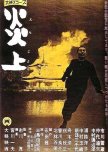
"Not everybody in Buddha's temple is as merciful as Buddha"
Despite a disclaimer at the beginning of the film that said it was not historical and that any similarity to real persons or places was coincidental, Conflagration was based on the book The Temple of the Gold Pavilion (Mishima Yukio, 1956), which was in turn inspired by the 1950 burning of the Golden Pavilion in Kyoto by a mentally disturbed monk. I have thoroughly enjoyed two of Director Ichikawa Kon’s other films adapted from real events, but this one missed the mark for me. Perhaps if I had read the book, it would have filled in the details so obviously glossed over in the film.High school student Mizoguchi Goichi arrives at the Shukaku Pavilion after his father’s death. His father had been a monk and thought Shukaku was the most beautiful place in the world. The chief priest accepts Goichi as an apprentice much to his deputy’s chagrin. Many of the young apprentices have been drafted or killed in the war and there is real concern over who the successor to the temple will be. Goichi is awkward socially and stutters which makes him a target among the young monks. Goichi wants nothing to do with his mother and has strong feelings about who is pure enough to enter the temple. Along the way he becomes friends with a pessimistic young man with a club foot who uses his infirmity to make women feel sorry for him. Friendship between the two misfits is volatile at best. For the most part, Goichi finds no joy in anything or anyone except for the perfect and eternal pavilion.
I found the character of Goichi to be inscrutable and unlikeable and not in any compelling manner. Ichikawa Raizo VIII’s take on Goichi was so deadpan that I struggled to understand any of his motivations. The film never answered the question why the chief priest would want Goichi to be his successor, the boy was clearly emotionally imbalanced and had serious issues with people. A young Nakadai Tatsuya played the manipulative Togari with his usual energetic flair. Nakamura Ganjiro II as the head monk Dosen gave a strong performance as a monk who dove into the worldly concerns of greed and sex.
Conflagration was beautifully shot, no easy feat in black and white. Story elements felt like rocks skipping over a pond, never quite connecting or showing any depth. There was no suspense to the film as it began almost at the end, after Goichi has burned the temple. The movie failed to explain his obsession with the temple and his complicated feelings regarding beauty and purity. Events occurred that were never fleshed out nor had any emotional consequences. The one likeable character disappeared midway through the story like a puff of smoke. By the last third of the film, I was ready for Goichi to find his book of matches and free me from this conflagration.
9 June 2025
Was this review helpful to you?
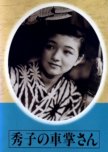
Okoma is the young conductress on an old, dirty bus. The driver and her friendly colleague is Sonoda. The two love their jobs even as the company they work for is being edged out by a new company that has cleaner, more modern, and faster buses. Their passengers tend to be poor or in need of a largely empty bus. Passengers bring baggage, children, even chickens with them. Okoma comes up with the idea of acting as a tour guide along with her other duties to liven up the ride and draw in more customers. The two bus workers ask a visiting writer that Okoma had helped out to write them a script. Ikawa is more than happy to pay back the favor he owes Okoma and sets to work writing the script and teaching her how to speak like a tour guide.
Takamine Hideko was delightful as the good-hearted conductor. In one scene they stop the bus so she can deliver a gift to her mother who scolds her for spending money. She had no problem sharing her meager earnings on something for her mother yet at this stop she had to trade out her badly worn cloth shoes for her traditional geta. Fujiwara Kamatari played the congenial but slow driver willing to go along with Okoma’s ideas. He took her ideas to the boss as it was unacceptable for Okoma to present them to the toe digging, lemonade drinking, back stabbing leader. Natsukawa Daijiro as Ikawa supplied the two bus workers with creative and legal advice. More educated and cosmopolitan, Ikawa came to their aid when the bus company boss crossed an ethical line and pressured the two to do the same. The trio of comrades were affable and easy to root for.
Naruse made use of the rural scenery as a silent fourth character. Most of the roads appeared to be dirt with the bus kicking up a trail of dust behind it. The opening sequence and jaunty music reminded me of Mr. Thank You (1936), another film dedicated to a bucolic bus route and happy driver. The copy I watched was sadly in need of restoration, like peering through murky water that caused the faces to be badly obscured. I would love to have seen the countryside more clearly as well.
Hideko the Conductor wasn’t deeply profound, nothing exciting happened, yet Naruse once again showed us regular people choosing to make the best of difficult situations. He also provided gentle laughter, friendship, and a twinge of pain on the scenic ride.
5 June 2025
Was this review helpful to you?
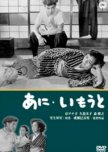
"Life is what matters, right?"
Older Brother, Younger Sister was another Naruse Mikio family drama, yet where other of his families quietly turned the knife, this family exploded in unexpected violence. Throughout the waves of emotions, the youngest daughter San, tried to keep her life and family steady.San returns home from school to find people giving her the side-eye in the small village her family lives in. Taichi, the boy she’s been romantically interested in, is forbidden to see her. Turns out, her older sister Mon has returned home pregnant and unmarried. Mon has worked in Tokyo to pay for San’s nursing school. San and their mother welcome Mon home, but the father ignores her and the older brother Ino, viciously berates her. Mon packs up and leaves which only creates further gossip and hurt feelings.
This is one of those films I wish I didn’t have to rely on subtitles. Mon didn’t appear to be a prostitute at the beginning of the film though the villagers seemed to imply that she was or at the very least sexually promiscuous. She’d been in love with a university student and the paternity of her child wasn’t questioned which seemed to negate their argument. Mon bemoaned her bad moral state after she lost her child with her brother implying she was working in the oldest profession. Or was she simply a “used” woman no longer with that shiny virgin smell men seemed to think was of great importance. Her churl of a brother was upset and gave her no quarter, letting her know exactly what he thought of her fallen status. Maybe too upset? When he explained how close they’d been even into her teens, it began to sound a bit incestuous. To cap things off, the violent fight between Ino and Mon took an uncomfortably erotic turn.
Regardless of Mon’s profession, she relished her independence and took care of her sister and family. The two sisters were very different yet San wished to follow in her big sister’s footsteps toward independence and was in no hurry to marry. Much like the daughter in Lightning, she wasn’t afraid to tell people what she needed, including her milquetoast love interest. The mother held her own and supported the family with the small shop she ran. The relationship between the two sisters was the backbone of this film given a solid assist from the mother.
The men were not shown in a favorable light. Ino spent what little money he made on “slutty” women, oh, the irony. He was also a thoughtless brute who justified his antagonistic behavior as just being a good brother. The father idled through his days drinking and reliving his past as a prosperous business owner. The noodle maker and the university student both lacked courage and the ability to stand up for what they believed in.
The actors’ ages were tough to ignore. In real life Yamamoto Reizaburo (Father) and Urabe Kumeko (Mother) were 51, Mori Masayuki (Ino) was 42 and looked every bit of it, Kyo Machiko (Mon) was 29-close to her character's age, and Kugo Yoshiko (San) was an age appropriate 22.
Naruse is one of my favorite directors from the earlier years of Japanese film. Unlike Mizoguchi who seemed to delight a little too much in torturing his heroines and Kurosawa who struggled with female characters, Naruse often showed women acting as independently and courageously as possible within a rather rigid patriarchal society. San and Mon brushed off what the townspeople and their own family said about them and mapped out the best lives they could for themselves. I should also mention that Tanaka Kinuyo was an assistant director, which delighted me to no end. Older Brother, Younger Sister was an odd film about a complex family with no easy answers, but it still left me hopeful that the sisters would keep their ties to each other without losing themselves in the process.
3 June 2025
Was this review helpful to you?
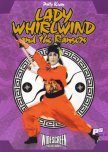
"If she was a boy she could help your papa get out of this"
Polly Shang Kuan Ling Feng donned a wig, cross-dressing as a man in order to bring down the people who had her father arrested on trumped up charges. She’ll have her hands full taking on two different salt smuggling gangs with her little brother in tow.Smuggler Chiang Piao uses his connections with corrupt government officials to have a policeman framed when the officer tries to bring him in for salt smuggling. Lin Kin tells his young son that it’s too bad his daughter wasn’t a boy, because then she could help him get out of the mess he was in. Lin Jo Nan decides to prove her father wrong and dresses as a man to infiltrate one of the salt smuggling gangs so that she can find a way to exonerate him. She has her little brother dress as a girl and with her kung fu skills soon finds a job with a rival gang.
Polly might not have been as fierce as Angela Mao or as competent as Michelle Yeoh, but on the lower rung of female kung fu stars, she held her own. Perennial bad guy, Kurata Yasuaki, is always fun to watch with his fast fists and even faster kicks. The best fight was between Kurata and the powerful Chin Kang. Addy Sung and Cheng Fu Hung were Piao’s minions who knew their way around fight choreography in fire and mud. Jacky Chen played a salt smuggler henchman with shady loyalties but quick moves both with his fists and in the bedroom. Martial arts directors Leung Siu Chung and Gam Ming created fights that suited Polly’s abilities and also showcased the more talented Kurata and Chin. They even helped little eight-year-old Yeh Hsiao Yee have some good moves.
If the movie hadn’t bogged down badly in the middle, I might have rated it slightly higher as the action was decent and the story adequate. Being a low budget film shot in Taiwan, most of the fights took place outdoors or in a warehouse. The only version I could find was dubbed in English. I don’t take off points for it, but I do dislike the dubbing aspect. While the film is fading at least it wasn’t badly cropped with almost imperceptible subtitles. I have no idea where they came up with the title The Rangers given it was a young woman and a little boy taking on salt smugglers to save their dad but looking for logic in these films is often a futile task. As always, graded on a curve for these films and only for fans of the genre.
18 March 2025
Was this review helpful to you?


