
 News


 158
 457
 17
 1
 2
 6
 3
 8
 10
 3
 14
 1
 1
 1
 2
 1
 3
 7
 14
 9
 12


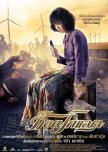
One sweet martial arts action fest!
If you enjoy martial arts action films and don’t mind a lackluster story---check your brain at the door and kick in your suspension of disbelief, make some popcorn and sit back and be prepared to be amazed by Jeeja Vanin in her first starring role.Chocolate's storyline uses the most dated of plots. A jealous crime boss doesn't like the woman he loves falling in love with someone else. The woman eventually sends her lover away to save him and has his child in secret. The child turns out to have autism and the woman runs up debts for her care and even more debts when the mom turns out to have cancer. The girl and a boy the mom adopted find her mom's old debt collection book and head out to try and collect the money from some shady characters. Fortunately, the girl has learned Muay Thai and other martials arts from watching tv and video games. I'm going to skip over the magical autism abilities discussion. The story setup is simply a reason for her to drop kick a wide assortment of baddies in ice houses, meat factories, and the Big Bad's headquarters. And punch and kick she does in the most creative ways you are likely to see. The fights started out fairly rudimentary and continued to crescendo until the bonkers, long finale fights that were as brutal as they were graceful.
The writing and acting were mediocre to poor. Just like in a Kaiju movie, when it takes the monster 30 minutes to show up, the only thing people really care about, this film took about that long to get the action rolling as well. The story was nearly irrelevant because the star of this show was Jeeja's astonishing ability to contort her body into a beat down machine, dodging objects, fists, and kicks while delivering punishing blows to men and women twice her size. I read that several actors were injured while making this film and it was not surprising when you see the hard slamming falls people took throughout the fighting. The fight choreography started out slow and breathlessly moved to astonishing.
If you are looking for stellar performances and an interesting, cohesive story, you are likely to be disappointed. However, if you enjoy exciting martial arts choreography, especially with a kickass female lead, this is definitely one to try out.
3/11/23
Was this review helpful to you?
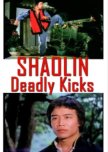
Dorian's Hung Yi hunts down the scattered members of the Eight Dragon gang. Three years ago they had stolen a secret octagonal treasure map and divided it among the 8 gang members. Holy story convenience Batman! More than bringing in the bad guys he's trying to collect the pieces of the map and return it to the temple the gang stole it from. The pieces don't come easy with numerous fights along the way. Dorian faced harm from farm implements, deadly wheel barrows, swords, explosives, hidden weapon traps, chains, bamboo spears, ropes, leap frog kung fu and a giant. Along the way he meets the comely and dangerous Doris Lung, daughter of one of the gang members.
The story, while thin, stayed on track and remained somewhat comprehensible, something more than a few martial arts movies from this time can't boast. Like many movies filmed in Taiwan, this title is in desperate need of restoration. It was dark, faded and grainy. The fights were typical of the 70's, slow and jerky yet the actors made them entertaining. They did make use of wire work, but the majority of fighting was on the ground. Instead of kung fu, Dorian used taekwondo, with his extremely limber and strong legs. He could pop, pop, pop up the bad guys' bodies and then slap or kick them with his feet in their faces.
Dorian is not the most emotive actor but he's entertaining to watch. Lo Lieh showed up as a scarred bad guy and he always brings energy to his supporting roles. Wang Hsieh made his menacing appearance as a deadly member of the Dragon gang. Doris Lung was a nice love interest who could hold her own in a fight. Lung Fei, Tsai Hung, Chin Kang, and Lu Ti rounded out the main partial map carrying members of the gang. There was a nice variety of characters in the gang. A few were completely murderous and others had come to have regrets about the life they had lived.
Things I learned from this movie. #1 Never turn your back on your mortal enemy. #2 Never carry a pocketful of fragile explosives to a fight.
Shaolin Deadly Kicks won't go down as one of the great kung fu flicks from the 70's but for a bargain basement Hong Kong movie filmed in Taiwan it was entertaining enough even with a rather abrupt ending. Probably of most interest to Dorian Tan fans. As always, I grade these old martial arts movies on a curve.
3/11/23
Was this review helpful to you?
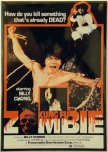
Ghosts, and zombies, and vampires, oh my!
Check your brain at the door and hope there's not a manic Taoist priest nearby. Kung Fu Zombie is so bad and so stupid it's almost good or at least funny. Billy Chong has to fight a ghost, hopping vampires, real life baddies, a possessed father, and a maniacal vampire in just around 80 minutes.Fong Fang is the rebellious son of a stern and overbearing father (Chiang Tao having a grand time) who pushes him hard every day in order to be able to fight the Long clan who has a vendetta against them. His words of wisdom when his son wants to take a break, "Meditation is time off." His idea of meditation for his son, is for the son to be tied up while sitting in a giant crock of water. Not father of the year material, but it does pay off when Fong not only has to fight one of the Longs, but also a Long that has turned into a kung fu blood sucking vampire due to a Taoist priest's incantation being disrupted. Cheng Kei Ying plays an inept baddie using the Taoist priest to try and control hopping vampires to kill Fong Jr. Just his luck he's the one who ends up not only dead but a ghost as well! He and the priest go corpse shopping at the local morgue to try and find a body he can be reanimated into. When Fong's dad dies of a heart attack, a body presents itself and the bad guy now wants to use Fong Sr to have revenge on the son. Fong Jr and the hapless priest have to team up to kill two dead guys.
This movie uses wire-fu, trampolines, reverse camera work, and super sped up camera work in a ridiculously fun way. I enjoy Billy Chong's fighting, but he is not a skilled actor even for the genre. To his credit he was young and pretty and never missed the chance to lose his shirt and show off his toned, oiled torso. Even the fights that weren't sped up were quick enough. This was my first time to see human yo-yo kung fu! And the movie also gave new meaning to the terms hot hand and hot foot.
Chong's selfish, childish, and arrogant character was unlikeable for the most part. Thankfully, he did more fighting than talking. The editing was super choppy, possibly due to 20 minutes being cut from the original film, but I'm fairly certain the editing would have been poor regardless. A 100-minute running time shoring up the story would not have helped because the frenetic non-stop action and gags were the only thing this film had going for it. The musical score was as scattered as the plot using a jaunty chase music one moment and shamelessly lifted portions from the James Bond theme the next. The sound department made full use of its zany sound effects to remind you at all times this was a comedy. There was a minimum of vampire gore and papier mache corpses. The most disturbing scene involved a puppy-dog lovers be forewarned.
I learned some valuable lessons from Kung Fu Zombie. #1-the dead can't enter a temple or walk past a picture of the Buddha or they are hit with red lasers. #2-the dead can't enter a jail for the law is the arm of god. #3-huge green leaf hats render the wearer invisible to the dead and practically so with the ladies. They just don’t teach you this stuff in school.
Kung Fu Zombie is everything you want in a cheap kung fu flick with this title. Only for fans of older kung fu movies who know how to set the bar low, like on the ground. For those who don't mind a little cheese to go along with their beefcake, it might be one to try. Remember to bring your leaf hat!
3/9/23
Was this review helpful to you?
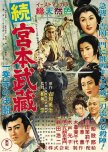
This review may contain spoilers
"Swordsmanship means right-mindedness"
Samurai II: Duel at Ichijoji Temple continues the story of Miyamoto Musashi from the first film. Where a young Takezo/Musashi spent much of the time in the first one running around in the woods with angry villagers chasing him, this time he spends a lot of time evading ambushes by a school of samurais that are offended that this nameless swordsman can soundly beat any of them. He also has the two women who loved him from the first film hot on his trail. What's a swordsman to do?True to his word, Musashi wanders the countryside in order to hone his skills. He duels a man with a chain and scythe, defeating him easily. A monk watching the duel tells him he's too strong and that a man's strength is not forever. To become a true samurai he must learn chivalry as well. Musashi puts a pin in that and takes on the Yoshioka School demanding a duel with the young master of the house. The samurai in the school don't think their master is up to it and seek opportunities to ambush the unknown swordsman.
Meanwhile, the characters from the previous film have moved on. Otsu has gone back to the temple forlorn over Musashi choosing the sword over her. Akemi is working as an entertainer for men, with her mom pimping her out. Her mom, Oko, now married to Musashi's friend Matahachi is cheating on him and waiting for the chance to sell her daughter and ditch him. Akemi still pines for Musashi but is being courted hard by Sasaki, another gifted swordsman. And of course, Matahachi's mom is still crying out for Musashi's blood even after she literally bumps into her ne'er-do-well son. Just for good measure she adds Otsu onto her blood list.
Some battles are better than others as we aren't always shown the end of the fights, only the deadly outcomes. Many fights are at dawn or at night, filmed in the day to look like night which can make the action hard to see. The final battle shows Mifune's fiery fury as he battles 80 samurai, having to use strategy as well as his sword. He also learns much to the priest Takuan's delight when to beat a hasty retreat. Even after treachery and blood lust, the future noble fighter, writer, and artist learns compassion or at least chivalry. He also renounces women. With the crazy ones in his life, might not have been a bad idea.
Mifune Toshiro truly made this character come alive with a wide variety of emotions. His energy and charisma were hard to resist watching. Godzilla's Hirata had few scenes, but the terror in his eyes facing Musashi was greater than when facing Big G. Once again, the women were portrayed in typical 1950's sexist fashion. They were dangerously jealous, short-sighted, obsessive, liars, and emotionally unstable all around. Throw in murderous as well. And then there was Akemi's mother who sat idly by while her daughter was raped so that she could profit off her. Not a good apple in the whole feminine basket.
Though there weren't as many scenic outdoor scenes as the first film, there were still enough to satisfy most viewers. The indoor and outdoor sets varied as to how well they came across. Some were quite realistic and others might be found on a theater's stage.
Samurai II was a more compelling film than the first with more dire consequences and challenges for a majority of the characters. I look forwarding to watching the final installment to see how Musashi transforms on his walk to become a better swordsman and more mindful person. And whether in all the spiritual enlightenment he receives he learns how to take a woman's rejection better.
3/8/23
Was this review helpful to you?
This review may contain spoilers
"You're not known as a hard man for nothing!"
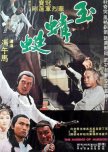
The Murder of Murders aka The Massive is not your typical revenge kung fu flick. It's a murder mystery where nearly everyone in town is hiding a secret and wants to find a fortune in stolen gems with a little kung fu thrown in for good measure.The Jade Dragonfly, a jewel thief, has been hitting all the major cities. When Lo Lieh comes rolling into town and wanting to buy some jewels at a high end shop it doesn't take a genius to know who the culprit is. He manages to get away with 6 precious stones but not before the town's inspector tells him everyone in the shop is a suspect and he'd better not leave town. If the thief isn't caught in five days, the inspector will resign. It seems like everyone in town is hunting for the stolen gem stones. Lo Lieh seems unbothered and has no problem dealing with the cops and baddies until he's poisoned and dies on the spot.
The Jade Dragonfly's brother, Chi Kuan Chun, shows up looking for his brother's killer and he has a plethora of people to choose from. The local gambling den boss, Yi Yuan, and his gang of thugs, including Phillip Ko Fei, Lei Ming, Lee Chiu, and Shih Ting Ken all have had motive and opportunity. Yueh Hua shows up as an art forger with a bad habit of serving suspicious tea. Miao Tien plays The Light in the Darkness, an assassin who uses a pole with a paper lantern to fight his opponents. Phillip Ko Fei uses a pipe with 490 poisoned tipped darts and Lei Ming has a poison dart fan. Chin Kang is the no nonsense straight arrow hard fisted Inspector. As a fan of Taiwanese kung fu movies, it's a grand slam of actors and stunt men to enjoy fighting as they scramble to be the one to obtain the stones. As one character says, "Never think a man has enough money because that's a lie." There are a couple of twists at the end of the movie that given the casting didn't seem too surprising but gave a little depth to the plot.
Lee Chiu was the martial arts director. Most of the fights were decently fast with a variety of weapons as stated before. The fight between Chi Kuan Chun and Yueh Hua was a stiff as Yueh's acting. The fights featuring Chi and either Phillip Ko Fei or Lee Chiu or Chin Kang were far more entertaining. A couple of fights were shot in the dark and with the aged film's fading were more difficult to see.
The Murder of Murders was a fun "who done it?" with plenty of villains and shady characters to choose from keeping the guessing going until the last minute. The fights were better than average 1970's caliber especially for low budget Taiwanese fare. As always, I grade on a curve for these old kung fu films.
3/6/23
Was this review helpful to you?
Dud in the Desert
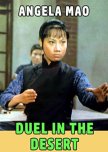
Duel in the Desert is what you get when you mix a convoluted story, bad direction, poor martial arts choreography, and almost no Angela Mao---few duels and more duds.The story starts with everyone converging on the inn Angela's family runs to find a place to stay so that they can take part in a horse race with a 500 gold tael purse. And that's the end of that storyline. Pai Ying and Hsieh Han, along with Wan Chung Shan are looking to make money on a deal regarding 3 treasure chests full of Imperial jewels. Unfortunately for them so are a lot of other people. Theft, revenge, subterfuge, a murder case, betrayal, a secret letter (there's always a secret letter or book!), deals and double dealings, hidden identities, and undercover police officers are shuffled together in hopes of finding a story.
To make matters worse there were few fights and even those weren't very good. Most of them were of the grab, lock, pose kind. Don Wong and Ling Yun had a fight that moved faster and didn't seem as posed. In many of the other fights you could see how far people missed their hits and kicks. Angela is always a delight to watch but she only had a short fight at the one hour mark and in the final couple minutes of the movie. Even her kicks, fierce gaze, and snake kung fu couldn't save this film.
The version I watched was dubbed which might have been fortunate. The film was faded and badly cropped, subtitles would have been hard to read and run off the screen. People's faces were almost completely cut out of some scenes due to the cropping.
If there had been some good fights and more Angela it might have made up for the ridiculous story and all the people running around trying to either steal the jewels or save the jewels. Either way, this is a film only for lovers of 70's Taiwanese kung fu movies and Angela Mao and even then it might require a great deal of patience on the viewer's part.
3/1/23
Was this review helpful to you?
This review may contain spoilers
"It's like when you look for something all over the place & then find it right in front of you."
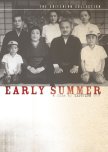
In Early Summer a family faces a time of transition and growth as the twenty-eight-year-old daughter's unmarried status seems to reach a crisis point with everyone wanting her married off, even her boss plays matchmaker! This poor "old maid" seems quite happy enough working, hanging out with her friends, and helping her family, but society norms being what they were, she understands her time of being single is fast running out.Ozu slowly takes his time setting up the characters and family dynamics in his usual aesthetic manner. The plot is not complex but the relationships are. Noriko is the "old maid" and seems fairly nonplussed when her boss tries to match her with an older friend of his. Her authoritarian brother, Koichi, jumps at the chance for her to be married to a wealthy older man. Noriko's mother and sister-in-law express their doubts about the match when they hear the man is forty. Koichi shuts them down saying that at Noriko's age, beggars can't be choosers.
When Koichi's two young sons run away after an argument with their father and can't be found, Noriko goes to a neighbor whose widowed son and small daughter live with her. The son, Kenkichi, goes with Noriko to help her find the boys off-screen. Kenkichi is a doctor and is later offered a promotion from his boss, Koichi, at a provincial hospital. Noriko takes a farewell gift to his house and before she leaves, she and Kenkichi's mother have arranged for her and Kenkichi to be married without his or her parents' knowledge or permission! How terribly forward and untraditional! Kenkichi is delighted, her parents not so much. "She acts like she grew up all by herself." Even though the family knows and respects Kenkichi, he's not wealthy and worst of all, he already has a child. Noriko loves the little girl and can't understand what the problem is.
The father goes to the store and has to wait for a train to pass by. Just like his teapot, trains play a big part in most of Ozu's films. Subconsciously, we know that trains are either taking people to somewhere or away from somewhere. Here the movement within the family is spurred by Noriko making a decision for herself, she's not only moving physically away from her family, but also away from the family's sphere of influence. The father realizes his family is transforming and that the train will soon be taking his daughter away as much as he would love for his family to stay together.
Always hesitant to show much romance, Ozu finally lets Noriko give voice to why she made what looked like a rash decision.
She admits her long standing feelings for Kenkichi. He's someone she trusts and knows she will be happy with. Her best friend reveals to Noriko that what she's talking about is love. Noriko doesn't always come across as the sharpest knife in the drawer with her perma-smile and sunny disposition, but even she knew that marrying a man who had been resolutely a bachelor until forty might make for a difficult relationship no matter how much money he had. Better to clip coupons and work on a blended family as a stepmother with someone she cares for than to be on unequal footing with an older stranger.
"It's like when you look for something all over the place, and you find it was right in front of you all along."
The acting in this film was uneven for me. It was interesting seeing Ozu regular Ryu as the older brother with jet black hair. Two years after this film, he would play an elderly father role with the actress who played the mother in this film in Tokyo Story. In Tokyo Twilight he played Hara's father! I have a love-hate relationship with Hara Setsuko. When she's given the chance to show a range of emotions, I find her compelling. I have a more difficult time when no matter what happens on screen, whether she's been offered congratulations or told she has six months to live she responds with the same smiling face. It can feel like a mask hiding the character's true emotions and I would like to see the depth of the character played out more.
Single, childless Ozu has more than once had two young brothers in his films, Good Morning and I Was Born…But, come to mind. In the films I've seen thus far, and also in this one, the boys are very disrespectful, selfish, and throw fits on a regular basis. Maybe it's because the kids always seem cooped up in the house like the caged birds in this film that they go stir crazy. More than likely, it's how someone who is childless sees children, but I find the children in his films can cross the line from delightfully realistic to incredibly annoying. There was a some of both in this film.
Unlike some of Ozu's older films where tradition must be maintained in the family and with fear of modern influences damaging the familial structure, Noriko is not punished for making her own decision regarding her future. No train runs her down nor is there a disaster to her reputation. I found this different direction with more sympathy toward the young people by the director a breath of fresh air.
Just like the sunny, carefree days of summer seem as if they will last forever, we know fall is around the corner. It doesn't mean the end of the world but it is a time of transition, even as Noriko's family had to accept that change is inevitable. Life is always in flux and families have to be flexible. Much like the family portrait taken in the film with the parents and their children and grandchildren, the last photo is only of the parents. In time, most parents will see their children move out to make lives of their own and be left by themselves with a much quieter house.
After Noriko is wed, again off-screen, and her brother and his family have moved due to his job, her parents talk about their lives. The father laments, "I wish we could live together forever, but that's impossible." On reflection they realize that they have lived a good life and raised their children well. They have earned their, if not happy, at least pleasant and contented ending.
2/23/23
Was this review helpful to you?
This review may contain spoilers
Despite Michelle Yeoh's best efforts, this stunt fell flat
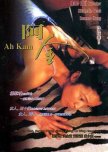
The Stunt Woman starring Michelle Yeoh started out strong giving the audience a behind the scenes look at the grueling and dangerous life of stunt women and men. Then it lost its way and stumbled down a confusing path that not even the graceful Yeoh could save it from.Michelle played Ah Kam, a stunt woman who through determination finds a job working for Master Tung's (Sammo Hung) stunt company. She quickly becomes one of the stunt family after showing her fearlessness and skill. Paco Yick and Mang Hoi, real life stuntmen and stunt directors, were part of Tung's crew. The film touched on the Triads who were involved with movie making during this time. If the film had stayed focused on the nomadic and precarious life of the stuntmen in Hong Kong, especially before CGI and improved safety conditions, this could have been a fascinating story. Instead, Ah Kam falls in love and becomes a manager of her lover's Karaoke bar. When this falls apart she heads back to her true love, working in the movies. Tragedy awaits her and the crew. The next thing you know she's playing surrogate mother to Tung's wild child son.
Perhaps parts of the story had to be re-written after Michelle suffered a calamitous fall, injuring her back. They actually showed footage of her jump from a bridge onto a truck and her having to be tenderly carried off afterwards, which paramedics should probably have been doing. Or maybe director Ann Hui was trying to show three different traditional eras in a woman's life-singlehood, being a couple, being a mom. Whatever the motivation, the story was all over the place in the second and third acts. A major death happened practically off screen, losing much of the emotional impact. Some story elements were vague at best, others were simply dropped.
Michelle Yeoh did her best with what they gave her as did Sammo Hung. They had a nice professional chemistry together. It was fun to see numerous stuntmen have the chance to show their skills as real characters. Kent Cheng and Richard Ng made guest appearances rounding out the cast nicely. The only drawback in the acting department was the child character. Ah Long was a thoroughly unlikeable kid who only partially redeemed himself.
There were a few fight scenes, but much like some of the stunts, they were filmed from a distance or too close, making the action blurry. With Yeoh and the stunt crew, it seemed as if there should have been much better, clearer shots for us to enjoy.
The movie started out strong and ended with a whimper, a terrible waste of kung fu legendary talent. The film did cause Michelle Yeoh to reconsider some of her movie choices which led to a James Bond film and Crouching Tiger, Hidden Dragon which helped to cement her status internationally. So in the end, this uneven film was useful after all.
2/21/23
Was this review helpful to you?
This review may contain spoilers
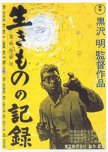
"Everybody has to die, but I won't be murdered!"
I Live in Fear dealt with the fear of atomic bombs and the dissolution of the patriarchal household giving all new meaning to the term nuclear family. It asked the question, "who is more insane---the one who fears a real threat and overreacts or the ones who know it exists and ignore it?"It would be difficult to overstate the fear and paranoia of nuclear war and nuclear testing in 1955, especially 1955 Japan. This film was made only ten years after the atomic bombs had been dropped on Hiroshima and Nagasaki. The Korean War which had left that peninsula carved up had ended two years before. WWIII had narrowly been averted on their front doorstep. In some countries bomb shelters were dug in backyards and duck and cover drills in school were a reality due to the Cold War and nuclear bomb proliferation. Not to mention, a giant irradiated lizard named Gojira had trashed Tokyo only the year before on screen. Living in the shadow of potential world destruction was a new fear that was being dealt with in books, movies, articles, coffee klatches, and political arenas. Kurosawa brought forth his own talking point in this film.
Nakajima Kiichi, the patriarch of his large family, can no longer live "with the fear of nuclear war or being down wind of nuclear testing. After a failed attempt at creating a large bunker in southern Japan he has determined the only safe place for his family is to move them to Brazil. His family resents his unilateral decision for them, but even more the money he has spent. If he sells the foundry he owns they will have to start over and actually have to go to work and not live off of their father. Kiichi is doing what he sees is best for his family out of his concern for them. Most of his family is more concerned with his financial viability thus ensuring theirs.
The family takes him to court and tries to have him declared incompetent. A judge, a member of the bar, and the local dentist-Dr. Harada, are tasked with mediating the case. Kiichi has been found to be psychiatrically sound. Ultimately, two of the three determine Kiichi's response is excessive and the greater kindness is to stop him from using his money to attempt to emigrate his family to Brazil. Harada, however, has his doubts. Everyone he knows fears nuclear war, but has found a different way of dealing with it than Kiichi. But does that make Kiichi's excessive response wrong?
When Kiichi is unable to buy the land in Brazil, his mental stability begins to crack. He meets with the family and begs them to go to Brazil, bowing deeply causing his wife to capitulate and ask the children to follow him. The children refuse his "unwelcome kindness" and Kiichi collapses. No one seems particularly concerned about him, instead they are like sharks smelling blood in the water. Everyone is concerned where they stand in the will, especially his mistresses and illegitimate children. They only need the foundry, not their father. This causes an explosion in his mind and it further cracks, in a moment of last desperation, Kiichi burns the foundry to the ground. His workers confront him about their loss of livelihood. He tells them he'll find a way to take them all to Brazil with him. Once again, he's faced with people unwilling to leave their homes to avoid a theoretical danger and instead willing to live in uncertainty. Kiichi's son yells at his father that there is no safe place on Earth, no place that will remain untouched if nuclear war begins, not even Brazil.
Kiichi suffers a mental breakdown which in the end takes him to a safer place. Visiting the asylum, Harada witnesses the change in the smiling older man. He's left wondering if he'd done the right thing. After all, is it really madness to fear a real threat or madness to pretend it doesn't exist?
Mifune Toshiro as the 70-year-old Kiichi gives his usual powerful performance but is hampered by the makeup created to make him look twice his age. I finally had to tell myself this was like a stage play to accept the awkward look. This was not an easy person to play, Kiichi is a complicated character and not always likeable. He loves his family yet also thinks he can tell them what to do, never asking their opinion on uprooting their lives to move to a foreign land. Cantankerous at times, yet also gentle, shown lovingly rocking his grandson to sleep. Lightning and thunder trigger a frightened response reminiscent of PTSD. His fear is real especially for someone who lived during the time when nuclear bombs were dropped on Japan. His response was to run from the danger instead of ignoring it knowing that one citizen could do little against the world powers building the insane weaponry as fast as they could.
As much as the film was an indictment on the nuclear age, it was also an indictment on the modern post war nuclear family. Kiichi's children were far more concerned about their standard of living provided by their father instead of his physical and mental health. While the children had some valid concerns about their father's actions, ultimately, it was his property and money, not theirs. They were content to feed off of his efforts. The greatest toxicity Kiichi was exposed to came from his own flesh and blood.
Decades after this film was made we still face the same decision Kiichi had to make. With enough weapons of mass destruction to wipe life off the surface of the planet, we each have to decide if we will live in fear or accept that the fear is the price we pay for the times we are living in. And that with any luck some day our collective wisdom may catch up with the terrors we have created.
2/10/23
Was this review helpful to you?

This review may contain spoilers
The landlord of my dinosaur world has emerged!
If you love movies like Dynocroc, Sharktopus, and Cowboys and Dinosaurs, Metamorphosis may be right up your alley. If you felt like the Jurassic Park series had too much story and character development and too many darn dinosaurs, Metamorphosis may be the movie for you! Metamorphosis stars one lethal ever-evolving dinosaur and two, count them, two giant snake-dinosaur hybrids. All that and web movie CGI-what more could a B movie enthusiast ask for?Deep in a secret genetic laboratory, a cleaning maid with an entrance card to everything, even inside a dinosaur's cage, finds out the hard way that the caged T-Rex can "camouflage". Meanwhile, Chris Pratt, I mean Liang, is chasing down an enormous snake to take back to the endangered animal sanctuary. He finds out that someone crossed a Monty Python (Who knew the Chinese were Monty Python enthusiasts-'Tis but a scratch!) and a Triceratops. He immediately visits his ex-girlfriend who works in the super-secret laboratory just in time to see the T-Rex's leftovers in the hall and the race is on to get everyone out of the building! But of course, the evil scientist in charge has locked the place down! It doesn't take much imagination or movie experience to see where this story is going.
You know you are in a B movie when even the Chinese take every chance they can for the women to lose their clothes. There are no true nude scenes, but it is funny how often they are losing their shirts. There is also the requisite idiotic female character who is supposed to be the comic relief, with the huge glasses and big fluffy ponytails who always screams at the wrong moment. I kept hoping she would turn into dinosaur chow. There is also the arrogant, in it for himself character, who you know will be eaten sometime.
The main male character spends most of his time running down hallways trying to lure the dinosaur away from others. He's heroic that way, and the movie lets you know this fact constantly. The two main female characters are almost interchangeable. Though daring they need constant saving. There is also a second ML who is usually trying to guide the group to safety while the ML is running furiously from giant creatures. The acting was serviceable, but bland and uninventive. None of the characters had any real personality to them.
Though everyone keeps calling the creature a T-Rex, the female lead said it was a mixture of Velociraptor, crocodile, and chameleon. You are in for a real treat when it uses a long tongue to lasso his prey. The CGI was okay for the ever-changing dinosaur. This is not Jurassic park level CGI, this is strictly B movie CGI. The two immense snakes were far less convincing.
Though the CGI wasn't great, there was a lot of monster action which made up for the lack of story and character development. The ending was strictly by the book for a B movie, right down to the last scene. If you are in the mood for a dinosaur movie and don't mind the lower quality, this one will give you something to watch until they make Jurassic Park 18 or Dynocroc 5.
2/3/23
Was this review helpful to you?
This review may contain spoilers
“The marriage proposal has turned into something really weird."
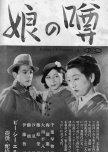
The Girl in the Rumor is a short film that packs a powerful punch, with layers of meaning and consequences. Director Naruse wove together beautiful camera shots and close-ups of his subjects, keeping the viewer uncomfortably near his characters’ hidden raw emotions.Kenkichi runs the Nayada, a sake shop his late wife’s family owns. Business has gone downhill, whether because of the economy, his lack of skill, or that the grandfather is drinking the profits. Oldest daughter Kunie is traditional and calm, helping him to run the shop. She smiles and laughs at Grandpa’s costly habits. Kimiko, the youngest is a firebrand who dresses in Western clothes, listens to jazz music loudly in the house, and stays out late with her friends and even boys.
Kunie’s uncle has played matchmaker for her with a wealthy family. She takes Kimiko with her to steady her nerves. Kimiko is loud, rude, and disruptive during the proceedings. Of course, Sato, Kunie’s intended falls for Kimiko. He and Kimiko end up spending time together afterward and he asks that they exchange her for Kunie. Meanwhile, Kenkichi, doesn’t want Kunie in an arranged marriage for he had been miserable in his. He also needs to figure out how to tell Kimiko that Oyu, who runs the bar next door, is not only his mistress but her mother. He also wants Oyu to come and live with them. Not only that, but Kenkichi has either been watering his sake down or changed the formula to save money. Of course, before it’s all over, everything is thrown into the air like tossed salad and scrambled eggs!
Naruse seemed to enjoy exploring the different aspects of women. Kunie was quiet, obedient, hard working and wore traditional clothes. Kimiko was one of the most annoying characters to have ever graced a movie screen. She was self-absorbed, rude, like her grandpa was a spendthrift, and could be casually cruel. The clash of western and traditional values were on full display, or at least Naruse’s version of them. In addition to the culture clash, the father had gone outside of marriage, creating a rift with his wife and child, something he does not want for Kunie. The man who had appeared calm and stable was actually a catalyst for the upcoming storm. The resolution to many of their problems lie within their reach, when out of the family drama, chaos dragged its members down. All that had seemed important turned to ash by the end. Naruse had no problem taking a flamethrower to an olive branch.
The film started with the barber and his customer across the street discussing how the Nayada wasn’t as good as it used to be. At the end of the film, they coldly and blithely take bets over what will be there next. No corner for a feel-good ending is left, only the darkness of the storm and the wreckage in its wake.
1/30/23
Was this review helpful to you?
This review may contain spoilers
Sometimes Love Just Ain't Enough
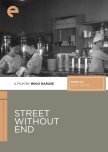
Director Naruse imbued his female lead with more backbone and rational thinking than all the male leads put together in this his last silent film. Despite being a melodrama, he managed to showcase the clash of societal classes and the detriments of wish fulfillment.Sugiko is a hard-working waitress who works with her friend, Kesako, at what appears to be a House of Pancakes, a tea house that serves American style pancakes. Her boyfriend asks her to marry him even though his parents back home are pressuring him into an arranged marriage. Around the same time, movie scouts want her to be the next big thing actress. Barely tempted with the acting offer, she rushes to meet her boyfriend when melodrama enters the scene and she is struck by a car. The rich owner of the car picks her up, before we knew to not move an unconscious victim, and holding her has them driven to a hospital. Of course, the boyfriend sees them driving by and when she doesn’t show up that night hightails it out of town to mommy and daddy. As she recovers in the hospital, Hiroshi, the rich man, falls in love with her. Before you can say, I’ll take the Rooty Tooty Fresh and Fruity, the two are married and living with his disapproving mother and sister. Hiroshi doesn’t have the strength to defend himself, much less Sugiko, leaving her to his family’s tender care.
The mother-in-law scolds Sugiko for being too friendly to the servants. The sister tries to create vile rumors about her and both scowl and skulk every chance they get. Eventually, Hiroshi begins to drink heavily and comes home later and later.
Meanwhile, Sugiko’s friend, Kesako, becomes an actress and has her bumbling artist boyfriend hired on to paint scenery. Ultimately, she finds that acting is not all it’s cracked up to be and begins to regret her decision.
Sugiko finally confronts Hiroshi and tells him she’s leaving so that he can figure out what he wants. Apparently, what he wants is to drive too fast with another woman in his car. A bookended car wreck brings the drama to a close. Sugiko confronts her in-laws and also tells Hiroshi a final good-bye. No histrionics, no forgiveness and romantic ending, just a realistic view of a woman who had been pushed too far. I cheered as she walked away tall.
Both Sugiko and Kesako ended up much where they started but much wiser. They had grown to understand what they did and didn’t want in life and also had greater self-respect and confidence. A final bus scene, seemed enigmatic to me. Was it a glimpse into the future or a farewell to the past?
The movie is badly faded with some skipping issues, combined with Naruse’s rather choppy way of filming with lots of set up shots held for only a few seconds could be distracting. I enjoyed the Debussy music that had been added to the film, its romantic theme fitting in quite well with the drama onscreen. The actors all put their own stamp on their characters, but the best part was Shinobu Setsuko when she set her gaze and showed Sugiko’s inner strength at the end, her freedom hard won.
Street Without an End was a short, entertaining melodrama whose strength lie in showing how love can’t always conquer class struggles and how a woman found her independence and courage to live her life her way.
1/11/23
Was this review helpful to you?
This review may contain spoilers
You have to play the hand that's dealt...all the way...
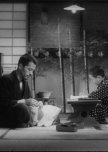
There Was A Father is an Ozu film made during WWII. The film calls for personal sacrifice from its characters yet also shows the price to be paid for it. While well made, I can honestly say, I’m not sure whether I liked it or the message within. For over a decade a father uses his sense of duty to work, and only work, to not live with his son even when it no longer serves their relationship or his son’s future.Ozu regular Ryu Chishu played the lead role as the father, Shuhei. Shuhei was an esteemed teacher, but when a student dies on a school outing, he accepts responsibility, even though no one blames him, and leaves teaching. He takes his son to his hometown and enrolls him in a boarding school. While the father is looking for work this sounds perfectly understandable, however, when the father finds a job in Tokyo it becomes less clear why he doesn’t take his son to Tokyo with him. The time between visits grows further and further apart. Each parting is devastating for the son who is admonished by his father when he releases his heartbreak by crying.
When the son has graduated from college and begun teaching, he tells his father when they visit a hot springs inn, that he wants to quit his job and move to Tokyo to be with his father. His father admonishes him for letting his feelings get in the way of the work that was given to him. “The happiness that you acquire after going through hardship and joy, will be everlasting.” You have to not be selfish and let go of the self.
For the father, all there was in his life was work. Though he initially worked for his son to have a better life, he also worked for his own sense of duty. I have tried to determine if this was propaganda or simply a way of life. Some Ozu enthusiasts say yes, others say no. For me it felt like it was a man who abandoned not only the teaching profession, but his own son, when he failed to live up to his own personal standards. There did seem to be propaganda inserted in places when it came to the single focus on diligent work as dignity at the loss of familial ties if necessary. “At a time like this, we must all do our part.” The father proclaims that life is better when working as hard as one can. That should be enough.
In this film, despite the father’s excuses as to why they could not live together it was obvious the two loved each other. The son adored his father and hopelessly waited for the day they could be together even as a grown man. Before the father’s death, Shuhei made sure his son would have a good wife, arranging a marriage with the daughter of an old friend.
Ozu used parallel scenes, fishing scenes and train scenes that brought the story full circle. His trains seem to always point the way home, even after death. The fishing scenes as the two cast and moved in synchronization, showed the two at one with nature even if they were not of one mind. And as he often did, Ozu explored life through a parent and child. Here he seemed to be looking at the nature of sacrifice, duty and responsibility and the familial loss that came about through them. Or perhaps he was working out his own childhood as his father had gone to work in Tokyo to make a living for his family, leaving Ozu and his mother behind. Whatever the case, I struggled to understand why the father refused to have his son with him, even after the goals had been met. Unlike other Ozu films, the director left it up to the audience to decide instead of leaving bread crumbs for us to follow, or perhaps the notion was a common one at the time and didn’t need to be explained. Or finally, perhaps Ozu made a film that the censors would approve of while subtly criticizing the political structure and its societal price to be paid. Maybe I’m looking too deeply to find meaning in this film.
Regardless of the meaning behind the father’s actions, Ryu gave a superb performance as the father stubbornly adhering to his sense of duty. Ozu’s transitions didn’t always seem as smooth as in his other films, but that could also have been that there were censorship cuts made after the war. I feel like I write this in all my reviews of his films—his teapot showed up and had its usual closeup which always brings me great joy.
This would probably not be a good introduction to Ozu’s films for most people. It is a slow slice of life with a difficult message. The best scenes were when the father and son were together, sadly like their relationship it wasn’t often enough.
12/9/22
Was this review helpful to you?
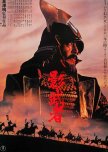
This review may contain spoilers
"The Shadow of a man can never stand up and walk on its own"
Kurosawa Akira had long dreamed of making Kagemusha. When Toho finally agreed to fund it, they were unable to finish financing it. In stepped George Lucas and Francis Ford Coppola along with 20th Century Fox and Suntory Whisky to see that the movie was completed.The story was based on real people and events leading up to the 1575 Battle of Nagashino. The warlord Shingen Takeda had longed used a double to protect himself during the tumultuous time. When his current double tired of the role, they found a thief ready to be executed who was his spitting image. When Shingen is killed the shadow has to take his place, convincing friends, family, and enemies that he is the real deal. Only a handful of advisors and guards know the truth. History would lead to a tragic end for the clan and the shadow.
This was not one of my favorite Kurosawa films. There were very few closeups and with a huge cast made it very difficult to identify people and their particular contingencies. Nakadai Tatsuya made a great foil for Mifune Toshiro in earlier films, but I found him lacking in this role. He didn’t have enough charisma and intensity to win me over. Despite the three-hour running time, little of it was spent on character development. Many pivotal scenes took place off camera. I had difficulty connecting with any of the characters and didn’t feel invested with any of them. They felt like distant obscure images.
The long still pauses Kurosawa used to great effect in his older movies became one long film this time. You have to be very patient to watch three hours of slow, quiet interactions from dozens of characters. If they had spent some of that time delving into the imposter’s feelings and life, giving me a better sense of who he was, I would have enjoyed it more.
Most of the battle scenes were underwhelming, often filmed in the dark. Two battle scenes used red lights in the background to simulate a castle burning, much as if it were a play on a small stage. Instead of seeing the action, a character was shown hearing the battle sounds. Even the final climactic battle left much of it unseen, mostly shown through the imposter’s reactions. I did find the final scenes of stunned, wounded horses attempting to rise to their feet deeply disturbing as the human carnage lay around them.
By all accounts, Kurosawa took liberties with the final battle. A ridiculously large rainbow over the ocean, while beautiful and unrealistic, was some distance from where the army would have traveled, but it did make for a nice shot. Kurosawa wanted to show the destruction of the Takeda by its enemies’ fire power even if some aspects of the battle went differently in real life.
In the end, as a body drifts past the clan’s flag, we’re shown that the currents of time are sweeping away not just the Takeda but a way of life as well. I learned several things from this film. There is a price to be paid for an unbridled ego. Blind loyalty leads people blindly to their doom at times. And never bring a sword to a gun fight.
Kagemusha didn’t have enough character development to make it a good character study and not enough quality battle scenes to make it a good war movie. In the end, I found it to be an impersonal, dryly told story at a glacial pace. Perhaps Mifune could have elevated it as he did other Kurosawa films, but that’s only wishful thinking.
12/2/22
Was this review helpful to you?
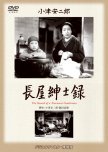
This review may contain spoilers
"The past is past. Now is now."
Director Ozu tackled the very real problem of war orphans in the uplifting Record of a Tenement Gentleman. Ozu used a lost little boy to quietly open the closed hearts of people damaged by loss and deprivation and a cranky widow to shelter one not her own.Ozu regular Ryu Chishu came home with a lost boy he’d found on a trip. His roommate refused to let the child stay with them. They hatched the brilliant idea of foisting the boy off on the neighbor widow, Tane. Tane was not welcoming to the idea of taking him in but relented for one night. After Kohei wet the bed, she reprimanded him and determined to be rid of him. After finding out the child’s father had apparently deserted him, she tried to desert him herself, but Kohei was too quick and determined for her. Slowly he began to wear her down and after another scolding when he ran away, she dropped everything to find him.
Tane was played by the talented Lida Choko. In her, we could see not only the grumpy middle-aged woman but also a widow making a living out of her home who had closed herself off emotionally. She portrayed a waterfall of emotions as the small boy broke her emotional dam. Seeing the gentleness in the boy she was unwilling to let him live the life of an alley cat. So great was her loving transformation that in the end she could cry generous tears of joy instead of selfish ones. Choko expertly played Tane’s regret at not having treated the boy with kindness from the beginning. It was a beautifully well-rounded performance.
Ozu showed the trauma of orphan children through Kohei. Silent for nearly 30 minutes after he appeared, and with very few words thereafter, the boy held everything inside. His stress over his abandonment and hostile environment came out through bedwetting at night. He observed homeless boys fishing along the water in order to feed themselves. In the final scene, Ozu showed numerous orphan boys at the base of a famous statue in Tokyo.
As always, every scene was composed and shot with exquisite care and Ozu’s teapot had its usual closeup. Not one for talking about the war much, he showed the piles of rubble lining the streets and even used in the tenements. The neighbors dealt with scarceness in post-war Japan, sharing information and food. He moved the scenes further outside as well and there was a gorgeous shot of Tane and Kohei on a beach right before she abandoned him. I admit to choking up watching the little boy race across the dunes to catch up with her.
The film closed with Tane and her neighbors all having been touched by the boy. They came to realize how selfish they had become, refraining from helping those in need. They vowed to be more generous in spirit. Record of a Tenement Gentleman was a film that teetered close to being overly sentimental, but for me it hit that melancholy heartwarming sweet spot.
11/16/22
Was this review helpful to you?


