

 135
135 431
431 16
16 2
2 6
6 3
3 8
8 10
10 3
3 13
13 1
1 1
1 1
1 1
1 2
2 6
6 8
8 5
5 9
9


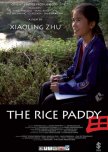
Her mother wants her to find a husband who lives in the valley where they are able to get two harvests a year and attain slightly greater wealth and stability than the one harvest they are limited to in the mountains. A Qiu desires so much more for her life and studies hard to be eligible for a quality secondary school. She knows that education is the opportunity for a life not tied to the rice paddies. Unfortunately, that education costs more than the little family has to spare.
Without being overly dramatic the film shows how precarious life and dreams are when the cost of education can be too high when measured by grains of rice.
I enjoyed this film largely because of the family unit who worked together and looked after each other. The score and loving shots of the characters and land wove together with the narrative to make a compelling, spare film about life, family, and dreams.
Was this review helpful to you?
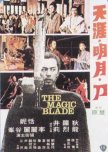
Lo Lieh isn't dressed in black as usual but a fashion conscious lord of some sort. Fast swordsman but not exactly the sharpest blade in the drawer. Ti Lung is fast and smart. Good thing because they have to fight for their lives against greater forces from beginning to end. Few people are who they seem to be and betrayals abound. As do plot holes. It seems like everyone is an assassin in disguise-an old woman, children, women, men, a man with a woman's voice. Hidden underneath the blood and subterfuge is a sad morality tale about power and money. The sets and costumes are top-notch for a kung fu film. It's one of those fun, forgettable kung fu flicks that makes for an entertaining 90 minutes if you don't ask too much from it.
Was this review helpful to you?
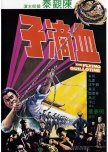
Just as weird as the title suggests. The emperor has an elite guard who throw round spinning weapons that lock on to their target’s head and decapitate them. It’s a 1970’s movie so it’s not too gruesome, but you do see the headless flailing bodies for a few seconds.
Chen Kuan Tai is the most skilled killer on the squad. He figures out the emperor is ordering the executions of scholars and ethical government officials and though he’s sworn an oath to the emperor he can no longer be his assassin. Someone else is scheming to use the guillotine squad to take out personal enemies and impediments on their path to the throne and hates the moral minded killer. Chen flees with a lovely musician and they start a life together elsewhere, but the emperor’s men never give up keeping them on the run.
Lots of kung fu and wild guillotine action. The kung fu was okay, but given that CKT was actually trained in the martial arts, the fight scenes seemed slow and stodgy. That didn’t stop them from breaking all the furniture in the room though! Plenty of unsuspecting people lose their heads with the flying killing machines while their loved ones or colleagues look on in horror.
Even with all the action and actual character development of the lead the story seemed slow at times. Wai Wang played a great dastardly villain, but didn’t seem to have enough time on screen to be a more menacing threat. Despite those drawbacks, I never expect much from kung fu movies. This one kept my attention and if you enjoy kung fu movies it’s worth seeing for the creative guillotine fights.
March 24, 2026
I pretty much agree with my original thoughts. Chen Kuan Tai's skills were underutilized with the slow fight choreography. This was one of my earliest reviews. Having watched around 400 martial arts films now, I can see this one is better than I thought it was in comparison to its competitors. The Shaw Brothers quality still holds up and the Guillotines had their own motivations. Ma was repulsed by the murders of innocent people. Chief Xin Kang may not have been completely upright but his life and the life of his family were always under threat. "Our heads are not our own." Wai Wang's Xu only desired to get ahead and if that meant others losing their heads, so be it. Norman Chu's Guillotine would show up in a later movie. It's amazing how many films reference this one. Much more entertaining than I remember it being so I bumped the score from a 6.5 to a 7.5. Good average for the genre and as always, rated on a kung fu curve.
TRIGGER WARNINGS:
Numerous decapitations and flopping headless bodies. Bare female breasts in one scene.
A dog was decapitated though it looked fake, goodness, I hope it was. A chicken was also alluded to being brutally slaughtered.
Was this review helpful to you?
This review may contain spoilers
Mary Poppins Kung Fu Fight with a Vengeance!
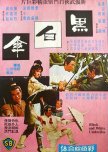
Black and White Umbrellas is about two rival clans who have had deep enmity between them for years. The premise is pretty simply, one clan dresses in white and carries white umbrellas, the other wears black and carries black umbrellas.Basic story elements follow-do not read if you are super spoiler sensitive--I like to know a little about the story of these movies before I commit to watching one, thus the sharing of these elements---
After a climatic and deadly battle between the leaders of the clans, peace held for many years until the son of one of the leaders returned for a bloody vengeance. Killing, raping, and dis-arming people until he took over the local fort, there wasn’t much evil he wouldn’t do and he did it all with great glee.
In walks the pacifist hero who had been given instructions by his dying father to stop the hatred and killing. This does not work out well when dealing with a homicidal maniac and the hero ended up at the bottom of a cliff badly wounded. Two women passing by carried him off to safety (apparently women were much stronger in days of yore), while a Mysterious Woman in White showed up to tend to him. The story at this point is largely hers. She spies on the Black Umbrella Man and his minions, fights with them and gives the White Umbrella Man time to heal.
Eventually, White Umbrella Man heals, decides Black Umbrella Man has to go no matter what dear old departed daddy ordered and he and the Mysterious Woman in White work together.
When watching these old kung fu movies I grade on a different scale. They were shot on the cheap for a specific audience 40-60 years ago. This movie had been cut and re-cut to fit different formats and the subtitles were often cut off at both ends.
The Mysterious Woman in White is expressive and handles her fights well, as does the The Black Umbrella Man. The White Umbrella man's acting is a little stiff though his fighting skills make up for it.
There must be a Buckets of Blood service that supplies these movies and Umbrellas went through it's share. The affinity for shooting in dark places escapes me, fortunately, the FL's fights were often in the light. Taiwanese kung fu movies are usually less well made than the Hong Kong Shaw Brothers made movies, but the Taiwanese movies do often shoot in beautiful outdoor settings. Umbrellas used a waterfall, forest, cave inn (please let that be the name of the place) and mountains as settings for fights and nefarious doings. And of course, the ubiquitous gravel quarry so that the trampoline and wire work can be done, which was fun, especially with the weapons loaded umbrellas scenes.
Umbrellas takes advantage of all sorts of creative weapons and plenty of fights to showcase them. This movie is saved for me because the FL gets a lot of sword time and doesn't back down from a fight even when she's outnumbered.
Not a movie for everyone, only those who get a kick out of old kung fu movies.
Was this review helpful to you?
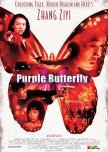
This review may contain spoilers
Cynthia and Itami are young lovers in the pre-Sino Japanese war time in Shanghai. Itami is called home to Japan for military service, leaving Cynthia behind in her homeland. After Cynthia's brother is killed by a pro-Japanese protestor she joins the Purple Butterfly resistance movement. As time passes she is again reunited with Itami, but this time they are on opposite sides. She is assigned to help kill his boss. He is hunting down the Purple Butterfly members.This movie utilizes tight shots often through blue lenses. More often than not the scenes are smoky or rainy, shot with a shaky hand. There is a scarcity of dialogue. The scenes will either feel intimate or claustrophobic, and sometimes they can feel both. Purple Butterfly can be maddeningly hard to follow at times as the story bounces back and forth in time and between characters, but buried under the pretty wrapping are solid performances by Zhang Ziyi, Nakamura Toru, and Feng Yuan Zheng. The sadness and inevitability of the war to come lingers over the story like the smoke and rain enveloping each scene.
Was this review helpful to you?
This review may contain spoilers
This one hour entry in the HBO Asia Folklore anthology was gripping. A family’s story and murderous secrets erupt when a son returns home for his father’s funeral. Kitamura Kazuki gives a stellar performance as a deaf crime scene writer. He conveys a myriad of emotions without ever saying a word as his character is forced to finally confront the horror hidden in his past and the horror facing him in the present. Kanno Misuzu plays the mother who becomes unhinged as those memories arise. The third main character in this episode is the tatami mat in a deserted room that has secrets to reveal, memories to revive and vengeance to repay.
“Tatami” was the most polished of the anthology episodes I’ve watched. Far from perfect but definitely worth watching Kitamura and Kanno play off of each other. The story is tight using every minute to develop the characters and tell the story in the present and through flashbacks. The scariest elements to this story are not ghosts or the supernatural but the human greed and depravity buried within the layers of the tatami mat.
Was this review helpful to you?
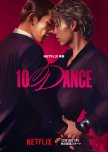
"Don't ditch when I get serious"
Two hot guys sizzling as they Waltz and do the Cha Cha Cha while staring into each other’s eye? That’s pretty much the plot of 10 Dance and yet the actors made it next to impossible to look away.Suzuki Shinya is the Japanese Latin dance champion while Sugiki Shinya is the Ballroom dancing champion. Both are competitive and seek to be the best. While Suzuki and his partner, Aki, are loose and have fun, Sugiki rigidly controls everything, never cracking a smile. Sugiki doesn’t hesitate to berate his partner, Fusako. “The Grim Reaper” puts forth a plan to Suzuki that they teach each other their different styles and compete in the 10 Dance that requires both Ballroom and Latin dance skills. Tentative at first, Suzuki agrees and the enemies become something a little more friendly.
I have not read the manga so I can only comment on what was shown on the screen. The plot was as thin as a sheet of music. I really wish we’d gotten to know more about the two characters than one was overtly rigid and the other enjoyed food, drink, and multiple women. Thankfully, the two actors were able to elevate their characters above the script. Takeuchi Ryoma gave a wonderful performance as the passionate Suzuki. He displayed a wide array of emotions, digging deep when he found himself falling for his cold rival. He also had a habit of taking his shirt off which I wasn’t mad about. Machida Keita as Sugiki had to work hard to convey his conflicted feelings in his character’s overtly disciplined body and mind. Just a shallow note, I miss his long hair from Glass Heart. Doi Shiori made the most of her screen time bringing the loyal Aki to life. Poor Ishii Anna’s character was mostly relegated to a pretty face.
I know nothing about ballroom dancing, but enjoyed the various dance styles and the rigorous training behind them. Most importantly, for a romantic dance film, Takeuchi and Machida’s chemistry was sensual and palpable. The ending seemed to leave room open for a sequel and I will certainly buy a ticket to watch these two dance again.
19 December 2025
Trigger warning: Nudity early in the film, nekkid buttocks and suggestive breast images
Was this review helpful to you?
AARO: All-Domain Anomaly Resolution Office
3 people found this review helpful
"I wasn't particularly planning on getting along"
AARO aka Zen Ryoiki Ijo Kaiketsu Shitsu was a shadowy organization occasionally used by the government when supernatural events were suspected. Working in tandem with the police department they investigated cases that appeared to go beyond the norm.Amano Koyume is pulled off her position in the PR department of the police department and assigned to the All-domain Anomaly Resolution Office aka AARO. With no investigation experience or knowledge of the occult she doesn’t appear to be a natural fit. Deputy chief Okitama Miyabi cuts her little slack as he pushes her along in their cases. The old god Hiruko seems to be making his presence known through social media and gruesome deaths gathering fear and members to his New Genesis plan. Okitama and Amano along with AARO colleagues work to track down and stop the source of the strange cases they encounter.
Supernatural investigators and creatures are nothing unique and AARO didn’t exactly break new ground. Despite strange goings on, there was a repetition of vengeful and jealous women throughout the drama. I kept waiting for Hiruko to be exposed as a female god who had been scorned and was taking it out on humanity instead of the people are horrible especially now that they have social media and must be reordered theme. Nearly every episode at least one person was kidnapped. The producers must have gotten a big box of zip ties on sale and decided they all needed to be used. Waste not want not.
The writing could be terribly uneven. Relationships were hinted at but never explored. Deaths of characters unknown to the viewers were mourned, while horrific mass deaths were scarcely mentioned. The acting was even more uneven, perhaps due to the writing. The last few episodes with the exception of the cliffhanger ending were more compelling and might have been even stronger if everyone hadn’t already been kidnapped or had their life threatened a half dozen times. I kept being reminded of Megamind regarding the frequent kidnapping card. “You of all people should know we discontinued that promotion.” While I’m on a rant, they overused the loud echoing footsteps. It was especially humorous when one character who weighed maybe 90 pounds/40kg was wearing rubber soled boots. One time is effective, four times not so much. I also haven’t seen fight choreography this bad in years.
Even taking my rants into consideration, AARO was an easy watch with entertaining moments. The sad thing is with better continuity and writing it could have been so much more. And 50% less kidnappings.
19 June 2025
Trigger warning: For people who are squeamish there were body parts shown and copious amounts of blood.
Was this review helpful to you?
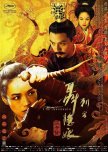
This review may contain spoilers
The Assassin breaks out of the standard martial arts mold. If you are looking for a fast paced, bloody, high flying wuxia film, this is not that film. Every shot is a breathtaking painting, lovingly lingered over to give you time to sink into it. Crickets and birds provide most of the natural soundtrack. The strength of this movie lies in the stunning cinematography and the slow, deliberate pacing.
While the times are complex, the main story arc is deceptively simple. Duty or morality? To kill or not to kill?
Nie Yin Niang (Shu Qi-So Close) has been trained for thirteen years as an assassin and is unmatchable. After refusing to kill an official in front of his son her teacher sends Yin Niang to her home province to kill Tian Ji’an (Chang Chen-Crouching Tiger, Hidden Dragon), the military governor, who also happens to be the man she had once been betrothed to before fate and politics changed her plan.
Yin Niang spends much of her time observing from rafters and in dark corners. Is she watching the life that once might have been hers? Or taking the measure of the man and situation to decide whether she can and should kill him?
Dialogue is sparse which can make this movie frustratingly enigmatic for those of us who are not familiar with this ancient tale. Yet I was never bored. Shu Qi gives an understated performance that is complex and compelling in its resolute silence. Yin Niang is no one’s victim and takes history into her own hands.
Fight scenes are often short with no complicated wire work. One scene in particular is beautifully shot among the trees. Yin Niang wields her curved blade confidently and dispassionately against her female opponent before walking off in the forest.
The costumes and sets are lush and a pleasure for the eye. Panoramic scenes of mountains and fields often take center stage. The attention to detail in every frame is captivating.
Yin Niang’s teacher says her heart lacks resolve because the way of the sword is pitiless. This assassin has plenty of resolve, she simply chooses what she wishes to fight for.
Was this review helpful to you?
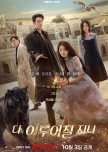
"Good intentions don't always lead to good outcomes"
Genie Make a Wish was a fantastical and chaotic carpet ride that at times required a dose of Dramamine. Yet as weird and wild as it got, I wasn’t able to stop watching. Genies, angels, mythical creatures, immortals, unconventional friendships, greed, love, loss, murder, sacrifice, and forgiveness, Genie Make a Wish ran the bases and the bleachers trying to hit as many plot points as it could. (Seriously mixing my metaphors! Lol)Ki Ka Young leads a rigidly scheduled life with rules largely set down by her grandmother. Her mother abandoned her because she was “difficult.” “Difficult” in this sense was having “anti-social personality disorder.” Ki’s life is boring to her but she maintains it to keep her grandmother happy. On a trip to Dubai, she visits the desert on a tour and literally stumbles across a lamp. A genie appears saying he will grant her three wishes. Unimpressed she leaves the genie with his mouth agape and his hair flowing about. Ki finds it’s not so easy to be rid of a magical being intent on not only granting her wishes but killing her as well. What the genie doesn’t know is that their connection is deeper than he realizes and other forces are at work against him.
What worked for me:
I loved the female relationships. Though Ki wasn’t able to feel the same way, her bestie-Min Ji, and her grandmother were devoted to her even when she could be trying. She was also devoted to them, her love strong enough as she would say to kill for them. There were villagers ready to accuse her of every crime committed in the area and yet others ready and willing to come to her aid when needed.
Characters were complex, comprising the best and worst of human nature. Some leaning in one direction more than the other. The question was also asked, “Is evil innate or a choice?”
Iblis and Ejlael were not confined to their job descriptions. Iblis, much like the original accuser/adversary from my book was capable of more than just corrupting people. Ejlael had spent too much time on Earth accumulating wealth after having discovered the hell of poverty. Both would learn that winning was not the point and both were in need of redemption.
For a television drama, the CGI and cinematography were unexpectedly good. The night tour of Dubai was especially beautiful.
Writer Kim Eun Sook dropped Easter eggs from her other dramas such as Goblin, Mr. Sunshine, and The Heirs.
I enjoyed the adversarial relationship between Iblis and Ki. It had a slightly different flavor than many Kdrama romances. Sade, the mythical beast was a nice touch as well.
Daniel Henney and Kim Ji Hoon’s microplot was strange and sadly heartwarming.
I enjoyed the comedy and actually laughed out loud several times.
What was more problematic:
I was uncomfortable with Ki’s abuse of Iblis. Had the roles been reversed it would not have been filmed. At the same time my first thought was that there was a lot of feminine repressed rage at the male dominated society being given a safe space to spew out. Kdramas do like their barely in check “psychopaths”.
The story was uneven and as could be as chaotic as Iblis with numerous micro black holes where plot elements disappeared. The whole choice about the grandmother was not well thought out for someone who was supposed to be smart.
This was one of those dramas where the essential story wrapped too early and the last episode dragged on too long.
To sum up:
Humans are unpredictable when offered anything they want, with the exception of raising the dead or going to the future, of course. There are those who make wise choices and those who choose selfishly. Wishes like choices often come with a price and unexpected consequences. Love can involve both growth and sacrifice, joy and heartache. GMaW was addictive and I devoured it easily, though like a third wish I may forget it soon after.
16 November 2025
Trigger warning: A few decapitations
Was this review helpful to you?
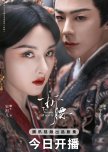
Love is a battlefield
The Prisoner of Beauty was uneven and had a thin plot, but it was also quite entertaining and humorous at times. Despite a bloody beginning and ending, the vast swath of it played out like a Shakespearean marital comedy.The Wei family led by resting grumpy face Wei Shao have it in for the Qiao family in Yan for failing to come to their aid during a terrible battle leading to the deaths of three generations of men in their patriarchy. Fourteen years later, Grandma Wei and Grandpa Qiao decide the two families need to mend fences and match their grandchildren in marriage. To say that the bridal negotiations and first days of marriage between Wei Shao and Qiao Man were rocky would be an understatement, not including a battle over a city, raging fire, and near genocide. Nothing a couple of princess carries and a piggyback ride couldn’t cure. And a prolonged discussion of and implementation of… canal systems. Outside forces don’t like the Weis and Qiaos cozying up or the idea of better transportation options and drought/flood control and set to breaking up the couple.
The newlyweds not only had to work through old family grudges and loyalties, they also had to deal with other family problems that arose. Despite being a cold, military man with very little, actually no, practical information about or experience with women or relationships, Wei Shao was mostly respectful of his despised wife until he learned what a valuable asset he had in her. Being spoiled with head massages, afternoon sweets, and proper fitting footwear began to soften his heart and mood. Aside from her annoying habit of whispering while everyone else spoke at a normal volume, Qiao Man Man ended up being his not-so-secret weapon. She kept her promises to her grandfather to restore the Wei family’s fortunes and to take care of Shao. She faced few problems her wits could not overcome, benefitting not only herself and the Qiaos but most certainly the Weis.
The strength of the drama for me was in the relationships. The four generals had a fun camaraderie, especially Qu and Liang. Shao and his men suffered through figuring women out together. I loved the teasing, blossoming relationship between Liang and Man Man’s maid, Tao. Advisor Gongsun not only had words of wisdom, but humorous quips, too. The women weren’t left out when it came to friendships. Man Man had a strong bond with her maids and also with her cousin. Grandma/Lady Xu was one wickedly smart dowager who loved her grandchildren and knew when to put her foot down. Little went on that she didn’t know about.
Just a note for their fans who have not seen this drama: Xuan Lu and Liu Duan Duan are currently listed as mains which is stretching things. Their characters didn’t show up until 10 eps in and disappeared for large amounts of time. While their characters may have been important to the wonky plot, other supporting characters had a lot more time.
Things I learned: 1) At 49, Peter Ho still has some of the best guns in Cdramaland. Yowza! 2) Just like bullets, a sword will go through two as easy as one.
Public service announcement from your old auntie Butterfly: Historical Cdramas love MLs to choke the FLs for some perverse reason. For young ones who do not know this and think it’s sexy, a man using strangulation to control or frighten a partner is a clear sign to pack up and leave. He is a considerable threat to your physical and mental safety. Unrestrained jealousy is also NOT attractive and a glaring, clanging warning sign. Wei Shao may have straightened up and turned into a heart-eyed puppy but real-life men do not change so easily or ever. Okay, off my soapbox.
A Prisoner of Beauty may have begun and ended with horrific deaths, but as I said much of it played out like a marital comedy. It did something few dramas can do, it literally made me laugh out loud numerous times. If I had magical editing powers, I would have cut the episode count and tightened several plot points, but overall I enjoyed this drama, largely due to the relationships mentioned above.
“I would love to be your spear and shield, to fight for you, to guard your path, and to make your every wish come true.”
5 August 2025
Trigger warning: A prominent character sustained a “flesh wound”. Two suicides.
Was this review helpful to you?
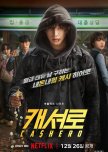
"Money is power"
Ca$hero gave a slightly different twist to the superhero genre. The titular character was given a super boost by having Lee Jun Ho portray him. He imprinted on me with Rain or Shine/Just Between Lovers early in my drama experience with that scratched up, beaten face so this portrayal hit that sweet spot with me. Was it perfect? No, but most superhero dramas and tv shows aren’t and I’ve watched my fair share. I found it watchable despite numerous plot holes and dangling story lines.Kang Sang Ung and Kim Min Suk have been together for 9 years. Kim decides it’s time to get married for a variety of reasons, not least of which is in order to fair better in the apartment lottery. Housing is expensive and cash is king in real estate and life. When Kang’s father calls him home, he passes on the family inheritance—superhero powers. Giving his son only the sketchiest of guidelines, Kang wanders home confused and perturbed. The biggest drawback to having powers? Every time he uses them, he loses money and they only work with money in his pocket. Practical Kim is not pleased. A disgruntled fiancé is the least of his worries as he discovers a dark syndicate working against the supers.
The premise was interesting, if confusing. Kang meets two other supers. One has to drink alcohol to activate his powers, the other has to eat. I thought there might be a stronger societal commentary on the three sources other than—money, alcohol, food must be used in moderation. With the RoK’s housing and employment issues, the money aspect felt like it became downplayed as the drama went on. The dangers of the drinking culture were completely glossed over as was the pervasiveness of women being held to rigid definitions of beauty and weight. I was also disappointed that the other supers were not given, if not more, better use of their screen time. The villains were thinly drawn. Rich family evil. Got it. Though in today’s political climate I’m more willing to accept that.
Jun Ho managed to convey the shakily written concept of a man going from not truly caring about the people around him to being willing to sacrifice for others. Kim Hye Joon as Kim Min Suk had the rather thankless job of being the partner who planned ahead and knew what needed to be done to succeed in life. While Kang didn’t give much thought to finances, Min Suk knew they’d have to save every penny/won in order to attain better living conditions. She also had to have a lightbulb moment in order to embrace their new lifestyle. Sadly, the chemistry wasn’t very strong between the two, partly due to the writing.
My biggest complaint in the drama was Kang’s dad. He handed over the powers without any real guidelines and the advice he did give only led to more problems. I was hoping for more resolution to their rocky relationship, but found myself disliking the dad more as it went along. *
As I mentioned before, despite the plot holes and dangling story lines I enjoyed this drama for the most part. At least the hero didn’t need episodic pep talks and forget he had powers when chasing down bad guys. And at heart, I have a soft spot for cheesy stories about people with super powers who are willing to sacrifice for the greater good even when they (and the writers) stumble.
31 December 2025
*Spoilery comments below
The pernicious gods who handed out these powers punished heroes if they didn't use their powers and if they used their powers. Not exactly a paradigm I was fond of. I was truly hoping that Kang's dad at his retirement would get a financial karmic rebound regaining all the wealth he lost with interest. Why he never told his wife was a mystery that bothered me. And his whole situation with the loan shark...could have used a few sentences to clear that up.
Was this review helpful to you?
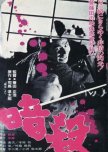
"Blood flew!"
Assassination aka Assassin was a film by Shinoda Masahiro about the real life enigmatic ronin, Kiyokawa Hachiro. This is important to know because I was off balance for much of the film not realizing I was dealing with an historical figure who wasn’t nearly as clever as he believed himself to be. I kept waiting for the typical enigmatic ronin who knows how to strategize and despite a crusty exterior has a heart of if not gold, silver. That would not describe this shady and at times, cowardly and duplicitous character.It's 1853 and the Shogunate is in its waning years while the Imperial Court is ascending. Conflict between the two for power is thrown into turmoil when Admiral Perry and his four warships anchor in the harbor. Both sides struggled with how to deal with the foreigners---make a deal or attempt to slaughter the better armed enemy. Men working for the Shogunate decide to hire Kiyokawa Hachiro to train men to do their bidding. He’s been attached to Imperial ronin, but after murdering someone seems to be willing to change loyalties. Hachiro is a well-educated, low class ronin that the elite samurai hate. He goes beyond the fifty ronin he’s ordered to hire and gathers several hundred ronin instead. Whether he delivers them to the Shogun remains to be seen.
Any film that has 2 ½ minutes of prologue and takes nearly 15 minutes to introduce characters is setting the viewer up for confusion. There were numerous major and very minor players that popped in and out of the film like a popcorn machine gone awry. Flashbacks and flashforwards were not well advertised meaning it was difficult to know what order the events took place in. Hachiro was a schemer who betrayed friend and foe alike. He was also not nearly the genius strategiser he thought he was. When he created a dangerous situation through his impulsive actions, he left those who were devoted to him behind to take the fall. He also seemed to take delight in raping a woman. I kept waiting for him to be redeemed or to be smarter than he seemed, but that was not the case.
Even with a despicable protagonist, I could still enjoy a well-made film. The constant skipping around in time, confusing parade of characters, inability to lay out a clear-cut plot, and a lead whose motivation for vile actions was never revealed made this film barely watchable for me. If I had been familiar with Kiyokawa Hachiro perhaps this film wouldn’t have been as frustrating, so those who are may find it far more enjoyable than I did.
15 June 2025
Was this review helpful to you?
Young Joey plans a special meal for his mother at his father’s behest. Of course, Jollibee’s chicken plays a strong supporting character in this tear jerker commercial/short film.
If you have two minutes and thirty seconds and need an emotional release after a tough day, Date and little Joey can help provide it. Full of love and sadness, this short film might touch your heart and moisten your tear ducts.
16 December 2024
Was this review helpful to you?
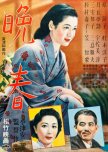
"Happiness comes only through effort"
Late Spring was the first film by director Ozu Yasujiro I ever watched. I had no idea who he was or anything about films from this era. For the most part, I was unimpressed. After watching Late Autumn which was a loose remake of Late Spring, I decided it was time to revisit one of Ozu’s classics.The plot is deceptively simple. Noriko is 27 years old and on the cusp of being too old for marriage. She and her widowed father have a comfortable relationship neither wants to change. It is an aunt who shakes things up by insisting on finding her a husband.
Ozu often focused on this transitional part of family life-a child on the verge of leaving and an aging parent facing loneliness. Noriko's familiar routine started to ebb away as her father came to terms with what was necessary for her future which begat sadness and grief. Noriko had become too much of a surrogate wife and needed to become a real wife with a real husband which would require her to leave the nest as children do. Her father recognized he would not always be around and the only way to protect her and secure her happiness was to marry her off.
Though the mother had died some time ago, her presence felt tangible. Noriko showed great jealousy when her father mentioned he might remarry. She felt men remarrying was “filthy” and “indecent”. Apparently, older people no longer required companionship and intimacy. Noriko seemed overly involved and attached to her father. “I’m the only one who knows what he needs.” Was she upset for her mother’s sake or her own? During a Noh performance, her feelings shown through when she saw the perspective woman was also attending. Ozu’s astounding ability created a deeply emotional scene simply by cutting back and forth between the characters’ reactions to each other and the performers. During another evolutionary moment as daughter and father were lying side by side, Ozu focused on a vase for long seconds as Noriko processed her emotions and gave the audience the same meditative chance.
Ozu’s skill and his ability to compose exquisite frames was, as always, impeccable. Where I struggled with Late Spring is what caused me to stumble last time---Hara Setsuko’s performance. Her overly bright smile for the first half of the movie could be disconcerting. Sometimes a smile hides a person’s pain and sometimes it hides a vacancy sign. Smiling while riding a bike and enjoying the moment seemed natural, smiling when taunting the professor for being “filthy” seemed strange. She is a much admired actress and while I have enjoyed some of her darker performances, too often she over-relied on her smile. The second half had her character behaving petulantly and pouting which seemed out of place for a grown woman who had survived forced labor during the war.
As a modern viewer these plots were uncomfortable and I had to continually remind myself this was 1949. A woman was basically sent from her father’s house to another man’s house with little say as there weren’t many other options available to her. Noriko’s father complained that daughters were pointless. “You raise them and they leave. If they don’t marry you worry and if they do you’re disappointed.” Noriko worried her father would be helpless without her. Modern me thinks her father would learn to pick up the clothes he casually dropped on the floor himself and pour his own glass of water while brushing his teeth.
Despite my reservations, Ozu knew how to incorporate the most basic concepts of life and make them interesting. Noriko’s father, expertly played by Ryu Chishu, grasped that loneliness and death were a part of life and he wanted his daughter’s future taken care of. The plot might have been simple but Ozu was a master of teasing out the buried emotional details of changing family relationships. I rated this higher than my first watch and perhaps in the future, I’ll appreciate it even more. The father’s speech to Noriko was memorable then and now, one of the strongest from any Ozu film I’ve seen and still holds true today.
“Happiness isn’t something you wait around for. It’s something you create for yourself.”
14 February 2024
Was this review helpful to you?


