

 135
135 431
431 16
16 2
2 6
6 3
3 8
8 10
10 3
3 13
13 1
1 1
1 1
1 1
1 2
2 6
6 8
8 5
5 9
9



Dud in the Desert
Duel in the Desert is what you get when you mix a convoluted story, bad direction, poor martial arts choreography, and almost no Angela Mao---few duels and more duds.The story starts with everyone converging on the inn Angela's family runs to find a place to stay so that they can take part in a horse race with a 500 gold tael purse. And that's the end of that storyline. Pai Ying and Hsieh Han, along with Wan Chung Shan are looking to make money on a deal regarding 3 treasure chests full of Imperial jewels. Unfortunately for them so are a lot of other people. Theft, revenge, subterfuge, a murder case, betrayal, a secret letter (there's always a secret letter or book!), deals and double dealings, hidden identities, and undercover police officers are shuffled together in hopes of finding a story.
To make matters worse there were few fights and even those weren't very good. Most of them were of the grab, lock, pose kind. Don Wong and Ling Yun had a fight that moved faster and didn't seem as posed. In many of the other fights you could see how far people missed their hits and kicks. Angela is always a delight to watch but she only had a short fight at the one hour mark and in the final couple minutes of the movie. Even her kicks, fierce gaze, and snake kung fu couldn't save this film.
The version I watched was dubbed which might have been fortunate. The film was faded and badly cropped, subtitles would have been hard to read and run off the screen. People's faces were almost completely cut out of some scenes due to the cropping.
If there had been some good fights and more Angela it might have made up for the ridiculous story and all the people running around trying to either steal the jewels or save the jewels. Either way, this is a film only for lovers of 70's Taiwanese kung fu movies and Angela Mao and even then it might require a great deal of patience on the viewer's part.
3/1/23
Was this review helpful to you?
This review may contain spoilers
"It's like when you look for something all over the place & then find it right in front of you."
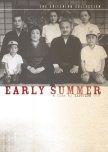
In Early Summer a family faces a time of transition and growth as the twenty-eight-year-old daughter's unmarried status seems to reach a crisis point with everyone wanting her married off, even her boss plays matchmaker! This poor "old maid" seems quite happy enough working, hanging out with her friends, and helping her family, but society norms being what they were, she understands her time of being single is fast running out.Ozu slowly takes his time setting up the characters and family dynamics in his usual aesthetic manner. The plot is not complex but the relationships are. Noriko is the "old maid" and seems fairly nonplussed when her boss tries to match her with an older friend of his. Her authoritarian brother, Koichi, jumps at the chance for her to be married to a wealthy older man. Noriko's mother and sister-in-law express their doubts about the match when they hear the man is forty. Koichi shuts them down saying that at Noriko's age, beggars can't be choosers.
When Koichi's two young sons run away after an argument with their father and can't be found, Noriko goes to a neighbor whose widowed son and small daughter live with her. The son, Kenkichi, goes with Noriko to help her find the boys off-screen. Kenkichi is a doctor and is later offered a promotion from his boss, Koichi, at a provincial hospital. Noriko takes a farewell gift to his house and before she leaves, she and Kenkichi's mother have arranged for her and Kenkichi to be married without his or her parents' knowledge or permission! How terribly forward and untraditional! Kenkichi is delighted, her parents not so much. "She acts like she grew up all by herself." Even though the family knows and respects Kenkichi, he's not wealthy and worst of all, he already has a child. Noriko loves the little girl and can't understand what the problem is.
The father goes to the store and has to wait for a train to pass by. Just like his teapot, trains play a big part in most of Ozu's films. Subconsciously, we know that trains are either taking people to somewhere or away from somewhere. Here the movement within the family is spurred by Noriko making a decision for herself, she's not only moving physically away from her family, but also away from the family's sphere of influence. The father realizes his family is transforming and that the train will soon be taking his daughter away as much as he would love for his family to stay together.
Always hesitant to show much romance, Ozu finally lets Noriko give voice to why she made what looked like a rash decision.
She admits her long standing feelings for Kenkichi. He's someone she trusts and knows she will be happy with. Her best friend reveals to Noriko that what she's talking about is love. Noriko doesn't always come across as the sharpest knife in the drawer with her perma-smile and sunny disposition, but even she knew that marrying a man who had been resolutely a bachelor until forty might make for a difficult relationship no matter how much money he had. Better to clip coupons and work on a blended family as a stepmother with someone she cares for than to be on unequal footing with an older stranger.
"It's like when you look for something all over the place, and you find it was right in front of you all along."
The acting in this film was uneven for me. It was interesting seeing Ozu regular Ryu as the older brother with jet black hair. Two years after this film, he would play an elderly father role with the actress who played the mother in this film in Tokyo Story. In Tokyo Twilight he played Hara's father! I have a love-hate relationship with Hara Setsuko. When she's given the chance to show a range of emotions, I find her compelling. I have a more difficult time when no matter what happens on screen, whether she's been offered congratulations or told she has six months to live she responds with the same smiling face. It can feel like a mask hiding the character's true emotions and I would like to see the depth of the character played out more.
Single, childless Ozu has more than once had two young brothers in his films, Good Morning and I Was Born…But, come to mind. In the films I've seen thus far, and also in this one, the boys are very disrespectful, selfish, and throw fits on a regular basis. Maybe it's because the kids always seem cooped up in the house like the caged birds in this film that they go stir crazy. More than likely, it's how someone who is childless sees children, but I find the children in his films can cross the line from delightfully realistic to incredibly annoying. There was a some of both in this film.
Unlike some of Ozu's older films where tradition must be maintained in the family and with fear of modern influences damaging the familial structure, Noriko is not punished for making her own decision regarding her future. No train runs her down nor is there a disaster to her reputation. I found this different direction with more sympathy toward the young people by the director a breath of fresh air.
Just like the sunny, carefree days of summer seem as if they will last forever, we know fall is around the corner. It doesn't mean the end of the world but it is a time of transition, even as Noriko's family had to accept that change is inevitable. Life is always in flux and families have to be flexible. Much like the family portrait taken in the film with the parents and their children and grandchildren, the last photo is only of the parents. In time, most parents will see their children move out to make lives of their own and be left by themselves with a much quieter house.
After Noriko is wed, again off-screen, and her brother and his family have moved due to his job, her parents talk about their lives. The father laments, "I wish we could live together forever, but that's impossible." On reflection they realize that they have lived a good life and raised their children well. They have earned their, if not happy, at least pleasant and contented ending.
2/23/23
Was this review helpful to you?

This review may contain spoilers
Despite Michelle Yeoh's best efforts, this stunt fell flat
The Stunt Woman starring Michelle Yeoh started out strong giving the audience a behind the scenes look at the grueling and dangerous life of stunt women and men. Then it lost its way and stumbled down a confusing path that not even the graceful Yeoh could save it from.Michelle played Ah Kam, a stunt woman who through determination finds a job working for Master Tung's (Sammo Hung) stunt company. She quickly becomes one of the stunt family after showing her fearlessness and skill. Paco Yick and Mang Hoi, real life stuntmen and stunt directors, were part of Tung's crew. The film touched on the Triads who were involved with movie making during this time. If the film had stayed focused on the nomadic and precarious life of the stuntmen in Hong Kong, especially before CGI and improved safety conditions, this could have been a fascinating story. Instead, Ah Kam falls in love and becomes a manager of her lover's Karaoke bar. When this falls apart she heads back to her true love, working in the movies. Tragedy awaits her and the crew. The next thing you know she's playing surrogate mother to Tung's wild child son.
Perhaps parts of the story had to be re-written after Michelle suffered a calamitous fall, injuring her back. They actually showed footage of her jump from a bridge onto a truck and her having to be tenderly carried off afterwards, which paramedics should probably have been doing. Or maybe director Ann Hui was trying to show three different traditional eras in a woman's life-singlehood, being a couple, being a mom. Whatever the motivation, the story was all over the place in the second and third acts. A major death happened practically off screen, losing much of the emotional impact. Some story elements were vague at best, others were simply dropped.
Michelle Yeoh did her best with what they gave her as did Sammo Hung. They had a nice professional chemistry together. It was fun to see numerous stuntmen have the chance to show their skills as real characters. Kent Cheng and Richard Ng made guest appearances rounding out the cast nicely. The only drawback in the acting department was the child character. Ah Long was a thoroughly unlikeable kid who only partially redeemed himself.
There were a few fight scenes, but much like some of the stunts, they were filmed from a distance or too close, making the action blurry. With Yeoh and the stunt crew, it seemed as if there should have been much better, clearer shots for us to enjoy.
The movie started out strong and ended with a whimper, a terrible waste of kung fu legendary talent. The film did cause Michelle Yeoh to reconsider some of her movie choices which led to a James Bond film and Crouching Tiger, Hidden Dragon which helped to cement her status internationally. So in the end, this uneven film was useful after all.
2/21/23
Was this review helpful to you?
This review may contain spoilers
"Everybody has to die, but I won't be murdered!"
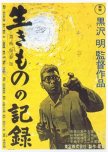
I Live in Fear dealt with the fear of atomic bombs and the dissolution of the patriarchal household giving all new meaning to the term nuclear family. It asked the question, "who is more insane---the one who fears a real threat and overreacts or the ones who know it exists and ignore it?"It would be difficult to overstate the fear and paranoia of nuclear war and nuclear testing in 1955, especially 1955 Japan. This film was made only ten years after the atomic bombs had been dropped on Hiroshima and Nagasaki. The Korean War which had left that peninsula carved up had ended two years before. WWIII had narrowly been averted on their front doorstep. In some countries bomb shelters were dug in backyards and duck and cover drills in school were a reality due to the Cold War and nuclear bomb proliferation. Not to mention, a giant irradiated lizard named Gojira had trashed Tokyo only the year before on screen. Living in the shadow of potential world destruction was a new fear that was being dealt with in books, movies, articles, coffee klatches, and political arenas. Kurosawa brought forth his own talking point in this film.
Nakajima Kiichi, the patriarch of his large family, can no longer live "with the fear of nuclear war or being down wind of nuclear testing. After a failed attempt at creating a large bunker in southern Japan he has determined the only safe place for his family is to move them to Brazil. His family resents his unilateral decision for them, but even more the money he has spent. If he sells the foundry he owns they will have to start over and actually have to go to work and not live off of their father. Kiichi is doing what he sees is best for his family out of his concern for them. Most of his family is more concerned with his financial viability thus ensuring theirs.
The family takes him to court and tries to have him declared incompetent. A judge, a member of the bar, and the local dentist-Dr. Harada, are tasked with mediating the case. Kiichi has been found to be psychiatrically sound. Ultimately, two of the three determine Kiichi's response is excessive and the greater kindness is to stop him from using his money to attempt to emigrate his family to Brazil. Harada, however, has his doubts. Everyone he knows fears nuclear war, but has found a different way of dealing with it than Kiichi. But does that make Kiichi's excessive response wrong?
When Kiichi is unable to buy the land in Brazil, his mental stability begins to crack. He meets with the family and begs them to go to Brazil, bowing deeply causing his wife to capitulate and ask the children to follow him. The children refuse his "unwelcome kindness" and Kiichi collapses. No one seems particularly concerned about him, instead they are like sharks smelling blood in the water. Everyone is concerned where they stand in the will, especially his mistresses and illegitimate children. They only need the foundry, not their father. This causes an explosion in his mind and it further cracks, in a moment of last desperation, Kiichi burns the foundry to the ground. His workers confront him about their loss of livelihood. He tells them he'll find a way to take them all to Brazil with him. Once again, he's faced with people unwilling to leave their homes to avoid a theoretical danger and instead willing to live in uncertainty. Kiichi's son yells at his father that there is no safe place on Earth, no place that will remain untouched if nuclear war begins, not even Brazil.
Kiichi suffers a mental breakdown which in the end takes him to a safer place. Visiting the asylum, Harada witnesses the change in the smiling older man. He's left wondering if he'd done the right thing. After all, is it really madness to fear a real threat or madness to pretend it doesn't exist?
Mifune Toshiro as the 70-year-old Kiichi gives his usual powerful performance but is hampered by the makeup created to make him look twice his age. I finally had to tell myself this was like a stage play to accept the awkward look. This was not an easy person to play, Kiichi is a complicated character and not always likeable. He loves his family yet also thinks he can tell them what to do, never asking their opinion on uprooting their lives to move to a foreign land. Cantankerous at times, yet also gentle, shown lovingly rocking his grandson to sleep. Lightning and thunder trigger a frightened response reminiscent of PTSD. His fear is real especially for someone who lived during the time when nuclear bombs were dropped on Japan. His response was to run from the danger instead of ignoring it knowing that one citizen could do little against the world powers building the insane weaponry as fast as they could.
As much as the film was an indictment on the nuclear age, it was also an indictment on the modern post war nuclear family. Kiichi's children were far more concerned about their standard of living provided by their father instead of his physical and mental health. While the children had some valid concerns about their father's actions, ultimately, it was his property and money, not theirs. They were content to feed off of his efforts. The greatest toxicity Kiichi was exposed to came from his own flesh and blood.
Decades after this film was made we still face the same decision Kiichi had to make. With enough weapons of mass destruction to wipe life off the surface of the planet, we each have to decide if we will live in fear or accept that the fear is the price we pay for the times we are living in. And that with any luck some day our collective wisdom may catch up with the terrors we have created.
2/10/23
Was this review helpful to you?

This review may contain spoilers
The landlord of my dinosaur world has emerged!
If you love movies like Dynocroc, Sharktopus, and Cowboys and Dinosaurs, Metamorphosis may be right up your alley. If you felt like the Jurassic Park series had too much story and character development and too many darn dinosaurs, Metamorphosis may be the movie for you! Metamorphosis stars one lethal ever-evolving dinosaur and two, count them, two giant snake-dinosaur hybrids. All that and web movie CGI-what more could a B movie enthusiast ask for?Deep in a secret genetic laboratory, a cleaning maid with an entrance card to everything, even inside a dinosaur's cage, finds out the hard way that the caged T-Rex can "camouflage". Meanwhile, Chris Pratt, I mean Liang, is chasing down an enormous snake to take back to the endangered animal sanctuary. He finds out that someone crossed a Monty Python (Who knew the Chinese were Monty Python enthusiasts-'Tis but a scratch!) and a Triceratops. He immediately visits his ex-girlfriend who works in the super-secret laboratory just in time to see the T-Rex's leftovers in the hall and the race is on to get everyone out of the building! But of course, the evil scientist in charge has locked the place down! It doesn't take much imagination or movie experience to see where this story is going.
You know you are in a B movie when even the Chinese take every chance they can for the women to lose their clothes. There are no true nude scenes, but it is funny how often they are losing their shirts. There is also the requisite idiotic female character who is supposed to be the comic relief, with the huge glasses and big fluffy ponytails who always screams at the wrong moment. I kept hoping she would turn into dinosaur chow. There is also the arrogant, in it for himself character, who you know will be eaten sometime.
The main male character spends most of his time running down hallways trying to lure the dinosaur away from others. He's heroic that way, and the movie lets you know this fact constantly. The two main female characters are almost interchangeable. Though daring they need constant saving. There is also a second ML who is usually trying to guide the group to safety while the ML is running furiously from giant creatures. The acting was serviceable, but bland and uninventive. None of the characters had any real personality to them.
Though everyone keeps calling the creature a T-Rex, the female lead said it was a mixture of Velociraptor, crocodile, and chameleon. You are in for a real treat when it uses a long tongue to lasso his prey. The CGI was okay for the ever-changing dinosaur. This is not Jurassic park level CGI, this is strictly B movie CGI. The two immense snakes were far less convincing.
Though the CGI wasn't great, there was a lot of monster action which made up for the lack of story and character development. The ending was strictly by the book for a B movie, right down to the last scene. If you are in the mood for a dinosaur movie and don't mind the lower quality, this one will give you something to watch until they make Jurassic Park 18 or Dynocroc 5.
2/3/23
Was this review helpful to you?
This review may contain spoilers
“The marriage proposal has turned into something really weird."
The Girl in the Rumor is a short film that packs a powerful punch, with layers of meaning and consequences. Director Naruse wove together beautiful camera shots and close-ups of his subjects, keeping the viewer uncomfortably near his characters’ hidden raw emotions.Kenkichi runs the Nayada, a sake shop his late wife’s family owns. Business has gone downhill, whether because of the economy, his lack of skill, or that the grandfather is drinking the profits. Oldest daughter Kunie is traditional and calm, helping him to run the shop. She smiles and laughs at Grandpa’s costly habits. Kimiko, the youngest is a firebrand who dresses in Western clothes, listens to jazz music loudly in the house, and stays out late with her friends and even boys.
Kunie’s uncle has played matchmaker for her with a wealthy family. She takes Kimiko with her to steady her nerves. Kimiko is loud, rude, and disruptive during the proceedings. Of course, Sato, Kunie’s intended falls for Kimiko. He and Kimiko end up spending time together afterward and he asks that they exchange her for Kunie. Meanwhile, Kenkichi, doesn’t want Kunie in an arranged marriage for he had been miserable in his. He also needs to figure out how to tell Kimiko that Oyu, who runs the bar next door, is not only his mistress but her mother. He also wants Oyu to come and live with them. Not only that, but Kenkichi has either been watering his sake down or changed the formula to save money. Of course, before it’s all over, everything is thrown into the air like tossed salad and scrambled eggs!
Naruse seemed to enjoy exploring the different aspects of women. Kunie was quiet, obedient, hard working and wore traditional clothes. Kimiko was one of the most annoying characters to have ever graced a movie screen. She was self-absorbed, rude, like her grandpa was a spendthrift, and could be casually cruel. The clash of western and traditional values were on full display, or at least Naruse’s version of them. In addition to the culture clash, the father had gone outside of marriage, creating a rift with his wife and child, something he does not want for Kunie. The man who had appeared calm and stable was actually a catalyst for the upcoming storm. The resolution to many of their problems lie within their reach, when out of the family drama, chaos dragged its members down. All that had seemed important turned to ash by the end. Naruse had no problem taking a flamethrower to an olive branch.
The film started with the barber and his customer across the street discussing how the Nayada wasn’t as good as it used to be. At the end of the film, they coldly and blithely take bets over what will be there next. No corner for a feel-good ending is left, only the darkness of the storm and the wreckage in its wake.
1/30/23
Was this review helpful to you?

This review may contain spoilers
Sometimes Love Just Ain't Enough
Director Naruse imbued his female lead with more backbone and rational thinking than all the male leads put together in this his last silent film. Despite being a melodrama, he managed to showcase the clash of societal classes and the detriments of wish fulfillment.Sugiko is a hard-working waitress who works with her friend, Kesako, at what appears to be a House of Pancakes, a tea house that serves American style pancakes. Her boyfriend asks her to marry him even though his parents back home are pressuring him into an arranged marriage. Around the same time, movie scouts want her to be the next big thing actress. Barely tempted with the acting offer, she rushes to meet her boyfriend when melodrama enters the scene and she is struck by a car. The rich owner of the car picks her up, before we knew to not move an unconscious victim, and holding her has them driven to a hospital. Of course, the boyfriend sees them driving by and when she doesn’t show up that night hightails it out of town to mommy and daddy. As she recovers in the hospital, Hiroshi, the rich man, falls in love with her. Before you can say, I’ll take the Rooty Tooty Fresh and Fruity, the two are married and living with his disapproving mother and sister. Hiroshi doesn’t have the strength to defend himself, much less Sugiko, leaving her to his family’s tender care.
The mother-in-law scolds Sugiko for being too friendly to the servants. The sister tries to create vile rumors about her and both scowl and skulk every chance they get. Eventually, Hiroshi begins to drink heavily and comes home later and later.
Meanwhile, Sugiko’s friend, Kesako, becomes an actress and has her bumbling artist boyfriend hired on to paint scenery. Ultimately, she finds that acting is not all it’s cracked up to be and begins to regret her decision.
Sugiko finally confronts Hiroshi and tells him she’s leaving so that he can figure out what he wants. Apparently, what he wants is to drive too fast with another woman in his car. A bookended car wreck brings the drama to a close. Sugiko confronts her in-laws and also tells Hiroshi a final good-bye. No histrionics, no forgiveness and romantic ending, just a realistic view of a woman who had been pushed too far. I cheered as she walked away tall.
Both Sugiko and Kesako ended up much where they started but much wiser. They had grown to understand what they did and didn’t want in life and also had greater self-respect and confidence. A final bus scene, seemed enigmatic to me. Was it a glimpse into the future or a farewell to the past?
The movie is badly faded with some skipping issues, combined with Naruse’s rather choppy way of filming with lots of set up shots held for only a few seconds could be distracting. I enjoyed the Debussy music that had been added to the film, its romantic theme fitting in quite well with the drama onscreen. The actors all put their own stamp on their characters, but the best part was Shinobu Setsuko when she set her gaze and showed Sugiko’s inner strength at the end, her freedom hard won.
Street Without an End was a short, entertaining melodrama whose strength lie in showing how love can’t always conquer class struggles and how a woman found her independence and courage to live her life her way.
1/11/23
Was this review helpful to you?
This review may contain spoilers
You have to play the hand that's dealt...all the way...
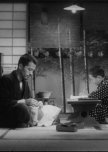
There Was A Father is an Ozu film made during WWII. The film calls for personal sacrifice from its characters yet also shows the price to be paid for it. While well made, I can honestly say, I’m not sure whether I liked it or the message within. For over a decade a father uses his sense of duty to work, and only work, to not live with his son even when it no longer serves their relationship or his son’s future.Ozu regular Ryu Chishu played the lead role as the father, Shuhei. Shuhei was an esteemed teacher, but when a student dies on a school outing, he accepts responsibility, even though no one blames him, and leaves teaching. He takes his son to his hometown and enrolls him in a boarding school. While the father is looking for work this sounds perfectly understandable, however, when the father finds a job in Tokyo it becomes less clear why he doesn’t take his son to Tokyo with him. The time between visits grows further and further apart. Each parting is devastating for the son who is admonished by his father when he releases his heartbreak by crying.
When the son has graduated from college and begun teaching, he tells his father when they visit a hot springs inn, that he wants to quit his job and move to Tokyo to be with his father. His father admonishes him for letting his feelings get in the way of the work that was given to him. “The happiness that you acquire after going through hardship and joy, will be everlasting.” You have to not be selfish and let go of the self.
For the father, all there was in his life was work. Though he initially worked for his son to have a better life, he also worked for his own sense of duty. I have tried to determine if this was propaganda or simply a way of life. Some Ozu enthusiasts say yes, others say no. For me it felt like it was a man who abandoned not only the teaching profession, but his own son, when he failed to live up to his own personal standards. There did seem to be propaganda inserted in places when it came to the single focus on diligent work as dignity at the loss of familial ties if necessary. “At a time like this, we must all do our part.” The father proclaims that life is better when working as hard as one can. That should be enough.
In this film, despite the father’s excuses as to why they could not live together it was obvious the two loved each other. The son adored his father and hopelessly waited for the day they could be together even as a grown man. Before the father’s death, Shuhei made sure his son would have a good wife, arranging a marriage with the daughter of an old friend.
Ozu used parallel scenes, fishing scenes and train scenes that brought the story full circle. His trains seem to always point the way home, even after death. The fishing scenes as the two cast and moved in synchronization, showed the two at one with nature even if they were not of one mind. And as he often did, Ozu explored life through a parent and child. Here he seemed to be looking at the nature of sacrifice, duty and responsibility and the familial loss that came about through them. Or perhaps he was working out his own childhood as his father had gone to work in Tokyo to make a living for his family, leaving Ozu and his mother behind. Whatever the case, I struggled to understand why the father refused to have his son with him, even after the goals had been met. Unlike other Ozu films, the director left it up to the audience to decide instead of leaving bread crumbs for us to follow, or perhaps the notion was a common one at the time and didn’t need to be explained. Or finally, perhaps Ozu made a film that the censors would approve of while subtly criticizing the political structure and its societal price to be paid. Maybe I’m looking too deeply to find meaning in this film.
Regardless of the meaning behind the father’s actions, Ryu gave a superb performance as the father stubbornly adhering to his sense of duty. Ozu’s transitions didn’t always seem as smooth as in his other films, but that could also have been that there were censorship cuts made after the war. I feel like I write this in all my reviews of his films—his teapot showed up and had its usual closeup which always brings me great joy.
This would probably not be a good introduction to Ozu’s films for most people. It is a slow slice of life with a difficult message. The best scenes were when the father and son were together, sadly like their relationship it wasn’t often enough.
12/9/22
Was this review helpful to you?
This review may contain spoilers
"The Shadow of a man can never stand up and walk on its own"
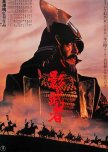
Kurosawa Akira had long dreamed of making Kagemusha. When Toho finally agreed to fund it, they were unable to finish financing it. In stepped George Lucas and Francis Ford Coppola along with 20th Century Fox and Suntory Whisky to see that the movie was completed.The story was based on real people and events leading up to the 1575 Battle of Nagashino. The warlord Shingen Takeda had longed used a double to protect himself during the tumultuous time. When his current double tired of the role, they found a thief ready to be executed who was his spitting image. When Shingen is killed the shadow has to take his place, convincing friends, family, and enemies that he is the real deal. Only a handful of advisors and guards know the truth. History would lead to a tragic end for the clan and the shadow.
This was not one of my favorite Kurosawa films. There were very few closeups and with a huge cast made it very difficult to identify people and their particular contingencies. Nakadai Tatsuya made a great foil for Mifune Toshiro in earlier films, but I found him lacking in this role. He didn’t have enough charisma and intensity to win me over. Despite the three-hour running time, little of it was spent on character development. Many pivotal scenes took place off camera. I had difficulty connecting with any of the characters and didn’t feel invested with any of them. They felt like distant obscure images.
The long still pauses Kurosawa used to great effect in his older movies became one long film this time. You have to be very patient to watch three hours of slow, quiet interactions from dozens of characters. If they had spent some of that time delving into the imposter’s feelings and life, giving me a better sense of who he was, I would have enjoyed it more.
Most of the battle scenes were underwhelming, often filmed in the dark. Two battle scenes used red lights in the background to simulate a castle burning, much as if it were a play on a small stage. Instead of seeing the action, a character was shown hearing the battle sounds. Even the final climactic battle left much of it unseen, mostly shown through the imposter’s reactions. I did find the final scenes of stunned, wounded horses attempting to rise to their feet deeply disturbing as the human carnage lay around them.
By all accounts, Kurosawa took liberties with the final battle. A ridiculously large rainbow over the ocean, while beautiful and unrealistic, was some distance from where the army would have traveled, but it did make for a nice shot. Kurosawa wanted to show the destruction of the Takeda by its enemies’ fire power even if some aspects of the battle went differently in real life.
In the end, as a body drifts past the clan’s flag, we’re shown that the currents of time are sweeping away not just the Takeda but a way of life as well. I learned several things from this film. There is a price to be paid for an unbridled ego. Blind loyalty leads people blindly to their doom at times. And never bring a sword to a gun fight.
Kagemusha didn’t have enough character development to make it a good character study and not enough quality battle scenes to make it a good war movie. In the end, I found it to be an impersonal, dryly told story at a glacial pace. Perhaps Mifune could have elevated it as he did other Kurosawa films, but that’s only wishful thinking.
12/2/22
Was this review helpful to you?
This review may contain spoilers
"The past is past. Now is now."
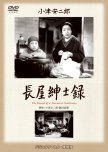
Director Ozu tackled the very real problem of war orphans in the uplifting Record of a Tenement Gentleman. Ozu used a lost little boy to quietly open the closed hearts of people damaged by loss and deprivation and a cranky widow to shelter one not her own.Ozu regular Ryu Chishu came home with a lost boy he’d found on a trip. His roommate refused to let the child stay with them. They hatched the brilliant idea of foisting the boy off on the neighbor widow, Tane. Tane was not welcoming to the idea of taking him in but relented for one night. After Kohei wet the bed, she reprimanded him and determined to be rid of him. After finding out the child’s father had apparently deserted him, she tried to desert him herself, but Kohei was too quick and determined for her. Slowly he began to wear her down and after another scolding when he ran away, she dropped everything to find him.
Tane was played by the talented Lida Choko. In her, we could see not only the grumpy middle-aged woman but also a widow making a living out of her home who had closed herself off emotionally. She portrayed a waterfall of emotions as the small boy broke her emotional dam. Seeing the gentleness in the boy she was unwilling to let him live the life of an alley cat. So great was her loving transformation that in the end she could cry generous tears of joy instead of selfish ones. Choko expertly played Tane’s regret at not having treated the boy with kindness from the beginning. It was a beautifully well-rounded performance.
Ozu showed the trauma of orphan children through Kohei. Silent for nearly 30 minutes after he appeared, and with very few words thereafter, the boy held everything inside. His stress over his abandonment and hostile environment came out through bedwetting at night. He observed homeless boys fishing along the water in order to feed themselves. In the final scene, Ozu showed numerous orphan boys at the base of a famous statue in Tokyo.
As always, every scene was composed and shot with exquisite care and Ozu’s teapot had its usual closeup. Not one for talking about the war much, he showed the piles of rubble lining the streets and even used in the tenements. The neighbors dealt with scarceness in post-war Japan, sharing information and food. He moved the scenes further outside as well and there was a gorgeous shot of Tane and Kohei on a beach right before she abandoned him. I admit to choking up watching the little boy race across the dunes to catch up with her.
The film closed with Tane and her neighbors all having been touched by the boy. They came to realize how selfish they had become, refraining from helping those in need. They vowed to be more generous in spirit. Record of a Tenement Gentleman was a film that teetered close to being overly sentimental, but for me it hit that melancholy heartwarming sweet spot.
11/16/22
Was this review helpful to you?
This review may contain spoilers
"We live in a fishbowl, and people love to talk."
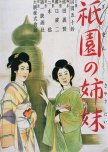
Sisters of the Gion tackled a familiar subject for this particular era among directors who were critical of the class structure and state of women. Omocho and her older sister Umekichi were geishas who had different approaches to their work. Both thought they knew the best way to navigate their difficult existence. Only time would tell who was right.Umekichi's patron, Furusawa had recently gone bankrupt and left his wife and children. He moved in with the sisters much to the younger sister, Omocho's, chagrin. The more traditional Umekichi felt an obligation to Furusawa. Omocho was the exact opposite. Men used them for what they could get out of them, she felt they should do the same to men. She hated men's predatory behavior and was willing to do whatever was necessary to gain a patron and stable lifestyle. Behind in their rent and unable to buy one good kimono between the two of the them, their new houseguest was a luxury they could not afford. Omocho worked to find both of them patrons and enough money for Furusawa to take the train back to his wife.
In the process of procuring a silk kimono and gaining a patron, Omocho made a dangerous enemy. Umekichi also found out how important she was to Furusawa when his fortunes changed.
Sisters of the Gion was an interesting look at the life of rank and file geishas in a time when their popularity was waning. The sisters were on the bottom rung of society and struggling to make ends meet, depending on men's needs and money to provide for them. Though one sister played by the rules and the other tried to be more independent, both were stuck in a world neither wanted to be in but with very few options for a way out. Director Mizoguchi never candy coated their miserable existence nor did he make Omocho vicious in her intentions. The women were dependent on whatever they could gain from their male clientele, men who could use them or forget them on a whim. It was no wonder Omocho despised the men she had to enthrall in order to eke out an existence. Like everyone she wanted to feel safe, but with her low status that entailed a great deal of risk.
Some of the director's choices could make it hard to connect with the characters. The camera was often set up high and at a distance which made it difficult to see facial expressions. This was complicated even more when a character had their back to the camera. It's not easy to feel empathetic when you can't see how characters are feeling. Fortunately, Yamada made good use of her voice to reel this viewer in. There were only a couple of scenes with a close-up, one put to good use in the final scene when Omocho let loose a tirade of despair and agony too long held back.
Yamada Isuzu had the strongest performance as the modern, more feminist sister bent on securing them a better life. The story gave her plenty to work with. Umemura Yoko was saddled with playing the demure, compliant sister willing to do whatever her former patron needed, making sure he was happy and comfortable even at the loss of her own happiness and comfort. The men came across as largely interchangeable. Given the theme, that may have been by design.
At times cynical, at other times humorous, SotG refused to serve the viewer up a happy or hopeful ending. Despite the sisters' opposing philosophies, both failed. Both suffered. In the end, neither gained anything for their troubles except more trouble. The final scene while cathartic, also came across heavy-handed as the director spelled out his opinion of the sisters' status. Despite the difficult topic, Sisters of the Gion is a film worth seeking out if you like older films and especially this gifted director's works. Sisters of the Gion won the Kinema Junpo Award for Best Film in 1937.
11/10/22
Was this review helpful to you?
This review may contain spoilers
Are you better off with him or without him?
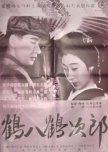
In this film, Director Naruse took the viewer behind the scenes of two performers, delving into their professional and personal lives. Jurio and Toyo had been together since training under her mother and must now decide whether to marry and continue on or break up the act.This was a difficult film for me to rate so I will simply list some pros and cons.
Cons:
Jiro was an egotistical jerk who constantly criticized Toyo's shamisen playing but never reflected critically on his own performance.
Toyo was told repeatedly that as the woman it was her duty to capitulate to Jiro's demands.
If you don't enjoy or have a background in these types of performances, they can be less than enthralling and there are plenty of them. On the converse side if you enjoy them, you are in for a real treat!
There is a lot of bickering between the main couple
Pros:
Toyo rarely capitulated and often defended herself well against Jiro's barbs standing up to him and their manager.
This was a love triangle with real stakes, there was no foregone conclusion who Toyo would eventually end up with.
Toyo truly loved performing and struggled with whether to give it up in an era when being married and continuing to work were not always compatible. I liked that she wasn't ready to jump on the marriage train simply because it was expected of her. She was also willing to do what was necessary once she made up her mind.
As much as I've enjoyed other Naruse films, I can't say that l enjoyed this one. I never liked Jiro, he was self-absorbed and felt the world revolved around him and his "talent". I sympathized with Toyo's plight, especially during the times she was living in. Jiro may have gotten some comeuppance which led to a modicum of personal growth, but it still wasn't enough for me to care about him. I kept wanting to tell Toyo, "Run girl, run for your life!"
The performances were well done, Hasegawa Kazuo and Yamada Isuzu, here in their youth showed why they would go on to have lengthy careers. If you are a fan of either, enjoy the shamisen, a creative love triangle, or are a Naruse fan, this is a film worth checking out. It may not have been captivating, but it had some entertaining moments.
11/5/22
Was this review helpful to you?
This review may contain spoilers
"Gamera! You're so cool!"
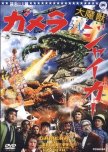
When watching Gamera vs Jiger it helps to remember that this was a 1970 Kaiju movie aimed at children. Gamera meets his match with Jiger and even gets impregnated! And yes, still a children's movie!Two young boys are once again featured and do their part to save the world and Gamera from destruction. They weren't as annoying as some of the kids in previous movies so that was a win.
The film takes place at the Osaka Expo Center where 70 different countries have set up their science exhibits. One of the groups wants to transport an ancient statue from Wester Island to the Expo despite the protests from a chief that it is cursed. Doesn't take long to figure out what the curse is, because not long after they pull up the statue and cart if off Jiger appears and has it out with Gamera. The crew transporting the statue becomes mysteriously sick. Jiger takes Gamera down by propelling spikes into his elbows and knees leaving the big tusked turtle helpless on his back. After immobilizing his enemy, Jiger becomes a speeding hydroplane heading to Japan and destroying any ships in his way. Gamera is not one to stay down long and follows Jiger to Japan where he is rampaging. This time Jiger drives a long spike into the tusked hero, impregnating him with a Jiger larva and seemingly killing him. Didn't even buy the big guy dinner!
The kids and their mini-submarine take a Fantastic Voyage (1966) into Gamera's body to find the mini-Jiger. They, of course, discover how to destroy the giant Jiger and it has to do with the statue. They manage to reanimate Gamera and get him back into the fight.
Gamera vs Jiger was actually not bad for a children's Kaiju from this era. Even Godzilla was aiming his movies at kids during this time. Gamera had a formidable foe in Jiger. Jiger had numerous weapons, even one that could turn humans into skeletons! The monster suits were decent for this time period. The action was close to non-stop, the kids weren't annoying, and the monster fights were creative with the limited funds and limited special effects capabilities. Most of the acting was bearable as was the kids always riding to the rescue. It was a common theme in these old children's movies so best to roll with that aspect. You may grow tired of hearing the Gamera theme song repeatedly sung by the end, "Gamera, you're so cool!" Other than that, if you enjoy Kaiju movies from this era, Gamera vs Jiger is one to try if you can keep your expectations low. As always, I grade these old niche movies on a curve.
10/26/22
Was this review helpful to you?
This review may contain spoilers
It's turtle vs squid!
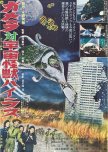
I don't know what bills or gambling debts Gamera had to pay for him to get involved with this movie, but he should have passed and hibernated somewhere until it was safe to come out. Gamera vs Viras had an okay beginning and an okay end, but the middle was largely comprised of clips from previous Gamera movies which was a huge letdown. And the okayish parts were bad enough the giant turtle should have called his agent and fired him for signing him up for this awkward mishmash of clips. Plus, he had to take a backseat to two Boy Scouts and was only vaguely the star of his own movie. It's enough to make an amphibian rampage on Tokyo---in black and white and in color!Aliens decided Earth was a good place to colonize only they ran afoul of Gamera in space. Long story short, they kidnap two precocious Boy Scouts so they can attach a control chip to Gamera and have him do their bidding. And thus begins the barrage of city destroying clips from previous movies, badly spliced together. Eventually, it's revealed the aliens are big squids and finally near the end of the movie Gamera is able to make fried calamari.
The Boy Scouts weren't as annoying as other kids in Kaiju movies, at least I wasn't rooting for a monster to eat them. If you want a shortcut to catch up on the previous movies, you can watch this one, otherwise, only if you are a huge Gamera fan-or maybe calamari.
10/21/22
Was this review helpful to you?

This review may contain spoilers
Run for your life!
This is an independent film that was intended to be the last in the Raiga/Reigo trilogy. It was more of a fan service made on the cheap and perhaps a Kaiju satire? It’s only for die hard Kaiju fans that are completionists.Normally, I’d give some of the story, but the story boils down to water loving Raiga is challenged by lava loving Ohga with two cities for their fight grounds. A variety of defense groups work to stop them. The Prime Minister was hoping one town would be destroyed by the Kaiju or the defense forces so he could scoop up cheap property and build a casino. Oh, and the Blues Brothers show up, too.
Many weapons made out of childrens’ toys IRL are deployed against the monsters. The acting is akin to what you would find in a 20th century Saturday morning television show, if they cussed and died. There was a lot of repurposing of monster action from previous Raiga movies.
No loving shots of guys in rubber suits demolishing buildings and oil refineries. Instead there were rubber toys with cheap home computer overlays and designs substituted for movement and action. Lots of squiggly lines, blurriness, fireworks, color splats, and fire over the monsters and weapons. How bad was it? Really, really bad.
They must have run out of money for real actors because they used action dolls to take their place for a super secrety secret group, something like the movie Thunderbirds.
If you can enjoy it for the complete bonkers, cheap, over saturated, bad acting, almost incomprehensible story with terrible computer graphics you might want to try this one but better safe than sorry and skip it. Or better yet, run for your life!
10/13/22
Was this review helpful to you?


