

 135
135 431
431 16
16 2
2 6
6 3
3 8
8 10
10 3
3 13
13 1
1 1
1 1
1 1
1 2
2 6
6 8
8 5
5 9
9


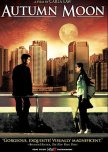
"Are you happy?"
Autumn Moon was a melancholy story of three lives in transition set in Hong Kong. The blue filter gave an added layer of existential angst to a 25-year-old Japanese traveler, a 15-year-old girl readying to meet her family in Canada, and her grandmother who knows that won’t be the trip she’s making.Hong Kong teenager Lee Pui Wai and Japanese traveler Tokio meet on a bridge where he’s fishing. Tokio’s looking for a great place to eat, having been let down by his guidebook. Wai takes him to her favorite restaurant---McDonald’s. Later she brings him to the home she shares with her grandmother. Wai and Tokio communicate in broken English but Grandma doesn’t speak any and aside from asking his name, generously feeds him. Wai and Tokio strike up a friendship sharing their life experiences and the difficulties they are going through.
I was concerned this would be an age-inappropriate romance but there wasn’t a hint of romance between Tokio and Wai. Tokio had become involved with an older woman and Wai was in love with her classmate. Tokio went through women like a giant Pez dispenser. The casual sex didn’t bring any satisfaction, only reinforcing his alienation from society and himself. Aside from her grandmother, the rest of Wai’s family had already emigrated. Most of her friends had left Hong Kong as well. Once her family found a house, she would be moving. Grandma was the odd person out, unable to emigrate due to her age. The only trip she was planning on was to the Goddess of Mercy.
The available version of this movie that I found was badly degraded and cropped for television. Visually, I could see the potential spoiled by graininess and wavy lines. The dialogue could also be hard to follow when the friends were speaking broken English as there were no subtitles during the common language scenes. What still held up well was Tats Lau’s music which ranged from playful to mournful and always hauntingly beautiful.
Director Clara Law filmed the leads on different locations around Hong Kong. Though the crowded city is usually shown packed with people, Wai and Tokio always seemed to be alone. Surrounded by the unseen people and crowded buildings, they were desperately isolated in worlds of their own. The two suffered from having “trapped hearts”, unable to break through the barriers. Tokio wanted someone to get to know him instead of his 'wham, bam, thank you mam' anonymity. Wai struggled with being separated from her family and friends. Yet she wasn’t prepared to say good-bye to her grandmother and her home. She was also dealing with the complicated feelings first love creates in a young girl's heart and body. Grandma’s legacy lay in the refrigerator filled with secret, sacred ingredients that would no longer be needed.
Three generations of people and two different cultures were lovingly and respectfully shown. The characters dealt with loss, soul shattering boredom, and the unknown. Through their friendship and a private celebration of the Mid-Autumn Festival, Tokio and Wai would discover how to revel in the small moments and find the courage and contentment they would need to travel the paths that led to happiness.
“When will the spring flower and autumn moon fade,
How much of the past do we know?
At my home last night the East wind blew…”
21 August 2024
Was this review helpful to you?
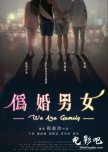
"The society is harmonious but I am bullied!"
Director Zero Chou gave a Taiwanese interpretation of how mainland Chinese gay couples are received in We Are Gamily. Her view of the complexities of loving someone that a conservative society will not accept was important but I found the interpretation on the screen lacking.“Any conflicts and unharmonious relations existing in a society, require us to actively harmonize them to achieve a stable, harmonious, and orderly outcome.”
Wu Gang and Yang Duo are both in relationships that their families would never approve of and that are not believed to contribute to a harmonious society. Gang and Sam have been lovers for over three years as have Duo and Liya. In order to get both of their families off their backs, Gang and Duo marry but continue to live with their lovers. Their plan goes array when their mothers decide they need to have a baby as soon as possible and Gang’s mother moves in with them to push the matter along. How having a live-in mother pressing a couple to have sex would enhance their performance is something I don’t want to know. Neither Sam nor Liya are happy about the new living situations. Complicating matters, Gang’s lesbian sister Rou moves in as well.
The comedic set-up had possibilities but didn’t work for me. The writing, acting, cinematography, music, and sound were all a “C” at best. Ang Lee made a similar movie nearly 25 years before this one on a shoestring budget that delivered a more emotional punch. In a two-hour movie, We Are Gamily had very little character development. Gang and South African Sam had been together for several years but all I knew about them was that they loved each other and had a penchant for phallic shaped art. Duo and Rou had similar development issues, but at least we were told what they did for a living. Ruo and Sam were both ready to rock the boat, while Gang and Duo were more concerned with their mothers’ acceptance.
Gamily started out with a comedic tone and then morphed into a more serious one as the couples began to wonder when they could stop acting and start living their lives. I found it hard to become emotionally invested in the story as Rou and Sam were dragged into the play neither wanted to act in. Rou was the character I could most connect with. She accepted who she was and was willing to live away from home in order to be honest with herself, even if she couldn’t be honest with her family. When societal harmony was brought up, she replied, “The society is harmonious, but I am bullied!”
We Are Gamily was a lighthearted look at a serious subject about being different and upsetting familial and societal harmony, when the lack of “harmony” or sameness should never have been the responsibility of those being judged. The social and familial commentary were elements to appreciate about this film. However, the overly contrived situations, poor camera work, and often terrible sound challenged my attention span.
14 August 2024
Was this review helpful to you?

Could have used more rom and more Tang Wei
Despite starring Tang Wei and Jacky Cheung, this ended up being Jacky and Pau Hei Ching’s movie. Tang Wei was criminally underused. Crossing Hennessy was a scrambled ensemble that too often pulled focus from the main couple.Loy is a 41-year-old man who sleeps until noon and has difficulty with responsibility. His mom owns an appliance store where he fixes equipment and does installs near as I could tell. His aunt dotes on him while his mom berates everyone around her. Queenie, the mom, sets him up for a matchmaking dinner with the woman whose uncle owns a shop across the street. Oi Lin, much like Loy, has no intention of following through with the match. She has a jailbird boyfriend and Loy is seeing his ex-girlfriend. Later, after meeting coincidentally the two find they share an interest in mystery novels. Kismet! Queenie, family friend Uncle Ching, and Loy’s aunt end up in a love triangle of their own.
I watched this film mainly because Tang Wei was starring in it. Before the hour mark she all but disappeared from the screen until the end of the film which was quite disappointing. Her character was given little to do overall. I also struggled to understand what thirty-year-old Oi Lin would see in a forty-year-old man (49-years-old in real life) who had no direction and nothing to offer her but the ability to make her laugh. Jacky Cheung’s acting style is not my cup of tea. I find his mugging for the camera and eyerolling more annoying than cute. It was difficult to understand what lit the attraction between Oi Lin and Loy. Pau Hei Ching as Loy’s mother was continually loud and overbearing with no nuance. I kept waiting for her older sister to finally snap after being continually rundown by the family diva. I only know Danny Lee from old kung fu movies so it was interesting seeing him as the henpecked, dog carrying Uncle Ching. The veterans’ love triangle dominated the second half of the film along with Loy’s challenges while Oi Lin sold toilets offscreen in her uncle’s shop.
Crossing Hennessy had some cute moments but then the film would go in another direction leaving the burgeoning romance on the backburner. Tang Wei’s return to film after being blacklisted (apparently, she did those spicy Lust, Caution scenes all by herself? None of the men suffered any consequences) should have highlighted her acting abilities instead of sidelining her in her own romance. Jacky Cheung’s hangdog, lazy character and verbally abusive mother weren’t interesting enough to carry the film for me.
8 August 2024
Was this review helpful to you?

The plot bounced all over the place at the beginning. It didn’t help that the copy I saw was faded with white subtitles over the pale images. A relief fund of 8000 silver coins was stolen from robbers who hit the convoy during the transport. During the melee, the chief escort officer was killed with a bamboo machete. Local crime boss Tsang had ordered the robbery and thought that bamboo boss Chin hit the escort, stealing his plunder in order to pay back money he owed. The actual robbers hid the money on Boss Chin’s land until things settled down. Tsang wanted Chin’s daughter, Lin Tang, to marry him, something she had no intention of doing. And finally thrown into the mix was Pao Liang, the younger brother of the murdered escort chief. Pao strolled into town determined to bring the killers to justice.
Chang Yi starred as Pao Liang, a rare good guy role for him. Chen Chen played the feisty Lin Tang who wasn’t afraid to fight anyone. Chen Hung Lieh who was always assigned the villain roles due to his resting bitch face played the smarmy crime boss Tsang. Wang Yung Sheng did the choreography which would have been challenging with some of the non-martial arts actors. Chang Yi had studied some and performed several impressive jumps. The stuntmen had their work cut for them as most of the fights were big gangs against one or two. They had to sell the limited abilities of Chen Chen and Chen Hung Lieh by flipping, falling, and soaring through the air. During the finale with Chang Yi against the world not a piece of furniture was spared in the gambling den as stuntmen flew over the balcony repeatedly and through the walls. The problem with these grand scale fights was that all the moves began to look the same.
If you are a fan of old kung fu films, The Cannibals is watchable. There were some cute moments with the child actors and flirtatious moments between Pao and Lin Tang. The fights and acting were average for the time frame as was Ni Kuang’s story. It just lacked any kung fu charisma. Chang Yi was always more compelling as an OTP villain.
4 August 2024
Was this review helpful to you?

"Families should eat together"
The House of Us was the second full length film by director Yoon Ga Eun. This time instead of the universal theme of rejection and fitting in, she tackled how three little girls dealt with the instability of their family lives. I enjoyed this film but felt unlike the realistic portrayals of her first film that this one veered off into fantasy by the end.Ha Na had just won the Good Classmate award at the end of the school year. Unfortunately, her family wasn’t terribly impressed. More than anything Ha Na wanted the family to eat dinner together and take a trip to the beach together. Her parents were far too busy and distracted to agree to a trip. When they were home the adults spent most of their time screaming at each other. Her older brother didn’t have the time or patience for Ha Na either. Ha Na ended up making a family of her own with two little girls she met who lived by themselves. Yu Mi and Yu Jin’s parents worked at a beach hotel and their uncle was supposed to be looking after them but he was absent most of the time. Ha Na cooked meals for the girls and helped them scare off potential renters for their apartment. They worked together to build a House of Us made of decorated boxes and egg cartons. Ha Na’s overwhelming desire for her family to take a trip together led the three children on a potentially dangerous adventure.
Yoon delved into fractured families and how children processed that information. Ha Na thought if only the family gathered around the table or on a vacation reconciliation could occur. Her little friends Yu Mi and Yu Jin believed if they kept someone from renting their apartment they wouldn’t have to move for the 8th time. Ha Na tried desperately to keep both homes and families intact in a way only a child would attempt.
As much as I liked the core story of the film I wasn’t as enamored with the narrative structure housing it. Yoon used a deux ex machina in the final quarter when Ha Na selfishly put the girls in danger despite having a logical way out. While the child actors were engaging, I never felt emotionally connected to them. House of Us didn’t shy away from the price dysfunctional parents have on children. Ha Na had to learn the painful lesson that families and made families can’t always stay together physically but can stay together in their hearts. Yoon Ga Eun crafts such interesting works of heartfelt art, I hope she is given the opportunity again in the near future.
3 August 2024
Was this review helpful to you?

Childhood without the rose colored glasses
Director Yoon Ga Eun shared the good, the bad, and the cruel in The World of Us. The story was shown through 10-year-old Seon’s eyes. When her dad proclaimed, “What could be wrong with kids? They just go to school, study, and play with friends,” it was clear he had blocked out all memories of being a child.Seon comes from a poor family where both of her parents work. She is often in charge of her energetic little brother Yoon, who is always getting into fights with his friend Yuen. Deemed an outcast by Bo Ra, the queen bee of her class, Seon has no friends and is always the last kid to get picked during dodgeball. Her fate seems to change when Ji Ah moves to town at the beginning of summer vacation and the two hit it off. Seon embraces life in the warm summer days with her new friend walking, playing, eating, and sharing secrets. Summer can’t last forever and soon Bo Ra sets her eyes on adding Ji Ah to her hive.
Seon’s joy and desolation were on full display in young actress Choi Soo In’s face. The isolation of being deemed less than was excruciating. Seon’s goodhearted, but clueless mother thought the girls in class were her friends, never knowing the little darlings made her daughter’s life hell every day at school. When Seon and Ji Ah had a falling out, neither behaved perfectly, both making terrible mistakes. Sympathetically, both made their mistakes out of a desire to not be rejected and left unprotected on the fringe. Ji Ah had been largely abandoned by her mother and father which caused resentment toward Seon. Seon’s family struggled financially but Seon and her mother had a warm, close relationship. Director Yoon showed the vulnerability in the girls and also Seon’s strength as she attempted to find out how things went wrong so quickly. Working out human relationships in the crucible of a classroom was a daunting task. Yoon Ga Eun showed Seon’s journey with a light hand, never resorting to the over-the-top bullying in so many Kdramas. Yet also showing that words can be as sharp as a razor, especially in one raw scene involving colored pencils.
The World of Us was a claustrophobic world of dreams and nightmares as Seon and Ji Ah navigated the perilous path of growing up even in the innocence of childhood. The film was not all conflict, scenes of the girls sharing a skillet of kimchi fried rice, dyeing their nails, or happily playing in the water demonstrated the sheer joy of new friendship. The two often forged toward the unknown separately as they gradually and painfully learned the process of making friends and which friendships were worth the effort and didn’t require selling one’s soul. The World of Us was an honest trip into childhood and one worth taking.
2 August 2024
Was this review helpful to you?

"Can we talk?"
Apart from You was one of Naruse Mikio’s early silent films. The subject matter was a familiar one for the times, a woman was lodged between a rock and a hard place trying to provide for her ungrateful son. There were moments of slapstick comedy sprinkled through the melodrama that also included an unrequited romance.Kikue is an aging geisha trying to hang on and make enough money for her son to finish school. Terugiko is a teenager who works with Kikue. Embarrassed by his mother’s profession, Yoshio has been skipping school and joined a gang of troublemakers. When Kikue finds out she is distressed and asks Terugiko for help as Yoshio cares for her. When talking to him doesn’t work Terugiko takes him home to her parents’ house by the sea. There Yoshio discovers what a truly dysfunctional family is.
Naruse began the film with two geishas walking down the street and a gang of ruffians running about searching for someone. There were overtly comedic moments as the camera bounced around. It took a bit of time to figure out who was the focus of the story. Initially, the story began as a mother-son film and then made a turn into doomed romance. It was also unclear initially whether this was going to be a comedy or a full-blown melodrama. There was a running gag about Yoshio’s hole filled socks with a cute moment involving Terugiko’s little brother right before he found out how lucky he was. When words failed to break through Yoshio’s feelings about his mother, Terugiko tried to show Yoshio how pigheaded and thoughtless he was being through her own example. Her drunken father relied on her money to provide for the family instead of working himself and he was prepared to sell her younger sister as well. Terugiko was faced with a terrible future in order to save her sister. After being dressed down by Yoshio, Kikue made a drastic sake soaked decision. Suddenly, the funny moments didn't seem so funny.
Yoshikawa Mitsuko was 32 at the time of this film and was treated as an “old hag.” Isono Akio who played her son Yoshio was a mere 9 years younger! The beautiful Mizukubo Sumiko was only 17 years old which only emphasized Terugiko's dire circumstances. Yoshikawa and Mizukubuo were the heart of this film while Isono as the petulant man-child played it with a straight face. Aoki Tomio, a frequent child actor at the time, played Terugiko’s mischievous little brother. The acting was all pretty solid, especially for this time period. The story had a tendency to change focus as much as Naruse’s camera did. He overused the dramatic closeups and choppy editing to convey emotions in several scenes. He did make use of Japan’s natural scenery when Terugiko and Yoshio traveled by train to her parents’ house and also when they talked by the sea.
Apart from You had its flaws but Naruse managed to fill 60 minutes with emotional impact without jumping headlong into sentimentality. Women had few financial opportunities and yet were ostracized when they walked the only path they could find to survive and help their families survive. As much as I was hoping mother and son would reconcile, it was diminutive Terugiko’s fate that haunted me. This statement by Terugiko could have been an anthem of resiliency for both of the women, “I won’t be defeated by hardships.”
22 July 2024
Was this review helpful to you?
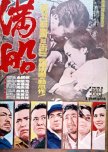
My life, my love, my lady, is the sea
Full Ship was a 1967 film set in a fishing village on a remote island. Poverty and tradition kept the islanders in a vicious cycle with seemingly no way out.Gom Chi is a fifty-year-old captain of a fishing boat and the father of new baby boy. Two of his three grown sons died at sea while the third refuses to sail. The sailors and Gom owe money to the owner of the boat who takes most of their haul to pay for gas and union fees. If they don’t catch fish, not only do they not get paid, they owe for the use of the boat. They are paid pitifully even when a “full ship” returns, sometimes only hulled barley. Gom Chi dreams of owning a boat and when his boss finds out, calls in Gom Chi’s debts.
Full Ship demonstrated the trials of living in a subsistence community and much like old coal mine towns where people owed their soul to the company store, the villagers were always in debt to the boat owners. Despite having lost two sons to the sea, Gom Chi could not fathom why his son Do Sum wouldn’t join the other men on the boats. Villagers and family whispered that time in the military and his education had made him “wild.” Gom’s wife did not want either Do Sam or her new baby to become bewitched by the sea as Gom Chi had. Do Sam’s sister, Seul Seul, was not opposed to leaving the island, but her fiancé Yeon Cheol was happy eating yams and being with her, with no desire to move to “land.” Beom Soe, a former islander who made money on land, came back and had his gaze set on Seul Seul. He also brought a dark secret with him.
The last twenty minutes were dominated by tragedy after tragedy as the Dragon King reminded the villagers that they did not control the sea. And just as with the miserly boat owner, the bill for depending on the sea, came due.
“To escape from an inch of regret, to leave behind an inch of suffering, those people were thrown into the providence of the sea.”
2 July 2024
Was this review helpful to you?

"Even if you solve this problem, no one will be happy"
Perfect Number was an entertaining thriller where the genius was neither a serial killer nor a super cop. Just a lonely mathematician whose lifetime obsession with solving *Goldbach’s Conjecture* had left him despondent. Female director Bang Eun Jin, helmed this 2012 film, one of her half a dozen directorial efforts.Kim Suk Go spends most of his waking moments thinking about math, until Baek Hwa Sun and her niece Yoon Ah move in next door. The beautiful and kindly Sun brings light into his dreary world. One night Hwa Sun’s ex-husband attacks her and Yoon Ah in their apartment. Suk Go can hear the violence but doesn’t intervene until silence returns. He volunteers to help Hwa Sun with the “cockroach” she killed. In a matter of moments, he perfects an alibi for the two, so that they will not end up going to jail. Hwa Sun and Yoon Ah follow his every order which might work until an unexpected variable enters the picture in the form of Detective Jo Min Bum, a tenacious cop, who also knows how smart Suk Go is.
If there was a true villain in this film it was Kim Chul Min, the abusive, rapist, pedophile, possessive, ex-husband. His violent assault changed the lives of all the main characters. I’d also call the women’s predicament an indictment on a criminal system that would punish them for defending themselves as they fought for their lives. Suk Go and the women walked outside the lines, but would never have been in that position without Chul Min’s brutal abuse instigating their actions.
Jo Min Bum was a sympathetic cop. He was doing his job and doing it well, which of course threatened the three people trying to avoid punishment. They were also sympathetic. Hwa Sun was willing to turn herself in but needed to protect her niece. Suk Go wasn’t just thinking with his head, he was thinking with his heart. All of which made the central conflict—“Even if you solve this problem, no one will be happy.”
Perfect Number wasn’t perfect as there were lapses in logic. I figured out most of the twists ahead of the big reveal, but it was still enjoyable watching Suk Go lead Min Bum on a merry chase in order to protect Hwa Sun. In the end, the two friends and adversaries would discover that the answer to “Making a problem no one can solve or solving that problem, which is harder?” was both.
20 June 2024
*Goldbach’s Conjecture*
“Every integer that can be written as the sum of two primes can also be written as the sum of as many primes as one wishes, until either all terms are two (if the integer is even) or one term is three and all other terms are two (if the integer is odd).”
Was this review helpful to you?

"The friendship given me is like water that nurtures the heart and body"
Muay Thai Warrior aka Yamada: Samurai of Ayothaya was based on the true story of a ronin living in Siam (present day Thailand) who pledged himself to the king and ultimately became a governor. Movie Yamada wasn’t terribly interesting or a very good fighter, the screen only came alive when the Thai boxers showed up.Yamada Nagamasa lives in the Japanese village of Ban Yipon in Ayutthaya. The village is populated with Japanese Christians who fled their homeland and numerous ronin of defeated lords who now work in the king’s Department of Japanese Volunteers. When Yamada discovers that the thieves terrorizing the area are actually Japanese, he’s tasked with tracking down the leader. He’s ambushed by masked assassins and nearly killed. Rescued by a handful of Muay Thai fighters, he’s taken to their village and treated by the monk Phra Khruu. The villagers accept him and he begins to integrate into their lives little by little. Eventually, Phra trains the foreigner in Muay Thai and Yamada proves himself an adept learner. Every pair of elbows and knees will be needed as Ayutthaya may soon be under attack from its lethal enemy. Yamada has the additional concern of Kuroda’s assassins out to end his life.
Ozeki Seigi was nice to look at, but his character and performance were underwhelming. He was also completely unbelievable as a fighter, especially in comparison to the real Thai fighters on screen. They were fast, accurate, fierce, and obviously powerful. Ozeki’s moves were slow and limp. Before you could say, “Wax on, wax off,” Yamada had integrated Thai martial arts with Japanese. Thankfully, professional fighter Buakaw Banchamek, showed up for some spectacular Muay Thai exhibitions.
Ozeki availed himself better with a sword, but then the CGI swords and blood removed any chance of immersing oneself into the fight scenes. I was far more invested in Ketsaro Thanawut’s Khaam. There was a heavy-handed attempt at building a romance between Yamada and Khaam’s sister Jumpaa/Champa which fell flat. And the friendship between Yamada and Khaam was terribly underdeveloped which was the biggest disappointment as they could have been a real highlight of the movie.
Aside from the aggressive training for the king’s bodyguard contest and to be ready for the real threat of the enemy attacking, this movie was blithely uneventful. There were few fight scenes, although the ones shown were for the most part entertaining. Yamada sat around playing his flute often when he wasn’t playing with the children, all to let you know he was a nice guy. Most of the dialogue focused on the right way to die and how important friendship was. The villagers did everything but sit around holding hands and singing Kum Ba Yah. When they weren’t fighting to the death to be royal bodyguards or watching cockfights that is. Overall, I enjoyed Muay Thai Fighter, mostly for the Muay Thai fights. The Thai fighters were a delight to watch. This was a slightly below average martial arts movie and one for fans of the genre to give a try, if you go into it with low expectations.
8 June 2024
Was this review helpful to you?
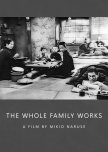
"Things can only turn out the way they are going to turn out"
The Whole Family Works was a short working poor slice of life film focused on how difficult and soul crushing it can be to find a way out of poverty. Nine children know that when they finish elementary school their only option is to work at the factory or other menial jobs to bring in money to support the family.Ishimura’s family of nine lived day to day with the three oldest boys supplementing the family’s income with meager paying jobs. Though Ishimura’s income had been in steady decline, he sipped sake and smoked while his wife lamented not having enough money to purchase tofu. The eldest child, Kiichi, realized at 22-years-old, that his future was slipping rapidly through his fingers. His dead-end factory job would never pay enough to help his parents as they aged or support a wife and family of his own. He was determined to go to school to train as an electrician to improve his chances of gaining better employment. What does filial piety mean and how much does one have to sacrifice for it? Kiichi weighed his responsibility to his parents and to himself. As he said, he had no great ambitions, “I just want enough to eat.” Ishimura was sympathetic to Kiichi’s concerns, also knowing that if he agreed to let Kiichi leave, the others would want the same freedom. As the one who handled the finances his wife was adamant that Kiichi stay. She had already been “borrowing” from one younger son’s savings and struggled every day to feed the large family.
The numerous brothers could make the film hard to follow. They weren’t always identified well at the beginning. Also, the years have not been kind to the film and it was badly faded and blurred, making it often difficult to tell which son was on screen. As a Naruse film, I have no doubt it looked splendid back in 1939, but many scenes were challenging to make out, especially the night scenes.
The family was in a perilous predicament despite the children being raised right. The kids were good students and hard workers and respectful to their parents. Yet they also had dreams of their own and didn’t want to be trapped in hard labor jobs forever. The parents understood the harsh reality that dreams were more easily achieved with money. Something the family didn’t have. Even if Kiichi succeeded in his potential goals, that success was years away, while food and shelter were needed in the present. Director Naruse Mikio didn’t give away the future, only tinged the unknown with gleeful hope and realistic concern.
7 June 2024
Was this review helpful to you?
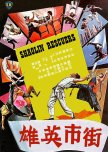
"We lived life to the fullest!"
Five of the six Venoms made a return for Shaolin Rescuers. Only Wai Pak was missing. I enjoy the Venom actors, but this movie took too long to gain any traction. It was an hour and fifteen minutes before any real action occurred and that is too long for a kung fu movie. The last forty minutes were entertaining if you can hold on that long.The story begins in familiar territory with the burning of the Shaolin temple and Hong Xi Guan injured and on the run. Gao Jin Zhong (Centipede Venom) and his crew of Manchu fighters are hot on his trail. Hong finds his way to a town that is fraught with danger. Lucky for him, four working class fighters are sympathetic to his cause. Chen A Jin (Toad Venom) is a tofu maker who practices his Mantis Style at work. Yang Da Bao (Lizard Venom) works in a restaurant where anything is a weapon with his training from the Black Tiger Clan. Gao Ji (Scorpion Venom) finds himself on the venomous end of the martial arts school he trains at, learning most of his 49 Big Dipper skills working at the dye factory. Eventually, Han Qi (Venom Apprentice) arrives with his acrobatic troupe. Three of the Venoms care for Hong pooling their meager resources to nurse him back to health. Before long Gao and his men track them down and the five heroes will be in for a fight for their lives.
The major drawback to the story is that for over an hour the Venoms spend most of their time goofing around and fighting each other for fun. It wears thin after the first “comic” fight. When danger strikes, everything picks up as the fights have real stakes. There were a couple of skirmishes with stuntmen and Lu which were faster than most of the other fights. In true Venom form there was a lot of kung fu posing. The last fight was quicker or maybe the editing was better. With the various weapons and fighters, the action felt more exciting. Phillip Kwok and Chiang Sheng were acrobatic as always, playing to their strengths. Sun Chien, a taekwondo artist in real life, brought the kicks. Lo Meng, the “big” guy, was the muscle. He was supposed to use Mantis style but I never saw it. Poor Lu Feng ended up a villain again and was often fighting against Jason Pai Piao as Hong.
Because it was a Chang Cheh movie there was plenty of blood and death. Disappointingly, the story wasn’t very tight. They could have easily cut 20 minutes of hijinks out and gotten down to business. All the smiles and pranks weren’t fooling anyone. Chang Cheh doles out death like a Vegas card dealer and you know better than to get attached to anyone. I have a soft spot for the Venoms so I was willing to impatiently wait until the final lethal confrontation knowing it would be entertaining. It was, but it still didn’t make up for the previous hour.
4 June 2024
Was this review helpful to you?

"People cannot live alone. You need comrades."
Fermat’s Cuisine combined mathematics and French cuisine for an entertaining drama though one with a rather narrow view of success for most of the episodes. I could tell it was based on a manga from the male lead who was overly enthusiastic both emotionally and physically while everyone else played it cool.“Less than perfect is meaningless.”
High school student Gaku gives up on math competitions when he realizes his skills are not extraordinary despite how much he loves mathematics. While Gaku is making lunch at a diner, Chef Kai jumps the counter to taste the food he’s prepared for the staff out of leftovers. Kai hires Gaku to work at his two-star Michelin French restaurant and pushes him to use his math to excel at cooking. The other chefs do not welcome the new favorite as they’ve seen many supporting characters come and go. Kai wants Gaku to become peerless and as isolated as he is, a problem for Gaku who has a tendency to draw out people and their strengths. Kai is hiding a secret that might push all of the chefs over the edge.
“Those who aren’t superior are the evil of this world.”
The concept of the drama was pushing the limits of believability. Kai hired the best chefs from around the world and used only the best ingredients. He spent more than he made and relied on special patrons to supplement the restaurant’s income. It was also difficult to hear over and over again that in order to be successful you had to be the best and be able to open the door to truth or else it wasn’t worth trying. If you couldn’t be the smartest mathematician, time to quit. If there was a chef better than you, time to hang up your apron or at the very least, go to work for that chef. Being the best meant being alone. Gaku was almost destroyed by the push to become “peerless,” as if that was some noble cause. In reality it probably rings true, but there so were so many big egos in the battlefield of the kitchen there was barely room for the pots and pans.
“The higher we reach, the more alone we become.”
Aside from the delicious looking meals the chefs whipped up, and there were many, the strength of this drama was the journey the Japanese chefs took to develop as individuals and as cooks. The international chefs were left in the background for the most part. Gaku, Kai, Ranna, Hotei, and Magoroku all had character growth, learning about themselves and how to collaborate and work with others. Their relationships were a rollercoaster ride of distrust, becoming comrades, distrust, and comrades again. The acting was a bit of a rollercoaster ride with some stronger performances and some weaker ones. I found it interesting that as much as Kai preached “The peerless have no one,” that he had enormous financial support. Most restaurants have narrow profit margins and somehow he was able to keep his open through the help of friends.
“Do what you love.”
Despite some of the over-the-top acting and relentless creative arrogance, I enjoyed this drama. Watching people make delicious dishes, even Naporitan/Napolitan with ketchup, is always fascinating to me. The camaraderie that developed between the kitchen staff was heartwarming as well as the road to bromance and culinary enlightenment. So, lettuce celebrate friendship, food, and math, but have a snack nearby because this drama will make you souper hungry.
1 June 2024
Was this review helpful to you?
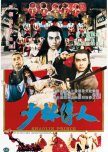
"Even when you can't see danger, it doesn't mean it's safe"
Separated royal princes, Shaolin Three Stooges, sword fights, kung fu, spirit possession, betrayals, and enough evil laughter for a dozen villains, Shaolin Prince didn’t scrimp on the spectacle. Ti Lung, Derek Yee, Jason Pai Piao, and just about every stuntman working for Shaw Brothers appeared in this film.The royal babies are taken out of the palace by trusted guards when the evil Lord 9th’s men storm it killing everyone. Guard Li Zheng survives repeated onslaughts to take the crown prince to the Shaolin Temple where three “silly monks” who are forbidden from stepping foot outside take the child in to raise him not knowing who he is. Gu Long spirits the younger prince away to the Prime Minister’s home where the good official adopts the boy so that he can keep the child’s identity a secret. The youngest prince, Wang Zi Tai, is trained with the Treasured Sword until he turns twenty. The crown prince, Dao Xing, is trained in high level kung fu by the Three Stooges in a most unorthodox manner. The two brothers coincidentally meet at an exorcism and become friends unaware of their familial connection and common need for revenge.
I’m always up for a Ti Lung kung fu movie because I enjoy his screen presence if not his fighting ability. He was a little long in the tooth at the age of 37 to be playing a 22–23-year-old. Aside from that quibble he seemed to be having a lot of fun playing this light-hearted character trained by the silly monks. Alan Chan Kwok Kuen, Lam Fai Wong, and Yue Tau Wan played the adoptive father monks for Dao Xing. The slapstick could be tiring at times, but when the chips were down, the trio showed they could best anyone who dared to take them on, with their feet never touching the floor. Derek Yee played the more serious, younger prince and acquitted himself well with his sword fighting. The friends to brothers relationship was endearing. And one of my personal favorites, Ku Feng, made a brief appearance as the righteous Prime Minister. Jason Pai Piao had no problem playing the sinister Lord 9th with his literal iron fingers, and weapons decked out sedan chair. Chiang Tao and Yuen Bun brought the fire and water respectively as the Fire General and Water General---because there weren’t enough bonkers characters. I wouldn’t want to exclude the young widow possessed by her demonic dead husband that went on a killing spree. Too much was never too much with this movie!
The fights came often and no two were alike as the gold medal group of martial arts directors went all out to try new styles, weapons, and configurations. Yuen Wah, Yuen Bun, Tang Chia (also the director), Lee Hoi Sang, Kong Chuen, and Huang Pei Chih managed to choreograph fights that looked like they belonged to the same movie while not being repetitious. Too often when there are several choreographers, the fights can seem disjointed. A plethora of actor-stuntmen filled out the cast for all of the extravaganza fights at the palace and temple.
Shaolin Prince may not have been a quality movie, but for a martial arts flick with humor and a high body count, it was entertaining. I’m happy that it has been restored and taken care of as so many other old kung fu flicks are fading with time. The most valuable kung fu advice from this film, “Continue if you can, hide if you can’t!” or equally helpful, the “Run for Your Life!” style. If you enjoy Shaw Brothers movies this is one to give a try.
31 May 2024
Was this review helpful to you?

"Success requires sacrifice"
Yue Song wrote, directed, and starred in Super Bodyguard aka Iron Protector. The clichés and migraine inducing editing were saved in the last act with some mind-boggling fights. If the outtakes at the end of the movie were any indication, plenty of real blood flowed as well.Wu Lin and Jiang Li were trained as children by their sifu until Jiang Li dabbled in crime and was kicked out before he learned the secret 108 Iron Kicks. Jiang Li joined a crime syndicate while Wu Lin faithfully trained, even wearing 50 kg/110 lbs worth of iron boots for ten years. After their sifu died, Wu Lin went to work for Jiang Li serving as a bodyguard to a spoiled, rich, young woman. When kidnappers came calling Wu Lin would stop at nothing to rescue Fei Fei, even if it meant confronting his friend and his painful past.
Yue Song was hard to take seriously with his terrible mullet and big stomping shoes. Becky Li had the thankless role of the annoying Fei Fei. How many times have we seen this overused rich girl stereotype? And that’s what was really the problem with this film. Nothing was new and I have seen it done better in other movies. The clichés were served up one after the other. Even the big twist at the end was no surprise. The shaky quick editing showing closeups of body parts, tigers, bad guys, good guys, etc. was dizzying. Yue also used comic book coloring and editing for certain scenes. Perhaps Yue was trying to be artistic with the back and forth editing combined with flash backs or maybe he was trying to make a mundane story interesting.
The fights made copious use of wire work as Wu Lin flew through car windows and people were thrown about as though weightless until they doubled their mass when they crashed through whatever wall or unlucky prop or stuntman lay beneath them. The final fight, while unbelievable, was highly entertaining when Wu Lin finally got his mojo going after he cut his mullet. Coincidence? I think not.
Campy, with a wildly ridiculous plot, and highly questionable editing choices, Iron Bodyguard still had entertaining moments and Yue Song made for a likeable hero with his stomping iron boots and iron fists. He was as impervious to injury and death as a Kdrama serial killer. I always enjoy seeing Xing Yu strut his kung fu stuff, even when his character couldn’t figure out what his motivation was. Between Yue’s mullet, the overused story elements, '80s kung fu movie bad guy Michael Chan as the villain, not to mention Yue's T.J. Hooker style of clinging to a racing vehicle, this movie would have felt at home in the late 1980’s. I probably would have rated it higher had it been filmed in the 80’s on my old kung fu movie curve. No points for nostalgia.
30 May 2024
Was this review helpful to you?


