

 135
135 431
431 16
16 2
2 6
6 3
3 8
8 10
10 3
3 13
13 1
1 1
1 1
1 1
1 2
2 6
6 8
8 5
5 9
9


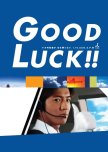
Gets off the ground but doesn't soar
Thanks to Netflix picking up more Jdramas I’ve been able to check out some of Kimura Takuya’s older dramas such as the enormously popular Good Luck. I enjoyed it for the most part though some of the older tropes haven’t aged well. Kimura has like a fine wine though.Rookie co-pilot Shinkai Hajime is called upon to land a passenger plane in an emergency. Once on the ground, both a cranky mechanic and the pilot auditor call him on the carpet for his errors. Ogawa and Koda are always ready to cut him down to size and call into question whether he should be a pilot. If those two aren’t on his case, his father is ready to let him know he’s a failure as well. Flight attendant Togashi Noriko and Head Purser Ota give Shinkai more balanced perspectives. Despite all the name calling, a romance burgeons between the co-pilot and mechanic and Koda also grudgingly realizes the sunny Shinkai has his uses.
One unrelentingly critical, combative, unpleasant character regardless of their reasons is enough for me in a drama. Two is pushing it. Three made me want to parachute out of the drama. Only Kimura’s goofy grin and positive energy kept me seated with my tray table in an upright position. I’m not a believer that being good at your job entitles you to belittle people in public and get personal with criticisms. The big reveal for Koda’s horrible attitude was weak and arrogant. Ogawa’s crankiness and drop-dead stare she continually leveled at Shinkai began to grate and I could never see the chemistry between the two characters. She had great chemistry with the equally cranky Koda. Both characters and actors appeared far more relaxed together than with their scripted love interests. Only Shinkai and the ever reliable Togashi kept me engaged.
Good Luck was an interesting look behind the scenes at the Japanese airlines with their dedicated and sometimes horny crew-which should have come as no surprise with all of the gorgeous pilots, FAs, and mechanics wandering around. Characters found love, friendship, and redemption. The drama was a solid commercial to show that air travel is safe and well regulated. But I also learned that I hope I’m never on an ANA flight that is delayed or detoured because Japanese businessmen can become dangerously hysterical. And men think women are overly emotional. Lol
16 August 2025
Was this review helpful to you?
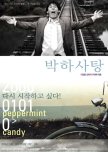
"What secrets made you leave me behind?"
Peppermint Candy told the story of a man who knew the only light at the end of the tunnel was the beam from an oncoming train bearing inexorably straight for him. As his life passes before his eyes, we see seven chapters that made him the man he became. What we find is a man with his life set on self-destruct.Kim Yong Ho crashes the outdoor 20 year anniversary party for factory workers who once lived in the honeycomb cells near the factory. Obviously distraught he stumbles toward the train tracks while most of the party goers turn up the music and dance. As he shouts, “I’m going back!” the oncoming train suddenly runs in reverse and his life is rewound showing the decisions he could control and the decisions that were ripped away from him.
Director Lee Chang Dong takes the viewer through Kim’s life during the 1980s and 90s. The ROK suffered a traumatic national wound during the times of dictators and martial law, student and union uprisings that led to many of them being arrested and tortured, economic failures, and the shocking Gwangju Massacre. Kim was thoroughly unlikeable, a man filled to overflowing with self-loathing who had nothing left to give but contempt. He felt no mercy had been shown to him so he showed none either. He had done things for which the stench and blood never left him. The backward running train seemingly appeared as a specter of the future at key interludes.
As Lee peeled back the layers of Kim’s life, I’m sure I was supposed to feel empathy for him. Soren Kierkegaard once wrote, “Life is an ironic tragedy. It has to be lived forward but only makes sense in reverse.” We can use past experiences to create a path for the future. Some misfortunes can lead to growth and better decision making or they can completely dismantle a soul. Kim chose the latter. Every stupid decision he made just added to the weight of his suffering and the suffering of those around him. He could have chosen atonement but instead he chose selfishness, cruelty, and bone crushing hopelessness.
Peppermint Candy showed the unflinching violence that sadistic policemen and soldiers, and a jealous husband committed on other people. The harrowing times played a hand in Kim’s trajectory, but he played a larger hand in the act of bleeding out his own humanity. He never took responsibility or asked for forgiveness, never chose a better path. No one forced him to make the horrific decisions he chose so I for one shed no tears for him. I know Lee must have liked his full circle motif, but the story would have played out better for me if he’d traveled back to the furthest moment and worked his way to the present chronologically. Overall, this film was well made and Sul Kyung Gu gave a stellar performance. But I was unable to absolve Kim by saying he was simply a victim of the times he lived in.
12 August 2025
Trigger warnings: Frontal nudity-male and female. Sexual situations. Torture scenes.
#JusticeforPoppy!
Was this review helpful to you?
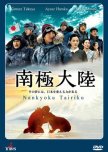
"Making clear judgments is key to surviving in Antarctica"
Antarctica was based on the real adventures of the first Japanese crew to spend the winter on the frozen continent. The story took place during the mid to late 1950s encompassing the struggles to get the expedition off the ground to fighting to return to recover the furry crew left behind. For dog lovers, this will be a painful watch because these were some of the best boys and girls ever.Kuramochi Takeshi is a geology professor determined to help Japan participate in the International Geophysical Year with a trip to Antarctica. His father had once traveled there and Takeshi is eager to follow in his snowshoes. With Japan suffering from not only devastating economic post war issues, it was also grappling with an identity crisis. Takeshi believes that a successful trip to the bottom of the world will revive the people’s spirits and help them to dream big once again. Takeshi desperately wants to give the children something to look forward to and to be proud of. The Japanese government and the international community are not keen on the idea, thinking Japan under prepared and funded for such a venture. Takeshi and friends convince even the most hard-hearted politicians with the help of school children donating their meager savings to the cause. When the men finally set sail, they have no idea of the wonder and hardships that await them.
The first episode was slow with political posturing and the struggles of adapting a ship for the ice filled waters, finding and training sled dogs, and picking a crew. Time was severely limited and those involved were not always experts on what needed to happen. Takeshi and the young Inuzuka were charged with finding sled dogs and training them, something neither had ever done. Takeshi also helped with the ship renovations. Developing a cohesive crew that could depend on each other with their lives proved daunting.
The acting was quite strong overall. With a great deal of melodrama milked for all it was worth the tears flowed freely. Men from different walks of life with different motivations for the trip had to overcome personality conflicts to work together. The drama filmed in Antarctica which showed the beauty and grandeur of the isolated continent. And of course, the stars of the show, the sled dogs were the heart and heartbreak of the story. I was saddened to learn that Sakhalin huskies couldn’t be used as there were only two purebreds left in Japan in 2011. Today there are none according to a recent report.
The drama often stalled due to a great deal of redundancy. Watching them retrofit the Soya once was okay, three times a bit much. And then the crowds gathering to send them off and welcome them home each time became repetitive. Every people wants to feel proud of their country and rousing speeches used judiciously lead to a heartwarming effect. But when patriotic, rousing speeches are overused it begins to wear thin.
This drama, like my review, felt like it should have been significantly shortened, a lengthy list of concerns follows for anyone interested in reading the rest. I enjoyed the redemption stories and the desire to venture forth to new horizons and give the people new dreams to dream. Takeshi’s developing love for his dogs and need to return to them was the crux of the drama buried in a pile of bureaucratic red tape. Dramas and films based on real world events are something I enjoy, but this one strained my attention span on several occasions. Near the end even when I knew a scene was made up for dramatic effect, tears still filled my eyes. The Sakhalin huskies were a lesson in triumph, resiliency, and survival. And ultimately, the bottomless well of forgiveness and love these majestic animals bestow on us, whether we are worthy of their devotion or not.
8 August 2025
Things that perplexed me, spoilery, but not too spoilery comments below:
The Japanese felt looked down upon because they had lost WWII and were constantly declaring that a successful trip would cause the international community to no longer think of them as losers. This felt like projection as much of the world was more concerned with the aggressor actions of the Japanese that contributed to a world war and up to 85 million deaths, not the fact that they were stopped. Germany had fences to mend as well. Acceptance and forgiveness take time.
I hope that many of the hazards the men dealt with were examples of dramatic license, otherwise they nearly proved to the international community that they were in fact not quite ready to take this step. Sometimes it pays to call in experts, I could not understand the decision for men unaccustomed to dogs in general attempting to train sled dogs which is a specialized skill. The decision to over-winter was shown as a last-minute decision onboard the Soya which went against governmental orders. How did they have enough supplies? Especially when they lost months’ worth of food supplies not once, but twice. Sakhalin huskies are voracious eaters and would have needed an enormous amount of food. The humans would also have required twice their normal calorie consumption. They mentioned fishing but catching enough fish in the deep dark of winter would have been a dangerous proposition. They often failed to plan ahead and had nearly deadly consequences more than once. Also, when facing death due to hypothermia, wouldn’t using the dogs for warmth have helped? They also didn’t seem to know that being so close to the magnetic pole would affect their compasses. One man made the team by lying on his resume which was caught early on, but was allowed to stay. His ineptitude all but caused a deadly disaster. Einstein’s quote was used repeatedly, “People are born to gain experience.” True, but in a place as unforgiving as Antarctica’s winter, everyone had to be counted on for survival.
Poor planning may have contributed to the canine tragedy as well. When the ship was in trouble, they delayed asking for help in order for the higher ups to save face putting the men and dogs in danger. The dogs’ lives were only considered by the government when the people turned against them and by then it was too late. The haphazard approach the team often defaulted to could be frustrating to watch.
The men would have stayed in Antarctica during the long dark winter. This total blackness was never shown to great effect, too often all of the action was well lit outdoors. Given they would have filmed in the summer when it was safer, but the rising sun constantly appearing over the horizon was overused. Yes, we wanted to see the actors' faces but that exposed skin would have been a health hazard in the winter. Same for when the sun was out all the time, where were their sunglasses to protect their eyes? Finally, even sled dogs should be given some form of shelter when conditions are extreme. Many of the dogs dying of “natural” causes at the age of 4 or 6 may not have been so natural. Sakhalin lifespans often reached 20 years old.
These are the things that tripped me up as I watched this drama, making me feel far more sympathy for the dogs than the people who couldn’t seem to get out of their own way at times. The expeditions and discovery of Jiro and Taro gave the Japanese a sense of excitement and pride when they dearly needed it so in the end perhaps it was all worth it, though the loss of the dogs that saved their lives on more than one occasion was a heartbreaker. Worth a watch, but would have benefited from condensing the story.
Was this review helpful to you?
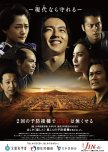
Today's ally may be tomorrow's enemy
Jin Season 2 picked up two years after the good doctor fell into 1862 Edo. The warring factions were turning up the heat which could lead to cities and castles burning. Jin tried to convince his friend Sakamoto Ryoma to find a better way to unite Japan than all-out war. In the meantime, he had Jinyudo to run and penicillin to make. His headaches became worse and Jin feared his time in the past might well be ending one way or another.Jin must deal with wounded soldiers, burned civilians, an injured time traveler, and beriberi sufferers. In his spare time, he travels to medical conferences to tout his penicillin and share the formula. During his journeys he treats patients from both sides of the conflict, yet is always left wondering if he has actually saved anyone. A royal trip lands him in prison with only his friends to rely upon. He and Saki help a pregnant friend and try to save the life of another. An old nemesis causes Jin and his disciples trouble that could cost them their lives and Jinyudo.
This season the oft mentioned Miki was all but forgotten. Despite their repressed---deeply repressed---feelings, Saki and Jin spent awkward time together in those old school hotel tropes, the kind with only one room. Jin slammed into history’s boundaries on a regular basis that were a pain in the old noggin’. He and his friends still ran, but this time steam boating was added as the plucky doctors traveled across the country saving lives.
Jin came across emotionally volatile and twitchy this season, something unexpected after having lived in ye olden times for 6 years and possessing the nerves of a surgeon (regardless of his health issues). Saki retreated behind her Edo smile which caused her to appear distant and enigmatic. I was truly disappointed that this pivotal character was not better written. Wanting to be a doctor and not so secretly being in love with her sensei were not true character traits. Ayase Haruka had an ethereal beauty about her, but I would like to have seen clearer growth and depth for Saki. Ryoma, as in S1, often came across as being slightly unhinged. Cunning and loyal, but unhinged.
Having watched both seasons now, I have a few unresolved issues with the drama. They struggled to answer the question of why Jin was sent back, something he questioned in every episode. Their basic time traveling rules were erratic. Instead of sympathizing with Jin and Saki’s unrequited love, it felt like the drama was baiting me by mentioning it. They were both so good at hiding their feelings that had they not reminded me, I would never have known. Jin and Ryoma had more passionate scenes than any between Jin and Saki. Trying to cover the various political factions along with the medical stories made this season feel less cohesive. Due to many of these problems, the ending didn’t hit for me, the way I’m sure the writers wanted it to.
After the previous paragraph it may sound as if I didn’t like it, but overall, I enjoyed this time traveling medical drama. Most of the characters had good hearts and were eager to help others. People desired for their country to be unified and peaceful. In this drama it wasn’t karma being a bitch, this time it was history. Speaking of history, I enjoyed this angle on the tumultuous end of the Tokugawa Shogunate era. S2 might not have been as strong as S1 but Jin is definitely worth trying if you like any of the genres or actors involved in it.
27 July 2025
7.75 upgraded to an 8.0
Triggers: Ryoma upped his nose picking. Ick. Like season 1, there were graphic surgery scenes. There were also torture scenes if you are sensitive to those.
Was this review helpful to you?
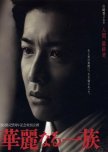
"If we can't dream, we can't change the future!"
Karei naru Ichizoku aka The Family was a 2007 family melodrama set in the late 1960s. Starring Kitaoji Kinya and Kimura Takuya as a father and son in a banking dynasty struggling to keep their financial conglomeration afloat when the government decides that smaller banks need to be merged with larger ones in order to compete with foreign countries. This family is full of dark and twisted secrets that create emotional chasms between most of the characters.Manpyo Teppei is ambitious and fiscally aggressive in his desire to make Hanshin Steel a player in the world market. He also wants his steel company to strengthen Japan's economy and make it more competitive. Despite that ambition, he is a man of great integrity and works alongside his men and is deeply loyal to his wife and child. His father, Daisuke, is the opposite. There is nothing he would not do to maintain his wealth and power, including betraying his son. He marries his children into families that can be of use to him regardless of the harm it causes them. Without a shred of shame, his mistress sits in the wife’s chair at family gatherings. As Daisuke’s schemes and resentments of Teppei grow, only one man can rise to the top when the dirty deeds are done.
This was a good old fashioned family melodrama with sides of banking and steel thrown in. I searched to see if this was an adaption of Shakespeare or Sophocles with its pessimistic and tragic familial relationships. It was hard to not root for Teppei as he fought against other steel corporations, corrupt government officials, and his own father to actualize his dreams. Daisuke claimed to be working for the benefit of his family and employees but his actions brought suffering and pain. I kept hoping someone would shove him into the koi pond and let the giant koi, Shogun, eat him for dinner. Side note---I’m not one to complain about translations, but Netflix’s translation of Shogun was General, enough people in the West are familiar with the original term that they could have just used it. Back to our scheduled program--- Aiko was the devious serpent whispering in Daisuke’s ear. They made a perfect viperous pair.
The Family kept the story moving making use of cliffhangers for each episode. That’s not to say that there weren’t times when the story dragged and became too tangled in the financial weeds. The foreshadowing was heavy-handed, I kept waiting for the two “twists” to finally be revealed. On a better note, unlike many dramas where side characters can be extraneous, the side characters here were put to good use even if it was only to place a check mark next to a melodramatic trope.
The Family had splendid cinematography, eschewing the blown out, retina burning style dramas that came after it tended to favor. The snowy mountain scenes were gorgeous. The sets and cars helped to build a believable 1960s world though the costumes and hairstyles were often more modern, especially Teppei’s BoF hairdo. The music was as overly dramatic as the story, fitting in like a secret love child. Kimura was painfully beautiful and delivered a complex performance as the son who desperately wanted his father’s love. Kitaoji’s performance wasn’t as nuanced but his classic glare was put to good use as the conniving banker and jealous father. I had only one real complaint and will add it further down as a spoiler.
The Family was a compelling family melodrama that managed to make steel production interesting. It also showed how damaging one man’s assumptions and pride could be on his wife, children, and their spouses. The drama sought to answer the question: Are integrity and compassion stronger than vengeance and schemes? Sometimes we don’t always get the answers we want. Shakespeare and Sophocles would be proud.
17 July 2025
Trigger warning: A spider capturing and devouring its prey in at least two episodes.
***SPOILER COMMENTS BELOW***
***SPOILERS***
Usually, I only talk about minor spoilers, but this is a biggie, so final warning:
I was with this drama right up to the last episode and there it lost me. Teppei’s end was used as a “gotcha” moment for Daisuke. His action was out of character for someone who never gave up and loved his family. He abandoned his wife and child. Nitpicky point-the bandage was in the wrong place, that shot should have blown his head off. The officer saying “he died like a man,” was a terrible glorification of suicide which I found repulsive.
The father came away largely unscathed, despite the final scene. His rationale was faulty and like all self-absorbed people he cast blame and aspersions on others instead of taking responsibility and growing as a human being. He wouldn't have turned into a monster if Teppei hadn't been born? Bollocks! I kept thinking of the Princess Bride. “Who kills Humperdinck?” “No one does.” “Geez, Grandpa, why’d you read me this story anyway?”
Last but certainly not least---Where was the justice for Yasuko who was raped by her FIL and humiliated for 30+ years by her husband and then also by his mistress? If anyone deserved her pound of flesh it was Yasuko.
Was this review helpful to you?
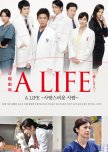
"Patients want to know what's going on in their own bodies"
A Life starred Kimura Takuya and Asano Tadanobu which was more than enough to grab my attention. I don’t particularly care for the medical genre but for these two I was willing to give this drama a whirl. They both gave strong performances but had an uneven and inconsistent script to contend with.Okita Kazuaki has been practicing medicine in Seattle, Washington (USA) for the last ten years, honing his skills to a sharp point. When everyone else has given up on a patient they call Okita. His old mentor, Danjo Toranosuke, has a heart condition only he can fix so he flies to Japan. His friend Masao is now the vice director of the Danjo Hospital and married to Okita’s ex-love Mifuyu, who also happens to be Director Danjo’s daughter. After the director’s surgery, Okita is talked into staying to help with the health of another patient dear to him.
What I liked about this drama:
Kimura and Asano gave strong performances and were compelling to watch, even when their characters behaved inconsistently or reprehensibly. I also like that the surgical nurse, Shibata, was quite competent and observant. They used the tried and true trope of teaching doctors to actually care about their patients instead of their own win-loss record. Okita might have been a renowned surgeon, but only due to Herculean preparation, instead of innate genius which was a refreshing change. Surprisingly, he could also admit when he needed help.
What was okay:
The medical stories were compelling for the most part. If you like surgical scenes with realistic body parts laid open and into the weeds surgical charts and images, you will be rewarded. The drama revealed that the biggest problems the surgeons dealt with were not greedy medical corporations or insurance hassles, but instead a rigid hierarchical system where one could not question the diagnosis of another doctor. And many of the doctors were incredibly thin-skinned and prideful. The medical staff vastly outnumbered the patients. There was a Greek chorus of three doctors who commented on the action around them but never saw patients or set foot in an operating room. DRS Igawa and Hamura were stock medical characters. The older doctor seeking to make his way up the ladder and the young overly emotional, overly confident doctor who needed to be shown how to be a person and competent surgeon. Several characters had daddy issues, they ran that trope into the ground.
What didn’t really work for me:
Mifuyu gave new meaning to the word nepo baby. She left work early every day and spent most of her time playing with her daughter, cooking fabulous meals, sewing, and cleaning. Despite desiring a prestigious promotion, she was never shown studying or even so much as filling out reports. What truly bothered me as the drama continued---Mifuyu smiled and giggled throughout the entire drama no matter what was going on. There were very few times she showed any real emotions. I don’t trust anyone who wears a smile mask even when they are alone. Made me wonder if she was grinning while she planned to murder her husband in his sleep. He could be a jerk, as he was unfaithful to her and the hospital. Which brings me to…
The writing for Masao was all over the place. He loves Mifuyu. He wants her to die. He loves his family. He’s rarely home and banging the hospital lawyer. He built the hospital into something grand. He wants to destroy it. He is friends with Okita. He hates Okita. He’s the best neurosurgeon ever. Until the last couple of episodes, he never picked up a scalpel. Given that Mifuyu slept in the same bed with their daughter, maybe he and his wife had a transactional relationship. There was certainly no chemistry or intimate touches. He whined about no one trying to get to know him, yet when his wife and daughter needed him most, he let them down. Speaking of relationships…
The drama often alluded to Okita and Mifuyu’s grand romantic past yet only showed one scene over and over of them tying surgical knots. While Okita seemed to still be carrying a torch or maybe an unlit match, she always looked romantically disinterested in him. The writers and lighting techs (so much gauzy white light around her) worked very hard to portray Mifuyu as pure and devoted to her family.
**(EPISODE 1 SPOILERS that troubled me)**
What annual exam includes a brain MRI? After the diagnosis of Mifuyu’s brain tumor, why wasn’t she given her test results? Aside from the legal aspect of it, she deserved to know what was going on in her own body and to have the time to process the information and get her house in order. Yet Okita and Masao withheld that critical information from her for too long. Unforgivable. Mifuyu didn’t come away unscathed either, she was having concerning symptoms and didn’t take it upon herself to schedule a check-up. Once her condition was identified, they should never have let her perform surgery.
**END OF SPOILERS from Episode 1ish**
This drama was messy and inconsistent, but also had entertaining moments, largely due to the actors. I think it would have been better without the “romantic” angle or if it had just gone full blown melodramatic. Kimura Takuya’s performance was enough to keep me mostly engaged even when he was doing nothing but tying knots. Not a ringing endorsement to be sure.
10 July 2025
Was this review helpful to you?
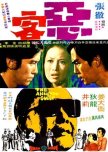
"It's difficult to dodge bullets in the dark" Better to dodge this movie altogether
The Angry Guest was another Iron Triangle production with director Chang Cheh and actors Ti Lung and David Chiang. This film was a sequel to Duel of Fists which means (spoiler alert!) both men survived the previous film. One or both of their characters usually died horrific deaths in Chang Cheh films. Chan Sing returned as the baddie from the last film only to be engulfed by the Yakuza bad guys led by Chang Cheh and Kurata Yasuaki.Chiang Ren escapes from the Thai prison where he was incarcerated for his actions in the previous film. He heads straight to Hong Kong to settle his score with Fan Ke and Wen Lieh. He’s stopped by Akiko who has had Wen’s mother murdered and girlfriend kidnapped. Her boss, Yamaguchi, wants the boys to work for him and is using Yu Lan to lure them to Tokyo.
This film did something a martial arts film should never do. It bored me out of my mind. It was more Tokyo travelogue with endless drives through town than kung fu flick. For a Ni Kuang film it made almost no sense. There were few fights until the very end and all of them were dreadfully choreographed. I’ve never been a big Tang Chia fan, and maybe because the characters were set in their present, the moves looked slower and clumsier. In modern clothing David Chiang appeared even more petite and less threatening than usual. Kurata could always bring the menace but he didn’t have many chances to show off his skills. Ti barely spoke through the movie. Bolo made a guest appearance as part of the yakuza brute squad. Unless you have a big desire to tour 1971 Tokyo or are a completionist of the Triangle, this one is easily skippable.
8 July 2025
Trigger warning: partial nudity and a sex scene. Apparently, Shaw Brothers didn’t pay Chang Cheh enough money to go to the dentist, his black teeth were frightening.
Was this review helpful to you?
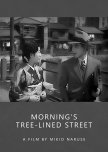
"It's actually good that you can still feel scared."
Morning’s Tree Lined Street has been called a romantic fantasy. This is Naruse Mikio we’re talking about and when it came to how men treated women he rarely wore rose colored glasses.At the age of twenty-two, old maid Chiyo travels from her rural home to Tokyo to find employment. She moves in with her friend, Hisako, who works at a low rent bar as a hostess. Jobs are hard to come by, especially for a woman as old as Chiyo. Eventually, she begins work as a hostess. Salaryman Ogawa takes a liking to her and comes in most nights requesting her company. Chiyo begins to have romantic fantasies about the man who spends his time and disposable income at their club.
I won’t spoil the fantasy element of the film which was foreshadowed in a conversation Chiyo had with Hisako earlier in the story. Chiba Sachiko gave a charming performance as the country girl trying to make it in the big city. Chiyo may have been shocked at some of the things she saw happening in Tokyo, but she was also savvy enough to know who she was and where to draw the line. She dallied for a time with a romantic dream, yet in the end she woke up and made the wisest choice for herself. I was concerned with the direction of the film at one point but Naruse didn’t let me down in the end.
30 June 2025
Trigger warning: Suicide. There was the discussion of double suicides on two separate occasions.
Was this review helpful to you?
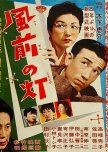
"Looks like a good time" Looks can be deceiving
Danger Stalks Near was a 1957 comedy featuring Takamine Hideko as a beleaguered wife, daughter-in-law, mother, sister, and target of a robbery. The little village where she lived, and her house in particular, was the epicenter of greed and selfishness.Yuriko is taking care of her sick child and a stingy, melodramatic mother-in-law. Her day begins with a renter burning a tatami leading her to evict the self-absorbed young woman. The doorbell continues to ring as relatives, friends, and repairmen insisted upon her attention. Most of the seemingly endless line of people turn out to have ulterior motives. The local newspaper had announced her husband as the winner of a prize in a contest leading everyone to want a cut of the booty. Relatives and other interested parties also greatly desire Grandma’s “secret” stash of wealth. Including the three knife-wielding thieves staked out on a hill not so patiently waiting for their chance to rob the family.
This film had the potential to be really funny and probably has been for other viewers. I just found the non-stop entitled behavior stressful and exhausting. Despite Yuriko seeing through the greedy relatives and sundry court of jesters, I felt sorry for the put upon daughter-in-law and sister. I halfway expected her to snap and burn the house to the ground as the grand finale. Her sister Sakura relentlessly badgered her for money. The MIL continually heaped complaints and demands on Yuriko, threatening to sell the house and move into a nursing home as a bludgeoning weapon whenever Yuriko stood up to her. Even the old woman’s son was ready for her to kick the bucket or fall off her shoes and die. There was a subplot involving a standoff between the evicted renter and the new renter which included their significant others. Then, of course, there were the weapon carrying thieves willing to kill anyone in the house for Grandma’s stash. Yuriko was having a challenging day which with this lot was likely an everyday occurrence.
Danger Stalks Near had entertaining moments, especially as the crooks grew more and more impatient with the revolving door of visitors to the small house. “What is this? A holiday or something?” And Takamine Hideko nailed the part of the woman trying to get through the day and fend off selfish guests. At least the robbers were honest from the start, they intended to steal from the family outright instead of swindling or cajoling it as the other guests not so subtly tried.
29 June 2025
Was this review helpful to you?
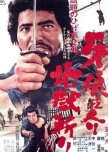
Kiba comes across prisoners being transported likely to their executions. One prisoner reminds Kiba of his father so when the entourage is attacked Kiba makes it his mission to see to it that Magobei arrives safely at his destination. Magobei had been double-crossed by the bandits who hired him to kill a mine guard. He and the prisoner “Oren the Thistle” escape and head to the mountains for vengeance against Higasa and his criminal family. Kiba ends up being taken prisoner, falls in love with Higasa’s daughter, and has to fight an enraged dojo master all before hunting Magobei down.
SW2 focused more on Magobei and Oren’s story than Kiba. Kiba wasn’t as likeable as he was complicit in innocent people being murdered by Magobei and his romance with Oteru was ill defined at best. The acting and writing weren’t nearly as good as the original SW. All in all, I was quite disappointed in this messy film.
20 May 2025
Was this review helpful to you?
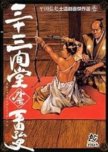
A Tale of Archery at the Sanjusangendo
2 people found this review helpful
"A record is there to be beaten"
A Tale of Archery at the Sanjusangendo was a rare period drama from director Naruse Mikio. Filmed during WWII, Naruse managed to side-step overlaying his film with heavy propaganda. In fact, the lessons involved were of sharing information and being okay with another’s success. “You don’t need to be in a hurry to die.”Seventeen-year-old Daihachiro has been secretly living at an inn under the care of the owner, Okinu. His father had once held the record at the Sanjusangendo Temple archery contest. His record was broken by Hoshino. Pressured to win back the honor, his father tried but failed, committing seppuku afterwards. For the past five years Okinu has been pushing Daihachiro to excel at archery so that he could win back the title. The poor kid is starting to crack under the life-or-death pressure, not helped by ronin attacking him. Out of nowhere, a skilled samurai appears at the inn offering his protection and help with Daihachiro’s archery training. It seems almost too good to be true…
I enjoyed this shorter film by Naruse featuring archers. Daihachiro’s doubts and people calling him a coward could be wearing. His doubts were understandable though. He was a teenager being asked to break a record and failure could tarnish his father’s death which would also lead to his own. Okinu was shown as being overprotective but at the same time her actions could be leading to the teen’s death. Into this pointy deathtrap sauntered in Kanbei who was completely unflappable with a word of wisdom for every crisis. His identity was revealed early on to the viewer. He stood ready to protect Daihachiro even from his own family. Most importantly, he tried to teach the boy what real honor was and that competition wasn’t a death sentence. My biggest complaint would be the awkward dumping of 20 pp of exposition on the viewer during the first six minutes of the film. After that, the pace of the story evened out.
AToAatS was simplistic yet also entertaining, largely due to Hasegawa Kazuo’s smooth samurai that understood honor went far beyond holding records. Tanaka Kinuyo’s role could have been played by a number of actresses, she of course, gave the limited character a modicum of emotional depth. Daihachiro was the last role for Ichikawa Sensho who died at the age of 29. While this was a departure for Naruse, I found it interesting that much like in other films of his, unruly family members were put in their place while the odd person out found their independence and own path. Worth a try if you are a Naruse fan and want to see a different effort from him.
4 June 2025
Was this review helpful to you?
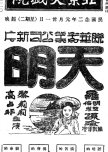
"Why did you have to come to this place?"
The silent film Daybreak aka Tianming was a political melodrama from 1933. Li Lili, one of the brightest stars at the time led the cast as the wholesome heroine done wrong by the big city and warlords. Ling Ling would seek her revenge through the coming revolution.Ling Ling and her beau Zhang leave the countryside for Shanghai hoping to make a better life for themselves. They move into the same building as her cousin and her husband, “Fatty.” At first everything is going their way as they happily work at the factory. When the factory bosses notice Ling Ling’s beauty she is assigned to night duty. Zhang takes exception to their actions and is fired. He ends up working on a ship and later joins the revolution. Ling Ling’s cousin sets her up unknowingly on a “date” with the boss. From there Ling Ling’s fortunes take a downward turn. After a tragedy she learns to use her body and her wits to help the workers and revolution.
The countryside was shown as idyllic and alternately as devastated by taxation and war. The big city and its modern ways was an inherently evil place while the countryside was considered uncontaminated by modern ways. Not for the first time the squeaky-clean country girl was sullied for daring to leave home. Unashamedly a propaganda film, it leaned in hard and used a sledge hammer to drive its points home. Happiness, the individual, and life were meaningless, only the revolution mattered. Only the revolution would bring the solutions for their problems.
Li Lili’s life played out much like one of these films. Her childhood was traumatic. And while she became famous from starring in Sun Yu’s films she drew the ire of Mao’s jealous wife Jiang Qing. Li and her husband Luo Jing Yu were jailed and tortured during the Cultural Revolution. Her husband did not survive the experience.
I’ve watched several of these old silent films. The acting was more overwrought than usual in Daybreak. The makeup might be recognized today as heroin chic or maybe consumption chic. Through no fault of the film makers, the film was off center at times, the frames would freeze and there was significant pocking on various frames.
While I could appreciate the political fervor during a volatile time, the exaggerated acting and martyr complex of the heroine dimmed its impact for me. Despite being historically relevant, the well-worn trope even by this time of the country girl soiled by the big city was less than compelling for me.
2 June 2025
Was this review helpful to you?
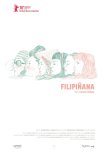
Isabel is a bored “tee girl” at a luxury golf club. She finds ways throughout the day to amuse herself and push the envelope regarding the rigid rules set for employees.
Filipiñana showcased the disparity between the haves and have nots. At the practice range, pretty young women set the balls on tees so that golfers did not have to strain themselves bending over. It looked more than a little dangerous as the tee girls were not far from swinging clubs, especially when a child wildly swung his club near Isabel. Women caddied, searched for balls submerged in the water hazards, massaged clients’ feet, and occasionally helped golfers, uh, find their balls in the bushes. Opulence was ever on display but decidedly out of reach for Isabel and her co-workers. That didn’t stop the lowly tee girl from stealing a taste of the other side when no one was looking though.
Well shot and slightly enigmatic, Filipiñana was an entertaining 24 minute glimpse into the gap between the privileged lives and those who serve them in this sharp take on capitalism.
20 May 2025
Was this review helpful to you?
"If you stop the bleeding, you'll survive"
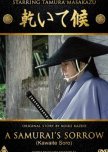
A Samurai’s Sorrow was a made for television movie directed by Inoue Akira. Set during the 8th shogun’s reign of the Tokugawa shogunate the special was embellished with ninjas, poison tongue needles, fratricide and possible matricide.The castle is in an uproar because the shogun’s food has been poisoned. The leader has been subsisting on very little rice for nearly two weeks for fear of being felled by poison. Everyone is hoping Mondo will return and save the day. The poison taster and tester is also masterful with the sword and ladies. Mondo’s mother died when he was young leaving him heart broken. As soon as he returns to town to help the shogun, attempts on his life begin in earnest. Secrets revealed by rivals could unravel Yoshimune’s command and Mondo’s heart even further.
Mondo would have made Rurouni Kenshin proud. For the most part, Mondo didn’t kill those who attacked him, telling them, “If you stop the bleeding, you’ll survive.” Just being in Mondo’s presence could cause a woman to lose her sense of reason. He was said to be so beautiful and well dressed that he could be mistaken for a woman. Satoh Takeru, yes. Fifty-year-old Tamura Masakazu playing a character around thirty years of age, not so much. The actress who played his mother was only twelve years older than he was. All of the actors were subjected to horrendous wigs and exposed wig tape.
The problem I had with A Samurai’s Sorrow was that it lacked spark. With rival clans, concubines, allies, ninjas, and spies around every corner it could be hard to keep up with all of the characters jammed into 90 minutes, much less care about any of them. The basic premise centered around Mondo’s promise to protect the shogun with his life despite the shogun’s betrayal of his mother, rang hollow to me. His mother’s love and hatred for the shogun caused her to kill herself three times for the man. Her son was just as blindly loyal. An emo ronin who constantly mentioned his heart was full of sorrow and might be dead by morning just didn’t resonate with me.
12 May 2025
Trigger warnings:
Three goldfish died trying to save the shogun and this special. RIP little buddies.
Suicides, ritual and otherwise
Was this review helpful to you?
"If you believe it, then it's real"
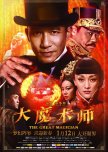
Director Derek Yee’s The Great Magician was set around 1920 China when the warlords were carving out their territory. Japan was angling to get a foothold by supporting various warlords with weapons. In the midst was a buffoonish warlord, his unwilling 7th wife, and a magician with more than cards up his sleeve.Warlord Bully Lei has his hands full. In order to stay in power, he needs soldiers. In order to feed and arm the soldiers, he needs money. And money is in scarce supply. His assistant, Liu Kun Shan, is an illusionist whom he doesn’t trust. On the family front, his 3rd wife is always vying for his attention, but it is his 7th wife who will have nothing to do with him that he adores. Wife Liu Yin is only hanging around until she can find her father. Yin’s ex-lover, Zhang Xian returns to the country from Europe and sets up shop in a local inn. He is a magician and also in league with rebels planning to kidnap Lei in order to have prisoners released. Zhang wants Yin back and is determined to free her father who was his magical mentor. Liu Kun Shan is working with the Japanese and also after the SECRET SCROLL Yin’s father had possessed.
The story was okay and tended to wander around too much and honestly, was too darned long. This film could have easily been 90 minutes and not lost anything. I will admit that my kung fu movie loving heart was thrilled to see the Flying Guillotine have a guest role. And of course, you have to have a secret list or in this case secret scroll, though in this case it was a bit of a bust. The comedy occasionally veered into slapstick but not overly so.
What made this film entertaining to watch was the enemies to lovers, I mean friends, of Bully Lei and Zhang Xian. Lau Ching Wan and Tony Leung Chiu Wai had a delightful chemistry whether they were ribbing each other or conspiring together. Poor Zhou Xun’s Liu Yin was the third wheel. Aside from her amazing kung fu introduction, the rest of the film she had little of interest to do. I was disappointed she was given short shrift in the story department. Wu Gang (Joy of Life!) and Yan Ni played the dangerous but comedic foils to the trio.
The Great Magician had a little magic, a little action, and a little fun. It was lighthearted bordering on times on silly. Zhang and Lei showed that illusion and perception are part of life whether in politics or entertainment. It’s hard to trust your eyes with those skilled at weaving deception. At least 30 minutes too long and too short on significant Zhou Xun time, this film still had enchanting moments to offer.
“The truth depends on your perspective.”
7 May 2025
Was this review helpful to you?


