

 135
135 431
431 16
16 2
2 6
6 3
3 8
8 10
10 3
3 13
13 1
1 1
1 1
1 1
1 2
2 6
6 8
8 5
5 9
9


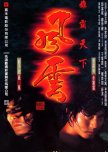
Sonny Chiba plays the perfect Big Bad. He has the evil laugh down to an art form. Ekin Cheng as the kindhearted Wind and Aaron Kwok as the unpredictable Cloud make for an interesting pair of men raised as brothers by the man who killed their fathers. Kristy Yeung and Shu Qi are there more for adornments and a little lusty conflict and humor respectively, but not particularly integral to the story. Of course, the movie hits its stride when Cloud and Wind must combine forces into a storm to try and take down Lord Conqueror and avenge their families while also freeing themselves and the world from his tyranny.
There's a fiery monster, a fighting monk, destiny, magical glowing red fruit and an arm seeking it's master. The movie rarely slows down to let the viewer catch their breath. The special effects were very good, but at times over-powered the fight scenes. I would liked to have seen a few more actual martial arts moves during the fights.
I tend to struggle with movies based on comics as often the movie makers assume the viewer is completely familiar with the story and they tend to skip about or not flesh out the main characters, but this story was told in a comprehensible straight forward manner and granted the main characters enough story development for me to care about them. The Storm Riders was a fun, entertaining movie.
Was this review helpful to you?
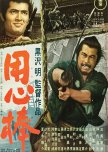
Despite his unkempt appearance, Mifune Toshiro saunters into town with a posture like an old-time gunfighter ready for a fight. In this town gambling, lying, cheating, and murder reign supreme. Prostitutes and townsfolk peer out of windows watching the play unfolding before them. The people are dirty and you can practically smell them in the desolate landscape. Western heroes before this were squeaky clean, but this ronin is roughly dressed and seems to scratch at fleas in his hair. I kept expecting to see a tumbleweed skitter across the dirt road in front of him.
Mifune Toshiro’s subtle and fluid body language and ever-changing facial expressions conveyed more than 10 pages of dialogue could about his character. He is the coolest ronin ever. Masterless, broke, and hungry he strolls into town taking inventory. While he has compassion on the townsfolk oppressed by two vicious rival gangs vying for control, he also needs to make some money. He has no problem doing what needs to be done to turn the gangs against each other and pocketing a few coins. This is not the cowboy with a white hat who adheres to an unbudging ethical code, this ronin toys with his prey before ultimately killing it. Sanjuro (the name the character chooses at random) is a classic anti-hero and fascinating to watch.
There is humor interspersed among the mayhem. One of my favorite scenes is after Sanjuro had stirred up trouble between the gangs, he climbed to a high point to gleefully watch the confrontation.
I’m no film student, but my amateur eye can pick up on the skill that went into the cinematography of this film. Every shot and frame felt filmed with care and an eye toward what was necessary for the story to be told.
The music varied from ominous to playful with some kooky 1960’s horns and cymbals thrown in for good measure.
Yojimbo is not a non-stop action film, though there are a few good action scenes in it. Sanjuro is as deft with his strategy as he is with his sword which is fun to watch as he pits people against each other. Yojimbo is a classic for a reason and well worth trying. I found it highly entertaining.
29 June 2021
Was this review helpful to you?
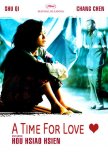
A Time for Love, is set in 1966. Shu Qi plays a young woman who works in a pool/snooker hall where she meets Chang Chen's character who is about to join the military. The Platters' Smoke Gets In Your Eyes plays in the background. The colors are warm and gauzy with a strong use of green. And these two are young, green and tentative as they give each other shy glances across the table. There is very little dialogue in this vignette, the tale told through actions, and body language. They write to each other after he leaves for the military and we see her smile as she reads his letter. Innocent and full of hope, this was easily my favorite story. "They asked me how I knew, My true love was true, I of course replied, Something here inside, cannot be denied." (Smoke Gets in Your Eyes)
A Time for Freedom is set in 1911 during the Japanese occupation of Taiwan. Shu Qi works in an upscale brothel and Chang Chen is her long time customer who comes and lives there when he is in town. Here the lighting is as subdued as the acting. The restraint is only broken when Shu Qi's character sings her sad songs. There are no spoken words in this vignette, though it is obvious much dialogue is being spoken, only a few words are shown on placards for the audience to read like in the old silent movies. I felt for Shu Qi's character, trapped in what amounted to indentured servitude with her only hope of someone making her his concubine. Chang Chen's character didn't approve of taking a concubine, but apparently staying at a brothel with girls as young as ten wasn't a problem with his ethics. Here again, there isn't much spoken conversation with some letters providing the rest. This story was sad and filled with longing as the couple and their world suffered. "Although this place has torn my heart, it is wrenching to leave it." (Liang)
A Time for Youth is set in 2005. The colors are harsh-cold grays and icy blues. Life is chaotic, fast, and real communication even with cell phones, email, and blogs is shown as being more difficult than in the past. Shu Qi plays a woman in a lesbian relationship having an affair with Chang Chen's character. He has a girlfriend who knows something is going on, just as Shu Qi's lover does. The two border on obsession as they meet in secret, creating tumult in their wake. "No past, no future, just a greedy present." (Jing)
The characters are molded by the times they live in, each one feeling authentic. Shu Qi gave brilliant performances. Her characters required a greater emotional breadth than Chang Chen's did and she absolutely nailed them. It's no wonder she won a Golden Horse for Best Actress for her work in this film.
This movie is not for everyone. It is slow and subtle, the endings not clearly written out, the characters not always likeable. If you don't mind the aforementioned you might be in for a quiet, gem of a movie.
Was this review helpful to you?

This review may contain spoilers
This is one of the Millennium films and it's not bad. The film did start off on the wrong foot with me by declaring Mothra a bad guy. If they got on the bad side of Mothra they had to have either been messing with her tiny twin besties or trampling the environment, but I digress.I was impressed with the FL, Yashiro Akane. Women are often prominently featured in Godzilla movies, this time they got it right. Even though the failure of not defeating a new Godzilla with her weapon and being unable to control her vehicle leading to another vehicle getting crushed under Big G's feet were laid squarely at hers she was able to redeem herself. She was strong, smart and no damsel in distress or screamer as is usually required of women in monster movies. A welcome relief. Ultimately, she was put in charge of controlling Mechagodzilla in the fight when Godzilla returned.
Kiryu, the mechanized Godzilla, built on the 1954 Godzilla's skeleton unfortunately had some DNA memory of the destroyer unknowingly coded within it. I wasn't sure or not if this was a deliberate message that building bigger weapons of mass destruction can be as dangerous as the foe before you.
The humans in this movie were the best of any I've watched. However, the training sessions went on too long for me. I watch Godzilla movies for the monsters, not the people. The star of the show was missing for huge chunks of time as if they'd forgotten about him. Long, loving shots of the mechanized Godzilla and the soldiers' training sessions could not replace him. When he finally showed up the fights were good, but lacking in energy and urgency. It's a perfectly fine way to spend 90 minutes on a lazy Saturday afternoon, but it could have been so much better.
Was this review helpful to you?
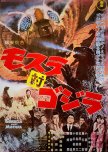
I enjoyed this movie, it's one of the last Mothra movies to be aimed at adults as well as children. Later, the movies became obviously aimed at kids.
The miniatures were good and Godzilla was given a menacing face to make sure you knew he was the bad guy in this tale. I did worry a little for the actor inside when it looked like his costume caught on fire!
Mothra was at the end of her life cycle and her appearance showed it. Though ragged around the edges she was still her graceful, mystical, environmentally conscious self even if she was not at the top of her game.
The twin Shobijin fairies were once again played by the Peanuts, singers from the 1960's. Mothra's besties always know when to call on her for help and when to encourage her.
There was a rather lengthy subplot about greedy investors wanting to use Mothra's egg that washed up during a typhoon as a tourist attraction, but we all know the main attraction was watching the two leads fight! The fights were short but effective and a reminder to never underestimate a Butterfly.
These movies were made before CGI and you have to let your mind travel back into a simpler movie time to enjoy it. But enjoy it I did.
Was this review helpful to you?
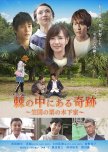
The acting in this film was natural if a bit stiff at times, but the actors were able to convey their characters' discomfort of adjusting to each other, accepting each other, and then revealing their truths. The music fit the emotions, though at times it felt unpolished. The cinematography was appropriate for the small, almost play-like atmosphere, no beautiful grand shots.
The chestnut in it spiny bur becomes a metaphor for the protections we put around the most sensitive parts of ourselves. Each of the three characters work to peel those layers back to confront the precious secret inside of themselves.
A short, spare, film big on heart.
Was this review helpful to you?
This review may contain spoilers
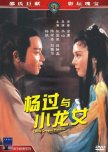
If you are able to embrace the absurdness of a hero who is trained first by a girl and then a pot-bellied condor, you might just enjoy this movie. Leslie Cheung is beautiful and vulnerable in this role of a young man who is the son of a traitor and must overcome trials and tribulations to find his way in the world.I might have enjoyed it more if I was familiar with the source material, Jing Yong's "Return of the Condor Heroes". As it was I could tell that there were characters I should know and story lines left dangling at the end. Even though it seemed there was way too much story to tell in 90 minutes it was an entertaining and intentionally or unintentionally hilarious movie at times. Not to say there wasn't darkness woven through the tale as well. Sexual assault, buckets of blood, people and animals cleaved in half, and someone made a meal out of a family pet.
Cheung as Yang Guo and Yung Jing Jing as the titular Dragon Maiden, had good chemistry together as she taught him to fight and as they fell in love. Lo Lieh shows up briefly as a seemingly crazy kung fu master completely immersed in the Toad style of fighting. Chen Kuan Tai plays the uncle who tries initially to set the young hero on the path of righteousness but ends up unknowingly putting Guo in a sect bent on revenge for the father's actions.
The story rarely slows down with either fighting or training scenes containing lots of wire action and creative weaponry in most scenes. The Big Bad and his minions create havoc as well as other rivals for the Dragon Maiden's affection and Guo gets plenty of practice taking a beating and learning his way through the martial world.
For a 1980's kung fu movie it lived up to expectations and the production values were much higher than most of the 1970's kung fu movies I've seen. Even if the condor looked like a reject from H.R. Pufnstuf.
Was this review helpful to you?
This review may contain spoilers
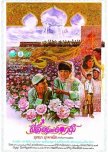
Butterfly and Flowers is a heartwarming coming of age story. Huyan is a young Muslim teen struggling with poverty. His mother died and his father is a laborer. He’s an excellent student and popular with the other students. When his father chooses to pay for a school fee instead of buying rice for the family Huyan decides to drop out of school. Selling popsicles on the street he hopes to earn enough money to send his siblings to school. When an accident pushes the impoverished family closer to the edge he feels he has no other choice than to go to work for the rice smugglers so that they can survive. The question he keeps asking of himself is, “what does it take to be a good person?” The young rice smugglers hide bags of rice on trains and try to avoid the conductor checking for tickets by riding on the top of the trains. The work is dangerous and the risk of getting hurt or arrested looms over the boys every day. Far from being a gloomy story, Huyan makes friends and provides for his family. A sweet romance develops between him and Minpee, a girl he knew from school who loves flowers and butterflies.
Huyan will ultimately have to make decisions for his family’s future and his future with Minpee. Whether those decisions will lead to him being a good person of course is always the question.
The acting in this movie is very natural. I was quickly drawn into Huyan’s life and desire to take care of his family. There are no villains, only people trying to feed themselves and their families. Much of the action and conversations take place on trains. Are they moving toward something better or something worse?
Huyan’s goal for himself is familiar to many people---how to be a good person? “It’s tricky.”
Was this review helpful to you?
"When your dignity is trampled on, being angry is the right response"
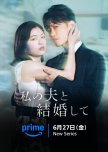
It has been a long, long time since I’ve enjoyed a romance drama like I did Marry My Husband: Japan. I’ve not watched or read any of the other versions, so my review will be solely focused on this one. Koshiba Fuka and Satoh Takeru were delightful in the lead roles. While there was the supernatural element and business side, revenge and a modicum of suspense, the drama excelled in developing friendships and characters which I quite enjoyed.Kanbe Misa is suffering from terminal cancer and to add salt to the wound, her only family in the world turns out to be a traitorous best friend and a murderous husband. She wakes up to find herself 10 years prior, the only one aware of her time jump. In her second life, she keeps bumping into handsome “Noble Son” Suzuki Wataru. Faced with her empty life and disloyal loved ones, she has to scramble to figure out what is going on and even more, can she change her future?
Koshiba gave a wonderful performance as the doormat Misa and also as the woman whose courage and confidence begin to steadily grow. I found myself highly invested in her journey and emotions. At her core she was still the kind Misa, but also learned through Wataru that she’d been a trash magnet. It was okay to have a few thorns to ward off toxic trash. Slowly, she came to realize that there were good people around, people far more worthy of calling friends and that she was worthy of being theirs. Misa could be a dim bulb when it came to putting facts together, bless her heart. In the past her vision had been myopic. She’d not seen the gorgeous student who sat 10 feet from her every day in the park or on the many occasions at work. In the present, hints were dropped with the subtlety of a sledgehammer that she could not add up. While Misa developed a backbone and confronted problems head on, she also failed to use her words on occasion. Someone who had better communication skills…
… was the socially awkward Wataru, whose failure to be brave had led to disastrous consequences. Satoh was lovely as the secret science nerd. At first, I thought he was going to be one of those crass cold male leads, but his acerbic tongue was short-lived...thank goodness. Wataru refused to live with misunderstandings and asked the right questions to get everything out in the open. He was a bright green flag whose loyalty was unwavering. Like Misa, his brain wattage had a tendency to dim at times as well, but like her it made them relatable.
The supporting cast was a good crew. Shiraishi Sei as the sabotaging best friend and Yokoyama Yu as the useless adulterous husband were perfectly vile. Though the script tried to make them a tad sympathetic, the characters were awful in two lives which won them zero sympathy from me. They blamed all their problems on others, the opposite of Misa’s job of assuming the blame. I loved the friendships that developed between Miku, Sumiyoshi, Yotu, and Misa. They looked out for each other, comforted and bolstered each other, and celebrated the small wins in life along with the big ones. The changes in Misa’s life changed theirs for the better, too, showing that confidence and loyalty are contagious. Instead of living in misery many of the characters came to the conclusion that taking chances, even starting over when necessary, had the potential to lead to greater gains and happiness. Life is short, make the most of it!
Misa learned that not only had Reina and Tomoya been lying to her but that the far graver sin was that she had been lying to herself. The truth truly did set her free. And when changing the polarity of her magnet she became a treasure magnet, attracting love and true friendships. Not a bad thing when handsome, kind, Wataru (Satoh!) was around. The two little turtles might have been slow in the romance department but made the journey and scenery worthwhile.
29 July 2025
Was this review helpful to you?
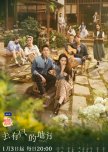
"Persevere through the storm, things will get better"
Meet Yourself was a tranquil 40 episodes of slice of life in a small village where wounded people went to heal. The safest place you could ever travel to or live in, where everyone might not know your name but they were always glad you came.After the loss of her best friend, Xu Hong Dou escapes to a small village to reassess her life. In the place she is renting she is befriended by a writer, a singer, a man who meditates most of the day, a woman who runs the local café, and a man who is working diligently to put the village on the map and attract tourists. Numerous other people come into her life from all ages-from the auntie brigade to the munchkin squad. No one is allowed to hibernate, but all are encouraged to become involved in the village happenings and helping neighbors. Hong Dou is only staying for three months which becomes problematic when she and village problem solver Xie Zhi Yao begin to develop feelings for each other.
I will get what didn’t work for me out of the way. It’s a short list. I could not keep up with all of the characters in this village, especially as it seemed to grow day after day. Business bores me so I tended to check out when there were lengthy and oftentimes redundant trade talk. Singing sessions felt like filler more often than not. As in real life, there were characters I was invested in and those that I was not. That’s about it, which for me is a short list. Lol
I’m a sucker for redemption and personal growth stories and Meet Yourself had plenty of both. Nearly every character experience emotional growth except Yao’s grandmother who was practically perfect in every way. Nature was appreciated even as villagers came to realize that farming was not going to keep the young people from moving away. Traditional crafts and skills were encouraged as Yao continually fought to find markets for the locals’ produce and crafts. Beijing was praised but the drama pushed finding alternate forms of income for the village so that families could stay together and parents didn’t have to leave children behind to work in the larger cities.
No one ever went away hungry. In every episode people were cooking and eating, often in the outdoor kitchen. In this idyllic place, the open kitchen was never plagued by insects, rodents, birds, or any other multi-legged creatures attracted to the smell of food. With the exception of a few animated aunties, everyone spoke in the gentlest of whispers. Problems were solved with a can-do spirit and a little help from their friends.
Friendships old and new had unbreakable bonds of trust, loyalty, and forgiveness. Grief and tears were replaced with happy memories and smiles. There were no surprises and no real conflicts. Meet Yourself was simply 40 episodes of the nice being nice to the nice---the ultimate in soothing slice of life.
“Dark clouds are passing and the wind will always rise.”
12 June 2025
Was this review helpful to you?
This review may contain spoilers
"It's human to lie. Most of the time we can't even be honest with ourselves."
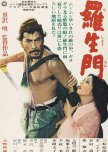
*I have updated this review and my score on a second viewing. My added thoughts follow the original review.*I'm going to post a short, heretical review of this much lauded film. Much as I wanted to love this film, it had a major stumbling block for me in the story.
That the movie is technically well made is not up for debate. It was a well made movie from 1950. I've enjoyed other Kurasawa movies. I love Mifune Toshiro. Rashomon might have been a profound movie experience for me if the story had not been told through such a narrow male lens.
The Rashomon effect is still used to describe eye witnesses giving different testimony to a single event. People do lie to each other, to the court, and to themselves because of their egos, fears, survival instincts, and inability to face the truth. The film showed this human frailty quite poignantly. The cinematography, music, and acting were exceptional for the time. Mifune's performance as the bandit tinged with madness was unexpected but quite well done although at times it did veer into Ernest T. Bass territory.
Where I diverge from the fans of this movie is in one particular aspect of the film. It repeatedly showed and told the viewer that women were not just physically, but morally weaker than men and were not to be trusted. This was even more despicable because the men were shown as being morally corrupt so the raped woman was even lower than they were. Twice we come away with the woman in the story enjoying her rape and trying to use it to her advantage. In different flashbacks she pit the two men against each other or asked the bandit to murder her husband. That she was willing to go with her rapist was beyond comprehension to me, unless she was planning on murdering him in his sleep. I understand that during the period of time the movie was set in, and even in 1950, a raped woman was looked on as damaged goods. (The Comfort Women after WWII were looked down upon and expected to commit suicide and often shunned by their families.) If the director had convinced me that she was doing what she had to do to survive I might have been able to stomach that part of the story better, but as it was shown it built a fire of anger in my chest, not at the woman but the storyteller for perpetuating some of the most dangerous myths about women and rape. Given, it was a common view of the time, but it didn't make it any less reprehensible to me.
Only in the woman's version does she not come across as a conniving "whore", perhaps only a murderous woman to save herself, but we are also told to not believe a woman's story immediately thereafter.
As much as I tried to overlook the misogynistic view of women and rape in this movie to enjoy the rest of the story, I couldn't escape it. Rashomon, despite all the glorious reviews I've read across the internet, failed to live up to them in my experience.
2 September 2021
*Update on my review:*
Having now watched all but one of Kurosawa’s films for which he was the writer/director I decided to revisit this film about the unreliability of eye witness accounts and how truth is often relative, enigmatic, and subjective. I struggled with it mightily the first time because of how women were not only looked down upon but treated with outright hostility. I wanted to see if my opinion would change on a second viewing of this famous and well-loved film.
When asked about Rashomon, Kurosawa had the following comments: “Human beings are unable to be honest with themselves without embellishing…(these characters) are the kind who cannot survive without lies to make them feel they are better people than they really are.” “The human heart is impossible to understand.”
The message that people are weak and even lie to themselves for a variety of reasons still resonates. Also, how perspective and memory are faulty witnesses still holds true. I would have to add that perhaps Kurosawa was blind to the depths of his own gender bias. Other Japanese directors from this time frame and even earlier had made films showing how the patriarchal society caused women to suffer, I guess I was just expecting more from one of my favorite directors. I’ve read interviews with him about this film and he discussed at length how they suffered from leeches while filming in the forest, but not even a brief comment about the trauma or suffering rape causes a woman or how he wanted to show the inequality women suffer from. Instead Tajomaru is romantically described as a womanizer.
Social reform, individual responsibility, and equality were important points in many of Kurosawa’s films. Apparently, just for men. Masago’s rape was only viewed as a crime against her husband, and yes, I know this would be historically accurate. I was just looking for a hint of sympathy for her from any of the male characters since she was the only woman in the film. Her testimony in court was dismissed as irrelevant immediately. When she testified, she didn’t even mention her rape because either she knew no one would care or the writers knew that. The only crime was the samurai's death. The male rape fantasy that women really like it and want to be dominated was still appalling. Just one flicker of disgust from the men telling the story to the peasant, anything to tip the hand that her treatment was inexcusable, but nothing. Because all of the voices except one telling the story or judging it were male—the witnesses, the judge, the writers, the director---Masago’s witness was all but ignored. Masago's only weapon against the dominating men was her sexuality, all she had to try and salvage her situation with and save her life. Perhaps Masago was diabolically cruel and cunning, pitting two men’s penises and swords against each other for her own pleasure, her rapist and heartless, cowardly husband, but as was pointed out, “It’s human to lie. Most of the time we can’t even be honest with ourselves,” so I’m afraid I can’t even believe the actor (character) who usually played the moral compass in Kurosawa’s films.
I did bump my score up from a 6.5 to a 7.5 because this is a culturally important film and it was well made, but honestly, and still unpopularly, I didn’t like it any better the second time around. From my own biased witness on this film, if Kurosawa had been making a culturally relevant film that also purposefully highlighted the ruthless way rape victims were treated and the stunning disregard for women instead of reinforcing dangerous beliefs, I’d have rated this much, much higher.
11 June 2024
Was this review helpful to you?
This review may contain spoilers
"Even though I'm no better than a beast, don't I deserve the right to live?"
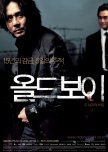
Oldboy was an unflinching violent revenge film that would have made a Greek tragedy blush. I watched this film during its 20th anniversary year and the production values held up. The storytelling's misogynistic overtones dated it and didn't hold up as well. I've not mentioned any of the major plot twists in this review.Choi Min Shik as the deeply flawed Oh Dae Soo did a marvelous job transitioning from drunk, philandering husband to confused, bitter prisoner to vengeful vigilante searching for answers. Yoo Ji Tae made a decidedly creepy and vengeful Lee Woo Jin. The two men whose lives were intertwined by a careless comment were at their best when playing cat and mouse.
The action scenes showed that nearly anything can be transformed into a weapon. You may never see toothbrushes the same. A hallway fight leading to an elevator fight were truly iconic and I can see where they influenced many other fight scenes in television and film. Dae Soo's commitment verging on insanity was frighteningly powerful.
Where the film failed me were the women's roles. Their very existence seemed to be as vessels of the men's lust and "love". They played into the men's circle of vengeance with no real identities. Of course, they were necessary to have several gratuitous bare breast shots and being threatened with sexual violence. Mi Do accepted it as perfectly normal when Dae Soo attempted to rape her. And the final plot twist, sick as it was, once again left her without any choice or agency of her own.
While Woo Jin's revenge long game was vile, the film seemed determined to make Dae Soo as unsympathetic as possible from beginning to end. His one moment of empathy was cut short by self-gratification. In the end the film doubled-down on his troubling personality. There was no redemption arc, no moment of healing, no positive character growth, only primal animal instincts. As a thought exercise in tearing away the veneer of civilization, the film succeeded in a disturbing manner.
9/2/23
Was this review helpful to you?
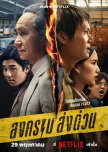
"Running into a storm is actually better because no one dares follow you there"
Mad Unicorn was inspired by Thailand’s first unicorn-Flash Express in 2021. A unicorn is a startup business that achieves a valuation of at least $1 billion. The names of characters were changed as well as the business name and other conflicts were added, but the drama is said to have hit many of the main challenges Komsan Saelee faced in his rise to fame and fortune.Santi Saelee is working in a sand mine and too poor to mail his mother a tin of cookies. After being rewarded for helping his boss keep the mine afloat, Santi takes his earnings to Bangkok to make it rich. He tries different ventures and is completely undeterred from asking people for money to invest. After being taken advantage of numerous times, he finally finds the right group to work with and begins a delivery service, hoping to not only become wealthy but also to take revenge against one of the people who swindled him.
Mad Unicorn kept a frenetic pace from beginning to end, scarcely letting the viewer catch their breath. Santi had to deal with sabotage and betrayal. He was also confronted by numerous economic hardships and challenges as he tried to secure funding and not lose the majority stake in his own company. Santi not only thought outside the box, sometimes he folded the box into an origami chicken in order to push his business ideas through. Quitting was never an option for him. The wildly creative and wild CTO Rui Jie, often ran afoul of his tech crew as he worked them relentlessly. CFO Xiao Yu was usually the voice of reason and the right person to hold the purse strings. The team’s nemesis was Kanin with his deep pockets and political influence. Kanin and his son Ken were willing to play dirty in order to drive the rival delivery service out of business.
This drama was raw with even rawer emotions as Santi fought hand, tooth, and nail, willing to risk everything to succeed. Having lived on rats and whatever birds he could kill as a child, Santi refused to go back, and obsessively pushed forward even when success seemed far out of reach. Mad Unicorn was a dream fueled by desperation and desire. I’m not a big fan of business dramas, and this one could be uneven, however, it was compelling from beginning to end.
“I have a big appetite because I am poor.”
8 July 2025
Side note: Ek Thaneth Warakulnukroh was stuck in either a hideous wig or terrible hair and eyebrow powdering.
Was this review helpful to you?
"Gaja! Gaja!"
Aimless Bullet aka Obaltan was a relentlessly bleak look at an impoverished family in post-war Korea. While the film didn’t touch on politics, showing the hopelessness of the characters and the devastated economy got the film banned for a bit, before the censors relented and let it be released in South Korea.Song Cheol Ho leads a family that includes his pregnant wife and young daughter, his traumatized and bedridden mother who cries out, “Let’s go! Let’s go!” repeatedly, Yeong Ho-his handsome brother who cannot find a job and spends his days drinking, a younger brother who dropped out of school to sell newspapers, and a sister who has been shunned by her fiancé. Yeong can usually be found with his buddies from the military. Most of them were wounded during the war and have had no luck finding jobs two years after the war. Cheol works a dead-end job as an accountant. He barely makes enough money to feed and shelter his family. His wisdom teeth cause him constant agonizing pain but he refuses to spend money at the dentist’s when he can’t even afford shoes for his daughter. As tragedy after tragedy hits, family members begin to seek alternate forms of income that have serious consequences.
The film utilizes broken glass throughout. With the exception of the daughter, most of the characters were like broken glass with little hope of putting them back together. Cheol took a deep breath every day as he shuffled into his hovel in worn out shoes, believing he was failing his family. Yeong received opportunities and blew them, found and lost love, and eventually used up all his chances. Tragedy after tragedy struck Cheol until he was like an aimless bullet, disoriented and not knowing where to go.
Just about every problem associated with the economy was shown, even in blink and you’ll miss them moments. The sheer financial hopelessness weighed on the characters like ominous millstones around their necks. After WWII most countries were able to begin rebuilding, Korea ended up torn in two by a calamitous war further devastating their country and economy. Men who had sacrificed so much for their country came home without job possibilities. Gut wrenching loneliness compounded by PTSD and infirmities only led to further isolation and emotional desolation.
Aimless Bullet occasionally gave the characters a brief glimpse of a better future only to burn it to the ground. This film was an aggrieved cry, “Gaja! Gaja!”, “Let’s go! Let’s go!” But go where? For some characters there was only one path that led to release from their suffering, others wandered in circles, aimless bullets searching for a direction that led to sunrise instead of the eternal night.
17 June 2025
Trigger warning: suicides both alluded to and shown
Was this review helpful to you?

"We like to do our own thing"
I Love Filipino was a charming and informative show covering Filipino food, art, music, and architecture. The production values were not slick but that just added to the homey feel of Filipinos sharing their love for their culture, country, and people.
One-Pinoy Altanghap
Different dishes are explained and their origins. Also, how geography and history have transformed indigenous ingredients along with imports into tasty food that pleases the Filipino palate. Filipinos who left for work outside the country have also become more interested in learning traditional cooking and have brought back new takes on old recipes. As much as anything food nourishes not only the body but relationships and is a form of affection for guests and family.
Two-Himig
This episode focused on music. Foreign occupations in the past by Spain, Japan, and the United States caused musicians to express their feelings and love of country subversively. Foreigners and the diaspora still influence Filipino music but the country’s artists make everything their own. Whether its songs about love, gratefulness, or the coconut, composers stay true to their roots as they sing from their hearts and life experiences in versatile and creative ways.
Three-Juan with Art
Painting, sculpting, comic books, and making toys out of trash were highlighted. Many of the artists wish to express creatively the Filipino way of life including religion and family. Others stress sustainability with their artistic expressions. While one artist has made a name for himself with Marvel comic books, he and others in the field are working to revive and expand Filipino comic books.
Four-Sawsaw Juan
Filipinos love affair with sauces and dips was explored in this episode. Many of the sauces originated from resourceful mothers and grandmothers. In order to customize each bite and enjoy a diversity of flavors different sauces are available and the flavor combinations are constantly expanding.
Five-Bahay Kubo
The ancient and also imminently practical Bahay Kubo architecture was discussed. The basic style connects people to other people and nature. The style was described as resilient and spiritual. As one person said about sustainability in buildings and furniture, Filipinos didn’t have to relearn how to as they’ve nearly always used bamboo and local materials that are recyclable and biodegradable.
As I mentioned, the production values weren’t extremely high, but the love of the people for their country and skills shown through brightly. I enjoyed learning more about Filipino food, history, music, art, and architecture. Their devotion to preserving traditions and building on them all while trying to protect the environment was inspiring. Whether making delectable food, or creating toys from used flip-flops, or singing heartfelt music, creative artists shared their talent and affection for the place they call home. I for one, am happy I was able to briefly visit through I Love Filipino.
16 June 2025
Was this review helpful to you?


