

 135
135 431
431 16
16 2
2 6
6 3
3 8
8 10
10 3
3 13
13 1
1 1
1 1
1 1
1 2
2 6
6 8
8 5
5 9
9


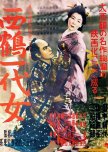
"What's immoral about a man and woman falling in love?"
Director Mizoguchi Kenji precariously balanced The Life of Oharu on the edge of a knife, while touching on melodrama, never slipped off into base sentimentality. His heroine, Oharu, faced degradation after degradation as a woman during the Edo period of Japan. Bound by tradition and gender, with little autonomy, her life was one of hardship created by roles she could not break out of.Teenage Oharu was in love with a young retainer played by Mifune Toshiro. Katsunosuke refuses to give up on her because of his lower class, believing rank and money don't mean happiness, one has to marry for love. When they are caught in flagrante delicto, she and her parents are banished from Kyoto and the court, a far easier punishment than the lowly man who loved her. As fate would have it in Edo, Lord Matsudaira needs a concubine because his wife is barren. Without a second thought for Oharu, her father sells her to the lord. She blesses the lord with a son, but when the ruler is deemed as becoming weaker for spending too much time in bed with her, she is shown the door with basically the clothes on her back.
Her father sells her to a courtesan house where her attitude gets her thrown out. He then sells her as a maid to a couple, but when they discover her background, the wife becomes jealous and the husband wants "favors." After leaving that household, her parents find her a husband who doesn't care about her background and for a brief time she is happy. But that happiness turns to tragedy and once again she is on the street even lower than before. A group of old prostitutes take her in and set her up as a common prostitute, not an easy or profitable proposition at her age. When fate seems to smile on her it is only to turn the knife. But this cruel last twist strangely leads to a path that brings her peace.
Tanaka Kinuyo at the age of 43 took part in the grand tradition of actresses too old for their role playing a teenager. Her father was played by Sugai Ichiro and her mother who was played by Matsuura Tsukie were both only two years older than she was in real life! The role took her well into middle age, with the prostitutes complaining that you can't make a fifty-year-old woman look twenty. Tanaka may not have had a teenager's youth but she still brought a resiliency and grace to the role even as Oharu's life deteriorated. Mifune Toshiro's role as the retainer in love with her was brief and filled with criticism of classism and advocation for personal choice in something as important as marriage.
Mizoguchi often focused on the plight of women in his pictures. When he was young, his sister was sold to a geisha house because his father had gone into debt. That same sister would later take he and his brother in and pay for their schooling and help him find jobs. His criticism of women being sold and the damage it did to their lives was stinging.
Oharu made one choice for herself, the love for the young retainer and that ended in utter disaster because such a union was unacceptable to society. After that, her life choices were determined by others, for their desires and benefits. When it was found out she had been a courtesan, it meant she was fair game and men took advantage of that. When she was dismissed by the daimyo, there was no compensation for her loss of status, nor when her husband died did she receive anything, it went to his family. She was a woman without power, without status, and without her own agency. Her father sold her three times, as a concubine, a courtesan, and then as a maid. With the brief exceptions of Katsunosuke and her husband, Oharu's dignity and happiness held little to no value to the men who came into her life. There was no guilt in selling her or casting her callously aside. Mizoguchi didn't dwell on the vile acts, he simply pointed them out---repeatedly. Men were the only ones who truly mattered, especially men of power, and they were myopically and self-centeredly exercising their rights. Oharu never wailed at her fate, she simply kept as much dignity as she could as she faced torment after torment. Only at the end, when she made a choice that kept her in control of her own body did she came into her own. What might have been seen as a loss by others, actually freed her for the first time and let her spirit sore.
Mizoguchi resisted an emotionally manipulative, overwrought soundtrack for this sorrowful story. Instead of a swelling impassioned score to highlight the current emotional crisis at hand, stark, traditional Japanese tunes were used, whether it was background music, Buddhist chants, or a beggar on the street playing. He often distanced the audience from Oharu's pain by having her partially cover her face. The beleaguered woman was also recurrently shown from the back so that we didn't see the wounded emotions on her face. The story enacted around her told us of her shame, grief, and anger. Oharu's circumstances were also hidden from other characters in the film. The people who derided her were blind to the depth of her pain and her despair at being powerless to fight the system that held no compassion for her.
The Life of Oharu could be repetitive but also contained an element of truth. In the 17th century, a woman once "ruined", lost her status and value making her vulnerable and leaving her with few alternatives. Oharu's real courage was in surviving and ultimately finding an escape route that freed her from the cruel cage society and family had trapped her in.
7/26/23
Was this review helpful to you?
This review may contain spoilers
The window of opportunity has opened
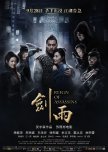
Reign of Assassins is a good old-fashioned wuxia. Though lacking the artistic flair of Ang Lee and Zhang Yi Mou, it had more than enough exciting sword action and compelling acting to set it well above average. With assassins around every corner, hidden identities, and a little romance thrown in, ROA delivered.Very minor spoilers:
The Dark Stone gang murders an official and his son in order to possess the remains of legendary monk Bodhi which are rumored to make the one in possession of them the ruler of the martial world as well as the source to miraculous healing. One of the assassins, Shi Yu, escapes with the remains and goes on the run with most of the assassin world searching for her. A soon to be monk named Wisdom helps her hide and they fall in love. He also gives her valuable information about the weaknesses of her Water Shedding sword technique. From her experience with him, she determines to turn over a new leaf. She visits Dr. Li who gives her a new face and identity. The freshly named Zeng Jing sets up a shop in town and soon falls in love with the local courier, Jiang Ah Sheng. He's a kind-hearted, clumsy, gentle man who seemingly couldn't hurt a fly. But the course of true love never runs smoothly and soon The Dark Stone gang and other contenders for the remains arrive in town when her secret identity is revealed.
This film might not have worked as well if Michelle Yeoh had not played Zeng Jing. She gave a complexity to the role that made her magnetic to watch. She and Jung Woo Sung had nice chemistry together and made for a believable couple. The Dark Stone gang was comprised of an eclectic group of killers. The Wheel King wore an obvious fake moustache and had personal reasons for wanting the remains. There was also an older assassin who was a magician, an assassin who used darts and had a loving wife at home, and a promiscuous and blood lusting new recruit who had murdered her fiancé and his family. Director Su Chao Pin took his time developing the characters and their complicated relationships which gave greater stakes to the fights and more fire to the vengeful surprises as they unfolded.
The fight choreography was creative and highly entertaining. Swords tore through the air so quickly, the action could be hard to follow. Wire-fu was used without making it the focal point and there were no Matrix slow-motion moves too often overused in films. Michelle Yeoh as always convincingly displayed a graceful dexterity with weapons and a dancer's flexibility with her kung fu moves. Korean actor, Jung Woo Sung acquitted himself well when it came his time to participate in the action.
This film embodied the important aspects of a good wuxia-revenge, quality fights, a little romance, and a satisfying redemption arch. Most of all, Reign of Assassins featured a captivating female swordswoman who evolved as a character and was allowed to fight her own battles. Michelle Yeoh once again demonstrated why she is the queen of martial arts movies.
7/19/23
Was this review helpful to you?
This review may contain spoilers
What's love got to do with it?
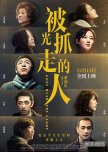
Gone with the Light was a thoughtful meditation on what romantic love is and the extent to which we need it in our lives. What happens when an inexplicable beam of light judges your relationship and love as inadequate? Do you examine yourself and your life? Or do you make excuses and justifications? Do you accept that you must live without love?One spring morning a beam of light causes a fraction of the people from the planet to disappear. The story focuses on three people left behind, Wu Wen Xue, a teacher who has been married for nearly 20 years; Lin Nan, an officer worker in the process of divorcing her philandering husband; and Kuai Zi, a small-time hoodlum who says he doesn't believe in love but is desperately searching for his partner in crime. Though not connected their paths do inadvertently cross at times.
"It's only us who can define our love." Wu is the emotional heart of the film as he wrestles with his stale marriage and the discrimination he faces at work for being morally suspicious as one left behind. Wu becomes desperate to prove he and his wife love each other even sinking to buying photoshopped pictures and a fake train ticket showing she was out of town during the beam which explains why they weren't taken together. Initially, he tries to save face during an increasingly unstable social order but soon he is forced to confront the reality that his marriage wasn't working and was built on convenient lies, both his and hers. Huang Bo gave a lovely nuanced performance that strengthened the emotional depth of the film.
"You take in my trash and treat it as treasure." Li Nan is confronted by her husband's mistress when he disappears. The two women begin their odyssey of discovering who he truly loved and disappeared with. Along the way they discover more about themselves and their feelings for the man they shared. They also uncovered parts of his life hitherto unknown, finding neither had truly understood him.
"We're all the same. We don't have love." Kaui Zi was the least developed character, someone who eschewed loved but whose desperation in finding his partner hinted more than a little at a same sex love, at least on his part. Through him we see another man who killed his wife for putting green onions in his stir-fry, an obvious demonstration that she hadn't loved him which is why they didn't disappear.
"It's already proved there's no love." A young woman whose parents refused to let her marry the guy she was in love with watched them disappear during a heated argument. The father had numerous mistresses and the mother was an inveterate gambler and neither ever showed any love toward the other. What is true love?
The light beam was never explained, which is okay, because the story was about the human response not the initial supernatural action. As one character stated, "Love is sci-fi enough." No one truly knew why the people disappeared or if it was even a good thing, but the ones left behind felt envious and ashamed, often sinking into despair. Even when the government eventually refuted the true love entanglement cause, people still felt as if their relationships and their lives had been judged as loveless. Many of the people taken were in affairs or unhealthy relationships, yet people always want what they don't have. For the people who took advantage of the gift of being rejected it gave them the chance to evaluate themselves and their relationships.
Love can be exciting, messy, complicated, pedestrian, and gently satisfying. Other times it is elusive as smoke. People find and cultivate what gives them meaning. The light beam caused those who were left behind to examine what it is they wanted, what might be missing from their relationships, and what responsibility they owned in that. Gone With the Light was a quiet reflection on love and relationships anchored by strong performances. My favorite scene was the last one. It is often during the routine and mundane where we find love, comfort, and even forgiveness. What is true love? Something you have to define for yourself. This film will not be for everyone, but if this is your type of film, you might find a hidden gem.
"The light won't give us an answer. It's a test, a projection of oneself to let us truly face ourselves and then move on in our lives."
7/14/23
Was this review helpful to you?
This review may contain spoilers
"I don't understand"
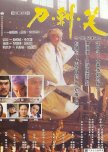
The Three Swordsmen had an excellent cast-Andy Lau, Brigitte Lin, and Elvis Tsui as the titular swordsmen. And that's pretty much it. I have watched a number of old kung fu movies with convoluted plots, but this one took the cake. When a character made the comment, "I don't understand," I wanted to say, you and me both dude.Andy Lau played "Smiling Sam"/Siu Sam Siu one of the three best swordsmen in the country. He was tied with "Blade" Wham Dao (Elvis Tsui) whose skills had earned him a place commanding the military. Most perplexing was Brigitte Lin as Ming Kim/Ming Jian who was not cross-dressing but actually playing a married man with a child and dubbed with a man's voice. Siu was framed for theft, rape, and murder. And that's about as much as I can tell you. He steals a man's wife. Falls in love with someone else. Ming helps him out or so he says. Wham discerns that something else is afoot, but palace and other politics preclude him from investigating the case as he would wish.
The fights were ridiculously dreadful. The director enjoyed filming too close or at odd angles obscuring much of the action. Yuen Bun and Tony Leung Siu Hung could usually be counted on for entertaining fight choreography, not in this film. The wire work and light body super leaping were comically bad. There was an awkward duel in the trees and over water predating CTHD and Hero, but were a prime example of how valuable good direction and cinematography are. Siu had his Invisible Whirlwind technique which belonged on a Saturday morning kids' show. He could also decapitate and disarm opponents with his clothes. One woman like a white-haired witch could defeat opponents with her hair. She even paused during a fight to breast feed her child.
The film was not pleasing to look at, the framing and cinematography were subpar. The pacing was erratic. And seriously, why would they dub Brigitte Lin of all people with a man's voice? It didn't appear to be done satirically. You know a story is confusing when characters have to stop and repeatedly dump pages of complicated and baffling exposition on the audience. It also felt like half the cast was playing the movie for laughs, especially Lau. Lin and Tsui were deadly serious along with a few other characters. I wondered if two writers wrote different parts of the story separately and then tried to do a mash-up of them.
The Three Swordsmen could have been so bad it was good. I found it so bad as to be annoying. The only good thing about the movie is that it was only 86 minutes long.
6/26/23
Was this review helpful to you?
This review may contain spoilers
"Everyday is Sunday for me"
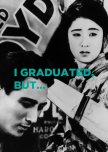
I Graduated But... is a film fragment and all that is left of Ozu's 100-minute original film. Sadly, the majority of Japanese films from this era were lost or destroyed. Interestingly enough the basic framework of the story survived and was shown here in just eleven minutes.Noboko has graduated and the only job he is offered is as a receptionist. Feeling the job is beneath him he turns it down but lies to his mother and fiancée saying that he is now employed. His mother visits with his fiancée in tow and evidently he and Machiko married soon thereafter. He finally has to admit to his wife that he is unemployed and spends his time playing with kids in an empty lot. Not long after he asks his wife where she has been all day and she admits she took a job at a bar so that they could make ends meet. Seeing her work and how men react to her, he strikes out again to find employment. He returns to accept the job as receptionist, willing to take any job offered. "Evidently, you have discovered the realities of life."
This film showed the nascent style Ozu would become famous for including shooting from the mat. Despite its short length the story encapsulated a complete tale. Whether the theme was difficulty finding a job as in other Ozu films from this time or difficulties between a mother and son or the lies about employment the spouses told each other, the film promised an engaging peek into one couple's marriage. The story had a nice symmetry to it with the beginning and the ending occurring at a job interview for the same company. The film tantalized me and also saddened me because the other 89 minutes are lost. I quite enjoyed the positive vibe to the film and would have liked to have seen the story fleshed out. I Graduated But... might whet your appetite for a full meal leaving you frustrated, but I'm grateful we had this delicious amuse bouche to savor.
6/19/23
Was this review helpful to you?
This review may contain spoilers
You killed my father, prepare to die!
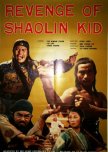
Revenge of the Shaolin Kid aka Master of Death was your standard kung fu revenge film except that the hero completed his training before the movie started so that we missed out on the Shaolin training montages. The story didn't try to throw in any curveballs for the viewer, but kept to the straight and simple revenge path. No secret books, no secret lists, just "My name is Li Tian Zhou. You killed my parents. Prepare to die."Chi Kuan Chun's Li spent eighteen years training at a Shaolin temple until he was ready to avenge his parents' murders. He had to fight his way through numerous baddies before ultimately taking on Lo Lieh's Big Bad Kim. Near the end of the movie he stupidly believed Chiang Tao when he told him that Lo was not the bad guy, that Chen Sing was. Dude, you never believe Chiang Tao, he's always a henchman for the Big Bad. Chen Sing playing against type was the good-hearted doctor who laid his sword down years ago. Somehow Chen ended up fighting and kept his shirt on.
The fights were slightly above average for Taiwanese kung fu films from the time, not super-fast, but not kung fu posing either. Lo Lieh had a spinning dagger which didn't do much although it made a funny noise and was distracting. Chi Kuan Chun had one facial expression but he was easy on the eyes and moved fluidly. Chia Ling and Wu Ma livened up the movie during their cameos in a casino brawl scene. Lo and Chen were always fun to watch regardless of what else was going on in the movie. Chi's cocky stoicism began to wear thin by the end especially due to an idiotic decision his character Li made regarding Chen's character. I almost started rooting for Lo's despicable character or at least a deadly draw in the final fight.
Due to its linear nature, Revenge of the Shaolin Kid avoided the convoluted storyline holes so many kung fu films fell into which worked to its favor. The need for revenge against several people provided ample opportunities for fights, the sole purpose of old kung fu flicks. There were enough charismatic cameos to help gloss over Chi's one note performance. Not a great film, but not a bad one either, just slightly below average for the genre. As always, I rate these old niche movies on a curve.
6/19/23
Was this review helpful to you?
This review may contain spoilers
"It's a trap!"
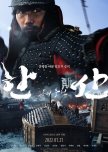
Hansan: Rising Dragon is a prequel of sorts to Admiral: Roaring Currents, with the events taking place five years earlier. The battle we are told was a war of the righteous against the unrighteous as Hideyoshi of Japan sought to put both Joseon and China under his heel. To protect his country, the shrewd and stoic Admiral Yi Sun Sin took on the ambitious and cocky General Wakisaka in a deadly game of oceanic chicken.The film begins with Joseon having suffered several humiliating defeats. In a battle of spying and strategizing, both sides seek to gain the upper hand for the inevitable sea battle. Yi's ship designer has developed plans for a new and improved turtle ship which the Japanese promptly steal. The first three quarters of the film deal with spying, coordinating or killing allies, and preparing for the fights for survival on land and sea.
Having watched Admiral: Roaring Currents I was underwhelmed with this film. It was lacking in the same tension and energy. Much of the first half of the film bounced around so much that it was hard to keep up, much less emotionally connect with any of the characters. I was surprised to discover the same man directed both. I suppose the difference was that The Admiral had a different screenwriter. The pacing and character development were noticeably lacking in comparison to the previous film.
Overall, the acting was serviceable. Park Hae Il played Yi so stoically that the famous admiral seemed devoid of any personality. He held the same expression throughout the film regardless of what was going on around him. The only character who drew me in was a samurai who pledged his allegiance to the great Joseon admiral. Kim Sung Gyu gave a compelling performance as the double agent who chose to fight on the side of righteousness. The bloated cast had many a familiar face if you could make them out behind the beards.
The water battles and CGI were spectacular giving you the claustrophobic experience inside a ship all while showing the full scope of battleships with their canons firing and splintering the opposing ships. The water sequences worked well with the varying currents as did the fog and wind elements. The land skirmishes lacked any weight to them and seemed very small scale in comparison to the sea battles.
The final fourth of the film was engaging as Admiral Yi showed why navies around the world have studied him even centuries later. Outnumbered and outgunned he outfoxed Wakisaka in a game of Crane Wing vs Fish Scale. This was a man you did not want to play chicken with, especially when death was on the line. I only wish the first three-fourths of the film had been remotely as captivating as the final showdown.
6/10/23
Was this review helpful to you?
This review may contain spoilers
"Man is too small when faced with the vastness of nature"
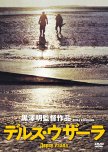
Dersu Uzala was based on the real lives and friendship of Dersu Uzala and Vladimir Arsenyev in the Siberian wilderness during the early 1900's. The impressive film about friendship won an Academy Award for Best Foreign Language Film in 1976. Aside from its famous director, Kurosawa Akira, you aren't likely to recognize any of the names in this Soviet-Japanese film, but don't let that deter you as the performances were all first rate.The film begins with Capt. Arsenyev and his men doing a topographical study of the Ussuri Region. Local hunter, Dersu, enters their camp having followed them for much of the day. The next thing he knows he has become their guide. Dersu is wise, kind, and generous as well as being a skilled hunter. The soldiers are largely unaware of the world he sees and hears around them. "Got eyes but don't see." At first the men are amused at his views, such as fire, wind, and water being alive and "strong men" to be wary of. It doesn't take long for them to come to respect him and trust his guidance. He also teaches them compassion for people and animals in ways they had not thought of in his special lessons on wilderness etiquette.
Arsenyev learns the hard way what disregarding Dersu's advice means in the life and death world of winter in the dangerous world. The two men slowly build on their trust and respect to develop a deep and abiding friendship. The movie could have comfortably ended at the 70-minute mark, and I did find the first half more compelling. When Arsenyev returns to the wilderness he finds his friend older, but largely unchanged. They race to each other and embrace as if soul mates and maybe in some ways they were. Only after an incident with a tiger, do Dersu's facilities begin to decline. The aged tracker and hunter finally relents, acquiescing to his friend's invitation to come live with him in town. Dersu understandably struggles to adapt to the confinement of city living. The film hauntingly ends much as Arsenyev's 1923 memoir.
This film is one that will find itself with a divided audience. There was almost no conflict which could be a deterrent for many, especially with a 140-minute running time. The characters found themselves in few perilous moments or facing life altering events. At the same time, it was an expedition into the beautiful world of the Siberian taiga and the development of a devoted friendship. People from disparate places came to understand each other. The film could almost fall into a slice of life travel drama with its languid, graceful pace.
Kurosawa's signature style appeared throughout the film. An encounter with a tiger leads to a mystical moment for the tracker, a seemingly innocent encounter that had profound effects on his psyche which reminded me of other Kurosawa characters affected by surreal events. Kurosawa's own particular blood red sky and sun also reflected in the ice was used in several scenes, reminiscent of Dodesukaden's sky. A faint rainbow appeared at a hut in the misty woods as happened in several of his films. At times, Kurosawa's signature winds and fog obscured the scenery, heralding in moments of significant changes. The film was beautifully shot in the Russian wilderness and accompanied by an elegant musical score. Rivers, forests, snowy marshes, and a frozen lake shared the screen with actors trudging through and over them. Despite the exquisite landscapes and evolving seasons, Kurosawa kept the story focused on the two men. In one particular segment Dersu and Arsenyev become lost when returning from a frozen lake. At Dersu's bequest they desperately cut the tall marsh grasses in a blinding wind storm for a makeshift shelter in order to survive the bitterly cold night. This scene with few words was stunning and emotionally gripping.
George Lucas has eluded that Yoda may have been loosely based on Dersu. With Dersu's broken Russian and oneness with nature it would be an easy leap in logic. At one point when Dersu was in danger after saving the rest of the men, he had to orchestrate his own rescue advising the men how to accomplish it. While his abilities seemed almost magical to the city folk, his skills were honed over a lifetime living in the harsh conditions needing to always be aware of his surroundings to survive. I believe he would have agreed with Yoda, "Do or do not, there is no try."
Rather than a man against nature theme, the story advocated man living peacefully and reflectively with nature and other people. Nature may be unforgiving, but it was also possible to learn from her and receive her gifts. Kurosawa showed not only the best of humanity but also the cruel face of humanity as well in the way heartless men treated animals and other humans. Though he touched on several subjects the overriding core of the film and its main focus was the friendship of two men from different walks of life who bonded in the wilderness.
It would be hard to overstate the skill Kurosawa used in the making of this film. The raw, scenic landscapes seemed to have personalities of their own, much as Dersu believed. Though the story was simple it was not simplistic. The unbreakable friendship of Dersu and Arsenyev resonated deeply with me. Even at over 2 hours long, I would happily watch this film again.
6/6/23
Was this review helpful to you?
This review may contain spoilers
No good deed goes unpunished
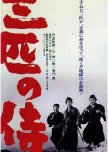
Three Outlaw Samurai was an entertaining samurai film that supplied plenty of action and more than a few laughs. It felt like a smaller scale Seven Samurai with three samurai who come together to try and save impoverished peasants from a callous magistrate.Shiba Sakon is a wandering samurai looking to find shelter for the night when he comes across a woman's hairpin in the road. An old mill is nearby and either weariness or curiosity compels him to go there. He finds three desperate peasants holding the local magistrate's daughter hostage. Suffering and dying because of recent crop failures, they want to force the magistrate to reduce their tax burden and help them out. Shiba gives them some hostage taking guidance and evens the playing field while they are in negotiation, or more accurately, fighting for their lives. The magistrate orders a samurai named Kikyo, who has been taking advantage of his food and lodging, to resolve the issue for him after his attempt to rescue his daughter and slaughter the peasants failed. Sakura Kyojuro, a vagabond samurai sitting in jail, is recruited by the magistrate along with three murderers to help Kikyo. Sakura grew up as a peasant farmer and quickly changes sides when he finds out what their real mission is. Kikyo, the "Freeloader" as Shiba dubs him, appears to do as little as he can in the distasteful situation.
After a time Shiba is able to reach a deal with the magistrate. He will take the peasants' punishment, 100 lashes, if the magistrate agrees to release him afterwards and spares the peasants. He makes the magistrate samurai pinky swear to uphold the agreement. The magistrate breaks the samurai code and starts having the peasants murdered and a post-torture Shiba thrown into a water dungeon. The local clan lord is arriving soon and the magistrate doesn't want him to know how incompetent he is and also doesn't want the peasant's petition to reach him. He unwisely sends killers after Kikyo which causes the high maintenance samurai to firmly change sides. Now the team is assembled.
This was director Gosha Hideo's first feature film and he nailed it. Narratively, the story flowed and he knew when to pause and when to set the fights in action. Betrayal, corruption, social class antagonism, and even a little redemption arch kept the pauses from being too slow. At its heart, the film was the ancient tale between good and evil and how much or any people are willing to sacrifice for justice. The cinematography, framing and editing all looked great.
The cast was strong with each samurai being his own man. Shiba and Kikyo shared their motivating influences in this exchange. Shiba told Kikyo, "You calculate the gains and losses too much." To which Kikyo responded, " You don't calculate enough." Sakura was a round deadly teddy bear. Though all ended up being likeable, they had their flaws. My biggest complaint is that the band took too long to get together. These actors had a very nice chemistry. Three Outlaw Samurai was a prequel for a tv drama series by the same name that the same actors would star in. My only other complaint would be that the women were portrayed poorly, most were clingy and/or flighty.
The fights tended to be quick and brutal. A number of people only seeking a better life and trying to do the right thing were cut down. A running fight scene was exhilarating and at one point I thought the guys were going to pull a Butch Cassidy and Sundance Kid stunt. After a betrayal and during a huge fight, a character tells Shiba, "You have to kill me!" Shiba sardonically replies, "I'm kind of busy at the moment." It's those moments of levity during a deadly fight against superior numbers that balances the mood of the film.
Despite the dynamic trios' efforts and good deeds-Shiba's torture, Kikyo's character growth, and Sakura's desire for redemption, and the small battles won, the intransigent nature of the corrupted caste system prevailed over justice. In the end, Shiba's idealism and swift sword were unable to cut through the status quo or embolden the peasants' courage. But at least he did not have to suffer his loss alone, he gained two friends to wander the path of the adventurous ronin. Three Outlaw Samurai was not a deeply layered story, but it was an entertaining and fast paced samurai film that fans of the genre might enjoy.
5/20/23
Was this review helpful to you?
This review may contain spoilers
"...it's a woman who never falls down."
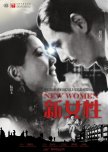
New Women was a radically feminist movie for 1935 and a bit of a real-life revenge flick as well. Moreover, it was also silent film star Ruan Ling Yu's next to the last film with an ending reflecting her own. Though heartbreaking verging on melodramatic at times, New Women also strove to normalize working and independent women and call out the men who preyed on them.In real life, Director Cai Chu Sheng was rumored to have had an affair with left wing actress and writer Ai Xia. When Ai Xia was savaged in the papers over her private life, she committed suicide. This film was said to be inspired by her struggles. The film also explored the new roles women were taking on in society prompting New Women to be promoted as a film about "the woman question."
Wei Ming (Ruan) is a beloved high school music teacher and aspiring writer. She has written for a local paper and submitted a book to a publisher. Though she is drawn to her book editor he gently turns her down while still supporting her at the publishing house. She is pursued by Mr. Wang, a wealthy married man, the husband of an old school friend. He sabotages her at the school hoping to force her to turn to him. An editor at the paper also tries to seduce her while promising her more work if she is cooperative. Even the local pimp states that with money you can always cop a feel.
Our beautiful heroine is behind in nearly all of her bills. After being paid at the paper she buys a wobble doll with a female worker on top of the globe. She tells the book editor he'd like it because the doll never falls down. Wei has a female friend, Li Aying, who works at a factory and also teaches the women workers to sing songs about being strong and independent. Aying is in a similar boat financially as Wei. To add to Wei Ming's woes, her sister informs her that her husband has died and she must bring Wei Ming's secret daughter to come live with her. Upon her arrival, the daughter is coughing, a sure sign in a Chinese film that the child is dying. The hospital staff informs Wei that the child's pneumonia can be easily cured with the new antibiotics but she must pay upfront for the treatment and the women have nowhere near enough money even after pawning most of what they own. To compound her discouragement, Wei Ming notices the wall of medications and the ward full of empty beds at the hospital ironically named Philanthropy Hospital.
After trying every legal way she can to cobble together the money for her daughter's treatment, Wei's landlady who works with the local pimp tells her that by agreeing to prostitute herself she could earn more than enough money in one night. Regarding a woman's plight, she tells the younger woman, "What other path is open to us?" Desperate to save her child, Wei Ming agrees only to find her wealthy client is the dastardly Mr. Wang. She refuses him and knows that if her child dies, she will follow her.
The film was set in the 1920's as women were beginning to enter the work force causing pushback from the males in charge. As in most countries, women were often paid less, discriminated against, sexually harassed and assaulted with little recourse. Li Aying stated that the new woman is born from hardship. There were different kinds of women presented in the story. Wei Ming was intelligent and focused on earning money with her talent, not her body but because of her beauty and physical fragility the men in charge sought to take what they wanted from her. They used the resources at their fingertips to bring her down and punish her for not acquiescing to their sexual demands. In a time when it had to seem rebellious to the standard quo, she equated marriage with slavery for a woman and felt like one night of slavery prostituting herself would be better than a lifetime. Aying was tough mentally and physically and believed in the Left's view of equality. One of the greatest movie moments in history was when she headbutted a despicable lech---twice! Mrs. Wang was unwilling to rock the boat and risk losing her status and wealth via her close proximity to Mr. Wang's power, thus turning a blind eye to his wandering proclivities.
Ruan Ling Yu gave an enchanting and heartrending performance in a role that not only mimicked Ai Xia's life, but hers as well. When the movie was screened, the press took great exception at being portrayed so negatively and forced the director to make numerous cuts to the film. In retaliation, they printed salacious stories about Ruan which in combination with an ex-lover's lawsuit, possibly instigated by the press, drove her to commit suicide a month after the film's opening.
The movie had some primitive sound effects and dubbing over the intertitles. In the copy I saw, the music became quite distorted at times. Overall, the quality of the cinematography worked well as the director utilized the different camera tricks he had at his disposal. The ravages of time had done some damage to the frames, but not enough to become a distraction.
New Women attempted to break new ground by calling out predatory men and a predatory press. It also sought to give hope to those who had been knocked down one too many times even with the film's heartbreaking ending. When Wei Ming decided she wanted revenge on the men who had brought her low, Aying told her, "…to continue living is without a doubt the prerequisite for doing anything at all!" New Women could feel a tad propagandistic at times but for the most part portrayed women's struggles in the world, especially those who attempted to follow a dream, in a fairly realistic manner. Even after the "Me, Too" movement many decades later, women are still seeking respect and equality at work and in society. When a film entertains and causes the viewer to think, that makes it successful in my book.
5/10/23
Was this review helpful to you?
This review may contain spoilers
"I love a challenge!"
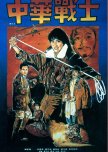
Magnificent Warriors was a fun and fast adventure starring Michelle Yeoh. Set after the Japanese invasion of Manchuria, Michelle, Richard Ng, and Derek Yee had to come to the aid of a small walled village when the enemy decided to use the area and the people to build a poison gas factory. Little did the Japanese army know what they were up against when Michelle landed her biplane outside the city.Michelle's Ming was a pilot who traded in all sorts of goods including weapons. The granddaughter of famed fighter Grandfather Fok played by kung fu movie regular, Ku Feng, she enjoyed using her whip, fists, and kicks to clobber men who tried to take advantage of her. Ming was commissioned by rebel forces to find Agent 001, a rather bland Derek Yee, and also to bring the Kaal village leader, Youda played by music director and composer Lowell Lo, to safety and discover the Japanese plans. Ming's mission was diverted when a nameless traveling conman played by Richard Ng was mistaken for 001. The matter was cleared up soon enough and before long they had Youda and his lover, Chin Chin played by Lau Chin Dai, with them. Ming needed gasoline to fuel her plane which took them into the heart of the Japanese camp which led to the fights and battles that would follow.
This was my second viewing of the movie. Unlike most of these experiences, I actually enjoyed it more the second time I watched it. Mood makes a difference, I guess. While the story was told haphazardly at times, what the film did do well was show off Michelle Yeoh's screen presence and athletic skills. Her fights and enthusiastic attitude lifted the movie when she was onscreen. Some of Richard Ng's early comic scenes dragged on too long, but as the film progressed so did his character's development which made him more appealing and sympathetic. Derek Yee was there, completely overshadowed by almost every other character onscreen. Chin Chin could be annoying, but the character's loyalty kept her from being loathsome. Lowell Lo's Youda, also there for comic relief, was able to have a couple of scenes showing the depth of his love for his people. The pacing could be uneven and answers appeared out of nowhere. All of the characters were archetypes, quite thinly drawn, leaving it up to the viewer to fill in the gaps. The writers tried to remedy this and actually just reinforced their stereotypes when they used a scene where the dynamic group was about to be executed to reveal the three main characters' backstories in an awkward exposition dump right before the miracle that saved them.
The fight scenes were all quite fast and innovative. Michelle was daring in her ability to do her own stunts and as always made the complex moves look effortless. Her early fight with some shady characters over lack of payment was stunning as she used her whip and then quite gleefully a gatling gun. Later, when the Japanese attacked, the Kaal villagers fought with spears and old school ways against the modern weapons of their invaders. The balance of humor and pathos could tip too far with humor when villagers were being killed during the battle. The only scene that didn't work well for me was early in the film when Ming and her biplane were involved in an aerial battle with a Zero. It went on too long and wasn't that interesting. The film utilized several actors and stuntmen I enjoy watching. I was happy to see "Toad Venom" Lo Meng as a silent guard. Fung Hak On, who helped choreograph the fights, showed his fighting skills as a Japanese agent. And Hwang Jang Lee finally had the opportunity near the end of the film to show off his superkick abilities. While the humor could be forced, the final skirmish was a local one that had high stakes for the people involved which weighted the fights with meaning.
Though the villagers and characters suffered consequences for going up against the Imperial army, Magnificent Warriors took a light tone with no spewing blood and severed bodies. The main characters never felt like they were in any real danger as they quipped and smiled through the mayhem. This was Michelle Yeoh's movie and she gave it her all. Magnificent Warriors may not have been magnificent, but it was pretty good.
3/24/23
Was this review helpful to you?

This review may contain spoilers
This fish may put you over the limit
If The Legend of Jiang Zi Ya was not a cheaply made movie about the titular character, then it did a good masquerading as one. The CGI was close to home computer level quality. Jiang Zi Ya would most likely be a familiar character to the audience and perhaps that's why the writers glossed over anything resembling character development, but by doing that it significantly lowered the stakes for the characters in the movie.Jiang Zi Ya battles a river demon after it has eaten the parents of a little girl named Phoenix who were fishing on a raft. After imprisoning the river demon, Jiang is called on the carpet by Primus. Primus tells him he must apologize for hurting innocents during his battle with the river demon. Jiang steadfastly refuses and is subjected to 15 years of lightning bolts and then being thrown down to earth as a mortal. The now grown Phoenix rescues him and miraculously carries his bruised and bloody body into her hut. The villagers quickly turn against him thinking he is responsible for another river demon threatening them and try to feed him to the giant fish. He ends up saving a little girl from being eaten and is now hailed a hero. The local earth god shows up and lets the cat out of the bag as to who he is. He sends Jiang to the Mausoleum of Deification to retrieve his Deity Whip. Phoenix who feels indebted to him for saving her life years ago, agrees to accompany him as does Rocky, the idiot who loves her. Rocky is the kind of sidekick who makes sure they leap from the frying pan into the fire on various occasions because of his lack of intelligence and self-control. While escaping an ancient ax-wielding demon, Jiang is hurt. Goddess Phoenix (yeah, I have no idea why she looks just like earthly Phoenix and the writers didn't explain) tells mortal Phoenix to transfuse blood into him. This seems to give him his powers back, but it could be because goddess Phoenix was mixing her blood in, too. Again, no clarification by the writers. They finally arrive at the resting place of the whip but are stopped when a voice tells Jiang if he takes the whip, the villagers will die. Our hero goes back to the village sans whip and now has to battle the river demon who has escaped his prison and is looking for payback.
The ending deals with sacrifice and benevolence. Thankfully, after all the sacrifices the women in Jiang's life made for him he's learned to let go of romantic love. Didn't help those women, but at least he's free to go on his heroic way unfettered to do his Investiture of the Gods work.
The movie relied on primitive looking CGI and the battles weren't exactly tension filled. The fight choreography was simple and unimaginative. Primus looked suspiciously like The Eye of Sauron.
Despite the low quality effects Benny Chan and Niu Ze Meng were likeable in their roles. They fell in love awfully fast. Of course, hers could be hero worship and for him she was a ringer for his girlfriend (who he hadn't seen in 100 years). The acting aside from the main two characters was cringe-worthy. One older woman's job was always yelling someone's name repeatedly when there was danger. "My granddaughter!" "Phoenix!" "Xiao He!" It became humorous after a while. The version I watched used English names for some of the characters in the subs, just to make you aware there are different versions out there.
Aside from the female doppelgänger situation, the story was easy to follow. For the most part it was entertaining despite the cheesy CGI and acting. The ending was a letdown as it used the female sacrifice trope I am well and truly over. I began to think the river demon cleaning house wouldn't be such a bad idea. Clocking in at just over an hour, The Legend of Jiang Zi Ya doesn't require much commitment but it could strain your patience.
3/16/23
Was this review helpful to you?
Bromance times four!
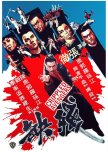
Shaw Brother classic, The Crippled Avengers, may have had an unfortunate dated title, but it was old school kung fu fun. Director Chang Cheh wasn't too interested in realism instead he gave the audience a spectacle which at times more resembled a circus acrobatic act than it did a martial arts throw down. The Five Venoms (the group of actors, not the characters) teamed up once again, this time to take on a butchering bad guy.Hero Chen Kuan Tai's Black Tiger came home to find his wife dead and his son's arms cut off. He quickly dispatched the hatchet men and made a 180 into villainy. Through the years he provided his son, Lu Feng (Venom Centipede) with new and improved metal arms and hands, training him in the three Tiger Styles. Anyone who crossed them or spoke a word against them incurred their wrath. Johnny Wang acted as his chief enforcer Wan.
Along came the Venoms. Philip Kwok (Venom Lizard) made the mistake of looking at the son's metal hands and was blinded. Lo Meng (Venom Toad) spoke out against The Black Tiger's cruelty and was made mute and deaf. Sun Chien (Venom Scorpion) bumped into the son and lost his feet. Chiang Sheng (Venom apprentice) confronted the Black Tiger over his ruthlessness and had his skull crushed leaving him brain damaged. The four men made their way to each other and took Chiang home to his master. His master vowed to teach them kung fu styles to overcome their disabilities. For three years they trained before returning to confront their nemesis and his gang.
The training scenes were quite fun to watch as Chiang and Kwok were quick and acrobatic. Any fights with them and/or Lu Feng didn't need wire work because they could jump, flip and tumble with the best of them. Kwok's abilities with the metal pole and rings were fast and amazing to watch. Chiang always looked like gravity didn't apply to him as he tumbled off of and onto furniture. Lo Meng, though trained in martial arts tended to do more kung fu posing. The "Shaolin Hercules" never met a shirt he wanted to wear and liked to show off his muscles. Though one of the main four characters, Sun Chien and his metal legs tended to disappear for long stretches of time showing up just when someone needed a deadly kick. This was not Bruce Lee kung fu, it was kung fun, more theatrical than useful.
Though the main characters were all disabled, there was no humor at their expense. The best part of the whole film was the obvious camaraderie between the men as they relied on each other to survive. It was a buddy movie times four. Lo Meng's Wei and Kwok's Chen, the deaf man and the blind man, were quite heartwarming in their tactile friendship as they protected each other. For a 1970's kung fu movie, it was fairly sensitive, admittedly the bar was set pretty low on that subject, but at least there was some effort in the machismo genre.
I enjoyed this movie more than the Five Venoms and thought the fights were more original and at least some of them were quicker. The story wasn't afraid to embrace the ridiculous with things like a character having bionic arms who could shoot darts out of them. But it was the more human aspects of the movie that made it memorable. The friendships that developed between the main characters and the characters' growth were unusual for this genre where relationships often took a back seat to fighting. I found those aspects of the movie refreshing. For anyone who enjoys old kung fu movies, this is definitely one to give a try, even with the horrible title.
3/14/23
Was this review helpful to you?

The Monkey King 1: Havoc In Heaven's Palace
3 people found this review helpful
I have no idea whether the story was true to the book, I simply go by whether the movie was entertaining as told on the screen. When a crystal used to rebuild the heavenly realm falls from the sky and creates a special monkey baby, both heavenly and demon realms take note. The young monkey is taken to train with one of the heavenly masters. After finishing training with his sifu Subhuti/Puti where he is given the name Sun Wukong, his master tells him he must leave to learn positive thoughts and attain enlightenment. As he begins his adventures as the Handsome Monkey King on Huagoa, gaining his cudgel and uniform, The Monkey King brought about the three signs that led to the Bull Demon King once again attacking the heavenly realm. Manipulated by the evil horned one, Sun Wukong aids him in bringing about the disaster.
Donnie Yen so seamlessly blended into the makeup and furry suit that I honestly forgot it was him playing the role most of the time. It must have been freeing to perform such a playful role since most of his movies require him to be cold, stoic, and/or angry. He and his stunt double along with his choreography made for agile, creative fights whether on the ground or flying. Chow Yun Fat as the Jade Emperor could play this regal role in his sleep but he did bring a gentleness to his heavenly ruler. Aaron Kwok as the Bull Demon King had less to do, in general being menacingly seductive or menacingly destructive. Peter Ho could be counted on to sneer on cue as the duplicitous heavenly gate guard. Joe Chen as Princess Iron Fan was called on to mostly look dewy-eyed as she tried to steer her man away from a disastrous end.
The music fit perfectly even if it was standard epic fantasy fare. The costumes were well done and what you would expect from the immortal realms. The CGI varied in terms of its quality, but coming out of Hong Kong at this time I was impressed. The underwater realm, especially the giant octopus wasn't very convincing, but I've seen far worse, I watched Big Octopus (2020). The colors and movement could overwhelm the story at times, however, we are talking about a magic monkey and horned evil dude taking on a dragon, so I just rolled with it.
This movie isn't for everyone. It could be campy, okay, was campy more often than not, but that's something I don't usually have a problem with. There was a fairly simple storyline, even if some of the periphery stories were give short shrift, with lots of martial arts action and bright shiny objects. Yen, Kwok, and Chow all did a more than adequate job of conveying their characters. Out of the three films this rated pretty evenly with the second in the trilogy for me. Even if I knew where the story was going from the beginning, having watched other Monkey King movies, it didn't take away from my enjoyment. The road getting there was adventurous and charming enough to keep my interest.
3/9/23
Was this review helpful to you?
This review may contain spoilers
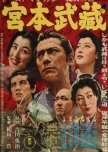
Samurai 1: Musashi Miyamoto is the first in a Samurai trilogy starring the charismatic Mifune Toshiro as the titular legendary swordsman. This film sets up the story from the time he was a brash "lawless" teenager looking to become a samurai to the point when his wild will is tamed.Mifune was already thirty-four when this film was released and looked every bit a man, but he did try to give Takezo a younger man's emotional vulnerability. Takezo as he was called in his youth and his buddy Matahachi run off and join the wrong side of the Sekigahara Battle. Carrying a wounded Matahachi, the two end up at a hut with a mother and daughter. The women take them in and care for them until bandits show up. Takezo fights them off while Matahachi and the daughter Akemi take the more expensive items the women have stripped off of fallen samurai to hide. When the mom, Oko, puts the moves on Takezo (just like her daughter had done before her), the young man refuses her and runs to the river to bathe. Upon returning he finds that everyone, including his feckless buddy, have evacuated the premises. When he arrives at his home village, he's turned into a fugitive because Matahachi's mother and the rest of the villagers want their pound of flesh from him for supposedly abandoning Matahachi! Eventually the local Buddhist priest talks him into turning himself in. Matahachi's ex-fiance, Otsu, who received a letter from his new wife is now firmly on Takezo's side and frees him and runs away with him. She is later captured and in the process of attempting to save her, Takezo is once again caught or better, rescued, by the priest who locks him in a room filled with Buddhist texts. Three years later, he's calmed down, more enlightened and ready to travel the wilds in order to further his training. He is gifted with a new name---Musashi Miyamoto.
The film was beautifully shot in color which showed off the stunning scenery as Takezo traveled through the countryside. The battle scenes captured the fear many of the men felt as they were outnumbered and literally outgunned by the opposing side during the great fight. The tall grasses and trees could come monotonous though when Takezo was relentlessly hunted by the people from his village.
That same monotony began to set in with me when a large part of the film was devoted to Takezo being chased and hounded on the thinnest of charges. He'd come home to let Matahachi's mother know her son was alive though he wouldn't give the shameful reason why he hadn't returned home and in return Takezo was left out to dry. Though all this might have been to show his untamed and fierce nature, it dragged on too long for me. It mirrored Takezo attempting to tame Akemi's wild stallion. He never did through force. The priest's gentle nature and spirituality was able to reach deep within his depths and help calm the young man and center him. I would have loved to have seen the actual growth period in Takezo instead of skipping over it. He went from unfocused and out of control to self-disciplined with more insight. It would be like a baking show giving all the main ingredients and then displaying an ornately decorated cake without showing how it was made. I want to see how he went from a bare-footed, half-naked, wild-eyed teenager to a confident, restrained, and dare I say it, elegant looking young man.
Aside from the journey of self, this film was helped by the powerful presence of Mifune Toshiro who went through a gamut of emotions believably. I don't know if this film would have succeeded in lesser hands. As with many of these 1950's film, the women's characters didn't fare so well. Akemi and her mother both throw themselves at Takezo, with the mother lying that Takezo attempted to assault her. Akemi's mother contemplates selling her near the end of the film. Otsu goes from completely devoted to Matahachi to eternal devotion to Takezo. And Matahachi's mother refuses to listen to reason so deep is her bloodlust.
I wouldn't be honest if I didn't say I was underwhelmed with this film aside from Mifune's energetic performance. However, I am looking forward to the second film and seeing where Musashi's journey of self-discovery and swordplay take him.
3/8/23
Was this review helpful to you?


