

 135
135 431
431 16
16 2
2 6
6 3
3 8
8 10
10 3
3 13
13 1
1 1
1 1
1 1
1 2
2 6
6 8
8 5
5 9
9


A valuable piece of film history
I love that for around 3 minutes in time I could step back into 1899 Japan and have a brief glimpse into the early film world. Momijigari was more of a documentary of two great Kabuki actors near the end of their lives in brief scenes from a famous play. It was still worth watching and surprisingly entertaining.Danjuro played the princess who was actually a demon in disguise. He gracefully danced with his fans, a challenge with the wind blowing as they filmed it outdoors. At one point, one of the fans blew out of his hand, rescued by the stagehand. Kikugoro played Taira no Koremori who valiantly fought the now ugly demon with long flowing hair. The demon used a maple branch against Taira’s katana. I was particularly impressed with Danjuro’s hair fighting skills. The fight was compressed in a small area with the costumed stagehand picking up debris as the two took part in their fighting choreography.
Though filmed in 1899, it wasn’t shown in public until 1903 when Danjuro was too ill to take the stage and gave his permission. Kikugoro had already died at that time making it even more popular for people to see. It was then shown again after Danjuro’s death later that year. Though Danjuro was reluctant about having their performance filmed, the two actors’ legacies have been kept alive through these 3 minutes and 50 seconds worth of grainy film one hundred and twenty-five years later.
If you enjoy old films and film history, this is definitely worth less than five minutes of your time.
19 February 2024
Was this review helpful to you?
"You know you are dealing with the yukuza, right?"
Outrage began the trilogy focusing on director Beat Takeshi’s traditional yakuza Otomo. The film could become wearisome as betrayal after betrayal ended in gruesome deaths for those up and down the yakuza ladder of power.The film’s plot could be hard to follow, or at least all of the players, as the Sanno family chairman started maneuvering all of his family’s subfamilies and tributaries, not realizing he was being played as well. The Murase family is in the chairman’s sights and soon the murders and torture scenes are ongoing. Even the ambassador from Ghana is dragged into their schemes. Dental equipment, a giant snake, chopsticks, knives, guns, and bombs. No one is safe as brother turns against brother, and even girlfriends are hunted down. There truly is no honor among thieves. Or among the police. Tokyo’s finest looked the other way and counted the money in their envelopes as the bodies started dropping.
My biggest problem with Outrage was that there was no one to feel sympathy for, as twisted as that sounds when watching a gangster movie. Everyone could have died a gory death, and many did, but it really meant nothing. They were all killers looking to make a buck and gain more power. Otomo had the old yakuza honor thing going for him, but he was just a deadly pawn easily used because he followed orders without asking questions for much of the movie.
Outrage had moments that were entertaining and the big plot reveal at the end helped to explain some of the mayhem. Character development of a few key figures would have helped enormously. Otherwise, it just felt like random people getting chopsticks jammed in their ears or eating bullets for lunch. In the end, killers killed killers who killed killers who killed killers…
17 February 2024
Was this review helpful to you?
"Love and marriage aren't always the same thing"
Late Autumn was in many ways a reworking of Ozu’s classic 1949 film Late Spring only this time focusing on a widowed mother and her daughter of marriage age. Three friends of her late husband decided they knew what was best by finding not only a mate for the daughter but the mother as well! Regardless of what the women wanted.At the memorial service for their friend Miwa, three old friends, Mamiya, Hirayama, and Taguchi ask Miwa’s widow, Akiko, if she would like help matchmaking for her daughter Ayako. She agrees and after she’s left the men discuss how much each one of them had a crush on Akiko when they were younger, not always in the most respectful ways. The men get to work finding a suitable prospect but run into a wall when they discover Ayako doesn’t want to wed for she fears leaving her mother alone. That knowledge only spurs them on. Mamiya finds out by accident that Ayako has started dating one of the prospects she’d rejected. When he called her on it she said it didn’t change anything. Love and marriage were not necessarily the same thing. The men change tactics and decide to have Akiko marry one of them which turns her small, quiet household upside-down!
Despite their sometimes crass language, the three men’s hearts were in the right place. They wanted the best for Akiko and Ayako. There was more innuendo in this film than most Ozu films. I really didn’t need to hear about the men’s “itches”. Akiko and Ayako had a close relationship that was tested. Fortunately for all involved, Ayako’s friend, Yuriko, stepped in and sorted the men out in the best scene of the whole movie. She then went to work on the mother and daughter.
Ayako feared marriage would cause her to lose her friends as she’d seen with her own friends that married. She also feared becoming distant from her mother and leaving her mother alone, with no one. Despite not being as independent as Yuriko, she enjoyed her independence and feared losing it, too. Akiko, with Hara Setsuko playing her, was the epitome of grace and generosity. The three men were all a little in love with her which even their wives knew.
Ozu’s palette was much the same-muted colors highlighted with green, yellow, and his favorite color red. His red teapot was replaced by a prominent yellow one here. The steady camera set low with the people moving instead was a constant as well as the intricately composed frames. Many of the same players from previous films showed up here like old friends. There’s a comfort and familiarity with his post-war films.
Despite having covered much of the same topics in previous films-the changing Japanese family, aging, and loneliness, he still had more to say. I enjoyed this film more than Late Spring with Hara as the mother instead of the daughter. Okada Mariko’s presence gave the film a jolt of energy when the talking began to go in circles. As bachelor Ozu aged, so did it seems, the boys from his silent films. Still incorrigible with good hearts, only now old men sitting together drinking sake and meddling in other people’s lives…with good intentions of course.
6 February 2024
Was this review helpful to you?
This review may contain spoilers
I enjoyed the first season of Teenage Psychic because as flawed as it was, it had a certain charm. The second season lost that luster for me. The stories didn’t have the same heart to them and the mediocre acting couldn’t cover over those problems.(This review contains spoilers from S1)
The story takes up after the first season, and Xiao Zhen is now seventeen. At the end of S1 she had found her smile and her confidence. At the beginning of S2 she’s back to the mumbling, mopey teenage psychic having lost everything she gained. Even the drama club abandoned her for a new “psychic”. Teacher Kim’s ne’re do well brother is in town and starting his own charlatan temple in a psychic competition for devotees. If all that wasn’t enough, Ah Le is back and in the body of an asthmatic suicidal high schooler to take care of unfinished business.
Fandy Fan as Zhang Yu Xuan/Ah Le must have been given the notes to smile all the time. He began to look exhausted from forcing the tight grins. Guo Shu Yao’s notes must have read, never ever smile or look anyone directly in the eye. This time instead of being at ease with each other, the couple felt awkward. There was no urgency or depth of emotion for the two, knowing their time together was going to be limited. Apparently, Ah Le was able to cure Yu Xuan’s health problems just by mind over matter and working out. Also in the awkward department, after living abroad for 2 years, Xiao Zhen’s mother returned home unaware her daughter had been working as a medium at the temple. She’d wanted Teacher Kim to cure her of her visions. No warm greetings or hugs, it was the strangest reunion. Another awkward familial problem, Teacher Kim reprimanded his brother as being opportunistic but Xiao Zhen’s mentor often sold people things they didn’t need to make a buck. The weekly spiritual problems lacked the dramatic weight of the first season. The storytelling jumped around in an erratic manner siphoning off any emotional punch.
Teenage Psychic 2 was in desperate need of energy and heart. Two mopey psychics were two too many. Three bickering adults were three too many. And if they were going to be bold enough to kill Ah Le off in the first season, let him stay gone after the meet and greet at the end of S1. Forcing another actor to try and capture the character’s charm was a disaster. I would also like to have seen Xiao Zhen continue growing as a young woman and a medium instead of regressing so badly. The message of this season seemed to be the living have to keep moving forward, I wish the writers would have learned that lesson and let these characters do the same.
26 January 2024
Was this review helpful to you?
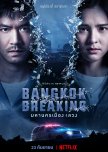
After Wanchai received a desperate message from his brother in Bangkok he grabbed the first bus and headed there. At the same time a reporter, Kat, and her two co-workers were on their way to a gathering for the new CEO of the media company she worked for. At the bus station, worlds collide when a speeding sports car causes a devastating crash there. Due to events that occurred around the crash and at the rescue station, Wanchai suspects foul play. As Kat’s colleague lay in a coma, she determined to follow-up on her senior’s investigation into the volunteer rescue services. Neither had a clue what kind of danger they were walking into and they would have to be careful and lucky to survive.
I was surprised to find that the majority of Bangkok’s rescue services were volunteer based and most workers received very little money. As I watched, it was also apparent they didn’t receive much training either. At a fire, only one person donned turnout gear but with no mask or air tank. No fire truck ever appeared. During a gas leak the rescue teams wore respirators which are of little help in a confined place with high natural gas saturation, there’s not enough oxygen to filter. Plus, many of them weren’t wearing them correctly. With a head wound victim they failed to use a back board, or brace, and they didn’t strap him in so I worried the poor guy was going to slide right off as they carried him. No vitals were taken, no IVs started nor oxygen administered—common tasks for EMTs. About all these volunteers were capable of was CPR, stealing from victims and committing the occasional murder.
The story itself took time to gain any traction as Wanchai and Kat sought out clues separately, not quite trusting each other. As the two spent more time together the romantic music began to swell. Given the number of car accidents, job training and job loss, beatings, and death threats, the romance came across as forced. These two people were in over their heads, romance should have been the last thing on their minds.
If you can’t fight city hall, it’s even harder to fight the wealthy and weird. One of the Big Bads decorated his long beard differently every day and traveled in an updated hippie van. The large cast made it difficult to keep up in the first couple of episodes as the layers of corruption and familial problems were peeled back disjointedly. The acting for the most part was good to serviceable. The good guys, of which there were few, were likeable and the numerous bad guys were easy to hate or even laugh at. There were also several gray characters who were willing to cross the line for their own reasons without understanding the cost of working for villains. I wish that they’d taken the time to give at least two or three characters more backstory instead of just teasing that information.
Bangkok Breaking was mostly entertaining if flawed. The numerous action scenes and rescues helped it move faster when the story bogged down. For me, I found the chaotic rescue squad system fascinating and frightening. If you live with an EMT you are likely to get an earful of all the things they did wrong, if not and you enjoy Thai dramas, this is one to try as it’s a fast watch.
24 Jan 2024
Was this review helpful to you?
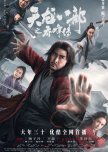
"Those who had feelings were caught in them"
Donnie Yen starred in and directed Sakra, a wuxia based on Jin Yong’s novel Demi-Gods and Semi-Devils. As I haven’t read the book I’m only critiquing this movie as a stand-alone. Kiu Fung was a man who had to figure out who he was and what he stood for after tragedies and treacheries befell him.The infant Kiu Fung was left on the doorstep of a Song couple and grew up to be a master in the infamous Beggar Gang. After rescuing a caged young man from turning into a sacrifice he returns home only to be accused of murdering a fellow Beggar by the man’s wife. The wife also produces a letter revealing that Kiu is actually a Khitan, the most hated of enemies. He’s not given a chance to refute the “evidence” and ends up turning in his Dog Beating Staff. It goes downhill from there for Kiu as the bodies begin to rack up with everyone blaming him for the deaths. During one of the angry mob scenes, he rescues an injured thief and romance blossoms.
This was one of those movies where it was hard to like any of the characters. Donnie’s Kiu was a masterful fighter but came across as not terribly bright. He was framed and double-crossed on a routine basis. And when it was his turn to communicate and seek the truth he reacted like the Beggar Gang, Shaolin monks, and townspeople had and jumped to an illogical conclusion which led to deadly consequences. The rescued thief, Ah Zhu, had only one job-to be carried around and make big puppy eyes at Kiu.
Parts of the story needed to be explained better. Kiu had stood up for the downtrodden, sought to be moral at all times and yet everyone believed he could murder the people close to him. Was it jealousy? Or were they all simply awful people who refused to hear Kiu’s side of the story? The romance fell flat, partly because of the development on screen but also because the 60-year-old Yen was twice as old as his costar. He came across more paternal or perhaps as a kung fu master to her. I could see him feeling sorry for Ah Zhu and she in turn hero worshipping him, but romance didn’t come across on the screen. And while I’m at it, why would he ever think he could pass for thirty?
There were numerous fights as the world took on Kiu. I understand Yen is 60 and his body has taken enormous abuse through the years. It would make perfect sense to rely on camera tricks and stuntmen to sell the fights. What ended up on the screen were ridiculously undercranked/sped up moves as if The Flash and Quicksilver went at it. When fights are repeatedly sped up in martial arts movies, it usually means the moves were slow or missing their targets. I don’t mind light body work with people leaping and skipping over rooftops, but they seemed rather awkward here. Wuxia “magic” doesn’t bother me either except how many times can you watch people being blown through walls or floors before it becomes exceedingly redundant? I would normally enjoy watching Donnie pummel his opponents but the exciting brawls were few and far between in this one. It didn’t help that before one long drawn out fight, he had to have a drink with anyone who wanted to take him on---which turned out to be everyone. The scene dragged on interminably.
Sakra was watchable, but at 2 long hours, just so. The natural scenery was gorgeous and a couple of fight sequences were entertaining. The rest of the time it was painful watching the hero be slow-witted in thought and artificially accelerated with his fists.
6 January 2024
Was this review helpful to you?
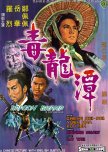
This review may contain spoilers
Cheng Pei Pei played two roles in the wuxia Dragon Swamp written and directed by Lo Wei. She was once again joined by Lo Lieh and Yueh Hua in this tale of deception, disguises, death, and a cursed sword. Fan Ying was seduced and betrayed by Tang Da Chuan aka The White Faced General. Her clan confronted them after she helped to steal the Jade Dragon Sword for her husband. Tang ran off with her son when he lost the sword and Fan was sentenced to 20 years in the terrifying Dragon Swamp. Her sifu agreed to raise her baby daughter. Twenty years later we are introduced to the daughter who looks just like her mother on the night the sword is once again stolen! Along with the rest of the disciples Qing Er is sent to find the cursed sword. She will find the thief, be rescued by the Roaming Knight, and meet the fearsome Swamp Master in short order!
At the age of twenty-three, Cheng Pei Pei aptly differentiated the characters of the older Fan Ying and the adventurous Qing Er. Lo Lieh gave a solid performance as the thief and Head of Security for a powerful clan. Yueh Hua roamed in and out of the story as the nameless swordsman still searching for his true love, Fan Ying. I was happy to see Ku Feng show up as an old master, almost unrecognizable in a wild white wig. Huang Tsung Hsun played the despicable Tang Da Chuan who had a habit of abandoning and murdering his wives in his quest for ultimate power.
The sword fights were standard for the era, with one fight between Pei Pei and Lo Lieh and a host of others almost looking like a dance from a sword fighting musical. If it’s a Cheng Pei Pei film it needs a fight at an inn and this film came through. Qing Er faced off against an assortment of assassins as she ordered her dinner including ones played by Simon Yuen, Fan Mei Sheng, and Han Ying Chieh.
Where the film struggled was the execution of the story. Characters wandered in and out. The cursed sword comically changed hands numerous times. On the positive side, the sets and scenery were all eye catching, including the Dragon Swamp. The special effects were for the most part average for the time. It was fun how they made the sword glow green. The masters were able to practice some magic and Pei Pei had a nifty party trick with drinks. The only area where the special effects were truly lacking was the boat trip through the swamp where there be dragons. Gojira’s creators did a better job with those effects from the same time period.
Despite some of the story and effects shortcomings Cheng Pei Pei lit up the screen as she always did. Her turns at both the mother and daughter were well done. Though flawed, the movie was entertaining. If you enjoy old martial arts films, this is one worth trying.
14 Dec 2023
Was this review helpful to you?
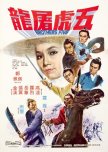
This review may contain spoilers
"It will be invincible!"
Brothers Five was a Shaw Brothers extravaganza featuring Cheng Pei Pei, Lo Lieh, Chang Yi, Chin Han, Yueh Hua, and Kao Yuen. Unlike some of the SB movies with visibly break-away sets and cheap costumes, the sets, costumes and scenery were all high quality for the genre.Yan Hsing Kung (Cheng Pei Pei) is on her way to the Tenglong Villa aka The Flying Dragon Villa when Kao Wei stops the driver of her carriage from whipping the horse and man who rented it to him to death. Turns out he is one of the 5 Kao brothers (#4) who were separated when they were young after their father was murdered by the current owner of Tenglong. Each brother has a horizontal scar across his hand so that they would be able to recognize each other. Yan’s father had saved the boys with each one of them going to a different place to live. Yan has been searching for them to bring them together. Brother #2, Kao Hao, had become a blacksmith with no martial arts skills but could swing a mean hammer. He enters into a fight with Tenglong men and heads to the Villa for personal revenge. Brother #1, Kao Chih, a scholar from Shaolin, runs afoul of Tenglong minions in town and also makes his way to the villa. Outnumbered and outmatched the two brothers are saved when Yan intercedes. Brother #3 owns an escort service which is ambushed on his way to the temple to meet up with Yan. Yan was only to stop one brother from attacking Tenglong Villa by himself which became repetitive, even comical after a while. Finally, #5 Kao Hsia, turns out to be a flamboyant thief who robs from the rich. Now the band is all together and introduced to each other. The five are not skilled enough on their own to take down Lung and his Golden Sword. Much to their amazement, Yan has a secret manual that describes the Invincible Five Tigers as One move! What luck! There are exactly five brothers!
The cast was amazing. The heroes and villains, with the exception of Kao Yuen, gave strong performances. Lo Lieh was a delight as the impish thief. Cheng Pei Pei was charismatic as the woman who fulfilled her father’s vow to find the brothers, reunite them, and point them in the direction of Lung to avenge his old friend’s death. Tien Feng as the Big Bad could always be counted on to turn on the menace. Wang Hsieh and Ku Feng joined him as creative weapon carrying baddies.
Sammo Hung had a tiny part as one of the escort members. He also choreographed the fights along with Simon Chui. Many of the numerous fights were filmed at a distance and involved large numbers of men fighting one or two heroes. For 1970 the sword fights looked quite good and I liked that they weren’t move two steps, cut, edit, add another sequence. You could see some misses and the actions could be slow at times, but overall, the actors were required to remember complicated choreography while fighting in large groups, in long unedited shots, with a variety of weapons being used. Copious amounts of blood also flowed, not Chang Cheh amounts, but enough to make it look realistic. Cheng Pei Pei is one of my favorite female kung fu actors. Not only could she move well and sell the action, she could also act which was not always common in this genre. I loved that she came to the men’s rescue on more than one occasion. Chang Yi was the strongest fighter of the heroes even if his acting wasn’t as strong as Lo Lieh’s. Lo had a particularly funny and heroic encounter when he first visited the Villa. This cast was huge, and the number of recognizable stuntmen from the credits was staggering. Most of the fights were large groups and the stuntmen sold the action-flipping, flying, and getting slammed to the ground. Trampolines and wire work were utilized with the wire work not always appearing fluid. The weakest element of the fights was the Invincible Five Tigers as One skill. It was laughably bad, as in I laughed hard when they finally used it.
Brothers Five would have gone down as one of my favorite old kung fu movies except for what seemed like a counterintuitive reason---the fights were too long. As each brother was introduced, each had to fight a gang of men in long drawn-out battles. After the second fight it began to wear thin. Clocking in at around 100 minutes, the majority of the time was used for these protracted fights. Had they trimmed the fight scenes I would have rated this much higher. The cast alone was like catnip to me. For fans of old martial arts films, this is definitely one to try. Even with the redundant fighting at the villa’s gate it was an entertaining movie.
12 Dec 2023
Was this review helpful to you?
This review may contain spoilers
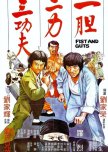
Fists and Guts was a frustrating combination of inane comedy and entertaining, well-choreographed fights. How much you enjoy this film may depend on your ability to tolerate slapstick and haphazard storytelling. Gordon Liu in a terrible wig worked with two inept conmen to try and recover family heirlooms stolen by a treacherous housekeeper. The conmen were played by the director Lau Kar Wing and usually bad guy Lee Hoi Sang. The story wandered around even going so low as to have the conmen travel to a leper colony. The story itself was redundant as they searched for the “housekeeper” who could disguise himself, with Team Inept choosing the wrong people or being led astray by the real thief. Most of the pointless endeavors were designed to highlight the comedy which fell flat for me.
Just past the halfway mark the fights kicked into gear, if not the story. You had to slog through a gross poop scenario to get that far though. Gordon Liu and Lai Kim Hung had an inventive silent fight as they both tried to steal a jade Buddha from a general’s well-guarded home. They stifled cries and prevented vases and furniture from crashing to the ground as they engaged in a desperate fight. Later, Gordon had to teach the two conmen moves that would help them beat the booby-trapped system in the “housekeeper’s” secret lair. This was one of the few times the fools came in handy. The highlight of the film was the life-or-death fight between Gordon and Lo Lieh. By this time the real identities of both men and their motivations were revealed and the ridiculous wigs were removed. This was one of Lo’s best fights I’ve seen, Gordon and the Laus brought out the best in him. The moral of the tale wasn't as righteous as they might have thought it was.
The story was aggravatingly circular and the comedy could be irritating, albeit those who love old kung fu comedies may be enraptured by the comedy in this film. Regardless of your threshold for slapstick, if you enjoy kung fu movies from this era, the second half of the film shone through with at least two worthy fights to watch.
6 Dec 2023
.
Was this review helpful to you?
This review may contain spoilers
A knife in her sole or soul?
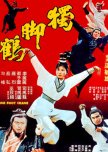
One Foot Crane was a watchable Taiwanese martial arts movie, but didn’t have anything to make it stand out. Lily Li’s One Foot Crane started out on a revenge rampage of her own, but as often happens in female led movies, before it was over she had to share the screen with male counterparts to take down the villain.The child, Fong Lin I, was presumably the only Fong family member to survive a massacre by the Four Outlaws. Seemingly overnight she grew up and became a martial arts expert. She begins her revenge rampage with Outlaw #1 making an enemy of his son. After dispatching Outlaw #2 at an inn, she’s forced to fight the son where she barely escapes after being wounded. She’s rescued by a nice, but mostly useless woodsman. Fortunately, Capt. Chow was sent to help her and he has a magic elixir to heal her which he gives to her upon discovering her hiding place. Family secrets are revealed and ultimately Fong will have to join forces with Chow and her newly revealed brother in order to take down the baddest of the outlaws.
This was a by the book kung fu tale that has been done a dozen times. It helps to have charismatic actors and creative choreography to elevate the standard material. One Foot Crane was largely lacking in that department. Lily Li didn't have the skill and personality of actresses like Angela Mao and Cheng Pei Pei. She was undeniably beautiful but the fights slowed dramatically when she was involved or they were absurdly under cranked. Miao Tien and Lo Lieh were killed off early in the movie leaving the villains not only short-handed but also without a truly sinister leader. Barry Chan managed to insert some energy and swagger into his character. Szema Lung as the police captain was dreadfully dull. Tsai Hung as the Big Bad came across quite vague for a murderous rogue.
If the story and acting are lackluster, the fights need to be spectacular. Sadly, the movie underperformed in that department as well. Most of Lily Li’s fights were close to kung fu posing and not very fluid or graceful. Szema was slow as well. Barry Chan and Tsai Hung were the most entertaining when they were fighting each other as the moves flowed better and were quicker. Too many hits overall missed during the fights with stuntmen flying backwards on their own. There was some wire-fu, mostly in the trees. The fights would often go from being indoors to a desolate quarry or sandy plateau instantaneously. There was a lot made out of the good guys using Crane, Mantis, and Eagle styles, but they felt more like Sloth and Snail styles. At least they knew if they couldn’t be quick to hit the vulnerable parts---eyes, temple and throat. One Foot Crane also had a knife that she could release out of the middle of the sole of her shoe which was physically impossible, more so than a lot of kung fu gadgets.
Lily Li and Barry Chan were attractive and likeable enough making One Foot Crane watchable if not memorable. As usual, I grade these old niche films on a curve.
5 Dec 2023
Was this review helpful to you?
This review may contain spoilers
Cheng Pei Pei in a melodramatic sword romance
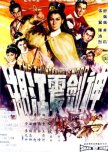
Cheng Pei Pei was an ethereal killing machine in The Thundering Sword. What started out as a standard martial arts movie in 1967 quickly evolved into a romantic melodrama only with the stereotypical roles reversed.Chang Yi and Lo Lieh belong to a sect that believes martial arts are for healing, not killing. The Thundering Sword is a sword that can break all others and their leader Tien Feng sends them on a quest to find it so that the dangerous weapon can be destroyed. Chang Yi comes upon Cheng Pei Pei as she dispatches a handful of villains who had made the mistake of attacking her. Chang Yi reprimands her for killing them which she doesn’t take too seriously even as she is instantly smitten with the righteous fighter. Later that night she stumbles across Lo Lieh who had survived numerous deadly traps to recover the Thundering sword. She steals the sword when he’s not looking and throws three poisonous darts into his chest for his troubles. When she realizes he is a sword brother to Chang Yi she takes him to an escort service to have him carried home where he must be treated within three days. After receiving 5000 pieces of silver the escort service promises that they will deliver him or die. On the road to the temple, perma-smirk Chen Hung Lieh thinking the group must be protecting the sword, attacks the convoy with Cliff Lok at his side. He awakens Lo Lieh only to torture him and leave him for dead. When Pei Pei realizes the escort agency failed, she returns to collect their debt…to be paid with their lives. Around 30 bodies later she leaves just as Chang Yi arrives, quickly followed by Ku Feng who accuses him of the mass murder. Pei Pei and Chang Yi reunite and marry which antagonizes Chang’s jealous sect sister made worse when she discovers that Pei Pei was the reason Lo Lieh was poisoned and crippled. When Chang Yi is captured and tried for the escort deaths, Pei Pei tries to tell anyone who will listen that she was the perpetrator.
I recapped the story to bring up a point that I thought was interesting. In old martial arts movies, men fought for a hundred different reasons and dying at the point of a sword or by an iron fist was not unexpected. Somehow when a woman was defending herself and killed the bandits, it was harshly judged. In this movie, the sect at the Baiyun Temple where Chang Yi and Lo Lieh trained were taught not to kill. Pei Pei at the Centipede/Caterpillar sect, was not taught those same rigorous morals. Her first impulse tended to be to lash out, especially toward her poor loyal maid. The fights were largely the swipe and fly backwards style although there was the occasional imbedded sword in a body or dismemberment. At one point in a long scene Pei Pei went behind a curtain with a stuntman playing her coming out the other side in order to do some acrobatics. Ever fierce and graceful whether wielding a sword or a whip, Pei Pei was entertaining to watch. Chang Yi and Lo Lieh didn't have to learn much fight choreography because they scarcely lifted a sword.
Cheng Pei Pei gave a wonderfully complex performance as the ferocious fighter and also as the tender, concerned lover. Chang Yi in a rare hero role was unable to sell it, coming across rather stiff. I wish that Lo Lieh had been given that role instead as he had little to do in this film. He had great chemistry with Pei Pei in Golden Swallow and could have given a deeper performance than Chang Yi. Both Chang Yi and Lo Lieh would end up typecast as villains within a few years. Tien Feng played his share of bad guys as well. Despite their limited time and success, it was fun seeing these ‘heels’ playing ‘faces’. Also worth noting, the music and cinematography for this category of film was quite good.
If you’re looking for one of Cheng Pei Pei’s more traditional sword-fighting roles, best to skip this one as it devolved into a very melodramatic romance with little fighting in the second half. What was worth seeing for me was Pei Pei’s opportunity to shine in a more diverse emotional role.
11/30/23
Was this review helpful to you?
This review may contain spoilers
"You have your one chance, you don't get a second"
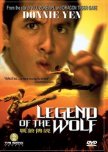
Legend of the Wolf marked Donnie Yen’s first official directorial credit. He was also a writer, martial arts director, and producer for it. The action was fast, furious, heads flying, and blood spurting violence, briefly interrupted with a blossoming friendship and old love.When a young man discovers the legendary Wolf is still alive, the Wolf’s associate, Wai, takes him to the old man. Ben Chan wants him to kill someone. Before the Wolf agrees, he tells the eager youth that he has to listen to a story…Not long after WWII, Fung Man Hin stumbles across Brother Wai in a run-down village on his journey to find the Seven Saints Temple. Wai and the villagers decide to con or steal as much money from the stranger as they can. On the way to the temple the two men are attacked by machete wielding bandits. Man Hin dispatches them, saving Wai’s life in the process. Later, Man Hin takes on several bandits at the temple and is wounded in the process. Wai carries Man Hin to a shack where Wai Yee attends him and just happens to be the woman who has been waiting for him for seven years. Her lover has no memory of her for he is suffering from the old trope of amnesia. When the worst gang of bandits led by Ben Lam arrive at the village looking for him all hell breaks out and deadly secrets are revealed.
Legend of the Wolf was decidedly low budget. Most of the fights took place in the woods or by the ocean much like an old school Taiwanese kung fu flick. The few buildings were scarcely standing. The story, especially the romance, was ill developed. Because he couldn’t remember Yee, it came across one-sided. His past and Yee’s with the bandits was glossed over. Instead of a grand romance, the writing pointed to the fact that she was a completely devoted girlfriend and disposable character. The quickly developed friendship with an energetic Dayo Wong as Wai was better developed than the romance.
Yen tried to make the film artistic in the present time, utilizing blue, green, and red lights to highlight every scene with different camera angles. Whether in the present or the past he kept the camera up close so that you could count every pore on an actor’s face, even during fight scenes. The exception to the rule was the earliest fight which was filmed in the dark leaving much to the imagination. By having considerable amounts of the movie's action filmed up close, most of the hits and kicks were shrouded. He also over cranked many of the fights causing the movements to fly by in fast motion. When Donnie wasn’t fighting, the action was abysmal, the kind of fights almost anyone could look like a martial arts expert the way they were edited.
There were some unintentionally funny scenes. When Donnie was chasing down the bandits and hit two rocks at them several guys fell down. The same thing happened when he threw a bamboo stick. One bandit used a revolver that obviously held 6 bullets, but could shoot 20 times before needing to reload! The last few fights were better than some of the others, but were still filmed too close to catch the full moves. Ben Lam belonged to Jackie Chan’s stunt team which should have freed Yen to show the fight from enough distance to capture all the moves, but too often the hits and kicks were obscured with the camera practically sitting on their noses. There were segments of the fights that were highly entertaining when they weren’t blurred or sped up. Something I haven’t seen before in a kung fu movie was Donnie using a machete like a rock and skipping it across a creek. A purely shallow viewpoint---Donnie looked lean and mean and cut to shreds as he fought the bandits.
Legend of the Wolf wasn’t a horrible first directorial attempt, but it tried to be more than it was and failed. Donnie Yen is nearly always entertaining to watch, but this film might be more for fans of the genre and era as long as they set the bar low going into it.
11/25/23
Was this review helpful to you?
This review may contain spoilers
Too punch drunk to know it's not drunken
In 1980, Kung Fu of Eight Drunkards attempted to capitalize on the success of Jackie Chan’s Drunken Master. Unfortunately, they did so without the martial arts skills of the former or the charismatic performers and were left with a below average kung fu flick.Chang Fung (Mang Fei) took some time off of working at his uncle’s restaurant to train with a drunken master named Wu Sing (Lui Ming). At first it doesn’t appear he’s learned much but a chance encounter with a mischievous Monkey (Wu Ma) reveals to the world that he has learned Wu Sing’s style of fighting. Word gets back to the Four Bandits, the biggest and baddest played by Chan Sing. The bandits are determined to end Wu Sing for causing problems with an old deal gone wrong. Lung Fei, Henry Lu, and the Gold and Silver Tigers go up against the newly trained kung fu artist to their detriment. Ultimately it will come down to Mang Fei confronting Chan Sing. As always, it’s all fun and games until Chan Sing takes off his shirt to show he means business.
There were numerous problems with this movie, but primarily Mang Fei was too stiff to even mimic the drunken style. Lui Ming came across as incoherent bypassing sloppy drunk altogether. I kept waiting for Mang Fei to use the drunken style but most of the fights were more kung fu posing than anything. The choreography was lacking in any creativity. The fights were already slow enough but then the director added slo-mo to a couple of them making me wonder if he was trying to go back in time. The deadly confrontation with Lung Fei was filmed in the dark hiding most of the action. Chan Sing can always be counted on to bring it even when he’s only briefly in the movie. Other than his fight in the finale, only Wu Ma with his moth-eaten wig brought any life to this lackluster movie.
Kung Fu of Eight Drunkards made the cardinal sin of a kung fu movie---the fights were uninteresting and bad. Also, if you name a movie after a particular style, it darn well needs to show up in it.
11/20/23
Was this review helpful to you?
This review may contain spoilers
A Nation of Banchan was an interesting look at Korea’s culture of rice and side dishes. Just like the greetings and farewells, “Did you eat?” and “Don’t skip meals” this special begins and ends with delicious meals. Heo Young Man, Ryu Soo Young, and Mimi travel across Korea eating at world class restaurants, restaurants run by ajummas, and places in between. Rice, fermented food, and seasonal ingredients are all explored.Banchan begins with the heart of the Korean meal---rice. The oldest rice seed was found on the Korean peninsula dating back between 13,000 and 17,000 years and the cultivation of it is still going strong. Approximately 3000 different rice brands are sold and instant rice has risen in popularity as well. They dine at a restaurant that specializes in serving rice in a variety of forms-chestnut porridge, alcohol, steamed, and noodles to name a few.
Side dishes are said to reflect the affection and generosity of the people. The cast travels to a restaurant run by women who have worked there for 20 years. The women bring in a sagging table that contains 24 side dishes. Then they brought in several more! The team barely made a dent in discovering different side dishes as Korea boasts more than 1500 types.
Next, they tackle wraps where anything edible is placed inside a leaf and eaten. Ssam dates back to Goryeo times. The leaf “embraces all ingredients.” They also tour where soy sauce is created and show a variety of jangs used to flavor foods.
The trio visits a Bibimbap restaurant next. Bibimbap is the food that shows “sharing and uniting the culture.” Whether using raw veggies or steamed, cooked meat or raw, it appears a practiced stir is needed.
Fermentation is investigated, the third style of food preparation---waiting. A food researcher is schooled by an old guru in how to make Jeotgal. At the fishing village the older woman demonstrates how fish and other seafood are salted and stored.
Episode 2-Seasonal Ingredients
“We can’t eat what’s grown in spring in summer…We can’t miss the time.”
Winter: Oysters are a winter staple and were cultivated in Korea going back 600 years. The trio goes to an oyster bar where they don protective gear to cook oysters on a grill at their table. They are also served oyster salad and pancakes.
Spring: In a country that is 70% mountainous, there is a long history of foraging for wild greens. They have lunch cooked by an older woman with nearly all of the ingredients either grown or found by her. Fried Acacia flowers, acorn jelly, and numerous wild green dishes are served with rice.
Summer: In a Bamboo forest, the three are treated to a feast cooked in a long bamboo tree called a “Steaming Dragon.”
Autumn: Rare pine mushrooms only found in the Fall for around 2 weeks are featured in an assortment of dishes at an upscale restaurant that Ryu goes to. Mimi is treated to seasonal raw fish at another high-end restaurant. Heo goes in the other direction to a small place that serves aged kimchi chicken stew. “Food that’s been aged a long time, like me, tastes better.”
I can’t say that all the dishes and styles of preparation made my mouth water, but I did enjoy how the meals were “built” and the history behind them. With the exception of a couple of places, it helps to be an omnivore as there were numerous meat dishes fermented or served. The three hosts were engaging and the two older ones informative. Mimi provided the wide-eyed wonder at discovering new flavors as a stand-in for the audience. Banchan means that a surprise guest isn’t a burden as there is always room for another at a table with plenty of side dishes. Korean meals are interpreted as a mother’s love, I think most mothers would approve of the love and dedication required to film this show about how seasonal ingredients and age-old methods are combined to nourish and strengthen those lucky enough to share a meal lovingly prepared.
11/1/23
Was this review helpful to you?

This review may contain spoilers
Mega Crocodile’s producers must have crunched the numbers on their calcugators and decided to utilize the most over-used stereotypes in monster movie history for this story about a rescue attempt on an island covered in enormous crocodiles. When the fearsome crocs weren’t terrifying the search party, the creepy crawly inhabitants scurrying about dug in to make for gruesome sightseeing experiences.After young biologist Zi Hao and his boat used for scientific research go missing near Hell Island, his sister Ming Zhu asked Luo Han for help rescuing him. Luo, an alcoholic with a painful past was the only person to have ever escaped the island alive. A noxious place with 3000 crocodiles and plagued with poisonous gas, the drunk basically responded that one does not simply walk into Hell Island. As all heroes do, he refused her then immediately sobered up and agreed to the perilous mission. Luo, headstrong Ming, money guy/comic relief Pan, and three aggressive foreign bodyguards jumped out of an airplane sans parachutes and began their deadly island adventure. They encountered body parts, deadly insects and plants. Oh, and the mother of all crocs, a ginormous creature with infrared vision.
The CGI alternated between good and poor, much as the acting did. Li Guang Bin managed to pull off the world-weary hero with a crossbow look, although I never understood why he used it when machine guns had no effect on the great toothy beast. I admit to being grossed out about the two different kinds of burrowing bugs the team came into contact with. The other squeamish moments were the finding of dismembered body parts lying about on a regular basis
The story itself was obvious from the opening shot, not that these kinds of movies innovate much. It’s all in the execution and this one just felt like a low-grade B movie which wasn’t very fun or terrifying. I wrestled with how to rate a movie about a bus-sized crocodile. Overall Mega Crocodile wasn’t jawsome, but it didn’t completely bite either.
10/26/23
Was this review helpful to you?


