

 135
135 431
431 16
16 2
2 6
6 3
3 8
8 10
10 3
3 13
13 1
1 1
1 1
1 1
1 2
2 6
6 8
8 5
5 9
9


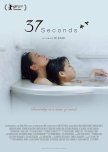
"We're just like everybody else"
37 Seconds was billed as a sexual liberation story for a young woman with cerebral palsy. While the film acknowledged that Yuma had desires like any other woman, for a film often set in the red-light district it was surprisingly chaste. This was a coming of age film as Yuma sought to break free from her mother's control and explore the world that couldn't see her as a real woman.Twenty-three-year-old Yuma leads an insular and highly controlled life. She works as a manga artist for her friend, Sayaka. What the world doesn’t know is that Sayaka can’t draw or write stories, Yuma does it all. Sayaka merely plays the part on YouTube and keeps Yuma a well-guarded secret. At home, her mother cares for and treats her like a child refusing to let her have long hair, use makeup, or wear dresses. When Yuma attempts to sell a manga idea she’s told to stop copying Sayaka’s work and be unique. She ends up at an erotica manga publication. The editor likes her work but tells her she needs some sexual experience to understand what they want. Yuma starts breaking free from her mother and Sayaka when she meets sex worker Mai and her assistant Toshi on a trip to the red-light district. Her new friends encourage her to explore what she likes and not be afraid to try new experiences. Advice her mother will absolutely not agree with.
This film was decidedly aided by hiring Kayama Mei, a woman who has cerebral palsy, instead of an actress mimicking what she thinks CP looks like. Kayama with her delicate voice showed Yuma's resolve as she fought to live her life for herself. Yuma wanted to be seen and heard, something her mother was afraid of. A gifted artist she was closeted away by her “friend.” The film bestowed Yuma with enormously helpful new friends which may not have been realistic but they provided her a gateway to independence. There were a couple of adult moments if you are sensitive to such subjects, when Yuma attempted to hire a sex worker and later when she and Mai visited a sex toy shop. Films about people with handicaps can be condescending and patronizing. 37 Seconds managed to avoid those pitfalls. Soft spoken Yuma demonstrated to herself and others that she was strong and despite her physical limitations, she was just like everyone else. Her transformation as she gained confidence was beautiful to watch. I loved Mai’s words to her, “You’ve taken a big step. Better not f*ck it up.” Of course, most of do on occasion whatever our life circumstances.
Yuma made friends, carved out a professional path for herself, gained independence, and even had an adventure to Thailand. She learned that sometimes you need to know where you’ve been in order to figure out where you want to go. 37 Seconds can be gone in an instant or its effects can last a lifetime. The memory of this tender, unique coming of age film will linger far longer than the title.
13 August 2024
Was this review helpful to you?
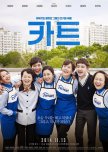
"They'll tire of it, they're just women"
Cart was loosely based on the 2007 E-Land strike that went on for 510 days. Workers were striking against the corporation abusing irregular workers, not promoting them to regular work, not paying for overtime and most egregiously, a whole sale firing of workers for cheaper alternatives and to avoid promoting workers under the Irregular Employment Protection Act of 2006. Most of the irregular workers were women over the age of 30. Cart focused on women fighting not only for their jobs but their dignity and fair pay.Han Sun Hee was close to being promoted to regular employee at the store after five long years. With a husband who traveled to find construction work, a teenage son and young daughter, her income was vital to the family. Lee Hye Mi was a single mother of a little boy and needed the job but refused to work unpaid overtime. One day everyone received a text message stating their contracts would no longer be honored. Hye Mi and older cleaner Kang Sun Rye gathered everyone to form a union and asked Sun Hee to help them lead it. Management refused to meet with the women, viewing them as “whining” and that there was nothing to worry about because, “They’ll tire of it. They’re just women.” Upper management couldn’t see what the problem was because the low pay was considered “pocket change” to them. The women were viewed as disposable and less than human. When the workers went on strike, the company played hardball utilizing brutal enforcers and police riot squads.
Cart had a strong cast. Yeom Jung Ah and Moon Jung Hee as cashiers, labor leaders, and Unnies gave heartfelt performances. Kim Kang Woo as assistant manager and labor leader Dong Jun added the one positive male portrayal. The story seemed unfocused at times and when an older lady told a speaker to put what he was saying in simple language, I repeated, “What she said!” Because I wasn’t familiar with the abusive working conditions and E-Land strike I ended up hitting Wikipedia to fill in the gaps. There were also events the writer failed to explain exactly what happened and it could feel like pieces of story were taped together with no connective material.
In my own country I’ve seen how people fighting to be seen, to be treated fairly, and paid fairly can run up against the wall of political or corporate bureaucracy. Goliath has the money and resources for long, drawn out fights. In the film, the women not only had to face a huge corporation, they failed to garner public support even after jackbooted enforcers pummeled them and tore down their encampments. Large corporations often have an easier time gaining the ear of reporters than disgruntled ahjummas. But when the chips are down, my money will always be on the fierceness of ahjummas, especially ahjummas willing to battle for 510 days to secure better and more fair employment.
7 August 2024
Was this review helpful to you?
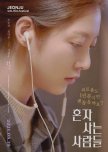
The price of loneliness
Aloners is a film written and directed by Hong Sung Eun, the only full-length film she’s done thus far. Which is disappointing because I quite liked her take on the price of loneliness and would love to see what else she has to offer. This film followed a young woman unable to reach past her own defenses to connect with anyone around her, further pushing her deeper inside herself.Jin Ah works at a credit card call center where she has to daily deal with rude customers and a frustrated time traveler. She lives alone. Eats alone. Smokes alone. Rides the bus alone. At a job where the employees have been zombified by the mind-numbing monotony, she works alone. Her relentless routine is challenged when she’s ordered to train Su Jin, the bubbly new employee. Su Jin has moved from her hometown to work in the bigger city and has no friends or family, leaving her alone. The only family Jin Ah has is her estranged father who had abandoned their family and swindled her as well. Jin Ah’s equally reclusive neighbor is found a week after he died buried under a fallen wall of magazines in his apartment. Suddenly and achingly, Jin Ah is forced to face her solitary existence.
Gong Seung Yeon perfectly captured Jin Ah’s tightly wound personality walking through her life where every day was just the same. Jin Ah was a prisoner in a castle, surrounded by a crocodile infested moat, a prison she had created herself. Earphones ever present to ward off any potential human contact, her only companions were her phone and television. A new neighbor asked, “Do you make a habit of being pissed off all the time?” And that was the key to Jin Ah, she wasn’t just an introvert, she was a tight ball of repressed anger and pain. Each new hit cracked away at her immaculately structured defenses
Being alone is something everyone faces at one time or another, chronic loneliness is a silent destructive force and the pain of it was palpable with the characters in this film. Director Hong slowly and subtly showed varying viewpoints on how people deal with loss and grief and the importance of human connection to help heal those wounds. If you are a fan of slow, slice of life films this might be one to try.
1 Aug 2024
Was this review helpful to you?
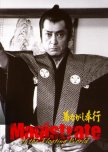
"I like cleanliness, and I have a strong sense of duty"
Magistrate of the Floating World aka The Magistrate Who Dresses Informally was an entertaining made for TV movie with an overly complicated plot. The best thing about it? Nakadai Tatsuya and his beautiful crazy eyes having a good time in a more comedic role for a change.After three magistrates break down and quit or attempt seppuku in one year, the powers that be in Edo decide that they have run out of options and must send the eccentric Mochizuki Koheita to clean a town up. Mochizuki sends a spy ahead to tell people that he is better at “having fun” than his skills as a samurai are. In reality, he actually is a remorseless womanizer, but also a master with the sword. He never checks in with the magistrate’s office, much to the consternation of the official and scribe working there. Instead, he makes himself at home in Horisoto, the den of iniquity openly run by “samurai losers” and clandestinely by high-ranking officials who make a tidy profit on the illegal activities. The spies, corruption, traitors, and temptations make Mochizuki’s job challenging, but the laid-back magistrate takes it all in stride.
The story was based on a book which might explain the large number of characters and intrigues. Ninety minutes was scarcely time to do many of the stories and characters justice. Nakadai was the focal point as he sauntered about unarmed for most of the movie, making friends as he drank, gambled, and slept his way to discovering who was the power behind the criminal enterprise. The office duo’s continued annoyance at his unexplained absence also provided some levity as they cluelessly complained while Mochizuki quietly cleaned up the deeply imbedded criminal element.
Magistrate of the Floating World was directed by Okamoto Kihachi, who directed many big screen films. With the star power of Nakadai Tatsuya it did feel at times like something grander than a TV special though something from the 1960’s. The large number of characters briefly introduced and used even when integral to the story could make it hard to keep up with who was important and who was irrelevant. Having said all that, I did enjoy it as a Nakadai fan. If you like old samurai movies or Nakadai Tatsuya in particular, this is something to give a try.
17 July 2024
Was this review helpful to you?
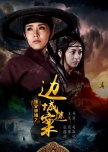
"A tiger's daughter is no kitten indeed"
Lady Detective Shadow was a low budget Dragon Gate Inn adjacent movie. The fights, story, and sets were the equivalent of a mediocre Cdrama. What it did have going for it was a competent female lead, a former royal constable, ousted by an evil, powerful eunuch during the chaotic times of the Ming Dynasty.Sima Fei Yan and her sidekick Yezi head to Shacheng in search of the bandit Lu Jiang. Lu Jiang and numerous sects and bandits are headed there in search of the mysterious treasure that reveals itself every 49 years in the desert. Everyone converges on a rundown inn where death is a familiar guest. Official Song and his servants wind up in pieces out in the woods giving Fei Yan another case to solve. Helping her is the local official, Wu Ping, a friend of her late father.
This film had an adequate story and acting though the logic during the final quarter of the film fell apart. The fights were shot for people with no kung fu skills with lots of obvious cuts, sped up and slowed down action, and wire work. The bare minimum was put into the sets and CGI. Shang Rong did her best with the Sherlockian, unemotional role of the brilliant detective.
If you have nothing else to watch except for this film, it’s not an awful way to spend 90 minutes if you keep your expectations as low as a buried city in the desert.
15 July 2024
Was this review helpful to you?
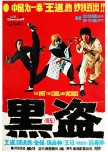
"No one can beat me"
Dorian “Flash Legs” Tan and Don Wong teamed up to take on an evil counterfeiter in Hot, Cool, and Vicious. This Taiwanese kung fu flick surpassed my expectations, albeit they were very low to begin with. Not gifted with the budget of a Shaw Brothers production, director Lee Tso Nam and martial arts director Gam Ming made the most of what they had, namely Dorian Tan’s excellent kicks.Capt. (Northern Leg) Lu takes care of the law and order in a village run by Mayor Yuen. When Yuen’s son commits a murder the two men clash. Southern Fist Pai Yu Ching, a known killer, arrives in town with his buddy Tieh and begins working for Yuen. Newly arrived Miss Lee and her uncle bear a grudge against Lu. Before long everyone seems to be trying to hire Pai to kill Lu.
There were no secret lists or manuals, but there were plenty of hidden identities and subterfuge. The plot led to the fights nicely. Gam Ming’s choreography utilized the cast’s abilities and those with lesser abilities well. Speaking of Gam Ming (aka Tommy Lee), he showed up in the final act as the dangerous golden haired albino fighter. Dorian’s kicks are always a joy to watch and the choreography showed them off splendidly. There was a modicum of wire-fu when characters did some high jumping but it was kept to a minimum. Sun Chia Lin even got in on the fighting. Most of the action was fairly fast though there were some glaring misses. The final fight was worth the price of admission.
Dorian Tan and Don Wong made for a fun dynamic duo as they took on Gam Ming and a host of minions led by Phillip Ko Fei, Li Chiang, and Lung Fong. If you enjoy old kung fu movies, especially the low budget Taiwanese flicks, this is one to try.
10 July 2024
Was this review helpful to you?
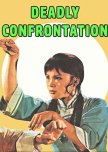
"Your kung fu is good but you can't stop bullets"
Deadly Confrontation was a below average Taiwanese kung fu flick with low wattage star power. Chia Ling, Lo Lieh, and Yueh Hua had top billing but the actual leads in the movie were Liang Hsiu Shen and Pai Ying.Mah returns home after three years in jail. He had been framed by his enemy Sung Teng Wai, the local warlord. While he was away his girl married Sung’s son. Hot headed Mah has nothing but revenge on his mind. Sung has no intention of letting Mah live long enough to reach that goal. Chow Sun arrives in town looking for a job and after beating most of Sung’s men is put in charge of the casino. Mah and his friends find themselves up against formidable forces, especially when it turns out Sung is also processing opium on the side!
Everything about this film was below average with a less than charismatic cast. Liang and Pai were adequate but didn’t command attention. Chia Ling had very little to do and was finally rewarded with one fight. Lo Lieh popped in to fight with Pai Ying. Finally, Yueh Hua showed up near the end of the film as another bad guy. The fights were okay. Guns were also used, something I don’t care for in martial arts films. The editing was abysmal. People who were about to be killed showed up later without a scratch on them. I don’t count off for cropped edges and wear and tear on the film, but it could be distracting. Typical of Taiwanese films from this era, much of the fighting took place out in nature.
This kind of film is the hardest to write a review on because it was so bland and poorly put together. Deadly Confrontations was far from the worst old kung fu film I’ve watched but far from the best as well.
27 June 2024
Was this review helpful to you?
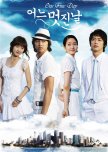
Who's your daddy? Or brother? Or lover?
One Fine Day boasted a fine cast and one of the messiest plots I’ve seen. Starring Gong Yoo, Namkoong Min, Lee Yun Hee, and Sung Yoo Ri, the writers didn’t have to do much to develop a story interesting enough to showcase their young cast’s talents but decided instead to make the story as ridiculous and melodramatic as possible.I usually give a brief synopsis of the drama so that my review makes some sense but this story will give you emotional whiplash with the way it starts and drops story threads and then completely changes them. Geon and Ha Neul are stepsiblings-no blood relation-who have been separated for 15 years. Tae Won and Ha Neul/Hye Won are siblings via adoption. Geon just wants to be her brother or so he says. Tae Won is a creepy incestuous molester. Gang Dong Ha is Ha Neul’s boss at the aquarium where she works and he is also in love with her. Hyo Ju is the girl Geon grew up with after his parents died and his dad’s driver took him to live in Australia. Hyo has a heart condition and is cuckoo, obsessively in love with Geon. Geon may or may not be reconnecting with Ha Neul because her adoptive family has money and Hyo Ju needs an expensive surgery. Ha Neul’s adoptive father may hold the key to what happened to Geon’s father.
Gong Yoo, when he wasn’t having to play the yelling possessive brother, gave a strong performance. Namkoong Min was entertaining as the charming boss with a past. I couldn’t help but root for him. Both men sported their BoF style haircuts before BoF came out. Sung Yoo Ri only had to display three emotions-surprised, sad, and “where did I leave my wallet?” Nothing any deeper as Ha Neul had no lasting emotional trauma from being molested. This was prime time for wrist grabbing in dramas. This girl was yanked from pillar to post throughout the drama. They even pulled off the complex double wrist grab. In one scene I saw bruises on her arms, no surprise where those came from. I’m not a fan of the wrist grab, I find it a dominant move that is degrading.
Hyo Ju will go down as one of the most selfish, manipulative characters in drama history. Lee Yun Hee did a good job of making me loathe her character. Yoo Ha Joon was excellent as the creepy, incestuous brother who had a scene with his dad that the drama The Heirs lifted straight from. And Jung Dong Hwan who would later play the wealthy lemon sucking dad in The Heirs played the wealthy lemon sucking dad here. The drama couldn’t decide whether to make him a villain or sympathetic. No sympathy from me, he knew his son was creeping on Ha Neul/Hye Won and did nothing about it.
The biggest problem with this drama was that it had no commitment and follow-through. The plot was overly complex and never fully explained. I kept waiting for the big flashback to show exactly what happened from the guilty party’s viewpoint, but it never happened. Geon prepaid for Hyo Ju’s surgery in Australia but she refused to have it when he left to find his sister. That money was still available, so why the proposed scam on Ha Neul’s family? Geon made some inexplicable decisions near the end of the drama, that truly made no sense. Even his motives toward Ha Neul took most of the drama to come to the surface. He and his found family brother went to work for Ha Neul’s adoptive father, but were never at work. Ha Neul worked at the aquarium but was hardly ever there except to mope in front of the fish so that Gang could comfort her. Her adoptive family was seriously twisted but she kept going back to them to act like a good daughter.
There’s a lot to unload with this drama, mainly because people’s motivations changed from minute to minute. Also, the secrets they knew changed which completely overrode their prior actions. There were plot holes big enough for a fleet of Mack trucks to drive through. One Fine Day was like a rollercoaster ride with no seatbelts. I was able to hang with the story and get some enjoyment out of it for most of the drama until the last few episodes when they completely ran that ride off the rails. If you like to watch pretty people and/or pretty fish, have a very flexible neck for when the ride changes directions, you could try this drama, but I suggest giving the Tilt-a-Whirl a chance instead.
26 June 2024
Was this review helpful to you?

"Oh how lovely, oh how sweet"
Pieces of Memories was a whimsical and touching look at how memories shape our perception of life. Ku Hye Sun perhaps best known for playing Jan Di in Boys Over Flowers wrote and directed this short film. I read she also wrote the music for the haunting song that played throughout the film.The film begins with an older man lamenting that his future is uncertain. He has tried to conduct his life, but found that not everything could be controlled. As he sits down at the piano, a portrait comes to life to direct the music and memories displayed. Time rewinds and his life is shown through his years at the keyboard.
What comforts us in difficult times and as our life draws to a close are the cherished memories of loved ones. While we cannot control much of what happens in life, we can control how we frame those thoughts. Love lives on and the sweetness of it enriches the moments that pass and heals the losses we suffer.
Ku’s music was both melancholy and uplifting, much like this short film. It reminded us that even when we haven’t visited our memories for some time, they are still waiting on us like old friends. This short film was an inspiration to live life to the fullest and to take every opportunity to make sweet memories.
“Our moments together
Days we share together
Now melt down in my teary eyes
Hurting, dampening, distancing
O how lovely, O how sweet
My immortal love that you are”
19 June 2024
Was this review helpful to you?
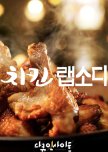
Clucking good!
Chef Baek Jong Won returned, this time to guide us through Korea’s obsession with the beloved yard bird on Chicken Rhapsody aka Korean Fried Chicken Rhapsody. With streets named after area specialties and fried chicken restaurants seemingly everywhere, the Koreans take chicken very seriously combining tradition with innovation in order to create nearly limitless variations to delight and challenge their taste buds.Despite Netflix’s title, only the first episode focused on fried chicken. Baek and his guests did a deep dive into the history of fried chicken and the major turning points for the popular dish. Fried chicken took off in the 1970’s as chickens and cooking oil became more readily available. The initial restaurants were influenced by American fried chicken but it didn’t take long for the Koreans to say, “hold my beer” and put their own delicious spin on the dish with a wide variety of sauces for the juicy and crispy chicken pieces to be tossed in. I did love the trivia bit regarding Kentucky Fried Chicken’s introduction in the 1980’s. Not only did the American chain show the benefits of brining, but it was also popular with women of all ages because they could finally order chicken legs for themselves which were often gobbled up by the men in their lives when meals eaten elsewhere only came with two.
Episode 2 explored other dishes, such as rotisserie and barbecued chicken. Baeksuk, Sujeunggye, Spicy Stir-fried Chicken, and Cauldron Lid Spicy Braised Chicken all had their moments of attention. None of the bird goes to waste as cooks through the years have developed new ways of serving offal in addition to the more favored parts. The show also discussed the efforts to restore native birds, including the long-tailed chicken.
With over 40,000 fried chicken shops, it's safe to say that Koreans love the crispy delights. And why wouldn’t they? Whether it’s for dinner, celebrating, or winding down with co-workers at the end of the week, they eat around one billion chickens a year. There are streets throughout market districts named after the specialty dish served to happy customers from Braised Chicken Street to Chicken Feet St! Fried, braised, stir-fried or cooked on a cauldron lid over a fire, there was no shortage of styles. Too hot for chicken soup? There is no such thing! The hotter the day the more bowls of scalding soup that are sold!
If you’ve ever watched a Kdrama with the characters eating fried chicken and wondered what went into making the tasty morsels, look no further. Baek and friends not only showed the different methods used, but the history and how cooks create their own unique and mouthwatering styles of preparing the popular bird. Per usual, this series produced a quality program showing the love and imagination that goes into preparing both traditional and cutting edge cuisine.
15 June 2024
Was this review helpful to you?

"The more you know, the more you see." I've seen enough.
A Trip with Friends is the third film of Kim Chang Gyun’s that I’ve watched and sadly it was the weakest. All three of his short films were made in 2018 abroad. This movie as well as Snapshot were filmed in Thailand. Like Snapshot, the characters visited various historical sights and tourist attractions.Kim Hee Jung, Seo Mi Jung, and Lee So Jung are theater and film studies majors at university. They decided to take a trip abroad to Thailand together. They eat, shop, and visit the elephants and later talk about the elephants. Over the next few days they take boat tours and go to the beach and visit other sights. They talk ad nauseam about acting and their love lives. Two of the girls have dreams about their professor of Arts in Images class. On the plane ride home, the third girl has her own dream about the professor.
I would worry that this was more of a Kim Chang Gyun Ego Trip rather than A Trip with Friends except that his professor Hur Dong Chul came across as a deadbeat in two of the girls’ dreams. During the dream sequences it became obvious how low budget the film was as there were people in the background yelling and babies crying. Much of the film was watching the girls take selfies together as they explored their surroundings. When they weren’t taking pictures, they were talking in their room, or at least two of them talked, the poor third girl spent most of her time trying to look interested during the mundane conversations. The two girls who did most of the talking also did what I call “hair acting”. They could not keep their hands out of their hair. They were constantly tussling, tossing, and flipping it.
I thought there were elements of Chang's other two films that were of interest, but I found A Trip with Friends tedious at best. I enjoyed seeing some of the places they visited, I just grew tired of watching them taking pictures of themselves. The dreams ended up being a little creepy. And the long, long, monologues about their lives held little interest for me. I don’t mind a bargain basement budget for an independent film, however, I need something to keep my attention. I wished I had stayed home instead of taking A Trip with Friends.
5 June 2024
Was this review helpful to you?
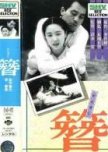
"The sun will show me the way"
While the world was falling into mortal turmoil and the stage was being set for a devastating war, Ornamental Hairpin found a group of people at a quiet inn nestled in the mountains where they could experience healing, friendship, and some moments of respite.Professor Katatae has come to the inn and hot springs for the summer to read. His ruminations are often ruined by traveling parties visiting the inn, making noise and hogging the masseurs. Emi and her friend Okiku are two such pilgrims enjoying themselves. The Hiroyasus have befriended both the professor and a Go playing grandfather staying there with his two grandsons. A young soldier, Nanmura, accidentally steps on a hairpin in the hot springs, extending his stay at the inn. While Katatae continues to grouse about the injury, Nanmura sees it as poetic. Now everyone is concerned whether the hairpin belongs to a young beautiful woman so as not to burst Nanmura’s poetic bubble, misunderstanding his meaning. Turns out the hairpin belongs to Emi and she returns to collect it and apologize. The group takes her in and she decides to stay there with them for the summer, much to the chagrin of a man she left behind in Tokyo.
Ornamental Hairpin was a simple, tranquil story, but not simplistic. Emi may have been the focal point of the story, but this was an ensemble cast of disparate characters who fell into an easy friendship while on vacation. They ate together, soaked in the springs, complained about the food, and even slept uneasily together with the snoring Professor and Grandpa keeping people up at nights. The grandsons Jiro and Taro whined about the sameness of the days but also took time to help Nanmura recuperate and exercise along with Emi. It is in Emi where the story transcended an uneventful vacation romp. She learned to do laundry and enjoyed spending time with the boys. Here where the sun could touch her face she began to long for something more in her life. She was looking to find meaning. While she was drawn to Nanmura and he to her, his life was back in the military and the coming war. When everyone else was preparing to leave, she remained behind, unsure of where she wanted to be and more importantly, who she wanted to be.
The acting was quite compelling. Saito Tatsuo as the Professor, brought the comic relief with his constant state of complaining. Especially when he railed against the noise then kept everyone up at night with his snoring. But it was Tanaka Kinuyo and Ryu Chishu who gave the heartfelt performances. Tanaka and Ryu were forces to be reckoned with in Japanese cinema. Ryu was an Ozu regular, but often as the father, older brother, or patrician friend. Tanaka excelled at playing women in more desperate circumstances. Here they were youthful and the romantic leads, even if the romance was not fully developed. They supported each other, gently and playfully, one time literally when she gave him a piggyback ride! They were soft and almost unrecognizable in these strangely easy-going roles. Tanaka conveyed the longing of her character for the sun on her face and freedom in her life beautifully.
Ornamental Hairpin was the ideal summer vacation for a group of people who became friends over dinner and soaking in the healing waters. Idyllic scenes of bubbling rivers, mountains, and trees gave way to reality calling again. A hint of melancholy also floated through the mists with the already present food shortages and war looming on the horizon. Emi, walking alone on the paths they’d traveled together had to discern the path ahead for herself. This film captured a cozy, funny, bittersweet moment in time for a group of strangers who became friends and faced uncertain futures.
12 May 2024
Was this review helpful to you?

"The soil of Burma is red. So are the rocks."
The Burmese Harp was a WWII film based on a children’s book by Takeyama Michio from 1946. The book was written to help young readers come to terms with Japan’s defeat while demonstrating Buddhism’s emphasis on altruism. Music featured prominently with both the Japanese and British soldiers singing as well as the playing of the titular instrument. This was the kindest, gentlest war film I’ve ever seen as the Japanese soldiers came to grips with their country’s loss and hoping to see home again.A small group of Japanese soldiers are making their way through Burma (Myanmar) to Thailand when they are captured by the British. They learn the war has been over for three days. Capt. Inouye is unsure of what lies ahead of them but says they will face it like men and they will face it together. The Allies ask for a soldier to try and talk a group of holdouts on Triangle Mountain into surrendering. Inouye sends the harp playing Mizushima Yasuhiko and tells him to catch up with them at the Mudon POW camp 200 miles/322 km from where he will be after the mission. Unlike Inouye and his group of singing soldiers, the fanatical soldiers on the mountain don’t care that the war is over. They want to die for their Emperor and call Mizushima a coward. The Brits hit the hideout hard and Mizushima is the only one to survive. A traveling monk rescues him and nurses him back to health. While the monk is bathing in the river, Mizushima steals his clothes and later shaves his head so that he can make the arduous trip back to his men. Along the way he repeatedly comes across the decaying bodies of Japanese soldiers left where they lay. He buries a handful before continuing his journey. When he reaches the Buddhist monastery at Mudon he teaches a young boy a few new chords on the harp (Saung). The next morning he hears singing and finds the Allied hospital staff at the camp singing and praying over a Japanese soldier they have buried. Something inside of him fundamentally alters at this sight and instead of joining his men he turns back to bury the dead. Meanwhile, his men grow ever more concerned at his absence.
This film fell more into fable or fairytale than realistic war drama. Director Ichikawa showed the ravages of war and starvation in his excellent film Fires on the Plain (1959). While the book supposedly touched on Japan’s responsibility for the war and was critical of Japan’s militaristic actions and mindset, this movie veered away from those criticisms. Since the core concept of the film was for children--comfort women, the Nanjing Massacre, and dire reality for Allied prisoners in Japanese POW camps where 40% died was left out. This was a film about healing, friendship, and spiritual transformation in the face of defeat while not shying away from the staggering loss of life from war.
Music played an almost magical role for the soldiers in healing and binding the men together. It also brought out the shared humanity between the Japanese and Allied personnel. “Home, Sweet, Home” was sung by both groups and at one time all together. As Mizushima observed the scattered bodies with birds feeding on them, “O, Sacred Head Now Wounded” played in the background. In typical 1950’s fashion, the men sounded like a professional chamber choir when they sang and Mizushima’s battered saung provided the clear, dulcet tones of an orchestra’s multi-octave harp.
The soldiers longed for home and longed for peace. As they dreamed of returning to their lives in Japan they had no idea of the drastic changes ahead or that many places would be unrecognizable. Mizushima had been reborn while assisting the dead to rest in peace. He had to decide whether to stay in Burma and mend the past or go home and help rebuild his country. While this film may have shown a more idyllic version of humanity it couldn’t hide the horror and monstrous cost of war and didn’t try. This type of meditative, comforting film in the face of upheaval and how humans choose to react and grow was right up my alley. I thoroughly enjoyed The Burmese Harp. “…our work is simply to ease the great suffering of the world…to find the strength to create peace by one’s own example.”
2 May 2024
Home, Sweet, Home (For those too young to be familiar with it)
“Mid pleasures and palaces though we may roam
Be it ever so humble, there's no place like home
A charm from the skies seems to hallow us there
Which seek thro' the world, is ne'er met elsewhere
Home! Home!
Sweet, sweet home!
There's no place like home
There's no place like home!
An exile from home splendor dazzles in vain
Oh give me my lowly thatched cottage again
The birds singing gaily that came at my call
And gave me the peace of mind dearer than all
Home, home, sweet, sweet home
There's no place like home, there's no place like home!”
Was this review helpful to you?
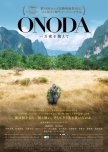
"Whatever happens, we'll come back for you"
Onoda: 10,000 Nights in the Jungle told the true story of one of the last Japanese holdouts after WWII. Japan surrendered on September 2, 1945. The war ended for Onoda Hiroo 29 years later on March 9, 1974. During his training as an intelligence officer he was told he had to survive at all costs and that "Whatever happens, we'll come back for you.” Onoda learned the hard way that the military was not as loyal to him as he was to the mission.“We will be back for you. We will be back. Whatever happens---survive!”
Late in WWII, Onoda Hiroo fails pilot school because he has a fear of heights and dying. He’s recruited to train as an intelligence officer and in guerilla warfare in December 1944. Before he leaves, his father (mother IRL) gives him a dagger to kill himself with rather than be captured should the need arise. When he arrives on Lubang Island none of the other officers will help him with his mission which was to disable the airstrip and port. Most of the soldiers are hungry, demoralized, and/or ill. The Americans take the island shortly after his arrival. Soon the only Japanese soldiers not dead or captured are Onoda and the three men he chose to work with him---Kozuka, Shimada, and Akatsu. Believing they must hold their ground until more Japanese forces arrive, they set up camp in the jungle and cause damage to the farmers’ fields in order to keep the locals afraid of them. They subsist on whatever they can find or steal, taking up residence in caves or homemade huts. The small group of holdouts refuse to believe the war is over and patiently wait for reinforcements.
“Try to change the way you see things”
Two different actors played Onoda and his second in command, Kozuka. They all performed admirably as the characters aged and learned to survive in the jungle and rely on each other. The film confined most of the shots to the men and their duties which displayed their arduous methods of staying alive. Bound by their limited outside contact, their lives seemed incredibly sad. They were completely isolated and separated from family and loved ones. As much as the film focused on the holdouts it would have been nice to gain the locals’ perspective of the killers in the hills and the fear they instilled for a time.
“They know that what is complicated and even incomprehensible, sounds true!”
My first thought when Onoda’s father handed him the dagger and told him, “Your body is the Fatherland. Do not let it fall into enemy hands,” was the Spartan mothers’ declaration to their sons, “With your shield or on it.” Ordered not to die and trained to unconditionally obey orders, unwilling to return home defeated, and determined to prove himself, Onoda’s psyche was trapped in a nightmare in the jungle of Lubang. The outside world and even loved ones attempted to convince Onoda that the war was over, but he could only see conspiracy theories everywhere he looked, convinced that Japan was still fighting. Eventually, he had access to newspapers, magazines, and a transistor radio but believed it was all an elaborate ruse to trick them. At some point, Onoda’s rigid obedience and views appeared to come across as an over-inflated sense of self. Why would the enemy go to such extraordinary lengths to trick one man? If he was that important they could have sent in a wave of soldiers to kill him or just bombed the jungle. Onoda had a high level of cognitive dissonance as he clung to his beliefs in the face of harsh opposing facts.
“What if we killed people we’re no longer at war with?”
Onoda and his men were resourceful and resilient. The youngest left after nearly 5 years and another was killed after almost nine. When the second in command was killed after 27 years of holding out, it seemed to chip away at Onoda’s confidence. Despite their incorrect assessments, Onoda and his men were a product of their training and propaganda. They truly believed they were serving the greater good by holding their position on the island. It took as much determination as denial to be separated from family and friends, to live on roots and fruit often with only rudimentary shelter for nearly three decades. In 1974 a Japanese adventurer discovered Onoda and befriended him. The young man caused Onoda an existential crisis as the holdout could no longer deny that Japan and the world had changed. The military bore responsibility as well. The loyal soldiers killed 30 inhabitants over the years. Two of the four died pointlessly and Onoda lost 30 years of his life because no one cleaned up the mess they created. These soldiers were imbedded on islands in the last months of the war when the writing was on the wall. VE Day occurred not long after Onoda was stationed on Lubang and Japan surrendered in August of 1945. All it took was for Onoda’s superior to come back for him. Unfortunately, for Onoda, his men and the people of Lubang, it took nearly 30 years to do so.
30 April 2024
Was this review helpful to you?
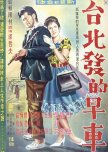
"There will be no end to the sorrow"
Early Train from Taipei is one of about 200 Taiwanese language films to have survived that were made between 1955-1970. This film was popular during its day and has been restored with only a few flickering skips still evident. There was no doubt what type of film this was going to be during the intro when an artist tells his friend there is a sad story behind two disparate paintings of the same woman. While I can appreciate its place in history, the endless melodrama and flat characters caused my interest to wear thin by the end.Siu Lan and Hue Thao are two beautiful people who live and work in the countryside and love each other. Siu Lan’s father died leaving her ailing mother in deep debt. When the creditor comes calling demanding payment, Siu Lan asks a friend to find her work in Taipei. The work turns out to be as a taxi dancer. Within a couple of weeks, she’s sending significant money to her mother to help pay down the debt. Hue takes the train to visit her but derides her for her choice of employment implying she needs to go home. He leaves her a note and catches the train, hiding from her when she follows him to the station. Siu Lan attempts to quit but her boss does not handle her resignation well, and from there on her life takes a decided turn for the worse.
A heavy-set couple back home brought comic relief whenever they encouraged Hue to visit Sui Lan. But that laughter was soon drowned in a torrential flood of tears. Tears of guilt. Tears of loss. Tears of sorrow and anger. Tears of hopelessness and remorse. And tears of pain. The last third of the film was a relentless parade of pain. With each new dilemma the catastrophes felt more like manufactured drama desperately trying to force the audience to cry than from any organic developments to the story. Siu Lan and Hue were tortured over and again. The lyrics to the songs implied that Siu Lan had been enticed by greed and the big city lights, but she appeared to remain the same lovely girl she always had been and was only working in the city to pay off her mother’s debts. She would have preferred to stay in the country with Hue and her mom but her innocence was exploited by the cruel club owner. Whatever lessons fate was trying to teach her for having sought to make money in the city, I’d say it was overkill.
I did like that the connections between the women were strong. Siu Lan’s friend, Suat Gno, stayed loyal to the end and felt deep regret over finding Siu Lan a job at the club. Suat Gno also cared for Siu Lan’s mom when Siu Lan was unable to. It was good to see Ko Yu Min, veteran of numerous kung fu flicks, play the defense attorney (paid by Suat) exasperated with Siu Lan’s martyr complex. His perfectly timed eyeroll expressed my sentiments exactly. It was difficult to watch this woman who only had good intentions be victimized over and over again. First by the lascivious men in charge of the club and then later by the justice system. Lastly by herself. Taiwan was going through a growth faze with young people heading to the cities for better jobs. Apparently, this melodramatic tale connected with audiences and was quite popular. The Last Train from Kaohsiung was a successful prequel to this film and there was possibly at least one sequel to Early Train. I would like to find the sequel to see if they saved Siu Lan and Hue Thao not only from their emotional damage but also the physical damage they endured.
Early Train from Taipei was a love story between two people torn apart by the evils of the big city. Beauty and “greed”, even if used for protecting the family were punished like using dynamite on a gnat. I appreciated this time capsule for what it was and am grateful it was saved and restored for future generations to see. Despite that, I struggled with the almost gleeful degradation of Siu Lan and Hue Thao as a cautionary tale for young people desiring to leave home for the promise of a better life in the city.
17 April 2024
Was this review helpful to you?


