

 135
135 431
431 16
16 2
2 6
6 3
3 8
8 10
10 3
3 13
13 1
1 1
1 1
1 1
1 2
2 6
6 8
8 5
5 9
9



Sengoku Gunto Den Dai Nibu: Akatsuki no Zenshin
3 people found this review helpful
"A thief is still a thief"
Saga of the Vagabonds, Part 2: Forward at Dawn took place one year after the virtuous Taro was betrayed by his family and being hunted by the magistrate. He joined Rokuro’s bandits as their leader, changing all of their lives.Taro’s leadership of the bandits has changed their entire operating procedure. They now only rob from the rich and give to the poor. There’s no raping or murdering of the peasants. Most of the bandits are strangely okay with this. Everyone, that is, except for Bonten and Jibu who have their eyes on the farm girl who had saved Taro in the first film. Their betrayal devastates the gang. Betrayals also hit close to Taro’s home when the evil retainer Hyoe’s plans are revealed.
Taro and Rokuro guided the band of merry thieves and fought side by side. I was shocked at how easily the bandits accepted Taro as their leader and was then reminded of a line from Ragnarok by Loki, "Well, it seems that you are in desperate need of leadership". Korg, “Well, thank you.” These bandits were not very bright and were also in desperate need of leadership.
This time the body count rose as Taro dealt with the fallout of Hyoe’s deadly actions. Part 2 was shortened in the version I watched and I wondered if they cut out the romance between Taro and the farm girl Tazu and any extended scenes between Taro and his love Koyuki. There seemed to be implied scenes that weren’t shown.
Whereas Part 1 was lighter and livelier, Part 2 was much darker as the deep betrayals burned away any ties that Taro had with his past. Not quite as engaging as Part 1, Part 2 was still enjoyable. The screen always sizzled more when Rokuro was engaged. Taro, bless his heart, could be a bit stiff. The message in the films was that the powerful and wealthy abused those beneath them in both social and economic status in order to prosper themselves. And when in doubt as the body count rose---the butler did it.
20 March 2026
Housekeeping note: In the version I watched, Parts 1 & 2 were combined. Part 1 was missing around 14 minutes and Part 2 over 20. If anyone finds the two in their entirety, please let me know.
Was this review helpful to you?

Sengoku Gunto Den Dai Ichibu: Toraokami
3 people found this review helpful
"Promise to not get angry"
Legend of the Vagabonds, Part 1: Tiger and Wolf began in a rather lighthearted manner. But as so often happens, as the story went on, the shadows descended.Toki Taro Tarao chastises his young brother Jiro when Jiro’s men devastated the suffering peasants in order to gather a larger tribute to the Hojo clan. Taro accompanies the small fortune only to be besieged by bandits. Taro is injured and saved by a small farm family. Kahi Rokuro, a new member of the band of thieves, made off with the money, much to the chagrin of his gang. Rokuro becomes distressed when wanted posters for Taro appear as he knows Taro to be the best of men and not deserving of such derision.
The most compelling character in this film was not the upright and uptight Taro, it was the flamboyant and strangely ethical Rokuro. Once Rokuro realized who he had stolen from, he did whatever he could to make things right for his old childhood friend, Taro. Taro, on the other hand, had to learn the hard way that his family and villainous retainer were willing to sacrifice him for their own evil ambition.
Part One ends with Taro making a fateful decision that will change his life and the lives of the bandits. This was an entertaining film with several limited fights. Nakamura Kanemon III’s rousing performance as Rokuro lifted the story when rigid Taro’s presence often let it down. The vile Hyoe and immoral Jiro may have caused problems for the virtuous Taro in this film but they had more in store in Part 2.
20 March 2026
Housekeeping note: The only available version of this film I could find had Parts 1 and 2 combined. It appeared that Part 1 was shortened by 14 minutes and Part 2 was shortened by over 20 minutes which would have included credits as well.
Was this review helpful to you?
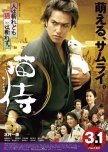
"Meowonderful!"
I was in the mood for something soft and cuddly. Samurai Cat curled up on my lap and brought a warm smile to my face. Kitamura Kazuki has never been more handsome and masculine looking than when holding a white kitty in one hand and a katana in the other.Madarame Kyutaro was fired as the Kaga family’s sword instructor and now makes ends meet by creating umbrellas. He faithfully holds out hope for finding a samurai job yet can’t even land an interview. His wife and daughter wait dutifully back home for him. One day, members of the Yonezawa family ask him to murder their rival’s cat. The town has been split in two ever since an incident 30 years ago between the cat loving Aikawa clan and the dog loving Yonezawa clan. Down to his last coins, he accepts the job. When she turns her sparkling green eyes on him, Madara is unable to kill the beautiful white cat and takes her home instead. Before long, the situation explodes and the loner ends up not only playing referee, but giving refuge to a maid who cares for the cat and a young samurai bent on vengeance.
Samurai Cat the drama was one of my first Jdramas. I found it to be thoroughly charming. Though not as strong, once Madara gave in and picked up the kitty, it was hard to begrudge the film anything. This character is my favorite of Kitamura’s. I was pleased he still had his own theme song he sang. “Slash ‘em, slash ‘em, slash ‘em! My mother once told me I was born holding a sword. Invincible, never lose a battle. That’s the only road for Madara...”
The story started out slow and was simplistic and a little silly. I suppose having a cat clan vs a dog clan made as much sense as a lot of other reasons samurai hated each other and wanted to fight. An old wives’ tale stated that white cats brought money and people. This sweet kitty and a gruff ronin actually did combine to bring people together and peace to Edo. So, if you are needing a heartwarming film that can put a smile on your face, Neko Zamurai/Samurai Cat would be a good place to start.
“As a ring of a cat’s collar bell
Tells me that I’m not alone
Going on the trackless path
I am Neko Zamurai.”
ஐ
18 March 2026
Was this review helpful to you?
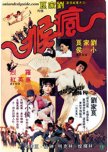
Uncle Chan and his sister own and perform in their stage show. The local gangster and patron, Duan Shiang Yuan offers them a dinner celebration on their last night. Tsuei Hung begs her brother to not drink too much which he of course ignores when his kung fu is called into question. A series of bad decisions later and Chan is accused of assaulting Duan’s wife. Tsuei Hung agrees to be Duan’s mistress in exchange for her brother’s life which Duan magnanimously agrees to…after he’s crippled Chan’s hands. Chan becomes a street performer and makes the acquaintance of a small-time thief. Both run afoul of the extortion gang with Chan eventually agreeing to teach “Little Monkey” Monkey style kung fu.
First my biggest complaint. Why does the woman have to pay for the man’s idiotic behavior? And why does everyone get over that sacrifice so easily? Okay, my other complaint, the movie was too darn long for a kung fu flick. There wasn’t enough story for 110 minutes, it dragged in places.
Now, for what did work. Lau Kar Leung is my favorite old school martial arts director and I loved that he was allowed to star in this film. He started out honing his craft in Kwan Tak Hing’s Wong Fei Hung films going back to 1953. At 41, he stayed up with the 19-year-old Hsiao Hou. His choreography for this film was exciting. Hsiao was extraordinarily acrobatic, limber, and fast making him the perfect Monkey style artist. Lo Lieh, as the villain, snarled and sneered his way through providing more than enough menace for two. A grand Shaw Brothers’ set for the extravagant brothel where most of the big fights took place gave plenty of stairs to fight up and down and balconies to fall off of. A teenage Kara Hui had the small, but important role, of Chan’s sister. Scriptwriter Ni Kuang did her wrong but at least she had a good fight against Lo to give her character a smidge of meaning and heroics, even if the student squandered her sacrifice much like his mentor.
If you enjoy Monkey style kung fu and not one, but two training montages, this is a film to check out. There was a great deal of acrobatic “no wires on me!” kung fu displaying a wide range of agility, strength, and quickness. I would have preferred several scenes to have been either cut or shortened, as the movie ran long for me. The final fights were entertaining, though sometimes with monkeys, they take the long way to get there. Rated on a curve.
13 March 2026
Housekeeping note: 400th entry in my Everybody's Kung Fu Fighting List!
https://kisskh.at/list/LOPBNbe3
Trigger warnings: While there was a lot of fighting there were only two deaths and they weren’t too gruesome. If smoking bothers you there was quite a bit of that and drinking.
Was this review helpful to you?
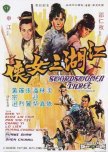
"We're family"
The title Swordswomen Three was false advertising as there were rarely 3 women on the screen at the same time. Director Shen Chiang preferred to focus on the male characters. Lo Lieh and Essie Lin Chia carried this film on their backs.Ambitious Chu Tien Hsing repeatedly challenges the master of the Xiude Martial Arts Academy to a duel. Chu is upset that the school is named #1 after winning a contest held every decade. The son, Hsu Chin Wu, finally agrees to fight Chu and then defeats him. Chu decides if he can’t win with his sword skills, he’ll steal the famous Mighty Steel Sword from his fiancée’s family.
First things first. If you are going to title a film, Swordswomen Three, then the swordswomen should be featured. Shen Yi as Ruo Lan was engaged to Chu and spent most of her time fretting what to do. Sister Hsiao Lien (Pan Ying Zi) had almost nothing to do. Neither was the sharpest knife in the drawer. Pan’s character was sidelined with an injury for much of the film which wasn’t a bad thing because she was a drip. Later, wishy washy Ruo Lan was injured and mostly off screen. The eldest sister, Ju Mei, was fierce and intelligent. Essie did a great job with the role she was given. Sadly, she was undercover wearing a hood for part of the film (or her stunt double). If the other heroes had listened to her the evil Chu would have been defeated earlier.
Shen Chiang’s direction and writing were sorely lacking, with too many scenes feeling redundant and also changing pertinent info about the sisters’ connection to the Xiude Academy midway. He also had the sisters make some of the dumbest and most illogical decisions to try and push the story along or gum it up.
Another dull knife was Chang Yi’s Hsu Chin Wu. Watching him play this dull good guy was like watching paint dry, grass grow, or any other tedious task you could think of. After Ju Mei survived all sorts of tortures with her wits and fighting skills, she actually asked Hsu to come up with a plan to defeat Chu. Seriously? She was the sharpest sword. I would have had qualms about asking Hsu for directions to the best restaurant nearby. Essie’s only equal in this film was Lo Lieh’s Chu. Chu acknowledged he wasn’t the best fighter, but with the Mighty Steel Sword he felt he would be invincible. One side could cut through anything. The other side was magnetic and could disarm opponents. Enticing and able to pour on the sexy charm when needed, I could see why Ruo Lan was conflicted. However, the villain shouldn’t be the most, if not only, captivating character on screen. Lo, like Essie had to do some heavy lifting to elevate their characters above the script. And the good guys shouldn’t be utterly inept, with the exclusion of Ju Mei. And mild spoiler alert, it was not Ju Mei or the three sisters who were given the final assault on Chu, it was of course, Hsu.
Most of the fight choreography was competent as it should have been with Tang Chia and my personal fave, Lau Kar Leung, as the martial arts directors. Although there was a hilarious moment in a scene where older actor Lee Wan Chung had an oopsie with the wire work. The final fight in a bamboo forest was bloody and violent as expected, yet disappointing without the SWORDSWOMEN THREE taking part in it. I would love to have had a movie with Lo Lieh and Essie Lin Chia locking swords together in a one of these old films. They both had a spark that came through the screen. Unfortunately, they were surrounded by wet blankets (have I used up all my boring idioms?) that dragged the film down. Not the worst film, but disappointing all the same. Rated on a curve.
6 March 2026
Trigger warning: One of the other interesting characters was Master Mei, the hooded thief and assassin. She blinded a maid with daggers upon seeing her face. Ick. Several impalements.
Musical Note: The James Bond riff was used several times.
Life Lesson Note: Beware of any boss who says, “We’re all family here.” They are the likeliest to overwork you and stab you in the back. In this film, that was literally.
Was this review helpful to you?
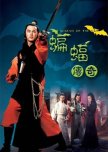
"Why are you trying to kill me?"
Legend of the Bat teamed up Ti Lung, director Chor Yuen, and Gu Long’s source material once again. Typical of these films, there was a huge cast list, betrayals, and hidden identities galore. The fights took place on the ancient version of yachts, dungeons, and of course, a villain’s lair fit for a drama queen.Famous swordsmen Chu Liu Hsiang and Yi Tien Hung come across a massacre of heroes on their trip. One thing leads to another and Chu is headed to Bat Island to help out a couple who tried to murder him. Yi ends up on the boat to Bat Island for his own professional reasons. They are joined by others who have their own incentives for going to a place where anything is for sale. On their journey, they face death repeatedly with some not escaping the Grim Reaper’s scythe.
Legend of the Bat was a sequel to Clans of Intrigue. If there is one thing to be sure of in these loosely related films, the cast will be bloated and the bodies will stack high. You know to brace yourself for numerous characters when the actors' names pop up on the screen as everyone is introduced. Characters revealed their courage and integrity, while others revealed their nefarious motives. There were actually a couple of touching moments of personal sacrifice, even if the reasons stretched the boundaries of believability. Like a good soap opera, several characters came back from the dead.
Ti Lung was back as the fan carrying hero. Ling Yun yet again donned his big hat and moral ambiguity. Yueh Hua and Ching Li played a devoted married couple. Ching Miao took on two completely different characters who were unrelated hoping the audience wouldn’t notice. This time Yuen Wah had a fairly significant role as a loyal bodyguard which I was happy to see. Many of the same actors and stuntmen from previous films were in this film as well though as different characters.
Tang Chia and Huang Pei Chih designed fast, creative fight scenes for the time. Whether on floating houses, yachts, or in the villain’s lair, the swords flashed and the blood flowed. The heroes had to make their way through caves filled with deadly traps with only each other to rely on…and their trusty secret weapons.
Legend of the Bat was wonderfully convoluted with betrayals, family secrets, revenge, unusual characters, and elaborate traps. Billionaires would envy the floating palaces where murder and mayhem took place, minus the murder and mayhem, I guess. Who knows what happens on those yachts. In the previous film in this collection, there were daddy issues. This time around grown-ass children had mommy issues. Instead of murder and crime, couldn’t these people go in together and ask for a discount on group therapy? As always, rated on a curve.
5 March 2026
Mammal note: No bats in the film
Trigger warnings: A rather long scene of four nude “dead” women. Suicide and a person suicided.
Tiny spoilerish comment: The lightbulb gimmick near the end was hilarious!
Was this review helpful to you?
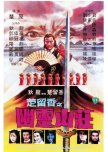
"We're heading to Ghostly Village, not hell!"
Perils of the Sentimental Swordsman was not actually a sequel to the previous two Sentimental Swordsmen despite Chor Yuen and Ti Lung teaming up for it again. Similar to the last film there was a huge cast and numerous flyby guest appearances.General Chu Liu Hsiang attempts to murder the 8th Prince and escapes to the Ghostly Village with the help of an old man who had just murdered much of his extended family. The mist hidden village run by Old Hawk is filled with criminals who would be hunted down and executed if they ever left. Chu befriends an inveterate gambler who is terrified of ghosts. In the village there are people who hold grudges against Chu and others testing his loyalty. It was hard to invest in any of the characters as they swooped in and either swooped back out or were carried feet first out. Ti Lung’s sentimental swordsman wasn’t that sentimental. Fortunately, he was not nearly as gloomy as the other two films. Lo Lieh gave the film a boost of humor with his strip dice gambling and gravitas when it was called for. Aside from vets Ku Feng and Yang Chi Ching, the rest of the main cast was underwhelming.
The sword and wild weapon fights were solid for the most part. It was funny watching the guys in gold costumes in the back looking like they were line dancing by themselves to give the big fights depth. Interspersed with fast action there was also kung fu dancing almost bordering on kung fu posing. The wire work and trampolines while primitive carved out creative moments. The fights might not be memorable, but Yuen Wah, Yuen Bun, and Huang Pei Chih acquitted themselves well as the martial arts choreographers.
The Perils of the Sentimental Swordsman kept the action and double-crosses coming along with hidden identities---even a “who’s your daddy moment?”! I didn’t enjoy it as much as the last two but it was still entertaining in that convoluted manner that only old kung fu flicks can offer. As always, rated on a curve.
4 March 2026
Trigger warnings: Violence though considering the genre, nothing too gorey.
Was this review helpful to you?
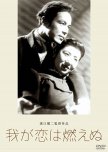
"If men are human, then women are, too!"
The last place I was expecting to find such a delightfully feminist film was a 1949 Mizoguchi film titled Flame of My Love. Set during the late 1800s as the Liberal Party sought to expand human rights, our heroine Hirayama Eiko fought for women to be included in those equal rights. The patriarchy doesn’t fold that easy, even with “progressive” males supposedly working for those rights.Hirayama Eiko is sad to see her boyfriend, Hayase Ryuzo, leave for Tokyo to more fully immerse himself in the Liberal Party. Eiko desperately wants to join him but he dissuades her. The maid she grew up with, Chiyo, is also leaving for Tokyo, having sold herself to help her family financially. After fighting with her father and her school being closed down, Eiko packs her bags and lands on Hayase’s doorstep, something he is not too happy about. Fortunately, his boss, Omoi Kentaro, finds her a place to live and a job at their newspaper. Betrayal, good times, hard times, and more betrayals await Eiko as she fights the good fight for women’s rights.
(I won’t be going into the historical setting much because all I know of this time period and the people involved are what I gleaned from a cursory glance at Wikipedia. Several characters represented real people from the Meiji government and Liberal Party though their names were changed.)
Tanaka Kinuyo seemed a little long in the tooth at 40 to be playing Eiko, but if there’s one thing I’ve learned it’s to either mentally age or de-age actresses. Eiko was a female character to be proud of. She worked tirelessly and fearlessly for the party’s cause and for women. Along the way she learned that subjugation and exploitation ran deeper than she’d thought. She also discovered that women were brainwashed from birth to accept their secondary role and to believe that they absolutely needed a man in their life. Attempting to change the status quo would be daunting. She, however, had the heroic Omoi on her side and by her side. Together they would set the world aright. ***(spoilery comment below)
Eiko was one of the strongest, most committed female characters from this time period that I’ve seen. She didn’t let men completely limit her, despite society’s cage around women. And for sure she didn’t let anyone tell her that she or other women were less than, regardless of economic class. No one could convince her that her self worth was tied to being a wife and mother. She refused to capitulate no matter the dire circumstances. I seriously loved this character. She may not have been able to conquer the world, but she worked to improve the lives and minds of women around her. While women have made great strides in the last nearly 80 years, there are always those people who want to revert to the “good old days” and strip women of the rights and progress we’ve made. While I can never forgive Mizoguchi for betraying Tanaka in real life, I can grudgingly respect this film he created.
“It will be a hard journey and we may not reach our goal. But if no one makes the first step, women will never know freedom!”
23 February 2026
Trigger Warnings: Rape and attempted rape-several times. The film didn’t shy away from women’s vulnerability at work, in prison, in private situations with men they should have been able to trust, or being “filial” by selling themselves into prostitution. Infidelity: “Whether I have one woman or two doesn’t change anything.” That’s what you think buddy. Does it work both ways?
Spoilery comment below:
***Omoi was all about women’s equal rights and using Eiko’s gifts. That is, until he Stepford Wifed her in a moment of utter betrayal. To her credit, Eiko refused to be cowed or gaslighted. Good woman. If everyone isn’t free and equal, no one is. You preach, girl!
Was this review helpful to you?
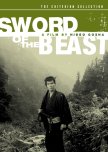
"We are connected. I'll be seeing you in hell!"
Sword of the Beast was one of Gosha Hideo’s earliest directorial efforts. While it could feel clunky at times, there was enough action, betrayal, revenge, and double-dealings to fuel a film twice as long.Yuuki Gennosuke is on the run after he killed his clan’s counselor. Hot on his trail are the man’s daughter, her fiancé, and a gaggle of samurai. A petty criminal he helps joins him as they head toward the mountain where gold has been found. The only trouble? Aside from the posse on his trail, panning for gold is a crime punishable by execution. Along with the shogunate’s patrols, there are bandits and also a samurai guarding a pile of gold like a dragon. Gennosuke has his hands full, sometimes literally, as nearly every woman throws herself at him.
“I’m a cornered and wounded beast. I can’t afford to live by my conscience.” The funny thing is, aside from the initial murder, Gennosuke was the conscience of the film. Set during the twilight of the samurai era, Beast highlighted the corruption running rampant through the clans, and how poorly some of the samurai were treated. Gennosuke had hoped to see reforms implemented in his clan that would have provided men like himself with a path toward promotion and a livable wage. He and the other low-level samurai discovered that their superiors demanded unquestioning loyalty and honor from them, while those in charge had zero qualms about lying, betrayal, and being utterly duplicitous. Low ranking men and women were expendable, especially if it meant promotion or gold for the more nobly born.
The sword fighting was average for 1965 with poor Gennusuke being outnumbered most of the time. The hunting party told him to die like a samurai, but he told his friend in the deadly group that they weren’t planning a death befitting a samurai---they were planning butchery. Much of the film was shot in a beautiful mountainous and forested region, a stunning backdrop for betrayal and revenge. Gosha knew how to get the most out of each frame. The story flowed well for the most part, but felt underbaked at times. I will never understand the male movie fantasy of women meeting a man and instantly start trying to take their clothes off. Because that's just what women do. Really should have been a clue Gennosuke was being set up whenever it happened.
Sword of the Beast was fun and Hira Mikijiro did a fine job as the least beastly of the characters. I enjoyed Gosha’s first film, Three Outlaw Samurai more, but this film kept my attention with each new person Gennosuke saved or threatened. Numerous characters discovered the hard way that the wealthy get that way and stay that way by not sharing the wealth. If you enjoy these old samurai films, this is certainly one worth trying.
14 February 2026
Trigger warnings: Sexual assault and attempted sexual assault. Nothing overtly graphic, just disturbing.
Was this review helpful to you?
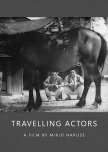
"I could stop playing a horse and become one"
Travelling Actors was a comedy by Naruse Mikio centered on a troupe of travelling actors (duh), primarily the two men who portrayed the horse. Hyoroku takes his job very seriously as the head of the horse and when the costume is desecrated, things go awry.Hyoroku and his protégé Senpai work very hard to bring the horse costume they inhabit to life. Hyoroku studies how horses look and move, even absent-mindedly stomping or walking like a horse off stage. He’s not always an easy man to get along with as his pride can get the better of him, especially when their new patron accidentally destroys part of their costume. His boss decides to use a real horse to replace Hyoroku and Senpai which leads to problems.
I had no issue with the premise of this simple film about stubborn men with too much pride. Where my attention wandered were all the drunken ramblings by different characters. It took a long time to get to the point and even then, I didn’t find the resolution very humorous. Humor is such a subjective thing, so I know others will find the actors’ antics hilarious. If you are a fan of Naruse Mikio, and would like to see one of his efforts at comedy, this shorter film (70 min) would be one to try.
7 February 2026
Was this review helpful to you?
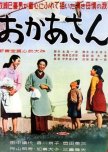
"A mother has to be strong"
Naruse Mikio created a compelling film about the Fukuhara family anchored by a loving and tenacious Mother. Dealing with the aftermath financially and emotionally following WWII, friends and family made the most of their lives and meager incomes.Fukuhara Toshiko introduces her family-Masako, her mother whom she adores, her father Ryosuke aka Papa Popeye, her little sister Chako, her brother Susumu, and her young cousin Tetsu. Susumu is chronically ill after breathing in dangerous materials at work and is bed bound. Her beloved father is planning to open a laundry service. Her mother sells items out of cart and has taken in her sister’s little boy. The two youngest squabble and play like siblings. And Toshiko helps with a snack shop where the local baker often stops by for food and to share his latest book. Money is tight but everyone finds joy as they face each day and each crisis head on.
Once again, Tanaka Tatsuyo was the center of a film. Masako’s family orbited around her and depended on her strength and insight. Death visited their doorstep not once, but twice and still Masako straightened her spine and carried on. Masako wasn’t maudlin nor the film depressing. She shed her tears and then summoned her smile for her children. The synopsis says that Toshiko was a rebellious teenager. She was far from that. Kagawa Kyoko gave Toshiko a ray of sunshine smile regardless of the never-ending work the teenager faced. Gradually falling in love couldn’t keep Toshiko from helping her family. She had only one stumbling block that was understandable after a loss. Even the younger daughter understood the sacrifice that was required when the dwindling family’s back was up against the wall. What I liked about this film is that the family dealt with loss and sacrifice in a pragmatic and loving way. They did what needed to be done without much complaining.
Mother gave a small view into women’s lives after the war. Unlike Ozu’s middle-class families, these were people on the lower end of the economic scale. Nearly everyone had been touched by the loss of a husband or son. Life went on and each person had to find a way to survive. While the survivors lived with their grief and financial insecurity, they still discovered ways to be content and laughter was always close by. Friends and family rallied to bolster those who were suffering or in need. Mother was not a profound film but I found myself deeply invested in these loyal and likeable people’s struggle to keep moving forward and maintain their love for each other.
3 February 2026
Was this review helpful to you?

"Deep is the dark"
A vigilante mad dog is roped into becoming an undercover agent. In the powerful and ruthless world of the yakuza he teams up with another mad dog teetering on the brink of sanity to become members of the feared Hell Dogs.Kanetaka Shogo aka Idezuki Goro was a young cop on the beat when several people were murdered in a robbery. When justice is not served Goro spends 10 years hunting down the perpetrators and executing them. After the last one he turns himself in and is quickly recruited to become an undercover agent as a yakuza in a notoriously dangerous and powerful gang. He takes the name Kanetaka “Tak” Shogo and teams up with the unstable Muro. The two make a name for themselves as assassins. Goro has to watch his back as he is continually tested all while he attempts to climb the ranks and move closer to the crime family’s boss.
This film was a familiar take on the tight rope UCs must balance. Goro was called upon to do heinous deeds to keep his cover with the end game of taking down the crime family. The money and adrenaline could be enticing, a real temptation when the police department proved itself to be scarcely better than the yakuza. There were of course, the double dealings and big “reveals” as the story progressed. Will any of them be shocking? Not particularly if you’ve watched many crime films. Despite the lack of innovation, Harada Masato pulled me into the world he created, no small feat when there were few characters to care about.
The acting was strong for the most part relying heavily on Okada Junichi’s massive screen presence despite being surrounded by much taller men. Goro’s personality was such that he was not intimidated by anyone. Being based on a book there were enough characters and plot elements that they could have made this into a short drama to expand on the different players. As it was, it ran a little long for a yakuza film.
For the most part, Hell Dogs balanced narrative with action with more of the former in case you are expecting non-stop thrills. The ending rushed through at breakneck (pun intended) speed dissolving much of the built-up tension. Yet I still enjoyed this film largely due to Okada’s performance and Goro’s ability to hammer, slice, and shoot his way to the top.
18 December 2025
Trigger warnings: There was lots of slicing and dicing, shooting, and other blood spattering activities. Sexual content.
Was this review helpful to you?
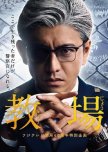
A new group of cadets begin the rigorous training to become police officers. The system is designed to filter out those who do not make the cut. No nonsense Kazama Kimichika takes over as one group’s instructor. The students literally quake in their shoes in his stern presence.
Kazama often appeared to be more of an exorcist than instructor as one by one the students’ inner demons were revealed. His methods were decidedly unconventional, bordering on illegal. Can’t say I agree with his mantra, "Those who hurt people can save people." By graduation, I wasn’t sure all of the ones who made it through should have. There was some seriously poor decision-making being done that didn’t bode well for stressful situations in the field. The criminal element will sleep better at night knowing these puppies are on the job.
10 November 2025
Trigger warning: Attempted murder-suicide
Slightly spoilery comments:
The mystery behind Kazama’s odd eye and dour disposition was never truly revealed. Perhaps in another installment.
I am a huge advocate for women in the police force, but it boggled my mind when one female cadet worried that weight training would make her arms “thick”. As tiny as she was, she could use a little thickness aka muscle when dealing with belligerent drunks and garden variety thugs. It won’t be her partner’s job to protect her. Oh, and drawing a nekkid pic of a fellow female classmate should have disqualified one student from being in the academy. Sexist jerk.
Very spoilery comments below:
Miyasaka should never have graduated when he did not turn the student in who threatened him with a gun. That’s not being a spy, that’s being a good cop and protecting not only himself but the class in general as the student was decidedly unstable. And hopefully, the other student who threatened him earlier was arrested for attempted murder and not just kicked out. Kazama secretly preemptively saving Miyasaka didn't obscure the murderous intent. Despite having such a tough instructor, the cadets who threatened, harmed, and/or attempted to murder other students didn’t appear to suffer any legal consequences.
Was this review helpful to you?
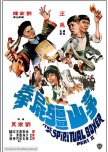
Jiangshi Fu!
The Spiritual Boxer II aka The Shadow Boxing wasn’t a sequel to the original Spiritual Boxer. Wong Yu starred in both and there was some cross-over cast playing different characters, but that was about the extent of it. This one was a must watch for me because of---jiangshi/hopping vampires.Fan Zheng Yuan and his gambling addict master, Chen Wu, are corpse herders. As they lead a parade of 9 hopping vampires through the countryside they run afoul of a local warlord and his criminal minions. The bad guys are on the hunt for Zhang Jie whom they framed for various crimes and had thrown in jail. Zhang managed to escape and has seemingly disappeared. When Master Chen is injured, Fan and hanger-on Fei Fei are called upon to lead the hoppers home which is complicated when it turns out one of their wards is not what he appears to be.
I was not a fan of the original Spiritual Boxer. This film benefited from Gordon Liu and Lau Kar Wing helping Wong Yu carry the show. Lee Hoi San and Wilson Tong were properly threatening baddies. Norman Chu even made an appearance as one of the villains. Cecilia Wong’s Fei Fei was written to be annoying and she fulfilled the job perfectly. And of course, the hoppers contributed their fair share of entertainment. Filmed 6 years before Mr. Vampire, this was a lighter version of the coming vampire franchise.
Lau Kar Leung was both the director and the martial arts director ensuring that the fights were high quality. Wong’s Jiangshi kung fu style was slower, but humorous. Lee had to slow his moves to counter the hopping vampire inspired style. Gordon and Wilson brought the speed and pain with their fighting styles.
The Shadow Boxing’s story was uneven and often ridiculous, with not too bright characters, but with jiangshi bunny hopping around and well- choregraphed fights it was a mostly entertaining flick for the genre. Only for fans of these old martial arts movies. As usual, graded on a curve.
31 October 2024
Triggers: brief bare breasts and buttocks.
Was this review helpful to you?
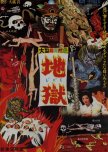
"In the end, all must die"
Jigoku aka The Sinners of Hell was one trippy, surreal tale of the afterlife. Even stranger were the events that caused people to be thrown into the Eight Hells of Fire and the Eight Hells of Ice.Late one night Tamura and Shiro are driving home when a drunken pedestrian steps out in front of them. Tamura refuses to go back and check on the man believing no one has seen them. He would be wrong. Two women plot their murderous vengeance in the shadows. Shiro’s conscience gets the best of him and he decides to turn himself in. This decision leads to more deaths and a boatload of people forced to cross the River Styx or in this case, the River Sanzu. Enma, the King of Hell, was far from benevolent.
I thought during the first half of this film that Shiro was already in The Bad Place because the number of murders grew hilariously exponentially. I tried writing the names down of the dearly departed and realized it was a futile effort. The writer seemed to be showing the many ways people are complicit with murder without actually driving a knife through someone’s heart. The perpetrators just all happened to converge at the same place and time. The clues about Tamura led in the wrong direction without ever making sense. For me, the first half was frustratingly bad.
The second half of the film delved into the excruciating and vile punishments inflicted on humans who had not been kind or who had committed murder. Or who had apparently been physically adjacent or knew of the actions. Too many of the damned didn’t make sense to me. Babies being tortured or family members who didn’t commit the egregious action. And why does being in a car crash make you responsible for another passenger’s death when you weren’t the driver or dying in the car crash is enough to send you south? The trials made The Good Place’s “bees with teeth” and “penis flatteners” seem tame. Modern horror fans may laugh at the simple techniques, but I still found different tortures stomach churning.
Jigoku took a pessimistic view of humankind and all the ways people’s selfish actions lead to the deaths of others. And also, the inventive ways those same people were tortured for their transgressions. A highly stylized film, it was artistically interesting to watch. As far as enjoyment, it could be painful and as memorable as a swim in a pool of gurgling filth.
30 October 2025
Trigger warnings: Impalements, dismemberments, fire, snakes, and an assortment of other tortures.
Was this review helpful to you?


