

 135
135 431
431 16
16 2
2 6
6 3
3 8
8 10
10 3
3 13
13 1
1 1
1 1
1 1
1 2
2 6
6 8
8 5
5 9
9


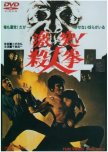
"You're disgusting, you make me sick!" Preach on sister!
The Street Fighter was violent, exploitive, and had almost no redeeming qualities. Takuma Tsurugi was the manliest man to ever man which means he got a pass for sexual assault and selling a woman into sex slavery. This was a violent film just to be violent, with little story to go with it.Takuma breaks a death row convict out at the last minute. When the convict’s brother and sister can’t pay the last installment he begins to rape the sister. The brother tries to intervene, so Takuma kills him, and sells the sister to be a sex slave. Big man. A group attempts to hire him to kidnap an heiress but he turns down their lowball number. Because Takuma knows of their plan they attempt to eliminate him which drives him to be the heiress’ protector. After forcibly kissing and groping her, he's hired on to protect her. When the convict discovers what happened to his family he joins the other bad guys for the chance to free his sister and kill Takuma. Yeah, at this point I’m rooting for anyone who would kill this b@stard.
The fight scenes weren’t well choreographed and I hated Sonny’s fighting style and acting. The editing was even worse. At one point Takuma asked his sidekick, “How did you get here?” I was expecting Ratnose to say, “Heck if I know!” It was as if they edited out anything that would have caused the story to make sense. The story jumped around and so did the people as if they had a transporter to drop them into a completely unrelated scene. The acting was bad even for a 1970’s martial arts film.
The Street Fighter failed on every account for me. Only for Sonny Chiba fans and those who enjoy the main lead behaving reprehensibly toward women. This movie put the mindless into mindless violence. At the end of the film, in big letters it declared “Return of the Street Fighter coming soon!” Thanks for the warning.
14 March 2024
Was this review helpful to you?

This review may contain spoilers
"If we can't live together, we'll die alone!"
Pending Train was an entertaining story about strangers on a train mysteriously landing in a dystopian future. The strength of the drama was the characters and how they learned to work together through their fears and problems in order to survive.Mild spoilers:
From the first, "Guys, where are we?" it began to feel like the writers had recently watched Lost (2004) and wanted to update the story for Japan. Shirahama Yuto (Jack) was a fire fighter with a painful past experience at work that has left him with deep seated guilt and a need to save everyone. Kayashima Naoya (Sawyer) was a hair stylist who due to his painful past trusted no one. Hatano Sae (too bland to be any character from Lost) was a school gym teacher who thought no one liked or respected her at work who was part of a weak sauce love triangle. The rest of the main cast contained a businessman who took a walk on the wild side (Locke), an effervescent game designer (Hurley), a graduate biology student who had a physics professor for some reason, a shady self-centered manicurist, and a middle-aged CEO who worried that she didn't spend enough time with her daughter.
As with Lost it turned out there were Others on the island who would compete for resources and survival. The battles were not nearly as deadly or mysterious. I have to say there were several characters who had me wishing a Smoke Monster would come and drag them away. At one point I honestly thought earnest Shirahama was going to quote Jack and say, "If we can't live together, we'll die alone," and he did more or less. Hatano was so uninspiring that her flashback story centered on her looking at a rainbow. She was everyone's cheerleader with either a smile on her face or a look that said, "where did I leave my purse?" None of the women had particularly interesting backstories or compelling stories in the future.
Despite the Lost coincidences and poor writing for the female characters, I did enjoy this drama. Kayashima showed the kind of character growth that makes dramas worthwhile. Shirahama worked through his guilt with the help of his new friends. The struggle to figure out where/when they were, and how to obtain food and water was interesting. The bromance that developed between Shirahama and Kayashima was the most engaging relationship.
The scenery varied with one side of the tunnel displaying Tokyo's ruins covered in an almost rainforest. And on the other side of the tunnel (always a tunnel in these pesky time-traveling dramas!) was a barren landscape. The latter setting appeared to be the one Kurosawa Akira used in his film Dreams for a post-apocalyptic future. The OST had a tendency to err on the overwrought side, not always meshing with a scene's mood.
The biggest problem I had with the drama was their "science" which would have been convoluted for an old Godzilla film and only coming in second to the Professor making phones out of coconuts on Gilligan’s Island ( yes my pop culture references are old ^^). And it was hard to get on board with people starting a fire with a green stick on a green leaf. The last two episodes dragged and didn't make a lot of sense with what had gone on in previous eps. To make matters more complicated the drama seemed to give an alternate ending unless they threw their own pseudo-science out the window.
Some people wanted to go home, desperate to see their loved ones while others had nothing to return to and were happy in their made kingdom. Many of the characters decided after learning how to survive in a hostile environment, the problems at home would be easier to deal with and they also would show appreciation for each day and those they cared about. "We have the power to recover from all kinds of obstacles and failures." Yet life is funny and people can be cruel and ignorant in the face of the unknown. I'm sure there were more than a few characters who would like to have said, "We have to get back to the island!" or at least "When's the next train to the future leaving?"
Pending Train came across more as a healing drama for damaged people than "it's the end of the world as we know it." If you enjoy a more character driven drama, don't mind a lack of dire consequences in your dystopian stories, and can overlook the terrible science, this drama can be a fun watch.
8/12/23
Was this review helpful to you?
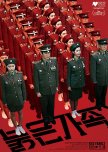
"In the end, all you have is family."
Red Family, a film about a "family" of North Korean assassins living in South Korea feels dated in some ways, but timely in the never-ending question about what makes up a family.The Assassin Family lived next door to the South Korean Sitcom Family. The Assassins blended in seamlessly in public but in private were stiff and formal, with the "Mom" who was their team leader constantly barking orders and threatening them. The Sitcomers were wasteful, always ended up in comic situations, and were constantly yelling at each other. Yet somehow, this comically imperfect family forever tainted The Assassins, causing them to question themselves and their mission.
The Assassins also had families back home, families who could be jailed or executed if The Assassins failed in their missions. Little by little, The Assassins began to develop into a real family who cared about each other which was a threat to their mission according to their superiors.
Also discussed was the split family of Korea divided into North and South, and the forces that kept the family apart.
The highlight of this film for me were the teenagers, the Assassin daughter and the Sitcom son. They were cute as they began to bond and form a friendship. I also enjoyed Assassin Grandpa and Sitcom Grandma having a few light moments.
The low points were the moms. Sitcom Mom was always screaming and berating her husband for not making enough money. If all South Koreans were this loud and obnoxious, I'd have headed north myself to get away from them. And even though The Assassins could hear much of what was said next door yet Assassin Mom's voice was always set on screech. The people down the block had to have known that they were North Korean assassins.
At the start of the movie, the Red Family seemed mostly one dimensional. Layer by layer, the rigid exteriors were peeled away to show more of what made each Assassin unique and the fears they had for their families back home. It would have been nice if the film had delved into the internal conflicts they might have had over having so much food available and being in a place where people could speak their minds without fear.
The premise was also a little shaky. The Assassin Family had taken out dozens of defectors to the south, and with all the other spy teams at work, it seems someone would have noticed if hundreds of defectors had been murdered over the last few decades.
Overall, I found the movie entertaining, if predictable. The juxtaposition of the two families with conflicting realities, the Assassins' stress of having to be ever vigilant for fear of being caught by the authorities or condemned by those monitoring them, and their evolution into something more than they were trained to be made for a flawed but compelling story.
26 January 2022
Was this review helpful to you?
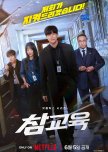
"I look forward to teaching you a lesson"
Teach You a Lesson took on the South Korean school universe leveling criticism on both sides of the podium and both sides of the front door. When it came to incompetent and/or corrupt teachers, ineffectual and/or harmful laws, bullies-both child and parental---Na Hwa Jin and his team were primed to slap people awake or into shape.Education Minister Choi Gang Seok, former special forces officer Na Hwa Jin, Na’s former subordinate Im Han Rim, and IT specialist Bong Geun Dae comprise the Educational Rights Protection Bureau team. The ERPB has immunity and special privileges when it comes to teaching students, teachers, school admin, and parents a lesson. The team hopes to decrease student and teacher suicides…and murders. They seek to make bullies understand how it feels to be bullied, show them the consequences of their actions and hold them accountable. Na takes a very hands-on approach with physical bullies. The team also deals with those bullied by social media, false police reports, or corrupt teachers gaming the system to line their wallets. Na and his crew use their special skill sets to bring justice for the innocent and punishment to the guilty, always with the desire to help the students and teachers do their best.
The drama sought to highlight a separate danger to students, teachers, and the school system in each episode. I quite liked the episodic quality as it kept certain stories from dragging on too long. In the first two episodes Na used restrained physical force which was a bit jarring, but I’m sure also cathartic for the students around the world who have been brutally bullied with no recourse. The cure might not have been realistic, but the disease unfortunately was and is. I also didn’t mind that the bad guys were often easily vanquished. Opposition to the bureau was shown but Minister Choi always kept his cool and refused to back down from protecting the innocent.
Due to the varied nature of the stories, different episodes will appeal more to different people. There were darker episodes where the bullies drove students to suicide. One episode left me laughing to the point of tears as the tables were turned on an adult bully. The drama was never subtle in their accusations as there wasn’t time to delicately beat around the bush. It also didn’t pretend that what the team did in the schools would resolve all the problems. Physical and emotional violence are complex social issues that require complex solutions. The weak job market and crushing pressure to be accepted into a good university put the students and parents through an emotional wringer for years. Even when laws had been enacted to protect students, both student and adult bullies used them as weapons against the innocent or to escape punishment. Students, teachers, admin, parents, and politicians were told they would have to be responsible for taking the next steps to improving the learning and life experience for all involved.
There were only a few things that truly bothered me. The age discrepancies while obvious are just a part of the genre going back to Grease or Steve Buscemi going undercover in 30 Rock, “How do you do, fellow kids?” Im was brought on to meet crazy with crazy but her screaming caused my eardrums to bleed. The total immunity clause was truly problematic for a country that not that long ago dealt with secret police who tortured and disappeared dissident students all in the name of national security. The immunity issue could very quickly lead down a disastrous path and was a huge red flag for me. And the story regarding the murdered teacher ended up making her look unbearably naïve at best and idiotic at worst. Her actions could have been interpreted as stalking or sexual harassment. When she was presented with evidence of a crime, she didn’t report it and confronted the person in an isolated area. Instead of the angelic representation, she looked like a walking, talking billboard for how to not handle the situation.
While Teach You a Lesson sought to highlight very serious problems in the school system it was also laugh out loud funny on numerous occasions. Most people know someone who was mercilessly bullied and the justice meted out was cathartic to see bullies finally get their due. The fight scenes were well choreographed and Kim Mu Yeol was believable as the Man in Black with the send the perp flying slap. Much like Taxi Driver or Leverage, TYaL was wish fulfillment, that a team could come in and easily right wrongs, stand up against the wealthy and powerful, and bring peace to students who had enough stress studying as it was. Maybe not a role model, but an entertaining drama with a world where the shameless were held accountable for their actions.
14 June 2026
Trigger warnings: Suicide and attempted suicide. Drug usage. Gambling. There was also a bone crunching fight scene with non-students.
Was this review helpful to you?
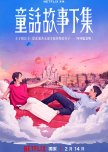
"Life has no script"
I’m Married…But starred two of my favorite Taiwanese actors, Jasper Liu and Ko Chia Yen. No one does realistic marriages like Taiwanese dramas, but somehow this one didn’t completely blow me away.Lin I Ling and Zeng Xue You have been married almost four years and are still living with his parents. Zeng is fine with the set-up, he has two women to take care of him leaving him plenty of time to build his Lego town after work. Lin is not nearly as enamored with the set-up which causes a lack of privacy and autonomy. Zeng’s first words tend to be, “My mom said…” Not what a wife wants to hear every time they discuss an issue. Lin doesn’t want children while Zeng does. At least once a week Lin contemplates divorce. When she puts a soul mate app on her phone due to a client’s request, it changes the trajectory of her relationship.
These two characters seemed ill matched. Zeng was passive and overly kind to everyone. Lin was blunt and easy to anger. I don’t know what age the characters were supposed to be but the actors were both pushing 40. If they hadn’t been able to save enough money by that age, especially living at his mom’s for free, it’s doubtful they would ever put enough cash together for their own “house.” Another sticking point being that Zeng’s mom had a tendency to reallocate their savings. Disagreements over whether to have children can doom a marriage. Both flirted with other people. For me, this drama would have benefited from showing what inspired them to marry in the first place.
The special effects were telling. The father-in-law and other older men were often portrayed as houseplants, completely invisible to the rest of the family. When Zeng heard difficult news, his brain funnily enough displayed the blue circle of death with a “stop function” indicator. Lin’s talking uterus popped up out of nowhere and disappeared just as quickly.
Six episodes into the drama I was ready to divorce Zeng because as nice as he was, no wife wants to be second to another woman, even her mother-in-law. I kept waiting for Zeng to find his useless cajónes. While he did have some character growth, that growth never displayed itself by disagreeing with his mother. His mother may not have been evil, but she was manipulative. Newly married couples need to learn to depend on each other and make decisions for themselves.
I enjoyed this short drama primarily for the actors’ performances. Jasper Liu stretched and displayed more emotional nuance than I’m used to from him. I found many of the couple’s decisions mind boggling though many real life couples fall into the same pits they did every day. As much as I love Jasper Liu’s beautiful smile, I might have been tempted to smother him in his sleep the ten thousandth time I heard, “My mom said…”
29 April 2025
Slightly spoilery comments below
*****
*****
*****
*****
*****
*****
*****
The minute “Rain” showed up, the Piña Colada song (Escape) sprang into my brain.
“If you like piña coladas
And gettin' caught in the rain
If you're not into yoga
If you have half a brain
If you like makin' love at midnight
In the dunes on the cape
Then I'm the love that you've looked for
Write to me and escape”
Infertility was not treated the same for men as women. Lin was subjected to every woman in the family giving her advice, forcing vile potions on her to drink, they had priests chant over, and even moved the bed to a more favorable (public) feng shui place in the house. When it turned out Zeng was the one who was infertile, everyone clammed up and left. Speaking of which, Lin’s uterus also shut up, and baby making was never brought up again. And on that subject, Lin thought about divorce incessantly and then suddenly decided to have a baby. Baby’s do not heal marriages, they exasperate current problems and reveal new ones.
I will admit, a man buying menstrual pads for a woman he is dating would definitely give him a star in the win column. I’m not sure that would be enough for this couple to stay together, maybe a place of their own and a good couple’s therapist. These two needed to be able to make their own decisions, one of which should have been to purchase a CPAP machine for beautiful Zeng to tame his snoring.
Was this review helpful to you?
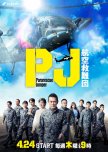
"We don't just save lives, we save hearts, too!"
Pararescue Jumper was an entertaining look at Japan’s Air Rescue Wing. Featuring the energetic Uchino Seiyou as the pararescue instructor, the drama demonstrated some of the rigorous training the candidates went through in order to graduate. In a high attrition school, the trainees had to learn to not only trust themselves but to also trust their team members with their lives.Seven trainees are introduced to their unconventional training instructor, Usami Seiji, when he repels out of a helicopter at their welcoming ceremony. The trainees include an airman who was saved by Usami as a child unbeknownst to him, the first woman to make the cut, a General’s son, an orphan, and also a black Japanese man who is always mistaken for a foreigner. With a washout rate of up to 50%, Usami is determined to see everyone graduate this time. Several of the airmen have issues impeding their progress and need his special brand of creative therapy. Usami’s estranged daughter, Yuna, is given permission to tag along in order to research her thesis paper showing her for the first time what her father does for a living.
The animated Uchino Seiyou was perfect for the role of the training instructor who pushed the trainees to their limit but also helped them however he could. With the exception of the black trainee whom the writers had no idea how to write for, the others were given quality one-on-one time with the instructor when they didn’t think they could go any farther. Yuna worried the strenuous mental and physical training was abuse when in actuality it was a gift for people who would be tested by Mother Nature if they succeeded in the program. “Nature is far more unreasonable than I am.”
For a military drama, the tears and hugs flowed freely. Dark secrets and fears revealed themselves as the trainees pushed themselves to their limits and breaking points. Usami was always there to lend a hand or throw it, whichever was needed. The young actors all did a good job of portraying the determined and at times conflicted candidates. At first, they did not comprehend Usami’s madness or his greeting of the “glorious sun.” As they endured and progressed, they came to understand that he was preparing them for a job where death was always close by and answers weren’t always easy.
Aside from the rescuers’ dogged determination and strong desire to help others, the drama emphasized the need for family. Whether it was Usami interacting with his ex-wife and cranky daughter or the trainees opening their hearts to each other and Usami, biological and made families abounded. They might all be carving paths for themselves but no one walked alone. I thought PJ was a compelling and heartwarming drama with interesting characters that provided the audience an insight into the grueling training few complete. These often unsung heroes make calculated life and death decisions as they put their lives on the line to save strangers. Pararescue Jumper did an admirable job of showing the sacrifices these brave people make for the greater good.
10 August 2025
Small note from watching this with someone who had similar training: Running in formation leaning forward will give you shin splints. Straighten up people! And when belaying rappelers, pay attention so that they don’t free fall. If they mess up, don’t tell them to take off their gear, send them back up!
Continuity glitch:
Fujiki injured her left arm but her right arm ended up in a sling. oops!
spoilery comment:
Re: Fujiki They were heavy handed in their acceptance of her, but for the most part it worked. There are no female PGs in the world. The position comes with one of the most rigorous physical tests in the military. For one reason because in war time it would also be combative and the life spans of PGs is very short during a real war.
Was this review helpful to you?
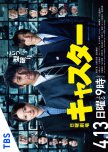
"Every day is April Fools"
Abe Hiroshi played much the same type of character in News Anchor aka Caster as he did in Vivant. I liked that character so I was okay with him looking rumpled, stunning and irreverent in his black suit and white shirt, this time as a no holds barred news anchor.Shindo Soichi is hired to destroy the JBN news program from the root. Failing and stagnant, the evening news might need a shakeup with a journalist who doesn’t play by the rules, but the employees aren’t overjoyed by his process. Sakikubo Hana is tasked with being his handler. She has a secret past connected to him that makes her loathe his presence. Motohashi Yusuke normally handles the camera on assignments and is often caught between Shindo and Sakikubo. What neither of his colleagues know, is that Shindo is also searching for the people behind the death of his father and attack on his former wife.
As I mentioned, I’m okay with Abe playing Abe. At 61, he’s still got it. Shindo was the stereotypical loose cannon that doesn’t play by the rules but (nearly) always gets his man. Nagano Mei as Sakikubo Hana, despite her offset troubles, was handed a tough role. Perhaps Sakikubo was supposed to be the voice of compassion but I found her completely insufferable from beginning to end.
News Anchor had the murder mystery and coverup at its base. On the surface it covered organ transplants and Japan’s extraordinarily low donation rates, murder, sneak photography, and a wildfire. It also showed how reporters and news stations often comply with governmental offices, sponsors, and police departments in order to maintain access. It’s something that happens worldwide and has been one of the worst things to happen to news organizations. By refusing to ask the tough questions and dig for the real answers in order to access the soundbites they need, they cede reality and truth to those in power. Shindo blew past all those niceties.
Aside from Sakikubo who was nails on a chalkboard to me, I enjoyed News Anchor for the most part. That’s not to say it was a great drama, far from it. Aside from the FL, the various pieces of the puzzle were ham-fistedly shoved together in the last episode while leaving the corner piece to be found should there be a season 2. News Anchor took a lot of dramatic license and loved to throw out red herrings. Probably only for fans of Abe Hiroshi or other actors attached to the drama and viewers who don’t need a great deal of realism in their journalistic drama. Categories it would seem, I fell into. lol
13 July 2025
Was this review helpful to you?
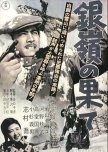
"When I'm cornered I tend to do some crazy things"
Snow Trail was a lot of people’s firsts. This film was Mifune Toshiro’s first film. It was Ifukube Akira’s first film to score. And it was the first of 53 films that Mifune and Shimura Takashi would make together. Kurosawa Akira wrote the screenplay marking the first, albeit minor, collaboration between he and Mifune as well.Three bank robbers flee to the mountains in Nagano with the police hot on their tails. They start out at a hot springs spa hotel before making their way deeper into the mountains where an old man, his granddaughter, and a mountaineer are staying in their rustic guest house. The robbers face the problem that there is only one road in and out of the mountains. Climbing over the mountains could be deadly as they face avalanches, blizzards, and treachery.
Let me just get this out of my system, Mifune was a sexy beast in this film and in his debut he showed the charisma that would keep him employed for many decades. But as much as a young Mifune Toshiro appealed to me, this was Shimura Takashi’s film. As the two men were cooped up in the guesthouse, Shimura’s Nojiro softened, longing for home and missing his lost daughter. Mifune’s Eijima grew more restless and dangerous by the minute like a caged panther. Kono Akitake had the pivotal role of the mountaineer coerced into leading the two criminals over the deadly mountains.
I can only imagine how beautiful this film would have been in a 1947 theater. The cinematography in the mountains was stunning even in this faded copy. I would also love to read about the making of this film as they climbed up, rolled down, and stumbled through the snow and rock.
The film showed the depravity of humanity through Eijima and the hidden humanity waiting to be restored as in Nojiro. The generous and cheerful grandfather and granddaughter elicited opposite emotional reactions in the two crooks. Shimura gave a touching performance as the crook transformed by human kindness. Mifune also gave a strong performance as Eijima’s baser instincts took over. The grandfather did not seem too concerned about the events that unfolded on the snowy peaks, “The mighty mountain will punish the bad.”
Snow Trail combined a thrilling mountain escape with a redemption story, fleshed out by two actors I enjoy watching work together. Ifukube’s music hit all the right notes as the men struggled against nature and themselves. Yeah, I enjoyed this film and could easily recommend to people who enjoy old Japanese films or want to be reminded that we are all tied together.
“Mountaineers have a code. No matter what, we don't cut the rope. The rope that ties one human life to another is not to be touched.”
19 June 2025
Was this review helpful to you?
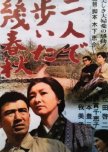
"An old shirt belonging to our son who is away; my wife washes it and hands it to me to wear."
Ballad of a Workman aka Ballad of a Worker was a loving ode to parents who sacrificed for their children to have better lives. Time jumps were often accompanied by stoic ballads and haikus. The film also showed the struggle many people faced as Japan rebuilt their economy after WWII.Our story starts in 1946 when Yoshio returns home from the war, welcomed by his wife and son who had feared he was dead. Torako had moved to the countryside as the bombings devastated Tokyo. The only job Yoshio can find is working on the roads. As the years pass and he is promoted, Torako is paid to do housekeeping for the workers’ center. They don’t earn much but make sure that their son Toshiyuki is educated. When Toshiyuki leaves for Kyoto to attend college, the little family is hit hard by the burden of their poverty.
This film showed the progress of the Nonaka family from 1946-1962. Yoshio had to slowly learn to deal with his miserable job in ways other than drinking. Torako was the rock of the family, the one person who held things together. She worked a demanding physical job in addition to her own household duties but never complained or drank herself to sleep. Takamine Hideko and Sada Keiji were a great duo for the roles of hard-working parents. Toshiyuki dealt with stressors in Kyoto that his less educated parents could scarcely imagine. Yamamoto Toyozo may have been less experienced yet he still managed to convey Toshiyuki’s stress of being his parents’ great hope and reason for living.
The drawbacks to the yearly time jumps with accompanying heavy-handed ballads was that I felt like I missed out on more of the day-to-day lives of the family. They often bounced from one crisis to the next. Despite the family’s troubles, the parents kept moving forward refusing to be dragged down by their privation. Their quiet dignity was moving, even when they hesitated to accompany Toshiyuki to his new school for fear of embarrassing him. The son’s growth and learning to accept them as they were was also quite heartwarming.
Ballad of a Workman could have done with less ballad and more tender moments between Yoshio and Torako. The film showed that the job of parenting is never done. Even after children grow up, there is always something to worry about and plan for. What could have been an overly melodramatic story ended up being a heartfelt slice of life about a family with a dream for their son to have a better life.
“Together we’ve walked through the years. In times of laughter and tears. Our hands are roughened but you and I. We shall walk, foraging ahead with smiles.”
15 June 2025
Was this review helpful to you?
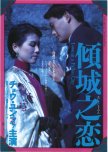
"Compared to the cosmos, how tiny we are!"
Two people dancing around a relationship struggle to understand each other’s feelings and even their own as the clock ticks down to the Japanese occupation of Hong Kong in Love in a Fallen City. Chow Yun Fat was sizzling as the westernized playboy who takes an interest in Cora Miao’s solemn divorcee.Pai Liu Su is being pressured to attend the funeral of her ex-husband. She’s been living with her family the last 7 years ever since she walked away after the brute had beaten her. In an explosion of words, her family tells her what a burden she’s been and how she never should have gone through with the divorce. All this despite the fact her brother lost her fortune in bad investments. Mrs. Hsu, a family friend, takes Pai and her younger sister to meet a couple of eligible men. Pai and Fan Liu Yuen hit it off before he leaves for Hong Kong. Mrs. Hsu invites Pai to accompany her to Hong Kong and stay as her guest. Pai and Fan grow closer as they spend time together, yet neither is sure of the other’s motives. Pai fears she will be just another notch in Fan’s belt and Fan fears Pai is only using him to get of out of her toxic household. Will the coming invasion drive them further apart or into each other’s arms?
“Life, death, and parting are immense things beyond our control.”
Chow Yun Fat brought the heat as he wooed the introverted Pai. I’d seen him in a number of action movies but here he turned on the charm and romance. It was hard to understand what Fan saw in Pai who appeared sullen most of the time. He seemed to enjoy the fact she was traditional, though untraditional enough to divorce and also to spend time with him.
“Laws can change from day to day, but morals and ethics, kinship and family, these things don’t change”
I’ve seen my share of Shaw Brothers kung fu movies filmed on their studio lots and with familiar exterior shots so it was a pleasant surprise to see the care and creativity allowed in this film. Hong Kong was explored and many scenes were filmed at the Old Repulse Bay Hotel. I was also pleasantly surprised to see so many women involved in the making of this film. Ann Hui was the director, it was produced by Mona Fong, and based on Eileen Chang’s novella. Violet Lam won the Best Original Film Score at the HKFA for her work.
“If everything should burn down, blow up, collapse, perhaps this wall will be left.”
I was confused by the timing of the story. The story took place from 1939-1941 approximately. My knowledge of Chinese history is minimal at best so my concerns may be over nothing. The Japanese occupied Shanghai by 1937 where the story began and there was no mention of their presence there in this film.
“Life’s never over for the poor.”
Despite Pai’s consistently somber attitude and the impending war, the movie never devolved into melodrama. Pai and Fan gradually worked their way through the problems hurled their way. The film clocked in around 90 minutes, short enough for the story to not become too maudlin and long enough to fall in love with Chow Yun Fat’s Fan Liu Yuen.
12 April 2024
Was this review helpful to you?
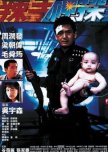
"Don't ever bite your own tail again!"
Hard Boiled was John Woo’s death filled cops and gun-runners ode to action films. A completely over the top, unrealistic, thrill a minute bloody carnival ride.Officer Tequila Yuen is determined to bring down the Triads running guns that caused the death of his partner. A loose cannon who doesn’t play by the rules, he ignores his boss’ warning about staying off the case. It’s not long before he runs into Alan, an origami making Triad assassin. He deduces Alan’s secret and the two reluctantly work together to bring down the deranged Johnny Wong’s gang.
What I liked:
What’s not to like about a Chow Yun Fat and Tony Leung Chiu Wai pairing? The screen could barely hold their bromantic charisma. I could watch these two in about anything. Phillip Kwok (Lizard Venom) as Mad Dog was right up my kung fu movie loving heart. Lo Meng (Toad Venom) made a brief appearance before he like hundreds of others-died. Kwok was also the action choreographer. Stuntmen flew through windows and fell off buildings, and with all of the bullets hitting and grenades exploding they rolled and were flung about the sets continuously. Chow Yun Fat’s signature move of diving through or over something with both barrels blazing was used several times. Bruce Law was the guy often called for car stunts and there were cars and motorcycles flying, flipping, and exploding everywhere. The stakes were high with hundreds of civilians and a nursery full of new born babies to worry about. Will someone please think of the children!
What I didn’t care for:
It was almost like John Woo wondered how many senseless deaths he could get away with. The gruesome deaths of innocents fleeing a hospital were disturbing in particular and also all the friendly fire deaths. One friendly death was caused because Tequila couldn’t stop taunting Alan instead of guarding the person relying on him for survival! I knew some film nerd would count the casualties for me-thank you Collider!: The body count for Hard Boiled was 305. Honestly, after the first 100 deaths it became monotonous watching the bad guys mow people down with automatic weapons or with RPG fire. Some of the fire fight casualties were funny. I understand a bullet can go through two as easy as one, but not when the people are standing side by side! It's apparent that the carnage had gotten out of hand when the bad guy named Mad Dog complained about the overkill.
While many people enjoyed the reckless slaughter of the masses, it didn’t work for me. I would have rated this film much higher if Woo had showed a modicum of restraint instead of characters gleefully gunning down anyone moving. Despite having some cute babies in the film to lighten things up, Hard Boiled was the kind of relentless gun porn that might have the average viewer wanting to take the dream trip to Antarctica that was talked about in the film. A place where there was always light after living with so much darkness. *
20 March 2024
*(Scientific quibble-Antarctica has light for six months out of the year, it’s dark the other six)
Was this review helpful to you?
This review may contain spoilers
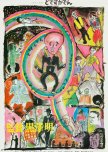
"It's like a bucket of sand poured over my head"
During Japan's economic boom period, Kurosawa Akira made a film about those who did not benefit from it, living on the fringes of society within or next to a large trash heap. Dodeskaden was his first film in color and he took full advantage of it with brightly painted backdrops and buildings. The colors did not translate into the drab, tragic lives of the people who lived there, as they continued moving in endless circles unable to escape their meager existence.The film begins and ends with teenage Rokuchan and his mother as they chant their Buddhist mantra. The mentally challenged teenage boy believes himself to be a streetcar operator and each day he goes out to his imaginary streetcar and runs his routes through the shanty town. As he "drives" along, he calls out "Dodeskaden", the sound a trolley makes. Out of all of the characters, his full imaginary life might actually be the happiest. Other characters are not so lucky, an overworked niece becomes a victim of rape, a man who saw something he shouldn't have walks around unspeaking with dead eyes, a father and son live in a car with the son begging for their food in town when they need it, and a man with a distinctive facial tic has to put up with a harridan for a wife. For comic measure two day worker drunks swap wives and the viciously gossipy Greek chorus of woman who gather around the water pump give their commentary throughout. A man who makes hairbrushes has a wife who has given him five children with a sixth on the way with none of them being his. And lastly there is the old village saint who tries to help where he can.
Kurosawa has vilified the upper classes and their consumerism in other films. In this one he shows the plight of society's outcasts. Much like The Lower Depths, he doesn't make the characters sympathetic for the most part, only the youngest and most vulnerable who suffer bitter fates. Most of the characters don't truly interact, only tied together by proximity.
While Kurosawa's skill shows through as well as the actors, I can't say I particularly liked this film. Justice hides her face. Redemption is but a dream. And hope is so far in the distance that most people live their lives in resignation to their lots. With the exception of dutiful Rokuchan's mother, women are portrayed as harpies and harlots, completely untrustworthy and for the most part interchangeable. The men are given much broader range from mentally ill to lazy to drunkards to industrious to kindly generous to wise old sage.
With all the drudgery and tragedy, a few moments of quiet and joy exist even when only in the imagination. There are beautiful surreal paintings of the house the father and son build together in their minds while starving in the car. Rokuchan's drawings of streetcars on every surface in their hut and his imaginary world are quite vivid. The wise sage tricks a suicidal man into wanting to live and stuns a burglar in his house with generosity. Those gentle moments are few and far between.
Despite Kurosawa's skill behind the camera and the general resilience of the people living on the outside of society, the flat, negative portrayal of women, and the relentless negativity dragged this film down for me. To quote one of the characters, "It's like a bucket of sand poured over my head."
2/22/23
Was this review helpful to you?
This review may contain spoilers
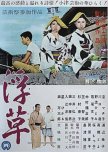
"Life is an unknown course"
Like the languid lapping of the waves against the shore near the quiet fishing village in this film, Director Ozu brings a gentle rhythm to the past meeting the present and directing the future currents for the people involved. Komajura and his troupe of traveling actors will find their lives changed as they navigate their circumstances and decisions in this remote place.Komajura is an aging actor with a less than successful acting troupe. He readily admits their Kabuki plays are not very good. Most of the players have only known the stage for most of their lives. In the sweltering heat of the day, they form a small parade in their costumes as they enter the village, handing out fliers. Some of the men seek out the prettiest women in town to invite to the play. Komajura seeks out an older woman and her 19-year-old son, Kiyoshi. Kiyoshi is actually Komajura's son, but only knows him as an uncle for Komajura doesn't want his son to have a poor actor for a father. Komajura's current mistress, Sumiko, becomes enraged when she finds out about his devotion to his secret family and hires one of the girls in the troupe, Kayo, to seduce the dutiful Kiyoshi setting into motion a wave of changes.
Though Floating Weeds has a romance with the young lovers, the main focus of the story is Komajura as the tides in his life change. He faces the loss of his troupe, his lover, and his son. He lashes out in fury in some of the most violent scenes I've seen in an Ozu film. He is forced to deal with his lack of control over his life circumstances and other people. Eventually, he comes to accept where he is in his life and what his relationships have come to be and that his loved ones will make their own decisions about their lives which he may not agree with. Many of the characters must decide who and where they want to be.
There are two scenes where Komajura becomes violent with the women who crossed him and his son. Though this male dominance may have been acceptable in 1959, it is jolting in this present time and incredibly offensive, making Komajura less sympathetic as he seeks to control the people around him through force. As with all Ozu films, the acting is normally quite restrained, making these outbursts all the more difficult to absorb.
The film itself is a beautifully staged and shot film. Ozu's scenic frames tell a story in and of themselves. They are contemplative, quiet, familiar, giving the characters and the audience room to think and breathe. Many of his frames would make incredible still lifes. His red tea kettle makes an appearance in the barber shop! In a powerful scene, Komajura and Sumiko have it out during a rainstorm. Each stands on the opposite side of the street, unwilling to budge, unwilling to move closer or get wet, unwilling to see the problem from the other's point of view. The words are vicious as the water pours down. Later, in a subtle bit of acting near the end in a train station, the same two actors drop their walls ever so slightly to let the other in as cigarettes are lit and forgiveness is given.
This film is a remake of his silent film, The Story in the Floating Weeds which I have yet to see as the film has no English subtitles. Floating weeds refers to itinerant actors. There were few weeds in this film, if I have any complaints, the movie did begin to feel long as some of the problems were dragged out and it felt as if some scenes could have been trimmed. Most of the acting was absorbing with the exception of the actor who played Kiyoshi. This young actor gave a rather wooden performance.
Ozu was a master of making family concerns and life decisions go from simple to complex to simply masterful. Though this film was not completely centered in a home, Komajura's family both biological and extended family with the troupe was explored. Ozu never ventures far from home and hearth, simply showing us different views of it. There is something comforting in his movies, we come to know the people and their struggles, their strengths and weaknesses, sometimes even see ourselves in them as they try to make the best of their lives. Komajura tells his old lover, "Life is an unknown course." The longer we live, the more these words resonate.
2/7/23
Edit—I have since watched and reviewed the original silent film.
Was this review helpful to you?
This review may contain spoilers
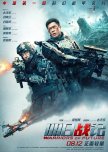
Whose got the weed killer and a giant fly swatter?!
Louis Koo and his production company produced Hong Kong's biggest Sci-Fi movie to date. A CGI extravaganza, Warriors of Future pits man against nature in a dystopian future not too far away.Due to man's greed and technological negligence and nearly endless robot wars, the planet's water and air have become polluted to the point of toxicity. Great domes are being built over the cities to try an give people a healthier environment. All seems to be going well when a meteor hits and a giant plant starts taking over. On the plus side, the plant is cleansing the air. Hong Kong now called section B-16 will be destroyed by the planted dubbed Pandora when the next rain hits. Carina Lau's military character is wanting to drop a bomb on the plant that will kill 160,000 people. In come Louis Koo and Lau Ching Wan to save the day by going into the belly of the plant to set off a bomb with a virus which will make the plant go dormant. No problem, right? Aside from the plants deadly ability to defend itself, it also has a host of giant bugs at its disposal. Throw in a traitorous human's evil doings and the good guys have their hands full. Phillip Keung also appears as a man in need of redemption.
The problem with Warriors of Tomorrow, aside from its obvious lack of an article (at least one "the") in the title, is that it dumps the viewer into the middle of the story. I can only guess that they thought the audience only wants to see the battles. The movie would have benefited from us feeling the relief of the domes being built along with the people and then the devastation of the meteor hitting and the giant plant erupting and destroying cities. We weren't there when the race to find a way to destroy or slow the plant was developed. Instead, we are told this information in flashback along with Koo's brief backstory and thrown right into the battle. There was little ebb and flow, just high speed, high tech fights against other tech and the enormous flora.
Koo, Lau, and Keung all gave emotional, compelling performances. Much of the rest of the cast came across deadpan and stilted. There was little humor to break up the lethal action. The CGI was actually high quality, especially for a Hong Kong film, and it's a good thing because there was a lot of CGI spectacle from beginning to end.
I actually found the movie entertaining, even if the writing let it down. It was obviously highly influenced by other films. I almost found myself quoting those films when the similar scenes popped up on the screen. I wish they'd spent as much time and money on the writing for the film as they had the sets and CGI. This would have been a far better film if they had.
In the end, who doesn't like to watch a bunch of men in metal tech take on an invasive plant species and carnivorous bugs. Anyone who has had to deal with kudzu and/or fire ants might feel the need for such superior hardware themselves. There are better movies in this genre, but for a first try it still managed to be fun.
12/6/22
Was this review helpful to you?
This review may contain spoilers
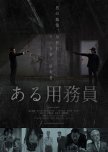
First come, first served or first killed, whichever comes first
A shy assassin assigned to guard a yakuza's teenage daughter finds himself in the middle of a revenge fueled war that takes place in a nearly empty school. Undercover as A Janitor, he ends up having to clean up more than empty juice boxes.Fukima Akira saw his father murdered when he was just a boy. His father's blood brother, Majima Yoshiki, took him in as a son and trained him to be an assassin. Majima's biological son, Honda, grew up to develop his own gang to oppose his father. Eventually, Akira finds out that Yoshiki had his father murdered so that he could take over the gang and honor dictated Akira now had to murder his father figure. Other leaders were involved, including Honda, because everyone wanted to take over Yoshiki's turf. Yui, the daughter, was needed to biometrically open the vaults thus creating the deadly situation at the school with only Akira between her and 9 assassins.
The film bordered on the absurd at times with a baby faced serial killer, two female high school assassins, a geriatric assassin, two bozo bro assassins and one that resembled a terminator. Some of the acting could be over the top. Honda, looked like an IT specialist, but what he specialized in was killing, especially his own men. I kept expecting to hear him say, "have you tried turning it off and turning it on?" This was a kill or be killed free for all, where the only ones who would be paid were the ones who completed the job first. First come, first serve. What the assassins learned the hard way was that the gentle spoken janitor had no intention of letting anyone collect a pay day.
A Janitor (the most commonly used title name) looked like it was cheaply made. The school shots were that blown out blue/gray and white that many Jdramas seem fond of. Scenes with Yui and her father having dinner, steak of course, murderous villains tend to like their rare beef, were tinted red.
Some of the scenes were gratuitous in nature, and fair warning, there were a few random high school kids murdered. At times the fighting seemed brutal and real at others times it could seem ludicrous. Suppressing fire is one thing, wasting bullets shooting at something you can't see when you have limited ammo is something else, something stupid. Speaking of stupid, if you have an amazing hiding place don't crawl out in front of the villains in plain sight.
The acting was all over the place. Fukushi Seiji did a fine job as the conflicted and loyal Akira. Imou Haruka asYui had the tough task of playing the high school girl getting dragged all over the place with little agency of her own. Most of the rest of the cast set their acting on crazy overkill.
Despite the limited acting and sets, the movie was entertaining at times. Like a Godzilla movie, the monster didn't show up until 40 minutes into the story, at which point the action began and it became more interesting. Ultimately, a cute assassin wasn't enough for me with the huge gaps in logic though. The film is part of the Baby Assassins world which I know nothing about. So if that franchise is something you enjoyed or you like yakuza assassins pummeling and shooting each other, this might be something to try. It is thankfully as short as much of the logic in the movie, clocking in under 90 minutes.
9/26/22
Was this review helpful to you?


