

 73
73 122
122 11
11 2
2 2
2 4
4 7
7 4
4 7
7 2
2 3
3 7
7 4
4 2
2 2
2 18
18 1
1 2
2 4
4 1
1 1
1 3
3 2
2 3
3 1
1 5
5 10
10 19
19 8
8 15
15


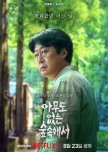
A frog (or frogs) dies from a stone thrown inadvertently
The Frog refers to an old Korean saying, “A frog dies from a stone thrown inadvertently”, which means people’s actions can have unintended negative consequences for others.“The Frog” is a pulse-pounding mystery thriller that seamlessly blends psychological tension with a high-octane narrative, making it a standout in the genre. Set across two distinct timelines, the series intricately weaves the fates of two men—Jeon Young-ha and Koo Sang-jun—whose lives are irrevocably altered by the presence of mysterious strangers and tragic events.
Young-ha, a reserved pension owner deep in the forest, finds his quiet life shattered when the enigmatic Yoo Seong-ha checks into his property. What begins as an innocuous visit quickly spirals into a nightmare as Seong-ha’s obsession with the pension pulls Young-ha into a game of manipulation, fear, and survival. Her presence is not just a disruption; it’s a catalyst for a series of increasingly disturbing events that push Young-ha to the brink.
In parallel, the series revisits the summer of 2000, where Sang-jun, a well-meaning motel owner, faces a different kind of horror. During the IMF crisis, a single act of kindness—offering a room to a stranded stranger—leads to an unthinkable tragedy that destroys his family and his livelihood. The show explores the psychological unraveling of Sang-jun as he grapples with guilt, public scorn, and the slow disintegration of his once-happy life.
Chief Yoon Bo-min, a tenacious detective who connects both timelines, adds another layer of tension as she digs into the mysterious happenings, driven by an intuitive sense of something deeply wrong. Her pursuit of the truth brings her dangerously close to the chaos surrounding both men.
The narrative is tightly wound, with each episode ramping up the stakes. The show is visually stunning, with beautiful mise-en-scenes that contrast the serene settings against the underlying dread.
One negative thing I found was that the transitions between the two timelines were not very seamless and can be confusing at first.
The terror comes from within—how far ordinary people can be pushed before they break.
In essence, “The Frog” is a suffocating, high-stakes drama that examines the devastating consequences of guilt, obsession, and the human capacity for both resilience and destruction. It’s a ride that leaves you breathless, with each episode escalating in intensity until the explosive conclusion.”
Was this review helpful to you?
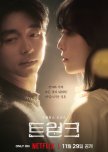
LOVE IS TEMPORARY AND MARRIAGE IS A SERVICE
"The Trunk" is an enthralling mix of romance, mystery, and emotional drama that intricately weaves together the lives of its complex characters. At its core, the series explores the fragility of human connections and the lengths people go to protect their secrets, blending suspenseful twists with deeply personal moments.The story centers around Noh In-ji, a field wife working for a marriage service company, and Han Jeong-won, a gifted but emotionally fractured music producer. When they enter a contract marriage, both carry emotional baggage that gradually surfaces: In-ji from a string of failed relationships and a painful betrayal, and Jeong-won from a past haunted by unresolved guilt and a toxic relationship with his ex-wife. Their initially transactional bond slowly transforms, revealing their vulnerabilities and sparking an unexpected intimacy.
What sets *The Trunk* apart in the ocean of contract marriage K-dramas is its ability to balance layered storytelling with sharp social commentary. The concept of contract marriages serves as a metaphor for modern relationships: transactional yet yearning for depth. The show doesn't shy away from themes like betrayal, emotional manipulation, and the scars of childhood trauma, but it handles them with sensitivity and nuance.
The characters are the lifeblood of this drama. Noh In-ji is a fascinating protagonist, a woman who seems unshakable on the surface but harbors deep emotional wounds. Her journey of self-discovery is as compelling as her dynamic with Jeong-won. Han Jeong-won, meanwhile, is a man trapped in his past, struggling to reconcile his unresolved feelings for his ex-wife with his growing affection for In-ji. The supporting characters, particularly Jeong-won's enigmatic and complex ex-wife Lee Seo-yeon and the unsettling stalker Eom Tae-seong, add layers of intrigue, ensuring the plot never loses its momentum.
The production quality is top-notch. The cinematography captures both the tension and intimacy of the characters’ lives, with dimly lit interiors and wide shots of isolated landscapes mirroring the characters' emotional isolation. The music, composed with a mix of melancholic strings and ambient tones, enhances the mood, making even the quietest moments resonate deeply.
Ultimately, "The Trunk" is more than just a romance. It’s a deeply human story about facing the shadows of the past, learning to trust, and finding meaning in unexpected connections. The title trunk does not point toward the actual trunk. The trunk here is metaphorical, about all the past traumas each character carries.
Was this review helpful to you?
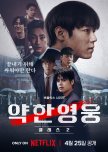
A Brutal, Thrilling Sequel That Forgets What Made It Special
"UPDATED REVIEW"I went into Weak Hero Class 2 with pretty high expectations, and while it definitely delivers a gripping continuation, I can’t say it completely lived up to the raw brilliance of Season 1.
On the surface, everything is bigger, and honestly, it’s impressive. Yeon Si-eun’s journey into a new school full of new dangers had me invested from the start. Watching him, Hu-min, Hyun-tak, and Jun-tae slowly forge a bond was probably the emotional highlight for me. Their brotherhood felt messy and real, full of guarded trust and bruised hearts. That part? The show absolutely nails it.
But where Season 1 thrived on slow-burn tension and devastating emotional buildup, Season 2 sometimes trades that for spectacle. The fights are frequent, beautifully choreographed, and absolutely brutal - but they’re also a little too polished at times. Some of the raw, desperate edge that made the first season so unforgettable feels sanded down here. It’s more "cool" than "gut-wrenching," and personally, I missed that rawness.
Another thing: the pacing feels uneven. The first half does a great job building new dynamics and setting up emotional stakes, but as the action ramps up, some of that careful character work gets sidelined. The heart is still there - it's just buried a little deeper under all the chaos.
That said, the performances are phenomenal. Ryeoun, especially as Hu-min, is magnetic. His layered performance brings a much-needed emotional anchor when the plot starts to sprint ahead. And Park Ji-hoon continues to be quietly devastating as Si-eun, managing to say so much with so little.
At the end of the day, Weak Hero Class 2 is a strong continuation that dares to expand its world, even if it sacrifices some of the emotional intimacy that made its predecessor special. It’s still absolutely binge-worthy - tense, brutal, and sometimes heartbreakingly honest - but it doesn’t quite reach the same unforgettable heights.
For me, it’s worth watching. Worth feeling a little heartbroken over. But not quite the masterpiece that the first season was.
Was this review helpful to you?

THE WORST OF EVERYTHING
Gangnam B-Side opens with promise, diving into Seoul’s gritty nightlife and setting up a dark, crime-infested world. But what begins as a potentially searing critique of social ills quickly devolves into full-blown exploitation.The series becomes a parade of graphic violence: Yoon Gil-ho is drenched in blood, women are injected with drugs and left vomiting or self-harming, and brutal imagery floods every episode. Its characters, however, are shallow outlines, tools for shock, not vessels for story.
Gil-ho, detective Kang Dong-woo, and escort Jae-hee are driven by rage and grief, yet never grow or evolve. Prosecutor Min Seo-jin walks a morally grey line, but the show’s surface-level feminism ensures she’s positioned as "one of the good ones" without much nuance.
Women like Jae-hee and Dong-woo’s daughter Ye-seo are written to be brave but ineffective, repeatedly saved by the men. Jae-hee’s final act of rebellion changes nothing except making Gil-ho more tortured.
Gangnam B-Side wants to be edgy and modern, but it sacrifices character for carnage. Ultimately, no matter how gruesome or flashy its scenes are, it doesn’t succeed in making me care. Its characters don’t feel real; they don’t adapt, grow, or even exist beyond their trauma. What’s the point of violence if it’s just noise?
Was this review helpful to you?

This review may contain spoilers
A Heartwarming, Empowering Drama with a Flawed Finish
Set in 1992 South Korea, A Virtuous Business tackles bold themes of female empowerment and sexuality against the backdrop of a conservative society. This quirky, heartfelt drama blends comedy, melodrama, and a touch of mystery, delivering a compelling narrative driven by the bonds of four remarkable women. While it shines in its character-driven storytelling and vibrant aesthetics, an uneven ending and underdeveloped subplots prevent it from reaching its full potential.At the heart of the story is Jeong-suk, a former beauty contest runner-up now living a modest life in the small town of Geumje. Struggling to make ends meet with her son, Min-ho, and her unfaithful partner, Seung-soo, Jeong-suk’s world shifts when she discovers Seung-soo’s affair. This betrayal sparks her journey of self-discovery, leading her to join Fantasy Lingerie, a venture selling adult products like lingerie, whips, and chains.
Jeong-suk teams up with Yeong-bok, a resilient mother of four, and later meets Ju-ri, a vibrant single mother and salon owner who embraces her femininity unapologetically. Rounding out the quartet is Geum-hui, a privileged yet unfulfilled housewife married to Won-bong. Together, these women form an unbreakable bond, navigating societal pushback, personal struggles, and hilarious mishaps as they peddle their provocative wares.
The show starts as a quirky comedy, with laugh-out-loud moments as the women awkwardly market their products. However, it gradually shifts into a sentimental, slow-burn melodrama, exploring deeper themes of self-worth, independence, and the pursuit of personal happiness.
Woven into the narrative is a mystery surrounding Do-hyeon, a detective new to Geumje, searching for his birth mother. Armed with only vague memories, burn marks on his arm, and a gut feeling, Do-hyeon’s quest intersects with Jeong-suk’s journey. Their budding romance is tender and heartfelt, grounding the drama’s more comedic and dramatic elements. However, the show’s attempt to juggle additional subplots dilutes its focus, contributing to its uneven pacing.
STRENGTHS: FRIENDSHIP AND EMPOWERMENT
The drama’s greatest asset is the chemistry among its four leads. Their friendship, reminiscent of Thirty-Nine but executed with greater warmth and authenticity, is the emotional core of the series. The writers skillfully shift the spotlight from Jeong-suk to the other women midway through, delving into their backstories and struggles. Yeong-bok and Geum-hui, in particular, face significant hardships, making their arcs feel especially poignant and impactful.
A Virtuous Business delivers a powerful message about embracing femininity and pursuing personal fulfillment, both sexually and in life. It educates its audience with sensitivity, challenging societal taboos while celebrating women’s strength and resilience. The show’s aesthetic complements its storytelling, with distinct set designs, well-crafted costumes, and a vibrant small-town atmosphere. Flashbacks are seamlessly integrated, and the soundtrack, featuring a quirky title track and soulful ballads, enhances the emotional depth. At a brisk pace, the episodes avoid overstaying their welcome, with sharp editing keeping the narrative engaging.
WEAKNESS: A DISAPPOINTING ENDING
Despite its strengths, A Virtuous Business stumbles in its final act. It falls victim to a rushed and unsatisfying conclusion. A time-jump trope disrupts the narrative flow, leaving several subplots unresolved. Yeong-bok’s marital arc, Ju-ri’s romantic prospects, and the future of Fantasy Lingerie are left ambiguous, while secondary characters, like Yeong-bok’s children, are sidelined entirely. This lack of closure undermines the show’s earlier momentum and sours its otherwise strong character work.
While Jeong-suk’s transformation from a timid housewife to a confident, independent woman is the drama’s central focus, it comes at the expense of the other characters’ development. By the end, Jeong-suk’s arc feels less compelling compared to Yeong-bok and Geum-hui’s, whose struggles carry greater emotional weight. The shift in Jeong-suk’s role, moving from self-discovery to supporting others, feels like an acknowledgment of this imbalance, but it’s not enough to fully redeem the uneven character focus.
FINAL THOUGHTS
A Virtuous Business is a delightful and empowering K-drama that blends humor, heart, and bold themes with a memorable cast. The friendship among its four leads, coupled with strong backstories and a vibrant aesthetic, makes it a standout. However, a disappointing ending and unresolved subplots hold it back from greatness. Despite its flaws, the drama’s infectious charm and meaningful message make it a worthwhile watch for fans of character-driven stories and female-led narratives.
Was this review helpful to you?
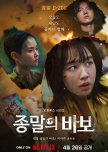
A Disorienting Yet Poignant Tale of Humanity’s Final Days
Goodbye Earth, a sci-fi dystopian series set in Woongcheon, South Korea, offers a gripping premise: humanity faces its final 200 days before an asteroid obliterates Earth. The show follows Jin Se-kyung, a former teacher turned volunteer, portrayed with heartfelt resilience by Ahn Eun-jin, as she navigates a crumbling society under martial law alongside her boyfriend. The narrative explores how people cling to hope, love, or vengeance in the face of certain doom, prioritizing human connection over apocalyptic spectacle. Yet, its ambitious storytelling is marred by initial narrative disarray, gradually finding its footing as it delves into profound human moments.The series shines brightest when it focuses on personal stories. Se-kyung’s quiet strength anchors the chaos as she fights to protect children caught in societal collapse. The ensemble cast delivers solid performances, bringing depth to characters grappling with despair, faith, or defiance. Visually, the show captures a gritty, grounded apocalypse, with scenes of looting, military crackdowns, and eerie normalcy that evoke the weight of impending doom. These moments of joy, sorrow, and connection feel authentic and moving, offering a fresh take on the end-of-the-world narrative.
However, the first three episodes present a disorienting experience, with a narrative structure lacking clarity and coherence. The plot jumps haphazardly between timelines without clear indicators, blending flashbacks and present-day scenes in a way that makes it challenging to follow the sequence of events. This lack of a clear timeline detracts from the viewing experience, leaving viewers struggling to engage fully. Additionally, the abundance of characters introduced early on adds to the confusion. While a large cast could enrich the story with diverse perspectives, many characters feel underutilized or underdeveloped, diminishing their impact on the overarching plot.
By the fourth episode, Goodbye Earth begins to coalesce. The timelines become more discernible, and the once-disparate characters start to intertwine in meaningful ways, creating a more cohesive and engaging experience.
As a philosophical drama with grand aspirations, the series overcomes its initial shortcomings to deliver a poignant exploration of humanity’s resilience and fragility in the face of extinction.
Was this review helpful to you?
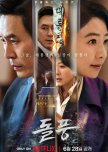
A Gripping Political Thriller with Stellar Performances and Intense Twists
The Whirlwind, a political drama, delivers a gripping, fast-paced narrative centered on Prime Minister Park Dong-ho and Deputy Prime Minister Jeong Su-jin as they engage in a high-stakes power struggle following an assassination attempt on a corrupt president. This 12-episode series shines with intense plot twists, morally complex characters, and stellar performances, making it a standout political thriller.The acting is exceptional, with Sul Kyung-gu’s charismatic portrayal of Park Dong-ho blending idealism with cunning, while Kim Hee-ae’s Jeong Su-jin is a formidable force driven by ambition. Their rivalry unfolds like a strategic chess match, each move calculated and thrilling. The drama maintains relentless momentum, weaving a narrative that critiques corruption and media manipulation without taking explicit political sides.
The Whirlwind excels in delivering a satisfying conclusion, with strategic sacrifices that leave audiences reflecting on the cost of power. It’s a must-watch for fans of intricate power plays and veteran performances, offering a compelling look into a corrupt political system.
Was this review helpful to you?
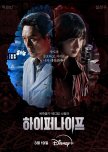
This review may contain spoilers
WHEN THE SCALPEL SLIPS
Hyper Knife begins like a cold, precise surgical instrument: sharp, deliberate, and thrilling in its control. It’s a female-led psychological thriller set in the morally compromised world of underground neurosurgery, anchored by the combustible pairing of Park Eun-bin and Sul Kyung-gu. She is a prodigy with a scalpel and a dangerously fragile sense of morality; he is the mentor-turned-rival who matches her brilliance but clashes with her principles. From the first episode, the series exudes confidence. The surgical sequences are eerie and intimate, the score pulses like a racing heartbeat, and the dialogue slices with a surgeon’s certainty. The first four episodes are a masterclass in tension, every operation doubling as a psychological duel.Then, midway through, something shifts. The slow, methodical dissection of character and motive gives way to a rush of reveals and shortcuts. Motivations that deserved careful exploration are abruptly explained in passing, as if the show were hurrying to clear the board rather than deepen the game. This is where the writing, so taut in the beginning, starts to loosen. The tonal precision that made the first half so gripping begins to fray.
By the finale, the collapse is complete. What should have been a cold, surgical reckoning swerves into emotional reconciliation, sentimentality, and a kind of sappy melodrama that feels at odds with everything the show had established. The moral stakes suddenly feel arbitrary, forgiveness is granted without the groundwork to make it convincing, and key threads are left dangling. The final confrontation, built up with such promise, fizzles into an ending that blunts its own edge.
And yet, even at its weakest, Hyper Knife never stops being watchable, largely because of its leads. Park Eun-bin is magnetic, a “gloriously unhinged queen” whose crazed eyes and unnerving calm are impossible to look away from. Sul Kyung-gu matches her beat for beat, their scenes together simmering with the tension of admiration and betrayal. The cinematography and score maintain an operatic, surgical tension, turning even the most implausible moments, like a barefoot, blood-spattered operation, into something unforgettable.
In the end, Hyper Knife is a paradox: intoxicating in the moment, but oddly hollow in retrospect. It promises a scalpel’s cut and delivers it in the first half, only to pull back when the blade should have gone deeper. Watch it for the performances, the mood, and the thrill of its opening episodes, but be prepared for a finale that dulls the edge it worked so hard to sharpen.
Was this review helpful to you?
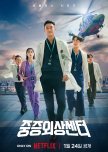
A High-Stakes Medical Drama with Action-Packed Heroics
""UPDATED REVIEW""Entertaining from start to end!
Kang-hyuk embodies the ultimate fantasy figure - someone who effortlessly saves lives, defies injustice, and commands attention with his charm, all while maintaining an impeccable style.
The hospital's relentless focus on profit acts as the story’s antagonist, with senior doctors often pushing back against Kang-hyuk’s idealism. Over time, some of these doctors begin to rethink their priorities, thanks to his influence.
The show knows that the corporate angle, while relevant, isn't the central focus. Instead, the heart of *The Trauma Code: Heroes on Call* lies in Kang-hyuk’s daring exploits and the growth of his two underlings, Jae-won and nurse Cheon Jang-mi, who initially finds Kang-hyuk’s presence more intimidating than inspiring. Kang-hyuk’s playful nicknames for them - 'Anus' and 'Gangster' - add a layer of humor and affection.
At its core, *The Trauma Code: Heroes on Call* is a high-energy, action-packed medical drama that plays with the familiar tropes of the genre while maintaining a lighter, more entertaining tone. It's a show best enjoyed in moderation, offering a fun mix of heroism and high-stakes drama.
Was this review helpful to you?
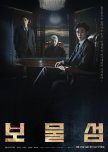
A promising thriller that forgets what it was trying to say
*Buried Hearts* markets itself as a slick revenge thriller drenched in corporate corruption, memory loss, and familial secrets. And to be fair, it starts that way. But as the story unfolds, the show loses not only its narrative grip, but also its own identity.The early episodes are compelling. A secret slush fund, a shadowy professor pulling political strings, and a lead character with amnesia - there’s no shortage of tension. But the writing quickly shows cracks. Instead of escalating the drama, the plot circles back on itself repeatedly, bogged down by overused tropes (amnesia again?) and characters who stop evolving after episode three.
There’s a frustrating lack of depth in how the show handles its core themes. Power, memory, guilt - these are fertile grounds for psychological drama, but *Buried Hearts* rarely digs deeper than surface-level reveals. Characters tell us how they feel; the show doesn’t show us. The narrative doesn’t trust its audience to interpret nuance, so it spoon-feeds motivation through long, expositional dialogue.
The drama leans heavily on twists, but few of them land. A late-game near-incest plotline feels like a desperate attempt to inject shock value, only to be reversed quickly. The big reveals often feel more like filler than payoff - contrived rather than earned.
By the final third, the show is barely holding together. Pacing becomes a major issue. Scenes drag. Characters lose their edge. The revenge plot, which should intensify, flattens under political subplots and boardroom infighting that lack emotional stakes. What could have been a tight 12-episode series overstays its welcome across 16.
Park Hyung-sik does his best with what he’s given, but the script boxes him into a narrow emotional range. Dong-ju’s amnesia is used more as a reset button than a way to explore internal conflict. Hong Hwa-yeon, while understated and watchable, is underutilized, especially in the second half where her arc plateaus into passivity.
Even Huh Joon-ho, playing the morally gray puppet master Yeom Jang-seon, is reduced to a repetitive mouthpiece for exposition rather than a compelling antagonist.
The direction is clean but lacks distinct style. There’s none of the visual storytelling or atmospheric flair that defines standout K-thrillers. Music is overbearing, often cueing emotion instead of letting the scene breathe. And while the sets are appropriately cold and corporate, the lack of variety becomes visually monotonous.
Final Thoughts:
*Buried Hearts* has all the ingredients of a high-stakes melodrama, but it lacks cohesion, restraint, and most importantly, soul. The show wastes its premise, dulls its tension with repetition, and leaves its audience more frustrated than satisfied. What could have been a biting commentary on greed and identity ends up as just another forgettable entry in the ever-growing list of K-dramas that promise more than they deliver.
Was this review helpful to you?

This review may contain spoilers
AN ODE TO YOUTH, CINEMA, AND MOVING ON
OVERVIEW:Melo-Movie is a quietly devastating and tender drama about people who love, lose, and learn to live again through the lens of cinema. It follows Ko-gyeom, a former actor turned critic, and Moo-bi, a director haunted by her father’s shadow, as their lives intertwine with a circle of artists, each carrying their own unfinished stories. The series explores how film mirrors life, how grief reshapes love, and how connection can heal even the deepest loneliness. Beneath its gentle pace lies an unflinching honesty about regret, forgiveness, and the courage it takes to begin again. It’s not just about movies; it’s about the moments between takes, the silences after heartbreak, and the fragile beauty of choosing to stay.
______
COMMENTARY:
Melo Movie is a story about the quiet disasters we survive, the ways we miscommunicate love, and the strange, redemptive beauty that comes from sitting through our pain instead of editing it out.
At first glance, it masquerades as another “melancholic slice-of-life” romance that’s a bit slow, a bit pretentious, full of beautiful people who never quite say what they mean. But the deeper you fall into it, the more you realize it’s about everything that lies beneath the surface of what people say and do. Every silence in this show is an emotion half-swallowed. Every smile is an apology never spoken aloud. The pacing, which might frustrate some, is its own language; the show is less about what happens than what doesn’t.
What I loved most is how Melo Movie doesn’t hand you emotions pre-chewed. It makes you earn them. It’s not melodrama; it’s micro-drama where every scene is built out of tiny, human moments: the way someone hesitates before saying a name, or looks away just before tears fall, or chooses a joke instead of a confession. It’s a series that trusts the audience to understand heartbreak without an orchestra swelling in the background.
This show is, at its core, a story about people who are all, in one way or another, haunted by the gap between the life they wanted and the one they actually live. Each of them has built an armor around that disappointment: Ko-gyeom with his ironic detachment and relentless humor, Moo-bi with her ambition and cynicism, Si-jun with his pride, Ju-a with her self-erasure. They orbit one another, collide, and drift apart, all trying to answer the same question: Can you really move forward while you’re still grieving what might have been?
If Melo Movie has a soul, it’s Ko-gyeom. He’s the character who made me both ache and laugh in equal measure, a man who hides deep wells of sadness behind a disarming grin. His love for cinema becomes both his shield and his crutch; films are how he learned to feel when real life became unbearable. There’s something almost tragic in that, the idea that stories saved him but also kept him from living his own.
Ko-gyeom is the kind of man who talks too much so he won’t have to say what matters. He cracks jokes when he should cry. He turns pain into performance. He’s spent so long being “the funny one,” the dependable one, that he’s forgotten how to let anyone see him break. And yet, Melo Movie breaks him, gently, lovingly, over ten episodes, until all the artifice falls away and he’s just a boy again, sitting in a dark room, watching flickering light fill the silence.
You start thinking he’s just the charming neighbor type, the failed actor who reinvented himself as a film critic. But as the layers peel back, what you find isn’t a cliché redemption story. It’s something rawer: the story of a man realizing that cynicism isn’t wisdom, and that healing doesn’t mean forgetting, but it means learning how to live with the memory.
The show’s greatest triumph, I think, is how it handles his grief. Ko-gyeom doesn’t fall apart in grand, cinematic fashion. He unravels slowly, like a sweater caught on a nail. A little tug here, a small silence there. When his brother dies, he doesn’t scream or break dishes, he just stops going inside the house. He lives in his car, pretending to be fine, because pretending is all he’s ever known.
Ko-gyeom’s relationship with Moo-bi becomes a mirror for everything he’s avoided. She challenges him to feel, to stop treating life like a movie he can critique from a distance. What’s beautiful is that their romance doesn’t “fix” him. It just gives him a reason to try again. By the finale, when he says he’ll stop watching movies for a while, it isn’t a rejection of art; it’s a confession of readiness. He’s finally ready to live his own story.
Moo-bi is not an easy character to love at first, and that’s precisely why I loved her. She’s brittle, defensive, a little cruel sometimes. But her sharpness is all self-protection. Beneath that cold precision is a girl who’s been aching for love her whole life and convinced herself she didn’t need it.
Her relationship with her father forms the emotional spine of her character. The tragedy of Moo-bi is that she spent her entire life resenting him for loving films more than her, only to become exactly like him. Her obsession with proving herself in the same industry is both rebellion and inheritance. She wants to disprove his belief that cinema is sacred, yet she can’t stop chasing that same ghost.
What makes her arc extraordinary is how it’s written not as a redemption but as a recognition. She doesn’t suddenly forgive her father or become soft. She just understands. And that’s far more powerful. The moment she realizes that her mother’s love had always been steady, while her father’s absence loomed larger only because she kept feeding it with anger, that’s the kind of emotional revelation that feels painfully, beautifully real.
Moo-bi and Ko-gyeom’s relationship is messy, tender, and grounded in mutual recognition. They’re two people terrified of intimacy: she’s scared of being left, and he’s scared of being truly seen. What they share isn’t a fairytale but a slow, awkward, brave attempt to let another person in. Their love scenes are breathtaking not because of passion, but because of restraint. Two wounded people choosing to stay anyway; that’s love at its most radical.
Ko Jun broke me. Completely. His story is one of those rare depictions of quiet despair that refuses to sensationalize suffering. He isn’t portrayed as a martyr or a villain, just a boy too tired to keep pretending that existing was easy.
Through Jun, Melo Movie explores a different shade of grief, not the kind that follows loss, but the kind that precedes it. He’s a man waiting for his own end, both literally and emotionally. And the show never punishes him for that. It treats his pain with dignity.
The relationship between the brothers is one of the best-written sibling dynamics I’ve seen in a while. There’s guilt and resentment, love and fear, unspoken devotion, and unbearable distance. Ko-gyeom’s realization that his brother’s “accident” was not an accident is one of the most harrowing scenes in the series, not because it’s shocking, but because of how quietly it’s delivered. Just a man realizing, too late, what his brother had been trying to tell him all along.
And then that letter, that beautiful, devastating letter where Jun writes that Ko-gyeom was his reason to live. That moment shattered me. Because in that confession lies the cruel symmetry of their bond: each brother lived for the other, and both forgot to live for themselves.
If Ko-gyeom and Moo-bi are about rediscovering love, Si-jun and Ju-a are about outliving it. Their story feels like a eulogy to a love that once burned bright but became suffocating over time. It’s not about betrayal or cruelty; it’s about what happens when devotion turns into dependency.
Ju-a is perhaps the most quietly tragic of them all. She believed that loving someone meant making yourself small enough to fit their dreams. She supported Si-jun to the point of erasure. And when she finally realized she didn’t exist outside his orbit, it was already too late. But her strength lies in how she doesn’t seek revenge or closure; she seeks rediscovery.
Si-jun, on the other hand, represents the paralysis of pride. He loved her genuinely, but his love was selfish, built on gratitude and fear rather than equality. When they meet again, his confusion feels painfully authentic. He wants to rekindle what they had, but he’s also terrified of seeing how much she’s changed.
Their final parting is one of the show’s most mature choices. Melo Movie understands that some love stories end not with heartbreak, but with acceptance. And sometimes, that’s the hardest ending of all.
______
THEMES:
Melo Movie is built like a sigh that never quite leaves the chest. The central idea is that life’s beauty and pain are inseparable, that to love is to risk being undone by it, and to keep loving anyway is the only real act of courage.
At its core, the show is about the after. Not the big moments of falling in love or losing someone, but the fragile, unglamorous stretch of time that comes after, when you have to live with the consequences of what you said, or didn’t say. That’s where Melo Movie lives: in the pauses, the half-remembered texts, the familiar streets that feel different because someone’s not walking beside you anymore.
There’s also a recurring motif of art as refuge. Every main character uses art as both expression and escape. Moo-bi hides behind her filmmaking, Ko-gyeom behind his reviews, Si-jun behind his music, Ju-a behind her work as a producer. They all create because they’re afraid of confronting the rawness of life. The show’s brilliance lies in how it doesn’t condemn this, it shows that art is survival, but warns that it can become a wall if we never step beyond it.
The cinematography reinforces this beautifully. The way light spills over empty rooms, the framing of doorways (always just slightly too wide, too lonely), the recurring shots of reflections, everything in Melo Movie whispers that the characters are both present and absent, living and haunted.
But the greatest theme of all is grief. Not the loud, cathartic kind, but the kind that lingers in your posture, in the way you leave a light on at night for someone who isn’t coming back. The show doesn’t treat grief as something to “get over.” It treats it as something you learn to carry. That moment when Moo-bi finds Ko-gyeom sleeping in his car is the perfect embodiment of that: the loneliness of someone unable to step back into a space once shared, the guilt of survival, the quiet hope that maybe someone will find you and just sit with you in it.
Love, here, isn’t grand or sweeping. It’s patient. It’s sitting in the cold car beside someone until morning. It’s telling the truth softly, even when it hurts. It’s the bravery of showing up again the next day, even when you’re still broken.
What struck me the most about Melo Movie is how it trusts silence more than dialogue. The emotional heavy-lifting happens in the moments between words - a look, a small gesture, an interrupted breath. The actors are masters of restraint, communicating volumes through the smallest movements.
There’s this scene where Moo-bi sits alone in the editing room, watching footage of Ko-gyeom smiling. You can feel everything she’s too proud to admit: longing, fear, guilt, tenderness.
Similarly, the friendship between Ko-gyeom and Si-jun speaks volumes through what isn’t said. The revelation that Si-jun knew about Ko-gyeom living in his car and quietly left supplies for him, that’s such a small detail, yet it’s one of the most moving moments in the series. It’s a perfect depiction of how men in particular are often taught to love indirectly, through gestures, through presence, through acts of care disguised as nonchalance.
Even the humor feels like heartbreak in disguise. The banter, the teasing, it’s all defense. The show understands that sometimes laughter is the only way to keep from falling apart.
______
LOVES:
What I loved most about Melo Movie was the writing. It’s some of the most emotionally intelligent, quietly devastating writing I’ve seen in a while. Every line feels intentional yet never stiff, as if the script were breathing right alongside its characters. The dialogue doesn’t talk about emotions; it simply embodies them. What fascinates me most is how it captures contradiction so truthfully: how a person can say “I’m fine” and mean “I’m breaking,” how a quiet “okay” can feel like the end of the world.
Then there are the characters, who feel astonishingly real. None of them are saints or villains; they’re simply people stumbling toward understanding. Each decision they make, even the misguided ones, makes perfect sense from their perspective. The show carries them with empathy, never judging, only observing. It understands that everyone is doing their best with what they have, and that sometimes, that’s not enough.
The soundtrack is another triumph. Sparse but unforgettable, it never dictates emotion but enhances it. The recurring piano motif feels like a heartbeat - steady, human, almost imperceptible until you notice how much you’d miss it if it stopped. The music never tries to make you cry; it lets you arrive there on your own.
And of course, the romance. The chemistry between Moo-bi and Ko-gyeom isn’t explosive or cinematic in the usual way, but it’s quiet, magnetic, and achingly believable. Their connection feels lived-in, as if they were two people who had already known each other in another life. Every touch, every shared silence, feels monumental precisely because it’s so restrained. There’s no melodramatic confession, no overwrought declarations, just the slow, patient unfolding of two souls learning to sit in each other’s presence without fear.
Above all, I loved how real it all felt. Melo Movie doesn’t chase neat resolutions or exaggerated catharsis; it chases truth. Healing here doesn’t erase scars; it simply teaches you to live with them. Relationships remain complicated, love remains flawed, and yet, there’s grace in all of it. The show’s realism isn’t cold or cynical; it’s tender. It knows that imperfection is the most honest kind of beauty.
______
FINAL THOUGHTS:
When Melo Movie ended, I didn’t feel the usual post-series emptiness. I felt quiet. Still. Like someone had pressed pause on the world so I could breathe for a moment.
This show reminded me that healing isn’t linear, that love doesn’t need to be loud to be real, and that sometimes the bravest thing you can do is stay. Stay when it’s hard, stay when you’re scared, stay even when words fail you.
Melo Movie isn’t for everyone, and that’s what makes it so special. It’s not built for bingeing or background noise. It demands patience, attention, and emotional honesty. But if you meet it halfway, it gives you something profound: a mirror. It shows you your own grief, your own tenderness, your own contradictions.
With all that said, I’d give this series a solid 8.5 out of 10.
Was this review helpful to you?
This review may contain spoilers
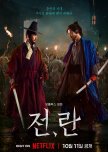
A HEARTBREAKING YET BEAUTIFULLY CRAFTED FILM
*Uprising* is a heartbreaking yet beautifully crafted film that takes us on an emotional journey through the friendship of Jong-Ryeo and Cheon-Yeong, set in a time of brutal class divisions in historical Korea. The plot centers on how the rigid social hierarchy affects their lives, particularly Cheon-Yeong, a slave who is forced to endure countless hardships in place of Jong-Ryeo.What starts as a cruel situation, Cheon-Yeong being beaten in Jong-Ryeo’s stead, evolves into a deep bond. Despite the fact that Cheon-Yeong isn’t born a slave, his family’s downfall forces him into this role, and it's his strength and refusal to accept the established hierarchy that makes him stand out. When he begins secretly teaching Jong-Ryeo how to fight, the dynamics between the two change, leading to a friendship that feels genuine despite the social disparity.
However, the film doesn’t shy away from the harsh realities of their world. Even after helping Jong-Ryeo win a prestigious sword-fighting competition, Cheon-Yeong is denied his freedom by Jong-Ryeo’s father, who breaks the promise of releasing him from slavery. This betrayal deeply scars Cheon-Yeong, though Jong-Ryeo still tries to protect him by sending him off to fight the Japanese invaders, hoping this will finally earn him his freedom. The film is filled with these moments of hope and crushing disappointment.
After years of fighting, Cheon-Yeong returns home only to find the world he left behind in ruins. Jong-Ryeo’s family home has been burned down by the people who suffered under the oppressive rule of his father. In one of the film’s most gut-wrenching moments, Cheon-Yeong tries to save Jong-Ryeo’s wife and son from the flames, but she refuses his help out of pride, seeing him as a slave rather than a person who might save her life. Her death serves as a stark reminder of how deeply ingrained social prejudice was, even to the point of self-destruction.
The climax of *Uprising* sees a tragic reunion between Jong-Ryeo and Cheon-Yeong after seven years of separation. Jong-Ryeo, unaware of the full story, initially believes Cheon-Yeong is responsible for his wife and son's deaths. Their final confrontation is tense, but as the truth is revealed, the film shifts focus from their conflict to a bittersweet reconciliation. Just when they finally resolve their long-standing misunderstanding, Jong-Ryeo is mortally wounded in battle against the Japanese. Cheon-Yeong kills the Japanese leader, Genshin, in a satisfying act of revenge, but it’s too late to save Jong-Ryeo.
In Jong-Ryeo’s final moments, he asks Cheon-Yeong if they’re still friends, referencing an earlier lighthearted exchange from their youth. It’s a poignant moment that captures both the tragedy and beauty of their relationship. Despite everything that has happened, the film shows that love and loyalty can persist, even in death. This scene is devastating, but it offers closure, showing that their bond was real despite the cruel world they lived in.
On a larger scale, *Uprising* also critiques the corruption of the ruling class, embodied by King Seonjo, whose greed and cowardice lead to the suffering of the common people. His alliance with the Japanese and subsequent desertion of his own throne during the invasion sparks the uprising that defines the film. The subplot involving Seonjo and the infamous Japanese leader Genshin, known as the “nose-snatcher,” adds layers of historical context and brutality to the narrative. In a symbolic twist, Seonjo’s greed is punished when the treasure he’s promised turns out to be boxes of human body parts, noses, to be precise, reflecting the horrors of war and the consequences of his betrayal.
In the end, Cheon-Yeong and a few of his fellow survivors form a new community, symbolically named “Beom Dong,” meaning “A world together.” It’s a hopeful note to close the film on, but *Uprising* doesn’t let the audience forget the price paid for such unity. The film leaves you with a lingering sense that although there’s hope for change, the struggle against social inequality is far from over.
*Uprising* masterfully balances personal and political themes, offering a powerful meditation on friendship, loyalty, and the fight for justice. It’s a tearjerker that hits hard, especially as it reveals the lasting impact of societal divisions, even as it tries to inspire hope for a better future.
Was this review helpful to you?
The More You Watch, The More You Love
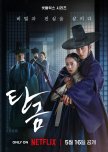
OVERVIEW:Dear Hongrang (Tangeum) is a sorrowful and gripping exploration of obsession, grief, and the violent yearning for belonging. Draped in mystery and laced with the emotional decay of a fractured household, the series begins with a tragedy and unravels into a slow-burning, multilayered descent into personal and political ruin.
At the center is Hongrang, heir to a vast merchant guild, who vanished mysteriously at the age of eight. His disappearance shattered the already fractured household. His mother, Min Yeon-ui, spirals into madness and addiction, while his father, Sim Yeol-guk, steps in to lead the association and, believing his son is dead, adopts Mu-jin, a shrewd and loyal orphan trained to be the new successor. The only one who refuses to stop searching is Jae-i, Hongrang’s half-sister, marginalized in her own home but bound to her brother by a childhood bond so deep it haunts her every step.
Twelve years later, a mysterious young man appears, scarred in all the right places, claiming to be the long-lost Hongrang. Yeon-ui is ecstatic. Jae-i is unconvinced. Mu-jin is threatened. What follows is not just a battle over inheritance, but over truth, memory, and identity.
COMMENTARY:
I didn’t expect Dear Hongrang to get under my skin the way it did. At first, it felt like too much, and suddenly, I was in it. Heart clenched, eyes stinging, trying not to see myself in people I didn’t want to relate to.
What hit me the hardest was the quiet collapse between Jae-i, Hongrang, and Mu-jin. It wasn’t loud or clean, but was the kind of heartbreak that just sits in the room with you.
Jae-i reminded me of what it’s like to be strong only because you have no choice. The way she holds herself - stiff, careful, almost too proud to admit she’s tired - I’ve seen that posture in people I love. I’ve worn it. And when she starts to let someone in, when her shoulders drop just a little, when her voice softens, I felt this stupid lump in my throat. Because I know how hard that is. To trust again after everything’s been taken from you.
Hongrang… god. He doesn’t even have to say much. He walks like someone who doesn’t expect to be missed. There’s this heaviness to him that made me uncomfortable at times, like watching someone who doesn’t believe they’re real anymore. But when he’s with Jae-i, when they just look at each other, it’s like the world pauses. It made me think of all the people I’ve tried to reach who were already halfway gone. People I wanted to save. People who maybe didn’t want to be saved.
And Mu-jin. I don’t think I was ready for Mu-jin. His pain is so quiet, it’s easy to miss, until you realize it’s everywhere. I saw a part of myself in him that I don’t like talking about. That feeling of being overlooked. Of loving someone who’s already looking past you. He doesn’t rage; he just aches. And I know that feeling too well. That desperate, silent kind of love that you pretend is enough, even when it’s killing you.
The show is gorgeous, sure - the forests, the candlelight, the jewelry, all of it. But that’s not what stayed with me. What stayed was the silence between scenes. The long stares. The unsaid things. The kind of tension that feels exactly like grief: stretched out, dull at first, then suddenly overwhelming.
Dear Hongrang wasn't trying to shock. It was trying to sit with me. Like grief does. Like guilt does. Like love does when it turns into something heavier. It’s not a drama about getting revenge or solving a mystery. It’s about what happens when the person you were dies, and you’re still here, expected to keep living anyway.
Every character in this show is holding on to something already gone. And maybe that’s why it wrecked me. Because I’ve done that. I’m probably still doing that. And the show doesn’t tell you it’ll get better. It just tells you to look at it. To let the ache exist. To stop pretending you can fix it by going back.
Was this review helpful to you?

A Bold Premise That Plays It Safe
Divorce Insurance sets out with a refreshingly bizarre premise. That kind of dark humor and social satire is a solid hook, and for the first few episodes, the drama leans into it well. But as the series progresses, it struggles to maintain that satirical sharpness, often trading its unique premise for safer, more conventional drama beats.-> What It Gets (Almost) Right:
1. A Unique Tone: Briefly, Before It Chickens Out
The first few episodes are weird in the best way. There’s a sly, deadpan humor, the kind that makes you think, Maybe this show is actually onto something. The actors get the assignment, the writing's clever, and the whole “divorce as an industry” thing feels biting. And then, poof! It remembers it wants to be heartfelt and relatable, and any trace of teeth gets politely brushed away.
2. Characters With Just Enough Quirk to Be Marketable
Ki-jun and Han-deul are awkward and emotionally damaged, aka perfect TV protagonists. They have an unresolved history, which the show dangles just long enough to be interesting before shoving them into a rushed romance. Dae-bok and Ah-yeong start off as quirky sidekicks and actually evolve into real people, which feels like a miracle considering how often they’re used for punchlines. Credit where it’s due.
3. Real Feelings, Occasionally
When the show stops trying to be cute or clever, it sometimes stumbles into real emotion. Seon-hee’s storyline, for instance, is actually moving. It’s the kind of subplot that makes you think, Why isn’t the rest of the show like this? And the answer, apparently, is because that would be too interesting.
-> Where It Trips Over Its Own Premise:
1. Remember That Whole “Divorce Insurance” Thing? Neither Does the Show
The hook is gold: morally questionable, ripe for satire, bizarre enough to stand out. Naturally, the show throws it in the trunk and drives off without it. A couple of episodes later, the business model is basically background noise. No messy ethics, no biting commentary - just cute coworkers trying not to cry at their desks.
2. Pacing? What Pacing?
The second half is like a montage in a movie where someone’s life spirals out of control, except without the music or the emotional payoff. Things happen too fast, characters make decisions that feel unearned, and big moments come out of nowhere. It’s not so much building tension as it is skipping steps and hoping no one notices.
3. Romance On Fast-Forward
Ki-jun and Han-deul clearly have history, and by the time the show explores any of it, they’re already halfway to coupledom. It’s the classic “we have chemistry, so let’s skip all the work” strategy. The result is a romance that feels less like a natural evolution and more like a checklist item the writers were eager to tick off.
4. From Satire to Sentimentality: A Speedrun
Once the show decides it wants to be “sincere,” it abandons the very thing that made it interesting. The bite is gone, the satire neutered, and what’s left are neatly wrapped plotlines. It’s emotional, sure, but safe, and not in a good way.
-> Final Verdict:
Divorce Insurance sets out to be sharp, strange, and subversive. But after a promising start, it quickly trades its edge for something safer and more familiar.. It is disappointing for me, who was hoping for something sharper, weirder, and more consistent.
At least you can’t say it didn’t try... for a little while.
Was this review helpful to you?
A Quiet Duel of Legacy and Pride
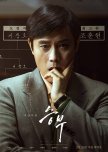
*The Match* is a compelling drama film based on the real-life relationship between two of South Korea’s most iconic Go players: Cho Hun-hyun and his protégé-turned-rival, Lee Chang-ho. Set in the early 1990s, the film traces their journey from a bond of deep respect and trust to a dramatic confrontation on the board that reshapes both their lives.The performances are the heart of this film. Lee Byung-hun is remarkable as Cho Hun-hyun, portraying a man torn between pride in his student and fear of being replaced. Yoo Ah-in brings a quiet intensity to Lee Chang-ho, expressing his character’s transformation from an obedient disciple into a confident and self-assured challenger. Their dynamic carries the film, grounding its emotional weight in realism and restraint.
The direction is subtle and patient. The film avoids melodrama, opting instead for a slow build of tension through deliberate pacing. The cinematography treats the Go board like a battlefield, using close-ups and careful lighting to give weight to every move.
One of the film’s strengths lies in its dialogue, which is thoughtful and philosophical. Lines like “A teacher is not someone who gives answers, but someone who opens the way” resonate far beyond the context of the game. The screenplay explores the loneliness of mastery, the burden of legacy, and the moment when every student must eventually step out of their teacher’s shadow.
There is also warmth and humor throughout the film, which balances the more intense moments. These touches humanize the characters and make their emotional journey all the more relatable.
It is a meditation on ambition, mentorship, and the bittersweet nature of growth. It’s a film that lingers because of the quiet, personal truths it reveals in the spaces between each move.
Was this review helpful to you?


