China (already banned historical fiction) and South Korea has a huge media literacy problem if historical fiction is such an insult to thier intelligence. 🤣
This is not an idol drama. There are no fluffy fan-service moments. The romance isn't stylized or manufactured…
This is actually still an idol drama. Just because it doesn’t rely as heavily on some of the trendy, stereotypical, or cheesy writing and fan service commonly found in recent historical idol dramas doesn’t make it something fundamentally different.
An idol drama doesn’t have to be fluffy, heavily romanticized, or filled with visual tricks. Those are stylistic choices within the genre, not what defines it. This drama still uses popular idol actors, familiar historical-romance conventions, and the same commercial framework associated with idol productions.
And I don’t find the camerawork in this drama particularly groundbreaking or beautiful either. The cinematography is fairly average; there’s nothing especially distinctive about the framing, composition, lighting, or camera movement that sets it apart. Calling the camerawork “understated” almost gives it more artistic significance than I think is actually there. Sometimes average camerawork is simply average camerawork.
So I don’t think the lack of flashy visuals or fluffy fan service is evidence that this isn’t an idol drama. At most, it’s an idol drama with a somewhat more restrained presentation.
Still they made FL bird brained, how can she not know that Shen run only wanted her to wait, not fully stop her…
Why are you asking what patriarchy means “to me” as though I’m using my own personal definition? Patriarchy is a social structure that centers men and institutions that privilege male authority and interests.
The examples you gave—inheritance and gender oppression—are symptoms or manifestations of a patriarchal system. They are not, individually, the definition of patriarchy itself. And I’m not sure what you mean by “independence to do your bidding.” That really has nothing to do with the definition of patriarchy.
That doesn’t mean women within a patriarchal system have no agency, influence, wealth, or privileges. Women can absolutely exercise power within that system, and they can participate in enforcing and upholding it. But women having power does not automatically mean the patriarchy is less rigid or less powerful.
A son asking permission from his mother, for example, doesn’t necessarily mean that the mother has more structural power or control over him. That dynamic can also be understood through filial piety, which historically operates within a patriarchal family structure. Respect and obedience toward the mother as a parent can coexist with a system that ultimately privileges male lineage and authority.
The mother can exercise considerable authority while still making decisions that ultimately benefit her son, preserve his position, protect the family’s male lineage, or secure advantageous marriages for her children. She may be powerful, but her power can still function within—and help maintain—a system that centers the male dynamic.
That’s the distinction I’m making with the women in this drama. Their influence doesn’t prove that patriarchy has become less rigid or less powerful. In many cases, it demonstrates how women can exercise significant authority from within a patriarchal system while simultaneously helping uphold that system.
Still they made FL bird brained, how can she not know that Shen run only wanted her to wait, not fully stop her…
Actually, I think this dynamic proves the opposite. The patriarchy isn't less rigid or less powerful simply because women have learned how to exercise power within it and even help uphold it.
Old Madam having enormous influence doesn't diminish the patriarchal structure. If anything, the way she exercises that influence demonstrates how the system works. Women gain and wield power through marriages, husbands, sons, family alliances, and their positions within powerful households. If women possessed the same direct institutional power as men, there would be far less need to exercise so much of that power through these channels.
That's why the marriage negotiations involving the Xie daughters are so important. Their marriages aren't merely personal relationships; they are mechanisms through which families gain and maintain political power. The daughters understand this and can strategically use marriage to their advantage, but their ability to navigate the system doesn't make the system less patriarchal.
Women can absolutely hold tremendous power in a patriarchal society. They can manipulate the system, benefit from it, and even become some of its strongest enforcers. That doesn't weaken the patriarchy—it shows how deeply embedded it is. A patriarchal system doesn't require every woman to be powerless; it requires power and social institutions to remain structured around male authority, lineage, titles, inheritance, and marriage.
So I don't see Old Madam's power as evidence that "everything is decided by power regardless of gender." I see her as an example of how women can become powerful actors within a patriarchal structure while simultaneously participating in and perpetuating that structure.
Still they made FL bird brained, how can she not know that Shen run only wanted her to wait, not fully stop her…
I agree. Acting withing the patriarchal systems the way she did does make her come across as brazen. I blame the writing for not properly establishing that while she is smart, she acts on her emotions. If this would have been established as a weakness, her decision to marry to gain power would have made more sense. But I do like the how they portrayed the rigid patriarchal system that keeps everyone so vile. 🤣
The reason for the low Douban score of 5.4 (average) is that there are only about 10.9k user ratings, and it was…
Eight Hundred wouldn't be considered an idol drama (sorry if I misinterpreted your comment). I remember it's part of one of Tencent series of more serious dramas. And I think the director of Eight Hundred knew how to direct Kai very well, someone like Kai, I think you can't leave to much to improvisation, you need to be a very controlled director, and know exactly what you are looking for in your actor within his abilities. Eight Hundred gave me so much anxiety I have to take it very slowly 🤣 because the acting was that good. Taking time to watch and understand each characters motives and choices.
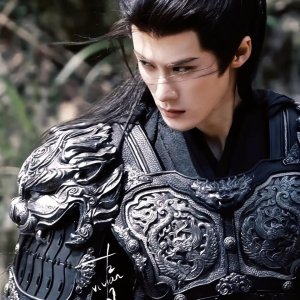
They had alot of material to work with Shen Run, it's a shamed poor writing and budget limits can't do his character justice. The biggest problem with Spring is that I could've been a great character led story and it turned out to be a plotty one, where all the plot devices are so obvious.
Some people complain that Qingyun’s decisions and her approach to getting revenge aren’t well thought out, but I actually think they fit perfectly within the world Spring of the Blade has constructed.
What the drama does so well is show how deeply entrenched the patriarchal system is—even the matriarch operates within it and, in many ways, helps uphold it. So Qingyun realizing that marrying into the Marquis family is what she needs to gain the power and position necessary for her revenge makes perfect sense.
Shen Run, of course, understands that he can’t simply override this structure either. To overturn it, he needs the word of Heaven—and the emperor is Heaven’s word.
The wedding scene is actually metaphorically beautiful: both Qingyun and Shen Run understand where power resides in this world and what they must do to gain access to it. Perfect.
That's what I'm saying...If you want more ML centered story I recommend Lost in the Kunlun Mountains...it's a…
So that's the real tea!It just sucks that Xu Kai's reputation took a hit for this poorly written and produce thing. In the end, I guess it's karma because pple still remember Xu Kai and everyone else was still irrelevant as ever 🤣 so the joke was on them, while Kai laughed all the way to the bank reguardless.
Xukai already getting 3minutes of screen time and he’s now about to get nothing in episode 26😭 it’s crazy…
That's what I'm saying...If you want more ML centered story I recommend Lost in the Kunlun Mountains...it's a republican era wuxia. Snow eagle lord is also ML centered but dam the writing was was so bad...but it is the drama that Xu Kai trained incredibly hard in martial arts. That's why Shen Run feels so effortless.
Everyone is mad about the prenuptial love scene, and I'm over here wondering why Shen Daren ways acting like he is homeless?! Always at the Xie family meeting hall.

 News
News 

 2
2  1
1 


An idol drama doesn’t have to be fluffy, heavily romanticized, or filled with visual tricks. Those are stylistic choices within the genre, not what defines it. This drama still uses popular idol actors, familiar historical-romance conventions, and the same commercial framework associated with idol productions.
And I don’t find the camerawork in this drama particularly groundbreaking or beautiful either. The cinematography is fairly average; there’s nothing especially distinctive about the framing, composition, lighting, or camera movement that sets it apart. Calling the camerawork “understated” almost gives it more artistic significance than I think is actually there. Sometimes average camerawork is simply average camerawork.
So I don’t think the lack of flashy visuals or fluffy fan service is evidence that this isn’t an idol drama. At most, it’s an idol drama with a somewhat more restrained presentation.
The examples you gave—inheritance and gender oppression—are symptoms or manifestations of a patriarchal system. They are not, individually, the definition of patriarchy itself. And I’m not sure what you mean by “independence to do your bidding.” That really has nothing to do with the definition of patriarchy.
That doesn’t mean women within a patriarchal system have no agency, influence, wealth, or privileges. Women can absolutely exercise power within that system, and they can participate in enforcing and upholding it. But women having power does not automatically mean the patriarchy is less rigid or less powerful.
A son asking permission from his mother, for example, doesn’t necessarily mean that the mother has more structural power or control over him. That dynamic can also be understood through filial piety, which historically operates within a patriarchal family structure. Respect and obedience toward the mother as a parent can coexist with a system that ultimately privileges male lineage and authority.
The mother can exercise considerable authority while still making decisions that ultimately benefit her son, preserve his position, protect the family’s male lineage, or secure advantageous marriages for her children. She may be powerful, but her power can still function within—and help maintain—a system that centers the male dynamic.
That’s the distinction I’m making with the women in this drama. Their influence doesn’t prove that patriarchy has become less rigid or less powerful. In many cases, it demonstrates how women can exercise significant authority from within a patriarchal system while simultaneously helping uphold that system.
Old Madam having enormous influence doesn't diminish the patriarchal structure. If anything, the way she exercises that influence demonstrates how the system works. Women gain and wield power through marriages, husbands, sons, family alliances, and their positions within powerful households. If women possessed the same direct institutional power as men, there would be far less need to exercise so much of that power through these channels.
That's why the marriage negotiations involving the Xie daughters are so important. Their marriages aren't merely personal relationships; they are mechanisms through which families gain and maintain political power. The daughters understand this and can strategically use marriage to their advantage, but their ability to navigate the system doesn't make the system less patriarchal.
Women can absolutely hold tremendous power in a patriarchal society. They can manipulate the system, benefit from it, and even become some of its strongest enforcers. That doesn't weaken the patriarchy—it shows how deeply embedded it is. A patriarchal system doesn't require every woman to be powerless; it requires power and social institutions to remain structured around male authority, lineage, titles, inheritance, and marriage.
So I don't see Old Madam's power as evidence that "everything is decided by power regardless of gender." I see her as an example of how women can become powerful actors within a patriarchal structure while simultaneously participating in and perpetuating that structure.
They had alot of material to work with Shen Run, it's a shamed poor writing and budget limits can't do his character justice. The biggest problem with Spring is that I could've been a great character led story and it turned out to be a plotty one, where all the plot devices are so obvious.
What the drama does so well is show how deeply entrenched the patriarchal system is—even the matriarch operates within it and, in many ways, helps uphold it. So Qingyun realizing that marrying into the Marquis family is what she needs to gain the power and position necessary for her revenge makes perfect sense.
Shen Run, of course, understands that he can’t simply override this structure either. To overturn it, he needs the word of Heaven—and the emperor is Heaven’s word.
The wedding scene is actually metaphorically beautiful: both Qingyun and Shen Run understand where power resides in this world and what they must do to gain access to it. Perfect.