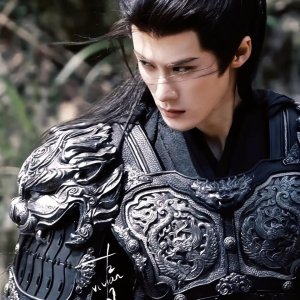
why does it feel like I watched the last two episodes like they were sped up by x5 just so that the producers…
Yep. I wrote a recap of the events that were not shown:
Xie Zhang is a master of psychological warfare, and his unpredictability is what makes him a military genius. In the novel, we really see this shine during the Battle of Kang City, where he traps Sui Yuanqing to the brink of madness (yes—even more than he already is). Through this, Sui Yuanqing is forced to confront his own shortcomings.
The Battle of Chongzhou is what truly sets the precedent for Changyu’s identity and her reason for becoming a general. It wasn’t so much General Tao’s words that drove her, but rather her sense of filial piety and her desire to redeem her family name.
The Battle for Lu City shows Changyu fighting a group of martial assassins. Xiaowu loses his arm, and Xie Zhang arrives just in time as reinforcement. However, since he was positioned at the rear of the battle, Changyu is forced to face the Prince of Qingxu on her own.
So in the latest episodes, we lost a lot of action and important details from the novel.
Xie Zhang is a master of psychological warfare, and his unpredictability is what makes him a military genius. In the novel, we really see this shine during the Battle of Kang City, where he traps Sui Yuanqing to the brink of madness (yes—even more than he already is). Through this, Sui Yuanqing is forced to confront his own shortcomings.
The Battle of Chongzhou is what truly sets the precedent for Changyu’s identity and her reason for becoming a general. It wasn’t so much General Tao’s words that drove her, but rather her sense of filial piety and her desire to redeem her family name.
The Battle for Lu City shows Changyu fighting a group of martial assassins. Xiaowu loses his arm, and Xie Zhang arrives just in time as reinforcement. However, since he was positioned at the rear of the battle, Changyu is forced to face the Prince of Chingxu on her own.
Am I the only one dissapointed they squished two battles into one? and we didn't get the psychological warfare Xie Zhang did with Sui Yuanqing at Keng City. 🥹
Okay YQQ and the white hair guy…So confused..how come he fell into water when older and she was a passerby and…
He was already sui Yuanhai, still suffering from burns. she was a maid sent by the nanny to serve him to get an hier. on her first day of work, he fell in the water and she saved him only to find out he was her young master and a lunatic.
The scene where Xie Daren forges Changyu blades out of her butcher knife is so beautiful and symbolic. I love this change from the novel. It forshadows Xie Zheng's influnce over her, and how this influence reforges and refines her character growth. 🥹 Chef's kiss*
I felt the battle was cut too fast. We missed Wu helping out changyu. and the fight between her an Shi general was little to short. Changyu sustained more injuries.
Sigh! Why does every c-drama FL in an army camp have to pull a Mulan?🤦🏻♀️Plot has taken a frustrating…
I'm not particularly impress with this change from the novel. I think it's a little silly, but I understand why they need it to set FCY up for her to learn about military responsibilities. And it would have been expensive to adapt the novel version of this scene-Marquis using SYQ as bait to learn more about thier defenses, while FCY go hunt a black bear, and accidentally chancing upon lightly guarded enemy camp.
I get it the character of Chanyu is practically an illiterate girl from a very remote village and hence the storyline…
FCY is not dumb...just a little slow learner. She's illiterate because she doesn't like studying and alot of her funny quirks are actually because she is naive. But she's actually quite observant and intelligence. If she was dumb Granf Tutor Tao wouldn't have chosen her to be his disciple.
Could someone please explain why the ML refuses to reveal his identity to the FL on multiple occasions? Does the…
He already said it. A Xie Madam will have a really rough road ahead married to him. And he wants her to roam free and live well. He just was not anticipating the Sui brother was still alive and mascare everyone.
This article is not pointless. It states clearly trending on data being inaccurate due to a glitch which was shown,…
Not all international viewers are here for the romance. Let’s not generalize international viewers as if we lack film taste. Granted, there are a lot of trash idol dramas out there. But even if it’s a formulaic idol drama, like all genre fiction, we’re always going to have our tropes and archetypes. That doesn’t make it any less compelling than a more “serious” drama.
I think this story would still stand even if the cast weren’t all idols. We have a strong female lead, and it’s a journey of her survival through war and regime changes. It’s almost like a retelling of Mulan with a twist.
I mean, the movie *Pearl Harbor* is essentially a romance set during World War II, and no one says it’s any less of a film than *Oppenheimer*. They were both Oscar-nominated. So why would you say an idol drama is inherently more or less than something like *The Knockout*?
I think the issue here is that it's quite biased. While yes, some C-netz complain - like they always do especially…
I was too lazy to write it all out for you since you failed to understand the bias in the article. Why would you be disappointed? 🤣 The article isn’t written in a blog style but uses language that suggests news reporting, which implies legitimacy. That can easily be taken out of context by people who are less media literate. You asked what I found biased about the article, and I gave you the easiest breakdown of it. My opinions about possible data manipulation or Zhang Linghe’s insensitive comments are a separate matter. I also understand that black marketing runs rampant in C-drama land. Once an idol makes the smallest mistake, haters and competitors jump on it like hungry coyotes. Yes, they use money to push narratives out of context. The end goal is usually cancellation or downgrading an idol’s marketability. So, I always take these things with a grain of salt.
I think the issue here is that it's quite biased. While yes, some C-netz complain - like they always do especially…
I chatgpt this for you: Below are **statements in the article that contain bias, loaded language, speculation, or unverified framing**. I grouped them by **type of bias** so you can clearly see *how* the bias is operating.
---
# 1. Subjective / evaluative language presented as fact
These statements contain **value judgments or opinion framed as objective reporting**.
* “**Judging by the numbers alone, Pursuit of Jade has had what could be called a blockbuster start.**” * “**However, the impressive numbers have not yet earned the acclaim in terms of public reception.**” * “**the drama has become mired in both data controversy and a reputation crisis.**” * “**in stark contrast to its dazzling numbers**” * “**there is little real sense that the drama has actually ‘blown up.’**” * “**the supposed dual-track structure little more than empty rhetoric.**” * “**Combined with draggy pacing and gaps in logic, the show's narrative tension is ultimately completely undermined.**” * “**stripping the drama of any real depth.**” * “**what the drama ultimately zooms in on is his looks**” * “**leaving her as nothing more than a sweet heroine with a ‘pig butcher girl’ label pasted onto her.**”
Why biased: These are **critical interpretations**, not verifiable facts, but they are written in **assertive language rather than attributed opinion**.
These rely on **unnamed public sentiment** rather than verifiable sources.
* “**Chinese netizens speculate there is little real sense that the drama has actually ‘blown up.’**” * “**many saw as an attempt to inflate its buzz.**” * “**Some users even said that although they had never actively followed the drama…**” * “**netizens to mock the drama as having ‘fabricated buzz.’**” * “**Chinese viewers criticize Pursuit of Jade for the imbalanced logic of its storytelling.**” * “**Watchers also complain of the slow-motion shots…**” * “**C-watchers criticize…**” * “**Chinese netizens criticize.**”
Why biased:
* The article uses **unspecified groups** to present criticism without evidence of scale or representativeness.
---
# 3. Loaded / inflammatory wording
These phrases shape reader perception emotionally.
* “**fabricated/manufacturing the buzz**” * “**concocted in the platform's backend**” * “**reputation crisis**” * “**empty rhetoric**” * “**draggy pacing**” * “**padding of the story with irrelevant scenes**” * “**stripping the drama of any real depth**” * “**nothing more than a sweet heroine**”
Why biased: These are **persuasive adjectives**, not neutral reporting language.
---
# 4. Speculation framed as narrative
Claims implying motives or manipulation without proof.
* “**sparking controversy over what many saw as an attempt to inflate its buzz.**” * “**suggesting that its popularity wasn't built episode by episode by viewers, but rather ‘concocted’ in the platform's backend.**”
Why biased: The article **implies intentional manipulation** but does not provide evidence.
---
# 5. False comparison / framing bias
Comparisons used to shape interpretation.
* “**Looking back at The Knockout, its success… ‘The Art of War’ sold out… tourism boom. By comparison… discussion has remained confined…**”
Why biased:
* This sets **an unrealistic benchmark** for success. * It implies a failure without equivalent data.
---
# 6. Framing contradiction (subtle bias)
The article constructs a **narrative of illegitimacy**:
Xie Zhang is a master of psychological warfare, and his unpredictability is what makes him a military genius. In the novel, we really see this shine during the Battle of Kang City, where he traps Sui Yuanqing to the brink of madness (yes—even more than he already is). Through this, Sui Yuanqing is forced to confront his own shortcomings.
The Battle of Chongzhou is what truly sets the precedent for Changyu’s identity and her reason for becoming a general. It wasn’t so much General Tao’s words that drove her, but rather her sense of filial piety and her desire to redeem her family name.
The Battle for Lu City shows Changyu fighting a group of martial assassins. Xiaowu loses his arm, and Xie Zhang arrives just in time as reinforcement. However, since he was positioned at the rear of the battle, Changyu is forced to face the Prince of Qingxu on her own.
Xie Zhang is a master of psychological warfare, and his unpredictability is what makes him a military genius. In the novel, we really see this shine during the Battle of Kang City, where he traps Sui Yuanqing to the brink of madness (yes—even more than he already is). Through this, Sui Yuanqing is forced to confront his own shortcomings.
The Battle of Chongzhou is what truly sets the precedent for Changyu’s identity and her reason for becoming a general. It wasn’t so much General Tao’s words that drove her, but rather her sense of filial piety and her desire to redeem her family name.
The Battle for Lu City shows Changyu fighting a group of martial assassins. Xiaowu loses his arm, and Xie Zhang arrives just in time as reinforcement. However, since he was positioned at the rear of the battle, Changyu is forced to face the Prince of Chingxu on her own.
If only we had more episodes 🥹😭
I think this story would still stand even if the cast weren’t all idols. We have a strong female lead, and it’s a journey of her survival through war and regime changes. It’s almost like a retelling of Mulan with a twist.
I mean, the movie *Pearl Harbor* is essentially a romance set during World War II, and no one says it’s any less of a film than *Oppenheimer*. They were both Oscar-nominated. So why would you say an idol drama is inherently more or less than something like *The Knockout*?
The article isn’t written in a blog style but uses language that suggests news reporting, which implies legitimacy. That can easily be taken out of context by people who are less media literate.
You asked what I found biased about the article, and I gave you the easiest breakdown of it. My opinions about possible data manipulation or Zhang Linghe’s insensitive comments are a separate matter.
I also understand that black marketing runs rampant in C-drama land. Once an idol makes the smallest mistake, haters and competitors jump on it like hungry coyotes. Yes, they use money to push narratives out of context. The end goal is usually cancellation or downgrading an idol’s marketability. So, I always take these things with a grain of salt.
---
# 1. Subjective / evaluative language presented as fact
These statements contain **value judgments or opinion framed as objective reporting**.
* “**Judging by the numbers alone, Pursuit of Jade has had what could be called a blockbuster start.**”
* “**However, the impressive numbers have not yet earned the acclaim in terms of public reception.**”
* “**the drama has become mired in both data controversy and a reputation crisis.**”
* “**in stark contrast to its dazzling numbers**”
* “**there is little real sense that the drama has actually ‘blown up.’**”
* “**the supposed dual-track structure little more than empty rhetoric.**”
* “**Combined with draggy pacing and gaps in logic, the show's narrative tension is ultimately completely undermined.**”
* “**stripping the drama of any real depth.**”
* “**what the drama ultimately zooms in on is his looks**”
* “**leaving her as nothing more than a sweet heroine with a ‘pig butcher girl’ label pasted onto her.**”
Why biased:
These are **critical interpretations**, not verifiable facts, but they are written in **assertive language rather than attributed opinion**.
---
# 2. Vague attribution (“netizens say”) / Appeal to anonymous crowd
These rely on **unnamed public sentiment** rather than verifiable sources.
* “**Chinese netizens speculate there is little real sense that the drama has actually ‘blown up.’**”
* “**many saw as an attempt to inflate its buzz.**”
* “**Some users even said that although they had never actively followed the drama…**”
* “**netizens to mock the drama as having ‘fabricated buzz.’**”
* “**Chinese viewers criticize Pursuit of Jade for the imbalanced logic of its storytelling.**”
* “**Watchers also complain of the slow-motion shots…**”
* “**C-watchers criticize…**”
* “**Chinese netizens criticize.**”
Why biased:
* The article uses **unspecified groups** to present criticism without evidence of scale or representativeness.
---
# 3. Loaded / inflammatory wording
These phrases shape reader perception emotionally.
* “**fabricated/manufacturing the buzz**”
* “**concocted in the platform's backend**”
* “**reputation crisis**”
* “**empty rhetoric**”
* “**draggy pacing**”
* “**padding of the story with irrelevant scenes**”
* “**stripping the drama of any real depth**”
* “**nothing more than a sweet heroine**”
Why biased:
These are **persuasive adjectives**, not neutral reporting language.
---
# 4. Speculation framed as narrative
Claims implying motives or manipulation without proof.
* “**sparking controversy over what many saw as an attempt to inflate its buzz.**”
* “**suggesting that its popularity wasn't built episode by episode by viewers, but rather ‘concocted’ in the platform's backend.**”
Why biased:
The article **implies intentional manipulation** but does not provide evidence.
---
# 5. False comparison / framing bias
Comparisons used to shape interpretation.
* “**Looking back at The Knockout, its success… ‘The Art of War’ sold out… tourism boom. By comparison… discussion has remained confined…**”
Why biased:
* This sets **an unrealistic benchmark** for success.
* It implies a failure without equivalent data.
---
# 6. Framing contradiction (subtle bias)
The article constructs a **narrative of illegitimacy**:
Structure used:
1. numbers success
2. suspicion
3. bug
4. criticism
5. storytelling criticism
Example framing sentence:
* “**However, in stark contrast to its dazzling numbers…**”
Why biased:
The structure **guides the reader toward doubting the success**, even though the data itself isn't disproven.
---
# 7. Selective evidence bias
Positive data is minimized while negative speculation is expanded.
Example:
Positive:
* Tencent popularity index
* Netflix Top 10
Negative coverage:
* entire sections on bugs, criticism, netizen complaints.
Why biased:
The **ratio of negative narrative to evidence** is disproportionate.
---
# Quick count
Approximately **20+ biased or non-neutral statements** appear in the article.
Types:
* Subjective judgments: ~9
* Anonymous crowd claims: ~8
* Speculative framing: ~3
* Loaded language: many overlapping
---
✅ **Key takeaway**
The article is written in a **critical editorial style disguised as reporting**.
Most bias appears through:
1. **Anonymous public opinion (“netizens”)**
2. **Loaded evaluative language**
3. **Speculative claims about manipulated data**
4. **Comparative framing designed to diminish success**