Of course, nothing recommended by me or others is authored by the director of Sky Valley.
I think they are on YouTube, but I can see them on special pages, with Spanish subtitles. I guess they are of no use to you if you don't master this language.
Of course, nothing recommended by me or others is authored by the director of Sky Valley.
Hello. Any. Don't impose an order on yourself, I would suggest. You should like all of them and they approach love between boys from different perspectives. I add you Marahuyo Project, about the fight for the rights of members of the LGBT community. I really like Filipino productions. Of course, the good ones where Sky Valley and all of its director's work are not.
Its D-Day!!! I wish GMMTV changes their system instant of 1 episode a week can’t they not do 2 episodes per…
Buenos días. Coincido contigo. ’The On1y One’, por ejemplo, emite dos episodios semanales, y se disfruta mucho. Sigo a Ohm, y espero me guste mucho la serie. Te escribo en español. Tu nombre de usuario me hace pensar eres de habla hispana. Por el mío, podrías pensar igual.
Interesting seriesNot sure about beating the crap out of blonde guy but i suppose it showed us what the other…
Shunichi (Soma Saito), Chihiro's high school classmate and ex-boyfriend, has only appeared in the flashback, during their wedding, while Chihiro tells Haoran about him old boyfriend, answering a question. However, he will later appear to try to convince Chihiro to start dating him again. Chihiro must choose between the two. The one who shows up to harass Haoran, and by extension Chihiro, is Maya (Yosuke Asari), an men abusive pimp for whom Haoran previously worked. This is the one who appears in several scenes next to Haoran, then a 15-year-old teenager. Haoran, not being under the care of his prostitute and drug addict mother or someone else, is forced into prostitution. This is how he meets Matsuki, Chihiro's former employer, the person who had invited him to live with him as a "pet." When Chihiro is evicted from him house for sleeping with other men, before leaving, he steals his black card. It's then that Matsuki hires Haoran to get recover him black card, even if he has to hit him black, like he did at the hotel after meeting at the bar. Matsuki had been a client of Haoran back in the day. This is the initial link between these three characters and the trigger for the conflict narrated in the series.
I have no intention of watching it, having already seen the original chinese version (less said is better!) and…
Hello. Thank you for your words. Of course, Poppy is a boy. The problem would be that my native language is not English, so I may very well make mistakes when writing in that language. I will review the review to correct it. Thanks for the alert.
I’m touched by the tenderness of your words throughout this review. I’ve loved getting to know the characters,…
Hello. Thank you for your words. I tried to convey in the reviews what I felt when watching the episodes broadcast so far. I'm glad you liked it. Your words encourage me to continue writing. And Mitsuya's ex-boyfriend also made me feel a little annoyed at first, especially because of his attitude towards him, but he redeems himself somewhat by coming back to invite him to follow him to Paris. He never forgot it, but it's too late now. Thank you once again for your message.
Concubinage! ?? what a word to use in this context!!Why? It is ok to love the main characters and fan-girl after…
Hello again. Yes, I find these debates very interesting. Thank you for your response, the time taken and making more known about your life. Among my intentions with the initial comment was to point out that we should not oppose the relationship between the two boys, because someone could consider that they are stepbrothers, when in truth they are not, and in this sense the creators of the series do not make them marry. to their parents to allow them the freedom to love each other without this impediment. Likewise, if this were the case (that is, of being step-siblings since their respective parents are legally married) it would not have much value for me either. When we hear the word “concubine,” the term “sex slave” or “mistress” probably comes to mind. Most of us Westerners describe the practice of concubinage as barbaric, sexist and outdated. It may be difficult for us to imagine that most of our own cultures openly accepted concubinage, at one time or another. The ancient Greeks and Romans, Christians and Jews, Islamic countries and Americans during the process of forming this nation all had concubines. Chinese culture itself, from which the series arises, also recognized concubinage. The broad definition of concubinage as a permanent relationship between two unmarried people leaves us with many different types of concubinage and different practices depending on times and cultures. Marriage appears as a figure in Chinese society, starting with Confucianism (500 BC), which mixes religion, philosophy and Asian culture in its doctrine. According to Confucianism, marriage was a way to "cultivate virtue" (develop patience and love) and the basis for creating a solid social structure. In marriages, love was supposed to be secondary. They arranged with one intention: to strengthen families over individuals. That also happened in our Western world. This was the case with political marriages in France, Spain, Italy, England or Scotland, during medieval times. If a man and a woman wanted to have a relationship based on love, and marriage was impossible, due to class differences or family choices, then concubinage was the only option available. But not all concubinages were so romantic. Often many concubines were kept by rich men and emperors in order to have children or heirs, or simply for pleasure, or to show social status. In reality, the matter of having a socially appropriate wife and securing an heir to the Emperor was vital in ancient China to preserve their dynasty. And, since it was sometimes difficult to have both a suitable wife and a male child, concubinage ensured that the patriarchal line could continue. The children of a concubine could be recognized as being part of the emperor's lineage, which caused a fierce struggle between the women of the palace, who constantly tried to gain the favors of the emperor and the inheritance of their children. Even the throne. There is a popular explanation in China for why men need several wives: 'A pot of tea is usually accompanied by four cups. But have you ever seen a cup with four teapots in it?’ “And Lamech took to himself two wives.” This is the first historical reference to polygamy, written in the book of Genesis of the Bible. However, it is not the only one. Abraham agreed with his wife Sarah when she called her Egyptian slave Hagar to conceive the first child of their descendants. According to the book of Kings, King Solomon had 700 wives and 300 concubines. According to Samuel 12:8, the supreme God, speaking through the prophet Nathan, claimed that if King David's wives and concubines were not enough, he would have given him even more. History has proven that in many cultures religious or political tradition interfered with the way of life of rulers and members of the social elite. Although the practice of concubines was not a tradition exclusive to China, it was undoubtedly an essential part of the emperors' lifestyle. The concubine was a symbol of a man's social prestige, whether it was her ability to produce children, or an unlimited opportunity to indulge his sexual desires. One of the theories about the origins of concubinage in ancient China dates back to the influence of Confucianism. Moral and religious doctrines structured Chinese society and therefore the family. Marriage was then conceived as a union that must be cultivated and the only option for arranged marriages to strengthen their ties was patience and dedication. Marriage was a duty and, as such, eliminated any romantic connotations. So, concubinage was the practice that allowed many men and women to have a relationship based on love, when their union was impossible, either due to class differences or family opinions. Generally, concubinage in China was regarded as an indicator of social status. Emperors, high officials and rich men kept their concubines in order not only to produce children or heirs, but as a way to demonstrate their economic and political power. For women, being a concubine also meant climbing the social ladder. Some poor families presented their daughters to rich men or rulers hoping to get rid of one more mouth to feed and an option to improve their daughters' living conditions. However, life as a concubine did not mean only comfort. Elements such as non-exclusivity over her husband, submission, the prohibition of asking or discussing any 'family' matter or the long wait of these women when their husband met other women turned out to be the least of them. For concubines there was also a hierarchical scale, and in the event that the emperor or man died, his wife would have power over the concubine and her children, that is, she could make her the slave or have power over her life. During the Qing dynasty, the emperor's concubines were recruited within the Forbidden City and were eunuchs, castrated men, who were in charge of taking care of them. Only in this way could the emperor ensure that a concubine's children were truly his. Concubines disappeared when the People's Republic of China was established. The practice was frowned upon and was part of a tradition of monarchies and Kuomintang rulers. It was a reference to China's political past. Communist ideals abolished the practice as a symbol of eradicating all traditions that contained characteristics of excess. Concubinage is not a socially accepted practice in today's China, and having multiple wives and concubines is seen as excess, and something that only a rich person would do. However, as China's economy began to take off to primacy in the world, more and more people began to look for ways to use and display their new wealth. Rich businessmen use the extramarital services of women who are commonly known as “bao er nai” (包二奶): modern-day concubines. This is the term coined to describe extramarital affairs. Generally, they are young women who need money for college and some men offer a monthly salary. Of course, this is not the case described in the series. Have you seen 'Ba wang bie ji (Farewell My Concubine)', a 1993 Chinese epic period homosexual drama directed by Chen Kaige, the first Chinese film to win the Palme d'Or at the Cannes Film Festival? It is a film set in China in 1925. “The military governs Beijing and, although the political situation in the city is unstable, there is one constant in daily life: opera, a show where even the female characters must be represented by men. Among the new boys destined to be Peking opera stars are the delicate Douzi (bean) and Shitou (stone), who takes him under his wing. While Shitou is trained at the Opera to play Jing roles (the male lead), Douzi is trained for Dan roles (female leads). The two forge a great friendship, and Douzi falls deeply in love with the older boy. Since Douzi has the beauty of a woman, he is trained in female roles, while the athletic Shitou is mainly trained for military roles. Among the operas they study is "Farewell to my concubine"...", reads the synopsis. It stars Leslie Cheung and Zhang Fengyi. The script is by Lilian Lee and Lu Wei and is based on the novel by Lilian Lee. It is considered, by the FA rankings, among the 13 best Chinese films of all time, and among the 57 best films and series with LGBT+ themes in the world. He has the following Awards to his credit: 1993: 2 Oscar nominations: Best Foreign Language Film, Cinematography 1993: Golden Globe: Best Foreign Language Film 1993: BAFTA Awards: Best Foreign Language Film 1993: 2 awards at the Cannes Film Festival: Palme d'Or, FIPRESCI award 1993: Cesar Awards: Nominated for Best Foreign Film 1993: National Board of Review: Best Foreign Language Film
The series is told from Sheng Wang's point of view, but in the final four or five minutes, before the credits roll, we will have Jiang Tian's vision, and this helps fill in the gaps in the story.
Concubinage! ?? what a word to use in this context!!Why? It is ok to love the main characters and fan-girl after…
Hello. I do not get to use the term concubinage in the full extent of the word, recognized by May17 himself as an error on his part when he confused it with something else as something derogatory, since in my initial comment I point out that the relationship between the parents of the two protagonists is "a kind of concubinage." Don't they represent two people of legal age who, united by emotional ties and with reciprocal moral and material assistance, reside under the same roof, in a convivial union? This is precisely what we as viewers observe in the series. I used this term as I could very well have used others, such as "De facto Union", precisely because it is universal, because it is a term with a long history, and not just as something pejorative. Of course, when using that term, I am not unaware that the word concubine derives from the Latin con (“with”) and cubare (“to lie”), nor that in the times of ancient Rome, concubinus was the term given to her to a young woman who was chosen by her master as a lover, and who, having not married, was considered a "less legitimate woman." This is not the case presented in the series. As you say that this is a forum for series and not for a legal debate, and in order not to expand on my initial comment, I only offered the meaning of that term based on the example in the series in the parents of the two protagonists, and I left out other elements, such as that historically, concubinage could be voluntary (by an arrangement with the woman and/or her family), since it offered a certain economic security to the woman involved, and allowed prohibited unions between differentiated social groups, or also the existence of involuntary or servile concubinage, which frequently involved the sexual slavery of a member of the relationship, usually the woman. Although the historical root of concubinage comes from the impediment to contracting marriage when those involved present factors such as social difference, a pre-existing marriage, religious or professional impediments, a lack of legal recognition..., currently it has more to do with simply because people They do not want to get married despite not having these impediments, because they do not consider it important for their relationship, and in the case of members of the LGBT+ community in countries where equal marriage does not exist or even where this possibility exists, they do not want to get married. At least for the moment. Or adolescents who live together at an early age and wait until they come of age to get married, or not, as is their right. Despite pressure from the Church and conservative and retrograde sectors, current laws around the world recognize concubinage. Italian laws themselves recognize both Marital Union and Free Union, De facto Union or Concubinage. Law number 76/2016, in force since June 5, 2016, provides for the regulation of concubinage or de facto cohabitation in Italy (paragraphs 36-65 of article 1). According to Italian laws, the establishment of a de facto cohabitation can be made by two adults, permanently united by emotional ties as a couple and by mutual moral and material assistance, who reside in Italian territory, living together and registered in the same family registry. It even provides options for those who are not residents, cohabitants and registered in the same family state. The only thing in which the parents of the two protagonists of the series fail in this sense lies in the fact that they live thousands of kilometers from Italy. You expose some terms to replace the word, such as “harmony”, “coexistence”, “solidarity”, “companionship” and others, with which I agree, are beautiful, but these are not legal, and are based more on emotions than from the reason. We cannot go to any Italian mayor's office to sign a contract for “a union of harmony” or a “union of solidarity” in the civil union registries. But, at the end of everything, and this is what has remained in the background, my objective in using this or another term with a similar connotation, is to tell those who disapprove of the relationship of the two protagonists considering they are stepbrothers that they do not They are really stepbrothers.
Concubinage! ?? what a word to use in this context!!Why? It is ok to love the main characters and fan-girl after…
The worst thing about "not understanding anything" is not only how exhausting it is to explain or give our point of view (which may also be wrong and we must be corrected), but that this "not understanding anything" can lead to the series not being correctly valued. , the film. Thank you for your words.
Concubinage! ?? what a word to use in this context!!Why? It is ok to love the main characters and fan-girl after…
Concubinage is not a derogatory word. It is a legal term, recognized in Family Law, and the word is included in all existing and future dictionaries. Concubinage is the de facto union between two people who, without contracting marriage, have reciprocal rights and obligations, provided that, without legal impediments to contracting marriage, they have lived together constantly and permanently for the minimum period established by the legislation of the state of that is treated. However, the passage of that period of time will not be necessary when the other requirements are met and the couple has a son or daughter in common. When using the term “concubinage”, I am referring to the older couple, the parents of the two protagonists, not them or the secondary characters. About the other topics you talk about about discarding secondary characters, double standards and tolerance... I really don't know what you're referring to. In my comment I don't say anything about it. On the other hand, I haven't read the novel and most likely won't. Therefore, my comment only refers to what has been seen so far in the series. I don't know how main or secondary characters will act in the future, nor why they aren't your favorites.
For the person who is not used to drinking alcoholic beverages, a pint of beer may be too much. On the other hand, we do not know how much he drank, since there were several glasses next to him and it seems that no one had noticed, based on Gao Tian Yang's reaction when he saw him drinking. But I think it is not the most important thing, but what made it possible for the two boys that Sheng Wang drank.
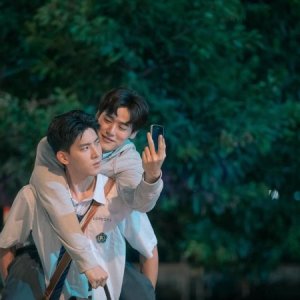
What a beautiful story, and taken care of down to the last detail technically, but also artistically. It is a privilege to watch this series. I like how it reflects those beginnings of beginning to feel something for someone of the same sex, for the friend, for the one who just a few minutes ago was your enemy, for someone who has just entered your life and your own home, and camouflage all this with excuses... childish games and false pretexts to steal a kiss. It is touching. A beautiful story. (Remember that the two boys do not have any blood relationship, in addition to the fact that their parents are not legally married, so they live in a kind of concubinage, that is, they are not even real stepbrothers).


 1
1  1
1  2
2 


I add you Marahuyo Project, about the fight for the rights of members of the LGBT community.
I really like Filipino productions. Of course, the good ones where Sky Valley and all of its director's work are not.
However, he will later appear to try to convince Chihiro to start dating him again. Chihiro must choose between the two.
The one who shows up to harass Haoran, and by extension Chihiro, is Maya (Yosuke Asari), an men abusive pimp for whom Haoran previously worked.
This is the one who appears in several scenes next to Haoran, then a 15-year-old teenager. Haoran, not being under the care of his prostitute and drug addict mother or someone else, is forced into prostitution.
This is how he meets Matsuki, Chihiro's former employer, the person who had invited him to live with him as a "pet."
When Chihiro is evicted from him house for sleeping with other men, before leaving, he steals his black card. It's then that Matsuki hires Haoran to get recover him black card, even if he has to hit him black, like he did at the hotel after meeting at the bar.
Matsuki had been a client of Haoran back in the day. This is the initial link between these three characters and the trigger for the conflict narrated in the series.
Of course, Poppy is a boy. The problem would be that my native language is not English, so I may very well make mistakes when writing in that language.
I will review the review to correct it.
Thanks for the alert.
Among my intentions with the initial comment was to point out that we should not oppose the relationship between the two boys, because someone could consider that they are stepbrothers, when in truth they are not, and in this sense the creators of the series do not make them marry. to their parents to allow them the freedom to love each other without this impediment.
Likewise, if this were the case (that is, of being step-siblings since their respective parents are legally married) it would not have much value for me either.
When we hear the word “concubine,” the term “sex slave” or “mistress” probably comes to mind. Most of us Westerners describe the practice of concubinage as barbaric, sexist and outdated. It may be difficult for us to imagine that most of our own cultures openly accepted concubinage, at one time or another. The ancient Greeks and Romans, Christians and Jews, Islamic countries and Americans during the process of forming this nation all had concubines. Chinese culture itself, from which the series arises, also recognized concubinage.
The broad definition of concubinage as a permanent relationship between two unmarried people leaves us with many different types of concubinage and different practices depending on times and cultures.
Marriage appears as a figure in Chinese society, starting with Confucianism (500 BC), which mixes religion, philosophy and Asian culture in its doctrine. According to Confucianism, marriage was a way to "cultivate virtue" (develop patience and love) and the basis for creating a solid social structure. In marriages, love was supposed to be secondary. They arranged with one intention: to strengthen families over individuals. That also happened in our Western world. This was the case with political marriages in France, Spain, Italy, England or Scotland, during medieval times.
If a man and a woman wanted to have a relationship based on love, and marriage was impossible, due to class differences or family choices, then concubinage was the only option available. But not all concubinages were so romantic. Often many concubines were kept by rich men and emperors in order to have children or heirs, or simply for pleasure, or to show social status.
In reality, the matter of having a socially appropriate wife and securing an heir to the Emperor was vital in ancient China to preserve their dynasty. And, since it was sometimes difficult to have both a suitable wife and a male child, concubinage ensured that the patriarchal line could continue. The children of a concubine could be recognized as being part of the emperor's lineage, which caused a fierce struggle between the women of the palace, who constantly tried to gain the favors of the emperor and the inheritance of their children. Even the throne.
There is a popular explanation in China for why men need several wives: 'A pot of tea is usually accompanied by four cups. But have you ever seen a cup with four teapots in it?’ “And Lamech took to himself two wives.” This is the first historical reference to polygamy, written in the book of Genesis of the Bible. However, it is not the only one. Abraham agreed with his wife Sarah when she called her Egyptian slave Hagar to conceive the first child of their descendants. According to the book of Kings, King Solomon had 700 wives and 300 concubines. According to Samuel 12:8, the supreme God, speaking through the prophet Nathan, claimed that if King David's wives and concubines were not enough, he would have given him even more.
History has proven that in many cultures religious or political tradition interfered with the way of life of rulers and members of the social elite. Although the practice of concubines was not a tradition exclusive to China, it was undoubtedly an essential part of the emperors' lifestyle.
The concubine was a symbol of a man's social prestige, whether it was her ability to produce children, or an unlimited opportunity to indulge his sexual desires.
One of the theories about the origins of concubinage in ancient China dates back to the influence of Confucianism. Moral and religious doctrines structured Chinese society and therefore the family. Marriage was then conceived as a union that must be cultivated and the only option for arranged marriages to strengthen their ties was patience and dedication.
Marriage was a duty and, as such, eliminated any romantic connotations. So, concubinage was the practice that allowed many men and women to have a relationship based on love, when their union was impossible, either due to class differences or family opinions.
Generally, concubinage in China was regarded as an indicator of social status. Emperors, high officials and rich men kept their concubines in order not only to produce children or heirs, but as a way to demonstrate their economic and political power.
For women, being a concubine also meant climbing the social ladder. Some poor families presented their daughters to rich men or rulers hoping to get rid of one more mouth to feed and an option to improve their daughters' living conditions.
However, life as a concubine did not mean only comfort. Elements such as non-exclusivity over her husband, submission, the prohibition of asking or discussing any 'family' matter or the long wait of these women when their husband met other women turned out to be the least of them. For concubines there was also a hierarchical scale, and in the event that the emperor or man died, his wife would have power over the concubine and her children, that is, she could make her the slave or have power over her life.
During the Qing dynasty, the emperor's concubines were recruited within the Forbidden City and were eunuchs, castrated men, who were in charge of taking care of them. Only in this way could the emperor ensure that a concubine's children were truly his.
Concubines disappeared when the People's Republic of China was established. The practice was frowned upon and was part of a tradition of monarchies and Kuomintang rulers. It was a reference to China's political past. Communist ideals abolished the practice as a symbol of eradicating all traditions that contained characteristics of excess.
Concubinage is not a socially accepted practice in today's China, and having multiple wives and concubines is seen as excess, and something that only a rich person would do. However, as China's economy began to take off to primacy in the world, more and more people began to look for ways to use and display their new wealth. Rich businessmen use the extramarital services of women who are commonly known as “bao er nai” (包二奶): modern-day concubines. This is the term coined to describe extramarital affairs. Generally, they are young women who need money for college and some men offer a monthly salary. Of course, this is not the case described in the series.
Have you seen 'Ba wang bie ji (Farewell My Concubine)', a 1993 Chinese epic period homosexual drama directed by Chen Kaige, the first Chinese film to win the Palme d'Or at the Cannes Film Festival? It is a film set in China in 1925. “The military governs Beijing and, although the political situation in the city is unstable, there is one constant in daily life: opera, a show where even the female characters must be represented by men. Among the new boys destined to be Peking opera stars are the delicate Douzi (bean) and Shitou (stone), who takes him under his wing. While Shitou is trained at the Opera to play Jing roles (the male lead), Douzi is trained for Dan roles (female leads). The two forge a great friendship, and Douzi falls deeply in love with the older boy. Since Douzi has the beauty of a woman, he is trained in female roles, while the athletic Shitou is mainly trained for military roles. Among the operas they study is "Farewell to my concubine"...", reads the synopsis.
It stars Leslie Cheung and Zhang Fengyi.
The script is by Lilian Lee and Lu Wei and is based on the novel by Lilian Lee. It is considered, by the FA rankings, among the 13 best Chinese films of all time, and among the 57 best films and series with LGBT+ themes in the world.
He has the following Awards to his credit:
1993: 2 Oscar nominations: Best Foreign Language Film, Cinematography
1993: Golden Globe: Best Foreign Language Film
1993: BAFTA Awards: Best Foreign Language Film
1993: 2 awards at the Cannes Film Festival: Palme d'Or, FIPRESCI award
1993: Cesar Awards: Nominated for Best Foreign Film
1993: National Board of Review: Best Foreign Language Film
I used this term as I could very well have used others, such as "De facto Union", precisely because it is universal, because it is a term with a long history, and not just as something pejorative.
Of course, when using that term, I am not unaware that the word concubine derives from the Latin con (“with”) and cubare (“to lie”), nor that in the times of ancient Rome, concubinus was the term given to her to a young woman who was chosen by her master as a lover, and who, having not married, was considered a "less legitimate woman." This is not the case presented in the series.
As you say that this is a forum for series and not for a legal debate, and in order not to expand on my initial comment, I only offered the meaning of that term based on the example in the series in the parents of the two protagonists, and I left out other elements, such as that historically, concubinage could be voluntary (by an arrangement with the woman and/or her family), since it offered a certain economic security to the woman involved, and allowed prohibited unions between differentiated social groups, or also the existence of involuntary or servile concubinage, which frequently involved the sexual slavery of a member of the relationship, usually the woman.
Although the historical root of concubinage comes from the impediment to contracting marriage when those involved present factors such as social difference, a pre-existing marriage, religious or professional impediments, a lack of legal recognition..., currently it has more to do with simply because people They do not want to get married despite not having these impediments, because they do not consider it important for their relationship, and in the case of members of the LGBT+ community in countries where equal marriage does not exist or even where this possibility exists, they do not want to get married. At least for the moment. Or adolescents who live together at an early age and wait until they come of age to get married, or not, as is their right.
Despite pressure from the Church and conservative and retrograde sectors, current laws around the world recognize concubinage. Italian laws themselves recognize both Marital Union and Free Union, De facto Union or Concubinage. Law number 76/2016, in force since June 5, 2016, provides for the regulation of concubinage or de facto cohabitation in Italy (paragraphs 36-65 of article 1). According to Italian laws, the establishment of a de facto cohabitation can be made by two adults, permanently united by emotional ties as a couple and by mutual moral and material assistance, who reside in Italian territory, living together and registered in the same family registry. It even provides options for those who are not residents, cohabitants and registered in the same family state.
The only thing in which the parents of the two protagonists of the series fail in this sense lies in the fact that they live thousands of kilometers from Italy.
You expose some terms to replace the word, such as “harmony”, “coexistence”, “solidarity”, “companionship” and others, with which I agree, are beautiful, but these are not legal, and are based more on emotions than from the reason. We cannot go to any Italian mayor's office to sign a contract for “a union of harmony” or a “union of solidarity” in the civil union registries.
But, at the end of everything, and this is what has remained in the background, my objective in using this or another term with a similar connotation, is to tell those who disapprove of the relationship of the two protagonists considering they are stepbrothers that they do not They are really stepbrothers.
Thank you for your words.
About the other topics you talk about about discarding secondary characters, double standards and tolerance... I really don't know what you're referring to. In my comment I don't say anything about it.
On the other hand, I haven't read the novel and most likely won't. Therefore, my comment only refers to what has been seen so far in the series. I don't know how main or secondary characters will act in the future, nor why they aren't your favorites.