
 K-Drama

 1
1



I sincerely hope Mantou doesn't choose either of them
I wasn't planning to write a review since it's been years since I watched this, but I noticed there were only positive reviews, and I thought I’d share my perspective.The plot, in theory, is actually quite good. Mantou is betrothed to Li Tang and in love with him, but Li Tang doesn’t reciprocate her feelings. To make matters more complicated, her parents arrange a marriage for her with Brian. Then, in a typical love triangle twist, Li Tang starts to realize that he might actually like Mantou after all. It’s a classic love triangle setup, and I have to admit, I’m a fan of love triangles — they frustrate me to no end, but that emotional messiness is what makes them so compelling. I probably would have really enjoyed this drama if it wasn’t for the fact that both potential love interests are complete jerks.
Both Li Tang and Brian treat Mantou like a prize to be won, constantly objectifying her and turning her into the center of a toxic competition rather than seeing her as a person.
Many people criticized Mantou for being stupid and dense, and yes, I can see why they’d say that. But the beauty of the story lies in Mantou's journey. She begins as someone desperate to earn love, only to realize by the end that her worth doesn’t depend on the approval of anyone — especially not two mediocre men. Her arc of self-discovery and empowerment is what ultimately makes the drama somewhat worth watching.
As for the acting, it’s decent — not the best I’ve seen, but certainly not the worst either. None of the performances really stood out to me in a remarkable way, though they were serviceable for the story being told.
I don’t think I’d rewatch this drama, mainly because Li Tang and Brian just annoy me so much. However, I did really enjoy Mantou’s character development, so if I were to watch it again, it would probably be for her storyline alone.
Overall, this drama has all the ingredients of a strong romantic setup, but it’s undermined by its frustrating male leads. Still, its message — that a woman’s value isn’t determined by others — is a redeeming and resonant takeaway.
Was this review helpful to you?

When in the mood for fluff and not much else
I’ll admit, I’m a little late to the party with this one. I kept putting it off after seeing so many negative reviews, but after some time, I finally decided to sit down and give it a try. Honestly, I went into it expecting to have to force myself through each episode, but surprisingly, I found it to be a pretty easy watch. In fact, I ended up binge-watching the entire series in a single day—something I didn’t expect at all.Sure, there are definitely some plot holes, and there were moments where I wished they had explained things more clearly or focused on certain aspects a little longer. There were also a few storylines that could have used a bit more depth or attention. However, despite these flaws, I found myself enjoying it more than I anticipated. The drama is light, cute, and genuinely heartwarming. It’s the kind of feel-good story that, while not perfect, still manages to deliver a solid dose of warmth and charm.
One of the best parts of the show was the friend group dynamic. They were so endearing, and their interactions brought a lot of joy to the story. I loved seeing their friendships evolve and the moments of lightheartedness they shared. As for the acting, the supporting cast didn’t always hit the mark—there were some performances that felt a bit flat or overdone at times. But, on the bright side, the chemistry between the main leads, Englot, was undeniable. Their connection really carried the show and kept me invested in the plot, even when other parts were a little weaker.
All in all, while the drama wasn’t perfect, it definitely hit the spot when it comes to being a cute and easy watch. If I’m ever in the mood for a lighthearted drama to lift my spirits, I could definitely see myself rewatching this one. It’s far from groundbreaking, but it’s enjoyable, fun, and full of heart—perfect for those days when you just need something sweet and uplifting.
Was this review helpful to you?
This review may contain spoilers
Could Have Been the Better Version
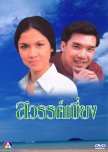
*Disclaimer: This review focuses on the characters and their relationships. It talks about some story stuff you probably already know if you’re familiar with Sawan Biang, so this review should be safe to read if you've seen at least one version.I’ve seen both the 1998 and 2008 versions, and while the 2008 adaptation is my overall favorite, I think the 1998 version began with a more promising concept. Unfortunately, it never fully delivers on that potential, though I genuinely believe it could have surpassed the 2008 version if a few key choices had been handled differently. Buckle up—this is going to be a long review.
One major issue is Kawee’s characterization. He is not the same captivating, tragic, and compelling figure he is in the 2008 version. Brook is clearly a talented actor and does his best to portray Kawee as someone desperate to be loved, but the script gives him little room to fully explore that emotional depth. While there are moments when you genuinely feel sympathy for Kawee, his early ruthlessness and lack of empathy toward Narin make him difficult to like, even when he later begins to feel remorse.
The 1998 version leans heavily into Kawee’s pride. There are many moments when he wants to be kind to Narin but can’t bring himself to do it. Even after falling in love with her, he refuses to show it, deliberately acting overly affectionate with Pat whenever Narin is around. He also refuses to admit his feelings even after learning she is pregnant with his child, refusing to confess his love to someone he knows despises him.
This pride affects his redemption arc as well. Unlike the 2008 Kawee, who is openly vocal about his guilt, the 1998 Kawee rarely expresses remorse outright, making it difficult for viewers to tell whether he regrets his actions themselves or merely their consequences. Instead, the drama emphasizes his internal struggle: he punishes himself after Narin runs away by refusing to eat, and Brook conveys his despair convincingly, even if the script doesn’t always give him the tools to make that conflict fully explicit.
Where this version of Kawee succeeds, however, is in presenting a more realistic path to redemption. Kawee doesn’t simply wake up one day, learn he’s about to become a father, and transform overnight. He resists acknowledging that he was wrong or that he needs to change at all, and he struggles to understand why Narin won’t simply marry him. Even after he recognizes the need to work on himself to earn her trust, the process remains difficult and incomplete—and by the end, he is still unmistakably flawed.
Another characterization that falls short in this version is Tom’s. The 1998 Tom is simply not as likable as the 2008 Tom—you may not actively dislike him, but you’re unlikely to feel much affection for him either. One major difference I noticed is how Tom reacts after learning that Narin has been raped. In the 2008 version, he feels a deep sense of anger and hatred toward Kawee for hurting the woman he loves, and it takes a long time—and significant effort on Kawee’s part to prove he is willing to change—before Tom even considers helping him pursue Narin. In contrast, the 1998 version shows Tom being angry at first but then softening very quickly; without Kawee doing much self-reflection or growth, Tom is already considering telling him where Narin is.
That said, the 1998 version succeeds in portraying Leela as a far more complex character than her 2008 counterpart. Rather than being reduced to jealousy or irrationality, she is depicted as a deeply wounded woman who doesn’t know where to place her grief, which leads her to rush into a marriage with a man she has just met. I also appreciated that this version does not hold Leela responsible for Kawee’s own decisions, unlike the 2008 version. Additionally, the 1998 version makes Leela’s guilt and remorse for her actions explicit, rather than leaving her feelings open to interpretation as the 2008 version often does.
Another area where this version is stronger is in Narin’s mother’s reaction to discovering that her daughter had been raped. She is angry and devastated and only begins to soften after she sees how much Kawee regrets what he’s done, even if he doesn’t express it out loud. In contrast, in the 2008 version, after Narin’s mother finds out, she is kind to Kawee the very next day and even teaches him how to cook.
Many viewers consider the 1998 version “darker,” and I think that’s because it doesn’t try to soften the story for the audience. Sawan Biang is dark—plain and simple.
This is evident in how Kawee’s violence toward Narin is portrayed. In the 2008 version, when Kawee hits her, Narin hits him back; in the 1998 version, she doesn’t. Similarly, the first rape is framed differently: the 2008 version presents it as a heat-of-the-moment act fueled by anger, while in the 1998 version it’s a calculated decision fueled by jealousy.
Another example is how the 2008 version restricts the amount of emotion Narin is allowed to show: she can cry and be upset, but she isn’t allowed to completely break down the way the 1998 version allows her to. I think that’s why this version is so difficult for many people to watch—it doesn’t downplay Narin’s emotions or devastation. While the 2008 Narin carries her pain with dignified grace, the 1998 Narin’s emotions are messy and painfully real, and the show doesn’t shy away from depicting her ongoing trauma and constant sense of fear afterward.
The romance in the 1998 version is much slower compared to the 2008 version. In the first few episodes, Kawee and Narin barely interact at all. As a result, the drama can feel a bit draggy, with long stretches that repeat the same emotions without really moving the story or the characters forward.
However, when they do interact—whether through heated arguments, quiet moments of compassion, secret longing, or fiery jealousy—the chemistry between Kob and Brook makes every scene feel worthwhile. Still, the writers often miss opportunities to deepen their emotional connection, which can be frustrating.
Because of the drama’s uneven pacing, Narin isn’t given enough time to genuinely fall in love with the kinder version of Kawee, which makes the happy ending feel forced. It comes across as though Narin forgave Kawee mainly because of her pregnancy and the constant pressure from those around her to “just give him a chance.”
Unlike most viewers, I actually appreciate that Kawee doesn’t kidnap Narin in this version. Instead, we see his love develop gradually through small gestures, such as setting aside his pride to buy her a birthday gift and even wrapping it himself.
That said, the framing of Kawee’s violence is still uncomfortable to watch. In the 2008 version, when Kawee kidnaps and rapes Narin, it has nothing to do with love and everything to do with hate and anger. In the 1998 version, when Kawee rapes Narin, it’s framed as coming from his love for her and his inability to express that love in a healthy way.
Showing how his desperate need to be loved led him to hurt the person he loved most could have added much more complexity to his character and served as a stronger foundation for a truly earned redemption arc. I only wish it had been handled a little differently—particularly by not portraying Kawee as so proud afterward. His pride over hurting Narin does eventually shift into something else—maybe guilt, maybe remorse—and he begins to worry about her. However, because of his prideful nature, he never fully expresses those feelings, so the characters in the show don’t see how bad he feels, even though viewers can.
Taken as a whole, Sawan Biang (1998) is an emotionally raw and ambitious adaptation that never quite reaches the heights it could have. I wouldn’t rule out rewatching this one day, though I’d definitely need to be in the right headspace, as the story is very dark.
Was this review helpful to you?

A rom-com but the only jokes are attempted rape and overacting
For a rom-com, this wasn’t particularly romantic—or funny. The drama struggles with its tone, shifting awkwardly between lighthearted moments and deeply disturbing content. It treats serious issues, especially sexual assault, with a strange and inappropriate sense of humor that made me deeply uncomfortable.Both the male and female leads are extremely unlikable. The male lead is a sexual predator, while the female lead is portrayed as a scammer. Throughout the first half of the series, the male lead repeatedly attempts to rape the female lead—scenes which are inexplicably played for laughs.
The villains in the show also commit some truly awful acts—attempted murder, drugging, attempted rape, and more—but these moments are oddly framed as 'funny' due to the dialogue, tone, acting, and background music.
The drama had me fooled for a moment. There were several scenes where the characters seemed on the verge of growth, or where their relationship could have developed into something more meaningful. I thought, “Maybe this isn’t so bad after all.” But the writing never takes that opportunity. Instead, the male lead ultimately rapes the female lead—set disturbingly to romantic music—crossing a line the show never earns the right to approach.
And just to be clear: I’m no saint. I’ve seen other dramas where rape to romance is part of the story and still found them compelling—depending on how the subject is handled. I don’t automatically write something off just for including dark or problematic material. But this show crosses a line in a way that’s hard to ignore. Even though it doesn’t go out of its way to justify the actual rape that happens later in the series, it repeatedly uses attempted rape as a joke. That’s what bothered me the most. It’s not just one badly handled scene—it’s a recurring attempt at humor throughout the show, complete with goofy sound effects and light background music. It sends a really disturbing message, especially for something marketed as a romantic comedy.
I also found myself fast-forwarding through a lot of the episodes. The pacing dragged, the plot became repetitive, and the humor just didn’t land. The acting was another issue—it was exaggerated to the point of being distracting. I’ve never seen Chompoo in anything else, so I can’t compare her performance, but I know Ken is capable of delivering solid, nuanced performances. So I can only assume the over-the-top acting was a deliberate choice—yet another failed attempt by the drama to be funny. Fortunately, the performances improved toward the end as the show adopted a more serious tone, dropping the comedy almost completely.
Honestly, it’s a miracle I managed to finish this. I definitely wouldn’t rewatch it, and I wouldn’t recommend it to anyone. If you’re looking for a rom-com with heart, humor, and chemistry, this is not the one. There are far better dramas out there—ones that don’t confuse comedy for cruelty.
Was this review helpful to you?

Almost unbearable to watch
I’ve watched all the U-Prince series, and I can confidently say this one is by far the worst. To be fair, you can't expect too much from the U-Prince franchise. Most of the installments are short, lighthearted romcoms with simple storylines and writing, which is exactly what I was expecting going into this drama. However, despite my low expectations, the drama still managed to let me down. Sure, there are a few cute and fluffy moments, but the romance itself felt more like puppy love than anything that would make me invest emotionally. Honestly, I can’t believe that these two would have lasted more than a month after the show ended before they got bored of each other and broke up.I had a hard time connecting with any of the characters. The ones I didn’t actively dislike, I simply didn’t care for. Both of the leads were extremely childish and behaved like they were in middle school. The female lead is not only immature but also a fairly unpleasant person, and I appreciated that the drama didn’t try to paint her behavior as normal or acceptable. As for the male lead, he’s also far from being a good person, though I won’t go into detail to avoid spoilers. Unlike with the female lead, however, the drama actually tried to excuse the male lead’s shitty behavior. The childish antics of both characters resulted in more cringe-worthy scenes than I could count, and that’s not the only reason why this drama was hard to sit through. The acting is mediocre at best, and the supposed chemistry between the leads was practically nonexistent. The only reason I’d ever consider rewatching this is for the brief cameo of Aurora, who was a shining moment in an otherwise forgettable show.
If you’re thinking about watching a U-Prince series but can’t decide which one to pick, I would highly recommend any other part except this one. It truly is a major waste of time. It’s not just weak by U-Prince standards—it’s one of the most forgettable dramas I’ve ever watched.
Was this review helpful to you?

This review may contain spoilers
Chaotic, Illogical, and Somehow Still Fun
*Disclaimer: This review contains major spoilers for the entire series, including plot twists and the ending. Read at your own risk.This drama is so dumb — ridiculously bad. So bad that I can’t even be mad about it. What’s worse is that I think I might have actually enjoyed it at times. I didn’t know it was possible for a show to move this fast-paced while also going absolutely nowhere.
The setup was nice, and I liked the first episode, but overall the story made no sense. It felt like the writers just threw all logic out the window. The plot twist came out of nowhere and didn’t make any logical sense whatsoever. It was very clearly added purely for shock value, with no real thought behind it.
Like, you’re telling me Arisa dedicated her entire life to avenging her dead parents and somehow never realized her mother was alive, yet Lalin and King figured it out in a single day? Her mother must have just done a terrible job faking her own death because what even was that?
Mek being secretly evil was very obvious — I think most people guessed that from the trailer alone. It’s a very common trope in revenge stories like this, so it didn’t feel original at all.
The writers also couldn’t even commit to giving Mek an actual redemption arc. Instead, they just had him appear out of nowhere and take a bullet for Arisa in the last episode like that was supposed to magically undo everything. I literally didn’t even know he was there until he got shot. How did he even know where they were? Was he just stalking Arisa the whole time?
The characters were barely developed. I couldn’t tell you a single thing about either Arisa’s or Lalin’s personalities outside of the revenge plot, aside from Arisa being resentful and emotionally closed off. Lalin especially felt underwritten at times. She kind of only exists so Arisa can love her. The show briefly mentions the struggles in Lalin’s own life, but they’re rarely explored deeply enough to actually matter. As a result, Lalin mostly ends up serving as the person who helps heal Arisa and teaches her how to love again. Which is cute, don’t get me wrong — I just wish we had gotten to know Lalin a bit more as her own character.
The romance was also rushed (though that’s somewhat understandable considering the show is only eight episodes long), and for most of the series, not much of real importance actually happens.
I also think a story that tries to combine revenge and romance like this needs a decent amount of emotional angst for both aspects to really work together, and Broken of Love surprisingly had very little of it. Considering the drama is built around betrayal, trauma, and revenge, the emotional tension felt oddly low most of the time, which made a lot of the drama feel underwhelming instead of intense.
I think the best episodes were Episodes 1 and 7. Even though all logic disappears after Episode 6, that’s also when the plot finally starts moving. The earlier episodes mostly just felt like buildup.
Of course, the show wasn’t completely bad. The acting was decent overall, and Faye and Atom had enough chemistry to make the romance one of the more enjoyable parts of the series. Even when the writing lost me, their scenes together still worked. The love scenes were also shot really well and felt surprisingly tasteful and intimate compared to other GLs.
I also liked the dynamic between Wei Ling and Arisa. Their rivalry had a fun push-and-pull tension that kept their interactions interesting, and I found that aspect more engaging than rest of the revenge plot. Visually, the show looked great too. The cinematography, lighting, and overall aesthetic were very polished and satisfying to watch, which definitely helped make the drama more entertaining despite all its flaws.
Overall, this is one of those dramas that’s objectively a mess but still somehow entertaining enough to keep watching. It had potential, but the weak writing and lack of logic held it back from being anything memorable.
Was this review helpful to you?

Great acting and interesting premise ft. sloppy execution?
Reverse With Me had all the ingredients I usually fall in love with: an interesting time-altering premise, emotionally layered family dynamics, charming and heartwarming moments between the leads, a lovable secondary couple, and strong chemistry across the board. On paper, it seemed like the perfect drama—one that would hit all the emotional beats and deliver something truly memorable.And to be fair, it does a lot of things right. The chemistry between the leads is genuinely engaging—they carry the emotional weight of the story well, especially in the quieter, more intimate moments. Some of the family scenes were beautifully done, with just the right mix of tension and tenderness. I also appreciated the soft, melancholic tone that ran through the series—it gave the show a distinct emotional flavor that stood out from other recent dramas. The cinematography and music choices were also solid and helped elevate some of the more emotional scenes.
That said, despite these strengths, I walked away feeling pretty disappointed. It’s hard to pinpoint exactly why—maybe it was the pacing, or maybe I just went in with expectations that were too high.
The story felt full of plot holes—things that could’ve been clarified or better explained. Some might blame the short length (just 8 episodes), but I don’t think that’s the issue. Reverse 4 You also only had 8 episodes, yet it managed to tell a tighter, more complete story without it feeling rushed or messy.
In the end, Reverse With Me is a show full of potential—it has the right themes, the right cast, and the right emotional undercurrent—but it doesn’t always follow through on what it sets up. It’s not a bad drama by any means, and it has some lovely moments, but it left me wishing for just a little more depth, cohesion, and payoff. Worth a watch if you’re looking for a short, emotional story—but don’t expect everything to come together perfectly.
Was this review helpful to you?

Disappointing, with scattered glimpses of what could have been a much stronger show
Affair had a lot of potential. The idea of two childhood friends—Pleng and Wan—reuniting after years apart, both carrying emotional baggage, sounds like the perfect setup for a deep, layered GL drama. But sadly, the actual show doesn’t quite deliver on that promise.Right from the start, it goes for a slow-burn vibe, but the pacing is one of its biggest issues. Scenes that should hit hard just drag on, and the emotional tension often falls flat. The show tackles heavy themes like trauma, class differences, and obsessive love, but it doesn’t explore them with the care or depth they really need.
The leads, Sonya and Lookmhee, are honestly the highlight here. They have decent chemistry, and it’s clear they’re doing their best with what they’re given. Pleng, the former rich girl turned musician, and Wan, the emotionally closed-off doctor, could’ve been great characters. But the script doesn’t really let them grow. A lot of their dialogue feels stiff or overly dramatic, and even the more emotional scenes don’t always land the way they should.
On the plus side, the show looks good. The cinematography is solid, and the overall aesthetic matches the moody tone it’s going for. The music is fine—not super memorable, but it works. Still, good visuals and a decent soundtrack can’t really make up for weak writing and uneven storytelling.
In the end, Affair feels like a drama that wants to be emotional and profound, but just doesn’t get there. There are a few nice moments, and the leads do what they can, but it never fully commits to telling a story with real emotional depth. If you're hoping for something with strong characters and meaningful development, this one might leave you a bit disappointed.
Was this review helpful to you?

Soft, Slow, and Emotionally Intimate
As Phansaeng said, “It pains me, whether she is near or far.” That line captures the bittersweet tenderness at the heart of “Captive Heart.”I went into the drama expecting a tragic romance. What it delivers, however, is not an epic love story but something much more restrained. The romance unfolds in a soft, almost domestic way, and while the stakes exist on paper, the emotional experience remains intimate rather than overwhelming.
At its core, the story follows Phansaeng, a man who has sworn off love to master forbidden powers for the sake of his country, and Chawala, the woman he is forced to marry despite initially distrusting her because she is his enemy’s sister. Watching their relationship develop is one of the drama’s strongest elements. Instead of dramatic declarations or constant emotional turmoil, their bond grows through shared space, quiet conversations, and everyday intimacy. The progression is slow and understated, but it makes their connection feel genuine.
Although the drama presents itself as a high-stakes romantic tragedy, the romance itself never reaches an intense emotional peak. Phansaeng’s guarded heart opens gradually, and the story prioritizes tenderness over turmoil. What it lacks in dramatic impact, it makes up for in warmth, allowing the audience to settle into the relationship before the pain sets in.
The chemistry between the leads works best in these softer moments. When the focus is on comfort, trust, and emotional closeness, their connection feels natural. When the drama pushes overt passion or heightened sexual tension, the chemistry falters and those scenes can feel awkward. Still, the emotional foundation of their relationship is strong enough to keep the audience invested.
Chawala brings much of the heart to the story. She is warm, kind, and emotionally grounding, and her presence is essential to making the romance work. Even when the writing stumbles, her character carries much of the emotional weight and helps maintain the story’s gentle tone.
“Even if my bones shatter, my muscles burn like fire, and my spirit descends into the deepest hell, I shall love you still.” — Phansaeng
The first half of the drama leans heavily into softness and tenderness, while the second half gradually moves toward tragedy. Phansaeng’s vow—that falling in love will lead to his death—adds real stakes and casts a shadow over even their happiest moments. When the tragedy finally comes to the forefront, it remains intimate and restrained rather than explosive.
The broader plot also gains momentum in the second half, with greater focus on Phansaeng’s duty, his enemies, and the consequences of his forbidden powers. This added tension gives the story more drive beyond the romance.
That said, the drama has clear flaws. The CGI can be rough, the cinematography sometimes looks cheap, and the dialogue can feel awkward. These issues do hold the show back from reaching its full potential, but they don’t erase the warmth at the center of the romance.
Ultimately, “Captive Heart” is not a sweeping or epic tragedy. It is a soft, restrained love story that approaches heartbreak gently, favoring tenderness and quiet sorrow over intensity. If you adjust your expectations away from grandeur and toward something small, warm, and bittersweet, it becomes a satisfying and emotionally gentle watch.
Was this review helpful to you?


