

 135
135 263
263 25
25 3
3 5
5 6
6 11
11 5
5 7
7 7
7 4
4 10
10 5
5 2
2 8
8 43
43 3
3 5
5 4
4 2
2 1
1 4
4 5
5 5
5 2
2 8
8 30
30 40
40 13
13 26
26


This review may contain spoilers
BEST FRIENDS, WORST ENEMIES
GENERAL OVERVIEW:
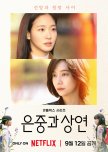
Friendship, in its truest form, can be a shelter against life’s tempests. But in “You and Everything Else,” it IS the tempest: violent, consuming, and relentless. This decades-spanning drama charts the entanglement of Ryu Eun-jung and Cheon Sang-yeon, two women bound together by intimacy and enmity in equal measure. Their friendship, fraught with rivalry, betrayal, and longing, ultimately bends toward reconciliation, painting a portrait of love and destruction intertwined.
From their first encounter as fourth-grade students in 1992, when Eun-jung was poor and sharp-edged and Sang-yeon seemed perfect as the new transfer student, their dynamic is shaped by mutual resentment and envy. What begins as hostility morphs into a fragile bond through middle and high school, only to become more complicated in college when both fall orbit to Kim Sang-hak, complicating their already fragile dynamic. When they collide again in their thirties, their professional lives spiral into betrayal, jealousy, and stolen ideas within the film industry. In the present day, a terminally ill Sang-yeon re-enters Eun-jung’s life, requesting accompaniment to Switzerland for euthanasia.
____________________________________________________
COMMENTARY:
What makes this drama remarkable is how believably it captures the way friendships shift with age. Childhood friendships break over small things and reconciliation is just as easy then, but as you get older fights become harder to undo and reconciliations rarer. You could just stop seeing each other and move on. The way the show makes the troubles deepen with time is believable, and it quietly shows the subtle shifts between liking and resenting someone. I especially liked that Sang-yeon and Eun-jung weren’t tied up and made to fight over love alone.
At first Sang-yeon had experienced the death of Cheon Sang-hak, and then mid-series her mother dies, but only after being given a terminal diagnosis does she seem to finally face the lifelong triggers she’d carried. She was full of fear: would she follow her brother into suicide, or suffer like her mother until she died? She said she found comfort in knowing that Switzerland exists. I liked that she had the chance to choose while she was still coherent, and with Eun-jung by her side she was no longer lonely. “Nobody will die happier than me.”
The script, direction, acting, and music were all so calm and composed, with muted colors and long takes that mirror the characters’ emotional restraint, almost documentary-like, and that’s why it made me cry.
It showed so well that Sang-yeon exists as she is now because of Eun-jung, and Eun-jung exists as she is now because of Sang-yeon. Even though their friendship wasn’t all happiness and fond memories, in fact, it was filled more with resentment and jealousy, even those memories became the driving force that shaped them. And so, the show convincingly insists that the two could only ever be each other’s one and only.
Eun-jung felt inferior to Sang-yeon, and Sang-yeon felt inferior to Eun-jung, but I think they were really just trying to fill their own lacks. They drifted apart out of mutual blame and envy.
Eun-jung has always been the one to reach out, so Sang-yeon probably asked her to stay with her at the end knowing Eun-jeong wouldn’t be able to refuse. All the awkwardness, annoyance, and hatred faded, and only then did they find peace, but the saddest thing is that there was no time left to be together. Eun-jung’s face, telling Sang-yeon without hesitation “you did well, you held on,” stuck in my chest.
The final episode in particular was so well made. It was undeniably sad, yet also beautiful. I’ve never seen a drama like this before. It just left me with such a strange, indescribable feeling.
Looking back, I don’t think this story actually hands out a protagonist and an antagonist, even though it’s framed mostly through Eun-jung’s eyes. Sang-yeon gets the bulk of the unflattering screen time, but the show is careful not to let her wallow in self pity without consequence. Every time she slides into the “why can’t it be me” mindset, whether about attention, love, or recognition, someone in her orbit pushes back with some version of “take responsibility for your own choices,” and I appreciated that. A lot of melodramas let a deluded character stay deluded for way too long just to manufacture conflict, but this one keeps calling Sang-yeon out at every stage of her life, even as it still makes room to understand why she ended up that way.
If I have a real complaint, it’s pacing. Sang-yeon’s shift from thinking money and status could buy people’s tolerance of her worse impulses, to actually sitting in remorse, takes a long time to land, and a tighter cut would have made the reconciliation ahead of her death feel earned rather than rushed at the end. The project-theft arc suffers from this too. We’re told it devastated Eun-jung, but we never really feel how much time and identity she’d poured into that specific work before it was taken, so the betrayal lands more as a plot beat than a gut punch. The adulthood stretch revisiting Sang-hak also overstays its welcome a little, though credit where it’s due, once the show actually let that thread go, it didn’t drag it back up again in the finale just for the sake of closure.
What did land for me was watching Sang-yeon try to understand her brother after his death, going through what he left behind and slowly piecing together who he actually was. That thread gave her grief somewhere to go besides spiraling, and it’s some of the quietest, most affecting material in the back half.
It also helped that the drama doesn’t pretend either woman is purely good or purely cruel. I went in expecting to pick a side and never managed it, and honestly didn’t want to. Despite how destructive Sang-yeon could be, I couldn’t fully hate her either, and that’s a hard balance for a show to strike for twenty-plus hours. There’s a version of this premise that plays as a straightforward female-friendship-turned-rivalry story, almost like someone watched the film Soulmate and decided the same female-friendship terrain deserved a slower, decades-long treatment with more room to sit in the uglier feelings, and that’s basically what this is.
I also want to give credit to the fact that this isn’t wall-to-wall misery. There are real lighter moments, healthy relationships that aren’t there just to suffer, an actual resolution instead of an ambiguous shrug, and even a passing mention of therapy, which dramaland still treats as rare. That balance is part of why the ending hit as hard as it did instead of just feeling bleak. By the time the finale arrived I was fully gone, somewhere between sobbing and just sitting there stunned, because for once the two of them were finally honest with each other instead of trying to wound one another, and both lead actresses absolutely sold every second of it.
____________________________________________________
INSIGHTS:
◉ Ryu Eun-jung:
Ryu Eun-jung is the central protagonist, portrayed as a resilient, empathetic, and multifaceted woman shaped by hardship, complicated relationships, and a lifelong struggle between bitterness and compassion. Born into poverty, she grows up in a semi-basement with her single mother, a milk delivery worker. Early exposure to inequality, such as school surveys exposing her fatherless home, bullying, and constant financial strain, leaves her both envious of privilege and fiercely resilient. Helping her mother and hiding her shame about home life forge a toughness that coexists with deep vulnerability.
At her core, Eun-jung is considerate and sincere, qualities that draw others in. Even as a child, she refuses revenge when wronged, showing empathy that becomes her quiet strength. This warmth attracts Sang-yeon’s mother (a mentor), Sang-yeon’s brother Cheon Sang-hak (her first love), and later Kim Sang-hak (her college boyfriend). Yet this same natural charm sparks Sang-yeon’s envy, as Eun-jung effortlessly wins affection Sang-yeon struggles to gain. She can be pessimistic, shaped by traumas which leaves her with guilt, anxiety, and a fear of loss.
Her growth is defined by moving from envy to self-preservation. Academically strong but always second to Sang-yeon, she sacrifices personal wants for her mother’s sake. Inspired by Cheon Sang-hak, she pursues photography, but her college romance with Kim Sang-hak collapses in a love triangle with Sang-yeon. Though jealous and insecure, snooping through mailboxes and drawers, Eun-jung ultimately breaks things off to protect herself, showing her shift toward independence.
As a working adult, she remains principled and uncompromising. She clashes with Sang-yeon over ethics, refuses to let victims apologize to abusers, and calls Sang-yeon a thief after being robbed of her work, rejecting compensation to keep her dignity.
Eun-jung’s photography becomes a metaphor for her perspective. She captures moments of truth but struggles to see her own worth until Sang-yeon’s memoir reveals how deeply she shaped Sang-yeon’s life.
Her guilt over Cheon Sang-hak’s suicide stems from believing she could have saved him, a burden that parallels her later decision to support Sang-yeon’s euthanasia, showing her growth in accepting what she cannot control, even while bitter about the timing.
Alone afterward, she embodies the survivor’s paradox: resentful of betrayals, yet unable to hate fully.
◉ Cheon Sang-yeon:
Cheon Sang-yeon is a complex antagonist-protagonist: brilliant, ambitious, and deeply flawed, her life arcs from privilege to isolation, driven by envy, loss, and unfulfilled desires. Introduced as a transfer student in 1992, she comes from wealth and stability: an apartment home, intact family, and prestige through her minister grandfather. As class president, she appears the perfect model student: authoritative, disciplined, excelling in academics. Yet this façade conceals insecurity. Rumors about Eun-jung’s milk deliveries (whether started by her or not) spark conflict, and her strict punishments betray a defensive need for control. To Eun-jung, Sang-yeon embodies utopia, everything she lacks, yet Sang-yeon herself suffers from favoritism, neglect, and longing for love.
Her personality blends confidence with fragility. Exceptionally capable, she is also envious and insecure. Her mother favors Eun-jung, her brother confides in her, and Kim Sang-hak loves her, all of which stoke Sang-yeon’s jealousy. Her provocations stem from this longing for validation. Most often she is secretive, manipulative, and destructive which shows when she sabotages friendships through betrayal and rivalry, steals Eun-jung’s work, among other incidents.
Tragedies accelerate her decline. Her brother Sang-hak’s suicide leads to divorce, poverty, and her mother’s eventual cancer. Overshadowed by her brother’s memory and by Eun-jung’s growing importance in her life, Sang-yeon spirals further. In college, she joins the photography club too late to win Kim Sang-hak, fueling regret and obsession. As a working adult, she is ruthless: sleeping with a director, stealing projects to launch her company, and forcing unethical compromises on staff before quitting under pressure.
Her manipulative streak peaks when she steals Eun-jung’s film project, but later revealed that this act stemmed from desperation to prove herself, not just malice, adding nuance to her character.
Her pancreatic cancer diagnosis mirrors her mother’s illness, deepening her fear of losing control and driving her to seek euthanasia as a way to reclaim agency.
Flawed, selfish, and destructive, yet painfully human, Sang-yeon embodies the tragedy of unhealed wounds and unrequited longing.
____________________________________________________
FINAL THOUGHTS:
I have to say this drama left me in a reflective haze after finishing. It’s one of those stories that doesn’t just entertain; it burrows into your soul and makes you question the messy threads of your own relationships.
Philosophically, the show burrows deep. It made me think about how envy and loss can warp us into unrecognizable versions of ourselves, how the people we resent most often reflect the parts of us we lack. It’s Nietzsche’s abyss refracted through friendship: stare too long at your insecurities, and they consume you. Yet the drama insists redemption doesn’t come from erasing the past, but from choosing compassion in the face of it.
What I learned here is that forgiveness isn’t for the offender, but it’s freedom for yourself. Grudges are stones in the chest; only by letting go can you breathe. And lastly, pride is an illusion; chase it too long and you end up alone, begging for connection at the end.
The last episode was undeniably sad, yet achingly beautiful. I’ve never seen anything quite like it. It’s melodramatic yet deeply human, heavy yet strangely liberating.
I don’t regret a single scene. If anything, it made me want to text an old friend I’d drifted from, just to say, “Hey.” Because if this drama shows us anything, it’s that love and hate aren’t opposites. They’re entangled threads, woven across decades, impossible to fully untangle. And that’s what makes them endure.
May all the Eunjungs and Sangyeons of this world, even if they never truly understand each other, still find a way to live side by side.
Thank you for reading!
Friendship, in its truest form, can be a shelter against life’s tempests. But in “You and Everything Else,” it IS the tempest: violent, consuming, and relentless. This decades-spanning drama charts the entanglement of Ryu Eun-jung and Cheon Sang-yeon, two women bound together by intimacy and enmity in equal measure. Their friendship, fraught with rivalry, betrayal, and longing, ultimately bends toward reconciliation, painting a portrait of love and destruction intertwined.
From their first encounter as fourth-grade students in 1992, when Eun-jung was poor and sharp-edged and Sang-yeon seemed perfect as the new transfer student, their dynamic is shaped by mutual resentment and envy. What begins as hostility morphs into a fragile bond through middle and high school, only to become more complicated in college when both fall orbit to Kim Sang-hak, complicating their already fragile dynamic. When they collide again in their thirties, their professional lives spiral into betrayal, jealousy, and stolen ideas within the film industry. In the present day, a terminally ill Sang-yeon re-enters Eun-jung’s life, requesting accompaniment to Switzerland for euthanasia.
____________________________________________________
COMMENTARY:
What makes this drama remarkable is how believably it captures the way friendships shift with age. Childhood friendships break over small things and reconciliation is just as easy then, but as you get older fights become harder to undo and reconciliations rarer. You could just stop seeing each other and move on. The way the show makes the troubles deepen with time is believable, and it quietly shows the subtle shifts between liking and resenting someone. I especially liked that Sang-yeon and Eun-jung weren’t tied up and made to fight over love alone.
At first Sang-yeon had experienced the death of Cheon Sang-hak, and then mid-series her mother dies, but only after being given a terminal diagnosis does she seem to finally face the lifelong triggers she’d carried. She was full of fear: would she follow her brother into suicide, or suffer like her mother until she died? She said she found comfort in knowing that Switzerland exists. I liked that she had the chance to choose while she was still coherent, and with Eun-jung by her side she was no longer lonely. “Nobody will die happier than me.”
The script, direction, acting, and music were all so calm and composed, with muted colors and long takes that mirror the characters’ emotional restraint, almost documentary-like, and that’s why it made me cry.
It showed so well that Sang-yeon exists as she is now because of Eun-jung, and Eun-jung exists as she is now because of Sang-yeon. Even though their friendship wasn’t all happiness and fond memories, in fact, it was filled more with resentment and jealousy, even those memories became the driving force that shaped them. And so, the show convincingly insists that the two could only ever be each other’s one and only.
Eun-jung felt inferior to Sang-yeon, and Sang-yeon felt inferior to Eun-jung, but I think they were really just trying to fill their own lacks. They drifted apart out of mutual blame and envy.
Eun-jung has always been the one to reach out, so Sang-yeon probably asked her to stay with her at the end knowing Eun-jeong wouldn’t be able to refuse. All the awkwardness, annoyance, and hatred faded, and only then did they find peace, but the saddest thing is that there was no time left to be together. Eun-jung’s face, telling Sang-yeon without hesitation “you did well, you held on,” stuck in my chest.
The final episode in particular was so well made. It was undeniably sad, yet also beautiful. I’ve never seen a drama like this before. It just left me with such a strange, indescribable feeling.
Looking back, I don’t think this story actually hands out a protagonist and an antagonist, even though it’s framed mostly through Eun-jung’s eyes. Sang-yeon gets the bulk of the unflattering screen time, but the show is careful not to let her wallow in self pity without consequence. Every time she slides into the “why can’t it be me” mindset, whether about attention, love, or recognition, someone in her orbit pushes back with some version of “take responsibility for your own choices,” and I appreciated that. A lot of melodramas let a deluded character stay deluded for way too long just to manufacture conflict, but this one keeps calling Sang-yeon out at every stage of her life, even as it still makes room to understand why she ended up that way.
If I have a real complaint, it’s pacing. Sang-yeon’s shift from thinking money and status could buy people’s tolerance of her worse impulses, to actually sitting in remorse, takes a long time to land, and a tighter cut would have made the reconciliation ahead of her death feel earned rather than rushed at the end. The project-theft arc suffers from this too. We’re told it devastated Eun-jung, but we never really feel how much time and identity she’d poured into that specific work before it was taken, so the betrayal lands more as a plot beat than a gut punch. The adulthood stretch revisiting Sang-hak also overstays its welcome a little, though credit where it’s due, once the show actually let that thread go, it didn’t drag it back up again in the finale just for the sake of closure.
What did land for me was watching Sang-yeon try to understand her brother after his death, going through what he left behind and slowly piecing together who he actually was. That thread gave her grief somewhere to go besides spiraling, and it’s some of the quietest, most affecting material in the back half.
It also helped that the drama doesn’t pretend either woman is purely good or purely cruel. I went in expecting to pick a side and never managed it, and honestly didn’t want to. Despite how destructive Sang-yeon could be, I couldn’t fully hate her either, and that’s a hard balance for a show to strike for twenty-plus hours. There’s a version of this premise that plays as a straightforward female-friendship-turned-rivalry story, almost like someone watched the film Soulmate and decided the same female-friendship terrain deserved a slower, decades-long treatment with more room to sit in the uglier feelings, and that’s basically what this is.
I also want to give credit to the fact that this isn’t wall-to-wall misery. There are real lighter moments, healthy relationships that aren’t there just to suffer, an actual resolution instead of an ambiguous shrug, and even a passing mention of therapy, which dramaland still treats as rare. That balance is part of why the ending hit as hard as it did instead of just feeling bleak. By the time the finale arrived I was fully gone, somewhere between sobbing and just sitting there stunned, because for once the two of them were finally honest with each other instead of trying to wound one another, and both lead actresses absolutely sold every second of it.
____________________________________________________
INSIGHTS:
◉ Ryu Eun-jung:
Ryu Eun-jung is the central protagonist, portrayed as a resilient, empathetic, and multifaceted woman shaped by hardship, complicated relationships, and a lifelong struggle between bitterness and compassion. Born into poverty, she grows up in a semi-basement with her single mother, a milk delivery worker. Early exposure to inequality, such as school surveys exposing her fatherless home, bullying, and constant financial strain, leaves her both envious of privilege and fiercely resilient. Helping her mother and hiding her shame about home life forge a toughness that coexists with deep vulnerability.
At her core, Eun-jung is considerate and sincere, qualities that draw others in. Even as a child, she refuses revenge when wronged, showing empathy that becomes her quiet strength. This warmth attracts Sang-yeon’s mother (a mentor), Sang-yeon’s brother Cheon Sang-hak (her first love), and later Kim Sang-hak (her college boyfriend). Yet this same natural charm sparks Sang-yeon’s envy, as Eun-jung effortlessly wins affection Sang-yeon struggles to gain. She can be pessimistic, shaped by traumas which leaves her with guilt, anxiety, and a fear of loss.
Her growth is defined by moving from envy to self-preservation. Academically strong but always second to Sang-yeon, she sacrifices personal wants for her mother’s sake. Inspired by Cheon Sang-hak, she pursues photography, but her college romance with Kim Sang-hak collapses in a love triangle with Sang-yeon. Though jealous and insecure, snooping through mailboxes and drawers, Eun-jung ultimately breaks things off to protect herself, showing her shift toward independence.
As a working adult, she remains principled and uncompromising. She clashes with Sang-yeon over ethics, refuses to let victims apologize to abusers, and calls Sang-yeon a thief after being robbed of her work, rejecting compensation to keep her dignity.
Eun-jung’s photography becomes a metaphor for her perspective. She captures moments of truth but struggles to see her own worth until Sang-yeon’s memoir reveals how deeply she shaped Sang-yeon’s life.
Her guilt over Cheon Sang-hak’s suicide stems from believing she could have saved him, a burden that parallels her later decision to support Sang-yeon’s euthanasia, showing her growth in accepting what she cannot control, even while bitter about the timing.
Alone afterward, she embodies the survivor’s paradox: resentful of betrayals, yet unable to hate fully.
◉ Cheon Sang-yeon:
Cheon Sang-yeon is a complex antagonist-protagonist: brilliant, ambitious, and deeply flawed, her life arcs from privilege to isolation, driven by envy, loss, and unfulfilled desires. Introduced as a transfer student in 1992, she comes from wealth and stability: an apartment home, intact family, and prestige through her minister grandfather. As class president, she appears the perfect model student: authoritative, disciplined, excelling in academics. Yet this façade conceals insecurity. Rumors about Eun-jung’s milk deliveries (whether started by her or not) spark conflict, and her strict punishments betray a defensive need for control. To Eun-jung, Sang-yeon embodies utopia, everything she lacks, yet Sang-yeon herself suffers from favoritism, neglect, and longing for love.
Her personality blends confidence with fragility. Exceptionally capable, she is also envious and insecure. Her mother favors Eun-jung, her brother confides in her, and Kim Sang-hak loves her, all of which stoke Sang-yeon’s jealousy. Her provocations stem from this longing for validation. Most often she is secretive, manipulative, and destructive which shows when she sabotages friendships through betrayal and rivalry, steals Eun-jung’s work, among other incidents.
Tragedies accelerate her decline. Her brother Sang-hak’s suicide leads to divorce, poverty, and her mother’s eventual cancer. Overshadowed by her brother’s memory and by Eun-jung’s growing importance in her life, Sang-yeon spirals further. In college, she joins the photography club too late to win Kim Sang-hak, fueling regret and obsession. As a working adult, she is ruthless: sleeping with a director, stealing projects to launch her company, and forcing unethical compromises on staff before quitting under pressure.
Her manipulative streak peaks when she steals Eun-jung’s film project, but later revealed that this act stemmed from desperation to prove herself, not just malice, adding nuance to her character.
Her pancreatic cancer diagnosis mirrors her mother’s illness, deepening her fear of losing control and driving her to seek euthanasia as a way to reclaim agency.
Flawed, selfish, and destructive, yet painfully human, Sang-yeon embodies the tragedy of unhealed wounds and unrequited longing.
____________________________________________________
FINAL THOUGHTS:
I have to say this drama left me in a reflective haze after finishing. It’s one of those stories that doesn’t just entertain; it burrows into your soul and makes you question the messy threads of your own relationships.
Philosophically, the show burrows deep. It made me think about how envy and loss can warp us into unrecognizable versions of ourselves, how the people we resent most often reflect the parts of us we lack. It’s Nietzsche’s abyss refracted through friendship: stare too long at your insecurities, and they consume you. Yet the drama insists redemption doesn’t come from erasing the past, but from choosing compassion in the face of it.
What I learned here is that forgiveness isn’t for the offender, but it’s freedom for yourself. Grudges are stones in the chest; only by letting go can you breathe. And lastly, pride is an illusion; chase it too long and you end up alone, begging for connection at the end.
The last episode was undeniably sad, yet achingly beautiful. I’ve never seen anything quite like it. It’s melodramatic yet deeply human, heavy yet strangely liberating.
I don’t regret a single scene. If anything, it made me want to text an old friend I’d drifted from, just to say, “Hey.” Because if this drama shows us anything, it’s that love and hate aren’t opposites. They’re entangled threads, woven across decades, impossible to fully untangle. And that’s what makes them endure.
May all the Eunjungs and Sangyeons of this world, even if they never truly understand each other, still find a way to live side by side.
Thank you for reading!
Was this review helpful to you?


