

 101
101 177
177 18
18 2
2 4
4 4
4 10
10 5
5 7
7 6
6 3
3 10
10 5
5 2
2 7
7 30
30 3
3 4
4 4
4 2
2 1
1 3
3 3
3 4
4 2
2 6
6 24
24 30
30 11
11 19
19


This review may contain spoilers
After the Sun Goes Out, What’s Left to Live With?
OVERVIEW:
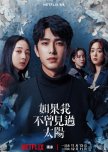
"Had I Not Seen the Sun" is a Taiwanese youth tragedy that disguises itself as a coming-of-age story before revealing itself as an autopsy of power, violence, and institutional betrayal. Centered on three teenagers who are Hsiao-tung, Jen-yao, and Yun-chen, the drama traces how sexual violence, class privilege, corruption, and adult cowardice grind innocence into silence and rage. Through fractured timelines, haunting symbolism, and a slow unpeeling of truth, the series examines how a society that protects perpetrators manufactures monsters. What begins as a story about friendship and first love becomes an indictment of schools, police, families, and money, and a meditation on what survives after the sun goes out.
________________
COMMENTARY:
I finished Had I Not Seen the Sun feeling hollowed out, furious, and uncomfortably awake. Not “sad in a pretty way.” Not “devastated but grateful.” Awake like I’d been forced to stare at something society works very hard to keep out of sight. This drama didn’t just tell a story; it conducted an autopsy on power, masculinity, class, and how thoroughly the system can grind human beings into collateral damage. From the first episode, where Jen-yao is already framed as a killer, the show locks you into inevitability. There is no suspense about whether things will go wrong. The only question is how many people will help push them there.
What I loved most, and I mean loved in the way you love something that hurts you, is how this show weaponizes intimacy. The scenes that gutted me weren’t the loud ones. They were the moments where people almost say the right thing and don’t. Where help is one sentence away and never arrives.
What makes this drama work is that it refuses to romanticize suffering while still acknowledging intimacy. It understands that tenderness and violence are not opposites; they often coexist, sometimes in the same breath. The writing is brutally precise. Every humiliation compounds. Every compromise costs something. No moment exists just to advance plot; every scene either deepens character psychology or tightens the moral noose.
I keep thinking about the convenience store scenes. They show up again and again, almost invisibly threading the story together. Late-night noodles, fluorescent lighting, two kids standing between childhood and adulthood with nothing but instant food and unprocessed trauma. That’s where Jen-yao and Hsiao-tung feel most real to me. Not on rooftops, not in grand declarations, but standing awkwardly with plastic spoons, trying to pretend the world isn’t already chewing them up. The show understands that tenderness often lives in places no one remembers to romanticize.
The relationships are where the writing truly shines. Jen-yao and Hsiao-tung are not built on grand declarations. They are built on shared silence, small gestures, and the mutual recognition of pain. Their bond feels intimate because it is unguarded. They don’t fix each other. They witness each other. That distinction is crucial. Yun-chen and Hsiao-tung’s relationship, meanwhile, carries the ache of unreciprocated love without turning toxic. It’s messy, raw, and deeply human.
Hsiao-tung taking care of Jen-yao while he’s sick, hiding him in the abandoned house, is another arc that destroyed me quietly. There’s no big speech about love or sacrifice. She just does it. She feeds him, buys him things, lies to adults without hesitation. It’s the clearest expression of who she is: someone who shows up. And that’s exactly why what happens later feels so unforgivable. The world punishes her not for being reckless, but for being kind.
Hsiao-tung is the emotional axis of the entire series. She is written as a girl with moral clarity who believes in showing up, even when it costs her everything. Her kindness is not naïve. It is active, deliberate, and repeatedly punished. What the show does with her character is devastating because it demonstrates how goodness is not enough when institutions are hostile. She doesn’t fail. The world fails her. Over and over.
Jen-yao is not written as a misunderstood angel or a cool antihero. He is written as someone shaped by abandonment, poverty, and structural cruelty. The show never excuses his murders, but it absolutely indicts the world that produced him. His father is weak, selfish, and transactional. His mother is loving but broken, trapped in survival mode, incapable of offering protection when it matters. The school treats him as disposable long before he commits any crime. The police see him as convenient. Power recognizes him only as a tool or a scapegoat. By the time he becomes violent, the question is no longer “why did he do this?” but “who didn’t stop this?”
Jen-yao’s relationship with his parents might be one of the bleakest portrayals of familial abandonment I’ve seen. His mother is loving and unreliable, apologetic and cowardly. His father is weak in the most dangerous way. When Jen-yao realizes his father sold him out, there’s no dramatic confrontation that gives him closure. Just a phone call. Just confirmation that he is disposable. That betrayal hits harder than any beating, because it removes the last illusion he had about safety.
I loved how the show allowed silence to carry weight. Scenes where nothing is said often hit harder than any monologue. The hug between Jen-yao and Hsiao-tung after his betrayal by his father is one of the most emotionally precise moments I’ve seen. No dialogue, no score manipulation, just two broken teenagers clinging to the last thing that feels real.
I was also deeply affected by how Yun-chen is written in relation to both of them. Her hostility toward Jen-yao is not irrational jealousy but survival math. Every time she tells him to stay away from Hsiao-tung, you can feel how much she hates herself for needing to say it. Yun-chen understands systems before the others do. She knows how power moves, how reputation crushes people, how girls disappear quietly. Her love is expressed through warnings, not affection, and that makes her arc heartbreaking in a slow, corrosive way. The moment she tells Jen-yao she’ll come for him if anything happens to Hsiao-tung is electric, not because it’s threatening, but because it’s grief spoken in advance.
Yun-chen functions as both mirror and warning. Her abusive grandmother, her suffocating control, and her desperate escape show a parallel outcome of trauma that doesn’t explode outward but calcifies inward. Her love for Hsiao-tung is real, intense, and complicated, but it is also rooted in survival. She recognizes danger earlier than the others because she has lived under it. Her decision to sever ties, to run, to draw brutal boundaries, makes sense. The show does not punish her for choosing herself, and that restraint matters.
I loved Yun-chen’s courtroom-like defense of Jen-yao at school. It wasn’t framed as heroism; it was framed as necessity. She knew how systems worked, and she used their own rules against them. That moment crystallized her intelligence and rage in one stroke.
One of the most brutal emotional punches is how the show handles parents. Not villains, not heroes, just people who fail in believable ways. Hsiao-tung’s parents trying to do “the right thing” and being systematically dismantled by money and influence is agonizing to watch. The scene where other parents gang up on them at the school, calling Hsiao-tung loose, is pure social violence. It’s not the rapists speaking, it’s society echoing them. I hated that scene. I also admired it, because it refuses to pretend that cruelty is rare.
The antagonists are chilling because they are banal. Ouyang-ti is not a mastermind; he is a boy weaponized by wealth and entitlement. His cruelty is casual, inherited, and protected. His parents are the real monsters, not because they are cartoonishly evil, but because they are realistic. They know exactly what their son did. They simply decide it doesn’t matter. Their use of money, influence, police connections, and schools to rewrite reality is the show’s sharpest critique. This is not about individual bad apples. This is about orchards.
The school hearing is a masterclass in writing institutional cruelty. Every line of dialogue feels researched, rehearsed, and real. The boys’ coordinated lies, the way parents weaponize moral language, the school’s eagerness to reframe rape as “misunderstanding”... it’s nauseating because it’s accurate. The moment the school declares it consensual lands like a verdict not just against Hsiao-tung, but against reality itself.
Thematically, the drama is ruthless. It interrogates how rape culture is upheld not just by perpetrators but by silence, disbelief, and procedural gaslighting. The school hearing scene alone should be studied. The way language is manipulated to turn violence into consent, the way parents are mobilized to shame the victim, the way “reputation” outweighs truth, all of it feels horrifyingly accurate. The show also explores masculinity under pressure, how boys are taught that worth is transactional and power is dominance. Jen-yao’s descent is not a transformation; it’s a revelation of what was cultivated all along.
The karaoke setup and its aftermath is one of the most sickeningly well-constructed arcs in the series. What makes it unbearable is not surprise (we know something bad is coming) but inevitability. Every choice Hsiao-tung makes is logical. She agrees to go to protect Jen-yao. She plays along to buy time. She steals the phone to delete evidence. She is brave, strategic, and self-sacrificing. And it still doesn’t matter. That’s the point. The show doesn’t punish her for being naïve; it punishes her for daring to resist within a rigged system. Watching her be outnumbered, filmed, mocked, and discarded while Jen-yao is physically barred from reaching her is one of the most harrowing parallel edits I’ve seen. His helplessness is not symbolic. It is absolute.
The hospital examination scene is one of the hardest sequences to watch, and it is handled with brutal precision. The camera does not linger voyeuristically, but it does not cut away to spare you either. You are meant to feel the indignity, the repetition of violation under the guise of procedure. It is not cinematic. It is clinical. And that’s the point.
Jen-yao dragging himself upstairs afterward, barely conscious, just to find Hsiao-tung, is another moment that refused to leave me. She doesn’t scream. She doesn’t collapse into him. She doesn’t explain. She walks past him. That choice is devastating because it’s honest. Trauma doesn’t always look like breakdown. Sometimes it looks like withdrawal so complete it erases the other person from the room.
I also appreciated how the show handles time skips and aftermath. It doesn’t rush to revenge. It lets rot set in. The years in juvenile prison, the extended sentence, the delayed release; this isn’t a revenge fantasy. It’s attrition. By the time Jen-yao starts killing, it feels less like rage and more like a final language he’s learned fluently because nothing else ever worked.
I also appreciated that the show never lets Jen-yao’s violence feel triumphant. Even when he stabs Ouyang-ti, it is chaotic, ineffective, and immediately punished. Revenge is shown not as catharsis but as further entrapment. The seven-year imprisonment is not just punitive; it’s erasure.
The rooftop scenes deserve their own grief category. That rooftop is not romantic space; it’s a confessional, a battleground, a promise site, a grave. When Hsiao-tung and Jen-yao talk there, it always feels temporary, like borrowed time. And when Jen-yao returns years later and realizes she kept the promise alone, that revelation lands without manipulation. No swelling score, no montage. Just decorations and absence. I actually had to pause there. That’s the kind of scene that trusts silence more than dialogue, and it devastates precisely because it refuses to comfort you.
Jen-yao waiting on the rooftop years later and realizing Hsiao-tung kept the promise wrecked me. No monologue. No flashback. Just decorations and absence. That’s grief done right.
I loved the motorcycle scene, not because it was romantic, but because it captured escapism perfectly. Arms out, eyes closed, pretending momentum equals freedom. It was honest about how young people try to outrun pain without having anywhere to go.
The Taipei interlude was beautifully cruel. The temporary joy, the food, the photos, the sea, all felt like borrowed time. The show let those moments breathe just long enough to make their loss unbearable.
The dance scenes deserve special mention. Hsiao-tung dancing barefoot in the theater for Jen-yao is not romantic fluff; it’s a farewell, whether either of them knows it or not. Her injured ankle is not symbolic subtlety; it’s physical truth. Art costs the body. Love does too.
Even small technical choices stuck with me. The repeated use of bells, phones cutting out, static on calls, it reinforces the theme of failed communication. People try to speak. Something always interrupts. The living can’t reach the dead. The truth can’t reach authority. Help can’t reach those who need it in time.
Technically, the direction is restrained and confident. The camera does not linger voyeuristically on violence. The assault scene is devastating precisely because it centers sound, obstruction, and aftermath rather than spectacle. Editing choices during institutional scenes are cold and methodical, mirroring the machinery of power. The score is understated, allowing discomfort to sit unadorned.
Symbolism is used sparingly but effectively. The moth and butterfly metaphor is one of the most painful threads. Jen-yao believes he is a moth, doomed to circle false light, incapable of existing in the sun. Hsiao-tung refuses this logic. She believes coexistence is possible. The tragedy is not that she is wrong about humanity, but that humanity proves her wrong anyway. The butterfly tattoo, the rooftop promise, the recurring imagery of light and exposure all reinforce the same idea: visibility is both salvation and danger.
The butterfly. That last image of a butterfly leading Jen-yao to a woman who might be Hsiao-tung, might not be, might be something else entirely, that’s one of the cruelest and most beautiful choices the show makes. It doesn’t reward him with reunion. It gives him ambiguity. After everything, certainty would be a lie.
______________________
FINAL THOUGHTS:
"Had I Not Seen the Sun" is one of the most emotionally intense, psychologically nuanced, and socially scathing series I have ever encountered. It is not for the faint of heart as it will make you uncomfortable, angry, and heartbroken. It blends trauma, morality, social commentary, and poetic symbolism with cinematic skill, and its characters are multidimensional, alive, and compelling.
If there is a takeaway, it is this: monsters are not born. They are manufactured, protected, and unleashed. And the cost is always paid by the ones who shone the brightest.
The characters are unforgettable, and their arcs are devastatingly human. The series confronts societal corruption, the failure of institutions, and the long shadow of trauma without flinching. It’s a painful, mesmerizing, morally complex masterpiece.
It leaves you emotionally drained but intellectually stimulated, questioning everything you know about morality, justice, and the consequences of inaction. Every plot point, every detail, every moment of character development is deliberate and loaded with significance. Watching it is an ordeal, but one worth enduring.
Tysm for reading!💖
"Had I Not Seen the Sun" is a Taiwanese youth tragedy that disguises itself as a coming-of-age story before revealing itself as an autopsy of power, violence, and institutional betrayal. Centered on three teenagers who are Hsiao-tung, Jen-yao, and Yun-chen, the drama traces how sexual violence, class privilege, corruption, and adult cowardice grind innocence into silence and rage. Through fractured timelines, haunting symbolism, and a slow unpeeling of truth, the series examines how a society that protects perpetrators manufactures monsters. What begins as a story about friendship and first love becomes an indictment of schools, police, families, and money, and a meditation on what survives after the sun goes out.
________________
COMMENTARY:
I finished Had I Not Seen the Sun feeling hollowed out, furious, and uncomfortably awake. Not “sad in a pretty way.” Not “devastated but grateful.” Awake like I’d been forced to stare at something society works very hard to keep out of sight. This drama didn’t just tell a story; it conducted an autopsy on power, masculinity, class, and how thoroughly the system can grind human beings into collateral damage. From the first episode, where Jen-yao is already framed as a killer, the show locks you into inevitability. There is no suspense about whether things will go wrong. The only question is how many people will help push them there.
What I loved most, and I mean loved in the way you love something that hurts you, is how this show weaponizes intimacy. The scenes that gutted me weren’t the loud ones. They were the moments where people almost say the right thing and don’t. Where help is one sentence away and never arrives.
What makes this drama work is that it refuses to romanticize suffering while still acknowledging intimacy. It understands that tenderness and violence are not opposites; they often coexist, sometimes in the same breath. The writing is brutally precise. Every humiliation compounds. Every compromise costs something. No moment exists just to advance plot; every scene either deepens character psychology or tightens the moral noose.
I keep thinking about the convenience store scenes. They show up again and again, almost invisibly threading the story together. Late-night noodles, fluorescent lighting, two kids standing between childhood and adulthood with nothing but instant food and unprocessed trauma. That’s where Jen-yao and Hsiao-tung feel most real to me. Not on rooftops, not in grand declarations, but standing awkwardly with plastic spoons, trying to pretend the world isn’t already chewing them up. The show understands that tenderness often lives in places no one remembers to romanticize.
The relationships are where the writing truly shines. Jen-yao and Hsiao-tung are not built on grand declarations. They are built on shared silence, small gestures, and the mutual recognition of pain. Their bond feels intimate because it is unguarded. They don’t fix each other. They witness each other. That distinction is crucial. Yun-chen and Hsiao-tung’s relationship, meanwhile, carries the ache of unreciprocated love without turning toxic. It’s messy, raw, and deeply human.
Hsiao-tung taking care of Jen-yao while he’s sick, hiding him in the abandoned house, is another arc that destroyed me quietly. There’s no big speech about love or sacrifice. She just does it. She feeds him, buys him things, lies to adults without hesitation. It’s the clearest expression of who she is: someone who shows up. And that’s exactly why what happens later feels so unforgivable. The world punishes her not for being reckless, but for being kind.
Hsiao-tung is the emotional axis of the entire series. She is written as a girl with moral clarity who believes in showing up, even when it costs her everything. Her kindness is not naïve. It is active, deliberate, and repeatedly punished. What the show does with her character is devastating because it demonstrates how goodness is not enough when institutions are hostile. She doesn’t fail. The world fails her. Over and over.
Jen-yao is not written as a misunderstood angel or a cool antihero. He is written as someone shaped by abandonment, poverty, and structural cruelty. The show never excuses his murders, but it absolutely indicts the world that produced him. His father is weak, selfish, and transactional. His mother is loving but broken, trapped in survival mode, incapable of offering protection when it matters. The school treats him as disposable long before he commits any crime. The police see him as convenient. Power recognizes him only as a tool or a scapegoat. By the time he becomes violent, the question is no longer “why did he do this?” but “who didn’t stop this?”
Jen-yao’s relationship with his parents might be one of the bleakest portrayals of familial abandonment I’ve seen. His mother is loving and unreliable, apologetic and cowardly. His father is weak in the most dangerous way. When Jen-yao realizes his father sold him out, there’s no dramatic confrontation that gives him closure. Just a phone call. Just confirmation that he is disposable. That betrayal hits harder than any beating, because it removes the last illusion he had about safety.
I loved how the show allowed silence to carry weight. Scenes where nothing is said often hit harder than any monologue. The hug between Jen-yao and Hsiao-tung after his betrayal by his father is one of the most emotionally precise moments I’ve seen. No dialogue, no score manipulation, just two broken teenagers clinging to the last thing that feels real.
I was also deeply affected by how Yun-chen is written in relation to both of them. Her hostility toward Jen-yao is not irrational jealousy but survival math. Every time she tells him to stay away from Hsiao-tung, you can feel how much she hates herself for needing to say it. Yun-chen understands systems before the others do. She knows how power moves, how reputation crushes people, how girls disappear quietly. Her love is expressed through warnings, not affection, and that makes her arc heartbreaking in a slow, corrosive way. The moment she tells Jen-yao she’ll come for him if anything happens to Hsiao-tung is electric, not because it’s threatening, but because it’s grief spoken in advance.
Yun-chen functions as both mirror and warning. Her abusive grandmother, her suffocating control, and her desperate escape show a parallel outcome of trauma that doesn’t explode outward but calcifies inward. Her love for Hsiao-tung is real, intense, and complicated, but it is also rooted in survival. She recognizes danger earlier than the others because she has lived under it. Her decision to sever ties, to run, to draw brutal boundaries, makes sense. The show does not punish her for choosing herself, and that restraint matters.
I loved Yun-chen’s courtroom-like defense of Jen-yao at school. It wasn’t framed as heroism; it was framed as necessity. She knew how systems worked, and she used their own rules against them. That moment crystallized her intelligence and rage in one stroke.
One of the most brutal emotional punches is how the show handles parents. Not villains, not heroes, just people who fail in believable ways. Hsiao-tung’s parents trying to do “the right thing” and being systematically dismantled by money and influence is agonizing to watch. The scene where other parents gang up on them at the school, calling Hsiao-tung loose, is pure social violence. It’s not the rapists speaking, it’s society echoing them. I hated that scene. I also admired it, because it refuses to pretend that cruelty is rare.
The antagonists are chilling because they are banal. Ouyang-ti is not a mastermind; he is a boy weaponized by wealth and entitlement. His cruelty is casual, inherited, and protected. His parents are the real monsters, not because they are cartoonishly evil, but because they are realistic. They know exactly what their son did. They simply decide it doesn’t matter. Their use of money, influence, police connections, and schools to rewrite reality is the show’s sharpest critique. This is not about individual bad apples. This is about orchards.
The school hearing is a masterclass in writing institutional cruelty. Every line of dialogue feels researched, rehearsed, and real. The boys’ coordinated lies, the way parents weaponize moral language, the school’s eagerness to reframe rape as “misunderstanding”... it’s nauseating because it’s accurate. The moment the school declares it consensual lands like a verdict not just against Hsiao-tung, but against reality itself.
Thematically, the drama is ruthless. It interrogates how rape culture is upheld not just by perpetrators but by silence, disbelief, and procedural gaslighting. The school hearing scene alone should be studied. The way language is manipulated to turn violence into consent, the way parents are mobilized to shame the victim, the way “reputation” outweighs truth, all of it feels horrifyingly accurate. The show also explores masculinity under pressure, how boys are taught that worth is transactional and power is dominance. Jen-yao’s descent is not a transformation; it’s a revelation of what was cultivated all along.
The karaoke setup and its aftermath is one of the most sickeningly well-constructed arcs in the series. What makes it unbearable is not surprise (we know something bad is coming) but inevitability. Every choice Hsiao-tung makes is logical. She agrees to go to protect Jen-yao. She plays along to buy time. She steals the phone to delete evidence. She is brave, strategic, and self-sacrificing. And it still doesn’t matter. That’s the point. The show doesn’t punish her for being naïve; it punishes her for daring to resist within a rigged system. Watching her be outnumbered, filmed, mocked, and discarded while Jen-yao is physically barred from reaching her is one of the most harrowing parallel edits I’ve seen. His helplessness is not symbolic. It is absolute.
The hospital examination scene is one of the hardest sequences to watch, and it is handled with brutal precision. The camera does not linger voyeuristically, but it does not cut away to spare you either. You are meant to feel the indignity, the repetition of violation under the guise of procedure. It is not cinematic. It is clinical. And that’s the point.
Jen-yao dragging himself upstairs afterward, barely conscious, just to find Hsiao-tung, is another moment that refused to leave me. She doesn’t scream. She doesn’t collapse into him. She doesn’t explain. She walks past him. That choice is devastating because it’s honest. Trauma doesn’t always look like breakdown. Sometimes it looks like withdrawal so complete it erases the other person from the room.
I also appreciated how the show handles time skips and aftermath. It doesn’t rush to revenge. It lets rot set in. The years in juvenile prison, the extended sentence, the delayed release; this isn’t a revenge fantasy. It’s attrition. By the time Jen-yao starts killing, it feels less like rage and more like a final language he’s learned fluently because nothing else ever worked.
I also appreciated that the show never lets Jen-yao’s violence feel triumphant. Even when he stabs Ouyang-ti, it is chaotic, ineffective, and immediately punished. Revenge is shown not as catharsis but as further entrapment. The seven-year imprisonment is not just punitive; it’s erasure.
The rooftop scenes deserve their own grief category. That rooftop is not romantic space; it’s a confessional, a battleground, a promise site, a grave. When Hsiao-tung and Jen-yao talk there, it always feels temporary, like borrowed time. And when Jen-yao returns years later and realizes she kept the promise alone, that revelation lands without manipulation. No swelling score, no montage. Just decorations and absence. I actually had to pause there. That’s the kind of scene that trusts silence more than dialogue, and it devastates precisely because it refuses to comfort you.
Jen-yao waiting on the rooftop years later and realizing Hsiao-tung kept the promise wrecked me. No monologue. No flashback. Just decorations and absence. That’s grief done right.
I loved the motorcycle scene, not because it was romantic, but because it captured escapism perfectly. Arms out, eyes closed, pretending momentum equals freedom. It was honest about how young people try to outrun pain without having anywhere to go.
The Taipei interlude was beautifully cruel. The temporary joy, the food, the photos, the sea, all felt like borrowed time. The show let those moments breathe just long enough to make their loss unbearable.
The dance scenes deserve special mention. Hsiao-tung dancing barefoot in the theater for Jen-yao is not romantic fluff; it’s a farewell, whether either of them knows it or not. Her injured ankle is not symbolic subtlety; it’s physical truth. Art costs the body. Love does too.
Even small technical choices stuck with me. The repeated use of bells, phones cutting out, static on calls, it reinforces the theme of failed communication. People try to speak. Something always interrupts. The living can’t reach the dead. The truth can’t reach authority. Help can’t reach those who need it in time.
Technically, the direction is restrained and confident. The camera does not linger voyeuristically on violence. The assault scene is devastating precisely because it centers sound, obstruction, and aftermath rather than spectacle. Editing choices during institutional scenes are cold and methodical, mirroring the machinery of power. The score is understated, allowing discomfort to sit unadorned.
Symbolism is used sparingly but effectively. The moth and butterfly metaphor is one of the most painful threads. Jen-yao believes he is a moth, doomed to circle false light, incapable of existing in the sun. Hsiao-tung refuses this logic. She believes coexistence is possible. The tragedy is not that she is wrong about humanity, but that humanity proves her wrong anyway. The butterfly tattoo, the rooftop promise, the recurring imagery of light and exposure all reinforce the same idea: visibility is both salvation and danger.
The butterfly. That last image of a butterfly leading Jen-yao to a woman who might be Hsiao-tung, might not be, might be something else entirely, that’s one of the cruelest and most beautiful choices the show makes. It doesn’t reward him with reunion. It gives him ambiguity. After everything, certainty would be a lie.
______________________
FINAL THOUGHTS:
"Had I Not Seen the Sun" is one of the most emotionally intense, psychologically nuanced, and socially scathing series I have ever encountered. It is not for the faint of heart as it will make you uncomfortable, angry, and heartbroken. It blends trauma, morality, social commentary, and poetic symbolism with cinematic skill, and its characters are multidimensional, alive, and compelling.
If there is a takeaway, it is this: monsters are not born. They are manufactured, protected, and unleashed. And the cost is always paid by the ones who shone the brightest.
The characters are unforgettable, and their arcs are devastatingly human. The series confronts societal corruption, the failure of institutions, and the long shadow of trauma without flinching. It’s a painful, mesmerizing, morally complex masterpiece.
It leaves you emotionally drained but intellectually stimulated, questioning everything you know about morality, justice, and the consequences of inaction. Every plot point, every detail, every moment of character development is deliberate and loaded with significance. Watching it is an ordeal, but one worth enduring.
Tysm for reading!💖
Was this review helpful to you?


