
 News



After Moving Seats, the Boy Behind Me Has a Crush on Me
10 people found this review helpful
This review may contain spoilers
Maybe I'm tired of the 'popular guy with two or three friends, who always gets confessions from many girls, but ends up rejecting them because he has a secret crush on a shy, unaware, unpopular guy' trope. I feel like the plot is getting pretty repetitive, especially in Japanese high school BLs. It’s not that I dislike it, but it’s nice to see something new.The series wasn't that interesting either; I only started to enjoy it after 3–4 episodes. I wouldn't say there is no chemistry between the main characters, but it still isn't exactly entertaining. I get that it tried to deliver a gentle, cute high school romance, but somehow it felt dull and boring.
However, some themes like 'being judged by others' and 'still choosing to be kind' really had my attention. Also, it was great to see Konishi Eito again after Takara's Treasure. So, it's just not 'the' series I would invest myself in after seeing so many familiar plotlines.
Was this review helpful to you?

This review may contain spoilers
A shoddy, bland GL!
This has to be one of the most shoddy and abysmal GL series I have ever watched. I officially wanted to drop it right after the first episode when it aired, and I wasn't even interested from the pilot. However, in the hope that there might be some improvement, I forced myself to finish it just to see where it was going. But the script is just meh, and the writing is awful. The entire plot boils down to a generic 'two girls fighting over one girl' trope involving a sugar baby—not to forget the 'no kissing on the lips' concept. A plot like this could have been executed so much better without feeling 'just that' or incredibly corny.The actors weren't able to nail their characters either. It felt as though these roles weren't meant for this cast; the characters felt distant and poorly suited to the actors. Consequently, the acting wasn't very good. There was no room for Chan's character to shine, and I never felt like she was truly highlighted in the series; most of the time, she was just sort of there. Meanwhile, Bonnie gave me the ick with her constant hair flips. Even though her character had a traumatic backstory, the series just looked more shabby. To be frank, there was absolutely no chemistry among the characters or the actors themselves—not even between Chan and Key, or Chan and Jay. Giving Bonnie's character a guitar, a pet, and the ability to sing feels unnatural and overly routine at this point. Now, it's not that I dislike it, and I acknowledge that here her character, Key, is a young singer herself, so of course she sings. However, I think it would be much more unique and interesting to see her play characters with no similarities in her future works.
The same issue applies to Film. Her character, Jay, is supposed to be meddling and annoying, and she certainly was. But maybe I am thoroughly done with seeing Film cry all the time in most of her projects, or maybe I am just tired and annoyed by the excessive crying of main leads used to force us to empathise with them; it is too vexing atp. (Though, with the utmost respect, the actors are remarkably excellent at executing those crying scenes.)
Coming back to the series, it was horrible and completely unacceptable to let it pass that Jay entered Chan’s room multiple times and Chan didn't even change the keycard? I understand that Chan isn't fully over Jay or is still figuring things out, but seeing Jay just trespass and act all bossy felt uncanny. It wasn't until a few episodes later that Chan finally announced that what Jay was doing was "illegal". It just highlights how unrealistic and impractical most of the scenes and these characters were. All the episodes felt repetitive and overly dramatic. Honestly, Chan and Key's relationship didn't feel like it had blossomed with depth or true love due to their superficial flirting and a rushed script, even when Key had supposedly been in love with Chan for years. The only thing that made this monotonous and tedious series lively was, of course, Namtan. She made at least every scene she was in quite quirky.
Furthermore, I don't understand the GL genre's obsession with toxic, overbearing parents. It was unnecessary to already have the never-ending drama of Chan and Jay's status, only to also throw in a dictatorial mother. At this point, Um is ruling mother roles that feature narcissistic control, emotional manipulation, and class-based elitism as their core personality traits. I am just so done with it.
The sweetest and genuinely better element in this series is that Jay and Key are not overly toxic to one another, despite loving the same person. Their dynamic was bearable because of how they portrayed their complexity through a respectful yet high-tension rivalry. However, the ending was low-key bland. Why did they feel the need to show a wedding with such a high-paced transition? Not every GL has to end in a wedding, especially not a rushed one like this.
Anyway, I had no fun watching this series. I just hope that Emi and Bonnie's next project together is actually good.
Was this review helpful to you?

This review may contain spoilers
Stunning acting, but the romance made absolutely no sense to me!
"Am I just some toy you rich people can play with? You buy me when you want me, toss me aside when you're bored, then come back whenever you feel like playing with me again." — ParnHonestly, I am completely done with the stereotypes this series is generalizing. Given how Pheem's character is written, I am baffled as to how Parn could even love her. From the start, Pheem was a toxic, poorly constructed character who is obsessive and needs to be in control. She imagines scenarios and constantly 'labels' Parn simply because she has trauma from her mother being a sex worker. How—and why—was her character written to have a gentle, sweet bond with Parn, who is clearly a victim here?
I didn't like Parn much either. She never once told Pheem what her actual job was. She let Pheem think and say whatever she wanted, even when it deeply hurt and wounded her. Honestly, what made her pause instead of just confessing that her job didn't involve sleeping with men but only serving drinks? Even when she finally did say it, it was too late, and I still feel like she never clearly stated the truth or cleared the unfair label Pheem gave her. Furthermore, after all that chaos, when Pheem forces herself on Parn, Parn just lets her. Even if it was for money, how could romantic feelings bloom after a constant cycle of criticism and abuse? It doesn't make sense. The script literally tolerated toxic elements and emotional trauma in the name of romance.
Pheem was always narrow-minded and incredibly reckless with her actions—like the way she tried kissing Parn and expected to get her back as if she were a toy. Again, I didn't quite like Parn's actions either. Why did she allow herself to help Techin behind Pheem's back, knowing Pheem wouldn't like it while they were in a relationship? From an outside perspective, it honestly looks like cheating, especially given how Parn handled Techin's secret—that he's gay!
And how idiotic Parn's parents are! They reminded me so much of Babe's mother from Dangerous Queen. However, at least Queen handled that mess with dignity, unlike Pheem. Here, Pheem just throws money around even after she is no longer with Parn, as if to use the debt Parn's parents would be in to control her. It’s crazy! At least Pheem’s gay friend was there to give her reality checks on how annoyingly she handled things.
The most irritating thing is how the writers didn't explore any character development before diving back into their relationship. After all that drama, including how Pheem tried to show off that she was with someone else (Songsak), any normal human would have massive trust issues. It felt like Parn never truly experienced or highlighted the agony of wanting someone to see her for who she really is, nor did she take a stand for herself. Yes, she realized that whatever she did, Pheem would think ill of her. Not to mention how Pheem's father intervened and told her not to meet Pheem. It was as if Parn's feelings didn't matter at all; she was always treated badly by others who never considered her emotions. Yet, at the end of the day, Parn just settled into these weird, forced boundaries. Even when she pushes Pheem out of her room and cries, it is only for a little while. Later, when Pheem finally realizes what her father did, she goes back to Parn, and they just get together. I truly feel the series never did justice to Parn's character. The awful treatment she received from the start was never properly addressed or met with the serious consequences it deserved.
Apart from the script, the actors Lena and Miu are superb. Their acting was excellent. Lena made me dislike her character to the core, lol! I loved their rich wardrobe too. Everything was wonderful, except for the editing, the script and how recklessly it was handled. ;)
"I want to try living for myself." — Parn
"What? You want to fix a gay man?" — Pheem
Was this review helpful to you?
This review may contain spoilers
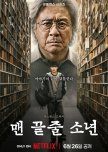
The chess game of parasitic obsession and fragile egos.
'Notes from the Last Row' is a masterclass in psychological manipulation that left me completely torn between admiration and disappointment.Heo Mun Oh, a failed, greedy, wrecked writer and Korean literature professor, meets Lee Gang, a talented writer from the last row of his class. Upon the brilliance and intelligence of story narration of the younger, Mun Oh offers one-on-one classes to Lee Kang for improving the younger's knowledge and his own curiosity (to win something in life).
As the story unfolded, it was not just about teaching classes on literature to improve Lee Kang's writing skills but utilizing them to unveil someone's life in literal words, in several prescriptions, and in descriptions, without consent.
I see Heo Mun Oh as an unreliable narrator-character at the start when he bulldozed with Lee Kang's plan of cheating, helping him slip answers to examination questions, just to let Lee Kang continue his assignments, scratching away his own commitment to responsibilities.
Mun Oh's relation with people around him seemed distant and often appeared to be coated.
His bond with his wife, unstable and unlovely, lasted to the end. With his co-workers, he's off on various bases.
I couldn't quite understand how Mun Oh's wife, Cho Hyeon Suk, a psychologist herself, didn't perturb over her husband's distance despite the writer's block, given her own sufferings over many miscarriages and a long period of an unshaken, unconcerned husband.
(Although her emotional exhaustion, keeping up with Mun Oh, is an acceptable coping mechanism.)
I admit that the second episode had me hooked.
Kim Su Hun, a popular writer, had a history of friendship and dreadful moments with Mun Oh, who held the main lead in a long slump of captivity for years.
Nonetheless, it didn't seem like a tragic story to me. Instead, sadly, it looks like Mun Oh destroyed his own career for a friend's derogatory remarks. (I believe there could be more, many more events in his life that might have sparked his ink once again, but only if he allowed himself to sway that way, without lingering, crippling in sulking past.)
The later episodes quite annoyed me and almost tested my patience.
Mun Oh's obsession, thrill, vengeance, and deliberate invasion of Kim Su Hun's life show his desperation and dark yearning to achieve the youthful career he could have had, but the cerebral path he ventured on after the inferior remarks he received is on him. His constant gaslighting and erratic decisions to Lee Kang hindered his progress. Shaped his broken future.
Lee Kang's a menace; his actions, his steady moves, took a toll on the rest of the show. It was not discreet, as Lee Kang's intentions are somehow on the plate, right in front of the nose; one could try to expect his reasons on the whole story of Kim Su Hun, although it was displeasing and troubling at times for the exaggeration of a 20-year-old to keep on imposing himself without a warrant of decent regard, but it was a splendid surprise to realize everything was just his play, a backspace to the real characters we have known—Kim Su Hun, An Eun Ju, Kim Se Yun, and Seon Min Hui.
I had absolutely immersed myself when An Eun Ju got highlighted. It was thrilling to see the new perspective of each character and their little story in the whole play.
Mun Oh at one point blurred his own ethics, responsibilities, and humanity with his perpetual greed, envy, and jealousy.
It wasn't shocking when he asked Lee Kang to write the end of the story, even when they were still unaware of it.
Given how unstable he is from the start with Lee Kang at certain things, denying at the initial stage only to accept and give in to the venturing broken pride of his.
As if, and really as Lee Kang was waiting for the exact call, he used the moments to his own satisfaction, writing a special story and making Mun Oh taste the bittersweet of reality.
However, it didn't meet my expectations when I became aware that Lee Kang's whole doing was just for the mistreatment of Mun Ho 12 years ago. I would have loved to see much more depth and growing insight into the psychological behavior of adult Lee Kang.
I liked Choi Hyun Wook's dynamics with everyone in the drama; regardless of a huge age gap, his unwavering chemistry bonded the strength and quality.
Still, in disappointment with how Mun Oh wasted his years and career, along with his wife's, the ending with his wife satisfied me, but the to-be-continued felt unnecessary. But as of now, as pleasing as it is to see Hyun Wook in a thriller concept and not all stories need pure suspense, I still welcome it.
This story exposes the dark side of creative writing and mentorship.
Not every teacher-student bond is healthy; it can be toxic. It opens the truth of reality, how unresolved trauma and fragile egos play a huge role in lives.
As Mun Oh thinks he is using Lee Gang to live out his successful writing career, he never had, while Lee Kang acts as the ultimate manipulator, feeding Mun Oh's greed and desperation.
The psychological depth of this story is that when you let envy, jealousy, and past insults write your future, you end up destroying not only your own life but also the lives of everyone who loves you.
Kudos to the cast and the team for this amazing show!
Was this review helpful to you?

This review may contain spoilers
This is pretty, like the blue sunset, perhaps.
Ryu is the kind of man who helps, hugs, and shelters those in need, without hesitation or fear. He greets the world with a sunny smile, while Jo Han, an orphan and a relentless boxer, struggles to care for his sister, Sua, throughout his childhood. This responsibility has drained him of hope and strength, making it difficult for him to seek warmth from others and ultimately leading him to give up on himself.Their meeting felt like alchemy, with Ryu touching Jo Han's heart and cherishing him to protect his soul. Ryu, who was ready to end his life, was saved and brought back to spirits by Jo Han.
As the frames unfolded, it was like watching the slow, factual, fragile life of people. Two individuals who are neither rich nor excessively in a rush to seek success, but to pursue the happiness of life.
The genuineness in the series I highly remark on is how Jo Han's yearning hobby of manga was actively diminished. Additionally, it portrays the lives within daycare centers—showcasing the experiences of older individuals and young babies who require extensive help, time, and patience. It also highlights the employees who work there and the immense pressure that daycare centers face. It is raw in the representation of the stress, the focus, the care, and the burden—how it lingers at low times, grabbing one's strength, playing, and almost quivering one's motive in life.
I was so sappy seeing the love of their friendship. Ryu's quirkiness shines through in his tendency to spread his arms wide and stand up for those he cares about, including Jo Han and Sumiko. Sumiko's a lovely friend. Though at times I felt like she could have moved out after her baby grew to a certain age, and with her salary, I was stunned to see Ryu planning his marriage to Sumiko just for her baby. The amount of love he showers on the baby moved me. He and Jo Han are the golden godfathers.
I monitored how they shifted Arata's character from Ryu's life, vividly, to Jo Han's. What happened to Arata was sad, and I am grateful that he has become well. Maybe it could have been beneficial to provide a little time where we could have had Ryu open up about what he felt after the conversation with Arata before moving from the hospital.
Jo Han's there like a constant pillar; he and Ryu have exchanged messages and calls and have been together before and after Jo Han's military service.
That's when it has clicked: their relationship isn't like any other bonds that were made on a random meeting, which gradually fade. It's a bond that doesn't need a name or label; it is strong, healthy, and stays.
The little details in the series, Jo Han's drawings and their accents, are carefully shown; they have both the Korean and Japanese styles.
I was mesmerized by the ending. I don't think it was strongly sad, as I felt it was more real, pleasant, and peaceful. Ryu's acknowledgment of Jo Han's health condition and those few minutes of backdrop to Jo Han's life established pride in me that Jo Han had come all the way. He has struggled and kept on earning, not giving up.
And the pause when he talks about how people who give up and drift through life don't feel pain anymore. His thinking of Ryu as a strong person, who let others into his life, and how his own self is scared of getting hurt, and he left after that one single night drunk argument because he doesn't want Ryu's happiness to be taking care of him. And alas, the way he wished for Ryu to be his last sight in the world.
The little vulnerable confession, "Why are you here? If you're here…it makes me...want to live longer."
And Ryu's vision of loneliness: "You said to me, 'You have a lonely look on your face again.' Loneliness is an incredible invention because feeling lonely means there's someone you truly care about. Someone you really want to see. That's truly amazing."
INCREDIBLE. INCREDIBLE LINES.
I am happy that they confessed and have enjoyed this so much. <55
Was this review helpful to you?
This review may contain spoilers
Two girls who choose love over hate.
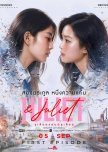
"Won't you let me try living my own life for once?"This has to be one of the very good GL series out there, driven by a deeply compelling narrative. The series masterfully explores the tension between personal desire and duty to one's family heritage, asking whether love can survive when loyalty demands hatred. The intense rivalry between the Monchaitrakul and Khongpurim families delivers a phenomenal forbidden romance between Blue and Tokyo that keeps you gripped the entire time. It is thrilling and engaging to uncover the hidden secrets and the root of their deadly cycle of revenge.
MingMing is an incredibly talented crier; her performance as Tokyo stands out the most. Meanwhile, Nepjune as Blue feels like a refreshing spring in the middle of a summer. Their enemies-to-lovers plot is beautifully executed. While a longer 'chasing' phase before their confession would have been ideal—as someone who loves to see characters chase each other before finally falling in love—the relatively fast pace of their blooming love does not diminish the overall quality of the show. It is also poignant to see Tokyo's early struggle to find her own dream and purpose.
"With a strong purpose in your heart, you can find out who you want to be wherever you are."
The series brings immense emotion through its empowering soundtrack! I love how the music plays a key role along with the modern, high-stakes visual aesthetic. It really increases the intensity of the emotional and physical dangers faced by the characters. And it is a gorgeous, exhilarating reimagining of Shakespeare’s Romeo and Juliet in a modern provincial Thai setting.
"We don't get to choose who we fall in love with. But we do get to choose what we're willing to give up for what we want to hold on to."
It wasn't exactly the consequences of the revenge and bad blood that invested me the most, but rather how it captured the struggle of young heirs to define their own identities against the weight of parental expectations and societal norms. Tokyo felt completely imprisoned, initially unable to even aim to live abroad. Similarly, Yi would have never known what he truly wanted because his father mapped out his entire life. I liked Yi a lot as a brother; despite his violent, forged upbringing, he tried to make a way for his sister to create her own path. And don't remind me how bad I felt for Big, the dismissed middle child. Even at the end, after Yi's death and Tokyo's departure, his father never once looked at him, acknowledged his aspirations, or saw him for who he was.
For some reason, I didn't like Blue's mother much. She just gave me a bad feeling even if she didn't actively do anything wrong. Blue's father, however, was the ultimate frustration, vexing me with his expressionless, 'know-it-all' attitude and unearned main-character ego.
And I was almost taken aback by Tokyo when she actually pulled the trigger and shot Blue—only to realize it was all a fake act! It almost got me there. ;)
Overall, the true heart of the story lies in how these two characters marvel at their escape from inherited hatred. The series beautifully captures what freedom smells like—the cool breeze cradling their hair as the waves crash against the wind by the sea, their eyes full of hope for a dream that is no longer dictated by their parents' malice.
I just wish this amazing series had a few more episodes. It has a great script and very well-performing actors!
P.S. I absolutely loved the cameo of DaouOffroad! ><
Was this review helpful to you?

This review may contain spoilers
It's good! Had me hooked!
"I'm lucky, aren't I? I have a great sister. And I have a great partner." — Phat"Even if I had a hundred lives, I'd have to spend all those lives saving you." — Phat
can't stop giggling as I write this, and honestly can’t express how good this series is! Dew and Tee’s chemistry literally had me screaming and smacking the air. The plot is an absolute thrill ride. I wasn't expecting much going into it, but wow—the acting, the romance, and the suspense were all incredibly well-built.
Have to admit, I kept guessing that Kaye was Nekros. But the final reveal was such a shock! The mastermind behind all those vigilante crimes turned out to be you-know-who, and it made perfect sense. I absolutely loved seeing Off; omg, he is so handsome and played his role brilliantly. His characters are always fascinating. On the other hand, why did they have to kill Nop? *crying His character was so enjoyable, but dang. Meanwhile, Praew made me angry and sigh so many times, but thank blimey she was smart at the end with how she handled it.
Maybe it’s because I binge-watched it, but I was completely hooked the entire time. Even though the pacing occasionally felt a little obvious or lacking something, the twists and the unreal chemistry between Dew and Tee kept me glued to the screen. *screaming happily
"In this world, justice has a cost." — Kaye
"Lies become truths if the people who know the truth choose to stay silent." — Thun
I think the series did a fantastic job of uncovering real-world societal problems, like how corruption and silence distort justice. Plus, Kaye's manga sketches were so amazing; I totally loved them.
P.S. Thinking about how much Dew must have enjoyed himself the whole time! *cough cough
Was this review helpful to you?
This review may contain spoilers
A series about teenagers, fluff, and platonic bonds in the ripening days of youth.
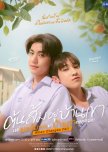
It is a lighthearted show that is going to stay with me for a long time. It has its oranges—those bright, small, yet important concepts that I have energetically enjoyed.Ko Neung is such a playful leader. At first, it was easy to judge him as a bully—the one in the team who controls everything and has a say in everything. However, as the story proceeds, you see that he is just a young teen who thinks he is the leader and can say anything. He has a low-key leader mindset, yet in his actions, he is neither superiorly smart nor athletic. Unlike his friends—Augar, who is exceptionally active on the playground; Achi, who is a sweetheart and loves, or rather is disciplined, to study; and Ko Song, who is smart and has a goal to achieve—Ko Neung simply stands back and enjoys the present. You see that he does not particularly care for anything except oranges and his bored, chill, carefree childhood. That says a lot about him.
August is the same, but as they grow, his interest in comics grows with him, inspiring him to pursue the arts, which was endearing.
Should I call this a summer series? It has such a vast aesthetic of warm breezes and the basking energy of the sun. Though people said it is similar to Bad Buddy (likely due to the neighbors, enemies-to-friends trope, and the phone concept), I just do not see it. Each has its own distinct disparities, and calling them similar left me with an exclamation.
The era of no phones and a sprouting youth feels so soft and nostalgic. I do not think I will get enough of this series anytime soon. All of the relationships and friendships were woven in a very platonic way. The fact that they have all been friends for ages—growing up fighting, bickering, and supporting one another before becoming lovers—is so adorable.
I loved KenPaul from the Boys in Love series, and I was so happy they are getting so much appreciation. I was, and still am, a little skeptical about August and Tle; nonetheless, their young age covered it for me.
There is a very fine transition in Ko Neung’s character development. Even after he and Ko Song confessed and started dating, his character did not entirely shift to being mature and smart. He is still the same Ko Neung we met in the first episode—goofy, playful, and thinking he is the leader. Even during arguments (like when he and Ko Song fight after Ko Song gets his university seat), he does not show instant progression; he is still that same childish teenager. It was so reassuring how the script kept his character consistent and relatable. It portrayed the beauty of how young minds dislike the change they experience in their coming-of-age journey. It showed how teenagers crave a mindless, soft summer.
The fear and anxiety of choosing what you want to become and who you are becoming is palpable. It captures the heaviness of realizing that this day won't come tomorrow, and that your friends have their own lives. They cannot always choose you or choose to stay; sometimes they have to go. I think this series brought back that familiarity—the late afternoons spent worrying about nothing but what to play the next day, and the soft, blue evenings spent walking mindlessly through pleasant sights. These are days that can only be remembered, but never visited again.
I had a slight fear with Ko Neung as the exams neared and he had to choose a field. I wanted to pause the story and let it end right there. With him, I wanted no change—just summer and the childhood joy of savoring oranges. However, life is life and it has its own legs.
Watching Ko Neung get stuck choosing a field, feeling completely disinterested in whatever majors they presented, hit me in the gut. There is one scene where he explains how all fields feel boring, and he is asked whether the fields are boring or if he just has no interest in them. That moment highlighted the core concept of the high school theme for me. I have never felt more relatable to a character than Ko Neung—capturing that exact feeling of being unable to choose and unable to belong anywhere. I am grateful for such key themes to be represented in such a blissful way—one that can be revisited and felt again and again.
This series made me fall in love with the themes of childhood friendships, the importance of holding onto those bonds, and growing alongside them. Every ship is adorable and a favourite. I am totally in love with this series.
"The most beautiful thing about teenage love is finding someone who makes you feel lighter, happier, and a little more like yourself.”
Was this review helpful to you?
This review may contain spoilers
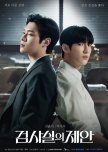
This had me actively binge-watching! Thank God I watched it after it aired; otherwise, my impatient heart could never. ;55I totally, totally loved the 'son of the victim' and 'son of the killer' trope! And the chemistry?? DAYUMN! Their chemistry is peak and unwavering.
Is it just me who adores Tae-Seon's eyes in particular? I feel like they have their own magnetic charm. ><
Although Tae-Seon was a prick at the beginning, and despite the rushed pacing and hasty portrayal of the case scenes, I was still able to enjoy this show because it had such amazing actors. They made the show thoroughly engaging, and their visuals are very captivating.
I must note how the show highlighted the way our loved ones' actions impact our lives and further shape our future. It offered brilliant insights into such a delicate theme.
Having Tae-Seon eventually realize—and let Lee Chae-Ha know—that his father's actions don't define him and that he deserves love and happiness was so reassuring to watch.
It's been a while since I vibed with a KBL like this!
Was this review helpful to you?

This review may contain spoilers
I believe this one could have shown more openly about the conflicts Tanrak felt internally. I couldn't help but feel the show somehow diminished the heavy theme of oppression and the reality of depicting the real disparities coming from the religious characters, as it did in the pilot.It got off to a great start, with the characters and storytelling glittering. I thought Barth's character was expertly portrayed. Tanrak had an incredibly loving relationship with both Father and Kongkit.
But the way they carried their characters perplexed me. Kongkit was the friend who Tanrak ignored, pushed away, and failed to express their distance from one another. There's constant apprehension in the episodes when Tanrak and Barth face Kongkit; neither of them shared a complete understanding nor had a factual comprehension. Given that Tanrak and Kongkit had been good friends for many years, I kind of didn't enjoy how Tanrak drifted away from the latter.
The biggest issue that left me feeling hollow at the series' conclusion was that neither the characters nor the plot showed any consequences for the battles Tanrak frequently appeared to be fighting in public.
Through Tanrak, we often had to come to believe we saw the shame and fear he goes through, but it was never implied. He was never pushed to make a choice, publicly chastised, or disgraced by anyone.
Initially, the priests who said that same-sex love is sinful simply understood and accepted it.
And ironically, Kongkit—who was previously thought to be a figure who may sabotage Tanrak and Barth's relationship—welcomed and encouraged them.
It's not like I disliked it; I suppose there could be some frames where we could have seen the apprehension that Tanrak felt throughout, actively, profoundly, from outside as well, from the characters, and seen Kongkit's side of the story a little more of what he felt.
Perhaps Tanrak realised what he had done and realised that his dread of not being able to see his parents in heaven does not change who he is. Then it might have made me feel something about Tanrak's constant fright, and the whole story what it ought to be.
Despite all of this, I still found the show enjoyable because of what it attempted to depict. I was humbled by Fourth's and Gemini's performances; the entire script's importance was breathtakingly lovely.
Some quotes I liked:
“If God teaches us to love, but we’re not allowed to love each other, then what’s the point of having God in this world?”
“No matter where I am, as long as you’re next to me, everything’s fine.”
“Humans can live without faith. Humans can live without hope, but humans cannot live without love.”
Was this review helpful to you?
This review may contain spoilers
A beautiful picture on time travel
I've really enjoyed this.It started not so heavy; it was balanced, aesthetically pleasing, and more active.
JJ's effortless acting made me want to binge-watch more episodes. I believe this time-travel Thai BL has satisfied me enough; throughout the finale, it has resolved and closed every loop and unveiled many mysteries. I don't see any plot holes, nor find the plot boring even in the slightest.
It took Nakun two full episodes to settle into the Ayutthaya Kingdom, and that was the most realistic. While some may find it over the top, I daresay it accurately depicts a 21-year-old travelling back in time from 2023(?) to 400 years ago.
Phop was the loveliest character whom I sheerly enjoyed from the very start to the end. Net has done a fantastic job capturing Phop's kindness, warmth, and nurturing nature, embodying such gentleness in the accent and action.
This lovely series has been made lively and enjoyable by the supporting characters Chuai, Sai, and Khong. I haven't seen a film with such a compelling storyline and outstanding actors in a very long time.
I was taken aback by Kim and Latte. They surprised me with their divine acting. It was my first time watching them on screen, and the way they depicted their strong, quivering roles enthralled me.
Kim's so pretty; I had thought I'd miss his beauty by the periodical manly attire; however, his role did stand out and speak.
(Is it just me who finds both Chan and Hyunjin in Latte? ><)
Even though I enjoy the show, I think JJ could do a better job acting in some of the more poignant (sad) and romantic scenes. Although I find some of his frames unsettling, he did a good job in his roles. I am looking forward to his upcoming projects. He made this series so much fun.
The marriage felt a little lacklustre, but it ended well, and I'm thrilled that my Phop has his beloved at last, hehe.
Was this review helpful to you?
This review may contain spoilers
“If meeting me hadn’t brought you so much misery, then could we see each other again?” — Lee Hyeon JaeI enjoyed this much more than I expected to, given the duration of the episodes. I loved how it felt short and yet, at the same time, whole—transitioning through its layers with each episode. The actors were amazing. Ha Jung Hoon did exceptionally well portraying that raw deprivation and emotional vulnerability. The way he nailed every expression of showering warmth while craving and yearning for the teacher's affection! It staggered me to see how his character, Lee Hyun-jae, who is quiet, isolated, and distrustful, cloaks himself as a brash troublemaker. He is someone who has entirely stopped expecting anyone to see him as a person, which brought so much curiosity to the story. I enjoyed the first few episodes immensely. Later, however, I must admit it didn't pique my interest as much, whether it was the pace or the script.
And how does one fall in love again? How does love bloom? Do just a few words of concern and comfort really move a soul? What does it take, and how much, for one to fall completely in love? Seeing Lee Hyun-jae made me ponder whether his 'love' for the teacher was true love or simply an attraction—an attachment he tried to weave because no one had ever shown concern for him before. How did his deserted soul instantly build an obsession and complete attachment to a teacher, driving him to go to extreme heights, even if it meant falling or being hurt by the public? And how does the teacher reciprocate that love? How does his heart waver for the younger student? Is it the boy's constant presence and unwithering, impulsive desire for him? The beginning of their love for one another was lost in blurred lights.
But I would say the series tried and succeeded in capturing the tone of dark, emotional, and complex relations, as the narrative focuses on emotional trauma, forbidden attraction, and the power imbalance of a teacher-student relationship. It carried the psychological toll and societal taboos of their bond with a solid intensity that gripped me the whole time.
Although I wasn't entirely into the second couple at first, their story became an instant highlight for me. I loved how the themes of pride and shame were deeply woven into Kim Jeong Ha and how they molded his embarrassment and the slight agony of confronting Park Seong Won (who was so gorgeous). Honestly, I was wholly taken aback by their confessions! I needed more of their scenes.
And I liked how it concluded with an open ending (I shall consider it that way), though I was a bit puzzled at first. This way, it ultimately emphasizes and weaves the story's themes more strongly, highlighting the difficulties of separating affection from responsibility and the consequences of their actions. Although there were a lot of unresolved things and it felt like the story got nowhere, it remained a truly interesting KBL.
Was this review helpful to you?
This review may contain spoilers
This is a beautiful period drama that unapologetically paints the struggles, shortcomings, and bearings of people divided and treated according to their social ranks. It is a gorgeous series with charming acting and deeply engrossed characters.When I first started watching, I expected another republic-era period drama focusing solely on the oppression of homosexual love. I was wrong. This series fights to prove the equality and dignity that every citizen deserves. I was surprised by how strong the first episode was; thankfully, it did not focus entirely on the two main characters hiding their love from each other. Instead, it continued with them opening up despite being afraid. The pace of the series was thoroughly maintained, so it never felt dragged out.
The actors delivered their characters perfectly. Ongsa was amazing—he is an incredible actor. Oh, his eyes! His eyes are everything; I could completely lose myself in them. He is incredibly expressive and versatile in portraying emotions that seem simple on the surface but hit the soul very hard. Tell me an episode where he didn't cry! Thinnakon got no rest, I am afraid; the poor soul was shattered more than anyone else in the series. Even after completing the show, I find myself needing more of his happy moments.
Inn did a good job too. At first, I wasn't sure how his character would stand out alongside what seemed like Prince Thinnakon's internal monologue, but Phob proved to be a very strong, challenging young man. However, one thing I disliked was when Phob attempted to touch Thinnakon while he was asleep. The kiss felt very disturbing, even after finding out that Thinnakon was actually awake. That scene was a minor flaw in this otherwise big, delightful series.
Is it just me, or does Chai (Prince Vasin, Thinnakon's father) look remarkably similar to Pond? It is as if they are actual father and son; the familiarity in their facial features deeply invested me. Also, I loved, loved seeing Pond! Pond always surprises me with his versatile script choices. He is one of those rare actors who doesn't fixate on a single acting partner, and he is doing incredibly well. Pond as Chat was everything I could have ever wanted. He was ridiculous, idiotic, messy, and cute. Yes, cute! Even with all his imbecilic actions, Pond sprinkled an innate cuteness into the character.
At one point, I was on edge feeling so bad for Chat because of how he was treated by his father. None of his misdeeds could be justified, but somewhere between his egocentric individuality and his determination to prove himself, there was a real, raw emotion craving affection and love for who he is—even if he is perceived as dumb, stupid, or untalented. Though he was indeed a fool, he made me laugh so much with how immature and unaware he was regarding his own brother.
The dynamic between a prince and a servant felt like a traditional start that I thought might lose my interest later. However, the plot's turning point—where Phob leaves the palace to study in France and returns to Siam as a military captain—is one of the finest character developments I have ever been amazed to see.
The conflicts between a hierarchical monarchy and a constitutional government progressed gradually. Admittedly, the series felt like a late-90s soap opera at times, especially during the dramatic outbursts between Thinnakon and his father. I hated Nual (Phob's mother) more than anyone. She was not only trying to show gratitude to the Varakulvathin family by denying her own son's desires and pleas, but she was also hesitant to even understand the core issues just because she felt the family had treated them well growing up. While it is admirable to be loyal to the hand that feeds you, choosing between right and wrong should never be compromised.
"Everyone deserves equal rights, dignity, and the right to love." — Phob
I really liked how courageous and open Phob was with his thoughts on needing societal change for everyone, regardless of boundaries—including the Varakulvathin family and his own mother. He saw a better world and sought to fight for it, knowing it meant a chance for him and Thinnakon to no longer hide. They could love openly, under no veil, and with no guilt or shame.
"What I saw was never just about you and me. It was about countless people who were never given the chance to choose their own lives. I wanted to see a world where no one would have to suffer simply because they were born beneath someone else. And I still believe that when our country truly changes, when everyone is free to choose their own path, our love will no longer have to remain a secret." — Phob
But, I couldn't help but feel sad for Phob because, at one point, he had no one—neither Thinnakon nor his own mother. I am thankful that Thinnakon at least had his grandmother, who understood him. It feels crazy to compare one suffering with another, but I was helplessly heartbroken to see Thinnakon being betrayed just when he was ready to leave his family and everything behind for Phob. Yet, I was deeply impressed that he understood Phob's reasons and remained open-minded, unlike his father and brother who still sought revenge.
I am highly flattered by Prim and Plengkwan. They are so pretty! Oh my god, they are beautiful and brilliant. Prim as Siri had me down on my knees. Siri is so generous—a sweet, young lady. Ugh, how I wished to see her end up with Jan! They are absolutely perfect for each other. I enjoyed seeing Jan; she was an honest, daring, and fierce fighter. She was a good friend to Phob, and I was so grateful for her. One of their shared scene that felt incredible to see was when Phob was feeling insecure that the changes they brought were not improving conditions. It offered a quick insight into how constitutional governments can sometimes become just another consuming force, much like self-serving monarchies.
"Are we turning into the very thing we fought against?" — Phob
The fear and helplessness Phob portrayed were very genuine, reflecting the harsh reality that sometimes a well-intended change can bring its own negative consequences. It shows how heavily our decisions can affect society, for better or worse.
Phob: "Sometimes, I can't help but wonder was everything I lost really worth it?"
Tin: "What matters now is what we do to make things better. We can't always have things go our way. Maybe what you've done hasn't made a difference on a larger scale yet. But at the very least it's already beginning to make a difference in someone's life."
I can't express how much I adored Tin for remaining a wise, empathetic soul, capable of seeing the goodness even amidst the harsh shifts in his life. This might be yet another one of his most admirable features. His way of guiding and supporting Phob despite his own diminished well-being makes their characters truly outstanding.
"Maybe what we do can't change the whole world overnight. But at least it can change someone's life and give them hope." — Phob
Tin's grandma, Patthamapriya, was one of the loveliest characters, and I wished I could have seen more of her. She was such a sweet woman whom I grew incredibly fond of with each passing episode. I am so glad she helped Tin see the positive side during bad times. She taught us how certain changes can still be embraced, and that it is through change that we move forward.
"What matters most is learning to accept and understand the things that change, to live with those changes with grace, and to make the best of what we have." — Patthamapriya
And thank you, thank you, Grandma, for bringing some sense to Nual! I wonder if she hadn't talked to Nual, would she ever have accepted Phob and his love for Tin? *bawling my eyes out For this, and for every fruitful thing, I will always adore Tin's grandma.
"Life is short. Far too short for us to waste it deciding who should love whom, or trying to tell people who they should or shouldn't be with." — Patthamapriya
"Don't let your fear become a cage for those two." — Patthamapriya
Ultimately, though I disliked how overly dramatic the series got at times and how foolish Chat could be, I loved it. I loved how it embraced the concepts of equality, dignity, respect regarding social status, and love. I am so happy that Prince Vasin finally realised how poorly he treated Chat; they got a deserved closure that left me content. As sad as I was to see Phob die and even have a funeral, I was incredibly excited to see him alive again. The happy ending both Phob and Tin deserved was beautifully delivered. It is a very good series indeed.
Was this review helpful to you?

This review may contain spoilers
This is SO GOOD!Although it sounds berserk, I was relieved the series didn't shift to "But she's a robot!" midway through. They stuck with the robot concept and faithfully represented how a thing like Ai—a robot—once brought to life, has a life of its own. It did take me back to Frankenstein—realizing how we humans build things for our own comfort and needs, and then forget their value and importance so easily.
To see Ai as her own person—an individual who deserves all the respect, affection, and care just like humans do—through Gen's eyes was deeply heartwarming. Irene is such a good character, too. Even though her past meeting with Gen felt a little illogical, it was still highly enjoyable. Chanya was amazing in both her roles; I was awestruck by her beauty and acting.
The ending was bittersweet. I am glad they went all the way and showcased Gen's old age. Ai shutting down her system because Gen had died, and that means she had no purpose or reason anymore—that was such a beautiful way to show that they were both completely all in with their love.
Easily one of my favourite GLs of this year, I must say! ><
Was this review helpful to you?

This review may contain spoilers
SO MUCH FUN!
ABSOLUTELY LOVED IT!!This season had me cackling and jumping—dare I say, more than season 1. EmiBonnie slayed as always. I am so smitten with the WilliamEst roles that it made me a little sad seeing Rome take over Arseni's company.
And THE CAMEOS??? OH MY GOD!!
TayNew hilariously matched the freak, but JimmySea?? NO WAY!!! Jimmy's disciplined look had me rolling. JuniorMark were the only ones who gave me a familiar vibe similar to Peach and Thee. Mark is nearly perfect for Phuwin's Peach role, in a font. And I think Junior could actually try pulling off Thee's role, lol. >< It's so fun to imagine!
Ultimately, I ENJOYED THIS SO MUCH!!
Was this review helpful to you?


