
 News



This review may contain spoilers
Enjoyed this, despite how often Lal's the only one who's apologising and chasing; in fact, I adored how upright she is in the pursuit and loved Wine for who she is that she never gave up on her for whatsoever reasons.Tangkwa has to be the most beautiful look of Kapook! Manifesting for her own series! <55
Was this review helpful to you?
A little messy but loved however!
The chemistry between the male leads inspired me to finish the show. However, there were many things and events that felt disorganized and rushed. Given the length, the romance unfolded beautifully, but I believe the story could have weaved the thriller with much greater precision. The actors did an incredible job. This is a one-time watch for me.Was this review helpful to you?
This review may contain spoilers
“A hungry wolf loves the sheep.”
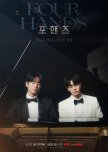
I am back here once again, for I can never say goodbye to this wonderful K-drama I was blessed to watch. (Yes, I don't know how dramatic I could be, but from here on, that's all I suppose I would be. So, hold on!)) Looking back at it, I don't remember falling in love with a work of fiction so endearingly and so hard that one wouldn't know how to recover from it. And boy, I wouldn't even believe one could feel this much. Now, that is the beauty of Four Hands, Two Sonatas.It looks you in the eyes and takes you into its world—a soft, warm hand that tells you it will show you a place full of golden rays basking on the morning roads and the beams of classical music that sing lullabies to sleep and cradle your soul. The humming rain in the late evenings leaves one drenched and weary, steeping you in a misery of longing, rivalry, and redemption. Nights that couldn't get any darker, tinged with a well-seeded trauma, show you an unpleasant, needed reality. But a beautiful friendship, a bond nonetheless of labels, comes to your rescue; it tugs at your shoulder, and suddenly you can only remember the softer moments that move time and the lighter, good things that could happen in the whole world. A voice that sings the way to the stars and gives you hope. It's a world that teaches you true connection and the art of humanity and forgiveness.
Each episode is captured with delicate elegance and pure exquisiteness. Every frame is a canvas of artistry and painted with memorable allure. Every character has their own charisma and grace. The story is written with grounding sophistication that treats every theme and element with dignity and respect. All the actors were phenomenal and performed admirably. One couldn't deny but love their chemistry and passionate peak platonic intimacy.
Coming to the story, it centers on two beautiful and handsome (ahem) contrasting piano prodigies—Kang Pi O, a wealthy, rigid, perfectionist student crumpling under the demands of his grandfather and the blockheaded, restless manipulation of his mother. And Choi Jeong Yo, an impoverished, instinctive, and spontaneous pianist suffering from stage fright due to childhood trauma. Also, there's Hong Jae In, a female viola major and friend of Pi O, who becomes a major presence in their orbit and the reason for these two young men to come together and become friends. When their teacher pairs them for a four-hands piano duet, their intense rivalry slowly morphs into a complex, high-stakes emotional bond.
As I recall the first two episodes, honestly (I don't know how I survived them), I was stunned and absolutely humbled by how the whole story started with a parallel transition. An intense dark action scene welcomes us, where Jeong Yo is being abducted, followed by a subtle shift in the frame showcasing a strong, untamed glow as Pi O dances his bloody fingers on the smooth keys of the piano, delivering a fierce and feral orchestral performance. Like a tale, the narrative slowly unveils, revealing erratic, totally unpredictable chapters that come with innumerable emotions—the anxiety, the burden, and the heavy compulsion of a wild past, along with a desperation for attention and approval.
The essence of this drama I totally enjoyed seeing is the dynamics FHTS portrayed with absolute distinction across several phases from high school into adulthood. Pi O is defined by rigid, detached technical perfectionism, grown up with wealth and toxic pressure. While Jeong Yo plays with messy, instinctive emotions and is abandoned, born from poverty. It poetically conveys how some people are rich in material wealth but not happiness; on the contrary, even in poverty, there are souls that live with sheer joy. That raw symphony adds a realistic touch and brings more attractiveness to the whole show.
As they are forced to play 'Four Hands', they become each other’s missing half—Pi O learns to feel the music, and Jeong Yo finds structure. I love how, though both characters are emotionally suppressed by their environments, the music operates and stands between them as a true connection, giving them a chance to see who they are beneath their names. It allows them to glance at their hearts, which have only one goal, providing a choice, a freedom to build a friendship that carries a magnetic tension.
When Pi O first meets Jeong Yo through his melody, he is initially amazed; there's a spark, a rhythm in his eyes that dances to the sweet tune Jeong Yo plays. But there's a quick shift that awakens his inferiority, which swells in his chest—the shame and rapid thumping of fear. It is a reflection of repressed emotion and a rage at experiencing a feeling that belittles him, making him compare his own music, a shiver that battles a throbbing doubt of not being good.
The drama layers the competitive school environment with realistic portrayals of bullying and economic disparity. Oh, I enjoyed seeing Lee Sang Jun as a bully; he was a nerd in Hessu in Class 2; here he erupted a good amount of fire. Honestly, I was thrilled to see where it all would go, then met with how it helped us see more reactions of the main characters—Pi O's subtle way of helping Jeong Yo and acting cool as if he didn't do it to save the latter. For the first time, we actually saw Pi O reacting to the strings he cuffed himself with. And the way he tried to push him away with nonchalance was super cute.
The first ever Four Hands they play together is such a tease to the audience. We see Pi O actually helping Jeong Yo come out of his stage fright, and it was with pure intention, even if it was also because he had to win to prove himself to his grandfather. The most favourable and charming thing we see Pi O doing is 'Candle light'. He lights up the whole room with candles hovering light over the dark walls, highlighting the big black piano placed centre stage. Pi O holds Jeong Yo's arm and walks him slowly to the stage, understandingly treating Jeong Yo's fright with ease and care. Now, now, if it's not a romantic wedding scene, tell me what is it? Like, he doesn't have to go all the way and light up a whole freaking room with CANDLES. A simple lightbulb would suffice, but of course, no. We need the effect to impress Jeong Yo to entirely shoo away his demons and the past trauma, and it's the only way, aye.
Though they are only there for a while, those quiet moments when the boys begin to venture out and find genuine solace in each other, using music to communicate things they cannot say out loud, they were peaceful.
But the fragile peace of those quiet, soulful moments is abruptly shattered when the shadow of the grandfather looms back over them. Despite Pi O delivering an absolutely flawless performance, his grandfather doesn't even grant him a glance—instead, he looks right past his own grandson to seek out Jeong Yo’s raw, unrefined genius. This rejection hits Pi O like physical violence. In a single second, his deeply rooted trauma and the agonizing fear of being 'never enough' completely take over. Suffocating under his own strings and burning with a defensive, heartbroken jealousy, Pi O immediately retreats into his icy shell. Unable to process his own feelings of failure, he chooses to cruelly weaponise his words and push Jeong Yo away.
"I only want to do it because it's with you, not with anyone else." — Jeong Yo
Jeong YO: "One minute you're nice, the next you're mad. It's confusing as shit. Hey, instead of pissing me off, if you're mad at me, just say it straight, is that clear??"
Pi O: "You should've just minded your own damn business. Why are you being so annoying and clingy? I told you, didn't I? I didn't do that duet cause I wanted to. I did it cause I wanted Mister Do to coach me. I got what I wanted. I don't want to waste anymore energy on you. That's why I want to stop, so why do you have so many questions?"
Jeong Yo: "Is that how you're going to talk to me? Hey, okay, cool. It's all my fault. For being clueless and clingy, I guess. Yeah, I had no idea. And here I thought we were actually friends."
It was so devastating how both of their beliefs were always destroyed. Jeong Yo thought he finally made a new friend, and Pi O was almost, almost happy and felt his performance was good enough at least this time. He believed his grandfather would look at him at least now, but, oh god! Seeing their first argument played out with such intense tension—especially Jeong Yo getting angry and vexed, punching the bin as he walks away—always stays eloquent. And not to forget how they didn't communicate, stayed angry, and even had a bloody fight during sports period as if they were after the same girl, and then we are given a perfect reconciliation! Like, omg, Pi O saves Jeong Yo from the loan sharks and aids him by plastering the bandage on Jeong Yo's forehead himself. I mean, Jeong Yo has hands unharmed, right? But of course, only Pi O shall do that, tending to him with delicacy and diligence. Also, I liked how Pi O apologised to Jeong Yo. While some think he just said, "I'm sorry. It was childish," I feel like it was a realistic accountability given Pi O's self-repressed nature and introverted personality. He forwardly apologised, and sometimes that just seems enough. And that was beautifully reflected by how Jeong Yo immediately understood and gushed with happiness. Aww, they're just so cute. ><
"I'm gonna teach you how to have fun while playing the piano." — Choi Jeong Yo
For another while, at least for some time, Pi O and Jeong Yo truly wanted to play the piano for fun, with happiness. Not for others or to win any competitions, but solely just wanted to enjoy the music for a little bit. And what's more worth it if there's a companion who teaches you and you have some fun in life? Their simple moments where they spend time in buses, in the corridors, in chugging, soothing melodies that linger on the road—the type of a lullaby that invites one into its singing crowd. The nuance of their bond that breathes every composition like it's a dew of fresh air, those soft, dawdling eye contacts flapping at every cheerful tune, the exuberant dancing fingers on the latter's shoulders, the art of feeling the music with the whole body heedlessly, the harmonious comfort that beams their smiles at each other thoughtlessly as they sit together to knit a favourite song. Oh, this drama made me fall in love with music all over again.
Also, what's with that shared dormitory phase? And why did Jeong Yo panic when Pi O saw his clothes lying messily in the room? Aren't you two growing men, and aren't you just friends, Jeong Yo? What is there to be shy about? Haha, the entire scene looked as if a girl came to his room. And Jeong Yo was utterly bashful.
And just as I thought we finally, finally got a beautiful friendship that would last long at least this time, all the dreams were swiftly shattered.
The main and most irritating thing, and the whole complexity in the drama, is the parents. And their upbringing. A grandfather who doesn't love his daughter and cannot accept his grandson because the father is someone else, an unknown. A mother who pressures her son from childhood in order to get approval from her father. And the tragedy of the whole plot is how the son has to starve for an acceptance that never comes, crave for an affection that is hard to reach, stay in a place that constantly forbids his joy and is a pool of scorching thorns, and cry every time he remembers how much and whatever he tries; there is no one who could love him for who he is. A shattering life that grows trying to meet others' expectations and focus on winning with an arduous journey, and even if he wins, there is no heart that beats, 'It is enough,' and that 'It matters,' for what he pathetically needs is just a gentle look from his grandfather who only has to whisper he is his family, that he belongs. He is not a nobody or any loser, and that whatever he is trying, it is better; if not excellent or good, it is better.
"What father would love a grandson who ruined his daughter's life?" — Grandfather
It was deeply terrifying how the character is defined by a deeply destructive paradox: he treats classical music as a divine, consuming deity, but treats his own family with cold, transactional cruelty. He was the root of all evil in this drama. He is a bitter and elitist patriarch who uses emotional and psychological abuse as a standard tool of authority. Even though he is a world-renowned orchestral conductor and the absolute ruler of the Hankook Symphony Orchestra, he failed in life by viewing Pi O’s existence as a stain that ruined his daughter’s life. He demands absolute perfection but intentionally denies them the one thing they crave: a single word of genuine validation or familial warmth. That is all they ever wanted.
And oh, how we create demons with our evilness. His coldness is what drives Pi O’s mother to her desperate, villainous extremes. Pi O's mother, Kang Ji Hye, is a tragic yet deeply infuriating character. It appalled me when it was revealed that she is a former elite ballerina. She shocked high society by returning from Germany as a disgraced single mother to raise an out-of-wedlock son. And because she was stripped of her own identity and cast aside by her monstrous father, she turned her son into a tool for her own survival. And that makes the whole show more of a horror. She doesn't see Pi O as a child; she sees him as a human ladder to climb back into her father's good graces and secure her inheritance. She guilt-trips Pi O, drilling it into his head that her ruined life is the price she paid for his existence. Whenever Pi O falters or shows weakness, she weaponises her own sacrifices, making him feel like an ungrateful monster if he isn’t flawlessly perfect.
She not only took her son's years of joyous youth but also his confidence and strength, and the hope that he is a good human being, that he deserves genuine love. She could have spared him a warm childhood, but he had to grow in an atmosphere that constantly had oppressive, overbearing adults and aggressive, wild arguments.
The adults in this drama stood for the merciless and predatory. Across both sides of the socioeconomic spectrum, they are driven by ego, obsession, greed, and unresolved baggage. This ultimately led the teenage protagonists to be treated like property rather than actual people. It drove Pi O's desperation to please his grandfather, and the story turns dark just as they head to a major competition in Prague. However, even after that, the grandfather never truly recognises Pi O; instead, he recognises Jeong Yo. Hence, we see a shift in their friendship; we see Pi O burn with jealousy and once again feel like a failure, making him drift away from the bond and cover himself with a cold appearance.
Then we have Choi Jeong Yo's father, who is revealed later to actually be his stepfather. He is a resentful, poverty-stricken alcoholic trapped in a relentless cycle of severe debt. He treats his son not as a child to protect, but as an emotional punchbag and financial shield. Jeong Yo has to put down his sheet music and work dangerous, grueling jobs. He has to spend his youth protecting his abusive stepdad. Honestly, this drama welcomed me to the reality of what some families are like—not every family has perfect and happy attachments. There are some families that act like anchors dragging you down into the dark, rather than sails lifting you up...
Full review on: https://letterboxd.com/heerawatches/film/four-hands-two-sonatas/6/
Was this review helpful to you?

This review may contain spoilers
A very sweet and joyous enemies-to-lovers trope!
A very sweet and joyous enemies-to-lovers trope, I was actually smitten over from the start. At first, before starting this adoring series, I was seriously unsure how much I would like it, but episode one alone completely locked me in. Genuinely, Teshow impressed me so much with his acting. There is a goofiness in his eyes that never withered to spark any frame, perfectly contrasted by the aloofness he performs to hide his affection and the whipped mischief he wraps his character in. My god, Teshow brought so much magnetic attraction that he kept me tuned in throughout. This is also my first time watching Ping, and he was remarkably good at playing Sun. His mature nature and soft humbleness provided a joyous contrast to Bay, making them a perfect match.Although I was gullible enough to think I might not enjoy a series that has a sports element, it was indeed an interesting story that didn't lean too heavily on the entire sports side. Instead, we got cute, platonic bonds that beautifully balanced the heavy hostility of Bay and Sun's fathers. On that note, it is fascinating to observe the art of imposing one's hatred onto souls that it doesn't belong to.
Watching Bee and Chun taught me that sometimes detestation isn't helped. Their intense revulsion, ego, and aversion were a reflection of what could have been a completely different tale. Their parenting didn't just only sabotage their kids' growing friendships but also shaped their spiteful nature and watered down their familial relations until they became distant strangers.
I didn't expect to see Chai (Chun, Sun's father) in this series lol; he was again a hot-headed father. He was so good in The Edge of Horizon that I couldn't unsee his Prince Vasin character. However, it was a relief that he was finally revived from his resentment before the final episodes.
"I think people in their 50s still have their own coming-of-age moments." — Sun
It was beautifully portrayed that often not only teenagers need their coming-out sessions, but even adults, regardless of age boundaries, would have one to confront their own secrets, bitter pasts, and the longing of their ripe youthful careers. The pining for truth and accountability and the agonised and constant fight for dignity were delightful themes I enjoyed.
"I'm afraid that if we love each other, someone will take you away from me some day." — Bay
The audacity of a human heart to let go of a loved one out of fear is too vigorous and needs to be studied. Bay was a character who constantly seemed to be flying from his own compulsions, unable to live in the feelings he desired or pursue the interests he sought. Oh, what a pain! At one point, it honestly felt a bit like a mood swing, as seen in Sun's POV—yet it was a lonely tragedy. He had to let go of his only friend at a very young age, when they should have been playing tennis forever, and chose to become an enemy just so that he could at least keep Sun in his life. If not a friend, at least as an enemy. *cries
Boat: "Do you really hate each other, or are you just pretending, huh?"
Bay: "We do hate each other."
Boat: "I think you're just pretending to. If you really hated each other, no one would try to stop you from being with Sun. You chose to act like this because it might be the only way you can have him in your life."
Though how tearful it is in the script, it was a comical banter that I laughed my heart out at—Bay and Sun's moments are crazily chaotic. Their chemistry (in principal's voice) had me hooked. Their teasing curses, the sheepish eye contact, and Bay's 'my tofu' endearments to Sun—everything about this duo is pretty dear. And most importantly, Sun's appalling facial expressions whenever Bay acts cosy or affectionate with him suddenly never failed to make me cackle, lol. Also, ahem, the fact that Bay is redder by each episode and clingy with Sun is too much, haha.
"Why would you want me to hate you so much?" — Sun
"I feel like I would go crazy every time you leave me." — Bay
"Please be my genuine, simple Sun again." — Bay
The one thing I mostly loved in this series is that it didn't force a new massive unnecessary conflict between main leads the way many series do. By episode 9, even though things got a little fudgy in Bay and Sun's relationship, it was such a relief that they didn't drag it out into a big quarrel. Bay was highly empathetic and understanding, and so was Sun. Both of them were excellent at listening to each other, putting their goals first, and remaining selfless and considerate in supporting one another. #healthyrelationshipgoals
Furthermore, Bay's father not accepting him lore felt a bit realistic. The whole thing about how Bay's livelihood changed and that his humorous father didn't instantly accept him was a surprise and close to reality. It reflected how pride, arrogance, and vainglory take over any close, comfortable relationship.
Now for my absolute favorite part of this series that I have gone more than a little berserk, lost my sanity over is seeing CHIMON. He is so freaking good!! I love him as Kong here. That little cutish, sheepish glamour he brings in every damn frame!! Ack, I can't; he's just too adorable. *crying.
Kong's presence provided a huge, refreshing contrast to Bay and Sun's rivalry-turned-romance! He was always there at every turn! And the way he eats—his cheeks are always filled completely!! (I collected plenty of pictures of him eating carelessly, lol.) I thoroughly enjoyed how flexible and more natural Chimon felt while playing Kong. I also loved how deliberately they made his character have a romantic interest that is a more-than-10-years-long discreet secret.
It was interesting how Kong was too witty with Boat. I liked their every simple, genuine, 'I-am-here-for-you-if-you-need-anything' moments. Finally, I adored Chimon's chemistry with Sing. It seemed like the pair, SingChimon is undemanding and more cosy.
Every single actor did an amazing job in this series. Even though it was a first-time experience for some of them, the acting felt incredibly natural. BaySun and BoatKong are just the absolute cutest pairs!
Was this review helpful to you?
This review may contain spoilers
A best psychological thriller!
"They finally found the man who ruined their family and their lives. They were ready to get their revenge, but he didn't remember a thing."What a fever dream!
It is one of the best psychological thrillers I have ever enjoyed, even though parts of the plot felt somewhat predictable at first. It was a fascinating way to deconstruct the importance of memory, guilt, and identity, packed with twists that rolled right into one another without mercy.
It made me linger on a haunting paradox: if a mind forgets its sins, does the soul become innocent again? Can erased memories truly wash away the blood of a crime, or does guilt remain etched in the dark, waiting to wake? What binds a culprit to their actions—is it the cold proof of what their hands have done, or the quiet reckoning of a conscience that finally remembers? And when a killer is born out of sheer desperation and heartbreak, where do we weigh his sorrow against the shattered lives left behind—and how do the innocent ever find their justice?
Song Jin-seok made me feel so troubled yet deeply invested. The first half was intoxicating. Kim Mu-yeol, as Yoo-seok, brought so much devious charm and a cunning, suspicious air to the screen. Even though the script felt a bit bare at the start, the cinematography still held me in a gripping trance. The entire time, I was actively guessing who or what was behind that locked door. I even expected to find Jin-seok’s real brother inside; alas, it was so cool to be met with such an unforeseen truth. Watching Jin-seok observe Yoo-seok’s altered behavior and suspect him of being an impostor—only to discover later that he himself is the impostor in his own life—was hauntingly incredible.
There were so many scenes that made me jump even when I was completely braced for them. That girl in his nightmare who appears out of nowhere—my heart practically leapt out of my ribs! And that scene where Jin-seok tries to climb through the window and reason with the "mother" in the shimmering rain had me gripped and agonizing for him. Not to mention that freaky, unsettling smile from the "father"—whew!
The coolest moment in the whole film for me is when he realizes it’s 2017 and he’s actually 41. Damn, I experienced a massive, peak-level truth reveal right there. The hypnosis angle was so traumatic. Yoo-seok actually orchestrated the entire illusion to force Jin-seok to remember his past and confess. This tragically explored the destructive nature of repressed trauma and the fragility of human memory—as well as how one person’s craving for truth is simply another’s forgotten nightmare.
Honestly, discovering the hired actors behind that door was somehow even more traumatizing than finding a tied-up brother would have been.
The whole mission to make Jin-seok remember is wildly intense, and his real backstory is horrifying. No wonder he developed dissociative amnesia. He committed a double murder in 1997 just to save his sick, disabled brother. As the story culminates in a brutal confrontation where Jin-seok's memories finally return, it’s revealed that the doctor—the victim's own husband—actually hired Jin-seok to kill his wife so he could collect the insurance money. Sheesh! And to make matters worse, the doctor was accidentally killed during the struggle because of Jin-seok. Give me a break! All those deaths were so horrendous. It’s devastating that, unable to cope with the trauma and the fallout of the 1997 Asian financial crisis, he retreated into amnesia, creating a false reality where he was still a young man living happily with his parents. Tragically, delusion is sweeter than a horrific reality.
"Fuck, that night...Why didn't you kill that kid too?"
For some reason, I just knew that spared boy was Choi (the fake Yoo-seok). He suffered so much, too—robbed of his family and his father’s legacy, and left to survive in an orphanage. The kid was so sweet; he woke up from what was probably a lovely dream only to lose his entire family at just five years old!
Looking at what Choi did to seek vengeance and closure shows how deeply the need for justice runs. Instead of taking a legal route, he relied on practical and emotional manipulation, staging an elaborate play to let Jin-seok relive his youth and his false dream before shattering it—which ultimately consumed them both.
I love how the movie's title, Forgotten, not only represents erased memories, but also how both men were abandoned by society—one left behind in poverty during a financial collapse, and the other stripped of his family and future. It drastically amplifies the painful weight of the narrative. I really appreciated how the film explores the moral dilemma that justice feels empty if the perpetrator doesn't even know what they did. When Jin-seok finally remembers the truth, owns his crime, and forces Choi to confront his own conscience, the ultimate tragedy becomes clear: the monster Choi spent 20 years hunting no longer existed—until Choi resurrected him through hypnosis. In the end, both had to wrestle with a painful truth that might have been better left forgotten.
The movie also boasts an excellent musical score alongside a solid script and relentless twists. The actors were brilliant. The movie completely enticed me with its seamless transition from a claustrophobic, haunted-house thriller into a gut-wrenching tragedy about grief, survival, and repressed guilt.
Gonna go hunt for more hidden gems like this!
Was this review helpful to you?
This review may contain spoilers
Handong: "What is the point? Death is Death. Everything's over."Lan Yu: "It's not really over as long as there are memories."
I suppose I wasn't entirely drawn into the script at first, but so many of the frames are just too beautiful and nostalgically mesmerizing. It felt practically given that Handong would leave Lan Yu. Still, it was deeply tragic to look at things from Lan Yu's perspective—being shut out by a non-committal relationship that ultimately leads to such drastic outcomes.
I enjoyed the second half of the film the most, as it delicately highlighted the fragility of their bond. Those shaken, pining eyes, and that lingering, "don't-want-to-take-my-fingers-off-you" touch on Lan Yu beautifully shimmered with Handong's vulnerability and brimming affection.
While the ending felt so inevitable that I wasn't able to feel much about it in the moment, the subtle, deep-seated angst is what totally made the story so poignant.
"When two people get to know each other too well, it's time to separate."
Liu Ye’s brilliant performance elegantly captures Lan Yu's ingrained anxiety and the constant, heartbreaking fear of being pushed aside and treated as a temporary third party in Handong's life. The acting and cinematography were just so charming.
Was this review helpful to you?
This review may contain spoilers
"I am nobody."Honestly, this film made me feel nothing, failing to deliver the psychological aspects it tried to showcase. However, Sung-woo's inability to be emotionally vulnerable with his boyfriend and his mother's profound mental instability and grief were portrayed through such a distinct, minimal range that I found myself wishing for a more unskimmed, deeper insight into them. Furthermore, the father's role—remaining physically and emotionally absent while managing his wife’s condition by repeatedly bringing home new sons—was indeed eccentric and uncanny.
Additionally, Sung-woo's relationship with the 11th brother, Sung Kyu felt rather tacky. In the final scene, when Sung Kyu's expression turns vacant and hollow the moment Sung-woo leaves, the film attempts to highlight how sacrificing his true self just to belong to the family has left him emotionally empty. However, this pivotal moment was barely visible. Perhaps, I would have preferred it if the story had been presented with a bit more precision and depth so that I could have truly been drawn into it.
Was this review helpful to you?
This review may contain spoilers
"If the world is this shitty, shouldn't the ending be happy?"OMG, it is a very emotional watch.
This movie might have just wrecked me with a heavy, melancholic loneliness that lingers through each frame. It stabbed me right in the gut with the sad, unapologetic, and harsh beauty of alienation and identity struggles. It is a movie that melodically represents the tragedies of teenagers in a hyper-competitive, homophobic society—one that will stay with me for a very long while.
Shin Yong-ju made me feel the heavy burden of being a closeted gay youth who has to strive for academic success to support his single mother. I felt terribly sad, and my heart ached for his longing—the long, alonesome, tiring pining he had for Han Gi-woong despite the massive disparities between them. Meanwhile, Gi-woong felt more interesting with his hidden layers, which try to unveil themselves from past memories, cascading his forged, distant secrets.
As the narrative insights highlight the toxic effects of rigid social norms, academic pressure, and schoolyard bullying, illustrating these deep-seated problems, seeing Yong-ju have to secretly meet his gay friend in an abandoned gay bar named 'Night Flight' deeply troubled me. It infuriated me when the teacher told him to stop making friends and focus on his studies when Yong-ju actively asked him for help from bullies. If teachers—who are supposed to support students through their troubles—step back and pretend as if nothing is happening, how will students ever grow and heal from their problems? How many students still struggle today due to irresponsible caretakers?
I really loved how Yong-ju never gave up on Gi-woong and still saw him as his friend. Though there are so many scenes that poignantly ink the pain of his unrequited love and the devastating consequences of societal intolerance, I acknowledge Gi-woong's deep-seated loneliness. The way he masks himself with heavy anger stemming from his father’s imprisonment, projecting it by bullying others, lamentably portrays the core of his fear to accept himself and form a connection.
It was tragically beautiful and deeply painful how their interactions slowly reveal how suppressed identities and family trauma drive them toward self-destruction or aggression. There is a blue anguish in the movie that heightens whenever the characters try to move away from their surroundings. It is as if their current place doesn't accept them or approve of their true selves. The characters dreaming about flying away, far from their owned space, poetically weaves how vital the need for belongingness is for a person. To feel belonged, to feel and to be whoever they are, for themselves alone—and for their love to bloom without being confined or looked down upon as just "another daughter-in-law"—oh, to be!
"There's nothing stupid as minding what the world thinks of you."
I so adore Yong-ju's mother. I liked her catchy vibe, the conversations she exchanged with her son, and mainly her naturally genuine sense of maturity! I suppose her kind, easy words to Yong-ju when he asked "what if I'm different" were the only kind words he ever received from the world.
On the other hand, I loathesomely despise Gi-taek, even if he has his own sob story to justify taking 'revenge' on Yong-ju. Turning your back on the one friend who was always there and tried to help you for years is just wild!
"Having crushes on a straight is like taking a rat poison."
This is wholesomely true, because with Yong-ju, half the time I was on an emotional roller coaster. With Gi-woong, everything is uncertain, and that is what makes his character more deep and entirely plausible. Not once was he deliberately shown to be actively interested romantically in Yong-ju, which is incredibly hard on the latter. Even when he helped him and came back to him at the park, it's as if Gi-woong isn't ready, or never can be, for a real connection—even with Yong-ju, the waiting friend.
Those subtle glances of Yong-ju looking at Gi-woong while the latter looks unfazed, deliberately not meeting Yong-ju's eyes, and the perplexed hands of Yong-ju cradling Gi-woong's neck, yearning for a touch that never comes, meeting instead with a shooing hand—oh, I loved those moments of quietude between them. It is just one soul desperately seeking another's love, trying to flee away from the monsters in their path while the latter is drowned in his own tides.
Also, what do you mean—what do you mean Yong-ju was assaulted and documented?! That was so horrifying and VERY disturbing! And what even was the deal with that teacher who was normalizing that gibberish, homophobic talk with the students? That one scene was forwardly packed with heavy tension and disgust—disgust for the teacher and his nonsense, and the disgust felt deeply by Yong-ju. The fact that this tension even looms over Gi-woong, making him terrified and angry, was intense.
The last 20 minutes are just completely wholesome. The fighting scene where Gi-woong beats the heaven out of those bullies is the coolest thing ever. That held-back, suppressed anger finally showering down in intense action is just brilliant. It truly did justice to the revenge I really needed to see for Yong-ju. It brought me right back to Weak Hero Class 1 (I am crying). Gi-woong is too cool and completely in the right for beating those bullies.
Also, the follow-up hospital scene ended this movie with pretty, bittersweet crumbs. Gi-woong bought two tickets! He is alive and sound, and he even asks Yong-ju not to go!!!! Seeing Gi-woong ultimately seek connection and validation seriously had me weak.
Overall, it was a very good movie that made me incredibly emotional. I also absolutely loved the acting and the atmospheric cinematography.
Was this review helpful to you?
Life: Love on the Line (Director's Cut)
0 people found this review helpful
This review may contain spoilers
"If I follow this line, it will lead me to someone very important to me."This movie made me feel so wholesome.
Itou and Nishi gave me a pleasant, wonderful story that encompasses an aging love, whimsically quoting how love can sometimes shred the happiest moments, and the bonds that were never meant to die, into a far-away memory—a love that needs to take a step back to prevent itself from completely falling off the line. It is a love that cannot endure the mere thought of losing the only soul it would give anything to see smile. Oh, what a wistful somber!
I love, love their first meeting. It was so puerile and adorably endearing. Nishi is full of warmth, like rays of sunset that shine through the darkest gales, blazing through the quirky times with his charming, full smile. He was dainty and so, so cutesy. And Itou has the appeal of fresh dew carrying the very first touch of a hot sun rising. He was comely and affable. Their chemistry together was wholly beautiful. I couldn't be more pleased, and I deeply enjoyed how joyously their romance fostered through time.
Their journey of growing up through love and through the ages was very refreshing and a complete amazement to meet with. They were initially together for a wonderful, long period, with a shared commitment and fixed goals. It was superly enchanting to see how they were heavily healthy for each other against all odds. Seeing them shine, smile, and have a wondrous routine while carrying such a light atmosphere brought so much comfort.
Yet, it was indeed saddening to see Itou wither away in love, burning in its passion and overwhelmed by a fear he couldn't shoo away. Oh, to love too much! To see the golden glisters in your beloved's magnetic orbs, to drown in his cherishing content and wide smile, to live in the beauty of a gracious, adoring time with your only ever-wanted one, to have his handsome presence. Oh, to be blessed to have YOUR heaven, yet still be washed away by a terrible horror—to feel it so intensely that you are scared of your own feelings. Alas, oh, a broken heart!
It tore me to witness Itou's growing pressure from his own feelings for Nishi and the heavy expectation to conform to societal norms. It breaks down how a person can be crushed into a corner by their own heart, exposing the devastating agony of how people generalize what is normalcy and what is not according to their own interests. Itou grew up alarmingly aware of the people surrounding him and adjusted himself to please them, attending school and doing what his parents wished to be 'normal'—always pleasing others instead of living for himself.
What is normal and what is not, anyway? What life is considered to bring a man his 'normalcy' if he is not living for himself? Itou believed what he had become was abnormal, unlike others. Thus, he chose to marry a woman, Honoka, to achieve an ordinary, socially acceptable life, believing this was what was expected of him. Which is utterly so blue.
I was honestly not expecting him to actually marry Honoka, but when it happened, I realized what stuffed, pressed feelings could do to someone. I was so upset for Nishi, seeing him faced with an ending he never stopped chasing. He tried his best to still make memories and spend time with Itou, so seeing him reach the end of the line was a horizon that mirrored his worst horror dream.
However, Itou’s subsequent marriage was deeply unhappy. It was highly soothing to explore his coming-out scene, which felt right in the gut! Seeing him stand up for his sister, asking their mother to let her marry the one she loves, while imposing that at least her marrying a man is "normal"—unlike his own love for Nishi—was terrific! I oh-so-adored that he finally spoke his true feelings.
But the fact that he spent the rest of the years searching for Nishi—who was deeply hurt by the breakup and remained single, waiting for Itou to return—just hits right home! Wdym Itou searched for Nishi for years without giving up, even if Nishi were to be with someone else, and Nishi wasn't able to let go of Itou either? Oh, my heart!
Their reconciliation in Fairbanks, Alaska—the very place they had once dreamed of visiting together to see the aurora borealis—was so mesmerizing.
I love how this story shows every single stage of the characters' love-life, wrapped in an aging, cheerful time. Their childhood-blossomed love, their spent coming-of-age, the wine of rushed adulting, and then, their evergreen senility. It was dreamlike and surreal to watch an elderly Nishi, wearing two rings, sleep into a slow, relaxed death—walking on the very line where he first met Itou, only to meet him once again.
Oh, I loved this watch so, so much! I want more of these tender stories that ride me back to a nostalgic, cozy youth—stories that hold a warm place with their brilliant essence by beautifully touching slice-of-life narratives.
"We are all just little dots that were forced into the world like this, helpless and lonely... That's why someday we search for another dot to connect with. Someone that we can form a line with and live on." — Itou Akira
Was this review helpful to you?

This review may contain spoilers
Old Man Yaoi: A Quiet Dance Through the Melancholy of Queer Romance
"If we don't speak for ourselves, then who will?"Oh, man, this is quite sappy.
Love how each frame dances through the melancholy of aging, painted with a still-thumping heart for grace and the beauty of chasing love and identity.
It was drastically peaceful to embrace this OLD MAN YAOI that enlightens a golden romance, alongside the everlasting struggles of coming out of the closet with utmost realism and authenticity.
So many scenes left me equally humbled, desperate to revisit the reality of how so many individuals are still pressed into the corners of their own books, unable to rewrite their own forward days—in spite of an economy that labels itself as family, and a society that forges its raging oppression against one's rights.
Pak slowly, pleasantly finding peace in Hoi's presence was mesmerizing—the hot sweat threading down their wrinkled skin, the relaxed, tired smiles in each other's eyes, the timid, packed, vulnerable atmosphere that leaves these two old souls, for a while, in their own time. Oh, how I loved their silence wrapped in comfort. However, it was tragic, and I couldn't look away from the truth that Pak has to cheat on his wife, and Hoi has nothing to say about it. It was so raw and heaving.
There was such tied-up tension in the house of Hoi—he couldn't breathe without hiding away his true self from his son and his family. To hold your own self back in your own room, to shoo away a reality that you feel you can no longer claim, is a dreadfully horrific thing. Hoi made me really sad with how his hands long to reach and the tiresome eyes that look down from the little light captured—like Polaroids replaced by the turned leaves of a digital camera. But, alas, feelings could never be replaced, can they?
I enjoyed how agonizingly it portrayed the love between elderly people, who always contradict themselves and have to choose because of the people and the fear they are surrounded by. Yet, I liked how the other elderly individuals didn't quit fighting for their rights, pouring bravery into the film.
"Nothing good comes out of dating a married man."
Was this review helpful to you?

This review may contain spoilers
Funny for a little watch, but not interesting enough to stay charged until the end!
After a long time, a K-drama rom-com actually made me sit down and smile. The fantasy element in this isn't as massive as in typical K-dramas, but it balances things out with a breath of lighthearted romance. While the entire script was super cliché, it was genuinely fun to watch. It made me naturally laugh and anticipate their blooming bond—even though that spark only lasted for a short period.The first half was incredibly strong, fun, and well-paced. I really enjoyed seeing Kim Young-kwang; he gave a fantastic performance by bringing that 'childish-in-love' and 'loser-in-love' energy to Ho-rang. It's so entertaining to see K-drama male leads being energetic and a little puppy-coded in love, especially since most dramas usually have the women carrying that enthusiastic energy. He actually reminded me a bit of Lee Min-ho—his aura as a third-generation chaebol really carried that build and aesthetic.
I wasn't initially invested in this drama because of Chae Soo-bin, as I respectfully don't usually vibe with her acting (though I liked her in I'm Not a Robot). However, she did a good job as Na Bo-bae. That said, whenever the scenes came up where her character writes and imagines her story, I couldn't see a single emotion on her face except for a perplexed look, which made it feel forced and unnatural. I guess I just don't vibe with her acting style, and that’s all. On the other hand, I was so thrilled to see Cha Woo-min since this is his first actual romance project! Man, he plays the second lead who has feelings for her but has to give her up! Ack, I liked him here too. His bond with Soo-bin in the drama was so sweet and gentle.
Also, who is this diva, Shin Do-hyun?! She is gorgeous! I don't remember noticing her anywhere else, but apparently, she has been in many projects. I loved the fierce energy she brewed for this drama. And of course, Jung Jae-kwang as Do-yun was just perfect, totally slaying that unapologetic bastard character.
As I mentioned, this drama was fun, but only until the main characters got together. After that, it just fell flat, and the plot became uninteresting and pretty boring. I suppose it was the 6th episode that completely locked me in. I wish there had been more to it, especially with how they wrapped things up. They could have given us a bit more anticipation—like how the bodyguard made me second-guess his character—or at least made the ending funny enough to maintain its appeal.
Looking back at the drama now that it's completed, there wasn't much chemistry between the main leads either. Honestly, the only thing I loved most was Choi Min-ho's guest role in the first two episodes. Ahh, my SHINee heart is screaming! He made me cackle so much, lol. I love seeing him in K-dramas! ><
Thus, it wasn't as great or funny as I heard it was about. Overall, it is worth a casual watch.
Was this review helpful to you?

This review may contain spoilers
"If we love someone so much, would we be able to stand it when the time comes for us to part? And, if saying goodbye is a part of life, and you understand separation well, is it possible, Tong, to love someone and not be afraid of losing them? At the same time, I also wonder if it's possible to live our entire lives without loving anyone at all." — MewIt is such a sappy, beautiful comfort film!
The movie hits close to home. It captures the heavy reality of growing up and the trouble of trying to feel like you belong when you are lonely and distant.
"It's like when we were younger, we were lonely because we didn't have a lot friends. And now that we are grown up, loneliness seems so much worse." — Mew
Aside from the main romance, Mew’s next-door neighbour, Ying, was hilariously unhinged. Her early attempts to make Mew fall in love with her were absolutely wild. But the moment she realizes Mew’s heart actually belongs to Tong, she immediately drops her obsession. Instead of turning into a toxic homewrecker, she becomes his fiercest defender and emotional anchor, which was refreshing to see.
Seeing how Tang's disappearance caused the entire family to break into pieces was a ride.
"As long as there is love, there is hope."
Totally, didn't see that bittersweet romantic confession coming at the end. It leaves you wishing Mew and Tong had actually ended up together, the emotional payoff is just lovely.
"I can't be with you as your boyfriend, but that doesn't mean I don't love you." — Tong
Loved it, it is a pretty blend of early-2000s nostalgia and deep, comforting melancholy that stays with you.
Was this review helpful to you?
This review may contain spoilers
"I used to hate snow. I never had good memories of it. Shima. Thank you." — TogawaOMG! I LOVE THIS SO MUCH!!!
The fact that I first grimaced at Togawa only to be completely gawked by his charm later, arghh! This was just a very pleasant and relaxing watch.
I was instantly drawn to its quiet, minimalist, and contemplative style—those still shots, subdued lighting, and calm atmosphere perfectly reflected the characters' internal struggles. The cinematography literally speaks for their loneliness!
And I love, love, love Togawa so much! The way he just handles Shima’s emotional walls and charms his way in, being so honest and forward—not to forget their freaking height difference?? So freaking good!
"You're trouble, seriously. I feel like doing something weird with you." — Togawa
"I knew it. It's better to eat you first." — Togawa
Not to sound bafflingly absurd, but the way Togawa just carries his inner freakiness and stands upfront was meaningfully cool. And the way most of those shady, glowing frames heightened his rugged beauty!
I love how the film embraced a silent, mature, and realistic relationship rather than an idealized romance. It highlighted their fears, the lingering self-hate, and that raw, heavy baggage. And that freaking conversation where Togawa gets hurt by Shima had me down so bad. It was honestly such a breathtaking portrayal of how anxiety can paralyze anyone—from love and hope. Shima wanting to run away because he's so scared of getting hurt again, ackk!
"Shima, it's true, your feelings are yours to have, but you don't have the right to trample on my feelings for you." — Togawa
It's so humbling to see how gradually the trust is built between these two men with painful pasts. The slow burn paid off so beautifully! I enjoyed this a lot! Shima is really just too cute!!
Was this review helpful to you?
This review may contain spoilers
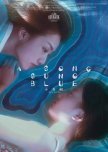
Love a shades of blue palette!
"Love and hate are alike: just as hard to forget."It is artistic how the entire film is drenched in various shades of blue, creating a hazy, dreamlike atmosphere that emphasizes Xian's isolation and melancholy. And those red accents whenever Mingmei enters the frame—a flashing warmth of red signalling passion and the light she brings into Xian's life.
It isn't that interesting, but it has soft lighting and a cool blue palette.
Was this review helpful to you?
This review may contain spoilers
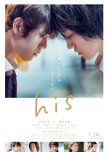
"It's a person's free will to like who they like. Do what you desire." — OgataThe character of Nagisa forced me to deeply rethink the concept of second chances and what truly constitutes the strength of a marriage. It asks a blue question: Is granting a second chance ever worth it when it comes at the cost of the time you spent feeling rejected, deserted, and left entirely alone? Can the dejected, melancholic fragments of a life left behind really foster a new beginning with the very hand that rejected you in the first place?
From the very beginning, Nagisa's sudden arrival did not sit well with me. His original vision of being a "real man"—sleeping with a woman he did not love, having a child with her, and getting married purely to please societal norms—is deeply flawed. What makes it worse is the way he suddenly returned to Shun on what felt like a whim, acting like it was completely fine, simply because he reached a breaking point where he could no longer live a lie. Imposing his presence and instantly offloading his childcare responsibilities onto Shun was incredibly selfish.
Thankfully, he eventually apologized, recognized his wife Rena’s immense struggles, and rightfully let her have custody of Sora. Too often, LGBTQ+ films try to normalize, justify, or downplay the devastating consequences of cheating just because a closeted character is involved. Being gay does not give anyone a free pass to sneak around and mistreat others. Nagisa did not just lie to and cheat on Rena; he actively tried to suppress and rewrite his entire identity, even if it meant deceiving his own family.
In the end, the only moments that felt genuinely pleasant were the light, sweet conversations between Shun and the elderly neighbor, Ogata, alongside the quiet frames where Shun, Nagisa, and Sora spent Christmas together. Aside from those rare glimpses of warmth, watching the rest of the film felt like sitting through a routine story.
Was this review helpful to you?


