

 23
23 41
41 8
8 1
1 1
1 1
1 1
1 1
1 1
1 6
6 2
2 3
3 1
1 1
1 1
1 1
1 3
3 1
1 3
3


I Was Ready to Hate This Drama, Until I Didn’t
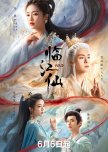
In a mesmerizing, fairytale-like realm, Li Qing Yue, a powerful immortal favored by the Four Spirits, crosses paths with Bai Jiu Si, the highly respected master of Dacheng. A tragic misunderstanding drives them into a painful conflict that ultimately leads to their deaths. Yet fate is unwilling to let their story end there. Given a second chance at life, they confront their past, repair their fractured bond, and reunite as allies. Together, they stand as protectors of the innocent, facing a growing threat that endangers the world.
As someone who hates misunderstanding and memory loss plots, I was shocked to find myself watching this nonstop in one sitting. Feud is a drama driven by a major misunderstanding, with revenge, justice, memory loss, and compassion as supporting themes. Honestly, I thought I was going to hate this drama, but I was proven wrong. I was completely engrossed and hooked, eager to see how the story would unfold, and that is thanks to the strong storyline.
I believe the charm of this drama lies in the way viewers experience everything alongside the characters. This is a drama that takes you on a journey and places you in a state of understanding similar to that of the characters themselves. You will misunderstand, then feel guilty for misunderstanding. You will trust, then feel betrayed. Essentially, you go through exactly what the characters go through. The drama follows a recurring formula of one point of view, the consequences that follow, revenge, the truth being revealed, and then another set of consequences. It is surprising that this repeated structure never became tiring. Instead, it kept me seated and fully invested. Although the story becomes a bit chaotic toward the end, overall it was well written and well paced. The misunderstanding and memory loss plots that I usually dread were handled so smoothly that they never made me feel exhausted.
I had a genuinely fun experience watching this drama. At first, I questioned whether Hua Ru Yue’s motives toward Bai Jiu Si were strong enough to justify her hatred and determination for revenge. Then, after seeing what truly happened, I began to sympathize with her. Soon after, I was shown Bai Jiu Si’s point of view and found myself sympathizing with him as well. Experiencing the emotional shifts alongside the characters was incredibly engaging. Despite my positive experience, the drama is not without its flaws.
One major pet peeve of mine is the use of comedy. Given how heavy the storyline is, the comedic choices often felt unsuitable. The use of exaggerated sound effects to highlight certain moments, such as Zhang Suan’s heartbreak, felt forced and out of place. Additionally, the music arrangement was awkward at times. There were moments when the background music would abruptly stop just to emphasize a comedic beat, which disrupted the immersion. Overall, the comedy felt unnatural and did not blend well with the emotional depth of the story. Fortunately, the comedic elements within the script itself were generally acceptable.
Bai Lu’s dual performance as Li Qing Yue and Hua Ru Yue was outstanding. As expected of her, she brought both characters to life beautifully. Her expressions were top tier. I cried when she cried and smiled when she smiled. For Li Qing Yue, I did feel that her early costumes as a gate guard did not quite match Bai Lu’s naturally elegant and mature visuals. However, this did not affect my overall experience and was simply a minor observation. Aside from that, Bai Lu’s visuals, aura, and expressions were perfectly suited for both characters, and the contrast between them was very clear. She also excelled at portraying Hua Ru Yue’s complex emotions through subtle expressions and body language, especially in the later episodes when her feelings toward Bai Jiu Si became increasingly conflicted.
Joseph Zeng’s portrayal of Bai Jiu Si was very appealing. His visuals were striking. He brought the aloof and reserved Bai Jiu Si to life convincingly, although I personally found the white hair somewhat unfitting for his youthful face. Joseph Zeng’s eyes and lips naturally carry a sense of sadness and longing, which suited his character well. While I do not vividly remember every expression, I believe his overall performance was strong. His portrayal during Bai Jiu Si’s memory loss arc left a particularly deep impression on me, as it showed a complete shift in personality. This contrast convinced me that Joseph Zeng truly understood and nailed the role, as he successfully depicted Bai Jiu Si across all stages of his character development.
The chemistry between Bai Lu and Joseph Zeng was excellent. It is clear that they are comfortable with each other, likely due to their real-life friendship. Visually, they complement each other very well. Bai Jiu Si’s chemistry with both Li Qing Yue and Hua Ru Yue felt natural and convincing. Their characters were well written, and the depth of their love and hatred felt justified and emotionally grounded.
The ensemble cast was also memorable. All the actors performed well in their respective roles. The side characters surrounding Bai Jiu Si, Li Qing Yue, and Hua Ru Yue left a strong impression. I grew fond of Li Mo, Cang Tu, Ning Yan, Yin Tong Zi, and Fan Ling Er and found myself rooting for them. However, Long Yuan consistently annoyed me, as he seemed to embody impulsive rage and unchecked anger. Unlike some ensemble characters whose arcs evolve over time, my frustration with him remained until the very end.
One aspect that could have been handled better, though it did not significantly affect my overall experience, was the ending. I found the use of the time artifact, as well as Bai Jiu Si and Hua Ru Yue’s reunion, confusing. I did not fully understand how Hua Ru Yue’s first attempt at using the time artifact differed from her next attempt. I have a general idea, but I am not confident in my interpretation. Additionally, I am unclear about why Bai Jiu Si was inside the frozen water. While the ending left me with many questions, it ultimately did not diminish my enjoyment of the drama.
Overall, Feud surprised me in the best way possible. Despite relying heavily on tropes I usually dislike, it managed to deliver an emotionally immersive experience through strong writing, compelling character perspectives, and excellent performances. While it has its flaws, particularly in its use of comedy and a somewhat confusing ending, the drama’s ability to make viewers feel, question, and empathize alongside its characters is what truly sets it apart. Feud is not a perfect drama, but it is a memorable and engaging one that proves even the most overused tropes can shine when executed with care and depth.
As someone who hates misunderstanding and memory loss plots, I was shocked to find myself watching this nonstop in one sitting. Feud is a drama driven by a major misunderstanding, with revenge, justice, memory loss, and compassion as supporting themes. Honestly, I thought I was going to hate this drama, but I was proven wrong. I was completely engrossed and hooked, eager to see how the story would unfold, and that is thanks to the strong storyline.
I believe the charm of this drama lies in the way viewers experience everything alongside the characters. This is a drama that takes you on a journey and places you in a state of understanding similar to that of the characters themselves. You will misunderstand, then feel guilty for misunderstanding. You will trust, then feel betrayed. Essentially, you go through exactly what the characters go through. The drama follows a recurring formula of one point of view, the consequences that follow, revenge, the truth being revealed, and then another set of consequences. It is surprising that this repeated structure never became tiring. Instead, it kept me seated and fully invested. Although the story becomes a bit chaotic toward the end, overall it was well written and well paced. The misunderstanding and memory loss plots that I usually dread were handled so smoothly that they never made me feel exhausted.
I had a genuinely fun experience watching this drama. At first, I questioned whether Hua Ru Yue’s motives toward Bai Jiu Si were strong enough to justify her hatred and determination for revenge. Then, after seeing what truly happened, I began to sympathize with her. Soon after, I was shown Bai Jiu Si’s point of view and found myself sympathizing with him as well. Experiencing the emotional shifts alongside the characters was incredibly engaging. Despite my positive experience, the drama is not without its flaws.
One major pet peeve of mine is the use of comedy. Given how heavy the storyline is, the comedic choices often felt unsuitable. The use of exaggerated sound effects to highlight certain moments, such as Zhang Suan’s heartbreak, felt forced and out of place. Additionally, the music arrangement was awkward at times. There were moments when the background music would abruptly stop just to emphasize a comedic beat, which disrupted the immersion. Overall, the comedy felt unnatural and did not blend well with the emotional depth of the story. Fortunately, the comedic elements within the script itself were generally acceptable.
Bai Lu’s dual performance as Li Qing Yue and Hua Ru Yue was outstanding. As expected of her, she brought both characters to life beautifully. Her expressions were top tier. I cried when she cried and smiled when she smiled. For Li Qing Yue, I did feel that her early costumes as a gate guard did not quite match Bai Lu’s naturally elegant and mature visuals. However, this did not affect my overall experience and was simply a minor observation. Aside from that, Bai Lu’s visuals, aura, and expressions were perfectly suited for both characters, and the contrast between them was very clear. She also excelled at portraying Hua Ru Yue’s complex emotions through subtle expressions and body language, especially in the later episodes when her feelings toward Bai Jiu Si became increasingly conflicted.
Joseph Zeng’s portrayal of Bai Jiu Si was very appealing. His visuals were striking. He brought the aloof and reserved Bai Jiu Si to life convincingly, although I personally found the white hair somewhat unfitting for his youthful face. Joseph Zeng’s eyes and lips naturally carry a sense of sadness and longing, which suited his character well. While I do not vividly remember every expression, I believe his overall performance was strong. His portrayal during Bai Jiu Si’s memory loss arc left a particularly deep impression on me, as it showed a complete shift in personality. This contrast convinced me that Joseph Zeng truly understood and nailed the role, as he successfully depicted Bai Jiu Si across all stages of his character development.
The chemistry between Bai Lu and Joseph Zeng was excellent. It is clear that they are comfortable with each other, likely due to their real-life friendship. Visually, they complement each other very well. Bai Jiu Si’s chemistry with both Li Qing Yue and Hua Ru Yue felt natural and convincing. Their characters were well written, and the depth of their love and hatred felt justified and emotionally grounded.
The ensemble cast was also memorable. All the actors performed well in their respective roles. The side characters surrounding Bai Jiu Si, Li Qing Yue, and Hua Ru Yue left a strong impression. I grew fond of Li Mo, Cang Tu, Ning Yan, Yin Tong Zi, and Fan Ling Er and found myself rooting for them. However, Long Yuan consistently annoyed me, as he seemed to embody impulsive rage and unchecked anger. Unlike some ensemble characters whose arcs evolve over time, my frustration with him remained until the very end.
One aspect that could have been handled better, though it did not significantly affect my overall experience, was the ending. I found the use of the time artifact, as well as Bai Jiu Si and Hua Ru Yue’s reunion, confusing. I did not fully understand how Hua Ru Yue’s first attempt at using the time artifact differed from her next attempt. I have a general idea, but I am not confident in my interpretation. Additionally, I am unclear about why Bai Jiu Si was inside the frozen water. While the ending left me with many questions, it ultimately did not diminish my enjoyment of the drama.
Overall, Feud surprised me in the best way possible. Despite relying heavily on tropes I usually dislike, it managed to deliver an emotionally immersive experience through strong writing, compelling character perspectives, and excellent performances. While it has its flaws, particularly in its use of comedy and a somewhat confusing ending, the drama’s ability to make viewers feel, question, and empathize alongside its characters is what truly sets it apart. Feud is not a perfect drama, but it is a memorable and engaging one that proves even the most overused tropes can shine when executed with care and depth.
Was this review helpful to you?


