
 News
News 


 27
27 54
54 8
8 1
1 1
1 1
1 1
1 1
1 1
1 8
8 2
2 3
3 1
1 1
1 1
1 1
1 9
9 4
4 4
4


This review may contain spoilers
To Match Her Freak
A Splendid Match is the kind of drama that knows exactly what it is from the very beginning. The premise itself is nothing groundbreaking. A noblewoman returns home, several men orbit around her life, and viewers are left waiting to see who ultimately becomes her “perfect match.” The answer is obvious almost immediately, but surprisingly, that never becomes a weakness. This drama is not interested in asking who gets the girl. It asks how two people become worthy of each other, and that distinction is what makes the story work.
Gu Jin Zhao grows up exiled from her own family because of an old prophecy, yet instead of becoming bitter or fragile, she returns sharper, louder, and completely unapologetic about who she is. Raised with love by her grandmother rather than suffocated by aristocratic rules, Jin Zhao carries herself with a confidence that unsettles polite society. She refuses to indulge nonsense, refuses to tolerate injustice, and settles accounts immediately whenever she is wronged. Ren Min captures both her youthful charm and fiery stubbornness perfectly. Every time Jin Zhao stands up for herself, I found myself silently cheering like a proud sister watching family drama unfold at dinner.
What I appreciated most is that the story never turns Jin Zhao into a heroine waiting to be chosen. In true amor fati fashion, she embraces the life handed to her and bends it into something that belongs entirely to her. Marriage, for her, is not survival or social strategy. It is recognition. She wants someone who sees her fully without asking her to shrink, and among all four potential matches, only Chen Yan Yun truly understands that.
I am one of the minorities who liked how the narrative took time exploring Jin Zhao’s dynamic with every man in her life. While the male lead lacked (romantic) screentime in the earlier episodes, I thought the structure made sense. The first half focuses heavily on Jin Zhao and Ye Xian’s chaotic friendship, while the latter half gradually shifts toward Yan Yun and Jin Zhao’s partnership. It creates a natural emotional progression instead of rushing directly into romance.
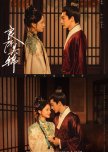
Chen Yan Yun is, without question, her splendid match. Mature, wise, reliable, and quietly affectionate, he feels like the rare male lead who understands that loving a strong woman does not mean taming her. Ci Sha portrays him perfectly. The actor embodies the mature, manly, and reliable allure of his character. Chen Yan Yun never asks Jin Zhao to compromise herself for his comfort. Instead, he protects the space where she can continue being exactly who she is. Their relationship is built on mutual respect, trust, and admiration, which makes their romance feel deeply satisfying even within a fairly cliché setup. He may navigate political disasters effortlessly, but love clearly short-circuits his brain, and honestly, that made him even more charming.
Once they got married, this drama practically turned into a romantic buffet. The kisses, the hugs, the mirrored gestures, the teasing intimacy, everything delivered maximum flutter damage. I also appreciate that the production committed fully to their chemistry instead of hiding every kiss behind curtains, sleeves, candles, or strategically placed furniture like some historical dramas love to do. Their romance feels passionate because both characters themselves are passionate people. The physical affection supports the fiery nature of their relationship instead of existing purely for fanservice.
One of the strongest parts of the writing comes from how the drama handles emotional conflict after marriage. When Chen Yan Yun discovers the history between Jin Zhao and Chen Xuan Qing, the story wisely avoids the easy route of one dramatic argument followed by instant reconciliation. Instead, it lets Yan Yun sit with the discomfort. Of course it would hurt knowing your wife once actively pursued someone else, especially when that someone is your own nephew. The added realization that they may have ended up together had he not intervened makes the situation even more complicated. What made the arc work for me is that the drama allows Yan Yun to spiral through those ugly “what if” thoughts instead of pretending mature people instantly process emotions rationally. And true to Jin Zhao’s character, she refuses to lose herself trying to soothe him. Her “I won’t indulge him” line felt completely consistent with who she is. She loves deeply, but she refuses to abandon her own dignity in the process.
Ironically, Chen Xuan Qing’s storyline only further proves why he and Jin Zhao were never meant to be. He may have been her first love, but he fundamentally lacks the courage and conviction needed to stand beside someone like her. Jin Zhao is drawn to his worldview and gentleness, yet in the end, he mostly awakens her protective instincts rather than standing as her equal. When forced to choose between safety and love, he chooses himself. That decision defines his entire character.
I honestly think the writers did Xuan Qing dirty toward the second half. His character practically takes a full tragic opera turn into pathetic lovesick territory. Zuo Ye portrayed his restrained misery very well, but the writing reduces him into someone consumed entirely by resentment. It is understandable for him to feel jealous of Yan Yun and out of place with the Chen family, but at some point his bitterness becomes exhausting because the Chen family genuinely treated him with sincerity from the beginning. The drama wanted emotional collapse, and boy, did it commit to it.
On the other hand, Ye Xian ended up becoming one of the most interesting characters in the drama for me. At first, he is basically a spoiled manchild wrapped in pretty robes and family pressure. Winwin embodied that mischievous youthful energy perfectly while still hinting at the burden beneath it all. His relationship with Jin Zhao works wonderfully as friendship because they are too similar. Putting them together romantically would be like throwing two fireworks into the same box and hoping the house survives. They bicker, annoy each other, protect each other, and genuinely care deeply, but they would absolutely self-destruct as lovers.
Episode 28 genuinely hurt. The wedding procession crossing paths with the funeral procession was one of the strongest scenes in the entire drama. While Jin Zhao and Yan Yun move toward happiness, Ye Xian stands there grieving the loss of his own love story. The way he lowered his gaze and stepped aside felt devastatingly mature. It was acceptance, resignation, and heartbreak all folded into one quiet moment. That scene alone deserves applause.
I also appreciated Ye Xian’s eventual growth. Watching him choose responsibility over obsession was satisfying because it finally felt like he matured beyond simply chasing Jin Zhao. Him addressing Yan Yun as Jin Zhao’s “fujun” carried more emotional weight than any dramatic speech could have. At the same time, the battlefield storyline constantly filled me with dread because it felt less like heroism and more like a beautifully wrapped suicide mission. Yes, from a character perspective, it makes sense. A man with limited years left would rather burn brightly on the battlefield than fade slowly in bed. But emotionally, it still hurt to watch.
The scene where Yan Yun carried Ye Xian’s body covered by the Ye flag genuinely left me speechless. Alongside the wedding versus funeral procession, it became one of the most memorable moments in the drama for me. Jin Zhao’s devastation afterward also landed emotionally, even if some of the screaming leaned slightly too theatrical for my taste.
As for the rest of the cast, the ensemble adds so much charm to the viewing experience. The sidekicks bring excellent comedic timing, especially Chen Yan Yun’s sidekick compete over who can gather information faster. Unfortunately for him, nobody gathers gossip faster than women. The Ji family was largely lovable aside from one permanently irritated aunt, while most members of the Gu family existed solely to test my blood pressure. The Chen family sat somewhere in between chaos and sincerity, though I appreciated that many of the women in the household remained reasonable and supportive.
The overall atmosphere strangely reminded me of Bridgerton mixed with a classic chick flick romcom. The “searching for the perfect match” narrative, the playful romantic energy, and even parts of the soundtrack carried that same exciting first-love feeling. The production quality is admittedly inconsistent at times. Certain shots and color grading occasionally look a bit cheap or overly template-like, but the emotional core of the story remains strong enough that I stopped caring after a while.
My biggest issue ultimately comes from the ending. After all the suffering, heartbreak, political turmoil, and emotional growth, I desperately wanted one final peaceful moment for the main couple. A quiet meal together, stargazing, attending a festival, literally anything warm and comforting. Instead, the drama fully commits to its fire symbolism until the very end. I understand the intention. Jin Zhao and Yan Yun are intense people who love fiercely and burn brightly together. Still, after everything they endured, I wanted softness. I wanted peace. I wanted my splendid ending.
Even so, I genuinely enjoyed A Splendid Match. It is a cliché done right. The plot may follow familiar beats, but the sincerity of the characters, the emotional storytelling, and the chemistry between the leads make it incredibly engaging. Despite an ending that left me emotionally robbed, the journey itself was entertaining enough to make me laugh, cry, scream internally, and grow attached to nearly everyone along the way. Sometimes that alone is enough to make a drama worth remembering.
Gu Jin Zhao grows up exiled from her own family because of an old prophecy, yet instead of becoming bitter or fragile, she returns sharper, louder, and completely unapologetic about who she is. Raised with love by her grandmother rather than suffocated by aristocratic rules, Jin Zhao carries herself with a confidence that unsettles polite society. She refuses to indulge nonsense, refuses to tolerate injustice, and settles accounts immediately whenever she is wronged. Ren Min captures both her youthful charm and fiery stubbornness perfectly. Every time Jin Zhao stands up for herself, I found myself silently cheering like a proud sister watching family drama unfold at dinner.
What I appreciated most is that the story never turns Jin Zhao into a heroine waiting to be chosen. In true amor fati fashion, she embraces the life handed to her and bends it into something that belongs entirely to her. Marriage, for her, is not survival or social strategy. It is recognition. She wants someone who sees her fully without asking her to shrink, and among all four potential matches, only Chen Yan Yun truly understands that.
I am one of the minorities who liked how the narrative took time exploring Jin Zhao’s dynamic with every man in her life. While the male lead lacked (romantic) screentime in the earlier episodes, I thought the structure made sense. The first half focuses heavily on Jin Zhao and Ye Xian’s chaotic friendship, while the latter half gradually shifts toward Yan Yun and Jin Zhao’s partnership. It creates a natural emotional progression instead of rushing directly into romance.
Chen Yan Yun is, without question, her splendid match. Mature, wise, reliable, and quietly affectionate, he feels like the rare male lead who understands that loving a strong woman does not mean taming her. Ci Sha portrays him perfectly. The actor embodies the mature, manly, and reliable allure of his character. Chen Yan Yun never asks Jin Zhao to compromise herself for his comfort. Instead, he protects the space where she can continue being exactly who she is. Their relationship is built on mutual respect, trust, and admiration, which makes their romance feel deeply satisfying even within a fairly cliché setup. He may navigate political disasters effortlessly, but love clearly short-circuits his brain, and honestly, that made him even more charming.
Once they got married, this drama practically turned into a romantic buffet. The kisses, the hugs, the mirrored gestures, the teasing intimacy, everything delivered maximum flutter damage. I also appreciate that the production committed fully to their chemistry instead of hiding every kiss behind curtains, sleeves, candles, or strategically placed furniture like some historical dramas love to do. Their romance feels passionate because both characters themselves are passionate people. The physical affection supports the fiery nature of their relationship instead of existing purely for fanservice.
One of the strongest parts of the writing comes from how the drama handles emotional conflict after marriage. When Chen Yan Yun discovers the history between Jin Zhao and Chen Xuan Qing, the story wisely avoids the easy route of one dramatic argument followed by instant reconciliation. Instead, it lets Yan Yun sit with the discomfort. Of course it would hurt knowing your wife once actively pursued someone else, especially when that someone is your own nephew. The added realization that they may have ended up together had he not intervened makes the situation even more complicated. What made the arc work for me is that the drama allows Yan Yun to spiral through those ugly “what if” thoughts instead of pretending mature people instantly process emotions rationally. And true to Jin Zhao’s character, she refuses to lose herself trying to soothe him. Her “I won’t indulge him” line felt completely consistent with who she is. She loves deeply, but she refuses to abandon her own dignity in the process.
Ironically, Chen Xuan Qing’s storyline only further proves why he and Jin Zhao were never meant to be. He may have been her first love, but he fundamentally lacks the courage and conviction needed to stand beside someone like her. Jin Zhao is drawn to his worldview and gentleness, yet in the end, he mostly awakens her protective instincts rather than standing as her equal. When forced to choose between safety and love, he chooses himself. That decision defines his entire character.
I honestly think the writers did Xuan Qing dirty toward the second half. His character practically takes a full tragic opera turn into pathetic lovesick territory. Zuo Ye portrayed his restrained misery very well, but the writing reduces him into someone consumed entirely by resentment. It is understandable for him to feel jealous of Yan Yun and out of place with the Chen family, but at some point his bitterness becomes exhausting because the Chen family genuinely treated him with sincerity from the beginning. The drama wanted emotional collapse, and boy, did it commit to it.
On the other hand, Ye Xian ended up becoming one of the most interesting characters in the drama for me. At first, he is basically a spoiled manchild wrapped in pretty robes and family pressure. Winwin embodied that mischievous youthful energy perfectly while still hinting at the burden beneath it all. His relationship with Jin Zhao works wonderfully as friendship because they are too similar. Putting them together romantically would be like throwing two fireworks into the same box and hoping the house survives. They bicker, annoy each other, protect each other, and genuinely care deeply, but they would absolutely self-destruct as lovers.
Episode 28 genuinely hurt. The wedding procession crossing paths with the funeral procession was one of the strongest scenes in the entire drama. While Jin Zhao and Yan Yun move toward happiness, Ye Xian stands there grieving the loss of his own love story. The way he lowered his gaze and stepped aside felt devastatingly mature. It was acceptance, resignation, and heartbreak all folded into one quiet moment. That scene alone deserves applause.
I also appreciated Ye Xian’s eventual growth. Watching him choose responsibility over obsession was satisfying because it finally felt like he matured beyond simply chasing Jin Zhao. Him addressing Yan Yun as Jin Zhao’s “fujun” carried more emotional weight than any dramatic speech could have. At the same time, the battlefield storyline constantly filled me with dread because it felt less like heroism and more like a beautifully wrapped suicide mission. Yes, from a character perspective, it makes sense. A man with limited years left would rather burn brightly on the battlefield than fade slowly in bed. But emotionally, it still hurt to watch.
The scene where Yan Yun carried Ye Xian’s body covered by the Ye flag genuinely left me speechless. Alongside the wedding versus funeral procession, it became one of the most memorable moments in the drama for me. Jin Zhao’s devastation afterward also landed emotionally, even if some of the screaming leaned slightly too theatrical for my taste.
As for the rest of the cast, the ensemble adds so much charm to the viewing experience. The sidekicks bring excellent comedic timing, especially Chen Yan Yun’s sidekick compete over who can gather information faster. Unfortunately for him, nobody gathers gossip faster than women. The Ji family was largely lovable aside from one permanently irritated aunt, while most members of the Gu family existed solely to test my blood pressure. The Chen family sat somewhere in between chaos and sincerity, though I appreciated that many of the women in the household remained reasonable and supportive.
The overall atmosphere strangely reminded me of Bridgerton mixed with a classic chick flick romcom. The “searching for the perfect match” narrative, the playful romantic energy, and even parts of the soundtrack carried that same exciting first-love feeling. The production quality is admittedly inconsistent at times. Certain shots and color grading occasionally look a bit cheap or overly template-like, but the emotional core of the story remains strong enough that I stopped caring after a while.
My biggest issue ultimately comes from the ending. After all the suffering, heartbreak, political turmoil, and emotional growth, I desperately wanted one final peaceful moment for the main couple. A quiet meal together, stargazing, attending a festival, literally anything warm and comforting. Instead, the drama fully commits to its fire symbolism until the very end. I understand the intention. Jin Zhao and Yan Yun are intense people who love fiercely and burn brightly together. Still, after everything they endured, I wanted softness. I wanted peace. I wanted my splendid ending.
Even so, I genuinely enjoyed A Splendid Match. It is a cliché done right. The plot may follow familiar beats, but the sincerity of the characters, the emotional storytelling, and the chemistry between the leads make it incredibly engaging. Despite an ending that left me emotionally robbed, the journey itself was entertaining enough to make me laugh, cry, scream internally, and grow attached to nearly everyone along the way. Sometimes that alone is enough to make a drama worth remembering.
Was this review helpful to you?


