


 23
23 43
43 8
8 1
1 1
1 1
1 1
1 1
1 1
1 6
6 2
2 3
3 1
1 1
1 1
1 1
1 3
3 1
1 3
3


Everyone Needed Someone to Be Guilty
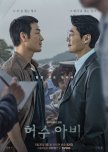
The Scarecrow feels like the kind of crime thriller that understands the most terrifying thing about violence is not the blood itself, but the memory of it. The way it lingers long after the crime scene is cleaned up. The way it quietly reshapes everyone who came too close. Inspired by true events, the drama moves with the cold patience of an old wound reopening itself. It is less interested in cheap shock value and far more obsessed with guilt, obsession, fear, and the unreliable nature of truth itself.
At the center of the story is Kang Tae Ju, a retired criminal profiler dragged back into a case he thought time had already buried. There is something deeply unsettling about a serial killer demanding the presence of the very man who once hunted him, insisting he will only confess after Tae Ju recounts his story of what happened in 1988 Kangseong City. Then there’s Cha Shi Yeong, an ambitious prosecutor tied to Tae Ju through a fractured relationship that clearly never healed properly. Their dynamic gives the drama its emotional voltage. Every conversation between them feels less like dialogue and more like a courtroom cross examination layered with resentment, guilt, and unresolved history. Nobody fully trusts each other, yet everyone is forced into proximity to catch the scarecrow, even if their reasons for doing so are completely different.
What makes this drama compelling is that it is not really structured like a traditional whodunnit. The mystery matters, but the story is more interested in exposing how flawed, outdated, and deeply frustrating investigations were in late 1980s Korea. The pressure placed on investigators is constant, and you can see how desperation leads to rushed conclusions, violence, and irreversible damage. The parallels to the Hwaseong murder cases are impossible to miss. Countless suspects investigated, innocent people destroyed, reputations buried alongside the truth. The Scarecrow painfully illustrates how institutions meant to protect people can become the very thing that ruins them instead.
Ironically, Kang Tae Ju is a good person but not necessarily a good detective. His tunnel vision becomes one of the most frustrating parts of the series because his desire for justice repeatedly blinds him to other possibilities. Park Hae Soo portrays him brilliantly as a man whose outdated methods and rigid instincts slowly sabotage the very justice he wants to uphold. At the same time, Tae Ju keeps giving Cha Shi Yeong chance after chance, almost relying on old friendship and personal morality to correct itself somehow. That trust becomes increasingly difficult to watch.
Cha Shi Yeong, meanwhile, is probably the most fascinatingly hypocritical character in the drama. Lee Hee Joon captures his instability with frightening precision. Shi Yeong is torn between finding the correct suspect and living up to expectations placed upon him, both professionally and personally. The more pressure mounts, the more he resorts to violence, intimidation, and forced confessions. What makes it worse is how normalized all of it feels within the system around him. Innocent until proven guilty barely exists here. Instead of proper profiling, deduction, or evidence, people are beaten until a confession appears. The realism of it becomes genuinely maddening.
The first half of the drama keeps its grip through uncertainty. The question of who the real killer is hangs over every episode like cigarette smoke trapped inside an interrogation room. Earlier episodes focus heavily on character dynamics, especially the uncomfortable victim bully relationship between Tae Ju and Shi Yeong. At times, it was difficult to watch and I kept wondering whether certain aspects were truly necessary or simply there for additional dramatic weight. Still, their frenemy relationship becomes important to understanding the emotional collapse surrounding the 1988 case. Misunderstandings, fear, regret, and traces of genuine friendship all bleed together until it becomes impossible to separate sincerity from manipulation.
The title itself is clever. A scarecrow is designed to resemble a person without actually being one. Human, but not humane. A decoy pretending to be alive. That symbolism quietly infects the entire narrative because almost everyone in this drama hides behind constructed identities, selective memories, or false certainty. The deeper the investigation goes, the more the line between hunter, witness, and suspect begins dissolving into something morally indistinguishable. Persona non grata everywhere.
The second half expands the story in a way that makes everything feel heavier and far more tragic. Seeing events unfold from different perspectives adds tension while exposing how cruelty exists on both sides of the investigation. Surprisingly, the killer’s evil becomes less terrifying than the hypocrisy of the people chasing him. Different motives, same madness. Watching how far people are willing to go while disregarding the collateral damage left behind becomes one of the drama’s strongest points. Once the killer is revealed, it becomes obvious that the drama intentionally spent episodes misleading viewers through carefully planted clues and assumptions. Looking back, many scenes feel entirely different in retrospect. The timeline jumps between past and present already hint at wrongful prosecutions, so the real mystery becomes less about who committed the murders and more about why the truth was allowed to remain buried for so long.
Seo Ji Hye also delivers one of the most emotionally memorable performances in the series as Kang Sun Yeong. One particular scene in a dimly lit setting stayed with me long after the episode ended because the emotions felt painfully raw and restrained at the same time. Kwak Sun Yeong was equally enjoyable as Seo Ji Won, Tae Ju’s journalist friend, who honestly would have made a far better investigative partner than the endless parade of yes men surrounding him. Tae Ju desperately needed someone willing to challenge his thinking instead of simply following it. Unfortunately, he keeps brushing her off. The unnecessary family drama, however, was one element I could have done without entirely.
What makes The Scarecrow linger is that the narrative is not simply about revisiting an old case. Tae Ju is excavating his own memories along with it. Thirty three years may have passed, but the past here never truly stays buried. It festers. Nietzsche once wrote, “He who fights with monsters should be careful lest he thereby become a monster,” and this drama feels completely fascinated by that slow moral corrosion. Not through exaggerated theatrics, but through the quiet erosion caused by staring into violence for too long while convincing yourself you remain untouched by it.
By the end, The Scarecrow creates this suffocating late night atmosphere where everyone looks exhausted and every truth arrives carrying collateral damage behind it. The mystery itself matters, but what lingers afterward is the heavier question underneath everything: how much of our identity is built upon the stories we choose to believe about ourselves? The drama understands that truth, especially in old cases, is rarely clean. Trauma distorts memory. Institutions protect themselves. People rewrite history to survive it. Sometimes the scariest possibility is not that the monster escaped justice, but that everyone involved needed the wrong person to be guilty.
The ending itself leans into a kind of realism that is hard to ignore. There is a quiet acceptance that not everything can be fully resolved, especially when time has already done its work. Statutes of limitation, buried truths, and cases that slowly fade out of reach all come into play, leaving behind a sense of justice that feels partial rather than complete. It reflects a reality where justice is often only possible for what can still be fought for, not for what has already been lost to time. In that sense, it feels painfully aligned with real life cases as well, where answers do not always lead to closure, and accountability sometimes arrives too late to matter in the way we expect.
Bleak, intelligent, and deeply atmospheric, The Scarecrow feels less like a conventional thriller and more like being trapped inside a long winter with people who have spent decades lying to themselves. Veritas filia temporis. Truth is the daughter of time. But this drama also suggests that time can make the truth almost impossible to survive.
At the center of the story is Kang Tae Ju, a retired criminal profiler dragged back into a case he thought time had already buried. There is something deeply unsettling about a serial killer demanding the presence of the very man who once hunted him, insisting he will only confess after Tae Ju recounts his story of what happened in 1988 Kangseong City. Then there’s Cha Shi Yeong, an ambitious prosecutor tied to Tae Ju through a fractured relationship that clearly never healed properly. Their dynamic gives the drama its emotional voltage. Every conversation between them feels less like dialogue and more like a courtroom cross examination layered with resentment, guilt, and unresolved history. Nobody fully trusts each other, yet everyone is forced into proximity to catch the scarecrow, even if their reasons for doing so are completely different.
What makes this drama compelling is that it is not really structured like a traditional whodunnit. The mystery matters, but the story is more interested in exposing how flawed, outdated, and deeply frustrating investigations were in late 1980s Korea. The pressure placed on investigators is constant, and you can see how desperation leads to rushed conclusions, violence, and irreversible damage. The parallels to the Hwaseong murder cases are impossible to miss. Countless suspects investigated, innocent people destroyed, reputations buried alongside the truth. The Scarecrow painfully illustrates how institutions meant to protect people can become the very thing that ruins them instead.
Ironically, Kang Tae Ju is a good person but not necessarily a good detective. His tunnel vision becomes one of the most frustrating parts of the series because his desire for justice repeatedly blinds him to other possibilities. Park Hae Soo portrays him brilliantly as a man whose outdated methods and rigid instincts slowly sabotage the very justice he wants to uphold. At the same time, Tae Ju keeps giving Cha Shi Yeong chance after chance, almost relying on old friendship and personal morality to correct itself somehow. That trust becomes increasingly difficult to watch.
Cha Shi Yeong, meanwhile, is probably the most fascinatingly hypocritical character in the drama. Lee Hee Joon captures his instability with frightening precision. Shi Yeong is torn between finding the correct suspect and living up to expectations placed upon him, both professionally and personally. The more pressure mounts, the more he resorts to violence, intimidation, and forced confessions. What makes it worse is how normalized all of it feels within the system around him. Innocent until proven guilty barely exists here. Instead of proper profiling, deduction, or evidence, people are beaten until a confession appears. The realism of it becomes genuinely maddening.
The first half of the drama keeps its grip through uncertainty. The question of who the real killer is hangs over every episode like cigarette smoke trapped inside an interrogation room. Earlier episodes focus heavily on character dynamics, especially the uncomfortable victim bully relationship between Tae Ju and Shi Yeong. At times, it was difficult to watch and I kept wondering whether certain aspects were truly necessary or simply there for additional dramatic weight. Still, their frenemy relationship becomes important to understanding the emotional collapse surrounding the 1988 case. Misunderstandings, fear, regret, and traces of genuine friendship all bleed together until it becomes impossible to separate sincerity from manipulation.
The title itself is clever. A scarecrow is designed to resemble a person without actually being one. Human, but not humane. A decoy pretending to be alive. That symbolism quietly infects the entire narrative because almost everyone in this drama hides behind constructed identities, selective memories, or false certainty. The deeper the investigation goes, the more the line between hunter, witness, and suspect begins dissolving into something morally indistinguishable. Persona non grata everywhere.
The second half expands the story in a way that makes everything feel heavier and far more tragic. Seeing events unfold from different perspectives adds tension while exposing how cruelty exists on both sides of the investigation. Surprisingly, the killer’s evil becomes less terrifying than the hypocrisy of the people chasing him. Different motives, same madness. Watching how far people are willing to go while disregarding the collateral damage left behind becomes one of the drama’s strongest points. Once the killer is revealed, it becomes obvious that the drama intentionally spent episodes misleading viewers through carefully planted clues and assumptions. Looking back, many scenes feel entirely different in retrospect. The timeline jumps between past and present already hint at wrongful prosecutions, so the real mystery becomes less about who committed the murders and more about why the truth was allowed to remain buried for so long.
Seo Ji Hye also delivers one of the most emotionally memorable performances in the series as Kang Sun Yeong. One particular scene in a dimly lit setting stayed with me long after the episode ended because the emotions felt painfully raw and restrained at the same time. Kwak Sun Yeong was equally enjoyable as Seo Ji Won, Tae Ju’s journalist friend, who honestly would have made a far better investigative partner than the endless parade of yes men surrounding him. Tae Ju desperately needed someone willing to challenge his thinking instead of simply following it. Unfortunately, he keeps brushing her off. The unnecessary family drama, however, was one element I could have done without entirely.
What makes The Scarecrow linger is that the narrative is not simply about revisiting an old case. Tae Ju is excavating his own memories along with it. Thirty three years may have passed, but the past here never truly stays buried. It festers. Nietzsche once wrote, “He who fights with monsters should be careful lest he thereby become a monster,” and this drama feels completely fascinated by that slow moral corrosion. Not through exaggerated theatrics, but through the quiet erosion caused by staring into violence for too long while convincing yourself you remain untouched by it.
By the end, The Scarecrow creates this suffocating late night atmosphere where everyone looks exhausted and every truth arrives carrying collateral damage behind it. The mystery itself matters, but what lingers afterward is the heavier question underneath everything: how much of our identity is built upon the stories we choose to believe about ourselves? The drama understands that truth, especially in old cases, is rarely clean. Trauma distorts memory. Institutions protect themselves. People rewrite history to survive it. Sometimes the scariest possibility is not that the monster escaped justice, but that everyone involved needed the wrong person to be guilty.
The ending itself leans into a kind of realism that is hard to ignore. There is a quiet acceptance that not everything can be fully resolved, especially when time has already done its work. Statutes of limitation, buried truths, and cases that slowly fade out of reach all come into play, leaving behind a sense of justice that feels partial rather than complete. It reflects a reality where justice is often only possible for what can still be fought for, not for what has already been lost to time. In that sense, it feels painfully aligned with real life cases as well, where answers do not always lead to closure, and accountability sometimes arrives too late to matter in the way we expect.
Bleak, intelligent, and deeply atmospheric, The Scarecrow feels less like a conventional thriller and more like being trapped inside a long winter with people who have spent decades lying to themselves. Veritas filia temporis. Truth is the daughter of time. But this drama also suggests that time can make the truth almost impossible to survive.
Was this review helpful to you?


