


 23
23 43
43 8
8 1
1 1
1 1
1 1
1 1
1 1
1 6
6 2
2 3
3 1
1 1
1 1
1 1
1 3
3 1
1 3
3


This review may contain spoilers
The Sweetest Revenge Smells Like Jasmine
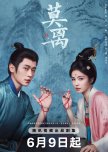
The First Jasmine is a drama about people carrying the weight of yesterday while trying to build a tomorrow worth living for. At first glance, it looks like another arranged marriage story between Ye Li, a young woman who descends from Lishan Mountain to marry the crippled Prince Ding, Mo Xiu Yao. At the same time, her younger sister Ye Ying marries Prince Li, Mo Jing Li, who was once betrothed to Ye Li and secretly schemes for the throne. Beneath these marriages lies a web of revenge, hidden identities, political conspiracies, old trauma, and long overdue justice. It sounds like a lot, but surprisingly, the drama never feels like it is juggling too many balls at once.
One of the biggest strengths of The First Jasmine is its pacing. It feels like the writers actually knew how many episodes they had and wrote accordingly. Every conflict lasts exactly as long as it needs to. Nothing overstays its welcome, and nothing feels rushed. I eventually found myself predicting when a mystery would be answered or when a conflict would wrap up, and more often than not, the drama followed through. It was incredibly satisfying. Even the biggest misunderstandings were resolved without dragging endlessly. The balance between romance, politics, revenge, and character development is carefully maintained throughout. It is the kind of storytelling that quietly earns your trust.
The heart of the story is Ye Li. On the surface, she is cheerful, laid back, fearless, and almost carefree as she reenters society after years on Lishan Mountain. Underneath that smile, however, is someone carrying a revenge plan years in the making and a trauma so severe that even she does not fully understand it. Early on, she creates four straw dolls representing the four people she intends to destroy, and that alone tells you she is not your typical female lead. She is ruthless, meticulous, and incredibly patient. Watching her execute her revenge was immensely satisfying because she never acted recklessly. Every move was calculated to protect herself while bringing down her enemies. When she literally burned someone alive, all I could think was, "Atta girl." I rooted for her every step of the way.
What impressed me even more was how the drama handled her trauma. Instead of relying on the usual memory loss or simple hallucination trope, it explored the lasting psychological damage caused by overwhelming grief. Ye Li's mental struggles become one of the drama's biggest mysteries, and the eventual reveal adds incredible depth to both her character and the overall narrative. It is rare to see a costume drama approach mental health with this much nuance, and I appreciated how much time was dedicated to exploring it instead of simply using it as a plot device.
Mo Xiu Yao carries a different kind of wound. Once a brilliant general, he lost the use of his legs after battle. At the same time, his brother, the former Prince Ding, was falsely accused and executed, destroying his family and affecting thousands of loyal soldiers. Xiu Yao himself was imprisoned, delaying treatment for his injuries, surviving only because of the pastries a young Ye Li gave him after he once saved her life. Years later, he continues searching for evidence to restore his brother's name while living in a wheelchair.
I do wish the drama spent more time showing how his disability shaped his daily life and how he eventually came to accept it. By the time the story begins, he has already adjusted, so we miss much of that emotional journey. Still, the small moments showing his frustration were enough to leave an impression. Then, after his legs were finally healed, he immediately unleashed breathtaking martial arts that made me wonder whether he had been secretly practicing off screen all those years. Maybe muscle memory deserves an award. Whatever the explanation, Cheng Lei absolutely delivered. Every action sequence had my adrenaline soaring.
What makes Ye Li and Mo Xiu Yao such compelling protagonists is how they mirror each other. Both carry unbearable pain from the past. One develops deep psychological trauma while the other lives with a physical disability. Yet neither allows those wounds to define them. Instead, they slowly become each other's place of healing.
Long before their marriage, Ye Li had already fallen for Xiu Yao after he saved her life. Unable to meet him again, she could only thank him by giving him pastries as he was escorted through the capital as a prisoner. Those pastries ended up saving his life in prison. At the same time, Ye Li had made a promise to Xiu Yao's brother before his execution that she would heal Xiu Yao's legs, restore Prince Ding's honor, and seek justice for everyone who suffered. She spent years on Lishan Mountain preparing herself to fulfill that promise. So while everyone pitied her for marrying the crippled prince, she gladly accepted the marriage because she already loved him and had chosen this path long ago.
Their romance became one of my favorite arranged marriage relationships in costume dramas because of how naturally it unfolded. Xiu Yao begins cold and distant, even offering Ye Li a divorce not long after they marry. Ye Li simply refuses and continues living her life with that wonderfully relaxed energy that makes her so lovable. She teases him, plays with the servants, spends time with the children, goes jogging, gardens, manages her business, and slowly chips away at the walls around his heart. She never forces him, yet she never gives up either. Eventually, Xiu Yao realizes he has been watching all of her so called strange little habits the entire time.
Their first kiss, first night sleeping beside each other, and first cuddles all felt incredibly organic. The butterflies were not the giddy excitement of young love. Instead, they felt like watching two married people quietly discover that home had been sitting beside them all along. Many call it a slow burn, but to me, they became a couple emotionally long before the romance fully bloomed. Everything progressed at a pace that simply made sense.
The synopsis promised that Ye Li and Xiu Yao would join hands to defeat their enemies. Interestingly, that was not really what happened. Much of the revenge remained Ye Li's own journey while Xiu Yao focused on his responsibilities and often found himself doubting her. Surprisingly, I did not mind. It differed from my expectations, but I genuinely enjoyed watching Ye Li stand on her own instead of relying on her husband to solve everything.
The only arc that did not fully work for me was the almost divorce storyline. It sparked endless debates among viewers about who was right and who was wrong. Personally, I understood both sides. Xiu Yao had every reason to be devastated after learning that the missing edict, which ultimately led to his brother's execution, had been connected to Ye Li's family. Yet I appreciated that he did not immediately lash out in anger. He took time to process everything before approaching her gently despite his confusion.
Unfortunately, Ye Li's mention of the promise she made to his brother sent him spiraling into the mistaken belief that her love was nothing more than repayment for an old debt. It was heartbreaking because she had already made her feelings clear long before that conversation. Then came the moment that truly frustrated me. Burning the pastry wrapper, one of the most precious memories they shared, felt painfully impulsive. Writing the divorce letter felt even worse. Xiu Yao is far too intelligent for such tunnel vision. He had already promised never to leave Ye Li alone, and I believe he was perceptive enough to notice the hints surrounding her past on Lishan Mountain. This misunderstanding stood out because the drama had consistently handled conflicts so efficiently until then. It felt like an obvious narrative shortcut to bring them back to Lishan Mountain. Once he found Ye Li there, everything suddenly fell back into place a little too conveniently. Fortunately, what followed marked a beautiful new chapter in their relationship.
After Ye Li healed Xiu Yao's legs and restore his family’s honor, it became Xiu Yao's turn to help heal Ye Li's heart and mind. The tragedy at Lishan Mountain was absolutely devastating. Watching Ye Li become the sole survivor, carrying every body herself and burying everyone one by one, was one of the most heartbreaking sequences in the drama. Her trauma suddenly made perfect sense.
That said, I found myself frustrated by the people of Lishan. Their commitment to principles and moral righteousness ultimately cost countless lives. Ye Li wanted to leave the mountain to seek help and resources, yet she was repeatedly stopped because doing so would supposedly compromise their ideals. They believed Master Helai could cure everyone despite the disease spreading rapidly and resources running dangerously low. I understood their reasoning, but I simply could not sympathize with it. It felt like blind confidence disguised as virtue.
I also wish the drama had explained why Ye Li never became infected herself. She spent so much time caring for the sick while wearing only a thin cloth over her face, sometimes even removing it completely. The story never addressed it, so I ended up convincing myself that perhaps she simply had natural immunity. Maybe that is my love for the drama trying to fill in the blanks.
One of my favorite moments came much later when Xiu Yao comforted Ye Li as she struggled with her trauma. After all the promises about never leaving her that circumstances forced him to break, his words about death felt strangely beautiful.
"A'Li, I'm no longer afraid of death. When I think that as we grow old and die, we can be buried together, and I can still hold you like this even beneath the yellow earth, I'm not afraid anymore."
There was something deeply comforting about that scene. It felt like a warm blanket on a cold night. On that note, the quiet cuddles, her head resting on his lap, his gentle hand stroking her hair, those simple moments carried just as much emotional weight as any grand confession.
Beyond the main couple, I appreciated how much care was given to the supporting cast. Every important character received enough development and closure to make their journey meaningful. Rival brothers eventually found understanding. Some lovers found happiness while others learned to move forward after loss. Their stories never felt like distractions because they all strengthened the larger narrative.
The cast also deserves plenty of praise. Bai Lu delivered one of her strongest performances as Ye Li. She captured every side of this incredibly layered character, from her playful warmth to her cold ruthlessness and quiet emptiness. Some viewers felt she lacked emotion, but I thought her restrained performance perfectly reflected Ye Li's psychological state. Cheng Lei was equally impressive. His microexpressions deserve their own fan club. A slight smile, a lingering gaze, or the smallest twitch of emotion spoke volumes. He handled the political scenes, romantic moments, emotional breakdowns, and action sequences with remarkable consistency.
The supporting cast was equally memorable. Yang Shu Yi brought so much joy as Ye Ying and added welcome comedy to the story. Her peacock scene remains one of my favorites. I only wish the drama had explored more of why she loved Mo Jing Li so deeply. Cai Zheng Jie still has room to grow as an actor, but he performed well enough, and his action scenes genuinely surprised me. Zhang Shu Lun once again proved why he keeps catching my attention. Ever since Pursuit of Jade, he has had a natural charisma on screen, and Li Fei Bai became another standout role for him. Even the child actors left a lasting impression and made me wish they had even more scenes.
The final battle also delivered several pleasant surprises. Watching the gravely ill Duke Hua rise up, defeat a major enemy, and somehow survive had me cheering. Mo Jing Li's martial arts also exceeded my expectations, and Cai Zheng Jie handled those scenes surprisingly well.
The ending itself deserves praise simply because it allowed the story to breathe. Rather than rushing toward the finish line, it took time to give every major character proper closure. Although many viewers wished for more romantic scenes between Ye Li and Xiu Yao, I actually felt the amount was consistent with the drama's overall tone. More romance would certainly have been welcome, but the story was never solely about love. It was about healing, justice, and learning to move forward. My only lingering questions remain the same. Why was the edict hidden in the first place, and why was Ye Li immune to the disease?
Visually, The First Jasmine is relatively simple, but occasionally stunning. One detail I especially appreciated was how natural everything looked. Instead of smoothing everyone's faces beyond recognition, the drama allowed us to see skin texture, fabric texture, and all the little imperfections that made the world feel more real. Some of the visual effects also stood out, especially during Ye Li's battles as Master Zhu, where the presentation cleverly reflected both the action and her mental state.
The music deserves special mention as well. Both the OST and background score elevated almost every emotional moment. The songs blended seamlessly into the scenes, while the instrumentals often reminded me of the orchestral arrangements in Bridgerton. Hearing Bai Lu and Cheng Lei's songs transformed into playful instrumental versions was an unexpected delight that made many scenes even more immersive.
In the end, The First Jasmine became one of those dramas that made me impatiently wait for each new episode. Even with a few unanswered questions and a misunderstanding arc that frustrated me, I genuinely loved the journey. The chemistry felt effortless, the pacing was refreshingly well controlled, the performances were excellent, and the emotional beats landed beautifully. More importantly, every episode felt like it had purpose. It never rushed, never wandered, and always knew where it was going. The First Jasmine reminded me that good storytelling doesn't always need constant twists or endless cliffhangers. Sometimes, all it needs is confidence in its own pace. Like jasmine itself, the drama never overwhelms with spectacle. Instead, it quietly blooms, lingers, and leaves its fragrance long after the final episode ends.
One of the biggest strengths of The First Jasmine is its pacing. It feels like the writers actually knew how many episodes they had and wrote accordingly. Every conflict lasts exactly as long as it needs to. Nothing overstays its welcome, and nothing feels rushed. I eventually found myself predicting when a mystery would be answered or when a conflict would wrap up, and more often than not, the drama followed through. It was incredibly satisfying. Even the biggest misunderstandings were resolved without dragging endlessly. The balance between romance, politics, revenge, and character development is carefully maintained throughout. It is the kind of storytelling that quietly earns your trust.
The heart of the story is Ye Li. On the surface, she is cheerful, laid back, fearless, and almost carefree as she reenters society after years on Lishan Mountain. Underneath that smile, however, is someone carrying a revenge plan years in the making and a trauma so severe that even she does not fully understand it. Early on, she creates four straw dolls representing the four people she intends to destroy, and that alone tells you she is not your typical female lead. She is ruthless, meticulous, and incredibly patient. Watching her execute her revenge was immensely satisfying because she never acted recklessly. Every move was calculated to protect herself while bringing down her enemies. When she literally burned someone alive, all I could think was, "Atta girl." I rooted for her every step of the way.
What impressed me even more was how the drama handled her trauma. Instead of relying on the usual memory loss or simple hallucination trope, it explored the lasting psychological damage caused by overwhelming grief. Ye Li's mental struggles become one of the drama's biggest mysteries, and the eventual reveal adds incredible depth to both her character and the overall narrative. It is rare to see a costume drama approach mental health with this much nuance, and I appreciated how much time was dedicated to exploring it instead of simply using it as a plot device.
Mo Xiu Yao carries a different kind of wound. Once a brilliant general, he lost the use of his legs after battle. At the same time, his brother, the former Prince Ding, was falsely accused and executed, destroying his family and affecting thousands of loyal soldiers. Xiu Yao himself was imprisoned, delaying treatment for his injuries, surviving only because of the pastries a young Ye Li gave him after he once saved her life. Years later, he continues searching for evidence to restore his brother's name while living in a wheelchair.
I do wish the drama spent more time showing how his disability shaped his daily life and how he eventually came to accept it. By the time the story begins, he has already adjusted, so we miss much of that emotional journey. Still, the small moments showing his frustration were enough to leave an impression. Then, after his legs were finally healed, he immediately unleashed breathtaking martial arts that made me wonder whether he had been secretly practicing off screen all those years. Maybe muscle memory deserves an award. Whatever the explanation, Cheng Lei absolutely delivered. Every action sequence had my adrenaline soaring.
What makes Ye Li and Mo Xiu Yao such compelling protagonists is how they mirror each other. Both carry unbearable pain from the past. One develops deep psychological trauma while the other lives with a physical disability. Yet neither allows those wounds to define them. Instead, they slowly become each other's place of healing.
Long before their marriage, Ye Li had already fallen for Xiu Yao after he saved her life. Unable to meet him again, she could only thank him by giving him pastries as he was escorted through the capital as a prisoner. Those pastries ended up saving his life in prison. At the same time, Ye Li had made a promise to Xiu Yao's brother before his execution that she would heal Xiu Yao's legs, restore Prince Ding's honor, and seek justice for everyone who suffered. She spent years on Lishan Mountain preparing herself to fulfill that promise. So while everyone pitied her for marrying the crippled prince, she gladly accepted the marriage because she already loved him and had chosen this path long ago.
Their romance became one of my favorite arranged marriage relationships in costume dramas because of how naturally it unfolded. Xiu Yao begins cold and distant, even offering Ye Li a divorce not long after they marry. Ye Li simply refuses and continues living her life with that wonderfully relaxed energy that makes her so lovable. She teases him, plays with the servants, spends time with the children, goes jogging, gardens, manages her business, and slowly chips away at the walls around his heart. She never forces him, yet she never gives up either. Eventually, Xiu Yao realizes he has been watching all of her so called strange little habits the entire time.
Their first kiss, first night sleeping beside each other, and first cuddles all felt incredibly organic. The butterflies were not the giddy excitement of young love. Instead, they felt like watching two married people quietly discover that home had been sitting beside them all along. Many call it a slow burn, but to me, they became a couple emotionally long before the romance fully bloomed. Everything progressed at a pace that simply made sense.
The synopsis promised that Ye Li and Xiu Yao would join hands to defeat their enemies. Interestingly, that was not really what happened. Much of the revenge remained Ye Li's own journey while Xiu Yao focused on his responsibilities and often found himself doubting her. Surprisingly, I did not mind. It differed from my expectations, but I genuinely enjoyed watching Ye Li stand on her own instead of relying on her husband to solve everything.
The only arc that did not fully work for me was the almost divorce storyline. It sparked endless debates among viewers about who was right and who was wrong. Personally, I understood both sides. Xiu Yao had every reason to be devastated after learning that the missing edict, which ultimately led to his brother's execution, had been connected to Ye Li's family. Yet I appreciated that he did not immediately lash out in anger. He took time to process everything before approaching her gently despite his confusion.
Unfortunately, Ye Li's mention of the promise she made to his brother sent him spiraling into the mistaken belief that her love was nothing more than repayment for an old debt. It was heartbreaking because she had already made her feelings clear long before that conversation. Then came the moment that truly frustrated me. Burning the pastry wrapper, one of the most precious memories they shared, felt painfully impulsive. Writing the divorce letter felt even worse. Xiu Yao is far too intelligent for such tunnel vision. He had already promised never to leave Ye Li alone, and I believe he was perceptive enough to notice the hints surrounding her past on Lishan Mountain. This misunderstanding stood out because the drama had consistently handled conflicts so efficiently until then. It felt like an obvious narrative shortcut to bring them back to Lishan Mountain. Once he found Ye Li there, everything suddenly fell back into place a little too conveniently. Fortunately, what followed marked a beautiful new chapter in their relationship.
After Ye Li healed Xiu Yao's legs and restore his family’s honor, it became Xiu Yao's turn to help heal Ye Li's heart and mind. The tragedy at Lishan Mountain was absolutely devastating. Watching Ye Li become the sole survivor, carrying every body herself and burying everyone one by one, was one of the most heartbreaking sequences in the drama. Her trauma suddenly made perfect sense.
That said, I found myself frustrated by the people of Lishan. Their commitment to principles and moral righteousness ultimately cost countless lives. Ye Li wanted to leave the mountain to seek help and resources, yet she was repeatedly stopped because doing so would supposedly compromise their ideals. They believed Master Helai could cure everyone despite the disease spreading rapidly and resources running dangerously low. I understood their reasoning, but I simply could not sympathize with it. It felt like blind confidence disguised as virtue.
I also wish the drama had explained why Ye Li never became infected herself. She spent so much time caring for the sick while wearing only a thin cloth over her face, sometimes even removing it completely. The story never addressed it, so I ended up convincing myself that perhaps she simply had natural immunity. Maybe that is my love for the drama trying to fill in the blanks.
One of my favorite moments came much later when Xiu Yao comforted Ye Li as she struggled with her trauma. After all the promises about never leaving her that circumstances forced him to break, his words about death felt strangely beautiful.
"A'Li, I'm no longer afraid of death. When I think that as we grow old and die, we can be buried together, and I can still hold you like this even beneath the yellow earth, I'm not afraid anymore."
There was something deeply comforting about that scene. It felt like a warm blanket on a cold night. On that note, the quiet cuddles, her head resting on his lap, his gentle hand stroking her hair, those simple moments carried just as much emotional weight as any grand confession.
Beyond the main couple, I appreciated how much care was given to the supporting cast. Every important character received enough development and closure to make their journey meaningful. Rival brothers eventually found understanding. Some lovers found happiness while others learned to move forward after loss. Their stories never felt like distractions because they all strengthened the larger narrative.
The cast also deserves plenty of praise. Bai Lu delivered one of her strongest performances as Ye Li. She captured every side of this incredibly layered character, from her playful warmth to her cold ruthlessness and quiet emptiness. Some viewers felt she lacked emotion, but I thought her restrained performance perfectly reflected Ye Li's psychological state. Cheng Lei was equally impressive. His microexpressions deserve their own fan club. A slight smile, a lingering gaze, or the smallest twitch of emotion spoke volumes. He handled the political scenes, romantic moments, emotional breakdowns, and action sequences with remarkable consistency.
The supporting cast was equally memorable. Yang Shu Yi brought so much joy as Ye Ying and added welcome comedy to the story. Her peacock scene remains one of my favorites. I only wish the drama had explored more of why she loved Mo Jing Li so deeply. Cai Zheng Jie still has room to grow as an actor, but he performed well enough, and his action scenes genuinely surprised me. Zhang Shu Lun once again proved why he keeps catching my attention. Ever since Pursuit of Jade, he has had a natural charisma on screen, and Li Fei Bai became another standout role for him. Even the child actors left a lasting impression and made me wish they had even more scenes.
The final battle also delivered several pleasant surprises. Watching the gravely ill Duke Hua rise up, defeat a major enemy, and somehow survive had me cheering. Mo Jing Li's martial arts also exceeded my expectations, and Cai Zheng Jie handled those scenes surprisingly well.
The ending itself deserves praise simply because it allowed the story to breathe. Rather than rushing toward the finish line, it took time to give every major character proper closure. Although many viewers wished for more romantic scenes between Ye Li and Xiu Yao, I actually felt the amount was consistent with the drama's overall tone. More romance would certainly have been welcome, but the story was never solely about love. It was about healing, justice, and learning to move forward. My only lingering questions remain the same. Why was the edict hidden in the first place, and why was Ye Li immune to the disease?
Visually, The First Jasmine is relatively simple, but occasionally stunning. One detail I especially appreciated was how natural everything looked. Instead of smoothing everyone's faces beyond recognition, the drama allowed us to see skin texture, fabric texture, and all the little imperfections that made the world feel more real. Some of the visual effects also stood out, especially during Ye Li's battles as Master Zhu, where the presentation cleverly reflected both the action and her mental state.
The music deserves special mention as well. Both the OST and background score elevated almost every emotional moment. The songs blended seamlessly into the scenes, while the instrumentals often reminded me of the orchestral arrangements in Bridgerton. Hearing Bai Lu and Cheng Lei's songs transformed into playful instrumental versions was an unexpected delight that made many scenes even more immersive.
In the end, The First Jasmine became one of those dramas that made me impatiently wait for each new episode. Even with a few unanswered questions and a misunderstanding arc that frustrated me, I genuinely loved the journey. The chemistry felt effortless, the pacing was refreshingly well controlled, the performances were excellent, and the emotional beats landed beautifully. More importantly, every episode felt like it had purpose. It never rushed, never wandered, and always knew where it was going. The First Jasmine reminded me that good storytelling doesn't always need constant twists or endless cliffhangers. Sometimes, all it needs is confidence in its own pace. Like jasmine itself, the drama never overwhelms with spectacle. Instead, it quietly blooms, lingers, and leaves its fragrance long after the final episode ends.
Was this review helpful to you?


