
 K-Drama


 5
5 5
5 1
1 1
1 2
2


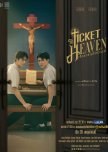
a question of faith, in God and Love.
Ticket to Heaven — The Temptation of Tanrak
Ticket to Heaven is, to me, less a BL romance than a story about temptation. It reminded me of Christ’s temptation in the desert—not because it retells Scripture, but because it asks the same timeless question: What are we willing to sacrifice for what we believe?
When I was a teenager, I once asked my cousin, a Catholic priest, how difficult it was to live the priesthood. His answer has stayed with me ever since.
He said being a true Catholic is already difficult because we are called to live according to our faith. Being a priest goes even further. It is not about fulfilling one’s wants or desires, but about sacrifice—giving oneself completely to God and choosing a life of service over personal fulfillment. He told me that many are called, but few are chosen.
That conversation became the lens through which I watched this series.
Although the story is set in a school for future seminarians rather than an actual seminary, it explores the same internal conflict: the struggle between faith and desire. Tanrak’s journey is not simply about falling in love with another boy. It is about confronting his own convictions, questioning the life he believed he was destined to live, and discovering whether his calling is genuine or merely inherited.
The writing cleverly uses biblical imagery throughout the series. Barth becomes the tempter—not evil, but the person who continually presents Tanrak with choices. The apple, the roti wrap, climbing over fences, breaking rules—each symbolizes another step away from certainty. Every episode slowly erodes Tanrak’s innocence until desire becomes impossible to ignore.
What impressed me most is that the series never portrays temptation as purely physical. Tanrak is an orphan who has longed for affection all his life. Barth gives him the attention, warmth, and acceptance he has always lacked. That emotional hunger makes the temptation far more believable than simple attraction. It raises an important question: are we witnessing genuine love, or is Tanrak confusing love with the need to be loved?
Episode four remains my favorite. Joe’s conversation about the priesthood beautifully captures its essence—not loving one person, but sacrificing oneself in order to love many. That echoes exactly what my cousin once explained to me, and it gives the series its emotional and spiritual center.
Fourth delivers another remarkable performance. He completely disappears into Tanrak, portraying innocence, guilt, longing, fear, and internal conflict with remarkable subtlety. Every emotional breakdown feels earned, making Tanrak’s journey the true heart of the series.
Gemini, however, left me wanting more. Barth carries deep resentment toward God, yet that anger rarely feels fully realized. Gemini naturally projects warmth and sincerity, qualities that work wonderfully in many roles, but here Barth needed a sharper edge and a more volatile emotional presence. I wanted to see a broken young man whose pain slowly softened because of Tanrak. Instead, Barth often felt gentle from the beginning, making his emotional arc less compelling.
This also touches on one of my recurring criticisms of the Thai BL industry. Established “ships” sometimes dictate casting more than character. While Gemini and Fourth undeniably possess excellent chemistry, chemistry alone does not always create the strongest performances. Sometimes the best actor for a role may not belong to the established pairing. Chinese and Japanese productions often feel freer in this regard, casting actors based primarily on the needs of the story rather than audience expectations.
Ironically, because Gemini and Fourth remain so closely associated with My School President, I occasionally found it difficult to completely separate these characters from those earlier roles. That familiarity slightly weakened the illusion this darker, more mature story was trying to create.
The finale will satisfy most viewers, but I don’t believe the ending is the true point of the series. This is not ultimately a story about choosing between love and the Church. It is about people of faith wrestling with guilt, identity, acceptance, and sacrifice. Whether Tanrak’s decision is viewed as happy or tragic depends entirely on one’s understanding of what happiness truly means.
Ticket to Heaven asks difficult questions without pretending to have easy answers. For that alone, it deserves recognition. It is one of the rare Thai BLs that invites viewers not merely to watch a romance, but to reflect on faith, vocation, temptation, and the cost of following one’s convicti
Ticket to Heaven is, to me, less a BL romance than a story about temptation. It reminded me of Christ’s temptation in the desert—not because it retells Scripture, but because it asks the same timeless question: What are we willing to sacrifice for what we believe?
When I was a teenager, I once asked my cousin, a Catholic priest, how difficult it was to live the priesthood. His answer has stayed with me ever since.
He said being a true Catholic is already difficult because we are called to live according to our faith. Being a priest goes even further. It is not about fulfilling one’s wants or desires, but about sacrifice—giving oneself completely to God and choosing a life of service over personal fulfillment. He told me that many are called, but few are chosen.
That conversation became the lens through which I watched this series.
Although the story is set in a school for future seminarians rather than an actual seminary, it explores the same internal conflict: the struggle between faith and desire. Tanrak’s journey is not simply about falling in love with another boy. It is about confronting his own convictions, questioning the life he believed he was destined to live, and discovering whether his calling is genuine or merely inherited.
The writing cleverly uses biblical imagery throughout the series. Barth becomes the tempter—not evil, but the person who continually presents Tanrak with choices. The apple, the roti wrap, climbing over fences, breaking rules—each symbolizes another step away from certainty. Every episode slowly erodes Tanrak’s innocence until desire becomes impossible to ignore.
What impressed me most is that the series never portrays temptation as purely physical. Tanrak is an orphan who has longed for affection all his life. Barth gives him the attention, warmth, and acceptance he has always lacked. That emotional hunger makes the temptation far more believable than simple attraction. It raises an important question: are we witnessing genuine love, or is Tanrak confusing love with the need to be loved?
Episode four remains my favorite. Joe’s conversation about the priesthood beautifully captures its essence—not loving one person, but sacrificing oneself in order to love many. That echoes exactly what my cousin once explained to me, and it gives the series its emotional and spiritual center.
Fourth delivers another remarkable performance. He completely disappears into Tanrak, portraying innocence, guilt, longing, fear, and internal conflict with remarkable subtlety. Every emotional breakdown feels earned, making Tanrak’s journey the true heart of the series.
Gemini, however, left me wanting more. Barth carries deep resentment toward God, yet that anger rarely feels fully realized. Gemini naturally projects warmth and sincerity, qualities that work wonderfully in many roles, but here Barth needed a sharper edge and a more volatile emotional presence. I wanted to see a broken young man whose pain slowly softened because of Tanrak. Instead, Barth often felt gentle from the beginning, making his emotional arc less compelling.
This also touches on one of my recurring criticisms of the Thai BL industry. Established “ships” sometimes dictate casting more than character. While Gemini and Fourth undeniably possess excellent chemistry, chemistry alone does not always create the strongest performances. Sometimes the best actor for a role may not belong to the established pairing. Chinese and Japanese productions often feel freer in this regard, casting actors based primarily on the needs of the story rather than audience expectations.
Ironically, because Gemini and Fourth remain so closely associated with My School President, I occasionally found it difficult to completely separate these characters from those earlier roles. That familiarity slightly weakened the illusion this darker, more mature story was trying to create.
The finale will satisfy most viewers, but I don’t believe the ending is the true point of the series. This is not ultimately a story about choosing between love and the Church. It is about people of faith wrestling with guilt, identity, acceptance, and sacrifice. Whether Tanrak’s decision is viewed as happy or tragic depends entirely on one’s understanding of what happiness truly means.
Ticket to Heaven asks difficult questions without pretending to have easy answers. For that alone, it deserves recognition. It is one of the rare Thai BLs that invites viewers not merely to watch a romance, but to reflect on faith, vocation, temptation, and the cost of following one’s convicti
Was this review helpful to you?


