


 1
1 1
1


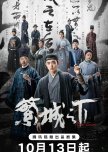
If Agatha Christie wrote a Chinese novel
I started writing this review when I was only on Episode 10, so I had no idea how this story would end. But I already had a feeling about this series. Now that I’ve finished it, I can say that my initial impression was actually right but the ending gave me an even greater appreciation of what the writer was trying to accomplish.
Ripe Town is one of those rare C-dramas where the production itself deserves movie-quality resolution. The cinematography, particularly the use of light and shadow, creates an incredible sense of depth. More importantly, the story demonstrates something I always appreciate in a drama: an understanding of humanity.
It reminded me a lot of Under the Microscope, wonderfully acted by Zhang Ruo Yun, where historical events gradually lead to mysteries in the present. Both shows trust the audience to follow the clues rather than simply throwing answers at us.
And perhaps what I enjoyed most about Ripe Town is what it doesn’t have.
It’s missing the very handsome A-list actor whose impeccable looks easily distract the audience and somehow make an unbelievable character believable.
It’s missing people flying through the air attached to invisible strings, performing acrobatic moves that defy every known law of physics.
It’s missing CGI that makes a serious historical drama look cartoonish, and sometimes downright garish.
It’s missing the horrible fillers that somehow take a story that should have been 12 episodes and stretch it into 40.
And it’s missing that dreaded C-drama finale that seems to simply drop off a cliff.
Instead, Ripe Town trusts its story.
The cinematography is particularly impressive. The director of photography uses beautiful soft lighting and filters that emulate the warmth of afternoon sunlight. Reflected light coming through windows often frames the characters’ faces with a softness that almost feels like a painting. As a photographer I always appreciate the use of shadows to add depth and there was a lot of that in this series.
What impressed me even more is how seamlessly the studio scenes blend with those filmed outdoors. Nothing feels artificial. If CGI was used, it was used sparingly enough that it never became a distraction.
The writing is equally impressive.
Masterfully written scripts can tell a story in only so many episodes. You don’t need 40 episodes when the story itself is strong enough to carry the audience.
Though this is a serious drama, I love the occasional light comedic moments that actually made me laugh, especially because our lead actor maintains such a wonderfully stoic face.
At the center of the story is our young lead, Qu Sangeng who is torn between his own moral values and his corruptible master. What makes him fascinating is the contradiction in his character. Despite essentially being his master’s lackey, he demonstrates intelligence and deductive skills far beyond his young age. Yet he still manages to maintain the respect of the more seasoned people around him.
The dynamics between the characters are complicated, and that is what makes the story so interesting. Everyone seems to be connected to someone else, and every relationship has another layer underneath it.
The script is complex without feeling unnecessarily complicated.
The writer and editor do something I particularly admire as they peel away the mystery layer by layer. Just when you think you understand what is happening, another piece of the puzzle changes your understanding of the previous one.
I was especially impressed by the young actors. For their age, they demonstrate remarkable skill. I truly admired young Lu Zhi, played by 15-year-old Yu Yao, who demonstrates acting ability far beyond his age.
And then I finished the series.
That’s when I realized that Ripe Town wasn’t really just a murder mystery. It is a story about revenge, morality and the consequences of allowing the past to control the present. The secrets they kept. What initially appears to be a story about murder gradually becomes something much darker. Lu Zhi’s desire and anger is something understandable. He has suffered, he has lost people he loves, and he wants justice. But revenge has a way of changing the person seeking it.
What begins as justice eventually becomes another form of violence. “Justice when it is late is not justice”.
And this is where the series becomes much more interesting to me. The real tragedy isn’t simply discovering who is responsible. It is watching how victims eventually become perpetrators themselves. The events that happened twenty years earlier continue to affect everyone in the present. Without giving away the story woven into the script, I was totally surprised
Twenty years. Think about that. An entire life shaped by something that happened when they were simply teenagers. And when the truth finally comes out, there isn’t the kind of satisfying ending we normally expect from a mystery drama. There is no great heroic victory where everyone gets what they deserve.
Instead, revenge has consumed almost everyone. After everything they have gone through, after twenty years of hatred and revenge, death ends it all.
The series isn’t really asking us to decide who is good and who is evil. At what point does a victim become the very thing he hates? Vengeance only begets vengeance. That is what I ultimately admire about this drama.
It doesn’t rely on handsome faces, spectacular wire work, excessive CGI or endless filler to keep us watching. It relies on its characters and the gradual unraveling of the truth. And perhaps most importantly, it understands that there is rarely such a thing as clean justice when revenge is involved.
Now that I know how the story ends, I actually want to watch Ripe Town all over again. Not because I didn’t understand the story the first time, but because I suspect I missed many of the clues. The beauty of a good mystery is that the second viewing can sometimes be better than the first.
The first time, you’re trying to figure out what happened. The second time, you already know what happened. Now you can see why it happened.
And that, for me, is what makes Ripe Town worth watching.
Ripe Town is one of those rare C-dramas where the production itself deserves movie-quality resolution. The cinematography, particularly the use of light and shadow, creates an incredible sense of depth. More importantly, the story demonstrates something I always appreciate in a drama: an understanding of humanity.
It reminded me a lot of Under the Microscope, wonderfully acted by Zhang Ruo Yun, where historical events gradually lead to mysteries in the present. Both shows trust the audience to follow the clues rather than simply throwing answers at us.
And perhaps what I enjoyed most about Ripe Town is what it doesn’t have.
It’s missing the very handsome A-list actor whose impeccable looks easily distract the audience and somehow make an unbelievable character believable.
It’s missing people flying through the air attached to invisible strings, performing acrobatic moves that defy every known law of physics.
It’s missing CGI that makes a serious historical drama look cartoonish, and sometimes downright garish.
It’s missing the horrible fillers that somehow take a story that should have been 12 episodes and stretch it into 40.
And it’s missing that dreaded C-drama finale that seems to simply drop off a cliff.
Instead, Ripe Town trusts its story.
The cinematography is particularly impressive. The director of photography uses beautiful soft lighting and filters that emulate the warmth of afternoon sunlight. Reflected light coming through windows often frames the characters’ faces with a softness that almost feels like a painting. As a photographer I always appreciate the use of shadows to add depth and there was a lot of that in this series.
What impressed me even more is how seamlessly the studio scenes blend with those filmed outdoors. Nothing feels artificial. If CGI was used, it was used sparingly enough that it never became a distraction.
The writing is equally impressive.
Masterfully written scripts can tell a story in only so many episodes. You don’t need 40 episodes when the story itself is strong enough to carry the audience.
Though this is a serious drama, I love the occasional light comedic moments that actually made me laugh, especially because our lead actor maintains such a wonderfully stoic face.
At the center of the story is our young lead, Qu Sangeng who is torn between his own moral values and his corruptible master. What makes him fascinating is the contradiction in his character. Despite essentially being his master’s lackey, he demonstrates intelligence and deductive skills far beyond his young age. Yet he still manages to maintain the respect of the more seasoned people around him.
The dynamics between the characters are complicated, and that is what makes the story so interesting. Everyone seems to be connected to someone else, and every relationship has another layer underneath it.
The script is complex without feeling unnecessarily complicated.
The writer and editor do something I particularly admire as they peel away the mystery layer by layer. Just when you think you understand what is happening, another piece of the puzzle changes your understanding of the previous one.
I was especially impressed by the young actors. For their age, they demonstrate remarkable skill. I truly admired young Lu Zhi, played by 15-year-old Yu Yao, who demonstrates acting ability far beyond his age.
And then I finished the series.
That’s when I realized that Ripe Town wasn’t really just a murder mystery. It is a story about revenge, morality and the consequences of allowing the past to control the present. The secrets they kept. What initially appears to be a story about murder gradually becomes something much darker. Lu Zhi’s desire and anger is something understandable. He has suffered, he has lost people he loves, and he wants justice. But revenge has a way of changing the person seeking it.
What begins as justice eventually becomes another form of violence. “Justice when it is late is not justice”.
And this is where the series becomes much more interesting to me. The real tragedy isn’t simply discovering who is responsible. It is watching how victims eventually become perpetrators themselves. The events that happened twenty years earlier continue to affect everyone in the present. Without giving away the story woven into the script, I was totally surprised
Twenty years. Think about that. An entire life shaped by something that happened when they were simply teenagers. And when the truth finally comes out, there isn’t the kind of satisfying ending we normally expect from a mystery drama. There is no great heroic victory where everyone gets what they deserve.
Instead, revenge has consumed almost everyone. After everything they have gone through, after twenty years of hatred and revenge, death ends it all.
The series isn’t really asking us to decide who is good and who is evil. At what point does a victim become the very thing he hates? Vengeance only begets vengeance. That is what I ultimately admire about this drama.
It doesn’t rely on handsome faces, spectacular wire work, excessive CGI or endless filler to keep us watching. It relies on its characters and the gradual unraveling of the truth. And perhaps most importantly, it understands that there is rarely such a thing as clean justice when revenge is involved.
Now that I know how the story ends, I actually want to watch Ripe Town all over again. Not because I didn’t understand the story the first time, but because I suspect I missed many of the clues. The beauty of a good mystery is that the second viewing can sometimes be better than the first.
The first time, you’re trying to figure out what happened. The second time, you already know what happened. Now you can see why it happened.
And that, for me, is what makes Ripe Town worth watching.
Was this review helpful to you?


