
 Editorials


This review may contain spoilers
A Name Borrowed, A Life Reborn
I began The Tale of Lady Ok with genuine excitement. The premise — a slave escaping horrific abuse, assuming a noblewoman’s identity, and navigating a rigid class system — felt rich and full of potential. For a moment, I even hoped it would become my next My Dearest-level historical obsession. But midway through, the drama lost its footing. The doppelganger plotline, the abrupt tonal shifts, and the overcrowded narrative made it strangely chaotic for several episodes, and I set it aside. I’m glad I returned, though — the second half steadies itself, slows down, and finally develops the emotional core that the story deserved.
Plot & Writing Structure
The narrative of The Tale of Lady Ok is ambitious, emotionally layered, and occasionally messy. The opening episodes deliver a gripping premise — an enslaved woman escaping an abusive household, taking on a new identity, and navigating the rigid class boundaries of Joseon society. These early chapters are sharp, tense, and full of promise. But the middle stretch (roughly episodes 5–8) veers into chaotic territory: too many plotlines colliding at once, an unnecessary doppelganger twist that disrupts the grounded tone, and a secret-society subplot that feels disconnected from the drama’s core themes. This overextension leads to abrupt character motivations and several plot holes that weaken narrative cohesion.
Yet the show redeems itself once it regains focus around episode 9. When the story slows down and turns its attention back to Lady Ok’s daily life, identity struggle, and evolving relationship with her new household, it becomes far more compelling. The quiet scenes allow the emotional threads to breathe. I also found unexpected enjoyment in the procedural legal elements. The investigation and defense sequences are surprisingly well-handled, grounded in period-appropriate logic, and add a layer of tension that feels earned rather than melodramatic. These parts highlight the harsh legal realities of class and status while also giving the protagonist agency within a system designed to erase her.
Unfortunately, just as the drama stabilizes, the ending swings back into randomness with another round of unnecessary twists. This return to melodramatic excess undercuts the careful work of the stronger episodes, leaving the overall plot undeniably inconsistent.
Score: 6/10
Character Writing & Development
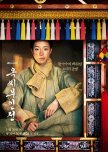
The most compelling aspect of Lady Ok is, unsurprisingly, its protagonist. Ok Tae Yeong (in her stolen identity) is a refreshing kind of sageuk heroine — wounded yet resilient, practical yet hopeful, determined to craft a life for herself within a system designed to crush her. Her struggle to adapt to nobility’s expectations while hiding her past is the most emotionally grounded part of the story.
However, the show undercuts its own strengths by giving too much narrative weight to the male doppelganger plot. Seong Yun Gyeom’s double role feels unnecessary in a grounded historical setting and ends up diluting focus from the story’s true emotional center — Lady Ok herself. The “original” husband remains flat, uninteresting, and dramatically inert, offering little depth despite his narrative importance. Cheon Seung Hwi feels far more layered and compelling. His quieter, more grounded presence stands out — but his arc is underused, overshadowed by a dual-role gimmick that adds confusion rather than meaning.
As for Seong Do Gyeom’s romance subplot — while it serves a structural purpose, it never sparks. Chemistry is minimal, and the scenes often feel like interruptions rather than contributions. I found myself wanting to skip through it entirely. The household servants, Mak Sim and Dokkie in particular, form a funny, warm, lived-in world that balances the more frantic twists.
Score: 8/10
Cultural or Social Commentary
The strongest thematic thread is class. The drama portrays how rigid hierarchy dictates a woman’s worth, how identity can be both weapon and prison, and how survival often requires erasure of self. Lady Ok’s journey highlights the vulnerability of the powerless, especially women and servants, in a stratified society.
Score: 8/10
Entertainment Value
Even with its uneven middle and a few plot holes, The Tale of Lady Ok is remarkably engaging. As a viewing experience, it’s simply enjoyable: the characters are warm and likable, the emotional arcs satisfying, and the overall atmosphere deeply immersive. The cinematography is beautiful in a way that elevates even quieter scenes, and the historical setting feels believable without ever becoming heavy. Most importantly, the drama has a momentum and charm that make it incredibly easy to watch.
Score: 8/10
Plot & Writing Structure
The narrative of The Tale of Lady Ok is ambitious, emotionally layered, and occasionally messy. The opening episodes deliver a gripping premise — an enslaved woman escaping an abusive household, taking on a new identity, and navigating the rigid class boundaries of Joseon society. These early chapters are sharp, tense, and full of promise. But the middle stretch (roughly episodes 5–8) veers into chaotic territory: too many plotlines colliding at once, an unnecessary doppelganger twist that disrupts the grounded tone, and a secret-society subplot that feels disconnected from the drama’s core themes. This overextension leads to abrupt character motivations and several plot holes that weaken narrative cohesion.
Yet the show redeems itself once it regains focus around episode 9. When the story slows down and turns its attention back to Lady Ok’s daily life, identity struggle, and evolving relationship with her new household, it becomes far more compelling. The quiet scenes allow the emotional threads to breathe. I also found unexpected enjoyment in the procedural legal elements. The investigation and defense sequences are surprisingly well-handled, grounded in period-appropriate logic, and add a layer of tension that feels earned rather than melodramatic. These parts highlight the harsh legal realities of class and status while also giving the protagonist agency within a system designed to erase her.
Unfortunately, just as the drama stabilizes, the ending swings back into randomness with another round of unnecessary twists. This return to melodramatic excess undercuts the careful work of the stronger episodes, leaving the overall plot undeniably inconsistent.
Score: 6/10
Character Writing & Development
The most compelling aspect of Lady Ok is, unsurprisingly, its protagonist. Ok Tae Yeong (in her stolen identity) is a refreshing kind of sageuk heroine — wounded yet resilient, practical yet hopeful, determined to craft a life for herself within a system designed to crush her. Her struggle to adapt to nobility’s expectations while hiding her past is the most emotionally grounded part of the story.
However, the show undercuts its own strengths by giving too much narrative weight to the male doppelganger plot. Seong Yun Gyeom’s double role feels unnecessary in a grounded historical setting and ends up diluting focus from the story’s true emotional center — Lady Ok herself. The “original” husband remains flat, uninteresting, and dramatically inert, offering little depth despite his narrative importance. Cheon Seung Hwi feels far more layered and compelling. His quieter, more grounded presence stands out — but his arc is underused, overshadowed by a dual-role gimmick that adds confusion rather than meaning.
As for Seong Do Gyeom’s romance subplot — while it serves a structural purpose, it never sparks. Chemistry is minimal, and the scenes often feel like interruptions rather than contributions. I found myself wanting to skip through it entirely. The household servants, Mak Sim and Dokkie in particular, form a funny, warm, lived-in world that balances the more frantic twists.
Score: 8/10
Cultural or Social Commentary
The strongest thematic thread is class. The drama portrays how rigid hierarchy dictates a woman’s worth, how identity can be both weapon and prison, and how survival often requires erasure of self. Lady Ok’s journey highlights the vulnerability of the powerless, especially women and servants, in a stratified society.
Score: 8/10
Entertainment Value
Even with its uneven middle and a few plot holes, The Tale of Lady Ok is remarkably engaging. As a viewing experience, it’s simply enjoyable: the characters are warm and likable, the emotional arcs satisfying, and the overall atmosphere deeply immersive. The cinematography is beautiful in a way that elevates even quieter scenes, and the historical setting feels believable without ever becoming heavy. Most importantly, the drama has a momentum and charm that make it incredibly easy to watch.
Score: 8/10
Was this review helpful to you?


