
 Editorials





peace
I don't know how to explain my feelings. I am a 27-year-old white-collar worker whose only solace is traveling and watching Korean dramas. and this series has me hooked! I felt the peace, I felt the forest, I felt the rain, I felt the losses. I felt the losses that could not be said goodbye to. traveling, trying new things, apologizing. and as in every korean drama the food was very good. I really liked the acting and clarity. No one was impossibly beautiful or handsome. It was a fun journey. The only bad thing is that it's over!Was this review helpful to you?
This review may contain spoilers
loneliness becomes its strongest evidence
There is a book I love deeply; I won’t name it, in case someone reading this has read it. In the story, a girl speaks every week on the phone with her mother, who is in prison. Throughout these conversations, the mother relentlessly belittles her daughter, always under the guise of concern. “You don’t really deserve that anyway.” “They spend time with you out of pity.” “Did she call you sweet? Then she probably didn’t like you that much.” At first, these words seem like nothing more than the language of a cruel mother. But toward the end of the book, it becomes clear that the “mother” the girl hears is less a real person than a voice deeply rooted in her mind. This is not simply an imaginary mother; it is an inner voice shaped by childhood trauma, one that forms the girl’s beliefs about herself, a voice that claims to protect her while quietly shrinking her, shaming her, and pushing her into solitude.This is a painful truth, yet the story whispers this: for a child, the mother’s voice is not an interpretation but reality itself. How the world works, what people mean, what love looks like — all of this is learned through that voice. Even when the mother disappears, the voice remains, because it no longer speaks from the outside but from within.
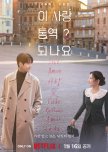
When read alongside Can This Love Be Translated, this meaning deepens further. In that story, the character the girl creates ultimately turning out to be her mother does not suggest a return to the mother, but rather the inevitable emergence of the mother from within the mind. The one who was meant to learn the language of love never learned it at all. And so love does not appear as tenderness or closeness, but as control and diminishment. The girl reconstructs the only form of love she knows.
In this book, the mother’s voice builds an invisible glass wall between the protagonist and the world. Because the voice insists, “No one truly loves you,” the protagonist grows increasingly isolated. As the isolation deepens, the voice validates itself; loneliness becomes its strongest evidence.
Both stories bleed from the same wound: sometimes we are hurt most where we were meant to be loved. And perhaps more painfully still, we are hurt most where we were forced to change ourselves in order to be loved. For the more we change shape, the more we lose our own voice until only someone else’s remains.
it was so good.
Was this review helpful to you?


