
 K-Drama

 37
37 40
40 3
3 1
1 10
10 3
3 1
1 10
10 1
1 1
1 4
4 3
3 2
2 4
4 25
25


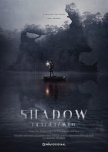
BL to Thriller or Vice Versa?
At first, my fujoshi heart was all aflutter for some fresh BL content, but six episodes down the line, I found myself spiraling into a rabbit hole of thrills and chills instead.Not a moment of fast-forward was needed through the saga: it's a wild ride through the eerie and the unknown, with narratives that grip you, suspense that keeps you on the edge, and a raw delve into the realm of mental health. It's a murder mystery adorned with a rich blend of folkloric whimsy and literary allegory, each scene more captivating than the last. This series is where the tender allure of BL meets the pulse-racing thrill of a mystery, all wrapped up in a cloak of cultural and literary elegance.
Was this review helpful to you?

Two Men, One Storm: The Unexpected Pull of To My Shore
Appendix – After Episode 14Watching up to episode fourteen, *To My Shore* stopped being just a beautifully filmed crush for me and started feeling like sitting with two very real, very damaged people who keep choosing each other in the worst possible ways.
At first, it was easy to float on the smoke and flirtation. Fan Xiao’s voice, the way he leans into Yu Shulang’s space, the pretend coincidences that feel like destiny – all of that still works on a visceral level. But the more the story unfolds, the more it becomes clear that what looked like fate was, in many moments, design. Fan Xiao isn’t just “drawn” to Yu Shulang. He plans, he tests, he interferes. Those dreamy meetings now carry the aftertaste of someone who has never been safely loved trying to build certainty by tightening his grip.
Yu Shulang, too, has shifted for me. In the beginning he read as almost impossibly composed – a man with clean edges and tidy morals. After fourteen episodes, he feels much more breakable. You can see how much of that calm is simply practice: an orphan who learned early that if you keep yourself small and steady enough, you can survive almost anything. Watching him slowly open up, only to realise how much of what he’s standing on was manufactured by Fan Xiao, hurts in a way the early romantic framing doesn’t prepare you for.
And yet, what keeps me invested is that the show never treats either of them as monsters. Fan Xiao is cruel, but his cruelty is legible: a child who watched love fail catastrophically, now terrified of being left behind again, building elaborate ways to make sure people can’t leave. Yu Shulang is kind, but his kindness is not saintly; it comes with tiredness, with anger, with that quiet, tired look of “I thought I was done suffering like this.” They are not tropes so much as two people whose worst habits happen to collide with each other’s softest spots.
By episode fourteen, the tension I once read as deliciously romantic has turned into something more complicated. When Fan Xiao looks at Yu Shulang now, I don’t just see longing. I see guilt, stubbornness, and a fear so old it doesn’t know how to do anything but hold tighter. When Yu Shulang looks back, there’s still that flicker of attraction, but it’s buried under the knowledge of exactly how much was a lie. The show sits in that discomfort and doesn’t rush to soothe it.
For me, that’s where *To My Shore* has quietly grown up. It’s still gorgeous. It still knows how to flirt. But by fourteen episodes in, it’s also honest about how love from wounded people can be selfish, clumsy, and deeply unfair. It’s no longer just a story about two men who “reroute” each other in a poetic sense. It’s about what it costs to change course when your whole survival has been built on never trusting anyone to stay.
As an appendix to my first review, I’d say this: the early episodes made me excited for episode three. Everything up to episode fourteen has made me nervous – in a good way – about how far the show is willing to let these two hurt each other before it dares to talk about healing. It’s still a romance. But now, it’s also a slow, painful study of how hard it is to unlearn the idea that the only way to keep someone is to never let them go.
……….
To My Shore starts like a quiet romance novel that suddenly discovers how to flirt. The first two episodes unfold with a slow, smoky elegance that pulls you in before you realize what’s happening. The dialogue is lush, almost musical, and Fan Xiao’s low, textured voice could convince anyone that gravity is optional. Honestly, half the show feels like a BL audio drama someone accidentally filmed.
The “coincidences” between Fan Xiao and You Shu Lang are anything but. They’re storybook encounters wrapped in fate, like two characters who keep drifting into the same chapter no matter how far apart they begin. Fan Xiao arrives with a teasing edge, poking at You Shu Lang’s overly saintlike calm. But somewhere in episode two, that teasing shifts. The tension turns softer. His gaze stops being a game and starts being a confession he hasn’t said out loud yet.
What makes it compelling is the transparency. Fan Xiao pretending to be lost is probably the least believable lie in the entire show. This man doesn’t lose his way. He chooses it. And what he’s really choosing is You Shu Lang. The directions are just an excuse to get close, to pull this orderly, gentle man into a world that runs on instinct and intensity.
And that contrast is exactly where the magic lives. You Shu Lang moves through life with clean moral lines. Fan Xiao moves like a beautiful storm that refuses to stay outside. When they meet, something shifts. Not dramatically, not loudly. Just a quiet, thrilling imbalance that hints at a love story waiting to tip over.
If these first two episodes are the foundation, then To My Shore is shaping up to be a story about two men who don’t just collide—they reroute each other. It’s about discovering that getting lost can sometimes lead you somewhere you were meant to find.
And yes, episode three cannot arrive fast enough.
Was this review helpful to you?

This review may contain spoilers
Hung on the Tree: How Goddess Bless You From Death Exposes Sacrificial Logic
Watching Goddess Bless You From Death as someone who loves horror BL, I didn’t end up with that fun “ooh, spooky lore” buzz at all. Especially once the finale hints that there might be multiple goddesses tangled up in this ritual, even the title starts to feel slippery. “Goddess Bless You From Death” sounds singular and almost comforting, but underneath it suggests this whole messy crowd of divine figures that can be invoked, misquoted, or even invented to excuse whatever people already want to do. Instead of cozy supernatural worldbuilding, it felt like the show was holding up a mirror and making me really look at what happens when belief becomes a cover for hurting people you’ve already decided are disposable.What really got under my skin is how Bom and Aisun aren’t doing anything conceptually new. They’re just taking a very old, very human logic, sacrifice a few so the chosen one lives longer, and turning the volume all the way up so we can’t pretend it’s anything but monstrous. The show lays it out plainly: the ritual is about life extension. Seven people die so one person can keep breathing. On the surface that sounds like pure fantasy, but it maps onto so many real situations where harm is justified “for someone’s good,” a family member, a leader, an idea of order. The math is always the same. Some lives count more. The people doing the math never put themselves in the lesser category.
The bodies are what really drive it home. Those stitched eyes and mouths, in both the old murders and the current cases, are not subtle. These victims are literally not allowed to see or speak, in life or after death. The shaman spells it out: the stitching pins the ghosts down so they can’t go looking for justice or come back to curse the people who killed them. So the ritual does two things at once. It kills people, and it tries to erase the moral fallout of killing them. It’s murder with a built-in gag order.
As I kept watching, I started to notice who actually gets chosen for sacrifice. It’s never the rich or the powerful. It’s always people who are vulnerable, inconvenient, or easy to write off, people whose deaths can be reframed as destiny or necessity. Bom and Aisun’s almost complete set of seven includes people like Darin and King, and then finally Thup, who is already marked as “other” because he can see ghosts. The show is making a quiet but brutal point: sacrificial systems are designed to land on the people whose complaints won’t be heard and whose suffering can be explained away.
Thup hurts the most in that context. His ability to see and talk to the dead gets described as a curse all the way through, this misfortune he just has to live with. But the ritual takes that ability, which really is a gift, the power to witness and carry the stories of the dead, and twists it into a reason he can be used up and thrown away. Instead of being valued as someone who connects worlds and advocates for the forgotten, he gets treated like another consumable resource. That flip makes the whole thing feel less like one bad guy’s evil plan and more like a pattern. Societies have always taken what’s strange or liminal about certain people and turned it into an excuse for violence.
One thing I really liked is that the show never says “belief in spirits is the problem.” From the very beginning, with the novel excerpts and the shaman’s explanations, it’s clear that honoring gods, ghosts, ancestors, local spirits is just part of daily life in this world. Incense at crossroads, ribbons on trees, little shrines in overgrown corners, all of that is shown as normal and even comforting. The horror doesn’t come from belief itself. It starts in that moment when someone decides their personal desperation matters more than everyone else’s right to exist.
Bom talks like a priest and carries himself with this careful piety, but the details of the ritual scream control, not devotion. The exact rules, seven bodies, specific preparations, stitching the dead shut, feel less like worship and more like a technology, a system for manipulating power, keeping some people “pure,” and locking dangerous others out of sight. By the time the finale suggests there might be multiple goddesses in the background, it doesn’t feel like “ah, new lore” so much as “of course there are many names you can grab when you want divine cover.” There isn’t one clear divine voice here. There’s a tangle of symbols that humans can bend to justify what they were already planning to do.
Coming at all this as a BL watcher, I really love that the show argues about faith and ethics through relationships, not sermons. The shaman tells Thup he’s going to see things he doesn’t want to see and hear things he doesn’t want to hear until this tragedy is resolved, which basically frames his whole life as an unwanted prophetic calling. But the thing that actually pushes back against Bom and Aisun’s fake religious framework isn’t a better ritual or a rival priest. It’s Singha simply refusing to accept that extending one life could ever be worth what’s being done to those bodies.
That’s where it feels like the show is poking at a certain BL comfort fantasy. In a lot of stories “love conquers all,” and we don’t look too closely at the systems underneath. Here, love doesn’t override ethics. It intensifies them. The more Thup and Singha care about each other and about the victims whose stories Thup carries, the more impossible and wrong the ritual feels. Their relationship doesn’t make the sacrifice beautiful or tragic in a romantic way. It exposes it as something that cannot be cleaned up, even if keeping quiet would be safer.
So watching the ritual play out left me in that strange space between fascination and disgust, and I’m still sitting with it. The worldbuilding is rich. The imagery is striking. But the show never really lets you relax into it. Under all the candles, the chanting, the arranged bodies, there’s a very simple question: are some people’s lives worth killing for, and who gets to decide that? With the finale’s hint of multiple goddesses in the background and a title that sounds singular on the surface, it almost feels like the series is side-eyeing how easy it is to package violence in a pretty religious phrase. In the end, it answers its own question not with big speeches but with where it puts its focus: whose pain it centers, whose voices it lets be heard, whose deaths it refuses to forget. That act of remembering and witnessing, of saying “this is not acceptable,” is what ends up feeling sacred in this story.
Was this review helpful to you?

This review may contain spoilers
10 DANCE: When Rivalry Becomes Romance
I came to this film as a manga reader, and honestly, I was nervous. The source material is one of those rare BL stories that takes both the sport and the romance seriously: two professional dancers at the peak of their careers, forced to master each other’s specialties to survive the brutal 10 Dance format. The tension between Suzuki and Sugiki works because they are genuine equals, clashing on and off the floor. Translating that to live action felt like a huge risk, especially for the dancing, which is the backbone of the story.I went in as a Keita Machida fan and came out obsessed with Ryoma Takeuchi too. Machida’s Sugiki is all control and precision, the Standard champion who keeps everything ruthlessly locked down. Takeuchi’s Suzuki has the swagger and physicality you expect from a Latin dancer, but there is real emotional fragility underneath the bravado. What sells it is how fully committed they both are to the actual dancing. This is not actors faking it with doubles; you can see the work in their bodies in every movement.
The dance sequences are where everything clicks. There is an early rehearsal where Suzuki teaches Sugiki a rumba walk, and you catch every tiny adjustment in posture, every weight shift, every moment where Sugiki’s stiffness starts to melt. The camera stays close enough that you see the hand placements, the tension in their frames, and the way their bodies have to negotiate through touch. Later, when Sugiki has to follow instead of lead in the Viennese waltz, the frustration in his face and body says everything about his terror of surrender. By the final performance, they are pulling together everything they have taken from each other: Suzuki’s fire braided with Standard discipline, Sugiki’s control flooded with Latin heat. It is technically impressive, but it hits hardest because these two people who have been orbiting each other finally move as one.
What grounds all of this is the specific reality of competitive ballroom. This world is rigid and hierarchical, built on traditional gender roles, fixed lead and follow dynamics, and heteronormative partnerships. When two men dance together as equals, swapping lead and follow and treating each other as true partners instead of rivals, that is not just romantic. It is disruptive. Choosing connection in a space designed around comparison and ranking reads as its own quiet act of defiance.
The chemistry between Takeuchi and Machida is ridiculous. Every charged look, every lingering touch during practice, every moment where competition blurs into something else feels inevitable but never cheap. The restraint makes it sharper. You are leaning forward, waiting for them to close the distance, and when they finally dance together in that last sequence, the intimacy lands like a confession even though the film stays relatively chaste. That is how you do slow burn in BL: the choreography carries the confession the script never verbalizes.
And yes, this should have been a series. The ending is both satisfying and maddening. You get emotional payoff, but it is very clearly only a midpoint in their story. There is so much more to explore, professionally, romantically, and psychologically, that you can practically feel the missing episodes. It plays less like closure and more like a pilot still waiting for its next season.
I have read the critics calling it too cautious, joking that it needed a chastity coordinator, and faulting it for not fully committing as a queer romance. As an exercise in pure film criticism, you can argue the caution. But as a BL viewer who knows what this genre usually delivers on screen, this is still the standout BL film of the year. The bar for BL cinema is often pretty, tropey, and thin, especially on the big screen. 10 DANCE aims higher, even if it does not swing for the fences in every area.
Most BL gives you surface romance with minimal character work and sports as aesthetic wallpaper. This gives you complicated adults with real ambitions and vulnerabilities, a romance built on mutual respect and earned connection, and dance sequences that actually move the story forward. The restraint reads as maturity, not timidity. The slow burn feels compelling rather than withholding because the film trusts you to read the subtext: to understand what a lingering touch means, to catch the shifts in frame and footwork, and to feel the weight of what never gets said out loud. That is sophisticated storytelling, and it is exactly what this genre needs more of.
If you loved the manga, this respects the core while making smart, medium specific adaptation choices. If you are new to 10 DANCE, it is a gorgeous entry point. And if you care about BL that is ambitious, technically crafted, and emotionally literate, this is essential viewing. Just be ready for that final stretch to leave you desperate for a sequel, and probably already drafting your comment to Netflix asking for one.
Was this review helpful to you?
This review may contain spoilers
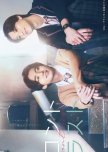
Quietly Radiant: Contrast and the Small, Steady Bravery of Falling in Love
Two boys, a stairwell, a rooftop, and a shared CD player — that is where Contrast begins, and where it quietly steals your heart.Set in a Japanese high school, this BL drama opens with the comfort of familiarity: well‑worn tropes, soft light in narrow corridors, and the kind of stolen moments you recognize before you can name them. All episodes drop at once on FOD, and even before the subtitles arrive, you can feel how assured the direction is; the rhythm of each scene is clean, the cuts unobtrusive, and the camera always seems to arrive half a second before a feeling crests.
Kanata Aoyama’s name is written as 「翔太」, a boy meant to soar, while Akira Senkawa’s is 「陽」, a sun that quietly redraws the borders of his world. The more time they spend trading earbuds and rooftop conversations, the more their shared orbit becomes a fragile, private refuge — until love starts to look less like a way of running away, and more like a way forward. Their relationship isn’t framed as a grand romance that magically fixes everything, but as a tender, clumsy partnership that makes surviving adolescence just a little more possible.
Contrast is far from a towering masterpiece, and it doesn’t pretend otherwise. What it offers instead is a steady, heartfelt coming‑of‑age story that trusts small gestures — a shared earbud, a glance on the stairs, the hush before a bell rings — to carry genuine weight. It’s the kind of drama that doesn’t shout to be noticed; if you’ve ever grown up in the blind spots of school hallways, you may find yourself lingering in the quiet spaces it so gently illuminates.
Was this review helpful to you?
This review may contain spoilers
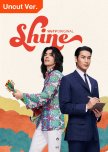
Shine (2025) Review: A Story Told Through Objects
I didn’t plan to get attached. I thought I was signing up for another pretty BL with good-looking leads and some historical flavor. Instead, I ended up sitting here with a lump in my throat, staring at ordinary objects that now feel heavier than they should.That’s the trick Shine pulls off. It doesn’t just tell its story through dialogue or kisses. It tells it through things: a television buzzing with the moon landing, a boy’s notebook full of scribbles, a guitar strummed in secret, a cassette tape holding lives inside its plastic shell, a protest placard raised too high, a pool that goes from comedy to tragedy in one cut, a ruined roll of film, a camera left behind on a piano, a hat still hanging by the door, a one-way plane ticket.
None of these are just props. They are the afterimages of a time when love was dangerous, and memory itself was fragile. Each one reminds us that intimacy can bloom in the shadows, but history can erase it overnight.
And then there’s the music. Slot Machine’s Beyond the Clouds hits like a funeral hymn, looping back to the name of the studio itself. Be On Cloud, Beyond the Clouds. It feels like the company was destined to give us this story, one where love doesn’t float on clouds—it struggles to reach beyond them.
What makes Shine special is its honesty. Some characters survive. Some don’t. One couple grows old together, another is torn apart. It’s harsh, but it’s real. The series doesn’t flatter us with fantasy. It hands us truth: that love and survival don’t always overlap.
When I think back on Shine, I don’t replay the dialogue. I see objects. I see a TV glowing in a dark room, a notebook clutched too tight, a placard raised in protest, a roll of film exposed to light. These are the memories the show left me with. And maybe that’s the point. History doesn’t always remember the lovers. It remembers what they left behind.
⭐ 9.5/10
A drama that turns props into poetry, romance into history, and memory into survival.
Was this review helpful to you?
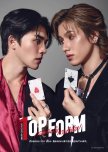
TOP FORM: The quiet ache behind the camera.
Some BL dramas go for instant heat.Top Form chooses a slow simmer—the kind that lingers long after the final frame fades to black.
Adapted from the Japanese manga Dakaretai Otoko 1-i ni Odosarete Imasu, this Thai reinterpretation steps out of the shadow of its source and quietly becomes its own. Not louder. Just deeper.
Set in the entertainment industry, the series follows two actors on seemingly opposite paths—one seasoned and guarded, the other rising and relentless. But this isn’t just a story about competition. Or desire. Or fame.
It’s about presence.
The beauty of Top Form lies in its restraint.
In the way it lingers on glances.
In the pauses between lines.
In the weight of words unsaid.
Yes, there are steamy moments—well-crafted, cinematic, and buzzworthy. But what makes this series extraordinary is what it doesn’t show off. It trusts the viewer. It trusts the silence. And it trusts its cast—especially Boom and Smart—to hold the emotional weight with breathtaking nuance.
The cinematography is elegant without ever being fussy.
The writing is romantic without being sentimental.
And the direction carries just enough edge to keep it grounded in reality, rather than fantasy.
What’s most striking is how Top Form captures something very now:
the longing for connection in a world that constantly demands performance.
And the courage it takes to love when nothing—especially not yourself—feels entirely safe.
This isn’t just a story of two men falling in love.
It’s a story of two people learning how to stay.
And if you’ve ever needed a reminder that quiet love can still roar—
Top Form is the kind of series that leaves its echo with you.
Even after the screen goes dark.
Was this review helpful to you?
This review may contain spoilers
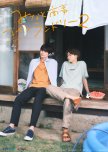
Minato Coin Laundromat: Where love's spin cycle meets rinse and repeat...and forget?
Season one warms your heart like that snuggly sweater on a chilly night. But season two? More like accidentally dyeing your whites pink. Minato's sudden cold feet with Shin? Imagine realizing you've been using fabric softener instead of detergent all along. And oh, the selective amnesia? Must've been left behind with those missing socks. A tip: Before diving into season two, maybe keep those emotional delicates in a protective mesh bag!If you’re into those acquired taste kind of characters, give Minato a whirl. But me? Watching him was like enduring a never-ending spin cycle!
Was this review helpful to you?
This review may contain spoilers
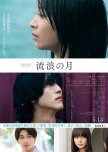
Momadic Moon
“Nomadic Moon,” with its formidable 150-minute duration, might initially seem like a lengthy commitment. Yet, the film effortlessly envelops you in its world, making the time pass unnoticed. This is a testament to Lee Sang-il’s exceptional directorial prowess. His talent for crafting a story that’s deeply engaging without relying on flamboyance is remarkable.The performances of Suzu Hirose and Toma Matsuzaka stand out, clearly a result of Lee’s deep commitment to the film. From my perspective, these roles could be considered the pinnacle of their acting careers thus far.
While “Nomadic Moon” has a delicacy that may not resonate with all audiences, its subtle interplay of themes like the moon and water leaves a lasting impact, prompting thoughtful discussions—an enriching experience especially for adult viewers.
Additionally, the performances by Ryusei Yokohama and Mikako Tabe are noteworthy and add depth to this beautifully crafted film.
It's fascinating to explore how societal norms and perceptions of mental health evolve, influencing our interpretation of characters and narratives in media.
The term "Lolita complex," known in Japanese as "rorikon," originates from Vladimir Nabokov's novel "Lolita." It describes an adult's sexual attraction to young girls, typically those who are prepubescent or in early adolescence. In Japan, this term is prevalent in both clinical and popular cultural contexts, though its interpretations can vary widely.
In this film, a young man shelters an abused girl, which places him in a delicate social position. Society swiftly categorizes him under the stigmatized label of 'Lolita complex,' regardless of his true intentions. This scenario mirrors a larger societal trend of quick judgments and ostracization based on superficial assessments or misinterpretations, without fully considering the complexity of the circumstances.
The movie challenges its viewers to reassess their biases and the simplicity with which they might label someone with a 'Lolita complex.' It weaves a narrative that obscures the line between societal labels and personal actions, prompting the audience to reconsider their viewpoints. The film's deliberate ambiguity suggests that judgment is in the eyes of the beholder, reflecting their personal prejudices or sympathies.
This method of storytelling, where the audience's interpretation becomes a mirror of their personal thoughts and societal conditioning, is compelling. It not only narrates a story but also engages the viewers in profound introspection about societal norms, mental health stigmas, and the often unfair practice of marginalizing individuals based on misinterpreted actions or misconceptions.
Was this review helpful to you?
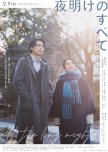
All the Long Nights: The Anti-Romance We Need
“Doesn’t matter if you’re a man or a woman, or even if you don’t get along—people can still help each other out, right?”“Well, yeah! I mean, doctors and patients aren’t always the same gender either.”
I rewatched All the Long Nights over the long weekend, and honestly, it hit differently the second time. The film follows Misa Fujisawa and Takatoshi Yamazoe, two coworkers struggling with mental health issues—her with severe PMS, him with panic attacks. They start off annoying the hell out of each other at work, but slowly learn to understand and support one another.
Here’s the thing: most mainstream movies would’ve turned this into a rom-com with manufactured drama and a love story. But this film? It goes nowhere near that territory. Misa and Yamazoe barely even qualify as friends—they’re more like two people dealing with similar pain who help each other when they can. And there’s definitely no miraculous recovery or overly positive ending where everything’s suddenly fine.
So I wouldn’t call this a tearjerker, but it made me feel something deeper. It’s all those tiny, wordless moments of kindness between people—the small gestures that warm you up inside. And here’s what’s beautiful: that warmth doesn’t come from one special person or fit neatly into some relationship box like “romance” or “friendship.”
It’s not about anyone saving anyone. It’s about how a compassionate, accepting environment can heal you. How even in endless darkness, you can hold onto hope and believe a new dawn will eventually come.
The dialogue is sparse, the pacing is slow, but the cinematography is gorgeous—all that light and shadow work is chef’s kiss. For me, this is the perfect film to watch when you need to quiet your mind and just… breathe.
Was this review helpful to you?

Love Sick 2024: When Lightning Strikes Twice
Remember when Thai BL was the industry’s best-kept secret? Now it’s a global phenomenon, and Love Sick 2024 arrives to remind us why this genre captured hearts worldwide in the first place. This remake of the 2014 classic that helped ignite Thailand’s BL wave walks a delicate tightrope between nostalgia and reinvention—and it’s a balancing act worth watching.The bones of the story remain: two high school boys navigate friendship, first love, and the rocky road of self-discovery. But this isn’t your older sibling’s Love Sick. Per and Mawin’s romance now unfolds in a world where production values gleam like Bangkok skyscrapers, and character development runs deeper than the Chao Phraya. Their family dynamics and personal struggles feel remarkably current, swapping out melodrama for a nuanced exploration of modern Thai youth culture.
The glow-up is undeniable. Every frame looks like it was dipped in honey, with cinematography that turns stolen glances into visual poetry. Yet, there’s a part of you that misses the original’s raw charm—like when your favorite street food joint gets a Michelin star. Sure, the plates are prettier, but something of that initial magic gets lost in translation.
Speaking of translations, let’s talk about the soundtrack. Thai BLs are known for their emotional musical punches—those heart-swelling ballads that linger long after the credits roll. While the original Love Sick gave us earworms that millennials still hum in convenience stores, the remake opts for a more sophisticated, ambient score. It’s beautifully produced, but it doesn’t hit you in the same visceral way.
For newcomers to Thai BL, this polished version serves as the perfect gateway drug. It’s accessible, stunning to look at, and emotionally resonant without requiring a PhD in BL tropes. For veterans, it might be a more complicated affair—caught between appreciating the craftsmanship and yearning for the unfiltered sincerity of the original.
Love Sick 2024 proves that lightning can strike twice—it just hits differently. The remake honors its roots while acknowledging how both the genre and its audience have grown up. Whether that growth feels like evolution or just really good cosmetic surgery probably depends on your relationship with the original. Either way, it’s a feast for the eyes and a workout for the heart.
So, is it worth watching? Absolutely. Love Sick 2024 doesn’t just reimagine a classic—it reflects how we, as viewers, have evolved. The original captured the messiness of teenage love; the remake captures our desire to make sense of it. Both have a place, just like there’s room for both our past and present selves.
And if you need me, I’ll be rewatching both versions back-to-back for the third time. You know, for research.
Was this review helpful to you?

This review may contain spoilers
Uncharted Hearts: A Youthful Sonata of Love and Hesitation
Upon the curtain fall of the fifth episode, my hesitation to draft a review for this ongoing BL manga, and its live-action counterpart, melted away. Dive in, there’s no room for disappointment here.In the BL cosmos, it's almost scripted for two matching boys to find their narrative arc together. Yet, reality scripts a different, more complex drama where fate and attraction are merely the opening act, setting stage for a play of courage and cognizance. The celebration of romance, regardless of age, echoes through the story, especially poignant among childhood buddies embarking on uncharted emotional terrains.
The narrative delicately explores the dance of hesitation spun from long-held familiarity, where the fear of confession could cue a bitter end, and the quiet guarding of hearts against potential heartache takes center stage, more so when a third character enters the plot. Yamato’s emotional whirl finds a universal echo, his affection for Kakeru a tender tune played cautiously, fearing an overwhelmed audience in Kakeru.
The plot truly sparkles when it unveils Kakeru’s silent yet profound regard for Yamato, unknowingly casting him in a leading role in his life's script. Much like their classmate Hosaka Yui, we, the audience, find ourselves on the edge of our seats, almost urging the script along towards their destined union. Hosaka, an unsolicited mentor, channels our chorus of encouragement to Yamato, lending a vibrant note to the narrative.
This youthful love melody, flowing with the serene grace akin to the waters beneath Kyoto's Togetsukyo Bridge, paints a calm yet poignant picture of adolescent love. Anxiously awaiting its Netflix debut, for a broader audience to bask in its soft, tender narrative.
Was this review helpful to you?
This review may contain spoilers
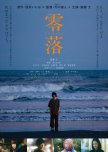
Downfall: A Poignant Exploration of Art, Alienation, and Redemption
Naoto Takenaka’s “Downfall” (2023) is a compelling narrative that delves deep into the turbulent life of Kaoru Fukazawa, a manga artist grappling with the end of his long-running series and the subsequent emotional and creative void. The film’s portrayal of Fukazawa’s journey from fame to obscurity and back is not just a story about the struggles of a creative mind, but also a reflection on the complexities of human relationships and self-perception.The opening scenes set the tone, depicting Fukazawa’s college days and a relationship with a quirky girlfriend, characterized by her cat-like eyes and rare smiles. This relationship, though short-lived, casts a long shadow over Fukazawa’s life, symbolizing his obsessive devotion to his art at the expense of personal connections.
The crux of the film lies in Fukazawa’s relationship with his wife, Nozomi, a dedicated manga editor. Their marriage, devoid of children and strained by their respective careers, reflects the dilemmas faced by many modern couples juggling professional aspirations and personal lives. Fukazawa’s sense of abandonment and frustration culminate in a harrowing scene where he confronts Nozomi with a mix of accusation and desperation, exposing the raw nerve of their failing marriage.
A significant portion of the film is dedicated to Fukazawa’s interactions with various women, particularly those in the escort world. These encounters, especially with a woman who possesses a maternal gentleness, and another, a free-spirited university student with cat-like eyes, represent his search for emotional solace and inspiration. These relationships, however superficial, are portrayed with a sensitivity that underscores Fukazawa’s deep-seated loneliness and quest for redemption.
The film reaches its emotional climax during a book-signing event where Fukazawa is confronted by a long-time female fan. Her words, praising the kindness and sincerity she perceives in his work, trigger a profound reaction in Fukazawa, who still considers himself a “monster,” as labeled by his college girlfriend. This poignant moment, marked by Fukazawa’s outburst, “You know nothing,” is a powerful testament to the internal conflict between self-perception and external validation.
“Downfall” stands out for its nuanced character development and the exploration of themes like artistic integrity, emotional isolation, and the search for meaning in a transient world. Takenaka’s direction is both subtle and impactful, weaving a narrative that is as much about the art of manga as it is about the art of living. The performances are uniformly excellent, with Takumi Saito delivering a compelling portrayal of Fukazawa, capturing the character’s vulnerability and complexity.
In conclusion, “Downfall” is a beautifully crafted film that resonates with anyone who has ever grappled with the dichotomies of success and failure, connection and isolation, perception and reality. It is a poignant reminder of the complexities of the human condition, making it a must-watch for not only fans of Japanese cinema but for all who appreciate deeply human stories.
Was this review helpful to you?

Delightfully shallow
"A Boss and A Babe" is a lighthearted office rom-com that serves as a perfect guilty pleasure for those seeking a breezy escape from reality. With its irresistibly charming male lead, Force, the show offers a visual feast for the eyes, while the storyline playfully dances around conventional office romance tropes. While it is not a show to be dissected for deeper meaning or life lessons, it does provide a humorous glimpse into the quirks and pitfalls of miscommunication that occasionally border on the toxic. Best enjoyed with a generous pinch of salt and a willingness to embrace its frothy frivolity, "A Boss and A Babe" will have you grinning as you indulge in its unapologetic simplicity.Was this review helpful to you?

This review may contain spoilers
Stay By My Side" Review: Taiwan's BL Drama Shines Once Again
🚨 **Spoiler Alert** 🚨When it comes to the pulsating world of Asian BL drama, Taiwan has always held a distinguished spot. From the inception of the famed *HiStory* series, Taiwan has showcased its unique flair. And now, with **"Stay By My Side,"** produced by the illustrious Sanlih E-Television, traditional Taiwanese TV has boldly stepped into the BL arena — and what an entry it is!
Meet Gu Buxia, a student whose academic prowess may be questionable but whose charm is undeniable. Raised amidst Taoist temples, this character has a quirky fear: ghosts. Yet, it's his childlike innocence, devoid of any guile, that captivates the enigmatic transfer student, Jiang Chi. As Jiang eloquently puts it, "I'm smitten with the very essence of you."
The show beautifully weaves quintessential Taiwanese elements — Taoist temples, the traditional birthday dish of pig's trotter noodles, and colloquialisms that might get lost in translation. Yet, fret not international viewers! The endearing dynamics between our leads will keep you grinning from ear to ear, language barriers be damned.
And here's the twist: who knew that the ultimate way to drown out pesky ghostly whispers was by diving deep into a same-sex romance, complete with passionate embraces? While the series might shy away from any risqué sequences, there's no shortage of heart-throbbing kisses between our leads.
In conclusion, **"Stay By My Side"** is more than just a BL drama. It's a vibrant tapestry of Taiwanese charm and culture. It promises not just romance, but depth, humor, and a cultural immersion. Tune in, and let yourself be whisked away by its youthful zest and allure!
Was this review helpful to you?


