
This review may contain spoilers
This drama simmered so gently, I forgot it was on.
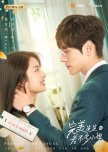
I have mixed feelings about this drama — the kind that makes you sigh dreamily because the main couple is genuinely sweet, then immediately sigh again out of frustration because the story itself feels like a slow descent into narrative purgatory. Zhang Ling He was the magnet that pulled me in; his face card could carry an entire dynasty, but sadly, not this drama. Xu Ruo Han was lovely too, more than holding her own. So let’s be clear: the leads were not the problem. The problem was everything happening around them — or rather, the lack thereof.I love slow burn romance. Give me longing glances, emotional repression, even years of unresolved tension if it pays off in fire. But this wasn’t slow burn — it was just slow. Like wading through lukewarm bathwater, tepid and bland, with no heat in sight. The “romance” mostly consisted of walking, flower-staring, and meandering scenes that had the narrative commitment of a lost tourist. I needed toothpicks to keep my eyes open — and not in a binge-worthy, “I can’t stop watching” way, but in a “why am I still awake for this?” way.
And then there was the dreaded intoxicated first kiss. Can we retire this trope already? It wasn’t romantic, swoony, or even messy fun — just tired. They also tried to stir in angst with the ex-boyfriend and his one-dimensional outbursts, but it barely registered, except give Xi Fan the trauma-induced backstory she needed to see Su Ye in the first place, and later an excuse to run into Su Ye’s arms.
Oddly enough, I found myself liking Xi Fan’s parents. The resolution Xi Fan had with her parents was surprisingly healthy and mature — they were quick to recognize their shortcomings and have an honest heart-to-heart with their daughter, which was refreshing to see. For once, the elders weren’t the source of melodrama, and even Professor Yu — Dr. He’s grandfather — added a layer of warmth. But liking a handful of side characters isn’t enough to drag me through a drama that refuses to spark.
In the end, The Best Thing felt like a drama that wanted to be tender and introspective but ended up sleepy and safe. Sweet couple, yes. But sweetness without spice just leaves a bland aftertaste — and no amount of face card could make that worth finishing.
Was this review helpful to you?

This review may contain spoilers
Psychological Warfare Wrapped in Crime Fiction’s Finest Silk
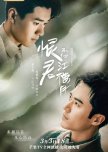
This drama came at me like a slow-burn crime thriller with its finger on a psychological trigger—and despite walking in blind, it pulled me in with surgical precision. I hadn’t read The Silent Reading, skipped the 2023 release, dodged fan theories like landmines. Just me, the short MDL synopsis, and Zhang Xin Cheng’s face staring back like it knew my brain was about to be turned into a moral Rubik’s Cube. I expected moody vibes, vague plotlines, maybe a queer-coded bromance dusted with plausible deniability. Instead, I got the kind of storytelling that grips your chest and whispers, “You’re not getting out of this sane.”The first three cases weren’t exactly diabolical. I pegged the culprits early on—suspiciously easy—but that didn’t kill the tension. In fact, it sharpened it. The show wasn’t playing for shock value; it was slow-dripping psychological decay. Each case framed guilt less as an act and more as a symptom—of trauma, of pressure, of a broken system. Watching Pei Su move through each unraveling was like peeling back the skin of human behavior layer by raw, bloody layer. He didn’t solve crimes; he dissected them. And when cases four and five hit? My ego got taken out back and got shot. Since episode 8 or 9, I was convinced Pei Su’s mentor—the one hiding behind the shadows—was the Janitor. The signs were textbook. But the story zagged instead of zigged, and it was glorious. That rare moment when a drama outsmarts you without cheating? Chef’s kiss.
Zhang Xin Cheng doesn’t just play Pei Su—he IS Pei Su. The man radiates control, damage, and repressed anguish so tightly wound you’re afraid blinking might break him. His performance doesn’t ask for sympathy—it commands understanding. And Fu Xin Bo’s Wei Zhao is the perfect foil: calm, grounded, quietly loyal. Their dynamic walks the tightrope between emotional intimacy and unresolved tension, but the show doesn’t queerbait—it lets their bond simmer in the ambiguity of shared pain. What blossoms isn’t romance, but a kind of moral codependency forged in fire. And the result is compelling as hell.
But even masterpieces have cracks. Let’s talk loopholes—because this drama expects a lot from your suspension of disbelief. Pei Su, initially not part of the official task force, strolls in and out of crime scenes like he’s got diplomatic immunity. The rest of the team breaks protocol like it’s a group hobby—no reprimands, just moody lighting and ominous music. And the bomb scene? Peak absurdity. A live explosive, no bomb squad, just Wei Zhao casually defusing death while everyone else stands around like they're waiting for fireworks. Add to that the team’s baffling tendency to abandon suspicion the moment someone looks mildly pitiful, and the cracks start to widen. Oh, and remember that burning question Wei Zhao asked Pei Su? Yeah. Never answered. Just... ignored. Narrative silence where catharsis should have been.
Then came the ending—the soft dismount after a track paved with tragedy cues. Everything about the finale screamed sacrifice: the tone, the symbolism, the emotional escalation. The show wanted you to believe Pei Su wouldn’t make it. And honestly, that would’ve been the narratively consistent choice. Not because I crave death, but because the story had earned it. But instead of catharsis, we got a hesitant pivot into safe territory. A finale that blinked when it should’ve stared us down. That kind of emotional bait-and-switch doesn’t just miss the mark—it undermines the entire arc. I didn’t need blood. I needed resolution that meant something.
And yet, somehow—it’s still perfect. Not in the flawless, pristine sense. Perfect in the way only something raw, jagged, and emotionally loaded can be. Justice in the Dark doesn’t hand out answers. It weaponizes them. It challenges your empathy, your judgment, your belief in redemption. It lingers in your chest like a moral hangover. No, the logic isn’t always airtight. Yes, the climax fumbled the ball. But the ambition? The performances? The sheer emotional weight? Unmatched. It didn’t just sneak into my top 10—it carved its place there with blood, guilt, and a very quiet, very devastating scream. If you can stomach the mess, the brilliance is undeniable.
Was this review helpful to you?
A drama where revenge is personal, time travel is emotional, and justice is fashion-forward
I normally don’t like to watch revenge dramas, but after “The Glory”, I became less reluctant to watch this sub-genre. I don’t like time-travelling shows either, unless it is done well. So I went into this drama with not much expectation, except I haven’t seen Min Young since “Her Private Life”, so I thought I should give this a chance, and boy, I’m glad I did.This drama asks: what would you do with your life, if given a second chance to relive it? Ji Won travels back in time to do just that, after dying not from terminal cancer as she was pre-destined to do, but from an argument with her husband and her best friend about their infidelity. Ji Won uses this second chance to turn her life around, refusing to become the doormat she once was, and using the knowledge she gained from her future, to mitigate her losses and transfer them to somebody else.
It was also during this time travel that she learned about her unrequited boss’ feelings for her. It turns out that Ji Hyeok has been quietly supporting her all along despite her obliviousness.
This drama was filled with so much angst and intrigue that I relished every moment of it. I also liked the brooding Na In Woo when he shoots heart eyes at Park Min Young’s character. It is the first time I’ve seen In Woo as a main lead in a drama and he didn’t disappoint. I’ve loved Min Young since "Sungkyunkwan Scandal" so I already knew what I was expecting and she delivered.
Perhaps the only thing that prevented me from throwing a bottle at the TV is my hope that justice will be served in the end. It was frustrating to see Min Hwan and Soo Min acting so entitled and devious, as if the world owed them something and both blaming others for their misfortunes. Min Hwan’s mother is no better. I wanted to rip her hair out for treating her daughter-in-law so badly.
Despite these frustrations, “Marry My Husband” is a highly entertaining watch.
Was this review helpful to you?

Acting/Cast: I did not even realize that Chris Wu is in this short film, until I saw the credits. What a waste of talent but I guess everybody has to start somewhere.
Music: Head-achy, the same as the strobing lights filtering throughout the short film.
Rewatch Value: Once is enough.
Overall: This short is trying to pass as film noir by interspersing the dialogue with the lines of two poems, but it came across more as a low-budget porn film that does not even satisfy. Please give me back 13 minutes of my time.
Was this review helpful to you?

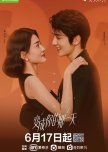
Xu Qin is still under her mother’s thumb despite being a hotshot doctor. Also, the push-and-pull games she plays on Song Yan would also make me exhausted, even just by watching. I could not understand how a character, who has so much sass when confronting her colleagues, becomes like a cowardly cat with her tails stuck between her legs when she goes home. It looked like Wang Chu Ran had only two speeds, and I was lulled to sleep with her flat delivery.
And what the fahk are all those coincidences? Am I supposed to believe that after years of not meeting each other, all of a sudden they cross paths like every five minutes??? Really?? Is Xu Qin the only doctor in the city??? Is Song Yan the only firefighter in that area??? And all the safety protocols they seem to abandon, just so they can get a love shot between the two, is just making me shake my head vigorously that I could have suffered from whiplash.
I only stuck around for Vin Zhang’s character, but after he left the Fire Dept, there was no more reason for me to hold on. Even Yang Yang’s pretty boy face could not make me watch this long, drawn out drama which is more like a PSA for the front liners. Yes, it was commendable that it portrays the livelihood of firefighters and doctors, and how they make decisions that save countless of lives. But it wasn’t enough for me to continue the story.
Was this review helpful to you?

This review may contain spoilers
Learning to Love? More like, Learning to Leave.
I usually have a soft spot for noona romances — something about older-woman-younger-man dynamics hits that sweet mix of maturity and yearning. But this one just didn’t click. I made it past the halfway mark hoping the emotional core would finally show up, but the pacing and editing made it impossible to stay invested. Every scene faded out like it was afraid to commit, and the constant cuts made the story feel like someone stitched together a bunch of half-scenes and called it a drama.Now, about the male lead — I’m not saying he’s unattractive. He’s got that clean, polished “Smart-from-Top Form” appeal. But there’s a certain aesthetic — the ultra-smooth, almost lip-filler-adjacent kind — that just doesn’t resonate with me. It’s purely a matter of taste, of course, but I tend to connect more with performances than symmetry — and here, neither the prettiness nor the chemistry filled that gap.
And don’t even get me started on the fiancé. Why is this man spending more time talking to Manami’s friend than to Manami herself? It felt bizarrely misplaced, like the show forgot who his fiancée actually was.
Manami ended up being the least likeable for me. Her arc had potential, but the way she handled the breakup—absolutely not. The guy was already struggling, and instead of respecting Kaoru’s space, she bulldozed right over it. What made it worse was how the show framed it like some grand romantic gesture, when really it just made her look emotionally tone-deaf. I actually thought the breakup was a rare moment of mutual clarity—finally, something adult. But then she immediately backtracks, ignoring everything they’d just agreed on. She’s the older one here, supposedly the more grounded one, yet she completely disregards Kaoru’s boundaries like they were optional. At that point, I was out. I couldn’t root for them anymore, and I definitely wasn’t going to stick around to watch the show pretend that was growth.
By the time I dropped it, it wasn’t out of anger, just fatigue. The setup had promise, but the execution felt like it was trying to mean something without ever earning it. Sometimes, the most grown-up thing you can do — both in love and in viewing — is just move on.
Was this review helpful to you?
Please watch and judge for yourself.
I have to admit, I hated this movie. Maybe it's just me, but there I said it and I'll say it again: I hated it. Even that is an understatement and I am being nice already to give it a 2.5.
Story: I normally read reviews before watching any movie or drama, and since this movie is really new and only had 1 amazing review, I decided to give it a whirl.
Bad decision on my part. Good news is: it only wasted less than two hours of my time. The story was so draggy, I fell asleep that I had to rewind again to see what I missed.....nope, I didn't miss anything apparently. It's like watching those daytime soaps where a scene of somebody slapping can run from a Friday episode to next Monday's. That's why I don't watch daytime soaps, and I shouldn't have watched this movie.
Acting/Cast: Despite my bad review, we have some pretty decent acting over here. I was only able to finish watching this movie because of the eye candy provided here. The mother's acting was poignant, and but not good enough to feel her pain.
Music: I fell asleep....was it a lullaby? I couldn't tell.
Re-watch Value: Once is enough. Unless I'm a masochist, I won't watch this ever again. EVER.
Was this review helpful to you?
Lost You Forever? Congrats, you really did!
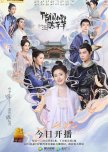
This came highly recommended, with glowing reviews and sky-high ratings that practically dared me to dive in. The premise promised a rich blend of wuxia, reverse harem intrigue, and a gender-bending lead—what’s not to love? But five episodes in, I was already eyeing the exit. My thumb hovered over the “drop” button like it was a lifeline. I told myself to be patient, that maybe the magic would kick in soon. Instead, my fast-forward thumb got more of a workout than my attention span, and by the halfway mark, I finally threw in the towel.To be fair, the production is gorgeous. The cinematography is lush, the costumes are exquisite, and the acting is solid across the board. Even Yang Zi—who’s never been my favorite—won me over with her performance as the male physician Xiao Liu. She brought charm and grit to the role, and for a moment, I thought maybe this drama would redeem itself. But charisma alone couldn’t justify wallowing through a plot that felt like it was wandering in circles. This story could’ve easily been told in half the runtime.
Then came the kicker: there’s a second season. Because apparently 39 episodes weren’t enough to wrap up this slow-motion saga. That revelation didn’t feel like a cliffhanger—it felt like a trap. My decision to quit felt less like giving up and more like reclaiming my time.
Watching this drama is like driving down an endless highway while Bob Ross narrates a painting tutorial. Undeniably pretty, but not exactly riveting. There’s potential in its tropes, but with pacing this glacial, I couldn’t bring myself to keep going. Beautiful, yes—but forever is a long time to be this bored.
Was this review helpful to you?
Peak fun until the plot started copy‑pasting itself.
Okay, so here’s the thing: Flex X Cop totally got me in the first half. I’m not even pretending otherwise. I was eating it up. The whole “chaebol son pretending to be a cop” setup? Delicious. The way he just strolls into crime scenes with the confidence of someone who’s never been told no in his life? Hilarious. And the fact that he somehow solves more cases than the actual trained officers — using methods that should absolutely get him fired, sued, or both — was exactly the kind of chaotic charm I signed up for. It was fun. It was silly. It was sparkly. I was vibing.But then… the midpoint happened. And listen, the show didn’t suddenly fall apart or anything dramatic like that. It just started getting predictable in that quiet, creeping way where I could feel my enthusiasm slowly packing its bags. The cases weren’t bad — they were just… familiar. The beats weren’t wrong — they were just the same ones I’d already seen. And once I could see the pattern, the magic wasn’t there anymore. That’s when it became a me‑problem.
Because I could feel myself dragging my feet by episodes 9 and 10. Not because the show betrayed me, but because I didn’t want to keep going if the spark wasn’t going to come back. I didn’t want to push into the second half and end up disappointed when I was already side‑eyeing the screen like, “Okay, I get it, you’re a cop now, can we do something new?”
And honestly, I didn’t want to erase what hooked me in the first place. The first half was genuinely fun. It gave me exactly what I wanted: chaos, charm, and a lead who solves crimes like he’s speed‑running a video game. I just didn’t want to keep going once the shine wore off. So yes — it’s a me‑problem. I loved the beginning, I stalled in the middle, and I chose to preserve the version of the show that worked for me instead of forcing myself through the rest.
Was this review helpful to you?
Acting wise, nobody acted naturally and the supposed chemistry between the two men who are engaging in an adulterous affair...was not even there. I felt that the actors especially the one playing Jack is so stiff, as if he didn't even want to be there. And the one who is playing Palm is too flamboyant as if he is playing a one-man orchestra.
The characters in this drama are so one-dimensional and almost predictable and therefore I did even bother to watch the rest of the drama to know where it's headed: disaster.
Was this review helpful to you?
Destiny? More like Delusion in HD.
I picked up this drama expecting breezy fluff—idol drama comfort food with pretty faces and maybe a love triangle tossed in for flavor. What I got instead was a grim, hypocritical mess wrapped in pastel posters and trauma bait. It’s like the show lured me in with soft lighting and then slammed me with a brick labeled “cheap suffering.” The tonal bait-and-switch isn’t just jarring—it’s ethically exhausting.By the 30% mark, the female lead had already been sexually assaulted by multiple people. And just when you think the script might offer her a lifeline, her so-called savior turns out to be another predator—only this time, he’s the male lead, so apparently it’s fine? The show’s logic is nonexistent, its morality thinner than rice paper, and the romance is just a parade of red flags shot in slow motion. It’s not “destiny”—it’s delusion dressed up as fate.
The mixed messaging gave me emotional whiplash. One moment it’s trauma, the next it’s swoon, like the writers couldn’t decide if they were making a PSA or a fantasy. I dropped it before my brain cells filed for emotional compensation
Was this review helpful to you?
This review may contain spoilers
Romanticizing abuse like it’s the 1980s, when red flags were just...fashion choices.
This one kicks off with a tone that’s shockingly risqué for a mainstream Chinese drama. The opening scenes toe the line of softcore, and I’ll admit—I bit. Curiosity overrode caution. It promised heat, tension, and emotional chaos, and for a moment, it looked like it might deliver something unhinged but gripping. Instead, it pulled a bait-and-trauma switch, spiraling into a disturbing mess that wasn’t horrifying because of gore—but because of its retrograde view of love.The real villain here isn’t the antagonist—it’s the toxic romance masquerading as depth. The leads' behavior reads like a walking red flag convention, but the script insists it’s all just passion. Psychological manipulation, coercion, obsession—wrapped in sleek direction and moody music to disguise how wildly outdated it all is. It’s 2025, and we’re still pretending that abuse is romantic? I’ve seen hostage situations with more emotional honesty.
And then there’s the kid. God bless him. He’s left to roam the streets like a Dickensian orphan while his mother plays spy games with her trauma, hiding behind her flimsy excuse of a mask like she’s Caroline Kent. She’s not fooling anyone, least of all her child—who’s clearly not the story’s priority. He’s emotional roadkill in a plot too enamored with its own dysfunction to notice.
The cherry on top? I wasted precious time scouring the internet for a working link, suckered in by a handful of glowing reviews that clearly skipped the part where the story devolves into a glorified hostage fantasy. If surrender is the only escape, I regret ever clicking play.
Was this review helpful to you?
This review may contain spoilers
Dropped halfway through the series. I'm struggling with this drama, not because it isn't good. But I have never wanted to take so many knives out of my cupboard because of so many characters. Typical dramas have one or 2 hateful characters (usually a spiteful mother-in-law or an annoying SFL). But this!!!!! I wanted to smash the heads of Yeo Joon's so-called-friends who accuse others of leeching when it fact they are the worst ones do so. If there is an award for the worst family, Yeo Joon's parents take the cake. (Maybe tied with the psychotic mother in IOTBO).And all those girls who are just jelly and abusive toward So Bin because Yeo Joon didn't choose them should just go to hell. Even though they are kids, those who made fun of So Bin for not having a mother are just plain mean. The professor who pilfers her student's work without crediting them, as if it was her privilege shouldn't be teaching. It's like they put every scumbag in one drama and it is making my blood boil!!!!
Was this review helpful to you?
This review may contain spoilers
The kids deserved better. The adults needed editing.
This is a drama that shines brightest when it focuses on its younger characters. The early episodes build a compelling emotional core around Bong‑seok, Hui‑soo, and Gang‑hoon, grounding their powers in vulnerability, survival, and family bonds. Their present‑day struggles carry urgency and heart, and the show feels most alive when it follows their attempts to navigate danger, secrecy, and adolescence. Whenever the story centers on them, the pacing is tight and the emotional stakes feel real.But this drama also wants to be a thoughtful superhero drama, but half the time it’s paranoia in a trench coat. The show builds its world on preemptive punishment—eliminating people not for what they’ve done, but for what they might do—dressed up as national security. It’s less “protect the future” and more “kill first, justify later.” Powers are framed as curses, not gifts, which could’ve been compelling if the series didn’t keep circling the same moral drain without adding anything new. Ironically, the story feels most alive when it stops philosophizing and simply follows the kids trying to survive the mess adults created.
For me, the school bullying arc is where the show’s moral compass wobbles hardest. Hui‑soo gets expelled after being attacked by seventeen students—on camera—because she dared to fight back. If she didn’t have powers, she’d be dead. Meanwhile, the bullies walk away untouched. For a drama that pretends to care about justice, the takeaway is uncomfortably tone‑deaf: victims should endure abuse quietly unless they’re superhuman. It’s a frustrating contrast to the kids’ otherwise grounded, emotionally resonant arcs, which carry the show whenever they’re on screen.
Then comes the adult backstory block, a pacing sinkhole that nearly derails the momentum. Tragic spies, doomed love, institutional betrayal—yes, it adds context, but it drags. Doo‑sik’s fate is cruel in a way that feels more exhausting than impactful, and the show never explains why the bus‑driving Beungeman is still employed after demolishing public property. By the time the narrative returns to the present, the action ramps up so aggressively that the final stretch becomes a blur of blood, bodies, and battles that go on far too long.
Despite the uneven pacing, Moving delivers powerful thematic payoffs. The downfall of the corrupt leadership is satisfying, and the unexpected alliances — like former enemies becoming family, or past bullies stepping up to protect the very kids they once tormented — give the finale emotional weight. These moments highlight the show’s core message: institutions exploit, but individuals can choose loyalty, growth, and connection.
Was this review helpful to you?
This review may contain spoilers
Started with skepticism. Ended with a lump in my throat
I’ll admit it — I was hesitant to “listen” to An Ancient Love Song. After being burned by a few overhyped short-length C-dramas, my guard was up. Add the umpteenth time-travel premise on top of that, and I was fully prepared to half-watch this one on 2x speed while folding laundry. But lo and behold, this drama had the audacity to earn my full attention. The concept may sound familiar, but the execution? Surprisingly convincing — a rare case where time travel doesn’t feel like a gimmick, but a bridge between two fully realized worlds.The balance between past and future was masterfully done — complex enough to be engaging without spiraling into a convoluted mess. Each timeline carried its own ache, its own emotional weight. Shen Bu Yan and Lu Yuan’s love story was quietly devastating, echoing across lifetimes without losing clarity. Even though the ending was shown at the start, the journey still managed to surprise me — not with twists, but with sincerity. It’s the kind of emotional payoff that sneaks up on you, then lingers.
What truly sets this drama apart is its precision. No filler. No fluff. Every scene matters. The lore, the pacing, the cinematography, the acting — all chef’s kiss. Even the secondary couple’s arc left a bruise. It’s proof that perspective, not budget, makes a story resonate. It’s a rare short-form drama that punches far above its runtime, delivering more emotional payoff than some 40-episode epics. I almost overlooked it out of cynicism—and that would’ve been a mistake.
If I had one tiny caveat, it’s the ending. Personally, I’d have stopped at the museum reunion. The final scene with middle-aged Shen Bu Yan meeting child Lu Yuan, while poetically intended, lands in slightly murky territory. It’s not a dealbreaker—just an eyebrow-raiser.
Final Verdict: This is how dramas should be done — concise, heartfelt, and crafted with care. A rare gem that proves emotional resonance doesn’t need runtime bloat or flashy tricks. Just intention. And this one had it in spades.
Was this review helpful to you?

2