


 2
2



This review may contain spoilers
Story: Two boys catch up about old times while playing badminton at night. They talk about girls, who they hooked up with, what's their ideal type, etc, etc, as they walk around the city.Acting: Okay enough for some randos.
Music: Well, if two guys can dance to it without looking like crazy lunatics, I guess that's decent enough.
Rewatch Value: Yeah, I get it the first time.
Overall Impression: The single thought I had in this film: "Are they or aren't they.........going to clean that vape?"
Was this review helpful to you?

The drama is mostly light-hearted, but it has its emotional moments, like when Ling Chao is dealing with his absentee father or when Juan Juan was coping with her relationship woes. But the gang of misfits provided comic relief, and Miao Yi certainly proved herself to be a natural. While there are some cringe moments, it is easy to overlook them. I love how this drama does not take itself seriously, and it is such a fun watch.
Was this review helpful to you?
This review may contain spoilers
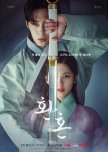
How to rate a drama where the first part had me at the edge of my seat, while the second part almost lulled me to sleep? Hence my dilemma with Alchemy of Souls. I wasn’t sure where part two went wrong, or was it because part one was so amazing, it was hard to replicate the same excitement when I watched it?The good of Part 1:
- The chemistry between Lee Jae Wook and Jung So Min is chef’s kiss. The banter between Master and Disciple, or Master and servant in some cases, showcased expert choreography and finesse in the performance.
- The cinematography, especially during the fighting scenes, was executed with remarkable precision.
- The plot, although sometimes over-complicated, was intricate and kept me on my toes.
- The supporting characters were not one-dimensional and had depth in the roles.
- The show explained the supernatural elements later, despite them being sometimes difficult to keep up with.
- The humor is quite refreshing and quirky
- The swoon-worthy music supported the emotional journey of the characters
Part 1 Verdict: Off to an amazing start!
Combined score: 9 out of 10.
Overall impression: Should have stopped at Part 1.
Was this review helpful to you?
This review may contain spoilers
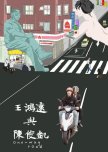
Story: Two friends on a motorbike because one is jobless and the other left his things at his ex-girlfriend’s place. With this plot, I really do not expect much of a story. Acting/Cast: Middling as this was supposed to be an LGBTQ story but the way the two actors portray it, they could just be friends. I could not even feel the pining.
Music: Bland at best.
Rewatch Value: Nah.
Overall: This short film tries to be artistic and profound but fails in execution. Although we are supposed to believe that one MC is in love with the other who is oblivious to his friend’s feelings, but the portrayal leaves so much to be desired. All we see is one trudging up a mountain just following whatever the other says, and coming down without accomplishing anything. It’s like taking a trip to the department store but coming up empty-handed.
Was this review helpful to you?
This review may contain spoilers
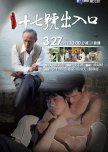
Story: It was confusing at first until it became even more confusing. I wasn’t sure whether I was seeing flashbacks of a person’s past or watching two separate lives of people on parallel universes, until I realize later that I was watching a combination of both. Old man Xue Ping reminisces about his past love Ding, who happens to be student A Hong’s doppelganger. So old man follows young man around town, not aware he is coming across as a creepy stalker. Acting/Cast: I’ve seen Chin Shih Chieh and Ray Chang around in other works, and they are decent, working with what they could of a sub-par script.
Music: Nothing to right home about.
Rewatch Value: No thanks.
Overall: The story of the old man’s past is more interesting than that of the student, which really doesn’t serve any purpose except for reminding Xue Ping that his lover is not coming back from the dead.
Was this review helpful to you?
Was this review helpful to you?

Sure it didn't have the annoyingly repetitive soundtrack of the Korean version, but it also didn't have the same nostalgia as the original. The Korean version at least tried to get a pluvious motif running, although sluggishly executed. I couldn't connect to the characters that are mostly one-dimensional, and there's not enough meat in the story for me to rate this higher. It seemed to me that the insertion of many plot arcs are just fillers, with no real contribution to the drama except for hitting the 30 episode quota they set for themselves.
Was this review helpful to you?
Was this review helpful to you?
This review may contain spoilers
This drama is such a fresh take on villain protagonists. Song Joong Ki is perfect as the badass consigliere who takes justice in his own hands. Vincenzo has one rule: do not punish the innocent. Contrary to this rule are the corporate vile monsters who won't stop at nothing (even stoop to murder) to reach their goals. The acting is phenomenal, especially by Taec Yeon as the psychotic genius behind Babel. Not many Korean crime dramas infuse it with dark humor, although yes, sometimes it can be over-the-top and cringey. The funny scenes, I believe, try to give some humanity in a drama that showcases evil, nefarious deeds. The juxtaposition of comedy and cruelty works well in this case, the comedic relief mostly provided Vincenzo's oddball crew, namely the tenants of Geungnam Plaza, who have different quirks that may look ridiculous in most instances but their heart in protecting their building and their earnestness in helping other victims of corporate greed are endearing.
There's not much to be said about Vincenzo in the romance department though, as Song Joong Ki seemed to have more chemistry and more skinship moments with the other male actors than with Jeon Yeo Been. Even Inagzhi the pigeon has more chemistry with Joong Ki so if you are looking for romance, this isn't the right show for you, But if you want to see hotness in the form of a Mafia kickass-master flicking a lighter in every episode, then this is a must-see if you try to overlook some loopholes.
Was this review helpful to you?
More like “Wandered-Land of Love"
The drama opens with a spark that immediately pulls you in—the banter between Li Ni and Cui Lin is sharp, witty, and exhilarating. Their battle of wits sets the tone for a promising start, and I found myself leaning forward, eager to see who would outmaneuver the other. The dynamic between them is one of the strongest aspects of the show. And look, I’ll admit it — I was probably a little biased. I found myself rooting for Li Ni more than I should’ve, even though half the time I wanted to smack Cui Lin for torpedoing his plans. But to be fair, she wasn’t wrong. Their clash stems from different goals, and that tension is what makes their early interactions so compelling.Unfortunately, about a third of the way in, the momentum falters. Li Ni’s choices start to feel questionable, driven more by emotion than strategy. I get it — he was never the “conquer the world” type and didn’t have that ruthless drive—but when you’ve got an entire faction depending on you, a little more grit would’ve been nice. His lackadaisical approach becomes frustrating. The fatigue set in for me here, as the narrative lost the sharp edge it had in the beginning.
What really pushed my patience, though, was his father, the ultimate poster child for ungrateful dead weight. Li Ni literally risks everything to save this useless man, only for dear old dad to turn around and shower affection on his incompetent, shameless sons instead. That was the moment my eyebrows permanently migrated north.
By the time the drama heavily leaned into its romantic subplot, I was done. The lovey-dovey couple moments were so cloying they felt like toothaches, and I couldn’t push through the cringe. Despite a strong start and flashes of brilliance in the character dynamics, Wonderland of Love ultimately lost me before the finish line.
Was this review helpful to you?
The mystery wasn’t the crime—it was the script
I know I’m in the minority here, but this is just my opinion.After trying to watch a couple of episodes of this drama, it ended up frustrating me, and it’s no fault of the actors.
First of all, I can’t comprehend why anyone, especially someone who is supposed to uphold justice, would jeopardize an investigation by tipping off the suspect, so that the latter could escape, just because she didn’t get to handle the case. I know Ayako is sour about her not getting the credit for her hard work, but this being selfish on her part. She prioritized her feelings first and not being objective in the matter.
Secondly, I’m not denying the existence of misogyny, particularly in a patriarchal society, but the way she was treated by her colleagues and superiors was infuriating.
Thirdly, Am I supposed to believe that after swapping their bodies, that somehow their personalities also changed? What happened to the non-nonsense attitude that Ayako had? It seems that she lost her bravado once she lost her body. Granted, anybody in that situation will probably be fearful of the sticky situation she found herself in.
Fourthly, the way Ayako’s “partner-in-crime” quickly figured out that she swapped bodies with Haruto, as if this is an everyday occurrence, is beyond me. I know I have to suspend some disbelief in a supernatural drama, but even then, I can’t ignore all the loopholes. Sorry, dropped.
Was this review helpful to you?
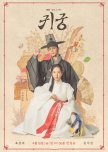
My patience got possessed — I exorcised myself.
I started this drama out of curiosity, expecting gothic mystery with possession drama. Instead, the pacing wandered like a ghost without a haunting plan. The cursed-palace premise had bite, but the story kept circling without consequences. It wasn’t bad enough to rage-quit, but it wasn’t compelling enough to fight for.Atmosphere-wise, it flirted with my scare ceiling. The eerie framing worked — until they dropped a girl-in-the-well scare straight out of Ringu. I spent months as a kid unable to sleep because of that movie. I did not sign up for discount Sadako flashbacks. My nervous system demanded a drop.
Character-wise, Gang Cheol was the one thing holding me together. He carried the emotional weight the plot kept hinting at, and without him, I would’ve quit sooner. Meanwhile, Yeo Ri (no shade to Bo Na) was written way too subdued to keep up with all the bleeding walls and generational guilt.
So yes, I bailed. Not out of hate — but out of self-preservation. Creepy enough to linger, slow enough to yawn.
Was this review helpful to you?
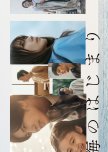
This review may contain spoilers
Some seas are better admired from the shore.
I really tried with this drama. I gave it my best sleepy-eyed effort, but this drama had me dozing off every ten minutes like clockwork. It took me longer to crawl through three episodes of this than it did to binge a 40-episode melodrama with five love triangles and a reincarnation subplot. At some point, I realized I wasn’t watching—I was surviving. And then I gave up.To be fair, I’m not here to drag the entire production. I could feel the directorial intent—there’s a quiet, deliberate artistry to the pacing, the framing, the pauses. But had I actually checked the tags before hitting play, I would’ve spotted “slice of life” and politely backed away. That genre and I have an unspoken agreement: I don’t touch it, and it doesn’t bore me into a coma. The one thing that kept me chugging through the first 25% was Umi. The child actor playing her? A revelation. Precocious without being cloying, emotionally intuitive, and just plain adorable—she’s the kind of kid who could carry a drama on her tiny shoulders. And here, she basically does.
Mizuki, her mother, is another story entirely. The show frames her as a free-spirited woman in control of her own life, but her choices land more as selfish detours dressed up as independence. Giving birth without telling the father isn’t some whimsical quirk—it’s a seismic decision. The ripple effects hit everyone around her, years later, and the drama treats it like a poetic mystery instead of the emotional grenade it truly is. Autonomy is valid; accountability is not optional.
Between the snooze-fest pacing and the ethical frustration, I couldn’t go further. Beautifully shot? Absolutely. Quietly poignant in parts? Sure. But I need more than aesthetic sadness and soft piano to keep my eyes open.
Was this review helpful to you?
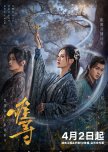
This review may contain spoilers
Pretty visuals, painful choices, and a romance that needed therapy, not tragedy
Over the last 4-5 years, I’ve adopted a policy of dropping dramas that fail to engage me early on. There’s probably over 300 dramas that I rated 7.0 below, and in a lot of these cases, I regret having finished these low-rated dramas solely to avoid the social pressure or sense of obligation or just for the sake of saying that I’ve watched them.In retrospect, I could have allocated my time to alternative entertainment options; however, my viewing habits were less discerning in the past due to a limited selection of high-quality dramas, whereas the current proliferation of excellent dramas has enabled me to cultivate a more selective approach to my viewing choices.
This rather long segue for a drama that I dropped is perhaps unnecessary, since I have already exceeded my tolerance and continued despite my disinterest, hoping I would change my opinion, but I didn’t.
First, I had issues with the pacing. Although the cinematography in this low-budget drama was undeniably beautiful, I unfortunately found myself compelled to repeatedly fast-forward through numerous excessively long shots of rain and snow, which, while visually appealing, ultimately proved to be somewhat tedious and distracting from the narrative.
Secondarily, the drama presented the ML as an unlikeable character. I understand the rivals-to-couple-back-to-enemies-to-lovers trope, but I wouldn’t date someone who repeatedly tried to kill me. Therefore, I deeply admired the SML’s sacrifices for the FL and his unwavering loyalty.
Thirdly, since I had no intention of continuing with this drama, I checked the ending and discovered both main characters died. Mind you, I am not against a tragic ending if the plot calls for it. I knew, in fact, that at least one had to die, but not both, particularly given how it concluded. Their deaths would have been acceptable if logical, but abandoning their child is infuriatingly selfish. The idea of supporting someone who would resort to suicide after their partner’s death fills me with an immense sadness. As a parent, leaving my child because of my heartbreak is unacceptable; my child deserves better than to be orphaned.
Given what I know now, I’m happy I didn’t waste my time on a mildly interesting drama—or I would have burst a coronary.
Was this review helpful to you?
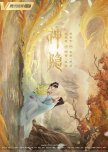
Mythical setting, mortal levels of boredom
I probably should have known that this will be as boring as Ancient Love Poetry, but I gave it a try because my favorite Chinese Actress is in it. But after giving it a good go, I had to drop it at 25%. I wasn’t sure if it was her character or performance that was ho-hum, but either way, I couldn’t justify spending my time watching this bore-fest.Gu Jin is also as dumb as they come. Sorry to say, I don’t find this kind of hero endearing at all. Not only is he a wuss, but he gets away with literal murder (though accidental) just because he’s supposedly the son of the Great So and So. His “punishment” is very light compared to his grave “mistake.” If he were in another Wuxia drama, he will probably get at least 20 lashings, or at least a few severe thunder strikes. But his vanilla castigation is to roam the three realms and try to recover the essence that he destroyed. I’m not saying it’s an easy feat, but he seemed to find them with very little effort. The way he went about it, seems more like an adventure, and less of a trip of repentance.
In addition, he is insufferably oblivious and clings to Peacock Princess as if she were the only woman ever to walk the earth. Not to mention, I already surmised who the villains are going to be from a mile away. Very predictable and nothing worth indulging. Besides, Lu Si’s baby-talking in this drama was grating on my nerves no matter how I much I love her. Nice try, but this ain’t for me.
Was this review helpful to you?


