

 12
12 30
30 8
8 2
2 1
1 2
2 1
1 1
1 1
1 1
1 1
1 1
1 2
2



This review may contain spoilers
Pro Power, Pro Connection, Pro Wit.
Pro Bono works best when you watch it as a legal comedy as advertised, not a strict legal procedural. I did, however, raise expectations from the start after learning that the screenwriter used to be a South Korean judge. Knowing that, I found myself paying attention to how the courtroom dynamics were written, especially how Kang Dawit handles cases. However, the drama proves to be fictional. Kang Dawit was written in a way that he doesn’t just argue law and evidence. He reads judges, predicts their leanings, exposes conflicts of interest, and sometimes corners them morally instead of legally. Whether that’s fully realistic or exaggerated for drama, it made the cases feel more layered that needs strategy rather than just technical law jargons, which was something I'm still not sure how to feel about.On another note, it ended up being exactly the kind of legal comedy drama I was expecting for from a Kyung Ho project. Serious themes, messy systems, and questions on morality, but delivered with teamwork and humor. The comedy helps keep the show from getting too heavy, but it also sometimes undercuts the weight of the cases themselves. There were moments that should have been tackled more seriously but were softened too quickly by the gags.
Kang Dawit is exactly the kind of lead who is hard to like at first, but you'll expect to change. He is loud, egoistic, shamelessly tactical, and very willing to bend process if he believes the outcome is justified. The fall from respected judge to being shoved into a pro bono team he used to look down on is a familiar setup, but his personality keeps it engaging, because lol it's also how he copes. He, however, never turns into a pure idealist. He stays sharp and a little dirty in method, usually matching how dirty his opponents play too.
I’m not a law expert and don’t know Korean legal technicalities, but the storytelling made the conflicts clear enough to track. The cases themselves, anyway, are less about legal complexity and more about moral and social pressure points, just written to fit the pro bono narrative. They supposedly deal with vulnerable groups, abuse of power, exploitation, autonomy, and systemic unfairness. The writing keeps them understandable even if you’re not a law expert. The tradeoff is that a lot of resolutions come from emotional truth and "public accountability" (protecting reputation) and less on airtight courtroom strategy, so nothing really lingers after a case. If you want tight legal procedure, this is not that show. If you want legal stories that push ethical questions and human rights issues into the spotlight, it does bring them forward, though often in a convenient way of writing (dramatized) rather than deeply challenging the system. If I were to point out anything about how they handle cases, I'd say I learned more about how much outcomes depended on phrasing, timing, and reading the judge and prosecution, rather than the statutes. It also does not shy away from showing how power and connections bend outcomes, for both the team and their opposition.
The pro bono team itself is chaotic and I liked them, but they didn't feel like a team until like, the last 3-4 episodes. They can be idealistic to the point of frustration, sometimes preachy, sometimes naive about their privilege inside a giant firm, but I guess I can say that they grow into their roles. I just wish that development came earlier, especially because this is a short drama. Their chemistry that should've become one of the strongest parts of the show was only felt towards the end. The only moment I found worth remembering was when the team learns to use Dawit’s tricks, but it was used against him in court lol. The rest, predictable.
There was ambiguity on some of the characters, but I'll be particular on the Oh Jungin, the ex-girlfriend. She sits in a morally gray space for most of the drama. She's not a clean villain, but she's not a clean ally either. Her choices are driven by ambition, pride, and personal gain, not for either pure good or evil. She was one of the few characters I actually stayed curious about until the end. Thankfully, her presence did more good than harm for the team.
Tone wise, the balance worked for me, but there wasn't anything groundbreaking nor deal breaking. It handles heavy topics but doesn’t stay emotionally suffocating. The humor is frequent and sometimes outright ridiculous, but it fits the exaggerated personalities and power plays. It’s one of those shows where a serious case can somehow sit next to a comedic stunt. I'd question if it feels coherent, but I guess it worked. It is not a drama I'll be missing, however.
Was this review helpful to you?

This review may contain spoilers
Idol-I: I for Intuition.
Major spoiler: I mention the culprit among other spoilers in the drama-------
If I did not know the gist of the drama beforehand, I would have thought I was getting something light and easy. The lead names alone screamed romcom, and the wordplay was funny enough to lower my guard. Then the end of episode 1 hit, and suddenly we were dealing with mystery, grief, anxiety, and how lonely and suffocating idol life could be.
Maybe it helped that I binge-watched this, but pacing-wise, it was okay for me than it did for those who watched while it was airing. I thought the story moved steadily without dragging until the end. I appreciated that they did not cram all the happiness into the last five minutes just to check a box.
Raik’s emotional journey was the backbone of the drama. We watch him navigate fame, guilt, suspicion, and the weight of being constantly watched, and in some points, it was sad to witness. I do think that the drama does a good job of showing why his on-stage versus off-stage self are different without overdoing it. It did not excuse his mistakes, but it also allowed us to understand where he was coming from. The same goes as well to the other characters. By the time the mystery deepens, we are already invested in him as a person, not just a suspect nor as an idol alone.
Early on, my expectations for the drama were already set. I had the idea that the drama focus will lean more towards Raik's emotional healing process and idol life than the mechanics of Raik’s case even though technically everything revolved around the case, so I stopped expecting a strong procedural script. I expected an emotional mystery instead, and in that sense, I was right.
With this expectation, the murder mystery itself became an okay. Not groundbreaking, but engaging enough to keep me guessing. I liked that it did not tunnel-vision on one mysterious culprit. The constant shifting of suspicion among characters we already knew kept things tense, and it made the investigation feel messy in a realistic, entertaining way. There was also this sense that solving the case was dangerous in itself and sometimes unfair, which added weight to the story.
However, I do admit that it was hard ignore how many basic investigative steps were skipped, though I was generous in letting that slide because of my set expectations. The very simple things that could've ended this drama on episode 2 were the DNA checks on door handle and the earring. Even if I assume they did check and just did not show it, the flashbacks themselves made it hard to believe the crime scene was spotless. The culprit was frantic and emotional, she was very far from careful. That earring alone should have been enough to crack things open earlier. All Raik had to do was go back to his apartment and the case would have unraveled much faster.
Where the show gets more interesting, and more uncomfortable, is its take on fangirling. Sena was meant to represent the healthier end of admiration, even if the drama sometimes undermined her professionalism to get there. Her fangirling slipped into her work more than it should, and I did find myself frustrated that she did not always act like the capable lawyer she was introduced as. She took on Raik’s case after reading his expression and decided to trust him because, as a 10-year fan, "he doesn't know how to act" was enough to convince her. While I understood the narrative purpose of giving Raik someone who believed in him, I did not love that her decision relied so heavily on intuition and personal guilt (about her father) rather than evidence. Afterall, she is a lawyer who works with facts, not intuition. But then again, she is also human.
In contrast, the ex-girlfriend felt close to a sasaeng. What initially looked like concern and longing on her part gradually revealed itself as obsession. The drama made it clear how "love" could rot when it turned into entitlement and obsession. Everything she said was designed to corner Raik into believing she was what he needed, and would hurt both of them if they aren't together. As her arc unfolded, we come to understand that her relationship with Raik turned parasocial and toxic, which I then questioned whether the love they once shared was ever even real. Watching her justify cruelty, surveillance, and control in the name of love was uncomfortable.
This is where the drama becomes ironic. It spent so much time showing fans how important it is to respect boundaries and recognize idols as human beings with private lives, and how it affects them mentally. Yet, the story ultimately framed a fan as Raik’s emotional and legal savior. At the same time, the culprit was written with sasaeng-like behavior, while the two sasaengs who caused repeated harm faced barely any real consequences and even had character glow-up in the end. I would have liked to see genuine accountability instead of a few scoldings and a glow-up. The way it plays out almost reinforces the idea that fans are the loyal constants. I do not think this was the intention, and viewers with common sense will understand the moral the drama was aiming for, but the narrative choice was still disappointing, especially given how many more challenging and thoughtful directions the story could have taken.
On a lighter note, I appreciated how the side characters parts were handled. No ridiculous filler arcs, and no unnecessary love triangles blowing things up for the sake of drama. The second male lead understood where he stands and respected boundaries. The prosecutor and the policeman, frustrating as they were at first, actually grew and chose truth over power, which was nice. Even Raik’s group was given enough focus to remind us how they also had their own struggles on how isolating idol life can be for others involved, not just for Raik.
The romance itself was fine. It is there, it develops naturally enough, but it is not the point. For me, it works best to be understood as part of Raik’s healing. After everything else was resolved, we witness his emotional growth after one final one-on-one scene with the ex-girlfriend. Finally, her words no longer had power over him. Sena, meanwhile, remains the same person she was, just no longer held back by her past. She's then balancing her appeal for her father’s case, her fangirling, and being Raik’s lover.
Idol I is far from perfect. Some parts could have been fleshed out more, especially given how heavy the themes are. But for a 12-episode drama, it did enough to tell what it was meant to tell.
Not a masterpiece, but a grounded watch.
Was this review helpful to you?

This review may contain spoilers
Comfort found outside VR.
"Love Between Lines" immediately caught my attention the moment I started episode 1. The first few episodes spend a lot of time in the VR world, which made the initial connection between the leads feel different from the usual office romance setup. I liked that we got to see more of who they were before their real-world dynamics fully kicked in. It avoided to make the transition feel confusing.I’ve seen some people assume the male lead was driven by revenge. On the surface, it can look that way. But as the story unfolds, it becomes clear that revenge was never the point. What he wanted was the truth, and more than that, justice for his late father. There’s a bit of mystery tied to his past and his family, but it never turns into a revenge drama. You can see it in his personality and in how consistent his actions are. He’s not out to hurt people, he just wants answers.
Once the story settles in, what really worked for me was the pacing. Nothing felt unnecessarily dragged out, and some reveals happened much earlier than I expected, in a good way. For instance, I loved that the drama didn’t rely on the usual secret-identity-of-the-ML for half the series trope. I mean this about his position in the workplace and his VR role. For the other things, they were understandable for the plot. When things came out, they came out. Some came with a bit of humor, while some for the more serious plot. And when misunderstandings popped up, they didn’t overstay their welcome. The leads actually talked, always tried clarified things, even when one was hesitant for the other's sake.
The female lead was a big part of why I enjoyed this drama. She knows how to stand up for herself and doesn’t let people talk down to her, whether that’s at work or in her personal life. She’s calm but firm, and I loved how she clocked people immediately when something felt off. She's a smart woman who actually acts smart. No dramatic spirals, no unnecessary self-doubt. Just a woman who knows where she stands.
The male lead, on the other hand, has a quieter arc. We slowly learned more about his past, his family, and why he kept certain walls up. His emotional moments felt restrained rather than explosive, which fit his character well. Also, I have to say it: his entrances were ridiculous in the best way. The slow motion, the blurred backgrounds… they clearly knew what they were doing. He looked so good in that VR costume that I never got tired how many times they slow mo-ed his entrances lol.
The leads had chemistry almost immediately after they met in the real world. They already felt like a couple before they officially were one. Small touches, obvious concerns, being there for each other in ways that's not how just friends act, and natural closeness. So, when the ML hesitated and pulled back at one point, it hurt because both of them clearly knew where their feelings were headed. Though, that moment made the yearning hit harder.
Once they do get together, I appreciated that the drama didn’t shy away from physical affection. Nothing over the top, but natural touches that made them feel like an actual couple. Their interactions slow the (my) world down. Watching them felt warm and comforting, and I'm just sitting here smiling without realizing it.
Of course, it’s not all smooth sailing. The FL’s family's misunderstanding with the ML's becomes another layer of conflict. I was worried it would drag on, but thankfully, it was handled and resolved fairly quickly, just in time for the entire truth to come out.
The second male lead is… honestly just pitiful, because he let his insecurities get the best of him. I did appreciate that the drama didn’t turn him into a cartoon villain though. Some of his concerns felt genuine, even if his actions were driven by wanting to be better than the ML. By the end, he backs off and seems to finally realize that his issues were never really about the ML, but about himself and maybe the real villain, his father lol.
Also, I’m very glad the best friend’s ex-husband disappeared from the story after the divorce. No excuses, no redemption arc. As it should be. I also love that although side characters closest to the leads had their own stories, they didn't overshadow the main plotline. So, everything felt okay the way that it was.
Was this review helpful to you?

This review may contain spoilers
The "villains" against the world (the plot).
I went into "How Dare You?!" almost blind. I had not read the original novel, watched the donghua, nor seen the vertical drama. I only knew a few trigger warnings and the general direction of the ending. However, as someone who reads a lot of isekai manhwas and manhuas, I expected something trope heavy and predictable.In some ways, it is exactly that. Modern people transmigrate into villain roles, navigate palace politics, and try to escape a written fate. But the execution surprised me. It is more emotionally aware and character driven than I anticipated.
The tone balances romance, humor, politics, and angst well. The comedy never undercuts the tension, and when it turns dark, it commits. The shifts never felt jarring to me.
Cheng Lei and Wang Churan were perfectly cast. Their chemistry and skills carry the emotional core of the story. Many scenes rely almost entirely on their expressions rather than dialogue, and they deliver. Wanyin’s wardrobe is also consistently breathtaking and deserves special praise. Dan’s long hair and styling suit him so well that it enhances his lonely presence and as emperor.
⁂ Wang Cuihua becoming Yu Wanyin
The setup is simple and effective. No dramatic accident, no truck-kun, no tragic prelude. Just two ordinary modern people suddenly thrown into a poorly written palace novel as villains meant to die. Wang Cuihua becomes Yu Wanyin, a doomed concubine of the emperor. Zhang San becomes Xiahou Dan, the tyrant puppet emperor.
What I liked immediately is that there was no long drag of them hiding from each other's identities. Immediately, we sense relief from Wanyin. But for Zhang San as Dan, it is far more overwhelming. And his reaction hints that his loneliness might have ran much deeper than hers.
As Wanyin, Cuihua is not overly dramatic about her situation. She approaches it with practicality, sometimes cynical. She does not have encyclopedic knowledge of the novel, so she cannot outmaneuver the plot with foresight alone. Instead of trying to steal the original heroine’s route, she aligns with another villain with the same tragic written fate.
Between her and Dan, she is the one constantly forming plans. Part of that comes from her having the main gist of the story. But more than knowledge, it is motivation. Where Dan feels worn down by years of surviving, Wanyin feels activated. She has urgency, and most importantly, she still has hope. She has something to fight against because she has not yet spent a decade being defeated by the system of that world.
Another key difference is that Wanyin builds alliances. She believes certain people can be convinced. Dan, having grown up in betrayal and manipulation, had long defaulted to isolation and control. Wanyin still operates with the assumption that trust, while risky, is possible.
⁂ Zhang San’s life, diary, and his life after meeting Cuihua
The biggest emotional punch for me was slowly realizing that Dan had been in that world since he was a teenager. He was not freshly transmigrated like Wanyin. He had grown up there. He has lived longer as Xiahou Dan than he ever did as Zhang San.
That reframes his cruelty. All along, the tyranny was not an act. He grew up under manipulation, poison, and constant danger. He learned to be cruel because the world around him was cruel first. In a palace where kindness is punished, he adapted. He learned to distrust and strike first. He learned that survival requires hostility and distance. Dan is not just lonely. He is resigned.
The diary entries deepen that impact. They begin almost humorous, then turn devastating. We see a lonely teenager trying to test fate and slowly realizing the world will not bend for him. The helplessness in those entries hurt when connected to Dan's current actions and attitude towards Wanyin.
When Cuihua arrives as Wanyin, the tone in his life shifts. For the first time, he has proof that his original life as Zhang San was real. That he was once loved and valued somewhere else. You can see how much that grounds him, because he can be Zhang San again. Before her, his alliances were transactional. After her, they become collaborative. He relearns trust. He allows trusted people closer. His softer expressions, smiles, and decisions not driven purely by calculation show Zhang San resurfacing within Xiahou Dan. Through their partnership and relationship, he slowly allows himself to hope again.
⁂ The villains
The drama presents two central antagonists. One who has been always the villain, the Empress Dowager, and another who became a villain, Duan. I would argue that he was made a villain because of his past, because his stubbornness and insecurity led him to refuse reality.
The Empress Dowager initially comes across as almost theatrically frustrating, even pathetic. But as we watch more of her, she is actually really despicable. Her obsession with power was not shallow ambition. Her connection to Qiang adds dimension and maybe a bit more context to her actions, but it does not redeem her. If anything, it explains why she consistently prioritizes control. She did not care about the empire and its people at all. The cruelty she inflicted, especially on Dan, reframed so much of his behavior. Growing up under someone like her would twist anyone.
Duan, on the other hand, is more complicated.
As the original protagonist of the novel, he was meant to be the righteous hero of the story. He is intelligent, observant, and politically capable. But, as trashy the novel was, he is also written to be deeply insecure and rigid in his worldview.
His mother’s suffering apparently defines him. Even knowing the Empress Dowager is truly responsible for that, he redirects his anger toward Dan. Part of it is cowardice masked under practicality. The Empress Dowager is too powerful to confront directly. Dan, as her puppet, becomes the more accessible target.
But it is also psychological. He needs Dan to embody cruelty so that his resentment feels justified. If Dan is not monstrous, then Duan’s hatred loses its moral clarity. When Dan begins acting more righteously, Duan cannot process it and interprets it as manipulation. If someone else occupies that moral ground, especially someone he has defined as the villain, it destabilizes his entire identity. And instead of reassessing his assumptions, he doubles down. His refusal to accept reality slowly pushes him into antagonism.
⁂ The allies
This drama is ruthless with allies.
Xu Yao’s early death immediately unsettled me. It came so soon after he aligned himself with the leads. And my guts were right on the impending deaths. The allies were on a countdown spree. Every time a new ally joined, I got anxious for them. The scholars, Yonger, Mr. Bei, even the late introduced ally. The drama kinda conditioned me to expect loss early on.
Yonger’s arc is one I have mixed feelings about. At first, she felt shallow and mildly irritating. But after she learned the truth and chose to align with the leads, she softened. She began to feel like a younger sister to Wanyin. That is why her death should have devastated me completely. It did hurt. But when I think about how she died, the impact becomes emotionally underwhelming. Instead of some last heroic move, she was killed suddenly, stabbed mid conversation by one of Duan’s cronies. Realistic, perhaps, but I wanted more weight given to her end.
Mr. Bei’s death, on the other hand, shattered me. He brought so much warmth into an increasingly heavy narrative. So, when the reveal surrounding his death came, I was sad. I had suspicions before the reveal of his death, but I still was not prepared. In a narrative point of view, it made sense that his abilities would circle back in a tragic way. But predictability did not make it hurt less.
The repeated loss of allies made the victories feel heavier, and that is why I understand Wanyin’s guilt so well. Many of her plans succeeded strategically, but they left a sad and bitter taste behind.
⁂ The ending
The final stretch felt dense and slightly exhausting, in a way that makes sense for a story that has been stacking consequences for so long. A lot is still happening, and they need resolution. Between Dan waking from his coma, Duan’s downfall, and the political aftermath that follows, the narrative is clearly closing in on its conclusion. Yet emotionally, it does not feel entirely settled. All of it was compressed into a short span of 2 episodes. Some questions were resolved emotionally, while others were left hanging.
Dan’s poisoning is one of the concerns that still linger for me. We know most of the poison was expelled and that he wakes up, but we never receive full reassurance that it is completely cleared. After investing so much in his survival, I wanted stronger confirmation.
Tiancai's situation also left an ache. He never learns the truth about Yonger. He just learns she went home. I understand Wanyin’s choice not to tell him, but it denied him closure. He cannot properly grieve because he still believes she is alive somewhere.
On the positive side, Dan proposing as Zhang San to Wanyin as Wang Cuihua meant a lot. He did not need to propose anymore. Wanyin was already empress and the harem was dismantled. But this was not about Dan and Wanyin anymore. It was Zhang San and Wang Cuihua. It acknowledged both identities and promised that they would choose each other beyond the novel world.
The return to the real world and the brief reunion on the train left me conflicted. It wasn't clear if they lived the rest of their lives in the novel after the proposal, before they returned. I also usually dislike short reunions that is alike quick epilogue or a fan service. Here, however, it worked just enough because their happy ending had already happened in the novel world and they have promised to choose each other in the real world. Still, I cannot deny that it felt slightly incomplete because of some details that are left unanswered, probably because of censorship.
Was this review helpful to you?

Soft, sweet, and calm, but maybe a bit too light.
I watched this mainly because I’m a sucker for best friends to lovers stories and TikTok sold it to me well enough to raise my expectations. I have not read the manga, so this is purely from a casual viewer perspective. I enjoyed it, but it is the kind of movie that feels nice while watching and fades from memory pretty quickly after.I still do not fully get where the "Stella" in the title comes from, at least from the movie alone. Maybe manga readers or those who catch more of the language nuance will understand it. But for me, it did not land anywhere as a strong symbol or theme in the film itself. I'm guessing it's because stella means star if derived from Latin, but that feels a bit random and out of place.
If I had to nitpick on appearances, it would be that they do not look like high school students at all, but I got over that pretty fast. Acting was okay, though I'd say the female lead actress carried the movie all the way.
Overall, the tone is gentle, easy, and calm. Not very deep and not very layered either. It is very straightforward narratively, which makes it an easy one sitting watch. If you like best friends to lovers and very (emphasis on very) low stress romance, this might work. But if you want more emotional weight or complexity, this will probably feel too thin.
The setup is simple and very familiar. The leads are childhood best friends who are slowly growing into different worlds. The male lead, Subaru, is a rising model and actor. He is a bit aloof, but it is something I'd expect from a high school male lead lol. On the other hand, Chii, the female lead, sees herself as average in looks, ability, and presence. She acts exactly like a girl with a long-time crush, supporting him quietly and tries not to get in the way. Awkward, sincere, and sometimes a bit harsh to herself.
The story runs on that classic "you never look at me" versus "I have always looked at you" narrative. And how they set it up was pretty much predictable. The film does not build ̶a̶n̶y̶ much external conflict, so most of the tension depends on the male lead’s mixed signals. The writing relies on the classic push and pull behavior that happens in friends to lovers tropes, except I never felt the yearning that it would have supposedly fueled.
The second male lead was present, although I questioned if he was actually a second male lead. Even as a plot device, he didn't do anything to make Subaru jealous enough to spark action. He was supportive of Chii, and he was aware that he will not be even a choice. He did not overstep boundaries, does not create forced rivalry, and did not turn bitter. He was a very very chill guy lol. He even helped move the plot forward literally through his motorbike lol.
It's an okay watch, but it was closer to boring than the comforting vibe they tried to sell. I would not have chosen to see it in cinemas.
Was this review helpful to you?

This review may contain spoilers
A surprisingly fun mess of a romance.
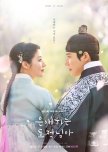
First of all, I think it was a wise choice to drop all the episodes at once. Although there was quite a lot going on, I'd say the drama is still on the lighter side, and I think its momentum works much better as a binge.Story-wise, I would've rated this much lower (probably would've dropped it too) if it were just about a clueless damsel-in-distress woman with amnesia and a smart manipulative man lying to her so he could keep her by his side. Because let's be honest, that's basically romanticized kidnapping and brainwashing. Well, this is still kinda that lol, but at least the drama knows its setup is ridiculous.
I was soooo relieved that they wrote Eunsae to retain her intelligence and wits. She doesn't simply believe everything she's told after waking up, and she keeps her doubts up for quite a time. She starts doubting Taeha immediately, and honestly, none of the village people involved are particularly convincing liars either, including Taeha himself lol. None of them even really tried so hard to convince her anyway lol. You can tell they want her to recover her memories as soon as possible for her own safety.
The story unfolded better than I had expected, and that's why I ended up writing a review in the first place. On paper, this is a countryside romance with the usual city girl meets rural guy setup and a reconnection thrown into the mix, but the story also keeps dipping into crime. Well, it did start at that before the cozy village setting. Those two sides continuously felt like they're taking turns instead of blending together. Taeha, especially, looks like a completely different person when he's dealing with his old life vs when he's hanging around the village and with Eunsae. The genre switching can be messy, so I wouldn't call the story perfectly balanced. There are moments where the darker side feels like it belongs to another drama that wandered into this light countryside rom-com. Still, I strangely had a lot of fun with it.
I also liked the leads a lot. Their chemistry carries a good chunk of the lighter scenes, and Hayoung is really, really pretty. She also has great comedic timing and gives Eunsae enough personality that the amnesia never turned her into a passive character. And Haein... yeah. His eyes are doing a lot of work here lol as usual. Taeha is a pretty quiet character, so there are plenty of scenes where his face has to do most of the talking, and he handles that really well.
I also appreciated that the drama doesn't make every conflict between the leads unnecessarily frustrating. There were several points where I expected the usual K-drama misunderstandings to drag things out. While I understand why that could be needed for this type of story, I was pleasantly surprised that it mostly avoided that. A few twists surprised me too, and it brought a bit of whiplash towards the end.
TLDR; The cast is charming, the romance is okay, the mystery actually kept me interested, and the whole thing moves along quickly enough that its stranger choices don't have much time to become annoying.
Yes, it's light, a bit absurd, and predictable. Yes, I enjoyed it.
Was this review helpful to you?
This review may contain spoilers
A love letter.
If this review were a letter, like how the drama felt, it would begin and end with gratitude.On paper, it is another soul swap historical drama with leads from different classes. A low born physician who lives as a masked thief at night and a grand prince under the shadow of a tyrant king. Political corruption, class divide, and palace schemes. Nothing unfamiliar.
And yet, the writing feels sincere, careful, and deliberate.
After the first two to three episodes, the tone of the drama reveals itself. The story is a drama first, then a romance, with humor woven in rather than relied upon. At its core, this drama is about social class, and eventually, the responsibility tied to the throne. These are not background elements but the forces shaping every decision. It asks what it means to be born into a role never chosen, and how one can choose to redefine it. Thus, the romance becomes a slow burn, because saving the country and protecting its people take priority, especially for Eunjo. Their love grows alongside the crisis, never above it.
What makes this drama resonate better is how the characters become clearer versions of themselves while remaining anchored in their values, and how this is beautifully reflected through their dialogues and their actions. Beyond their constant reassurances, it is also evident that they remain committed to a bloodless fight, however unrealistic that may seem.
Eunjo’s constant awareness of her birth is not just insecurity, but also survival. She knows exactly where she stands as an eolnyeo. She does not romanticize her position, nor does she beg for sympathy. Instead, she acts in the only way she can. As Gil Dong, she steals never for glory or riches, but because she cannot stomach the injustice that the non-nobles endure under corruption. She also never abandons her father’s teachings. Even when revenge would have been justified, she chooses restraint. And she knows that this choice does not make her weak.
Yeol’s hesitation toward power is not weakness either, but calculation. He has seen what the pursuit of power has done to his family and what it has turned his brother into. So, when he finally takes responsibility, he does so carefully. He does not suddenly become a reckless revolutionary. Even after their success, he does not immediately claim everything he could. He understands that placing Eunjo beside him as queen would contradict what she wants, and risk destabilizing the throne again. So instead of choosing desire, he chooses patience.
The writing does not reserve nuance only for the leads, but extends it to the supporting characters as well. Jaei’s cruelty is rooted in shame and years of feeling lesser, and his interactions with the leads allow him to grow. Haerim chooses dignity over bitterness and learns to grow beyond the comfort of her home. The Queen and Queen Dowager are portrayed with restraint and wisdom, allowing solidarity among women where rivalry would have been easier. The tyrant king is not simply loud and paranoid, but the result of unchecked fear and obsession with authority he believes will protect him. Sahyung’s villainy, too, is born from insecurity, a man corroded by comparison, unable to bear that others choose integrity where he chooses power.
The soul swap between the leads is not only written as a gimmick either. It becomes a bridge that allows them to understand each other more deeply.
For Yeol, it forces him to confront the consequences of corruption not as a prince hearing reports, but as a commoner personally enduring them. He sees how his reluctance to step forward allows injustice to continue. He understands more deeply why Gil Dong has to exist if nothing changes, why that name becomes a symbol of hope for the people and a threat to the guilty. Living in Eunjo’s body does not suddenly change his values. It confirms what was already within him and removes his excuses. It pushes him to act.
For Eunjo, stepping into Yeol’s world reveals a different suffocation. She experiences the political traps, the constant surveillance, and the fragile balance required to survive as royalty. She begins to understand why Yeol appeared stagnant, that his indifference was actually caution. That being royal is not just power and responsibility. It is also isolation, and survival requires constant calculation.
Their love story was not written through grand declarations, but in swapped experiences and most importantly, conversations shaped by sincerity. When they disagree, it is rooted in perspective, not forced misunderstanding. That is why they are able to trust each other. That is why they are willing to wait for each other.
What makes this story linger is not grandeur. It is because the writing was intentional, from start to finish. There are dramas with bigger twists and louder climaxes, but only few feel this intentional.
And for that, this remains something I will remember.
Was this review helpful to you?

This review may contain spoilers
Glory… to the FL’s omniscience lol.
Going into Glory, I already had a feeling romance wasn’t going to be the main point here, despite having romance as one of the main tags. I might’ve started this at the wrong time, or maybe I was just expecting a different balance, but either way, the tone became clear pretty early on.The opening was rough for me. There’s an overload of names, faces, and tropes/themes all at once, and it took a while before I felt grounded. What did stand out early, though, was how deliberately unsettling everyone felt. No one felt neutral, I didn't trust anybody, including those were introduced to us as close with the leads. Some people were obviously scheming, while others hid behind politeness, filial piety, or concern, which somehow made them feel even more suspicious. There were characters who played pitiful a little too well, people who wrapped manipulation in "good advice," and those whose jealousy practically sat on their faces. I didn’t know yet who would turn dangerous and who just needed context, but the discomfort was very intentional.
What kept me watching was the dynamic between the leads at the start, though I still was confused who were who with the side characters lol. The ML, even with amnesia, was sharp, observant and even sly, not the helpless pawn I was afraid he’d be at the start. And the FL was clearly not someone to underestimate. Watching them quietly test each other, circling with their wits, was engaging and entertaining. Early on, it felt like we were being set up for two intelligent leads on equal footing.
That’s also when I started to see why this drama would be divisive.
It becomes clear pretty quickly that the FL prioritizes herself and her household’s reputation above all else, which on its own isn’t a problem. My issue is that the drama still insists on selling this as romance. But over time, a pattern starts to form: she quietly but boldly advances her plans, uses the ML’s wit and influence when it suits her, reassures him just enough to keep him close, and moves on. When he confronts her about being sidelined or disrespected, the conversation rarely goes anywhere. A smile, a deflection, sometimes intimacy, and the issue is conveniently buried before she ever has to take responsibility. The ML, being smart, knows this. He sees the pattern, calls it out, yet still lets it happen. She keeps making unilateral decisions that affect him deeply, often at moments when he’s most vulnerable, and he’s left to absorb it quietly. And then the cycle repeats.
She does care about him; I didn’t doubt that. But she consistently cares more about control, outcomes, and her family’s reputation. Some argue this makes the show female-centric or "empowering," but I don’t buy it. Emotional manipulation doesn’t automatically become empowerment just because the character doing it is a woman. Independence doesn’t mean making decisions while dismissing others’ feelings when inconvenient. Strength isn’t just dominance. It isn’t always being right, staying one step ahead, or avoiding the consequences of your choices. You can be independent and strong while still making hard decisions without using someone else as emotional collateral, respecting those who trust you, and facing the impact of your actions. Empowerment comes from accountability, allowing vulnerability, and treating people who stand by you with respect rather than tools. This isn’t a critique of women-centered dramas. In fact, I enjoy complex, emotionally responsible female leads, but the way FL's character was written here would have frustrated me no matter who was written this way, even when genders are swapped.
What made it even more frustrating is that, again, the ML isn’t stupid. He knows what’s happening. And yet he keeps running after her. He keeps forgiving. He keeps absorbing the emotional cost. Watching a character that is that capable slowly get reduced to "he endures this because he loves her and she's all he got" was exhausting. It's frustrating because the drama teased something better early on. I wanted to see two sharp leads working together as equals, combining strategy, trust, and mutual respect. Instead, the story increasingly centered the FL as the solution to everything, while the ML’s struggles, history, and emotional weight were sidelined until very late, and even then, rushed. For a drama with two leads, it often felt like only one of them was important.
At some point, despite all the romantic scenes, it just stopped feeling romantic to me. I kept watching anyway, because I’d already adjusted my expectations, and to be fair, the story outside the romance was still entertaining.
Without the romance, the plot would have been at its strongest. The FL's world felt busy, and this was where the writing felt the most confident. The mix of heritage, control (monopoly even) over the tea industry, internal power struggles, and moral compromise was compelling to watch and unfold. You could feel the weight of legacy pressing down on everyone involved, and the consequences of decisions were elaborate. Supporting characters weren’t just there to orbit the leads; everyone had motives and agendas. At different points, I found myself second-guessing first impressions. It kept me alert, and it made the political and familial conflicts feel vital.
And then there’s the grandmother. I understand the narrative role she was meant to play, but wow, she was exhausting to watch. Her control, cruelty, and lack of faith in her own family caused more damage than any external enemy ever did. Instead of protecting the family, she strangled it. She pitted her granddaughters against each other, measured worth through alliances and appearances, and weaponized authority instead of guidance. The fact that she came from a matriarchal background yet upheld some of the most suffocating patriarchal values felt tragically ironic.
There are also other things I appreciated. The sisters, for all their scheming, actually grew on me by the end. Their conflicts were ugly, but there were lines they wouldn’t cross, and eventually even they recognized how much damage the grandmother’s rigid ideals had caused. Also funnily enough, I've felt more yearning and emotion with the sisters' love stories than the leads. I'm happy they got their real happy endings. Other side characters who initially felt threatening were given enough context to make sense in time, even if I never fully liked them.
Unfortunately, with so much narrative weight given to the FL’s arc, the later shift to the ML’s background felt uneven. The conflicts tied to his family were rushed and compressed. We’re introduced to his mentor, his biological father, his blood brother, and his larger “family,” only for everything to be wrapped up in a handful of episodes in the end. His backstory was supposedly sad, but the drama doesn’t even give us enough time to feel it. Even the issues dealt here was supposed to be for the ML, yet the FL had the spotlight. I also wanted him to have a real chance at happiness, especially with reconnecting with his brother, but of course, that was taken away too. In the end, it just reinforces why he keeps running back to the FL: she’s all he has left, for real this time. And that makes him one of the loneliest male leads I’ve watched in a while.
And then comes the FL, trying to end things for what she thinks is for their own good just barely after that arc, as if the ML had just not been emotionally beaten and drained by his family. Telling him to stop their relationship so she can remember him as he was, before the power and ambition that might change him like his father. The irony made me roll my eyes knowing that she's becoming almost as controlling and emotionally rigid as her grandmother, the very person she just confronted to change ways a few episodes back. And yet, despite her cruelty, he still chooses her, giving up his power to be with her. This may be a happy ending in his point of view, but I just see this as an ending that was very much still controlled by the FL's desires.
By the end, I wasn’t angry nor frustrated anymore, I was just tired. I don’t regret finishing this drama, because I was invested anyway. At the very least, it was consistent in what it chose to be. But my final takeaway is that the “glory” promised by the title ultimately belonged to the FL alone. Everyone else, especially the ML, just had to adapt around it. Maybe it would've been better if the poster had only her on it lol.
Was this review helpful to you?

This review may contain spoilers
Manman, Prisoner of Wei Shao's wits.
Rewatching this almost a year later, my notes and reactions still line up with how I felt the first time. If anything, the rewatch made me appreciate the character writing and relationship progression more because I could see the setup and payoff more clearly.❁✿❀❁✿❀
⁂ My type of enemies to lovers
What I appreciated most is that this is an actual slow enemies-to-lovers story, not the kind where they argue once and then spend the rest of the show bickering like it's what being enemies are all about. Manman and Wei Shao actually start with actual hostility rooted in family history, bloodshed, and political betrayal. There is distrust baked into every early interaction.
Wei Shao does not warm up quickly and the show does not rush him. He is competent, disciplined, and principled, but emotionally blocked by grief and revenge. The drama does not pretend he is gentle from the start, because he still has to unlearn things. He is suspicious of Manman’s motives, reads almost every move as possible manipulation from the Qiao clan, and reacts badly when his trauma gets triggered. There are episodes where he is honestly very hard to like. He jumps to conclusions, lets anger drive his actions, and hurts Manman emotionally and nearly physically more than once. Still, even when he is harsh and guarded, he does not reduce her status or treat her cheaply. He keeps her position as Lady of Wei intact, which says a lot about his baseline principles even when his emotions are driven by revenge.
The drama also feels like Wei Shao’s personal emotional journey. He eventually softens, but it does not happen magically. What makes the shift a nice watch is that it happens in layers. First comes reluctant acknowledgment of Manman's wits and intelligence. Then respect for her political instincts and strategies. Then trust in specific situations. Then emotional dependence. He goes from seeing her as a threat, to a useful ally, to someone whose judgment he relies on, to someone he loves, actively wanting to protect and listen to. The change shows in how he speaks to her, how he believes her over time, and how often he checks himself after reacting badly. When he realizes he is wrong, he adjusts. He may not be good at apologies, but he changes how he handles similar situations later.
Also, it is ironically funny how often this undefeated battlefield warlord loses every verbal match with Manman and retreats with a pout and a side eye instead. His jealousy streak shows up a lot too, but the timing is usually comedic. Manman getting jealous and pouty over misunderstandings herself was also a cute balance.
Speaking of Manman, on the other hand, she never forgets that she walked into enemy territory through the marriage alliance, and she carries her clan's guilt with her. Even if Manman herself had no part in it, she never pretends the debt does not exist. A lot of her restraint and caution comes from knowing she walked into Wei territory carrying that history. Many of her decisions are made with the goal of not deepening resentment and not adding more burden to what her clan already owes.
She carries a huge part of why this drama works. She is not written as a damsel or a passive genius who only reacts. She is proactive, strategic, emotionally aware, and politically sharp. She adapts her approach depending on Wei Shao's mood, his triggers, and the political climate. She reads rooms well, understands power, and knows when to act gentle and when to be firm.
What I also really liked is how she treats Wei Shao not just as a political counterpart but as a partner, even with her own goals and even before their relationship becomes emotionally secure. She adjusts her behavior to protect his authority in public, redirects credit toward him when needed, and makes choices that strengthen his position with the people even when it might cost her own reputation. This is because even early on, when trust between them is still thin, Manman already recognizes that beneath his anger and prejudice of the Qiaos, he genuinely cares about civilians, which aligns with her own values. That becomes her anchor for how she deals with him. Instead of trying to melt him emotionally which she knew won't work, she works alongside his values. She treats him like someone capable of being better, not someone she needs to fix or submit to.
Even when she is cornered or treated unfairly, she thinks before reacting. Manman let people witness why while she is and will always be a Qiao, she is also the Lady of Wei. She uses timing, framing, and evidence to turn situations around. Most of her wins come from observation and planning, not luck or rescue. She saves situations again and again through her wits and negotiation skills.
When their relationship improves, I love that they do not become stupid for love. Neither of them gets watered down. When they soften, it is not because one becomes submissive, but it is because Wei Shao becomes more willing to meet Manman halfway, and vice versa. They stay sharp, stubborn (in good and bad ways), and capable. I also liked how their shared values become clearer over time. While they have their own priorities clear, both pushes for solutions that protect civilians, long term peace, and stability.
❁✿❀❁✿❀
⁂ Why it’s a 9.5 and not a 10 for me
Not everything worked for me, but it's not something I consider a flaw. Just a nitpick lol.
E Huang absolutely overstayed her narrative welcome. She kept circling back into the story long after her role was already clear. The leads already felt something was off about her, but eventually couldn't do anything because evidence could not be pinned on her. This allowed her to have too much screen time for my liking, eventually letting her in Liu Yan's plans. Too many schemes, and not enough payoff shown on screen for her. Sure, I guess her realizing Bogong actually loved her even after seeing through her lies was already enough for her to stop everything, including her life. But man, we should've seen that part lol. I wanted to see more regret from E Huang and Liu Yan.
Qiao Fan’s father dying at Liu Yan’s hands instead of facing fuller consequences for his own greed and decisions felt like a lazy way to write his doom. He caused massive fallout, contributed to the chain of events that led to tragedy, and then exits without properly facing what he has done. For me, he would have been one of the biggest and far more stressful villains if E Huang and Liu Yan weren't in this drama lol. Because unlike others, he was just driven by greed and power. So, his end felt veryyyy unsatisfying.
And I am still not over Fan and Wei Liang’s death. On rewatch, Wei Liang's death still feels unnecessary. I can understand Fan's decision because it also freed Bi Zhi's undeniable love for her that also became his shackles, but for Wei Liang, I just could not understand at all. It was so sudden for me that the first time I watched it, I really thought plot armor would save him. Apparently not. And I am still blaming the writers for that one.
❁✿❀❁✿❀
Was this review helpful to you?

This review may contain spoilers
The pager is my 13th reason.
My Page in the 90s ended up being a lot more fun and emotionally engaging than I expected. The premise alone already signaled that this was not something I should judge using strict real-world logic. The FL getting pulled into a novel she once criticized, while staying aware that she was not in her real world, gave the show a built-in excuse to be chaotic, self-aware, and a bit ridiculous at times. Basically, I turned my real-world brain for a bit and watched it using the drama’s internal logic. Once I accepted the rules of the system, everything going on in the drama landed a bit better for me.The drama was light, funny, frustrating, and heartfelt in turns. The episodes were short, which made it very easy to binge, and I barely skipped scenes. Not everything was polished, but the leads carried the story well, and the mix of game mechanics and romance gave it its own flavor.
⁂ The pager & the gamified system
The gamified system was both the smartest tool in the drama and my biggest source of stress while watching. I liked it conceptually and also because it answered a lot of common viewer complaints in advance. Normally in stories like this, people ask why the lead does not just warn others, reveal key information, or avoid disasters directly. Here, the FL tried, and the system punishes her for it. Penalties as well as fixes to attempts to cheat the game were built into the system. It was chaotic and sometimes ridiculous, but at least the drama gave an internal reason instead of pretending the loopholes did not exist.
And because I can mention it again, the quests got more and more absurd as the story went on. There were missions that made me pause and go, this is nonsense, no real person would think this helps romance. But at the same time, the drama knew it was nonsense and leaned into it. The system was not meant to be fair. It was meant to push results. The system's presence does not fade until the end of the drama, and we also notice that it became more aggressive as the story progressed. Early on it felt playful and annoying. Later it felt strict and almost desperate for FL to follow the novel script.
⁂ My experience on the romance arc
The early episodes were pure comedy for me, and this is an understatement to express the enjoyment I had in these episodes. The FL got pulled into the world of a novel she once criticized, so she stayed fully aware that she was not in her real world. The early misunderstandings, especially the wrong target situation, were hilarious to me. The FL was bold, reckless, and unfiltered because she believed none of this was permanent anyway. That gave the early episodes a chaotic charm. Her tactics were wild, sometimes secondhand embarrassing, but very entertaining.
Then, as their feelings deepened and the stakes rose, the tone slowly shifted into something more emotional and urgent. We could really feel the point where the story stopped being just a game and started costing the characters something. As her feelings became real and the consequences became heavier, her behavior changed too. We could see the hesitation, the conflict, and the fear of getting attached because she knew she would eventually have to leave.
I would not call the romance groundbreaking, but it was effective and quite satisfying in context. Though, I have to give props to the ML. Although at first their interactions were through FL's forced encounters, it helped develop the relationship through these repeated interactions and helped on gaining trust. The ML was sharp and observant, and because FL can't say anything about her circumstances, I liked how he quietly put things together on his own. Even when he did not have the full truth, he sensed when something was off and adjusted his actions. I liked that he did not just react to what she said, but also to what she could not say. When he helped FL try to change someone's fate and it didn't work, he eventually knew FL has no choice but to do what she had to do. Even when he couldn't understand why exactly, he reassured the FL to not run away from her feelings anymore and it was okay.
⁂ The plot devices
Not every side plot worked for me, but none were deal breakers. I understood these scenes were there as plot devices to push decisions and raise pressure. I just need a short rant.
The cheating boyfriend storyline dragged longer than I personally preferred, though I understood why it was there. It created emotional tension and forced certain decisions. Still, I was more interested in the system conflict and the main couple than in him. The conflict with ML's father also felt familiar and predictable, so I did not feel very invested there. It did not ruin anything, but it was not a highlight either. The second couple getting more focus near the later part of the drama felt uneven in distribution. I did not dislike them, but the timing made their arc feel inserted rather than smoothly written throughout.
The biggest weakness for me was the lack of clear explanation for some of the deeper mechanics, that is the system's rules.
Near the final stretch, the drama decided to stack more tropes to make more screentime for the system lol. The proposal on the New Year, the truck accident, and the amnesia plot all happened in one episode. Okay, funny (sarcastically) for me and sad for the FL. But there was no explanation how the ML got his memories back but not the people around them who also forgot about their relationship, other than the implication that "love triumphs". Another thing, the cross-world logic and system boundaries are also important for understanding how story ended that way, yet the details stayed vague. I can guess this is partly due to censorship limits around transmigration style plots. Still, we can feel where explanations were cut short or simplified. I ended up filling in the blanks myself just to keep my sanity. The ending gave emotional closure, which I appreciated, but we can tell some details were wrapped quickly and lightly.
Was this review helpful to you?

Oh, to be seen clearly beneath the wide skies.
The cinematography deserves all the praise it gets online. Almost every scene is breathtaking without looking overly composed for aesthetics alone. The camera pauses just long enough for us to take in the world around the characters, whether it is sheep moving across distant hills or the stillness of the grasslands.What I loved most, though, was how unforced everything felt. The landscape is beautiful, yes, but the drama never treats the setting like a glossy travel brochure. Life simply unfolds there. People work, eat, argue, migrate, reconnect, and continue on with their routines. None of it feels empty because the series understands the rhythm of the place it is portraying. There is beauty in that life, alongside difficulty, isolation, and constant movement. Every moment carries texture because the world around them is lived in.
I have very little knowledge about Kazakh culture, so everything felt new. The drama presents the culture in such a raw and observant way that it almost sits somewhere between fiction and documentary, with both sides complementing each other naturally. Traditions, language barriers, and changing lifestyles are woven into daily conversations and routines. We can feel a way of life slowly shifting under modern pressures, alongside the uncertainty of whether to adapt or hold on more tightly to tradition. The series never pushes a clear judgment nor romanticizes anything either way.
I also did not expect that I'd end up liking the people, nor did I expect I'd find the journey romantic in more ways than one. Wenxiu’s experience of returning home and slowly immersing herself in a culture she once felt distant from carries its own romance. Her story could have easily turned into a familiar "city vs countryside" narrative, yet the drama wrote her journey with much more patience. We simply observe her drifting through uncertainty, writing, family, loneliness, and fleeting moments of happiness until she slowly begins seeing herself more clearly too.
The romance between Wenxiu and Batay fits just right into that journey. There are barely any scenes loudly announcing that romance is developing, yet it is always there beneath the surface. Most of their connection exists through small conversations, glances, and quiet understanding. By the time they confess, the feelings had already settled in long before either of them said it aloud.
I also liked how different yet warm her family dynamics were, especially with her mother. She carries humor, exhaustion, practicality, and affection all at once, and she steals scenes whenever she appears. Though, somehow, her mother ended up getting more scenes I would have wanted to see with the main couple, which was both hilarious and slightly criminal.
That, along with that one dramatic spin before the finale, is probably why this remained a 9.5 instead of becoming a perfect score for me. Eight episodes felt right for the story’s overall flow, and stretching it further may have weakened the atmosphere, though I still wanted more time with the main couple after they reunited.
I can also understand why this drama may not work with some. Anyone expecting a focus on romance, heavy twists or constant emotional highs might find it too understated. The drama is intentionally slow because it wants us to sit with these people and their way of life for a while. It captures that uncertain period where people are still figuring out where they belong, and how certain encounters quietly change them along the way.
Was this review helpful to you?

This review may contain spoilers
A story of two hearts in winter, trying to become each other’s spring.
When you strip everything back, this is a fairly simple story about people learning to face what they avoided for too long. The main conflicts could have been solved earlier if everyone just talked honestly, but then we would not have this journey. Thus, it became a drama that is dressed beautifully, paced with patience, and carried by two people trying to become safe places for each other.The FL is living through heartbreak layered on heartbreak; this is the premise. She lost her parents, then lost the man she loved, only to later learn that the very thing she was trying to hold onto was built on deception. After losing a beloved one after another, it makes sense why she returns to life wanting no attachments, choosing distance as protection. And I think the drama does a good job showing that withdrawal without needing to overstate it.
Then comes the ML, who offers friendship first. It is such a simple gesture, but it carries the whole story. He wants to heal FL because she unknowingly healed him first long before they properly met. Her words had already reached a man who was close to giving up in life, so he wanted to repay that kindness.
Ironically, however, the ML is the one whose pain becomes most visible. We quickly learn he may not have healed at all, at least not physically. While she hides emotionally, he suffers through headaches, memory flashes and distortions that keep interrupting and questioning his present. Their wounds take different forms, and I appreciated that the story allows both to matter.
One thing that I was surprised, is how much I liked the amnesia angle here. Usually, this trope tests my patience, but this time, it added something meaningful. The truth was not dumped all at once, even to us viewers. It arrived in fragments, enough to keep the mystery moving while also deepening the emotions behind it. Even when the full truth waits until (very) late in the story, the pacing gives enough along the way to keep me engaged.
When everything started surfacing, I felt for the FL the most. I'm glad it wasn't only a one-day argument, because she has every right to feel betrayed and disappointed. The man she thought she once loved turns out to be tangled with someone else’s presence. Grief alone is heavy enough, but grief mixed with betrayal leaves a different scar. The ML knew so much about her as he pretended to be someone else, while she knew almost nothing about him until the revelation. Her pain is so valid, because what she lost was not just her past love, but also the version of love she believed had been hers.
Outside the colors and the pacing, I also loved the FL’s dynamics with her sisters. They each had their own stories and personalities, enough to feel alive without stealing attention from the leads. No one felt like filler. They added warmth whenever the main story grew heavy, and brought the FL back to life, though showing withdrawal, even before meeting the ML.
This is far from a perfect drama. I have little nitpicks on a few of the leads' actions as well as questions on why the involvement of some characters were needed, but overall, I liked how the story played out.
Was this review helpful to you?

This review may contain spoilers
All the scientific justification just to make the leads kiss.
This is what happens when a drama forces any explanation just to rationalize one man’s instinctive, obsessive pull toward one woman, and the justification on why the drama needs so much sniffing and kissing for our entertainment.Affinity plays like an omegaverse with a mix of guideverse, masked as science fiction with a splash of mythology. We are talking futuristic elements, aliens, virus, biology, and even somehow a dragon that had the best CGI out of everything unrealistic. Each new concept sounds like it will deepen the story, but most of them end up working as elaborate justification. Everything eventually circles back to the same outcome: the ML gravitates toward her again and again, and the narrative bends itself to make that feel inevitable.
And the more serious the setup becomes, the funnier the payoff gets, at least for me.
The worldbuilding talks about dangers and survival, because, hello, there's a literal virus out there. And yet, the center is just a man 'logically' craving a woman, because her presence and touch is his temporary cure. It is basically a reversed Disney princess situation played straight. The bond is framed as something rare and almost fated, and conveniently, it only works between opposite biological genders.
The logic stretches, breaks, then keeps going anyway, and this messiness becomes part of the appeal; it is oddly confident in its own ridiculousness. I guess a bad idea plus another bad idea equals a good watch here, and it somehow works. You stop expecting coherence and start anticipating what wild explanation will come next. One moment it is the virus driving instinctive attraction, the next it is emotional dependence, then mythology enters the conversation, and somehow all of it coexists.
At the core of everything is the ML’s obsession over FL, and FL trying to escape him. The dynamic leans heavily into that. He pursues, she retreats, and the narrative keeps placing her in situations where she becomes the anchor he clings to. It is clearly not framed as a healthy relationship, and it does not really try to soften it. The tension comes from a seemingly predatory pull, where she is like prey caught by the ML. But of course, being a romance-centered drama, they eventually develop real feelings for each other, no matter how toxic the beginning is. His need overrides boundaries, and the story repeatedly reinforces closeness as the solution. Whether it is danger, new lore, or another sudden twist, it somehow ends with her on his lap once again.
It is not a well written drama by any conventional standard. The logic is shaky even in its own rules, and the story sometimes feels like a pile of random ideas stacked together under the guise of science fiction. The unhealthy dynamic between the leads is also not something I'd watch. It is the excuses that became the logic behind ML's actions that make it bearable, plus the obviously unrealistic entirety of what's happening in their world.
But it is undeniably bingeable, very much in the guilty pleasure territory. That is also what I expected from a short web series. It sits right alongside those trashy short dramas and vertical series that you watch for your own satisfaction and entertainment rather than quality. The difference is that this one is as bold as it is absurd, and it makes it feel oddly fresh. It tells its ridiculous story with complete commitment to the fiction, and that uniqueness makes it more entertaining than it has any right to be.
Was this review helpful to you?

This review may contain spoilers
Learning about accepting warmth in a cold, quiet winter.
This drama feels like standing in the middle of winter where everything is still, muted, and a little lonely, but warmth slowly builds in small places. It allows the leads to move at a gentle pace and never rush their emotions. I liked simply being a witness to it. The winter atmosphere, the bookstore, the book club, the familiar countryside neighbors, and the quiet routines all created a space that felt comforting even when the leads themselves were not. It is framed as a healing drama, and that softness does come through, especially in the way people show up for each other in one way or another.At the center are two emotionally distant people shaped by different kinds of pain and loneliness. The ML is capable of giving warmth to everyone around him through actions, yet he retreats the moment that warmth is returned. He has a loving family, but he keeps them at arm’s length, creating quite a distance. Similarly, the FL returns to the countryside carrying something heavy and unresolved. And this distance extends her, almost seemingly inherited, when we are introduced to her mother and aunt, who seem just as colorless. The drama holds onto these emotional gaps like a mystery. I kept wondering why they were both so withdrawn, and why their lives felt paused. The hints only begin to surface in the second half, when their romantic relationship has already taken root.
The first half feels like a healing romance built on familiarity. The ML who had been yearning for the FL and is his innate nature to care for her, and the FL, who had been the recipient of his warmth, opening up to him. With their unspoken sense of loneliness, it was like a story of two people slowly finding comfort in simply not being alone.
Then, the second half shifts into confronting the past. Their relationship gives them the courage to finally face what they have been carrying for years, though it does not make the pain any lighter. The ML’s backstory explains his detachment and loneliness, but the FL’s past turned out heavier than expected. At some point, however, the narrative leans heavily into the aunt’s story, and it almost feels like the FL gets pulled into something larger than her own arc. I am unsure on how I feel about this focus, but still, it does answer many of the questions surrounding their family dynamics and gives context to the FL's emotional distance that defined the first half.
Some more parts did not fully convince me. The drama occasionally felt like it was trying too hard to be poetic. The slow pacing worked, but combined with the layered mystery, it sometimes became more confusing than meaningful. The emotions were present, but the motivations were not immediately clear, and it took so much time for everything to settle. I also questioned FL's reconciliation with a former friend and how she processed the truth about her family, and it was difficult to understand how the narrative tried to frame her mother’s pity toward the very person who caused their suffering. No DNA needed for the mother and daughter; they pitied the people who harmed them. These decisions did not take away from the overall experience, but they did leave me a little unconvinced.
What kept the story continuously appealing was the community. The side characters, except for a very few, were easy to love. Everyone had their own quirks and presence, allowing them to shine in their own little stories without overshadowing the leads. The neighbors, the townspeople, and especially the book club gave the drama its warmth. They simply existed together, and their presence reminded us that sometimes, we can receive comfort from being quietly surrounded by people who care and understand.
By the end, it felt like watching two people learn warmth in the middle of a long winter, but not everything landed. I wish we understood the leads earlier, and I wish the ending felt a little clearer. If I had to point out a takeaway I got from this drama, it's that, the ML, his uncle, FL, her mom, and her aunt all need to go to therapy lol.
Was this review helpful to you?

This review may contain spoilers
"...that no matter how hard life is, when two people share it, it becomes lighter."
It is the kind of line you hear often in romance stories. But here, it lands differently because of the circumstances surrounding the characters. Life in this drama is not comfortable or glamorous. Stability itself is hard to come by, and something as simple as having a roof over your head can become the biggest concern. People's greatest ambitions are quite simple: to study, get a stable job, a place to live, and a peaceful life with family. But even these are difficult to achieve in this story's setting. So, when the story talks about two people making life lighter for each other, it carries more weight than the usual romantic sentiment.One of the things I loved most about this drama is the pacing, fully embracing what a slice-of-life story is like. Nothing is rushed and life moves slowly. The characters are allowed to simply live, dealing with work, family and societal responsibilities, and the quiet routines of everyday survival. Visually, the drama also stands out. The warm lighting and colors give everything a soft, almost cozy nostalgic atmosphere, which is ironically comforting considering how difficult that period clearly was. The world feels modest and sometimes harsh, yet the story itself still manages to feel gentle. The drama understands that ordinary lives can still tell extraordinary stories.
Fei Ni is the center of the story. She is capable, hardworking, and clearly meant for bigger opportunities, yet she constantly runs into obstacles placed by both the system and the people around her. Watching her try again and again despite being pushed aside becomes one of the most compelling parts of the drama. What I appreciated most about her character is that she never allows anyone to completely crush her small but persistent hope. Even when things look unfair, she continues moving forward, supported by the people who genuinely care about her.
Fang Mu Yang enters the story under chaotic circumstances, and I was initially worried his amnesia arc would become frustrating. Thankfully, it instead becomes a quieter part of his character journey. His memories return gradually, sometimes in the most random ways, and the situation becomes more about how those memories reconnect him to Fei Ni. Mu Yang is a genuinely supportive partner, but he is not flawless either. For someone who insists that married couples should share their burdens, he also has a habit of quietly carrying problems on his own, although Fei Ni discovers them in time lol. I know his actions come from a place of care, but it is also something he slowly learns to change.
The development of their relationship is one of the strongest parts of the drama. Their marriage begins as a practical arrangement. Fei Ni needs stability, a roof over her head, and the reassurance that she can continue chasing her dream of studying. Mu Yang needs a place to stay and a reason to remain close to her while rebuilding his life. What follows is not dramatic romance but gradual companionship. They adjust to living together, argue about their differences, learn each other’s habits, and slowly become a real family. They did not fall in love in grand gestures, but in the quiet routine of sharing life together.
The story of the second couple, Fang Mu Jing and Qu Hua, deserves appreciation as much as the leads' story. Their relationship carries a very different kind of tension. While Fei Ni and Mu Yang grow through warmth and companionship with a hint of a youthful romance, Mu Jing and Qu Hua’s story is shaped by restraint, misunderstandings, and emotional baggage. And their dynamic feels more mature. Mu Jing in particular is a surprisingly complex character, though not in a way that overshadows the leads. She often appears cold or rigid, but that surface hides someone deeply affected by societal pressure tied to her family background and the guilt she carries toward her family. Her pride, insecurities, and sense of responsibility constantly clash with her feelings. Qu Hua is also shaped by his own past and lingering attachments, which makes their relationship even more fragile. Their love is not as outwardly sweet, but the emotional layers in their story make it just as compelling. Like the main couple, they also begin by using each other out of circumstance, only to slowly grow into genuine love.
The antagonists also reflect the competitive and restrictive environment the characters live in, where even a supposedly strict system still leaves room for manipulation. Some characters are driven by greed, others by pride or desperation, but almost everyone acts when an opportunity appears, whether fair or not. Ling Yi’s choices show how easily ambition can turn into selfishness when opportunities are scarce. She was the antagonist I thought would eventually grow, but in the end she became her own downfall because of her greed. Xu Hong Qi’s authority and sense of righteousness gradually blind her to her own actions, and it takes returning to her roots for her to finally realize what she had become. These characters are frustrating, but they are believable. Feng Lin, however, eventually becomes the outlier. She starts as a simple insecure character, which made her interesting at first because there will always be people like her. But her constant attempts to sabotage the leads eventually feel excessive and a bit cartoonish compared to the grounded tone of the story. Instead of evolving, she keeps escalating her schemes until it becomes more exhausting and embarrassing than threatening. By the later episodes I was less angry at her and more tired of seeing what new trouble she would attempt next. Thankfully, karma eventually catches up with everyone who deserves it. For Feng Lin, everything she tried to take from Fei Ni eventually came back to haunt her: opportunities, a job, a home, and even a lover, all gone in the end.
The ending circles back to where the story began. Fei Ni spent years trying to enter university through recommendations, only to be blocked again and again by circumstances outside her control. When the college entrance exam finally returns, everyone cheers for Fei Ni, and so did I. But at the same time, I thought the moment feels bittersweet. All the effort she poured into meeting the old system’s requirements suddenly feels almost meaningless. It was not her effort that eventually changed her fate. It was time.
Yet perhaps that is also the point: the system had to change to open paths.
The story begins with Fei Ni dreaming of going to college. And it ends with that dream finally within reach.
Was this review helpful to you?


