


This review may contain spoilers
Lee Dong Wook!!!
Ahhhh..........LDW is so f'n charismatic. 🤩I liked this a lot~They left a window for a 3rd run but I think they should stop here, too many deaths and despite the VERY small spark with Q, it's not enough to ship another season. Or is the *reveal* at the end saying something otherwise?
Wasn't overly complicated or hard to follow. Enough characters were already fleshed out in season 1 to the point where jumping straight into the story was fairly fast. New characters were vetted quickly and then it was off to the races~
My biggest complaint is the lack of screentime with LDW which was kind of understandable since the focus was on his co-star but still disappointing. But each week gave me that *I can't wait until the next episode!*which is how I like to measure the success of a drama personally. It was great. Everyone killed it in their respective roles~
Was this review helpful to you?
This review may contain spoilers
I absolutely adored this series!!
Honestly, one of the biggest surprises for me was how much I enjoyed it. Considering it's a MeMindY production, I went in with cautious expectations because let's be real... MAME's projects can be very hit-or-miss for me... But Love Beyond Dreams ended up being one of the hits.What impressed me most was how well-balanced the story felt. The romance, the emotional moments, and the fantasy elements all blended together naturally, creating a narrative that was easy to become invested in.
The chemistry between the leads was wonderful, and that made a huge difference. Their relationship felt believable, emotional, and easy to root for from beginning to end.
The visuals, the setting, and the overall tone helped create an immersive experience that pulled me in much more than I expected. Time travel plot it's love or hate for me, and I really loved this one.
Is it a perfect series? No. But it knows what kind of story it wants to tell and executes it well. The pacing is solid, the emotional beats land when they need to, and the romance remains the heart of the story throughout the entire journey.
This one is proving that every now and then MAME decides to remind us she can actually cook.
Was this review helpful to you?
This review may contain spoilers
Acting
The only interesting thingis the role reversal
with a better opening, it would be well-received.
The reunion was total nonsense—it really highlights just how sick our world is.
There are moments when I feel bad, because I could tell that Kim Hyeon Seo didn't really want to do it. It was also too obvious when they had to laugh—not to mention that the person filming on their phone barely paid attention to their own shadow.
Was this review helpful to you?

This review may contain spoilers
Guilty Pleasure Not-So-Pleasurable in the end
was enjoying it for almost a "guilty pleasure" type of watch + the FL is so pretty and was killing it when in revenge mode but sadly... it ended up VERY MEH/Should've dropped it from about ep16 on.issues:
1. FL has a very specific jawline/mouth (she's gorgeous!) so the fact that NO ONE could tell it was her is a bit crazy/too unbelievable. If this was the plot then possibly another FL would have worked better with less recognizable features.
2. FL was killing it until EP16 and {{SPOILER}} after ML recognized her, her revenge etc went ~kaput~ and the drama plot just staggered along disjointed with everyone going batshit crazy (they all were to begin with but yeah)
3. How many lunatics is too many? In my estimation, once every.single.character. in a drama (aside from FL/ML) is crazy/is extreme in their character or backstory or personality or in their actions, then a drama often feels too ridiculous to be enjoyable. This drama falls into that problem x100.
4. ML is wayyyy too passive and forgiven wayyyy too easily. Regardless of did he/didn't he, the truth of the matter was he didn't protect the FL and his passiveness attributed to her suffering majorly.
5. ML & dude helping FL's revenge... STAHPPPP with the crazy wig/hairlines already. WHY??? -_-
Anyway. I love a good ridiculous, turn-your-brain off revenge drama but this one was a disappointment in too many ways.
Was this review helpful to you?
the only thing I probably liked would be the dog’s role in this lol
I’m genuinely bothered cuz I see so many positive reviews who had a completely different experience than mine which really made me question if we did watch the same dramaI didn’t feel a thing during entire drama
fl acting was so shitty throughout sorry I had to say
the villain being ml’s dad everyone going crazy shocked over this baffles me more I mean is it a kinda twist in dramas
I have so much to rant about this drama wow god I think I hate this one actually
the only thing I probably liked would be the dog’s role in this lol
I feel so alone hating this drama. like seriously you guys like this???!!
Was this review helpful to you?
GOOD DRAMA, TERRIBLE ENDING ?
I literally started watching Royal Bethrothal because of Wu Jinyan. She has a way of portraying strong female characters, and it’s something she embodies so naturally in every role. I already had high expectations going in, and honestly, she did not disappoint. She completely embodied her character and gave me exactly what I came for.Chen Zheyuan is a great actor as well, and while I wouldn’t say the chemistry between the leads was mind-blowing, it definitely wasn’t bad.
The female lead is someone determined to rise for justice, protect herself, and protect the people of Danning. The male lead, as the Emperor, shares that same vision. He wants to eradicate corruption, protect his people, and become a wise and capable ruler. I really liked that they weren’t simply brought together by attraction—they both had a genuine desire to make Danning better.
✔️Likes
The first CP is obviously the Emperor and the female lead, the scholar. Their chemistry wasn’t mind-blowing, but it wasn’t bad either. They understood each other, worked well together, and their relationship felt natural enough. I liked that their romance flowed alongside the main storyline instead of completely taking over it.
The second female lead, though? 😭 That girl was such a messy crier! But honestly, I loved her character. She was incredibly caring, especially when it came to her best friend and the people she loved. She cried a LOT, but it was usually because she genuinely felt other people’s pain, and I appreciated that about her. She showed how much she cared.
And her CP? I liked the guy too. The way he love her spoke beyond literally. Their dynamic had its moments.
Then we have the third CP… A nian. Anian REALLY tried. 😭 That man had liked her since they were young, and this girl simply refused to look in his direction. I was STRESSED. What made it worse was that I actually respected her at the beginning. I thought she was going to be this shy, timid character, but she had so much courage and personality. Then everything just went downhill when she fell for that creepy chancellor...
And now we’re getting into what I disliked....🌚
✔️Babe became DUMB towards the ending. 😭 I was genuinely stressed watching her decisions. Wanting to Marry the guy despite everyone saying no
✔️Fl sudden identity crisis her sudden 360 attitude made me internally stressed
And the ending… LORD.
Around episodes 29–32, I genuinely don't know what the writers were smoking. Because how did we go from a drama that started off so well to THAT ending? The second female lead fighting with her man because they couldn't understand each other properly? STRESSFUL
Soo randomised ending the wedding, everything.....
Honestly, the drama went from 📈 to 📉 so quickly towards the end. I was just sitting there thinking, “What the fuck is going on? What is happening in this world? Why is everybody making these stupid decisions?”
Despite all of that, I would still recommend Royal Bethrothal—but with a warning:
Skip the ending if you value your peace. 😭
The beginning and middle were genuinely enjoyable, the characters had potential, and I liked the different CPs. But that ending? Absolutely not. I was STRESSED and questioning all.
Was this review helpful to you?
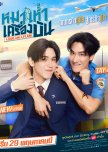
HALF-ASSED REVIEW FOR A HALF-ASSED SERIES ;)
Finally, forced myself to end this series. And the only thing I'm gonna say is it's a hot mess...idek what this series was supposed to be but it did turn out to be a huge disappointment and a waste of the whole budget (that surely was 10$). Never thought any series could ever out-trash Revamp but this series debunked that thought.It tried to be a comedy, horribly failed at that, every joke fell flat, the humour was questionable but hopefully someone found it funny (becuz I definitely did not).
It tried to be a Romance series, Half-assed this genre too...Don't even start with me about the 2nd lead, Cuz they contributed nothing to the whole series. I absolutely loved MondRyu in That Summer but this series did not do them any justice.
TBH this series did not do any justice to TayNew too. It literally failed at Everything!
In Short, YES IT SUCKED BAD :)
Was this review helpful to you?
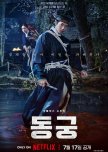
It gets better as it went along ...
This series took awhile for me to get hooked on it. after the initial episode, everything seemed to get so complicated and crowded with sub plots & new antagonists. I found myself really having to work in following the story. Though episode 4 the direction of this horror series seemed to be a bit confusing ... and then, it was like a new series.The last three episodes were fantastic, the story became intense, and the acting matched it as well.
Joo Hyuk became the protagonist to root for. His character became much more likable toward the end rather than he was in the beginning. Even Yoon Seo's character of Saeng Gang had a turn around by the end. I really found her character annoying early on, but the two main protagonists blended well together, giving us a great finish.
I almost gave up on it a few times through the early episodes, but I'm glad I stuck with it. It turned out to be a pretty good series.
Was this review helpful to you?
This review may contain spoilers
Lacked In Comparison To The First Season
Where Season 1 had me, I didn't feel it in this 2nd season. The action didn't really hit me, and Jian never felt like Jian from how she ended S1.For the first half of the show, there wasn't any action; it felt more like a buildup, and in comparison to Season 1, those who watched the first season should know what I'm pointing at. The second half of the show gave a lot more action than the first half, but still fell back a lot when you get reminded of the first installment. I went into this show expecting something from that end at Season 1: Jian's significant character growth, Jian being the ladyboss in Season 2. The trailer gave a lot more of her as a Ladyboss than the drama itself; trailers can be really misleading. The writers gave nothing about what she went through and became in S1. Firstly, she just ran from what she promised/her responsibilities into the countryside, where she could likely endanger the people living there with her identity. Her staying in that peaceful environment in the first two eps of the drama ADDED NOTHING TO THE SHOW: NO TWIST, NO DISCOVERY, NO VALUE. Jian of this season felt more like how she was at the start of the first season. The Season 2 focus wasn't on Jian's growth but more on the conflict between Muthehelp and Babylon, and it was saddening to me as the writer never cared about the growth Jian had from the first season.
The writers just killed Bale at the midpoint of the drama. It felt like when he died, he was a side character rather than a tough villain from the first season. I was really disappointed by the time he died, how he died, and the way the scene was directed. Bale was such a compelling villain in season 1, with a menacing screen presence, and he just died like a minor character. The actor really did a great job with his portrayal. They never gave a real face-off/showdown between Bale and Jiman; It was just anticlimactic, given how much potential these two characters had to make the show more engaging. J was an interesting character to me, and I would like to see more of his scenes, BUT the writers gave him an intentional death as a plot device in making Q develop a relentless mind in pursuing Jian and killing Jiman. It was dissatisfying. The fact that Q believed what was told of how her brother died, with what she knew of how dangerous Bale was, was NOT MAKING ANY SENSE.
Pasin definitely did what he had to do to save his son, but he really overdid it. If he chose to help his team, he would have found a way, even with him having the chip in his body. At last, the writers just killed him off (I felt the writers made him kill his team's opponent and him casually dying for redemption), and we weren't told what went on with his son in Jiman's hands. The writers picked what was important and left out some minor things I would have loved to see.
The villains of this season weren't as good as the ones from the former. If I were told to choose which villain had me, it would be K; he never talked much and had one gloomy face, but he gave me a villain feel, at least in comparison to the rest of the named Babylon.
Q didn't feel like a villain/an enemy; she felt like someone who had to do something she doesn't want, and her shooting the gun at the wall instead of her foe in front of Jian says it all. Loved how the misunderstanding between Q and Jiman didn't drag out too long; also loved the interaction they had at the end of the show.
Kusanagi Jin didn't actually get me to feel anything, except at times she feels so comical, like a mentally derailed patient in therapy; she just feels so unserious and weird. She gets me laughing when asking for food when something serious and in need of attention occurs. The actress deserves praise for that performance. I couldn't truly get invested in her character as a villain because she actually did nothing other than bossing others around and talking big. They threw in action into her character at the end, and we see her with the guns killing the red team like flies, going through the leader of the reds and bursting into the door unscathed, pointing guns at Jeong Jiman and Jeong Jian. Everything felt so Hmmmm. She passes the red code leader offscreen. CAN'T THEY JUST GIVE ME THE ACTION LIVE AND STOP DOING OFFSCREEN? She came out unscathed from the red team and their guns, without the writers giving us a hint or a backstory to what she did in the past for her to be this strong; this just feels like A LAZY WAY OF WRITING.
Season 2 really fell short in comparison to the first season, and I shouldn't even be surprised; that is the way most series are.
Jian never made real use of a gun, and that was a problem because she felt like she was in the shell of her Season 1 character who hadn't overcome challenges, even though she had done all of that. But I was satisfied by the forehead shot she bestowed upon Kusangi Jin.
If they ever make a Season 3, please keep it engaging, fast-paced, and juice up Jian's character like it should be done.
Thanks for reading the long Review🩷
Was this review helpful to you?
This review may contain spoilers
Just Routine, Avoid unless have a urge to finish S2
1. There are too many characters, no one receives enough depth to make us care. The villains are written like caricatures instead of serious threats. Their exaggerated performances and cheesy dialogue become unintentionally funny. Furthermore, the portrayal of the Japanese characters feels stereotypical and borderline mocking.2. Absolutely not required to kill the characters for any reason. (The boy in the island, J, Pasin, Other team members)
****** Despite these major narrative flaws, the acting was commendable. ****
3. Mainly, the actors were weighed down by an extremely depressive and relentlessly gloomy tone throughout.
Pasin is gradually reduced to a pathetic and weak figure, making his betrayal feel forced rather than earned, while his death lacks the impact it deserved.
The FL choosing to live alone under constant surveillance is also difficult to understand—it is obviously never a life of peace, and at times she behaves almost like she has a split personality.
Q’s character initially looks interesting, but it is hard to comprehend how she could fall for Jin’s extremely obvious lies.
The ML, meanwhile, has many choices and opportunities to protect his niece, yet repeatedly makes questionable decisions. When all of this is combined with the relentless gloom surrounding the main characters, the character dynamics become exhausting rather than engaging.
4. The plotting and technical elements also falter. Most of the twists are predictable, and several interesting plot developments go nowhere. The action sequences lack excitement, while inconsistent abilities muddy the stakes. Additionally, the subpar CGI and visual choices occasionally make the show feel like a parody rather than a gritty thriller.
Overall, the season is just average, unless you have a desire to complete the Season 2.
Was this review helpful to you?
Weak storyline, not much chemistry
I m giving this 7 bc thr ML is fantastic. FM had the most annoying character, at 1st she was impulsive, entitled,judgemental she couldn't see past her hate. Second half she became a weak damsel, prancing around and taking any "bullet" for him. The chemistry was abismal bc there were almost none quality scenes between them. The somber background and the obsessive killing of b characters destroyed any respect I had left for this series. I got into Chinese historical shows thanks to Fated Hearts which was fantastic, this is an incredible letdown.Was this review helpful to you?

horror romance
I loved the concept but I wish I knew more about the general religion of Thailand first. It reminded me a lot of the og thai horror that I loved when I was younger. But the production here was so much better.I made a mistake watching this right after pit babe(shared actors) so I kept remembering the names of those characters. But the actors still did a good job and I was on the edge of my seat several times wondering if they would all survive.
There wasn't as much focus on the romance as I would have liked but there was a good balance for bring a bl drama, a procedural, and a horror show. One of the issues was that there was often too strong of a difference from one second being fully immersed in a horror with the suspense building music and the next being a romance scene with cute music.
I would only rewatch it for the cute scenes between the main leads, but they're not as plentiful as other bls. I can see the appeal to relive the mystery knowing the truth.
Was this review helpful to you?
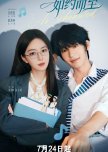
OMFG... horrendous beyond mere words
I'm not a fan of the chinese dramas. Their style is too different, it is mostly based on.. nothing really, just using idols, whereas I prefer a good story, script, character development, dialogue, world-building, or something. I don't even know why I started watching it, but I did. So, here it goes.Visuals. Meh at best. I haven't seen anything good. OH, sorry. There were a few (very few) decent/nice shots. And thats it. The dance choreography was meh.
Sound design was horrible. They tried too much and they destroyed it. Ok, one good song (just one in a drama where they start singing every 10 minutes...). The rest of the tracks and the volume of the dialogue was all over the place.
Editing, pacing, world-building., production value. You're joking, right?
Now, the good parts. Everything is sht. Horrendous acting (because 2-3 moments of decent acting is the same as null). The script, dialogue, story... Everything is bad. Very theatrical, but in the bad way. Some character development for the supporting cast (?), not the main couple. What else? I don't even know how to describe what I've seen, I'm feeling exhausted....
Oh, not even the synopsis is quite correct. From the way it is said, I'd think its him against the world, when in fact there are only two people that make his life "harder". And by that I mean a tiny bit, and for silly reasons, really. But mostly people adore him, and thats even before the mid of the story.
What else? The comedy was sht. Maybe 1-2 decent scenes, but I don't even remember those. The romance is meh, the chemistry is missing.
It gets a rating of 2 (for some character work, acting, visuals, one song!). Waste of time. So far, I've seen a couple of chinese drama (from "silly" ones with some gamers, to ones with one playing the role of an actresses, to something "serious", something with clouds in the title? About a war photographer and a bomb squad soldier? ), this one has by far worse visuals, is worse as a story, as acting, as anything. And the pacing is soooo bad, that it will make it feel even longer. No re-watch value, obviously.
Have a lovely evening.
Was this review helpful to you?

This review may contain spoilers
Irritating FL and very fast paced
TW: mentions of su1cide in the movie.I normally don't care that much about the acting but rather the story and the making of it. But for this movie the issues issues really was the personality of the FL. Maybe my rating would've been higher if I liked the FL... This is not meant as attack towards Toey Jarinporn. Aside from my irritation on Mesa I do have to admit that this story was really cute, especially the moments between Ben and Mesa. I was afraid to start this movie. Anything that says Netflix makes me afraid. Maybe I should cut this crap and just accept that Netflix does make good/average stuff.
From the beginning on I shipped Mesa and Ben but Tul wasn't really in my mind. I knew Mesa had a different partner but it was really obvious something between them would happen. The break up was way too early for me to give a fuck and that also kinda ruined how I saw the movie. It was too rushed, to the point where I hadn't really had the time to build empathy for Mesa. I just preferred Ben, he's tuff.
Mesa really pissed me off. It was the overreactions and the slightly high classed/pick me conversations. Instead of thinking the actress is bad, I think this was meant to be. Actually her acting was amazing and I think it really was done with a reason. I don't remember the name of the characters, I think it was Min. But from Min's actions it was clear that she had the exact same idea about her as I do. I think the reason she was stuck in this loop also had to do with her ignoring her surroundings and being self centred. Even though I feel heavily irritated by her, I love the expressions she made. They reallyyyy reminded me of Cooheart. What I also found impressive and really nice is how Toey her English is understandable, which is rare given it's a Thai series.
I actually realllyyy liked Great Warintorn and idk why but something about him makes me blush like he's amazing. His smile makes me shy like bro what. Barely any actors do such a great job at giving me that reaction. I should definitely watch more of his series/movies. I've also seen Man Trisanu before in step by step and I really liked him as actor, he's amazing. I am a bit disappointed in his role as Tul but the story of Tul in general made 0 sense aside from him trying to break up with Mesa all the time.
As someone with French blood, I really love how this movie was shitting on us. I love how they included all sorts of tourists including Japanese and French. The French family being portrayed as loud and rude was so funny to me and I really don't mind. The kid was so annoying as well like omg I would've had such an urge to slap that kid if I was Mesa. I know Thailand has a lot of issues with tourists absolutely disrespecting rules and I'm just really happy they 'addressed' this.
The styling and colours are amazing. Somehow just every shot feels right. And Mesa's outfits??? Hello??? She is sooo beautiful. I have 2 other movies from Suea Yanyong on my list and I really do wanna watch them now. The poster absolutely fits what I was thinking about the show. I'm not usually interested in composers, however, it is super nice that they had Phil Chapavich compose. He did amazing work in the Next prince.
Another small thing I disliked was the ending made. It no sense to me I'm so sorry. I get who she ended up with etc but I feel like it was overall rushed and just confusing. I have to admit that I personally am not the biggest fan of movies because I feel like series give a more in depth feeling of the story. This is my first time making such a long review on a movie and I wouldn't call it necessarily good. I'm not sure what to think. I'm a big fan of the production but less on the story. I would say it's quite mid.
Was this review helpful to you?
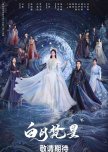
A blessing on the eyes and ears.
Wow. I was not expecting to like this drama as much as I did. It's the most aestheticly pleasing series I've watched up until now. I'm a huge fan of cinematography and it's shown that the people working on this drama have a keen eye for it. From the scenery, the effects to the absolute amazing costumes and make-up, everything was done so beautifully that I was stunned almost every episode, So much so that i had to pause it multiple times just to admire the absolutely amazing job they did. I'm absolutely in love with every aspect of this drama, I can't even explain how much this cdrama touched my heart.The relationships between the characters were so heartwarming and beautiful, I was kicking my feet at every little interaction any of the couples had in this show. The pairings were just amazing. There were so many emotional moments that had me ugly crying (I do cry quite easily though :')) So many twists along the way that had me at the edge of my seat EVERY. SINGLE. TIME. Definitely a must watch for everyone!!
And something we absoultely can't forget: the music. For me the music is a big part of what breaks or makes a series and they just absolutely nailed it. Sa DingDing has a stunning voice which really fits so perfectly. It's just like a puzzle falling exactly into place.
Was this review helpful to you?


