K-Drama


This review may contain spoilers
A long, slow journey of love, survival, and destiny
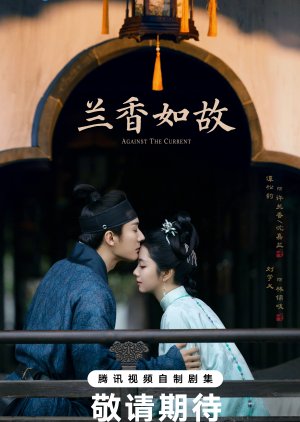
This drama is a story about two people whose lives are changed by circumstances beyond their control long before they truly have the chance to know each other.Lanxiang and Jinqi are connected by a promise made between their families, but fate takes them in completely different directions. What begins as a story about an arranged marriage gradually becomes something much deeper, a story about survival, identity, resilience, and the unexpected bonds people form along the way.
Lanxiang is one of the strongest parts of the drama. From a young age, she is shown as someone kind-hearted and compassionate, but what makes her compelling is not just her sweetness. She is someone who adapts to difficult circumstances without losing her sense of self. Watching her navigate a world where her identity and status are no longer what they once were is one of the most interesting aspects of the story.
Jinqi, meanwhile, follows a very different path. He carries the weight of family expectations, duty, and choices made when he was still young. His character is not simply defined by his position or power, but by the consequences of the decisions made throughout his life.
The romance between the two leads is an extremely slow burn. This is a 47-episode historical drama that takes its time, and it may feel slow for viewers who prefer faster-paced storytelling. However, the gradual development is also one of the drama’s biggest strengths. Their relationship does not appear suddenly or rely on exaggerated romantic moments. Instead, it grows through shared experiences, trust, understanding, and slowly learning who the other person truly is.
What I appreciated most is the nostalgic feeling the drama gives. It feels like a return to older historical dramas that were willing to spend time building characters, relationships, and atmosphere rather than rushing from one major event to another. The story allows emotions and connections to develop naturally.
Tan Songyun’s portrayal of Lanxiang is especially convincing. She brings a quiet strength to the character and makes her transformation feel believable. Lanxiang’s intelligence and adaptability never feel forced, they come naturally from her experiences and the world she has had to survive in. Some of the other performances are more uneven, and I found certain portrayals less consistent, but the emotional center remains strong.
Overall, this is a drama for people who enjoy patient storytelling, historical settings, and character-driven romances. It requires commitment, especially with its length and slower pacing, but there is something comforting about watching a story unfold gradually. It is less about dramatic romance at first sight and more about two people slowly finding their way back to each other after life has taken a lot from them.
Was this review helpful to you?
This review may contain spoilers
What a large order of nothing burger (WHOMP WHOMP)
I feel like this show has taken me out of my character. I never yelled at a girl like this before. I’m irritated that I invested so much time waiting for the potential from the first 15-25 episodes to pay off. Watching this show felt like the equivalent of watching a horror movie and yelling at the screen “don’t go through that door” and then the character turns around and says “OK!”. Now that’s not very much of a movie, now is it? Every time I felt we were being set up for real tension, real plot, real conflict they pull a 180 in the last 5 minutes, and somehow the problem gets solved FOR 20 EPISODES IN A ROW. I guess from time to time we all need something to fold our laundry to, but why waste something so rife with potential. Every large grandiose emotional moment feels completely unearned by the time it comes along. Which is such a shame because every bit of dialogue is like poetry. For how much it’s used, it better be. Punishments feel so out of proportion because nothing ever really goes wrong enough to justify it. What should’ve been a five episode conflict arcs are completed in one episode. After 45 minutes I just sit at screen wondering “is that it?”. Beautiful moments of cinematography and visual storytelling are ruined almost immediately in the next episode because it will be literally explained to the audience through throw away lines. Even worse, there are these great moments that deserve screen time that are being reduced to three second dialogue peices. I’m not saying I need a soap opera, slap-heavy, drink throwing show. On the other hand, you want me to believe that in 85 years no one disagreed with her at all and she made the right choice every single time??? At some point this stopped being a deeply perspective television show and became a dramatic sitcom. What a waste of 47 episode. This could’ve been a cute 24 and donate the rest to a drama that needs it. Which is something sacrilegious for me to even say because I require a 30 episode MINIMUM from in all of my dramas. Everybody from the OST studio booth, to behind the camera, to in front of the camera did their job. DOWN!!! They almost made this show feel worth something. I will say this: if you are on your 12th reason, cortisol at all time high, nothing to live for and you just need to win. This is the show for you.Was this review helpful to you?
It flowed until it didn’t
This story draws you from the start. The episodes from the beginning up until her marriage make a connection with women. The struggle in society to carve a place of your own.The relationship with her “parents” is so beautiful and heartwarming. They mutually adopt each other and become a truly united family. You are rooting for them to get their freedom from the start. They really captured the FL’s initial disgust and disappointment being a slave for the family that was involved in her family’s demise.
Friendship really embodies this show. It’s really about women supporting women at its heart or women striving to destroy other women. The FL’s wit and knowledge becomes an advantage to everyone around her.
After marriage the show took a little bit of an unexpected, undeveloped plot. I loved the fireworks of the marriage ceremony! We truly only got hints of her disappointment after marriage. It turned to focusing on political issues. We do finally see the couple come to support each other in war. After that we see the beautiful scene of their first child’s birth.
After the birth of their first child we start focusing more on family dynamics, the episode releases get shortened and spread out. I’m on episode 43, I’ve lost where this show is heading. It was beautiful to see how they moved time forward, but all of a sudden they had another child and we jump into pirates. I’m struggling to get back into it. I really wanted to see their relationship develop. Where are the fireworks in the couples relationship? I mean he forced her to marry him. Yes we find out he’s a good guy but I feel this was a missed opportunity. Now we are focusing again on how she’s so smart and solving major political issues and old enemies. I don’t want to start episode 44. I’m hoping to get back into the story and not drop it. Maybe this show is best of you can stream all of the episodes without gaps from airing.
Was this review helpful to you?
An S+++ story
Trying to produce a Song or Ming Dynasty historical romance AND make it centred on women’s power is a tough road. The Autumn Ballad (2022) with Qiao Xin and Jeremy Xu is an example of good intentions restrained - the delivery, lines and solutions are 21st century but don’t match the costumes nor era. What Against the Current gets so well is historical context and cultural mores. The FL knows what is possible and uses what little power she has to survive. It resonates with viewers emotionally. We understand why she does it. We are emersed in the world built for us. But we know it is not us moderns cosplaying in hanfu. This is a genuine historical drama. A great, great one!Was this review helpful to you?

This review may contain spoilers
So far 1000/10 masterpiece!!
15 episodes in, and Against the Current is already proving to be an absolute masterpiece! The lead actors and the entire supporting cast are doing an incredible job bringing this story to life. What I appreciate most is how the narrative brings the background characters, who are so often overlooked in traditional period dramas, straight to the forefront. You realize every single character’s journey is just as important as the main leads. The screenwriters have woven the plot together beautifully, highlighting the harsh realities of the era. Regardless of whether these women are rich or poor, they barely have any rights in a society built entirely for the benefit of men. Yet, they are all fighting to survive, endure, and live on their own terms. Lanxiang uses her sharp intellect and her survival instincts to make her way to freedom while she just wants to live happily with her adoptive parents. It is so empowering to see that every character in this cdrama serves a meaningful purpose, and their struggles don’t go unnoticed.As for our leads, Lanxiang and Jinqi their romantic storyline proves that a true slow-burn romance is always worth the wait. I love a cdrama that focuses on deep yearning from the ML rather than relying on the typical “love at first sight” trope.
I truly hope it stays this captivating all the way through! Congratulations on this cdrama reaching 31,000 heat index! 🎉🤍🤍🤍🤍❤️
Was this review helpful to you?
EXCEPTIONAL DRAMA
This is a Chinese drama that takes place in a fictional country and era that resembles the Ming dynasty. It focuses on the harsh, difficult lives of women in general. Palace maids in particular, have no power, no prestige, and aren’t much better off than slaves.But even upper class women have a hard time in this culture. Any woman who makes one mistake might be asked to kill herself to preserve the honor of her family.
If she doesn’t have money she might be sold to a brothel.
The maids have no rights at all. They’re subject to brutal punishment and can be beaten to death at any time.
The story centers on one maid, the quick-witted, kind FL, originally a nobleman's granddaughter, who manages to find solace, friends and to eventually flourish in this treacherous society.
To be clear, this series isn’t a downer. There are plenty of lighthearted and tender moments, and the plot moves along at a nice pace. Some viewers will disagree because a lot of the action is taking place in the gestures, the facial expressions, and the subtext, so it can seem slower. You have to be able to see what’s going on under the surface to get the full impact.
It’s a very good drama. But it would have been better if the writers (and I presume the director) had not felt the need to drive the theme home every chance they got.
And what exactly is the theme? The horrible abuses women have had to suffer at the hands of men throughout history.
The writers are so insistent that you get this message that Li Meng (more on her later) appears in episode 36 to preach it to us one more time. And she brings all this up while she’s mortally wounded.
Believe me, the FL doesn’t need a reminder of this sorry fact. Her whole life embodies it. Forgive me for harping on this–but the script writers should be sent to a re-education camp for this crime against good writing.
Li Meng reminds the FL that all men are rotten to the core. She even imagines a time in the future when women will be able to control their own lives.
The FL assures her that, yes, “that day will surely come.”
Dear movie makers, It’s an insult to your audience to inundate them with this level of didacticism.
But back to the story...the female lead in this story is fiendishly clever. And she knows how to level the playing the field when she needs to.
It takes awhile to get there, though, so be patient.
At times the plot is melodramatic. Someone is kidnapped; an innocent person is put in prison. Twice it turns into a police procederal with one of the two leads following the clues and saving the day. In many places, the story-telling, acting, directing, and grown-up themes are truly impressive.
The main negatives for me were the sections where the plot was confusing--and I had difficulty figuring out what was happening. I’m not sure if this was a problem with the editing, the subtitles, or the script.
One example–in episode 39 the FL is trying to explain something important to the ML. She creates a dramatic production to make her case, and they watch this production together. Judging by his reaction, the ML gets it.
He gets it–but what about the audience?
What exactly is the FL trying to say? I played this scene over several times–and it was still vague, incoherent and obscure.
But for every scene like that–there are others that are magnificent.
Most of the actors seem well-suited for their roles–and a few stand out. One is the actor Li Meng, mentioned above, who did an amazing job playing the husband-stealer in THE EPOCH OF MIYU. She’s the heavy in this drama as well, but she lets the audience know in a well-written and brilliantly delivered speech in Episode 8 that she (an upper class woman forced into a loveless marriage) is also a victim.
While the FL’s mother was very sweet and lovable, I was a little disappointed that the FL cried harder when her mom died than when the ML died. The ML was trying to console himself with the thought that they could be husband and wife in the next life. Her comment? “Once is enough.” I suppose you can read this several ways, but I admit it was kind of a let-down.
But with all its flaws, this is one of the better dramas of 2026
Was this review helpful to you?

Was this review helpful to you?

Against the Current Review
Against the Current (兰香如故) — Review
1. Writing and Storytelling
Against the Current is an emotional historical drama about love, family, sacrifice, injustice, and resilience. Its strongest moments come from the characters’ relationships and the difficult choices they face. Although some plotlines feel rushed the story remains engaging because of its emotional depth.
2. Shen Jialan / Xu Lanxiang
Shen Jialan, also known as Xu Lanxiang, is the heart of the drama. Her journey from a vulnerable young woman to someone who faces hardship with courage gives the story its emotional strength. She experiences betrayal, grief, and injustice but continues to fight for dignity and the people she loves. Her resilience makes her compelling, though some decisions could have been explored in greater depth.
3. Tan Songyun’s Performance
Tan Songyun delivers a moving performance as Lanxiang. She conveys vulnerability, determination, heartbreak, and quiet strength through subtle expressions and emotional restraint. Her portrayal makes Lanxiang’s suffering believable without relying entirely on dramatic outbursts. She is the drama’s greatest strength and helps maintain its emotional connection with viewers.
4. Xu Wanquan and Xue Guihua
Lanxiang’s adoptive parents, Xu Wanquan and Xue Guihua, provide the story with warmth and a sense of family. Their care gives Lanxiang a place of belonging amid the cruelty surrounding her. Their relationship with her makes the themes of parental love and sacrifice especially powerful. Xue Guihua’s death is particularly heartbreaking because of the comfort and security she represents.
5. Death, Grief, and Loss
Death is central to the drama’s emotional impact. Xue Guihua’s death leaves a deep void in Lanxiang’s life, while Lin Jinqi’s fate adds another layer of sorrow. These losses demonstrate how deeply injustice affects the characters and those who love them. At times, the repeated tragedies can feel overwhelming, but they reinforce the story’s themes of sacrifice, endurance, and the lasting consequences of cruelty.
6. Lin Jinqi and Liu Xueyi
Lin Jinqi is an important and emotionally complex character whose relationship with Lanxiang adds tension and tenderness to the story. Liu Xueyi brings a restrained intensity to the role, expressing complicated feelings through his presence and subtle acting. Their storyline offers memorable emotional moments, although some developments would have benefited from more time and explanation.
7. Supporting Cast
The supporting actors help create a convincing world around the leads. Guo Keyu and Chen Chuang bring depth to the family relationships, while Li Meng adds intensity to the drama’s conflicts. Zheng Hehuizi and Niu Junfeng also contribute to the wider story. Although some supporting characters receive limited development, the ensemble strengthens the atmosphere and gives the main characters’ struggles greater context.
8. Direction and Pacing
The direction emphasizes emotional performances, family relationships, and dramatic turning points. Quiet scenes often provide the strongest moments, allowing grief and affection to develop naturally. However, some transitions and plot developments feel rushed, while certain conflicts continue longer than necessary. More balanced pacing could have made the story’s emotional peaks even more effective.
9. Cinematography
The cinematography supports the drama’s historical atmosphere through carefully composed shots, expressive close-ups, and visually appealing scenery. The camera often focuses on the characters’ faces to communicate feelings that dialogue cannot fully express. The visual style complements the themes of longing, loss, and perseverance without distracting from the performances.
10. Costumes, Styling, and Sets
The costumes and styling help establish the period setting and distinguish the characters. Lanxiang’s appearance reflects changes in her circumstances, while the clothing of other characters supports their identities and social positions. The sets and production design create a convincing historical environment. Together, these elements strengthen the drama’s visual identity, even if some details may occasionally feel more polished than realistic.
11. Production Team
The drama’s overall effect comes from the combined work of its writers, director, cast, cinematographers, costume designers, and production crew. The performances and visual presentation create many memorable scenes. Nevertheless, stronger editing and more consistent storytelling could have improved the balance between the drama’s emotional ambitions and its plot development.
12. Emotional Journey
The most affecting aspect of Against the Current is its portrayal of love and resilience amid hardship. Lanxiang’s relationships give meaning to her struggles, and the losses she experiences make her determination more poignant. The drama encourages viewers to consider the importance of kindness, loyalty, family, and inner strength. Its emotional scenes can be painful, but they also provide moments of tenderness and hope.
13. Themes and Messages
One of the most meaningful aspects of Against the Current is its exploration of family, loyalty, justice, and resilience. Lanxiang’s journey shows that true strength is not the absence of pain but the courage to continue despite hardship. The drama also highlights the importance of kindness and the lasting influence of people who offer love and support during difficult times. Through its relationships and emotional struggles, the story reminds viewers that family is built not only through blood but also through care, sacrifice, and understanding. These themes give the drama a deeper meaning beyond its romance and historical setting.
14. Final Thoughts
Against the Current is a moving historical drama carried largely by Tan Songyun’s performance and the emotional journey of Shen Jialan/Xu Lanxiang. Its portrayal of family, sacrifice, grief, and resilience gives it lasting appeal. While uneven pacing and melodramatic developments weaken parts of the story, its characters, performances, and visual atmosphere remain memorable. It is most successful when it focuses on the human cost of injustice and the strength required to keep moving forward.
Was this review helpful to you?

This review may contain spoilers
Lifetime of Stories and an Absolute Masterpiece
I can confidently say that Against the Current is the best drama of 2026 and one of the most beautifully written dramas I’ve watched in a very long time. It deserves every single bit of the hype and praise it has received. I went into this expecting a romance-heavy historical drama, but what I got was something so much more meaningful. It completely blew my expectations away.What makes this drama so special is that it never really felt like I was watching a show. It felt like someone was telling me a story. A story about life, love, family, injustice, kindness, loss, and, most importantly, women. There’s something so beautiful about the way the narrative unfolds, almost as if you’re sitting down and listening to someone recount an entire lifetime. And I find that particularly fitting because Lan Xaing herself has that storyteller quality.
At its heart, this is a woman-centric story, and I absolutely loved that. The women were undoubtedly the center of the narrative, while the men, despite having important storylines of their own, often played supporting roles in their journeys. What surprised me was how naturally the drama approached its themes. It never felt like it was forcing a message about feminism. Instead, it showed women supporting women, surviving injustice, making difficult choices, and finding their own paths in a society that constantly tried to limit them.
And Lan Xaing? What an incredible female lead.
I’m usually not a fan of the overly intelligent, know-it-all female lead who somehow has an answer to everything. But LX was never that. She was intelligent, calm, compassionate, and incredibly resilient without ever feeling unrealistic or overbearing. Her characterization was so consistent that even when you look back at her younger self, you can see the same kindness and composure that defined her throughout her life.
Her beginning absolutely broke my heart. I genuinely don’t remember the last time I cried during a drama’s first episode. She had every reason to seek revenge, and her story could easily have become another typical revenge plot. But what I loved most was that her journey was never about revenge. It was about justice.
She remembered her mother’s wish for her to live on, and she understood that her parents would never have wanted her to sacrifice her life in pursuit of vengeance. Instead, she chose to live. She chose kindness, even in a world that had shown her so little of it. She never forgot the injustice her parents suffered, and even if it took years, she continued searching for a way to clear their names. She eventually achieved justice on her own terms, without allowing revenge to consume her life.
I found that incredibly refreshing.
I also loved how vocal she was about the injustices of the ruling system. She wasn’t blindly loyal to authority, nor was she portrayed as someone who could magically fix everything. She recognized the flaws in the world around her and wasn’t afraid to acknowledge them. Yet she never lost her compassion.
And that brings me to one of my favorite aspects of her story: the idea that one act of kindness can lead to countless others.
The kindness she showed her future adoptive parents eventually came back to save her life. Their decision to protect her gave her another chance at living, which eventually allowed her to become part of the Lin family and save others in return. It was such a beautiful cycle of kindness. One good deed created another, and those acts continued shaping the lives of so many people.
Her relationship with her adoptive parents was also incredibly touching. I loved that they genuinely felt like her parents, and that their love became such an important part of her journey. Her entire storyline was beautifully developed, from her beginnings as an enslaved girl to finally gaining her freedom and building a life of her own.
She’s easily one of my favorite female leads. Her story connects so many of the other women’s journeys, and I loved every moment of it.
Now, the male lead. Where do I even begin?
First of all, the actor deserves all the praise in the world. I swear, every time this man cries, I cry with him. He’s such an incredible actor, and it certainly doesn’t hurt that he’s an absolute heartthrob.
What I loved about his character was that he wasn’t written as the perfect male lead. He could be serious, responsible, and intelligent, yet also surprisingly foolish and flawed. He made mistakes, sometimes terrible ones, and there were moments when I genuinely wanted to shake some sense into him. But that made him feel human.
One of my favorite things about him was how much he cared for his family, especially his sisters. We rarely see male leads whose relationships with their siblings are explored with this much attention. I loved how protective and responsible he was toward them, and how much importance the drama placed on family bonds.
His relationship with LX was equally beautiful, although certainly not perfect. The circumstances surrounding their marriage were difficult, and I didn’t particularly like how he forced the situation. But I appreciated that the drama didn’t pretend he was flawless. He had his own growth and redemption, and their relationship developed into something genuinely meaningful.
I don’t think LX ultimately regretted marrying him. Their marriage became part of a much bigger journey. Together, they built a family, raised beautiful children, and helped save so many lives.
And can we talk about their chemistry? Absolutely incredible.
I genuinely wish we had gotten more scenes of them together because their chemistry was too good. Their relationship was never the main focus, but every moment they shared felt special. The romance was subtle, mature, and beautifully woven into the larger narrative. It wasn’t about grand gestures or a perfect man constantly saving his woman. If anything, there were plenty of moments when she was the one saving him.
And his ending? I bawled my eyes out. I hated that he died relatively young, but I also understood why his story ended that way. It was heartbreaking, yet fitting for the life he had lived. The fact that he passed away in her arms made it even more emotional.
Speaking of family, I absolutely loved how much attention the drama gave to sibling relationships.
The siblings genuinely felt like siblings. They loved each other, argued, supported one another, and occasionally got completely fed up with their parents. I especially loved those moments when they found comfort in one another because they were all equally frustrated with their parents. Those little details added so much realism.
And honestly, the entire cast was phenomenal.
I cannot single out one performance because everyone delivered. Every character, including the villains, had something meaningful to contribute. Some villains were absolutely detestable, while others were written with enough complexity that you couldn’t help feeling some compassion for them.
What impressed me most was how the drama explored the different struggles women faced during that era.
We saw women treated as tools for their families’ social advancement, like the first wife, whose story eventually made me sympathize with her despite everything. We saw wives forced to accept concubines because they couldn’t produce a male heir. We saw women whose reputations were destroyed simply because they had fallen in love with the wrong person, leaving them unmarried for years. We saw women trapped in abusive marriages, women who became widows, and women who never married at all.
There wasn’t just one version of womanhood being presented.
Every woman had her own circumstances, struggles, choices, and consequences. And what I appreciated was that happiness didn’t necessarily mean marriage or romance. Some found happiness through family, others through independence, freedom, or simply finding peace with their circumstances.
I loved that the writers gave these women the attention and closure they deserved. Nobody felt like an afterthought. Even characters I initially disliked were given enough depth that I could understand their experiences.
And that’s another reason why this drama stood out to me: it never felt like the writers were manipulating the audience.
There were deaths, heartbreaks, and tragedies, but they never felt like cheap plot devices designed to make us cry. It genuinely felt like life was taking its natural course.
When the brother died, I was absolutely devastated because I adored his character. When the mother passed away, it broke my heart all over again. But neither death felt unnecessary or deliberately cruel. People grow older, circumstances change, and sometimes we lose people we love. That’s life.
The drama understood that.
It wasn’t trying to give everyone a perfect happily-ever-after. It was showing us an entire lifetime, with all the beauty and heartbreak that comes with it.
And I think that’s why the ending affected me so much.
I cried my eyes out during the final episode, just as I had during the first. But I wouldn’t change the ending. It was bittersweet, yes, but incredibly realistic.
You fall in love, build a family, struggle, experience happiness, lose people, and eventually reach the end of your own journey.
I loved that LX continued living after losing her husband. Her parents’ final wish was for her to live, and that’s exactly what she did. She held on to life for as long as she could. Even though she eventually passed away without him beside her, I didn’t find that disappointing. If anything, it brought her story full circle.
She lived. And she lived well.
Now, I do have to mention the time skips because, while watching, they occasionally drove me insane. Sometimes the story jumped forward so quickly that I wished we could have spent more time with the characters during certain periods of their lives.
And let’s be serious, none of these people looked like they were aging. That was probably my biggest complaint.
But after finishing the drama, I actually understood why those time skips were necessary. The writers weren’t trying to tell us about one particular chapter of these characters’ lives. They were telling us their entire story.
The final stretch almost felt like one long goodbye. Usually, dramas rush through their endings or give us one extra episode to wrap everything up. Here, it felt like we were given several episodes simply to watch everyone’s stories reach their natural conclusions.
And I loved that.
It gave us time to say goodbye to these characters, to see where life had taken them, and to appreciate how far they had come. Some people might find that pacing unusual, but I genuinely appreciated the closure.
Another thing I have to praise is how intelligently written the drama was.
For once, I never felt like the writers were treating the audience like fools. The characters’ decisions, the conflicts, and the consequences all made sense within the world they had created. There was no unnecessary stupidity just to move the plot forward, and nothing felt overly fabricated or conveniently unrealistic.
Even the political intrigue was handled beautifully. It was interesting without becoming overwhelming, and it never distracted from the characters’ personal journeys.
Despite covering so many storylines and serious themes, the drama was surprisingly easy to watch. I was never bored. Not once. The pacing kept me invested, and the writing made even the quieter moments feel meaningful.
The production itself was another masterpiece. The cinematography was absolutely stunning. The costumes, hairstyles, makeup, sets, and overall attention to detail were phenomenal. The OSTs were equally beautiful and complemented the emotional atmosphere perfectly. The direction, acting, and writing all came together so seamlessly that I genuinely struggle to find anything substantial to criticize.
But beyond all the technical brilliance, what truly stayed with me was the message.
There was a moment when one of the women questioned when they would finally live in a world where women could have justice and freedom. Watching that scene in 2026 genuinely touched my heart.
It made me reflect on how far we’ve come.
Of course, women around the world still face countless injustices, and many remain trapped by societal expectations and restrictions. But compared to the world these characters lived in, we’ve made tremendous progress in many places.
There was something incredibly moving about watching these women dream of freedoms that so many of us have today, while also recognizing that their struggles haven’t entirely disappeared.
And that’s what made this drama so powerful. Its message transcends cultures, nationalities, and generations. You don’t have to share these women’s backgrounds to understand their pain, admire their resilience, or feel inspired by their stories.
It’s a drama about women finding their place in a world that constantly tries to define that place for them. Not necessarily women rising to power or achieving extraordinary status, but women breaking free from the restrictions imposed upon them, sometimes in the smallest yet most meaningful ways.
And I absolutely loved that.
Would I recommend Against the Current? A thousand times, yes.
But I wouldn’t recommend it to someone who’s specifically looking for a romance-heavy drama. Don’t get me wrong, the chemistry between the leads is incredible and absolutely worth watching. But romance was never the point of this story.
I’d recommend it to anyone who appreciates exceptional writing, layered characters, meaningful storytelling, and a drama that actually has something to say.
It’s rare to find a show that balances so many characters, relationships, and storylines without losing its emotional core. It’s even rarer to find one that makes you feel so deeply connected to its characters that their lives almost feel like memories of people you’ve actually known.
I laughed with them, cried with them, celebrated their happiness, and mourned their losses. By the end, saying goodbye genuinely felt difficult.
Against the Current isn’t just a drama you watch and move on from. It’s a story you experience, a story that teaches you something, and a story that stays with you.
It reminded me that life isn’t always fair, that justice doesn’t always come quickly, that love takes many forms, and that even the smallest act of kindness can change someone’s entire life.
I could genuinely talk about this drama for days and still feel like I haven’t praised it enough.
An absolutely phenomenal cast, beautiful cinematography, incredible writing, unforgettable characters, and a story filled with so much heart.
A masterpiece in every sense of the word, and easily my favorite drama of 2026.
Was this review helpful to you?

Was this review helpful to you?
The storytelling is its greatest strength. The pacing is generally excellent, with few dull moments, and the various subplots are woven together skilfully. There is family intrigue, power struggles, politics, scheming, rivalry, romance, and enough twists and surprises to keep one thoroughly engaged. The characters are not merely there to fill the screen; their ambitions, weaknesses, and choices drive the story forward.
The drama also boasts an excellent cast, with Liu Xue Yi standing out as the handsome Lin Jin Qi. Beyond his good looks, he brings considerable presence to the role. The chemistry between the leading couple is another major draw, making their romance all the more compelling. Overall, the cast delivers strong performances, bringing the characters and their complicated relationships to life.
What I particularly enjoyed is that we do not get just one romance, but the dynamics of five couples, each with their own circumstances and challenges. There are sweet, heartwarming moments as well as painful disappointments, making the romantic landscape far more varied and interesting than a single love story could offer.
Shen Jia Lan, living under the assumed identity of Xu Lan Xiang, is a particularly engaging character. Intelligent and resourceful, she navigates the treacherous Lin household and the machinations of the vicious Lady Zhao with considerable wit. Meanwhile, Lin Jin Qi is far from a passive romantic lead. His determination to escape an unhappy marriage and eventually make Lan Xiang his wife, despite the obstacles of social status and a potential rival, makes their romance all the more compelling.
The emotional impact is another major highlight. This drama is a feast for the senses, with plenty of emotional highs and tear-jerking moments. Even the seemingly less sympathetic characters have their own vulnerabilities, while the innocent and naive are not always spared the consequences of misplaced trust. The complicated family dynamics and the relentless competition for power add further layers to the story.
Two moments particularly touched me: the death of Jia Lan’s kind adoptive mother, which nearly brought me to tears, and the untimely death of a capable, upright scholar who had done his best to serve his country. Credit to the director and the actors for making these scenes so affecting.
The production values deserve praise, too. The costumes are excellent, adding visual richness to the period setting, while the CGI enhances the spectacle without taking away from the storytelling. And then there is the soundtrack! It is among the best I have heard this year and absolutely stole my heart. The music complements the emotional scenes beautifully, heightening the heartbreak without feeling out of place.
Beyond the romance and intrigue, the drama also offers a sobering glimpse into a society in which women had little control over their own lives. Their social standing could determine their fate, while traditional prejudices were so deeply ingrained that women themselves could come to believe in their own inferiority. It is painful to watch how readily such injustice was accepted as the natural order of things. Confucius is one of two historical figures whose widely influential teachings I believe have helped entrench prejudice against women, although I acknowledge that his teachings also contain many valuable principles.
The setting appears to draw inspiration from the Ming dynasty, judging by the costumes, the prominent role of eunuchs, and what seems to be a borrowed historical episode involving an emperor who personally led an army and was captured. The drama takes some liberties, but the historical flavour adds to its appeal.
The English title 'Against the Current' is wonderfully apt, capturing the characters’ struggles against fate, social conventions, and the powerful forces working against them. It feels thoughtfully chosen for this drama, rather than an attempt to ride on the popularity of other dramas’ titles or a literal translation of the Chinese title.
One final observation: the drama portrays emperors as far from consistently wise or capable rulers. Looking at today's world, however, I would argue that neither are all democratic leaders particularly wise. Different systems, perhaps, but human folly remains remarkably consistent!
Overall, a wholehearted thumbs-up from me. With its well-paced storytelling, compelling characters, intricate family politics, five romances, heart-rending moments, excellent performances, beautiful costumes, impressive CGI, and superb soundtrack, 'Against the Current' is an absolute must-watch for fans of Chinese period dramas.
Was this review helpful to you?
Against the Current — A Beautiful Portrait of a Life
Against the Current is honestly one of the most remarkable dramas I’ve watched in a very long time. Calling it beautiful almost feels insufficient. This is a true masterpiece.What makes this drama so special is how real everything feels. It doesn’t simply tell us about these women; it allows us to understand their struggles, choices, sacrifices, and strength. Each woman has her own path, and seeing how their lives unfold was one of the most compelling aspects of the drama.
Xu Lan Xiang is at the heart of what made this story so powerful for me. Her character feels incredibly human. She is strong, but she is also vulnerable, imperfect, and deeply affected by everything life puts in her way. Watching her grow and change through the different stages of her life was genuinely moving.
Lin Jin Qi also brought an important dimension to the narrative. I really appreciated the complexity of their relationship and how naturally their connection evolved alongside everything they experienced.
The acting was outstanding. So many scenes felt completely authentic, as if we were witnessing real lives rather than watching fictional characters. The performances, writing, and character development all came together exceptionally well.
What I loved most is the scope of the story. We are not just following one chapter of Xu Lan Xiang’s life; we accompany her from the beginning through the different stages of an entire lifetime. We see her evolve, face hardship, make choices, love, lose, and continue forward as the world around her changes.
That sense of time and continuity is what makes Against the Current feel so complete. By the end, it feels less like you have simply finished a drama and more like you have witnessed an entire life unfold.
Was this review helpful to you?