K-Drama


 1
 1
好好活着 (Hǎo hǎo huó zhe)
These four characters, 好好活着, are repeated throughout the drama by different characters: Shen Jialan's mother, Xu Lanxiang's mother, Xu Lanxiang herself, Lin Jinqi, and even Zhao Xingtang, among many. The literal English translation is usually something like "live well," but I don't think that quite captures the essence of the phrase. To me, 好好活着 means surviving by whatever means necessary, no matter how difficult or desperate the circumstances are.Shen Jialan's mother wants her daughter to survive despite the annihilation of their entire clan. Xu Lanxiang's mother tells her to survive like grass—bend with the wind, but don't break. Despite being used by her family as a pawn for their advancement through marriage, Zhao Xingtang survives by fighting back. Lin Jinqi survives by constantly examining himself, listening to other people's opinions, and learning to compromise when it leads to the best outcome. Even after suffering grave injuries, he struggles to stay alive, with his life hanging by a thread.
And Xu Lanxiang? She learns to survive by becoming extremely observant. She watches everything around her, keeps a low profile, and avoids attracting unnecessary attention. She becomes as slippery as an eel—almost impossible to catch—and that very ability helps her escape one dangerous situation after another.
For me, this is the true meaning behind 好好活着. It doesn't simply mean "live well." It means you must fight to survive, no matter what, as long as you don't hurt innocent people. That's where the 好 comes in.
And I think that's the central message of this drama.
I originally tried to write a short review, but there are simply too many details that I find interesting and meaningful. I'm afraid that if I make it too short, I'll lose some of what makes this drama special. So, if you find this review too long, feel free to scroll down to the Final Words section.
👉Xu Lanxiang's Story
Xu Lanxiang was actually Shen Jialan, the sole survivor of the annihilation of the Shen family. And her ultimate goal was to clear her family's name.
The annihilation of the Shen family in the drama is based on a real and particularly brutal episode in Chinese history involving Fang Xiaoru (方孝孺), an advisor to the Jianwen Emperor.
After Zhu Di seized the throne and became the Yongle Emperor, Fang Xiaoru refused to serve the new emperor. According to the historical account, Zhu Di ordered the execution of Fang Xiaoru's relatives across the so-called ten kinships, with his students ultimately included as the tenth category. In total, 873 people are said to have been executed.
The drama takes this historical tragedy and creates Shen Jialan's story within it. In the drama, Shen Jialan is the only survivor.
This changes how we should understand Lanxiang. Survival is not her final destination; it is the means to an end. She has to stay alive, remain hidden, and protect the people who saved her so that one day she can restore the reputation of the family that was erased.
Being a playwright under the pseudo name Shen Rugu (沈如故), she writes her own story into plays and lets her audience discover the truth through her words.
Once we understand this, her guarded relationship with Lin Jinqi also makes much more sense.
Many viewers have commented that Jinqi's love for Lanxiang seems much stronger than Lanxiang's love for him, or that she never truly reciprocates his feelings. I can understand why some viewers see it that way.
But Lanxiang's heart is occupied by something larger than romance. She respects Jinqi, grows to love him, and clearly cares deeply about him. Yet she cannot simply abandon the purpose that has guided her entire life.
Her restraint is not necessarily a lack of love. She knows that she has a family name to restore and a truth to preserve.
That is why I find Lanxiang's character easier to empathize with once her true motivation is understood. She isn't simply a woman hesitating to accept the love of a man who adores her. She's a survivor who has spent her entire life carrying the burden of a family that no longer exists.
The opening scene is therefore especially heartbreaking. Shen Jialan suddenly finds her entire world turned upside down. She goes from being a highly regarded, well-educated young woman to becoming the poverty-stricken, sickly daughter of a slave couple.
The opening also immediately shows us how important a woman's chastity was in that society. The threat of sexual violation was so devastating that some women would rather take their own lives than live with the shame.
Shen Jialan's instinct for survival saves her from the mass suicide. And that same instinct continues to save her throughout her life as Xu Lanxiang—from her days as a lowly servant girl to eventually becoming the powerful first madam of her husband's noble household.
This brings us back to 好好活着.
For Lanxiang, surviving isn't simply about staying alive. She survives because she still has a purpose: to protect those who saved her and, ultimately, to restore the name of the family she lost.
👉The Setting
Although the drama never explicitly says so, the setting appears to be based on the Ming Dynasty, and judging from the historical events referenced at the beginning of the drama, it seems to be around the Yongle era, during the reign of the third Ming emperor, Zhu Di.
The historical background is particularly important here because the annihilation of the Shen family is drawn from the historical persecution of Fang Xiaoru. This historical foundation also helps explain the atmosphere of the entire drama.
Confucian values are practiced to an extreme, and family hierarchy, social status, loyalty, reputation, and obedience are treated as matters of life and death.
One of the things I love most about this drama is the way it portrays everyday life, people, and the passage of time. It doesn't always explain things through dialogue. Instead, it shows us.
We see the detailed workings of a conservative noble household: how men and women behave, how family members interact, and how servants are treated. And the treatment of servants can be absolutely brutal.
At the center of all this is Xu Lanxiang, trying to survive in this harsh environment while somehow helping both her fellow servants and the people she serves.
Every detail is a clue. Nothing feels completely random or wasted.
For example, the plaques hanging above the main halls tell us what each family values.
The Shen family's plaque says 惟善德馨 (wéi shàn dé xīn)—roughly, "virtue brings honor." To me, it represents the idea that glory is temporary, while compassion and virtue endure. This is the philosophy that shaped Xu Lanxiang, or rather, Shen Jialan.
The Lin family's plaque says 惟永懷圖 (wéi yǒng huái tú), conveying the idea of always thinking about and planning for the future rather than focusing only on the present.
And that perfectly sets up Lin Jinqi's character.
With just a few characters on a plaque, the director establishes the values of the two families—and, by extension, the values that shape our two leads.
I love this kind of storytelling.
👉 Characters and Acting
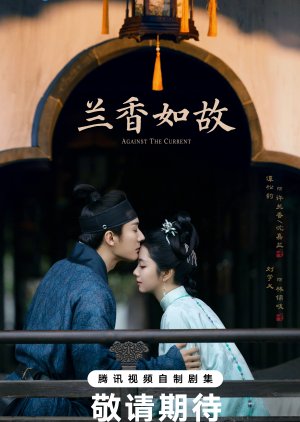
Xu Lanxiang — Tan Songyun
Casting Tan Songyun was an excellent choice. Even though she was 36 when she played the role, she can convincingly pass as a much younger woman at the beginning and then naturally grow into the role of the lady of the household.
Tan Songyun brings a maturity to Lanxiang's personality without making her feel artificially sophisticated.
She has incredibly expressive eyes that can communicate so much emotion without saying a word. A lot of Lanxiang's strength comes from her ability to observe rather than speak, so this quality works especially well for the character.
I wish the team had used Tan Songyun as the younger Shen Jialan as well, as the change in actors has made a big shift in the aura, look, and feel of what is supposedly the same person. Furthermore, Tan Songyun has played many roles convincingly as young schoolgirls. I believe she could have played an excellent Shen Jialan.
Lin Jinqi — Liu Xueyi
Lin Jinqi is serious and stoic on the outside, but in private he's actually quite affable and surprisingly open to the opinions of the people around him.
From a young age, his wise mother teaches him that one tree cannot make a forest. He needs his siblings, and he needs to take care of them, to create his "forest"—which is especially fitting given that his family name, Lin (林), literally means "forest."
That philosophy explains a lot about Jinqi.
He's kind to his family and takes responsibility for them, and in return, they give him their loyalty and support. There are quite a few scenes of Lin Jinqi simply spending time with his siblings, and those scenes are genuinely heartwarming.
But Lin Jinqi is also a controversial character.
Many viewers love him. Many others absolutely loathe him because he forces a free Lanxiang to marry him through an imperial decree. Later, he even drugs her so that he can bring her to the capital when she initially refuses to go.
I understand why viewers are angry with him. I'm not trying to glorify what he did.
But I do think it's important to remember that the concept of "freedom" in ancient China was very different from our modern understanding of individual freedom, particularly when it came to women.
I'm not saying, "It was the past, so everything is excused." Rather, I think the character needs to be understood within the social structure of his time. Men—especially powerful men—held enormous authority, while women often had very little control over major decisions, particularly marriage.
From Jinqi's perspective, he genuinely believed that what he was doing would benefit Lanxiang. He thought he was saving her from poverty and giving her the kind of status and security that most women of that era would have considered desirable.
He fell in love with Lanxiang precisely because she was different. But ironically, he still assumed that when it came to major life decisions, she would ultimately want the same things other women wanted.
In his selfish little mind, if he was going to make the decision for her anyway, why not make what he believed was the better decision?
I can understand his motivation, even though I don't necessarily agree with his actions.
And despite all of this, I absolutely enjoyed the humor Lin Jinqi brings to the drama. He makes the character much more lovable than he has any right to be.
And Liu Xueyi?
Wickedly good-looking.
As Lin Jinqi, he is probably the most desirable character in the drama—mature, serious, intimidating, and powerful. But behind the scenes, Liu Xueyi is apparently one of the goofiest people around.
His acting is a 10/10 for me.
He's stern without ever becoming wooden, and his micro-expressions are incredibly well executed. You can tell exactly when Jinqi is happy, sad, puzzled, suspicious, or deep in thought, even when he barely moves his face.
Liu Xueyi also has a commanding presence that makes him a very believable—and surprisingly lovable—大爷 (dà yé), or "big master," of the Lin household.
👉Official Soundtrack
The drama also has a wonderful collection of ballads, sung by different artists in soft, almost haunting voices. They feel like reflections on the pain endured by the people living behind the high walls of these mansions.
My favorite songs are 《大梦归》 (Return of the Big Dream), the ending theme sung by Zhou Shen, and 《我來書寫我的名》 (I Will Write My Own Name), sung by Wang Zhengliang.
《大梦归》 feels like Lanxiang's story—the pain she has endured and her determination to move forward rather than allowing the past to consume her.
《我來書寫我的名》, on the other hand, feels like Lin Jinqi's story. It's about his determination to go against the current and carve out a new life for himself and Lanxiang, breaking away from the traditions and expectations he inherited as the eldest grandson of a conservative, high-status family.
👉Final Words
This is a beautifully produced drama. It is visually stunning, but its real beauty lies in the culture, philosophy, politics, and everyday lives of both the servants and the nobles. This is not a drama you can watch casually while scrolling on your phone. It requires patience and attention.
At first, it may seem like very little is happening to the main characters in each episode. But actually, a lot is happening in the background. The details are subtle and often tiny, but they contribute enormously to the story.
I especially love the way the drama uses a recurring character as a marker of the passage of time. It's such an ingenious little storytelling device. I love how carefully the director incorporates all those tiny details, especially through visuals rather than dialogue. I love the beautiful framing of almost every shot. I love all the humor scattered throughout the episodes—even during scenes involving death. I love the serenity of the whole setting. And I love how it stirs up my emotions in almost every episode.
The drama gives us a detailed look into the life of an elite household during the Ming Dynasty—a household where the head of the family has enormous power over the lives and deaths of everyone beneath him.
And despite all the talk about Confucian morality and social order, the society underneath is full of double standards, hypocrisy, corruption, and rot.
The drama also makes an interesting point about politics: there isn't necessarily a "protagonist" or "antagonist" in politics. Those labels often depend entirely on which side you're standing on.
The winner becomes the hero.
The loser becomes the villain who supposedly deserved to be punished or executed.
Is this drama perfect?
Well, there are definitely too many coincidences that remind us we're watching a drama.
For example, Xu Lanxiang's adoptive parents happen to be in exactly the right place at exactly the right time—even though there was no particular reason for them to be there—and can swap places with their dead daughter and rescue Shen Jialan.
When Lanxiang escapes from the brothel, someone just happens to be waiting at the dock and manages to lure her out with singing, despite the fact that the villains are desperately searching for her.
Even the painting that becomes an important clue to Lanxiang's true identity happens to be accidentally picked up by her adoptive father, who is illiterate, and eventually sold to Lin Jinqi's grandfather.
And Lanxiang herself is almost too perfect. She always seems to have an answer and a solution to everything and rarely, if ever, makes a serious mistake. That's not particularly realistic.
Even though he and Lanxiang eventually have children and a happy family, I still finished the drama with a heavy heart. I pondered over the ending for days before I finally understood why the director chose to end the story the way they did in Episode 47. The director wasn't simply giving us a glimpse of the ending of Lanxiang; they were bringing us back to Lanxiang's ultimate mission, which also explains why she treated Jinqi the way she did throughout the drama. Once I understood that, everything finally fell into place. What initially left me feeling sad and unsettled became, in retrospect, a deeply meaningful and beautiful ending.
A wonderful, heartwarming watch. Strongly recommended. Don't miss it. Bravo!
Was this review helpful to you?

It feels like reading a beautiful novel...
The legend of TANNIANG, THE LIFE AND MEMOIRS OF SHEN JIA LAN.The Life and Memoirs of Shen Jialan
The way the finale ended may again divide viewers, but for me it was a fitting and grand ending for a woman who lived through a life filled with tragedy, servitude, sacrifice and love.
I’ve watched this entire drama through the eyes of Shen Jialan. It is her life story after all. The writers wanted to tell her story almost as if we were reading her memoir.
The passage of time is one of the most beautiful parts of the writing. Instead of simply telling us that years have passed, we see it through the people around her. Children grow, servants marry, families expand, and even a young lotus root vendor returns years later with a child of her own. The world keeps moving…and so does Shen Jialan.
There are no grand visuals of heroes arriving on magnificent horses, no wire acrobatics, dazzling fight sequences, not even romantic kisses to keep us satisfied. This is a thinking person’s drama, where answers are not always given…they are learned.
The writers rarely explain everything. Water, the eagle, crickets, poetry, ants eating away at the roots…things that initially seem insignificant eventually mean something. I actually found myself rewatching episodes because sometimes there was another story underneath the story.
In many ways, it feels like watching a Jane Austen novel come to life, where our heroine simply keeps living despite everything life throws at her. It is about perseverance, survival…and maybe even outliving everyone.
Tan Song Yun carries that lifetime beautifully. So much of Lanxiang is expressed through her eyes, her posture and the smallest movements rather than grand speeches. Liu Xue Yi matches her with Jin Qi’s quiet restraint. Their romance may have very few kisses, but sometimes one look between them says more than a kiss ever could.
Sometimes the smallest, most subtle movements make the biggest sound.
But this story still belongs to Shen Jialan. The story of Tanniang, told in the middle of the series, became much more meaningful to me by the end. She was the woman who sacrificed herself and eventually became the eagle, forever watching over everyone else. For me, Shen Jialan was Tanniang.
And whether one likes it or not, Jin Qi was only one part of her very long life. An important part, certainly. But like her adoptive parents, he gave her the love she needed to overcome some of her sadness and eventually find happiness again. Together they found strength in each other, but Lanxiang’s journey was always larger than their romance.
After watching over a hundred Chinese dramas and God knows how many Korean, Japanese, English and Spanish shows, I can say this is one of the best written drama series I have watched.
It will not be for everyone. Some will find it painfully slow. Some may dislike the finale. Others may wish there had been more romance.
But I don’t think this was ever simply a romance. It was the life of Shen Jialan.
In the end, we enter and leave this world alone. But life was never really about the destination anyway…it was always about the journey.
And the final words of the drama say it all. Not completely spelled out for us, because just like the entire series, they leave us with something to think about:
“Love given returns as love, blessings bestowed return as blessings.”
Jia Yi, Han Dynasty
Was this review helpful to you?

This review may contain spoilers
Going Against the Current: A Love Story Beyond Romance
“When I became engaged to my wife, her name was Shen Jialan. When I married her, her name was Xu Lanxiang. The red thread has always bound me to the same person.” Those are Jin Qi’s last words to Lanxiang, and honestly, I think they explain their relationship better than any romantic confession could. He loved her intensely and almost completely. He went against his family, society and even his own interests for her. I would not necessarily call him the perfect lover, but I can confidently say he was the best husband for her. Yet throughout the drama, I kept asking myself: what exactly did Lanxiang feel for him?For a long time, I genuinely wondered whether she loved him at all. Jin Qi’s eyes were always full of love when he looked at her, while Lanxiang’s feelings were much harder to read. She was a good daughter, mother, wife and daughter-in-law. She cared about him and his family, protected them and stood beside them, but so much of what she did seemed to come from responsibility, principles and righteousness rather than romance. At one point, I thought perhaps they were simply life partners and companions who understood each other, rather than soulmates in the conventional romantic sense.
By the end, I changed my mind. Lanxiang did love him. But her love was never going to look like Jin Qi’s because romance was never the centre of her existence. Jin Qi could love one woman as if she were his entire world. Lanxiang could not live that way because life had already taught her that love was only one part of existence. Her family was destroyed, her engagement broken, she was forced into slavery, betrayed, humiliated and eventually forced into another marriage by imperial authority. Her mother’s last word to her was simply “live.” After surviving all that, how could romance possibly become the most important thing in her life?
She wanted freedom before she wanted romance. She wanted her parents to live peacefully. She wanted to protect the people she considered family. She wanted to write her own stories. She wanted to survive without becoming another person controlled by power. And perhaps most importantly, she refused to let revenge consume the rest of her life. She had every reason to hate the Lin family. She had a blood feud with them, yet she did not spend her life trying to destroy them. That alone makes her different from the countless revenge-driven protagonists we see in historical dramas. She suffered injustice without becoming obsessed with reproducing that injustice onto someone else.
That is also why I stopped blaming her for not loving Jin Qi in the same way he loved her. Love is not a transaction. Someone loving you ten times more intensely does not create a debt that you have to repay. They loved each other, became husband and wife, raised children and shared an entire life. For me, that is enough. Their relationship becomes more meaningful precisely because they are not the usual “two people who live only for each other” couple.
Their marriage also begins with a serious problem: Jin Qi forced it. He genuinely believed he was protecting her by giving her security through an imperial edict, but his good intention does not erase what he did. From Lanxiang’s perspective, he was still another powerful man making a life-changing decision on her behalf. That is why her emotional distance makes sense. It takes years before she can separate the man he becomes from the man who once took away her choice.
This becomes one of the most interesting contradictions between them. Jin Qi’s rebellion against the world is often about protecting Lanxiang, while Lanxiang’s rebellion is about refusing to be controlled by anyone, including Jin Qi. He thinks love gives him a reason to act. She thinks love should never become a reason to control another person. Their is different. Even when Jin Qi eventually understands this, he can never completely experience the world the way she does because he has never lived through the same loss of identity and freedom.
That is why the scene in which he finally discovers who Lanxiang really is works so well for me. He does not expose her or use her identity against her. Instead, he burns the evidence and essentially tells her that from now on she is simply Lanxiang, his wife, regardless of where she came from. There is no grand romantic speech necessary. They just look at each other. That quietness means more to me than a dramatic confession would have. It is almost as if, after everything, he finally understands that loving her means allowing her to exist as the person she chose to become.
And then there is the red thread. Jin Qi literally ties himself to Lanxiang and wishes that in another life he could still marry her. It is incredibly romantic, but what makes the scene painful is that Lanxiang’s life continues after his ends. He dies before fifty, while she lives on for many more years, losing almost everyone around her one by one. She does not die because her husband died. She continues living. She continues writing. She continues raising the next generation. Eventually she finishes the story of the Shen family and dies peacefully at old age. That ending is very Lanxiang. Jin Qi’s love may have been the great romance of his life, but Lanxiang’s life was much larger than her romance.
This is why “Against the Current” fits them so well. Jin Qi goes against the current loudly. He was expected to become a scholar but chose the sword, married the woman he loved despite the circumstances, resigned from an important position when he no longer believed in the court, and repeatedly put himself between his family and danger. He even trains his daughter in swordsmanship rather than deciding that being a girl should limit her.
Lanxiang goes against the current much more quietly. She does not want wealth or political power. She simply wants to live freely, and in her circumstances even that is a radical desire. She survives through intelligence, observation and patience. She writes under another name, finds ways around rules rather than simply smashing them, helps women escape terrible marriages and repeatedly chooses solutions that minimise bloodshed. Her rebellion is not always loud, but it is constant.
I especially loved the way her intelligence is connected to writing. Lanxiang cannot physically change the entire society around her, but she can write stories. The woman who once had to survive by hiding her identity eventually becomes someone who records the experiences of women living under that society. At first she writes about herself and the Shen family. Later her perspective expands. She begins recording the lives of women more broadly. That makes her writing almost an alternative form of resistance. History may be written by those in power, but Lanxiang preserves the experiences of people who otherwise might disappear from history.
The drama also understands that “freedom” does not mean the same thing to every woman. That is one of the strongest aspects of its female ensemble for me. Some women want financial independence, women who want love, women who want status, women who want to escape an abusive marriage, women who want children, women who want careers and women who simply want a peaceful family. Lanxiang does not represent every possible version of womanhood. She is simply one version. That is important because sometimes dramas become so obsessed with creating one “perfect independent woman” that every other woman is reduced to a lesson designed to make the heroine look better.
Du Cuique, Zhao Xingtang, Lü Jier, the Lin sisters and others all have their own desires and reasons for trying to escape their circumstances. Their choices are not always admirable, but that does not mean their desires are meaningless. Du Cuique’s ambition, for example, comes partly from wanting to escape the position assigned to her. Zhao Xingtang’s obsession with money is also understandable when you realise how little control she has over her marriage, family and reproductive life. Even when these women make terrible choices, their desperation is often recognisable.
That is why I found the drama most interesting when it allowed different women to pursue freedom in different ways. It becomes weaker whenever it seems to say, “This is the correct way for a woman to live.” Lanxiang’s philosophy is powerful precisely because she arrived at it through her own experiences. It does not need to become a universal instruction manual.
What I cannot deny how much the drama gave me outside the central romance. It genuinely feels like a whole-life story. We see a girl become a young woman, then a wife, mother and eventually grandmother. We see people enter her life, change her, leave her and eventually die. The drama does not treat time as something that exists only between major plot events. It makes time visible.
One of my favourite examples is the woman selling chrysanthemum greens. First she is a young girl selling vegetables. Years later she is selling the same greens with her newborn. Years later she is still selling them, now with a girl and a boy running beside her. Nothing dramatic has to happen in those moments. The vegetables remain the same while the people change. That is such a simple way of showing that life keeps moving even when the characters themselves are caught up in huge personal struggles.
That idea affected me more than I expected. Watching Lanxiang see women from her own generation slowly disappear into old age made me think about my own life. I am in my early twenties, my mother is in her fifties, and my grandmother is in her eighties. Watching this drama made me realise that the woman I see as “my mother” was once a young girl too. My grandmother was once young, active and carefree. One day I will also look back at this period of my life from somewhere much further away. I find that kind of reflection difficult, and this drama made me confront it.
That is why the later parts hit me much harder than I expected. The deaths are not only there to create tragedy. They create a sense of time passing. People who were once central characters become memories. Families change. Children become adults. People who were once enemies end up helping one another’s families. A woman who began as a carefree girl becomes a mother. A former servant becomes a respected wife. A divorced woman builds a different life. Someone who once betrayed another person eventually helps that person’s family. Life is messy like that.
The drama repeatedly shows that everyone is trapped by something. Lanxiang is trapped by her identity and history. Jin Qi is trapped by family responsibility and political power. Other women are trapped by marriage, money, social status or reproductive expectations. Even people who appear powerful are negotiating with someone above them. That makes the world feel more believable than a simple good-versus-evil story.
I also appreciated that Lanxiang often chooses strategic resistance rather than simply relying on Jin Qi’s authority. The divorce storyline is a good example. Instead of having the powerful male lead crush everyone for her, she looks for a legal route within the existing system. The rules may be unfair, but understanding them gives her another kind of power. That fits her character much better than simply becoming someone who solves every problem through status.That philosophy is one of the reasons I think the drama's social commentary is stronger when it is embedded in the story than when it is spoken directly.
The production is another major strength. The costumes, sets, cinematography and historical atmosphere are beautiful, and I particularly liked the visual sense of time passing. The drama often feels like someone actually thought about how to frame a historical household rather than simply putting actors into expensive costumes.
Liu Xueyi absolutely surprised me as Jin Qi. He could easily have become frustrating because of the forced marriage and the intensity of his love, but Liu Xueyi gives him enough restraint that his internal conflict is visible even when he barely moves. His eyes do an absurd amount of work. I could see his love, jealousy, guilt, worry and helplessness without needing a speech.
I had a more complicated reaction to Tan Songyun’s Lanxiang. I understood her intellectually before I always felt her emotionally. The character deliberately hides a lot of her feelings, which suits Lanxiang, but in a romance where one person loves so intensely, I sometimes wanted clearer evidence of what was happening inside her. Her eventual realisation that she loved Jin Qi therefore felt meaningful, but it was also something I often had to infer.
Ironically, that emotional imbalance may also be part of why I became so attached to Jin Qi. Because his feelings were so visible, I kept waiting for Lanxiang to meet him somewhere emotionally. She did, eventually, but on her own terms and at her own pace. I don't think that makes their love unequal. It makes their lives different.
The supporting relationships were another major reason I stayed invested. The friendships among the maids, the siblings, the parents, the children, and even former rivals often felt more alive than many dramas make their secondary romances. I particularly liked the way women helped other women survive, whether through small acts of kindness, sharing information, protecting each other or simply making life slightly less miserable. The little household interactions often gave the drama warmth when the larger political story became heavy.
What ultimately makes this drama special to me is that it is not really a love story disguised as a historical drama. It is a life story in which love is one part of a much larger existence. It is about family, friendship, responsibility, survival, social position, injustice, ambition, motherhood, ageing and the choices people make when every available choice is imperfect. It allows its characters to live with consequences instead of resetting their lives after every arc.
Lanxiang is especially memorable because she does not spend her entire life trying to win. Sometimes she simply wants to survive. Sometimes she wants to protect someone. Sometimes she wants to walk away. Sometimes she accepts poverty over power. She can be stubborn, complicated and even selfish, but I think that is part of why I believe in her. She does not owe the world a perfectly inspirational version of womanhood.
So yes, this is probably my drama of the year. Not because every part is flawless. The heroine can be too capable, the themes are sometimes overexplained, some supporting characters are underdeveloped, and the later story becomes more exaggerated than I would have liked. But the ambition of telling an entire life instead of just one romance is something I rarely get from historical dramas.
I started watching it wanting to understand why it was called Against the Current. By the end, I realised the answer was not simply that Jin Qi and Lanxiang rebelled against society. They were both trying to decide what kind of people they would become inside a world that had already decided what they were supposed to be. Jin Qi fought the current loudly. Lanxiang moved against it quietly. Neither escaped completely, but they found their own way to live.
And maybe that is enough. They loved each other, even if they did not love in the same way. They became husband and wife, raised children, lost people, endured hardship and eventually reached the end of their lives. Jin Qi wanted the red thread to continue into another lifetime. Lanxiang simply continued living in this one. For me, that difference is not a flaw in their love story. It is the reason I will remember them.
Was this review helpful to you?

A Masterpiece From Start to Finish
Wow. Just wow. Against the Current is what happens when a C-drama actually knows how to tell a story. 😂 This is a masterpiece through and through.Every episode connects so beautifully to the next that by the time you reach the end, everything falls into place. No confusing plot holes. No random storylines thrown in just to drag things out. No sitting there thinking, “Wait…what just happened?” The script is simply masterfully written.
And the characters? Every single one has their own personality, purpose, and story. Nobody feels like they're just there to fill screen time.
The FL absolutely brought her character to life. She was awe-inspiring to watch—strong, intelligent, capable, and completely believable. The ML was equally well played, and together they gave us a love story that I absolutely loved.
And THANK YOU for not rushing the romance! 🙌 Their relationship develops naturally, and when they finally had their first kiss…OH MY GOODNESS. 😂 After watching their relationship slowly build, that moment was SO rewarding. It actually felt earned.
But one of my favorite things about this drama is that the FL and ML are surrounded by incredible people. From their families to the people who serve them, the supporting characters are so well written that you genuinely become invested in them too. They aren't just there to stand in the background and say, “Yes, my lord.” 😂 They have personalities, loyalty, intelligence, and their own important roles in the story.
And that's what makes the supporting cast so special. The FL and ML are already strong characters, but the people around them hold their own. Everyone brings something to the story, and nobody feels wasted.
The story itself is incredibly gripping, and every victory feels earned. The characters work for every win, which makes it that much more satisfying when they finally get it.
Against the Current kept me completely invested from beginning to end. The story is gripping, the characters are memorable, the romance is beautifully paced, and the writing is on another level.
Honestly, this is the kind of C-drama that reminds you how good a drama can be when the writers actually take the time to build the story, the characters, and the relationships properly.
10/10 for me. Absolutely a masterpiece. ❤️
Was this review helpful to you?

A Masterclass in Storytelling So Far
FINALLY a drama that respects the viewer and their intelligence!It is a mature, masterfully executed historical drama that treats its audience with respect. My brain cells did not decay while watching this; instead, the narrative holds you in a vise from the very first episode and layers it slowly and tightly.
This is a compelling tale of survival, family, hierarchy, and sisterhood. It focuses heavily on the morally grey choices characters make when dealt a terrible hand by fate. The production thoroughly did its homework. The world-building feels authentic, grounded, and logical. Actions have real, tangible consequences without having to suspend your disbelief to the point that your brain shuts down.
The female lead possesses incredible courage and intelligence, but she isn't brash, loud, or flashy. It is deeply refreshing to see a heroine who doesn't do outlandish things that would realistically get her killed in ancient times especially as a slave. Even though she loses almost everything early on in a heartbreaking twist of fate, her resilience is inspiring.
The narrative sets up a beautifully paced slow-burn dynamic. The story takes its time to have the main characters to truly cross paths, allowing the writing to build their bond with a rare degree of realism, depth, and emotional weight. The way the male lead becomes intrigued—shifting from subtle, recognizing glances to later praises that carries a hint of seduction with her, it stirs up a smoldering tension that is far more powerful than heavy skinship.
I hope the quality of the story and the execution of it will continue till the end and not disappoint! Hope you will enjoy it as much as I have so far.
Was this review helpful to you?

This review may contain spoilers
The art of becoming.
It’s a story about how often women have no say in making decisions, but also need to face the consequences of the decisions men made. How not only do they survive, but learn how to thrive in any environment. This is not a story about revenge, but a story about adaptation of oneself to the environment, but also their environment to their own goals. I appreciated how the drama tried to keep some balance and realism to the positive outcomes - you don’t always get all you wanted, but you are satisfied with the result you were able to achieve. At times it was sad to watch how even women use the vulnerability of being a woman against each other, but that also added more interesting layers of depth to analyze. Women are neither good nor bad, as people are neither good nor bad. A person’s nature is complex and has to be judged individually.I think we all agree that Lan Xiang was the heart of the story. She might have been more stoic and reserved, but she was not a stagnant and passive character. She observed her surroundings and acted according to what's best for her survival. She is the person that teaches by example, that stands by her morals. That seeks peace and resolution, not pity fights and revenge.
She was the heart and brains of the story, but what’s more important, she was the storyteller. She was not really a central character, but rather a central storyteller. None of her personal stories are truly explored, but she is there to convey what other people struggle with, bring solutions, and empathize. And most of the things that development wise would be important for her character happen in the "time skips" or are presented with one scene solution. They often showed turning points, but never the actual development. Be it how her relationship with Lin Jin Qi changed after marriage, how she was accepted by Lin elders, how her personal goals and dreams developed. Her role in the drama is not necessarily a bad thing, but because her situation was in fact so complex - both internally and externally, I just crave for more focus on her as an individual.
That said, I do appreciate how consistently she was used throughout the show to convey all these amazing stories. Be it the tragic end of the Shen family, the hardships of the servants, the misguided pride and need for power with noble ladies, the maturity that comes with experiencing hardships. Each character had a specific role in the drama, specific life lesson and, in a sense, advice that was given to the audience. Some of my favorite supporting characters were Lin Xiu Ru, Lin Xiu Wan, Zhao Xing Tang, Ji'er and surprisingly Grandpa Lin.
I think both Xiu Ru and Xiu Wan exceeded any expectations I had. The way their stories were not stereotypical and both had amazing, yet such a distinctively different development was just beautiful. Xiu Ru, who was extremely smart and observant, yet so timid at first, found her voice and confidence. Xiu Wan who was spoiled and did not care for the consequences, learned how to depend on others, but also help them if needed, without losing her spark and want for freedom. I adore how the shy lady was not also this naive wallflower - she had all her strength from the start, she just had to learn how to use them. Or how the silly and free spirited one did not get a complete character change into a mature lady - she was still a bit childish by the end, but also good natured.
Even grandpa Lin was such a surprise. I think many of us were ready to send him to hell for what happened in episode one, but I love how the drama slowly was able to present the events from his perspective. He might have been more strict and seemed cold, but he was also wise and cared deeply for his family. He understood the dangers of politics and the consequences one might face if they get too deeply involved. Truth to be told, I believe he was far more similar to Lan Xiang, than Lan Xiang’s actual father.
Then we have Ji'er. What a journey. I honestly think her arc was the most moving of them all. She was never a bad person, but she was someone who was competitive and felt like they always had to find new opportunities and use them. With lack of experience and young age she was not able to correctly assess risks and that brought her trouble. She was naive and childish in how she viewed the world, and then the world made her mature in drastic circumstances. But she never lost that spark and drive. She just redirected it into more reliable and honest ways.
Even during her maid era, she was spoiled and made many mistakes, but she was never evil. She did think about herself first on many occasions, but in a really honest way.
And then when we witnessed the brothel era - she could easily turn bitter, and even blame Lan Xiang for not stopping her in the past. But she knew it was partially her fault, and instead she was grateful remembering how Lan Xiang actually did try to warn her and cared for her. And now she decided to help her back even if the risks are high.
I also adore how she truly was the only person who treated Lan Xiang exactly the same whenever she was a maid or now Lin madame. She was the only one who did not care for the title and saw the person in front of her.
"Not as a maid of the Lin Residence, not as Young Lady Shuang, not as Concubine Lu. I want to truly live as Lu Ji'er once. (...) From this day forward, the person who will treat me best in this world is myself"
And can we talk about Liu Mei Han? What a performance. I think she stole the show for me. I love every second of her acting and how expressive and raw it was. I cry even thinking about that scene in the brothel.
While I enjoyed all the positive supporting women in the show, I have to say I was completely captivated by Zhao Xing Tang - what a perfect performance with intense and complex writing. She was not a good person, but she was not bad at the core. She was also trapped in her position and wanted freedom. I think making her illiterate was such a brilliant writing choice - the ultimate wall that stopped her from truly being free. Unable to read or write any documents, even if given a way to enrich herself, she would still need to rely on someone for all the paperwork, she would be unable to do it herself. A perfect example of a bird in a golden cage given as a gift to whomever benefited the family the most, abandoned when deemed to bring no value.
For the man, sadly I do not have much to say? Most of them existed as either love interest, or the antagonists against the female characters. Even our male lead does not truly present much complexity. Don’t get me wrong, I really like Lin Jin Qi. I loved how he did have actual flaws, how he was at times extremely selfish and impulsive. How he always wanted to gain first and deal with potential consequences later. That led to realistic and slow paced development with him learning how and when to give up his desires and ideals, how to focus on what truly matters, how to be patient.
I also really liked his dynamics with Jiu Gao and Nan Ke. On the topic, Nan Ke was such an unexpected comedy king. I am curious if he found all the butterflies already.
I am not sure how I feel about romance though. The build up and anticipation was one of the best I have seen in any slow burn romance, but the payoff was just heavily discounted. I am not really mad that I never, not once felt like Lan Xiang truly romantically loved Lin Jin Qi. I think she loved him, but she was not in love with him. She cared for him, she admired his strength, she appreciated his character, but she was never in love with him. On paper I love it, and I find it a realistic and fascinating subject to explore, but in the drama the set up made me anticipate something more grand.
But I also love how smart the big picture of the story is with her family’s fate in the past and how the fate of her, Lin Jin Qi and Scholar Han concluded. By all means the ending mirrors the past - Lin Jin Qi did not care for the grand morals and political integrity, he made choices that let him come back to his family. Scholar Han could not abandon his principals and would rather die, leaving his family alone to deal with the consequences. Isn't that exactly what happened with the Shen and Lin families in the opening of the drama? Isn’t that just amazing writing?
Best romance though? Xiuwan and Xie Zhao.
For the schemes, the focus was on the smaller politics between social classes - on how lower class lives and how the nobles’ decisions impact them. Even if the story dived more into court politics, it was still all mostly contained in how it affects the characters we follow in a local area.
The production had many amazing touches that enhanced the quality of viewing. One aspect I truly loved was how they kept highlighting the contrast between different character’s environments and their current situation. A good example of it was the wedding between Lin Jin Qi and Zhao Xing Tang, while Lan Xiang was suffering alone. Or Lan Xiang leaving Lin’s home with her newly found freedom while Zhao Xing Tang is being shipped to the capital for another unwanted marriage. Mixing scenes that emotionally have contrasting messages was an extremely effective way to emphasize the impact they are supposed to have on the viewer.
I also liked how they didn’t verbalize everything that was happening and every decision that was made by the characters. They showed details and assumed you would get it from the context. Or how they framed the characters with architecture, which made the scenes feel fuller.
And then we have to talk about the acting - almost perfect casting. I had almost no complaints. Almost. We get back to it later, for now let’s just focus on the positives. First of all, Tan Song Yun has a more stoic and grounded character, over the more hype one she often plays, which was an amazing choice for her career development. She shined so much as Lan Xiang. Especially during the “silent suffering” scenes - perfectly capturing the deep pain she felt while trying to control it and keep it inside.
And did Liu Xue Yi graduate from toxic male lead into soft potato? Because that role fits him so much more than anything he has played (or at least anything I watched with him). Give this man more roles when he just has to look at the female lead with soft eyes full of love, let’s skip the glaring and smirking - that can be used for the villains. This man delivers being in love so well, I was left speechless and breathless.
I did have some issues though - not ones that would strongly influence my watching experience and the rating, yet ones worth mentioning.
I heard some sentiments in comments that this drama is anti-men, but for me it’s completely uninterested in men, which might be actually worse writing wise. When a show focuses on showing men in a negative light, they might still write complex and compelling villains with it, but here we got none of that. The men were by all means just props to tell women’s stories and I’m not sure how I feel about it. You can have a drama that centers around womanhood, and still have well written and interesting male characters. Except for male lead, I’d say all the other men had good moments, but in general were just… fine.
I also truly believe Lan Xiang was too perfect of a character. One could say her flaw was the fact she always took the burden of helping others without complaining and asking for help, but I disagree. Not only did she ask for help and cooperate with people around her, she rarely ever truly fixed things herself - she actually knew how to use her support system extremely well. Yes, she was the mastermind for the majority of solutions, but it was a natural course since she was in fact written to be the most intelligent character in the whole series. I think her taking charge was less about her not wanting to ask for help, and more the result of the character’s strength. I truly wished to watch her make at least one major mistake that would lead her to deal with the consequences, whether internal or external. But it never happened. She always made the correct assessment, she always managed to help others.
What’s more, I think they ended the show with the weakest villain out of all they presented throughout the drama. Du Cui Que just ain’t it. She was the most flat in both writing and delivery, her motivations were the most obvious and stereotypical and she did not have the presence to give us the high stakes ending. She did go with the bang at the end though, gotta give her that.
The biggest flaw that was actually infuriating in one of the episodes - time jumps. I am sorry, but the number of time jumps we had, and how ill fitted they were for the flow of the story was crazy. What do you mean you hit me with “6 months later” after a major revelation/confession? What do you mean you won’t show me the actual aftermath of it and how the characters dealt with it? Episode 39 was a whole ass math exercise to keep track of how much time passed.
I think they were a little bit too ambitious with the timeframe of the story. The period of the time they wanted to cover just did not work, whenever we talk about transitions between certain eras, or the casting. I see these young actresses that have baby faces making them look like they are in their teen years, but the characters tell me they are in their mid thirties. Can I ignore reality and what I see to this extent? Not really, no.
For me, the story should have ended when Lan Xiang took over the Lin’s household - a powerful and fitting conclusion. All that followed after seemed unnecessary and did not expand on the story nor the characters at all. I think they were so hyperfocused on that touching ending and showcasing truly the whole life of Lan Xiang, they kind of lost the plot, or rather the idea of how to tell it and how to get that dreamed ending scene and conclusion. I do appreciate the “many years later” at the end, instead of giving us the specific number. No one knows how many years have passed, they knew the math was gone and we were lost good 15 episodes ago.
And honestly, the scene of all the ladies together right after offing Lin Jin Qi kind of did leave a bad taste in my mouth. What I liked about the show were the moments of brotherhood, sisterhood and partnership. I liked the moments when it was focused on being a good person and helping others in need. So this shot after the lead man of the show died, with no man in frame… with Xiuwan standing next to a freaking horse and not her husband? What’s going on? It would be a great scene… but it was so poorly timed I just rolled my eyes. You gotta put something between these two scenes.
Overall, it’s still an amazing watch. Might be a bit overly ambitious and that’s where the majority of the issues come from, but emotionally it had such a strong impact on me, and I was so impressed with how well connected the motivations and events were from different periods of the story, I just cannot care too much about the flaws I saw. Highly recommended for sure.
Was this review helpful to you?

AGAINST THE CURRENT OF MELODRAMA! best script in a long time!
by far one of the best scripted shows in 2026.. i wasn't hoping for much, i like both main actors and i know they are brillant to give nuanced character depiction.But such a classic plot of "a family treated for treason where the daughter survives " can easily turn annoying, melodramatic and cliché....
Now that I have completed this series, I realize it was a very ambitious one, and well executed almost perfectly.
here are things that amazed
- The story is tight and smart. the production trusts its viewers without including overly repetitive, dumb, or too obvious plots.
- our Lianxiang and ML both are resourceful in their own ways and the plot is unfolds brilliantly and subtly without too many flashbacks/ sensational clichés.. While this story has romance, it is not the center of the story and understanding why is part of the series concept on women's lives.
- with 47 episodes, the story evolves at a GREAT PACE.
- main characters really appropriated their stories in a way that makes a classic story be original: FL journey as maid is so realistic and her motivations are really interesting to follow along.
-many support actors are also so brillant in their roles!! its nice to see!
- By episode 18, we already have 3 subplots closed!!! i mean this story is rich!!
The story kept surprising all the way. However I understand it may not be everyone's cup of tea. Without spoiling anything, this story is about survival but ultimately, living. Lanxiang is a very wise character and what makes this show special is how this show truly goes "against the current" of melodrama and romantic sensationalist scenes (that i also love!! don't get me wrong!! ).
Lanxiang makes you see further than the confrontations, the life and death situations, even one's weaknesses and obsessions. It re-sensitizes you to the core of human struggle, and ultimately, gender inequalities. so this is a very composed series.
While it tones down on things, it doesn't shy away for more raw scenes of the brutal life experiences of the characters.
I do have some reservations towards the role of some men characters, and decisions to time skip. Nevertheless, in the scope of the show as a whole, we see the production did have a clear vision.
This drama is a life journey beautifully executed.
Was this review helpful to you?

Not Your Typical Sugarcoated Female-Centric Drama Favoring Romance Over Women’s Struggles
This is not a romance drama, nor is it a female-centric drama that shows the FL being strong in the beginning, then heavily relying on her husband/ML later to build romance. There weren't many swoon-worthy moments either! The drama shows us real-life occurrences that women from back then and even up to today have had to go through. It showed us a female lead who relied on her own skills and knowledge without having to undermine others or stoop lower than they should. There was no sugarcoating; this drama stayed true to itself until the last fleeting moment.Please, I'm begging y'all not to come and start this drama only to downvote it when you realize it's not a heavily romanticized story. Instead, I hope a lot of us young women and girls were able to watch and take a lesson or two from this show. I'm already in my late twenties, and I've learned and opened my eyes even more to so many new things through this series. I hope others are able to do the same and not be hellbent on coming here searching for romance in a drama that set the tone since episode one with the mass suicide.
I could go on and on about the dramatic aspects and events of this show, but then I think I would've missed the message the series was trying to convey. BTW, this isn't only about women's struggles; there are also takeaways for men too, especially those living in and growing up around bigoted environments.
Was this review helpful to you?
This review may contain spoilers
I wish I could watch it again for the first time ?????
I don't know where to start because I am still crying. This is why you must have a clean heart and always be helpful because you don't know when you will be blessed. Shen Jia Lan was blessed to be alive and lived as Lan Xiang. Lan Xiang's parents (Xu Wan Quan and Xue Gui Hua) were blessed to have Lan Xiang as their daughter.They went through hardships and small wins together.
Being kind can be good and can be bad but I am glad it was for the good because Lan Xiang and other maids were all about sisterhood, woman power, don't settle for less, be you and be happy....that type of vibe.
The relationship Lan Xiang' had with her in laws was so beautiful. I also like seeing when a FL is strong in dramas and I also like character development and that was the case with Lin Xiu Ru (I really like how strong she became and could defend herself).
There are so many others to talk about but I can cover everyone.
The chemistry between Lin Jin Qi and Lan Xiang ❤️❤️❤️❤️❤️ Love made him into a chatterbox LOL he was just happy and I know we all were happy. Though they didn't start off on good terms, everything just worked out and fell into place.
I won't even talk about the villains......
As you are watching, you are actually watching each character grow in years....it was so touching and made me feel sad seeing some of them get old...the grey hair, etc....
I am always a sucker for those type of ending, where you get married, start a family, kids are grown on their own and the couple also gets old and eventually, you know.....IT WILL ALWAYS MAKE ME CRY BUT IT IS SO BEAUTIFUL.
That red string scene, very very touching.
I wish I could watch it again for the first time.
Was this review helpful to you?
Love love love it!!!!
Its the first time im hooked up to a chinese drama again after a long time. From the first episode, I have been anticipating the next ones and so far its has been exciting and good! I know this is probably not the first drama to have this kind of plot, but whatever the director and writer is doing right now, they should keep doinh it cause its working. The male and female lead are collaborating very well,and I love that they didnt have an interaction on the first few episodes so it didnt come out cringe and was very natural. I recommend this if youre not into overly cringe romantic type of drama😁😊Was this review helpful to you?
A Masterclass in Substance: Why ‘Living Well’ is the Ultimate Triumph
As "Against the Current" comes to its final episode today, October 12, 2026; it leaves behind an unforgettable legacy.This drama successfully did the impossible: it rejected the hollow trend of 'idol image worship' and 'porcelain doll' aesthetics to deliver a masterpiece of raw, logical, and emotionally mature storytelling.
At its core, the series beautifully embodies George Herbert’s philosophy that "the best revenge is living well." Instead of consuming herself with a toxic, destructive revenge plot after the tragic loss of her noble family, our heroine, Xu Lanxiang, chooses the path of dignity and survival. She navigates the complex, corrupt currents of the Lin household like resilient "wild grass"—bending under the fiercest winds but never breaking.
What elevates this emotional journey to heights of profound comfort and calm is its extraordinary original soundtrack. The music functions as the heartbeat of the show's philosophy. Whenever the narrative feels overwhelmingly heavy, Zhou Shen’s hauntingly beautiful theme song, Return From A Great Dream, envelops the viewer, transforming raw grief into a soothing sense of inner peace. All of the OSTs of this captivating drama doesn't manipulate tears; it provides a sanctuary of calm for both the characters and the audience.
The success of this drama rests entirely on the sublime talent of its cast. Tan Songyun delivers a masterclass in grounded acting, infusing Lanxiang with a fierce, quiet intelligence that makes her deeply relatable. Opposite her, Liu Xueyi shines brilliantly as Lin Jinqi, treating his character with a sharp, professional maturity rather than relying on superficial visuals. Backed by a stellar supporting cast who made every hidden courtyard scheme feel chillingly human and realistic, this slow-burn strategic chess match respects the audience’s intellect from start to finish.
Setting a historic 2026 Tencent record with its massive heat index, "Against the Current" proves that true substance and artistic integrity will always triumph over shallow hype. A breathtaking, elite drama that is entirely worth your time!
My rating is 10/10.
Was this review helpful to you?
WOW! WOW! WOW! Masterpiece! Best scripted, directed and acted series I've watched this year!
What a great series! The writer(s) director(s) actors have done an AWESOME job! Academy Award material! This is NOT A ROMANCE story! This is a profound LIFE story encapsuling many layers such as the cycle and journey of life from birth to death; the FL and other women overcoming adversities because of their gender; the injustices of the inequality of social classes, to name a few. This story will squeeze your heart to tears and then soothe it.You must watch with open mind and eyes! You will not be spoonfed. Don't watch thinking "this is how this story should go" and then be disappointed. You will not be expecting what you will see and you will not see what you are expecting. If you watch engaged and you are good at interpretation of what's implied, you will be very amazed and satisfied with this production. It is fast paced with the evolution of time and character development. It is thought and analysis provoking. A lot of people are used to being spoonfed everything through visuals and can't absorb much through narrative and inferences. This is why they have completely missed the point of this story and have made the most absurd comments and reviews. This story and its presentation are like none other!
I have certainly enjoyed beyond words the last 3 1/2 weeks of watching this story. 47 episodes went by like sands through an hourglass! This was the shortest, long series I've ever watched! The first episode is heart crushing and even shocking for some. The 47th episode is painfully sweet and satisfying. From episode 1 through 47 I was NEVER bored. There was never a filler. Never a slump. Consistently good.
The story has a piece of story for every character to tell and it is all so well blended that it just flows so naturally. Yes, there is good character development. Yes, there is NO ROMANCE, but there is LOVE - first one sided and then mutual. Yes, there is a happy ending, but not the fairytale kind. Yes, there are good fight scenes. Yes, there's political drama. No harem fighting. No first wife second wife 3rd concubine fighting. There is a mean first wife/young madam for ML, but not for too long.
I can go on and on and on. I'll just close with this: this is the best story I've seen in CDramas in last 2 years (that's how long I've been watching). The whole production is amazing. I love LXY and am so happy for him and everyone involved for the success of this series. 👏👏to the writer/creator of this story, to screenwriter, directors, producers, etc., everyone behind the scenes! Applause 👏👏👏 and hats off to LXY, TSY, and to each and every actor in this production who brought this beautiful story to life👏👏👏👏👏👏👏👏👏👏👏💓
Hope everyone enjoys this masterpiece as much as I have.
Was this review helpful to you?