K-Drama


 2
 1
 1
The Women Who Came Before Us
A female centric script with a very thought provoking and realistic portrayal of how women’s lives were back then. It personally got me thinking about what real women had gone through, and how they’ve paved the way for a modern woman like me to live. What I take now for granted is something that women in the past had to relentlessly fight for. This drama did a brilliant job portraying how women navigated the limitations placed on them, from their struggles, to their triumphs.The female lead, Lanxiang was Superwoman to me. She always knew how to deal with people and manoeuvre tricky situations. Was she too perfect at times? Yes but I did enjoy her Girlboss energy. Did I want to see more vulnerability from her? Perhaps.
The male lead, Lin Jinqi was flawed but at the same time made up for it with his tremendous loyalty, and appreciation for the female lead. While he made questionable choices, the writers clearly showed us that he learned from his mistakes. Liu Xueyi did a brilliant job in this role!!
The one but glaring flaw for me is the romance and time jump in episode 39. After the fantastically crafted slow burn, I expected to witness Lanxiang saying that she is finally willing to be Jinqi’s wife and willing to love him. I also expected to witness the progression of her relationship with the Lin elders. But instead we just got a time jump where everyone was already on good terms?! I truly feel I was robbed of some powerful scenes. While I do appreciate the realism of the forced marriage where she reluctantly accepted him, with time respected him, was loyal to him and maybe loved him after many years. But as a hopeless romantic, it was crucial for me to see her in love with him (which I didn’t). In the end, it was very clear he loved her way, way more. So while episodes 1-38 were pure perfection, I was a bit unsatisfied with the romance and the final 9 episodes. Although the last episode definitely made me teary!
Overall, among the 200+ cdramas I’ve seen, this drama truly felt unique. A meaningful realistic story with great assemble of characters and cast, fantastic cinematography, beautiful costumes and set designs. A drama where you are watching for the actual plot. A drama that shows, not tell. I cannot recommend it enough!
Was this review helpful to you?

This review may contain spoilers
Beautifully Made, Emotionally Unfulfilled
First, the production deserves genuine appreciation. The cinematography, costumes, atmosphere, and visual storytelling give the drama a sense of elegance and emotional depth that elevates it beyond an ordinary historical costume drama. The cast is another major strength. Liu Xueyi portrays Lin Jinqi with admirable restraint, conveying his affection through subtle expressions, his eyes, and the quiet sincerity of a man whose principles guide both his duty and his love. Guo Keyu brings emotional weight to Xue Guihua, making Lanxiang’s adoptive mother a memorable presence, while Kong Lingmei gives Lin Jinqi’s mother warmth and dignity. Also, He Peng as General Yuan Shao Hui - his portrayal of Lin Jinqi's best friend adds a layer of camaraderie and loyalty to the narrative. The entire ensemble cast contributes meaningfully, making the family dynamics and broader relationships feel deeply lived-in and authentic.The first half especially captivated me. Lin Jinqi is a compelling highly educated-turned military commander who earns his position through merit, fights for his country, and still retains his conscience . Watching this principled, capable man slowly fall in love with Lanxiang was one of the drama’s greatest pleasures. Unfortunately, the slow-burn romance never delivers on its promise. The abrupt consummation, Lanxiang’s insufficiently developed feelings, the anticlimactic identity reveal, and the excessive time jumps leave too many emotional milestones unexplored. So much tension was built up, only for the payoff to feel strangely hollow.
What makes Lin Jinqi and Lanxiang interesting is that their relationship could have embodied this ideal:
* He is not a man who suppresses her independence. He respects her intelligence, supports her ambitions, protects her when necessary, and gives her room to pursue the life she wants. His love is not an obstacle to her freedom, it helps make that freedom possible.
* She does not need to become less capable to love him. She can continue writing operas, helping women, and making her own choices while acknowledging how much his love and support mean to her. Recognizing that she relies on him emotionally does not make her weak.
* Their relationship could have demonstrated mutual empowerment. He gives her the security to live more freely, while she brings meaning and warmth into his life.
Lin Jinqi seems to have achieved a fuller sense of life. He serves his country, loves his wife, raises his children, and passes on his knowledge - teaching his daughter martial arts so she can protect herself.
The drama gave Lanxiang a long life. She died still clutching the sachet containing her mother’s blood-written character for 'live' (活). To me, it symbolizes that she survived her tragedy but never truly freed herself from it. She spent her life helping other women. writing opera, with immense support from her husband and his family, yet I wonder how fully she ever learned to live for herself.
I appreciate the drama’s desire to celebrate women’s resilience, but a woman can be strong, intelligent, and independent while still loving, respecting, and relying on a good man. Love and marriage need not diminish her freedom, they can help her flourish. Lanxiang deserved to be shown not merely enduring and helping others, but genuinely enjoying the life she built.
Ultimately, Against the Current is a visually beautiful drama with compelling performances and tremendous potential, let down by an emotionally unsatisfying conclusion. Resilience should mean more than surviving. It should mean learning to live freely, fully, and joyfully.
Was this review helpful to you?

This review may contain spoilers
This is truly a slow-burn drama that I absolutely love!
The 47 episodes didn't feel long at all, the show keeps the audience constantly intrigued and is crafted with meticulous detail and polish. The story follows Shen Jialan, a young woman from an aristocratic family, the kind everyone dreams of educated and deeply loving. However, her family is suddenly accused of treason, leading to their collective punishment. Shen Jialan survives through a twist of fate, rescued by the family of a servant she and her mother had once helped. She assumes the identity of Xu Lanxiang and gradually embraces this new life, starting over from scratch. Lanxiang or Jialan is incredibly intelligent, astute, and kind.. she hardly seems like someone from a servant's background, as she truly stands out. This is especially evident when she enters the Lin household as a maid, her cleverness makes her shine, and Lin Jinqi eventually falls for her. Their relationship slowly evolved into a marriage.. well, actually, it wasn't slow.. it happened quite suddenly because Jinqi requested an imperial decree to make Lanxiang his wife, HAHAHA! They went from being strangers with Jinqi often getting scolded or ignored to Lanxiang finally accepting him, and they eventually became a happy family with their children. Beyond the main couple, the drama also does a fantastic job of fleshing out the supporting characters like Lanxiang’s maid-friend and Lin Jinqi’s younger siblings, all their storylines are thoroughly explored and explained beautifully. Having shared the broad strokes of the story, I hope you can appreciate the quality of this drama, as I find it absolutely perfect in every aspect. The narrative is crafted with such precision. The acting is beyond reproach, Tan Songyun and Liu Xueyi are a perfect match for the roles of Lanxiang and Jinqi. Even as a married couple, they are wonderfully balanced matching each other in wit and courage making them an ideal pair. Plus, they are the same age in real life, omg, I absolutely adore this couple! The supporting cast also deserves high praise for their performances. What I love most is the cinematography, it is truly stunning and highly commendable. There are so many soundtrack, yet I love every single one of them because they are just that good. I feel like I could rewatch this drama endlessly without ever getting bored, it’s just that amazing.. I simply can't stop singing its praises! I really love the side stories involving the couples Nanke & Xiaolian and Xie Zhao & Xiuwan, they are just so incredibly adorable. Xie Zhao and Xiuwan, in particular they only get together toward the very end, yet they are clearly meant for each other. Their story is a true example of destiny, they were initially supposed to have an arranged marriage that fell through, but they met naturally later on and eventually united. It’s the perfect definition of “what’s meant for you won’t pass you by.” It’s similar to the situation with Jialan (or Lanxiang) and Jinqi they were engaged, the engagement was called off, yet they still ended up as husband and wife. This drama really shows that if two people are destined to be together, nothing can keep them apart they will find their way back to one another as fate intended, and we can see the characters slowly becoming more mature than before. Anyway, I absolutely love this drama. I wasn't particularly excited or anticipating it at first, but once it aired and I gave it a try, I discovered just how amazing it is seriously, you won't regret watching it, so go check it out!Was this review helpful to you?

Survival over revenge amidst brutality
**Reasons to watch:**- Strong and natural acting from both leads
- A female lead who is smart and resilient without being loud or arrogant
- A clear reason for every hard choice she makes
- Realistic household and court politics
- A romance that grows through actions, not just words
- Emotional moments that feel earned
The story is simple but strong. ...
In the first episode, Shen Jialan’s(FL) family is destroyed.
Her grandfather is accused of treason.
The men are killed.
The women choose suicide over humiliation.
She only survives when a kind servants switched her with their dead daughter, Xu Lanxiang.
I kept thinking about how rare it is to see a story that treats intelligence like a survival skill instead of a plot device. Lanxiang doesn’t outsmart everyone with clever monologues. She watches. She remembers who takes extra rice
At first she was determined to die.
But after she was saved, she slowly lets go of that wish.
She now had a reason to live again
She chooses survival over revenge
She chooses to live so her new adoptive parents will not fall into despair.
That quiet decision changes everything.
She agrees to become a lowly maid in the ML household, because she does not want to invite trouble.
She does not cry or shout all the time.
You can see the pain and the strength in her eyes and in the way she moves.
She watches everything carefully and thinks before she acts.
She is smart, but never arrogant.
She notices small details other people ignore.
She plans carefully and solves problems without drawing attention to herself.
She helps people in quiet ways and earns respect through her actions, not through loud words or pride.
Some people shine by speaking.
She shines by staying silent and still moving the pieces.
The ML Lin Jinqi is just as good.
He is not a perfect hero.
He puts his family first at the beginning.
He can be cold and careful with his feelings.
But he is also deeply responsible.
He carries the weight of his family’s safety on his shoulders and makes hard choices even when they hurt.
As the story goes on, you see him slowly change.
He starts noticing the quiet maid who always thinks one step ahead.
He begins to protect her without making a show of it.
He listens more.
He softens in small ways that feel real.
His growth is quiet but steady.
He becomes a man who learns to trust, to care, and to stand beside someone instead of only standing above them.
Liu Xueyi plays all of this with calm control.
You feel the conflict inside him without big speeches.
That makes his character feel honest and human.
Later, the story grows bigger. ...
There are family secrets, political problems, and hard choices.
When the time comes to marry, she does not agree for romance alone.
She agrees because she wants to protect the people around her.
She does not need to prove she is good.
She just does the right thing.
Now about the love....
This is not the usual butterfly romance where the girl says "I love you" early.
Lanxiang never rushes to say those words.
But the love is still clear and strong.
You see it when she keeps protecting the Lin family even after they once abandoned her.
You see it when she risks her safety for Lin Jinqi.
You see it in the way she stays by his side during hard times.
You see it when she chooses to trust him again after learning the truth about the past.
Lin Jinqi also shows his feelings through actions.
He protects her.
He listens to her.
He slowly opens his heart.
Their love grows from respect and shared pain.
It feels real because it is built step by step, not forced with big declarations.
Some loves are shouted.
This one is proven in silence.
The biggest debate so far was wether the FL actually love the ML or not.. some argued that FL don't quite love the ML but just fulfilling her duty as a wife after when she listed the most important people in her life excluding the ML
The drama being 47 episodes long.
Some parts in the second half move a little slowly.
But the story stays focused on Lanxiang’s quiet strength.
She does not get power by luck.
She earns every step forward with patience and intelligence. I'm yet to complete the last 5 ep and I will add my opinion when complete
Was this review helpful to you?

This review may contain spoilers
“A single light is dim. But if we each light a lamp, even fireflies can brighten a street.”
This drama is like poetry in motion. Its beauty truly lies in its simple yet profound storytelling that transcends social classes and ages.Xu Lan Xiang is such a magnificently crafted character. At a young age, she experienced the deepest sorrows of witnessing her entire family’s massacre and falling to the lowest social status. Despite the harsh vicissitudes of life, her will to live remains stronger than anyone and she refuses to let vengeful thoughts consume her. Lan Xiang is courageous, resilient, smart and resourceful in striving for what she wants, but she's also clear about the moral boundaries that cannot be crossed. It’s extremely fulfilling to see her character development from a well-educated noble girl, to a maidservant and finally the Lin household's madam. As a third-class maid, her sole aim is to survive and provide for her adopted parents. As she gradually rises in social status, Lan Xiang not only wants herself to live well but also to help those around her have a good life. She can act well and hide her talents to survive, but also become very versatile and adapt to any situation to get what she wants. Rather than spiralling into despair as people leave her one by one, she becomes more enlightened about life and death, and focuses on the contentment of what she has achieved for herself and those she loves. Lan Xiang’s name (“orchid fragrance”) is very fitting of her character, which symbolises enduring purity and elegance.
Lin Jin Qi is intelligent and ruthlessly decisive, yet still possesses a deep sense of responsibility and loyalty towards those he cares about. However, he’s not without imperfection. At times, he’s too naïve in expressing his affection and placing blind trust in those with bad intentions. It’s frustrating to see Jin Qi’s mother and grandfather scheming to get what they think is the best marriage prospects, only for those to become catastrophic failures. In particular, his mother is gentle and caring, but her pride and obsession with reputation refuse to let her accept that the “daughter-in-law [she] carefully selected turned out to be a servant”. But in a twist of fate, the only person they reject (Lan Xiang) actually ends up as the Lin family’s savior and best match for Jin Qi. Poor our male lead, who has to fight so hard to marry the love of his life.
I absolutely adore the slow-burn, grounded chemistry between the leads. Their mutual trust is built gradually, but once set, it becomes unshakeable. During Lan Xiang's days as a maid, Jin Qi recognises that she's as capable as his closest aides. After they marry, Jin Qi becomes increasingly besotted by Lan Xiang's immaculate ability to manage the Lin household, and how well-versed she's in both the arts and politics. Jin Qi also owes a lot of his growth to Lan Xiang. She's shown him how to prioritise and protect his family and love ones, rather than blindly follow the Heaven Ways and rely on complete loyalty to the fickle throne. Lan Xiang and Jin Qi share a tacit understanding in whatever they do, both in the good and bad times. The emotions and romance are subtle, but as Seven Tan says in amusement, “As long as they’re in the same frame, it counts as a sweet moment”.
All the female characters are portrayed with such depth in this drama. Jin Qi's mother Shun Hua, sister Xiu Lai and cousin Xin Rui are incredibly strong and independent in their own ways. At the heart of it, they're all women trying to survive and protect their children in a patriarchal society where “a married daughter is like water poured away”. It's heartwarming and awe-inspiring to see Lan Xiang use her wits to fight the system and show women how to band together to lift each other up, becoming each other's "light". This truly reminds me of The Story of Ming Lan and A Dream of Splendor, both of which showcase strong sisterhood dynamics and female empowerment in ancient China. Even the supposed antagonists have complexity and can't be judged at first glance. Initially, we have Zhao Xing Tang (Jin Qi’s ex-wife) and Lu Ji Er (Lan Xiang’s neighbour). One loses her lover and unborn child to fulfil her family’s political marriage, while the other is too ambitious and impatient to get a promotion. Neither is inherently evil, just trapped by their circumstances and temporarily went astray. Whereas, Cui Que (sister of Jin Qi’s lifesaver) and Zheng Man Yi (Jin Qi's marriage match) were too self-absorbed in their own brilliance and arrogance to notice that there’s another path to greatness besides one that tramples on other people. The former are redeemable, whereas the latter don't deserve redemption. As Lan Xiang so wisely reminds us, it’s normal for people to strive for a better life but not at the expense of others. Lan Xiang's relationship with her adopted parents is very touching too. Initially, they rescued her out of gratitude and in memory of their late daughter. But this beautifully blossoms into deep family bonds as they selflessly care for Lan Xiang, and she helps them out of destitution and gain purpose in life.
Admittedly, I hadn’t thought that this lead pairing could be possible, despite being a keen follower of both lead actors. My first impression of Seven Tan (Tan Song Yun) dates back to 2010s during her rom-com phase. Later on, Seven Tan became incredibly adept in the slice-of-life genre. Her heartfelt role in Go Ahead still brings me to tears. Seven Tan doesn’t do many historical dramas, but Under the Power and The Sword and the Brocade have been my soft spots. On the other hand, I’ve seen Liu Xue Yi in so many historical fantasy dramas that I start to think he actually lives in that period. He’s such a charismatic, captivating and powerful actor. His suave monk portrayal in The Blood of Youth is right up there in my hall of fame. Them together in a historical slice-of-life has been nothing short of a treat. Seven Tan and Liu Xue Yi bring the ordinary day-to-day of the lead characters to life with subtle expressions and in-sync acting. It feels natural and heartwarming yet enchanting.
The settings and cinematography are excellent and meticulously planned. I absolutely adore the exquisite and refined aesthetics of the Lin family’s courtyard. Each window view feels like a framed piece of art, with perfect balance and composition. They also carry deep meaning. For example, at the beginning, the red blossoms over the wall signify Jin Qi’s inner conflict over his first/ex-wife’s infidelity (“the red apricots grew over the wall” is a metaphor for cheating wife). But for Lan Xiang, reaching her hands out to the red blossoms amidst the winter snow is akin to embracing her biological mother, whose name Cui Xue Mei means “plum blossoms in the snow” (her adopted mother’s Xue Gui Hua also means “blossoms in the snow”).
The soundtracks are very complementary to the drama. My personal favourites are On the Same Path (同道) by Jess Lee, Fragrance of Orchids Remain (兰香如故) Ye Xuanqing and and The Deeply Entwined Us (深深的我们) by Liu Xijun. They really awaken the mellow and poetic soul within me that I didn’t know existed.
“No longer will I resent the moon for failing to shine its light upon me.
I only hope that the old acquaintance I once knew remains safe and well, growing with the passing years."
“Like the silent fragrance of an orchid.
Lingering through the days and nights at the end of time…
I've searched and wandered again and again.
Yet I can never mend that old dream, leaving only regret behind.
Thankfully, the rise and fall of life have kept me here for a lifetime.
In this life and the next, you will always be the one.
I only pray that fate lets us recognise each other sooner.”
“A deep and enduring bond, binding us together so tightly.
Washing away the dust of this mortal world, even if we must part in the end.
I’ll have no regrets that we met in this life, may we stay together until life’s end.
Every bit of sincerity you’ve shown me has already taken root deep in my heart...
After seeing all the questions life has brought, this love has never faded in the slightest.
A lingering fragrance remains, blessed in this life to have one person by my side.
Through these warm and gentle years, my heart remains as true to you as ever.”
FAVOURITE QUOTES:
“It’s good to be alive. I can still smell the flowers." Lan Xiang
“If you want to rise above your birth and live a better life, perhaps you should abandon your conscience and gamble with your life. In this world, who doesn’t want a better life? I’m greedy, too. But our forebears taught us, 'A gentleman acquires wealth by honorable means'. You can’t trample on others just because you want a better life.” Lan Xiang
“A single light can only illuminate a few feet. But if I light a lamp and you light one, even the light of fireflies gather together can also light up a long street… Let women walking in the dark night see their way clearly.” Lan Xiang
"Father, mother, stop blaming yourselves for not being more capable. As long as you’re both well, that is the greatest support I could ever have. No matter when, I know you’ll always be behind me. As long as I always have a home to return to, I’ll feel secure.” Lan Xiang
"We are husband and wife, sharing both fortune and misfortune… I’m no gentleman. I get scared. I act on impulse. But for as long as I live, I will never betray you [LX].” Jin Qi
"In the heavy snow, when I was on the verge of death, my wife refused to leave my side. In the bitter cold, she stayed with me through an entire day and night and even saved the whole Lin family. My wife has shown me kindness, loyalty, and love. If I betrayed her... what kind of man would I be?” Jin Qi
“When will there be a world where women can be like men, going to school to study, sitting the imperial exams, doing business and earning money, not bound by their husbands, not bound by their sons, just being who they are?” Xing Tang (Jin Qi’s ex-wife)
“Sons and daughters are born to the same parents. Yet sons are naturally entitled to inherit family property, while daughters can only gain a small share of it through marriage [as a dowry]... For a woman in this world, she obeys her father at home and her husband after marriage. No matter how capable she may be, she must depend on a man to have a place in this world. Not a single coin she earns truly belongs to her.” Xing Tang
---
“Perhaps it’s because throughout history, most of those who wrote and shaped these ideas were men. They could never understand a woman’s hardships or what women truly need.” Lan Xiang
Was this review helpful to you?

GLORY TO WHOEVER CONTRIBUTED TO BRINGING THIS DRAMA TO LIFE.
I'm writing this review with tears streaming down my face, watching the last episode of this absolute masterpiece of a drama. I haven’t felt this overwhelmingly emotional about a story in a very long time.This drama deserves an award in every category imaginable. The storytelling, the deeper meanings and wisdom woven into every scene and every line... To experience a person’s life so intimately through a screen is something I never thought was possible.
The writing, directing, acting, editing, and production were all top-notch. I wanted to keep my reviews spoiler-free and talk about the bigger picture, about what makes a serie worth watching. But with this one, all I want to do is pour out the sorrow I feel now that it has come to an end.
For me, at least, there won’t be a competitor to this one for a long while.
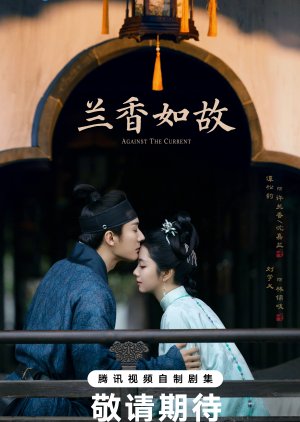
Against the Current.
A story about a woman who went against the currents of her time, and a lamp that illuminated the lives of those around her. A story of her first steps beyond the boundaries of her family after a great catastrophe, of her navigating the ravines of life with courage, intelligence, and perseverance.
A story of resilience and strength, and a story that will resonate with women everywhere.
The story of Shen Jialan and Xu Lanxiang.
Was this review helpful to you?
Heartwarming
This one will go down as top 5 best cdramas EVER. Women centered drama, hopes, dreams, wisdom, love, sisterhood, healing! There's nothing quite like it! Great cast and an absolute joy to watch! It’s a classic Cinderella story brought to life with wonderful charm. Every characters story was so good! You'll be hooked instantly and fall in love with the characters. Not gonna lie, I already rewatched the entire thing twice! Wow, Liu Xueyi is now one of my favorite ML ever. He is simply amazing❤️Was this review helpful to you?

LX is a wise, kind, and humble woman. Her life journey teaches us to cherish every day, be grateful for what we have, and treat others with kindness because life is simply too short.
Her years of hardships and losses are heartbreaking, yet her story reminds us to live life to the fullest and treasure the love we have.
This drama is more than just a story. It is a beautiful work of art that captures the beauty of life and the true value of love. 🤍✨
I highly recommend this drama! Every detail has been carefully crafted, from the production and cinematography to the beautiful background music. Every actor delivers an outstanding performance, bringing their characters to life in such a convincing and touching way.
In this day and age, it’s rare to find a drama with such a meaningful story and such exceptional quality. If you haven’t watched it yet, you’re truly missing out. This is a drama you might regret not watching! ❤️🥹
Was this review helpful to you?

 1
This review may contain spoilers
A Fleeting Life Tale Of A Woman.
First, we see this girl living a life of splendor; overnight, her family was falsely accused of treason. The men were executed, while the women were to be exiled; unwilling to be disgraced, they drank poison and hanged themselves; in all, they killed themselves. It remained for Shen Jia Lan and her mother to commit suicide. Bitter and unwilling to see her daughter die, Shen Jia Lan was swapped with a girl who had recently died of illness, the daughter of Xu Wan Quan and Xue Gui Hua. Xu Wan Quan and Xue Gui Hua, who were slaves, raised Shen Jia Lan as their daughter, Xu Lan Xiang. We then follow Lan Xiang on her journey as she uses her wits to rescue her masters from calamity/problems once and again, lift her family out of slavery, become an independent woman, marry, fall in love with Jin Qi, bear children, control her household, see her children grow, witness her great-grandchildren's birth, and die (peacefully).Commentary
I saw someone drop this drama because the FL was too girlbossy and didn't seek help from the ML. I think this made the drama feel like a breath of fresh air to me, while avoiding the usual damsel-in-distress plot. Finally, an FL who can stand on her own, solve her problems and those of others with her wits, and also assist the ML in seeking solutions to his troubles. Mind you, she needed the assistance of Jin Qi to solve some problems.
Against the Current (ATG) offered a slow-burn romance that grew through 42 episodes, built on trust, support, and care; their romance evolved into something pure and beautiful. ATG didn't just bring romance; we witnessed character development, court politics, the constraints placed on women, and domestic/family affairs (both the good and the bad). You get to witness endearing familial bonds(in relationships between parents and children, siblings, friends, and family), as well as the consequences of greed, jealousy, and hatred, and how it negatively affects one's life. As the story progresses, characters die because of health problems and natural occurrences; it was really sad watching them go/die, especially if you get attached to them. It added realism to the plot.
I got hooked right from episode 1; it was really tragic, and I'm sure many viewers cried/were heartbroken at the death of these courageous women. I believe that in episode 1, when Shen Jia Lan and her mom met with Xu Wan Quan, Xue Gui Hua, and their sick daughter, offering them money to cure their sick daughter, it was that act of kindness that saved Shen Jia Lan from death, and it also reflected the life Shen Jian Lan had to face while being a slave.
I felt drawn to Xing Tang character arc; her character felt like a rebellion against fate, family constraints and society opinion,her death was really saddening, and it hit me deeply. Li Meng outstanding performance really brought out the essence of Xing Tang character, making her growth, realization, and closure interesting and, at the same time, heartbreaking. Xing Tang was basically a tool her family used to cling to power; they never loved her, and she felt like a pawn that could be discarded at any moment. Unwilling to accept this situation, she saved a lot of money through embezzlement and was willing to flee with her secret lover and start a new life, but she was betrayed by her lover. Used and mocked by her family, abandoned by her kin/family after they stole all her money, and dropped her and ran off on the roadside, exposing her to bandits. All she wanted was to be called by her own name, not constrained by the name of others, whether through marriage or by birth. Her closure was painfully sweet; it revealed the kind soul beneath a distant and harsh appearance. Dying close to someone who truly acknowledged her without any other family name attached was truly peaceful.
Controversial take: I feel Scholar Han shouldn't be criticized. Believe it or not, Scholar Han and Lan Xiang were better suited as a couple than Jin Qi and Lan Xiang. First of all, they were each other's true equals, spent more personal time together practicing plays/songs, cared for each other, and had good chemistry. After all, Scholar Han timing was a little late, missing out on a woman like Lan Xiang. He must have been so sober and in pain when the imperial edict came right after he came to propose. I'm happy he and Lan Xiang ended amicably and still consider each other friends. His end was unexpected and painful
Likes
The sets and the cinematography were pretty. I heard they built their own set, and it took four to five months; it was really evident.
The actors put a lot of work into their acting and nailed their characters. They acted their asses off and brought out the best.
Jin Qi and Lan Xiang were never each other's equals, nor were they ever fated to be together; they never had similar paths. It was the love Jin Qi developed for Lan Xiang and the choices he made that brought them together. The choices he made and the steps he took may not be morally good; to be honest, I was offended at times, but it is important to know that without those steps and choices, they would never have been together in a 1000 lifetimes, worlds, and meetings, and they wouldn't have fallen in love to become the couple they were at the end. It is also important to know Jin Qi is a flawed character; he is not perfect (in love), and he doesn't even understand the heart of the woman he wants to marry/loves. That was the reason he thought Lan Xiang loved Scholar Han, and why she ignored him all this time. He clearly doesn't know the heart of the woman he loves. But as the story progresses and Lan Xiang begins to develop subtle care and affection for Jin Qi, I believe he gets a better understanding of her.
Yi'er's character arc was one of the best to come from this show. She was a kind but opportunistic girl who was falsely accused and exiled, forsaken by her parents; I'm really glad she still had that kind spirit in her, and also a newfound ambition of becoming a businesswoman, even though she will face mocking and contempt from those around her, as unmarried women aren't eligible for this. I'm pleased she followed her wish, instead of leaving her dreams out of fear of the criticism of the public. Her friend, maid, and I'm sure many other women got inspired by Yi'er's dreams and followed in her footsteps. In a way, she serves as a role model for women who are double-minded and afraid of the consequences and criticism that come with following in her footsteps.
I love how the supporting characters had depth and sought romance, love, and marriage. I loved their pairing, and I thought they were well suited for each other, but I would have loved seeing them as a couple, you know, in a scene or two, just the two of them being romantic, because the main leads didn't give us much, but I get it; they are not the focus. But I appreciate the depth of seeking marriage they were given.
Xiu Wan growth was endearing. It was pleasing to see that youthful energy still alive in her, after being used and betrayed by Du Cuique and Du Sheng. I believe she gained some knowledge, became more mature, and, most importantly, grew from that experience. She became more sensitive and concerned about her sisters and their marital lives. She is 35 in age and 18 in mind; she has a youthful spark in her that makes her character endearing. I was smiling and grinning when she met her perfect match, Xie Zhao, not bound by her family/connections gained through the marriage, just two individuals who are now mature enough to conform to their own wishes; they share the same path, and I'm happy they met each other. I enjoyed the Lin Family bond and their interactions and banter; it shows they truly love each other. The siblings were willing to support and uphold justice for one another, even if it brought trouble, negative rumors, and criticism to their personal lives.
Dislikes
The time skip added realism to the plot, but it wasn't cohesive at times; it feels like some details are left out and you end up being confused, as I was at times.
I disliked how Lan Xian didn't tell Jin Qi about her identity when she knew he had laid the Shen family to rest; instead, he found out himself. I tried to understand her pain, but that could have resulted in a misunderstanding.
To be honest, I don't have many things I dislike about this show.
Final Thought
Before I began watching this, I thought it would be like all the other historicals I watched this year, but no, this was different: the well-developed characters, their struggles, their pain, their joy, their vulnerabilities, their friendships, their insecurities, got me invested "deeply". Some characters' deaths made me sad, heartbroken, devastated, incomplete, damaged, and filled with anguish; I never expected/want them to go that early. But some things don't always go the way you wish.
This show is realistic in a way that, as the story progresses, you see the deaths of different characters. When Lanxiang mother died on that couch, before Lan Xiang's tears broke from my eyes, it was so painful and devastating. Her death was naturally expected because she had come to that age, but the show makes it more painful by throwing in those heartwarming moments of her life in flashbacks right after she died.
AAaaahhhhhhh when I thought the show was done. They make you sadder by leaving another character's death. I anticipated his death, but I never knew it was going to come that early.
This show is about the tale of a woman, and the pain, happiness, joy, sadness, romance, love, and troubles she has to face and overcome in her fleeting life; told from her teenage years to when she became a grandma and died peacefully lying in bed. I appreciated the show as it didn't lay any focus on her making a revenge/clearing her family's name. She wanted to live in peace with her parents, taking them from slavery into a better life, and by the end, she used her wisdom/wits to clear her family's name long after her death.
Against the current tells you to go after what you want/wish, instead of going against your wish because of parents, laws, rules, and all.
If you want something, go for it without looking at the person next to you.
Would recommend this drama to anyone looking for a complex plot, well-developed characters, and a realistic, unconventional ending
Rating: A SOLID 9.0.
Hand down, my historical best drama of 2026 (So Far)
Thanks for reading the long review
Was this review helpful to you?

 1
This review may contain spoilers
A Life Beyond the Ruins
Against the current arrives as a breath of fresh historical drama air, grounding its narrative in the grit of survival, family and social hierarchy, and the quiet resilience of women navigating a ruthless patriarchal landscape. The story kicks off with a devastating tragedy when highborn protagonist Shen Jia Lan sees her family falsely accused of treason, forcing her to strip away her noble status and enter her former fiancé Lin Jin Qi’s estate disguised as a low-ranking maid, Xu Lan Xiang.That setup alone sounds like the blueprint for a deliciously dramatic costume romance, but this drama proves to be so much more than that. What makes the drama work is how deliberately it handles that familiar setup. Beneath the costume, romance, family politics, and palace-adjacent intrigue is a story much more interested in survival than revenge, and much more interested in identity than restoration. Plot choices heavily favor a slow-burn psychological and strategic game over cheap melodrama, refusing to lean on lazy tropes or excessive flashbacks, which makes the narrative feel remarkably tight and smart. Those qualities give the drama far more weight than its familiar premise might suggest.
The premise is wonderfully cruel. Lan Xiang has to live close to the man who was supposed to marry her while pretending to be someone else, carrying the secret of who she really is. It creates an immediate tension between identity, class, and survival, and the drama wisely allows that tension to breathe rather than resolving everything through one convenient revelation.
What is particularly likeable about the early and middle portions is that Lan Xiang’s rise does not happen overnight. She does not suddenly become powerful because the script decides she is the heroine and therefore everyone should admire her. She has to learn how the Lin household works, understand its personalities, navigate its hierarchy, and figure out which battles are worth fighting.
The identity switch is much more meaningful than a simple disguise. Becoming Lan Xiang forces her to experience the world from the bottom of the social ladder, learning what it means to be dismissed, underestimated, and treated as expendable. That experience transforms her understanding of power, turning her into a deeply observant strategist who recognizes how information moves and how influence can be built without an official title. In that sense, the servant identity becomes one of the smartest ideas in the drama because the woman who eventually takes control of her fate is not the same woman who lost everything in the opening episodes.
The strength of this series lies heavily in its story and character writing, where details fall into place naturally without dramatic or convenient setups. Instead of saying how something is important, details accumulate until they become meaningful. The character writing follows the same philosophy. Even the secondary characters are allowed to be complicated, flawed, and shaped by their circumstances rather than being conveniently divided into heroes and villains.
The drama also handles its women empowerment theme with a refreshing amount of restraint. It does not need to make every man insufferable just to make the women look strong. The men are allowed to have understandable motivations, even when their choices are questionable, while the women are allowed to be intelligent, flawed, selfish, compassionate, ambitious, and everything in between. That balance makes the message feel much more grounded. It is not "women good, men bad." It is about women trying to find agency in a system that was never designed with their freedom in mind.
Tan Song Yun delivers a phenomenal performance, capturing Jia Lan’s transition from sheltered innocence to calculated, stoic survival with immense grace. Some of her best moments come when almost nothing is being said and you can see her calculating what she should reveal and what she should keep to herself. That restraint is vital because a heroine who is constantly announcing how clever she is would become exhausting very quickly. Instead, the drama lets the audience notice the intelligence.
Jin Qi is a charismatic, reliable, and imposing eldest grandson and heir with a strong sense of loyalty to the sovereign. Liu Xue Yi portrays him very well, especially his unintentional comedic expressions and crying scenes. I actually enjoyed how slowly and naturally the drama develops his encounters with Lan Xiang. As the narrative progresses, he begins to notice and admire Lan Xiang’s sharp resourcefulness and quiet fortitude, realizing she possesses a fierce intellect that sets her completely apart.
However, the romance hits turbulent waters as he forces things with Lan Xiang. Although it eventually worked in both their favors, the marriage decree and sleeping drug arcs were hard to swallow. Still, I appreciate how the drama eventually allows Jin Qi to learn, understand, and acknowledge through clear heart-to-heart dialogues that Lan Xiang is her own person with her own mind. In fact ironically, the romance worked best for me when the drama stopped trying to make it romantic. Their relationship has a lovely push and pull because Lan Xiang never becomes completely dependent on him. She may care about him, but she still has her own agenda and convictions. Her entire existence does not gradually shrink until it revolves around the male lead, which is something I greatly appreciated. Their eventual partnership feels earned because Jin Qi has to learn to stand beside her rather than ahead of her.
The supporting cast is another quiet strength, giving the story a populated, breathing world rather than a stage built solely around the leads. Lan Xiang is not constantly surrounded by characters who exist solely to create problems for her. Sometimes she is helping solve theirs, using the skills and perspective she has accumulated along the way. That was a refreshing change.
Characters like Lv Ji'er and Zhao Xing Tang serve as fascinating reflections on female survival in a suffocating system. Ji'er starts out with a raw, desperate drive for self-preservation, sometimes to the point of selfishness, but her behavior comes from survival instinct rather than simple malice. Watching her gradually develop a sense of self-worth that is not dependent on status is genuinely rewarding. On the other side of the social spectrum is Zhao Xing Tang, one of the drama's most fascinating characters. As Jin Qi's brilliant and disillusioned first wife, she exposes the ugly contradictions of aristocratic marriage. Her storyline questions why women are expected to depend on the mercy of men, while her own history of betrayal gives those questions a deeply personal weight. She has some of the drama's sharpest observations about gender, marriage, inheritance, and autonomy.
Lin Xiu Wan and Lin Xiu Ru also surprised me, as they add incredible depth to the story. Xiu Wan brings tension by navigating secret romances and societal expectations. On the other hand, Xiu Ru is a silent observer and master schemer. She quietly collects information and schemes while everyone underestimates her. I especially enjoyed that neither character needs a grand declaration of "female empowerment" to prove their growth. Their development simply happens through the choices they make. Together, this rich ensemble turns the narrative into a diverse tapestry of women finding unique ways to push against the system.
Visually, Against the Current is beautiful in a restrained way. The production is a feast for the eyes, utilizing meticulous courtyard framing, authentic architectural details, and natural lighting to turn every window view into a composed piece of art. The seasonal imagery gives the drama a composed, almost literary quality.
The costumes also do more than make everyone look pretty. Lan Xiang's appearance changes as her position changes. The drama's imagery of one garden moving through four seasons and one life moving through joy and sorrow fits this beautifully. There is a quietness to the cinematography that suits Lan Xiang's character, almost as though we are watching her life through the pages of a memoir.
The OST complements that atmosphere well, wrapping the heavier emotional scenes in a lingering, melancholic fragrance. I do find songs sung by the actors themselves slightly awkward at times, but thankfully they never pulled me completely out of the experience.
On the flip side, the show's primary weakness lies in some uneven pacing during the middle and final stretch, where dramatic time jumps occasionally skip vital developmental moments that I would have liked to actually see, and render certain realizations unexpectedly abrupt. The story remains coherent, but occasionally I felt like I had been handed the answer key without being shown one or two steps of the calculation. The ending and overall conclusion lean into bittersweet realism rather than wrapped-with-a-bow perfection, staying true to the central thesis that true strength is found in lighting your own path when the world tries to plunge you into darkness.
It is advisable not to go in expecting a conventional historical-romance happy ending. Jin Qi dies peacefully, leaving Lan Xiang to live on without him, and their final scenes are deliberately painful because there is no grand last-minute miracle waiting around the corner. They finally get the life they wanted, but they do not get to keep it forever. While I understand why some viewers might dislike the ending, I actually think it is more defensible than it initially sounds.
Jin Qi dying first and Lan Xiang dying much later make sense to me. The entire story has been building toward Lan Xiang becoming someone whose existence is not dependent on marriage, social status, or male protection. Giving her a conventional happily-ever-after with Jin Qi would have been emotionally satisfying, but it would also have softened one of the drama's most interesting ideas. Her life cannot simply become "everything is fine because the right man is beside me." By making her survive him, the story forces Lan Xiang to continue being Lan Xiang after the her role as wife ends. It is cruel, but it is thematically consistent.
The more controversial decision, however, is what happens to the Shen family's justice, as Lan Xiang never lives to see the official clearing of her family's name. That vindication comes 113 years later, long after she and Jin Qi are gone, preserved only by the writings and stories she left behind. That is why I would hesitate to call the ending either happy or sad. It is bittersweet in the most literal sense. Lan Xiang never receives full justice for her family and has to live with the knowledge that some wounds cannot be repaired within one lifetime. Yet she survives into old age, builds a meaningful life beyond the tragedy, continues her work, and leaves behind her wisdom and the truth of what happened. Her victory is not getting everything back. It is refusing to let everything she lost become the entirety of who she is.
That also makes the title Against the Current feel much more meaningful in retrospect. Lan Xiang spends most of the drama pushing against forces far larger than herself: social class, family expectations, political power, gender restrictions, betrayal, and the weight of an official narrative. She cannot overpower all of them. What she can do is refuse to let them completely determine who she becomes. Even when she loses people she loves, she continues. Even when justice does not arrive in her lifetime, she preserves the truth. Even when the world takes away almost everything she once considered hers, she finds a way to build a life from what remains.
That bold refusal to tie everything into a neat bow makes the title feel deeply meaningful in retrospect, proving that you can win one battle, lose another, and still make a profound difference to the people who come after you. It is admittedly less comforting. But it is also why the ending stays with you.
Against the Current is a drama whose strengths far outweigh what it lacks, offering a smart, deeply human exploration of endurance that respects its audience from the first episode to the last. This is a drama about survival more than revenge, resilience more than restoration, and finding yourself after the world has taken away the identity you thought you were supposed to have. For anyone looking for a balanced, old-school historical costume drama with thoughtful and layered character writing, restrained romance, and a story that is willing to let life remain messy, Against the Current is well worth the journey.
Was this review helpful to you?
3 Episodes In — So Far, So Good ?
3 Episodes In — Interesting Start 👀Watched the first 3 episodes and I’m liking it so far! The opening was intense and heartbreaking, and I’m already curious to see how Lanxiang’s journey unfolds. Tan Songyun and Liu Xueyi are both doing well, and the family politics look promising. The cinematography and costumes are beautiful too. I’m especially curious about the relationships and secrets that will slowly come to light. Also… the ML’s wife 😂 I hope she surprises me this time! 🤞,........................
Was this review helpful to you?

Multi-layered story telling at it's best
"Against the Current" is a compelling, emotionally layered drama with a strong storyline and two phenomenal leads, Liu Xueyi and Tan Songyun, whose on-screen chemistry was absolutely outstanding. Although the story is female-centered, the male lead is equally important to the narrative, adding depth and complexity to the story.Spanning several decades, the drama takes us on a journey from the leads’ teenage years into adulthood, allowing us to witness how their experiences, choices, and hardships shape the people they eventually become. Across its 47 episodes, survival is the central theme—not simply surviving difficult circumstances, but finding the strength to endure, adapt, and keep moving forward when life offers few easy choices.
What I found particularly compelling was the contrast between two families. One family was willing to do whatever it took to survive, adapting to circumstances and making difficult decisions along the way. The other remained rigid in its beliefs and principles, refusing to change course even when the consequences threatened the well-being of the entire family. Their contrasting approaches highlight how deeply our values, decisions, and unwillingness to compromise can affect not only our own lives but also the lives of those we love.
Episode 1 and the final few episodes were especially heavy, carrying an emotional weight that made the story all the more impactful. The drama does not shy away from the harsh realities of life or the painful consequences of the choices people make. Instead, it allows the characters’ struggles to unfold over time, giving their journeys a sense of realism and emotional depth.
As for Liu Xueyi and Tan Songyun, I cannot praise them enough. The casting director made the perfect choice in bringing these two actors together. Both were exceptional in their respective roles, delivering nuanced and convincing performances that brought their characters to life and their chemistry was top-notch. Whether portraying vulnerability, determination, or the emotional complexities of their relationships, they made their characters believable and kept me invested in their journey throughout the drama.
Overall, "Against the Current" is a memorable production with a well-developed storyline, outstanding performances, and a powerful exploration of survival, family, and the consequences of the choices people make in one stage of life can shape everything that follows. Liu Xueyi and Tan Songyun stood out but all of the cast contributed to the success of this drama making it a worthwhile watch.
Was this review helpful to you?