K-Drama


Awesome C Drama
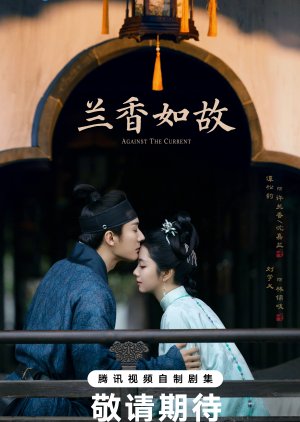
Against the Current is truly one of those C-dramas that I know I will miss for a very, very long time. 🥺🌸 It was heartbreaking, beautiful, emotional and heartwarming all at once. And now… how am I supposed to move on after watching this? 😭😭 I really love the entire cast , I was crying ,blushing , getting angry all at the same time . Really hats off to everyone . Really a marvellous c drama 💕🙏❤️✨Was this review helpful to you?
This review may contain spoilers
A story about women, survival, choice and what makes life worth living
Against the Current is one of those dramas that reminded me why I love women-centered stories when they are written with care. At its heart, this is a story about survival, but more importantly, it asks what comes after survival. What makes a life worth living once you are no longer simply fighting to stay alive?Lanxiang was an incredible female lead because her intelligence never felt like a superpower conveniently given to her by the writers. She observes, learns, adapts, asks questions, makes mistakes and works with the information available to her. She is intelligent because she has learned how to survive. Yet the drama never allows survival to become her entire identity.
I especially loved the women. They were not written as perfect examples of “strong women.” They could be intelligent, selfish, loving, classist, ambitious, frightened, cruel, funny, practical and contradictory. They felt like people first and female characters second.
One of my favorite aspects was watching Lanxiang’s influence slowly spread through the Lin household. The younger women begin speaking for themselves, making choices, thinking about their futures and protecting their children differently. The drama’s metaphor of one lamp lighting another until an entire space becomes illuminated perfectly captures her journey. Lanxiang did not simply change her own circumstances; she showed other women that another way of living was possible.
Jinqi was equally compelling. He frustrated me, impressed me, made me angry and eventually became one of my favorite historical drama male leads. His flaws were never magically erased to make his romance work. Instead, he had to learn. Watching his understanding of love, choice and power evolve was one of the most satisfying parts of the drama.
And I genuinely loved Lanxiang and Jinqi together. Their romance may be too understated for some viewers, but that quietness is precisely why it worked for me. Their world is constantly chaotic, yet together they find peace. Their love is expressed through actions, trust, protection and understanding rather than endless declarations. I only wish we had been given far more of their domestic life.
That leads to my biggest criticism: 47 episodes were simply not enough.
The later time skips could be frustrating, and new children, grandchildren and characters sometimes appeared before we had enough time to become attached to them. I desperately wanted more ordinary moments: Lanxiang and Jinqi raising their family, the younger Lin women living the lives they fought for, marriages developing, children growing up and everyone simply existing without another crisis waiting around the corner.
I didn’t need more plot. I needed more life.
Still, the writers accomplished an incredible amount within those limitations. The directing was beautiful, the fight choreography deserves its own praise, the OST elevated so many emotional scenes, and the cast delivered across generations. Tan Songyun and Liu Xueyi especially gave performances that made these characters feel fully lived-in.
And Lanxiang’s ending brought the entire story together for me.
She began as a young woman whose primary goal was simply to stay alive. She eventually became a mother, grandmother and great-grandmother. She preserved the memory of the Shen family through her writing, and those stories eventually became something larger—a way of reaching and helping other women.
She started writing so the past would not be forgotten and ultimately used those stories to help shape someone else’s future.
There is something incredibly beautiful about a character whose story begins with “How do I survive?” being allowed to grow old enough for the question to become “What makes life worth living?”
Lanxiang survived.
But more importantly, she lived.
She loved, learned, taught, influenced generations and left something behind.
Despite wishing desperately for another 20 episodes, I finished Against the Current feeling grateful that I got to spend 47 episodes with these characters.
Was this review helpful to you?
I'm a drama veteran and this may have become my favorite drama
As someone who has been watching dramas for almost 2 decades, I don't think I've watched a drama so complete in a while. This was a beautiful story. It impresses me because it has a lot of tropes other dramas in this genre have, but pulls them off so well so that they feel new again. I love when a drama leaves me so inspired that I now have a different outlook on life. I have a renewed desire to really live.Was this review helpful to you?

 1
This review may contain spoilers
When in Doubt, Ask Lanxiang
In a nutshell, this drama lays bare a brutal reality: when men in power mess up, they drag their entire clan down to the grave with them, but when a woman slips, she is instantly discarded. Only remarkably sharp women like Lanxiang could foresee these tragedies and navigate the treacherous loopholes to survive. Yet, hanging over everyone is the inescapable equalizer: the mighty imperial decree.There was plenty to love about the show. First, the women in this drama knew what they wanted and their characters remained consistent until their demise, including female antagonists like Xingtang and Du Cuique who had real depth and masterclass acting. The world-building was meticulous, with the writer acing foreshadowing and irony. I especially loved the foreshadowing in Episode 1 where Shen Jialan asks her father, "What is a slave?" only to later live as one for six years. The thematic irony of the imperial decree was also brilliant: the same decree that chased her from her house and wiped out her family ended up trapping her in a marriage and accidentally bringing her former home back to her, lol. I also appreciated how the writer incorporated modern satire, like Jinqi being so ahead of his time that he ended up fainting in the delivery room during the birth of their firstborn, and later vowing never to take a concubine because he would rather stand by his wife than a child he hasn't even met. Word! On top of that, the Lin siblings were a breath of fresh air: tight-knit, non-toxic, and always standing up for each other, whether Xiuru covered for Xiuwan's secret rendezvous or Jinqi and Xiuwan helped Xialan get a divorce with Lanxiang's help obviously.
Of course, I had mixed feelings about a few things. The pacing was extremely slow, especially regarding Lin Jinqi and Lanxiang's love story, and I wasn't a fan of the forced marriage trope, though after Jinqi's grandpa whooped him real good, all was well on my end. It also became a bit predictable that every single trouble that came their way could be instantly solved if Lanxiang was consulted, lol.
On the downside, the time-skips in Episode 39 were too much and really hurt the romance arc. I was looking forward to seeing their honeymoon phase after visiting her family grave, but we only got to see Jinqi fall hopelessly in love with her without ever getting Lanxiang's perspective in that phase.
In the end, though, they all led decent lives and stuck with the core theme: To live well. Life gave these women lemons, but they managed to turn them into a full-course dessert.
I would recommend this to lovers of women-centric dramas; it wasn’t perfect, but I had fun watching this.
Was this review helpful to you?
Probably the best dramas in 2026
The focus of this drama is survival, striving to live a better live, unlike the typical revenge drama. I had zero expectation getting in because this year I dropped several dramas I started. To think about the reason I've been enjoying this drama, there are several aspects:1. The story telling is just the right pace, not to fast that you feel lost and not too slow that put you to sleep.
2. The survival from the servants' point of views instead of the 'royal families' or the 'upper class' is heartfelt and an eye opener how lucky we are to live in modern time.
3. I enjoy the scenes throughout the show so I can say the camera work is good.
4. I also do not feel super anxious watching the show so I can say the music and sound are just right.
5. The slow burn romance is addicting.
6. Excellent ML and FL, and also the the side actors.
Toward the end of the show though the FL became a Mary Sue and the women empowerment themes are overused and as many mentions the romance needs to show more sparks. Overall it is an excellent show for first time watchers.
Was this review helpful to you?

A gem far from artifice!
This is my second traditional drama after Pursuit of Jade, which I loved. I have tried to watch more traditional dramas, but I always leave them because I never connect with the history. Sometimes they're too fantastic and exaggerated; other times, the scripts are too violent or predictable.Against the Current is a deliberate, measured drama. I read some comments complaining that it's too slow. But for me, no. Every chapter is a succession of events, plots, conspiracies, and action scenes. However, It’s filmed in a very measured way to make the spectator think and consider the different points of view behind the action.
The script is a gem! You're always surprised by how it all comes together, and one wrong move can trigger disaster, especially in a time with so many realms, marquis, ministers, and eunuchs.
I love the sisterhood and the feminist point of view—the fight for women's rights, and the defense of knowledge as an instrument of freedom. I sincerely love it. I feel the director didn’t try to sweeten all the problems women faced at the time, and even reflected the setbacks and obstacles other women faced in the fight for more rights.
Maybe 39-41, in this sense, were too much for me. But later, there is a recognition of the FL's exceptionality when the Old Master remembers what she was like as a kid.
Visually, it's so beautiful!! For me, much more than the artifice of some dramas like POJ. POJ is for platforms like Netflix and for Western audiences, more used to Hollywood artifice. I liked it, but for me, it was too focused on reaching other countries and making viral social media videos (which is good but maybe too much). On the other hand, Against the Current is an old-fashioned Chinese movie. The film is exquisitely shot, with every detail beautifully captured. The palace scenes, the images of the Capital, the vestments, the jewelry… everything is so beautiful.
As for the love story, I heard some comments saying it is not a love story. If what you are looking for are kiss scenes, then there is no love. But if you are looking for true love, a love beyond everything, this is the drama. A couple built on admiration and respect, who sacrifice their own lives for the other, who break conventional norms and risk their titles, possessions, and even their family reputation for each other.
Both characters are different; FL is restrained and discreet. But she is always the same; since she was a kid, she has made her discretion her most powerful asset. Risking her life to save him, burning proofs that may condemn him… are obvious tokens of love. ML, on the other hand, is passionate, tempestuous, and ambitious, as he should be in that time. But it's beautiful to see how, over the years together, they take some of the other's features. Something that happens in reality.
Apart from them, there is the love in capitals: the filial love, the love for the family, the love for the friends.
And the music??? Amazing!!! I can’t stop listening. It’s the perfect soundtrack for a drama that is already at the top of my list.
An ode to love and knowledge.
Was this review helpful to you?
Good writing is what it's all about
This may not have had the version of romance I enjoy watching, but Jinqi and Lanxiang certainly made for a power couple and they had a loving relationship in their own way.The plot, story, messaging, and acting was all top quality and I cannot disparage the drama for not meeting my own personal preference in one small regard, so this is a solid 9 stars for me.
I wasn't expecting this to be a female-centric story, but that's what I took away most from this. Finding happiness in the path you choose for yourself, not being greedy for things outside of your concern, building healthy relationships and supporting your loved ones with taking charge of their own lives. So many good themes. The overarching plot was also great, villains were written very well with none of the usual over the top annoying fanfare we're typically used to with cdramas, so I didn't have as many frustrating moments watching the villains. Every character had a role to play and their own story to tell which was great to see.
Overall, it's a remarkable show with great storytelling and great performances from the entire cast!
Was this review helpful to you?

 1
The Difficult Business of Living
Xu Lanxiang begins Against the Current with a fairly modest ambition.Live.
Forty seven episodes later, this has involved two identities, several households, employment problems, marriage problems, family problems, political problems, pirates, and at least one man discovering that an imperial decree is not, in fact, a substitute for courtship.
Living is complicated.
Fortunately, Against the Current is very good at complications.
Its greatest strength is that the world around Lanxiang never feels like scenery waiting for a heroine.
People work here. Money matters. Reputation has practical consequences.
Marriage can change a woman's entire material existence. Family can protect you until protecting you becomes inconvenient. Servitude determines where you can go, what you can refuse and who gets to decide what happens next.
Even survival has administration.
It takes its time. If watching people live sounds less interesting than waiting for the plot to arrive, forty seven episodes may feel considerably longer than forty seven episodes.
Lanxiang fits this world beautifully.
She's intelligent without developing supernatural competence by episode twelve, resilient without treating compromise as moral failure and proud without becoming allergic to help. Sometimes she wins. Sometimes she gets outplayed. Sometimes the smartest available move is simply surviving long enough to have better options later.
Tan Songyun understands the assignment. Anger gets swallowed. Fear becomes calculation. Grief waits because something more urgent needs doing.
The women around her are equally well observed. Madam Lin, Guihua, Xiuwan, Cuique, Xingtang. Different positions, different resources, different ideas about what can and cannot be endured.
Zhao Xingtang could easily have become a thesis with excellent hairpins. Instead Li Meng gives us someone intelligent, wounded, perceptive, selfish and occasionally appalling.
She remains a person.
Much better.
That's Against the Current at its best. It doesn't ask whether these women are strong. It asks what strength is worth under different circumstances. Sometimes quite a lot. Sometimes very little.
Liu Xueyi's Jinqi is another good example, at least initially.
He arrives intelligent, arrogant, observant, politically capable and just amused enough by most of humanity to be entertaining.
He's also a man accustomed to power, which matters more than the drama sometimes seems willing to admit.
Jinqi can convince himself that deciding for someone is the same thing as protecting them. The imperial decree is the obvious culmination of that.
He's wrong. Lanxiang knows it. Eventually, so does he.
I liked the growth. I was less convinced by how thoroughly the later writing domesticated the man having it.
Early Jinqi feels like somebody produced by his world: soldier, eldest grandson, political animal, a man for whom hierarchy is ordinary and power is something you use. Watching him learn restraint is interesting precisely because restraint doesn't come naturally.
He should change. The problem is that somewhere along the way the writing begins confusing growth with sanding.
By the later stretch, some of those rough edges, along with his politics, ambition and alarming competence, have been polished down enough that I could see the romantic ideal arriving.
I preferred the flawed man.
Liu Xueyi, fortunately, plays both.
The romance is less convincing to me than the relationship.
Romance isn't the drama's primary concern, nor did I need it to be. But secondary doesn't mean dramatically irrelevant.
Jinqi's feelings are easy to follow. Lanxiang's take considerably longer, as they should. Trust accumulates, reliance becomes mutual, and I can believe these are two people who know each other well enough to build a life together.
Whether the drama quite convinced me they needed to, given their history and how they came together, is another question.
But the writers chose that direction. Once they did, the relationship deserved more than a convincing foundation. It deserved the emotional payoff that foundation had been building towards.
The graveyard scene finally brings them somewhere new. Lanxiang understands something about Jinqi she hadn't before, and the possibility of a different relationship between them opens up.
And then the drama starts skipping time.
That's precisely the stretch I wanted it not to skip.
Not because I needed more romance, but because I wanted to see understanding become attraction, and attachment become love. Instead, the drama is much better at showing me why Lanxiang trusts Jinqi than when, or quite how, she falls in love with him.
The performances create warmth, intimacy and platonic familiarity, but that final shift into romantic attraction remains implied rather than written. Two or three carefully chosen scenes might have been enough.
Tan Songyun and Liu Xueyi are skilled enough individually to fabricate the rapport the writing leaves between the lines, and I remained invested anyway.
I'm not entirely sure the writing would have been so fortunate with another pair.
This is also roughly where my problems with the second half begin.
Early Against the Current is comfortable with unpleasant choices. People compromise for understandable reasons. Good intentions produce ugly consequences. Women living under the same restrictions respond to them completely differently.
Later, things become tidier.
Not bad. Just tidier.
Lanxiang's empowerment becomes more explicit, and she gradually becomes a character the script seems determined to prove right. Characters occasionally fail to notice things for exactly as long as the next twist requires. Some promising ideas are introduced with more conviction than they're developed.
The script starts showing its hand.
I preferred when it kept the cards closer.
Visually, though, this world is superb.
Rooms feel inhabited rather than arranged. Clothing communicates status without turning everyone into a fashion editorial. Courtyards, doors and seating arrangements establish power before anybody says a word.
And yes, people have pores.
We remain grateful.
All that care makes it more noticeable when the thinking inside this carefully constructed world feels less rooted in it.
My issue isn't that these characters resist the values of their time. People have always resisted the worlds they were born into, and historical dramas have always used the past to speak to the present. The best ones do.
But if you're going to make me take this social world seriously, and Against the Current very much does, then I also want to feel what growing up inside it has done to these people.
The inherited belief you can't quite discard. The compromise you hate but still make. Knowing something is unjust and knowing you still have to live tomorrow.
The drama can be excellent at this.
And then, especially later, someone arrives at an impressively clean conclusion while all that historical conditioning quietly leaves the room.
Possible? Certainly. As interesting? Not even close.
The politics never quite reach the same level either. Give this drama a household and it knows exactly who speaks, who stays silent, who pays, who inherits, who gets protected and who becomes expendable.
Give it the imperial court and things get considerably fuzzier.
Bigger stakes. Less interesting power.
The cast rarely has the same problem.
There isn't really a weak performance worth complaining about. Tan Songyun carries Lanxiang without making restraint monotonous. Liu Xueyi gives Jinqi enough presence that his later narrowing feels like a writing decision rather than a performance problem. Li Meng is a particular standout in an excellent supporting cast, and the ensemble gives the whole thing the feeling that everyone had a life before the camera arrived.
The cinematography and direction are equally assured.
Even the music mostly knows when to shut up.
Which leaves me with a drama I liked enough to be irritated by.
There are worse problems.
Because underneath the uneven politics, compressed stretches and occasional urge to make its ideas cleaner than its people, Against the Current remains unusually interested in something costume dramas often rush past:
the difficult business of building a life.
Lanxiang begins with one instruction.
Live.
At first, that means surviving because there is no other option.
Work gives her something. Money gives her something. Other people give her something. Love eventually does too.
None makes her completely free.
Together, they give her room.
"Live" begins as an instruction given to a young woman with almost nothing left.
The drama ends only after she has done exactly that.
Not merely survived.
Lived.
Was this review helpful to you?
Best C-Drama of the 2026!
Finally, a C-drama that is thoughtfully done with a stellar cast. Kudos to the director and script-writer for providing us with such an amazing female leads, and frankly all the characters are great! What I love about this drama is it's focus on story-telling and having the characters be true to their nature, rather than doing illogical things just to advance the plot. It doesn't pander or insult the intelligence of the audience nor does it give in to tropes that so many lazier productions have done. It portrays the lives of women during these times and the constraints they lived in from the rich and influential to the lowly maid. There is a lot of nuances in scenes which makes me want to turnaround and rewatch. If one is looking for hot romance or fast paced action, this is not the drama. In this drama, you get to smell the roses and enjoy the journey as much as the destination. You get to know the characters and care about them, not just the female and male leads. Highly recommended if you are starved for intelligently made C-dramas lately.Was this review helpful to you?
This review may contain spoilers
A capable woman doesn’t require a diminished man.
Strong opening, then disappointing. The Shen family women’s death scene and the identity swap were great. After that, it’s downhill.It uses a historical lens when it benefits her stakes (treason means wiping out the whole clan) and swaps to a modern lens when it needs her to win (she slaps the hell out of him in front of his family at the wedding, withholds sex, acts as a lawyer, and so on). Without the lens change, the slap, the withholding, and the defense of the abused wife would have earned her, at the very minimum, a beating. He didn’t have to be softened to make her strong. A capable woman doesn’t require a diminished man.
The Lins broke the engagement because standing with a family condemned for treason would have gotten them killed too. What were they supposed to do? The show treats it as Jinqi’s fault and a moral failure of the Lin family, and as her reason, other than the arranged marriage (another jump to a modern lens), for her actions.
It’s also very unevenly paced. Painfully slow at points, then it jumps ahead years. I thought I had skipped an episode when she finally relented on consummation. After 30-something episodes of making a point of her withholding, don’t we deserve to see her decision to change her mind? (I don’t mean the act itself).
Finally, it’s billed as a romance. That’s intellectually dishonest. The couple is mostly there to make a point. I’ll give it credit for showing just how bad things were by modern standards, but that isn’t what I started watching for.
I like the actor and actress. They did a good job. My criticism is of the structure of the drama itself.
Was this review helpful to you?
beautiful ❤️
This drama is amazing! Honestly, it doesn’t even matter whether you’re a fan of the leads or not, because I’m not, and yet this drama has me completely hooked. 😂 The story is genuinely interesting, the pacing keeps you wanting to watch the next episode, and everything is presented so beautifully. The cinematography, atmosphere, and overall production really add to the experience and make the story even more enjoyable.I’ve never really been able to get into either the FL or ML in their other dramas, so I definitely didn’t expect much going into this one. But Against the Current has completely surprised me. There’s something about the way this story has been put together that just works. It pulls you in without relying solely on the leads’ popularity, and I actually find myself invested in what happens next. Definitely one of those dramas that makes you realise you don’t need to be a fan of the actors to genuinely enjoy their work. I’m loving this one so far! ❤️
Was this review helpful to you?
This review may contain spoilers
From Traitor's Daughter to Household Head: 28 Episodes of Brilliance, 19 of Disappointment
You can easily break this drama down into four distinct phases:Chapter 1: The Slave Arc – Shen Jialan surviving after her family’s destruction, hiding her noble education and intellect under the guise of Xu Lanxiang.
Chapter 2: The Maid Arc – Navigating the Lin household, working her way up, and quietly matching wits while remaining unnoticed.
Chapter 3: The Wife in the Capital Arc – Dealing with the forced imperial marriage decree, bitter resentment, and high-stakes court politics.
Chapter 4: The Matriarch Arc – Leading the clan back in their ancestral hometown and watching the generation pass.
Chapters 1 and 2 are gripping, tight television. Chapter 3 still holds up, but Chapter 4 completely falls apart because the script rushes through decades just to reach the finish line. As many other viewers have pointed out, it started as something that could rival top historical classics and ended as a hurried checklist.
Right from episode one, the inciting premise asks for an enormous leap in logic. The Shen family is executed or forced into suicide for alleged treason. Lanxiang only survives because servant parents swap their own freshly deceased daughter’s body for hers. Yes, Jialan had shown them kindness before with medicine and clothes, but what grieving parents immediately trade away their dead child's corpse and risk having their entire line wiped out for treason instead of mourning?
Still, Chapter 1 works because watching an educated noble lady force herself to hold back her genius and silently swallow humiliation just to survive as a slave is grounded and compelling.
Where the drama loses its footing later on:
The Romance & Emotional Payoff Were neutered: The drama sells itself on a slow burn, but the payoff never arrives. Jinqi pursues, begs, and yields, while Lanxiang maintains an impenetrable emotional wall for years. After decades of marriage and a multi-year gap before consummating, we never actually see resentment turn into love—we just get a sudden time jump where they are suddenly intimate, leaving their connection feeling like a mechanical duty rather than genuine devotion.
The Identity Secret Was Watered Down: The central hook—Lanxiang being Jinqi’s former fiancée from the condemned Shen clan—should have exploded with dramatic impact. Instead, the eventual discovery felt like a muted non-event.
Capital Politics Reduced to Running Away: The dangerous political labyrinth of the capital gets abandoned. Jinqi simply steps away from his post as Left Army Commander to avoid purges—because in court, any king or crown prince eventually destroys whoever shines brightest—leaving the grand political tension feeling deflated.
Useless Men and Toothless In-laws: Once outside the court and the capital, the influence of the high-ranking nobility and Marchionesses evaporates. Apart from Jinqi, nearly every man in the Lin family is either dead, incompetent, or reduced to background set dressing so Lanxiang can solve every crisis unchallenged.
If the second half had matched the organic, grounded pacing of the slave and maid eras instead of jumping through years and rushing to conclude her life story, this would have been an easy 9 or 10. Instead, the final stretch trades storytelling for fast-forwarded life lessons.
Was this review helpful to you?